What is PolitiFi: A Political Meme Coin
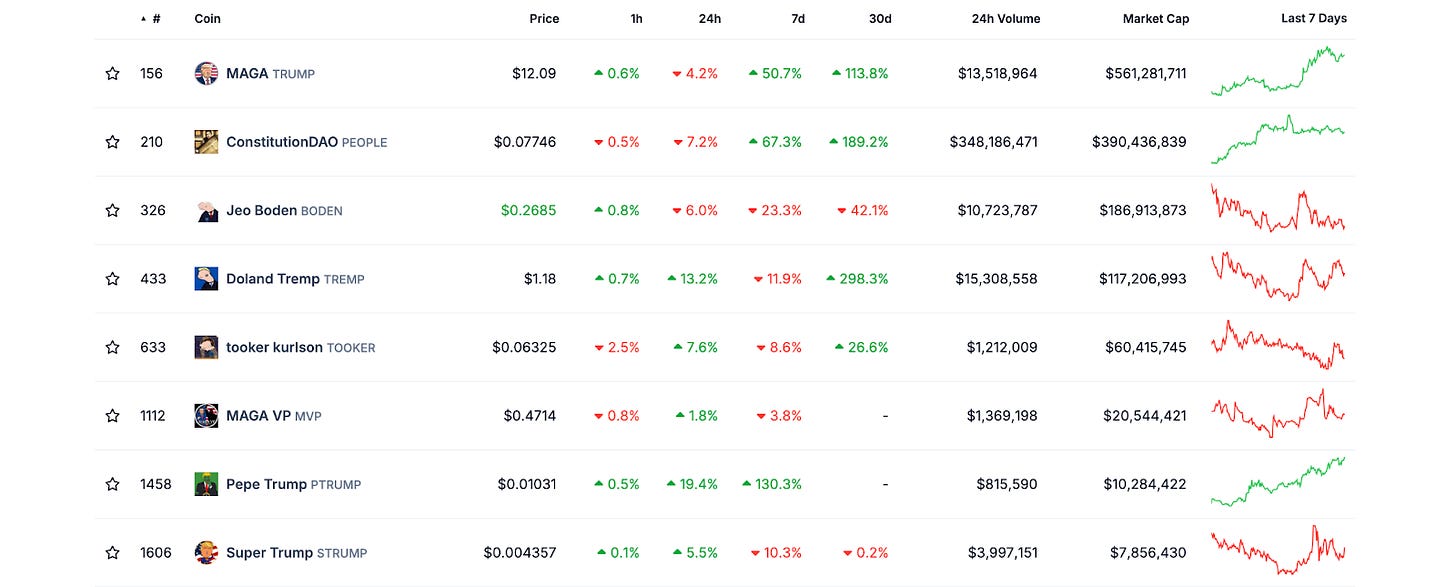
Simply put, PolitiFi refers to a political-themed Meme coin, focusing on the US presidential election. Most of these tokens are based on the names and images of well-known political figures, but so far have no actual connection with actual political figures and are created purely for entertainment and speculation purposes.
Among them, the one with the most related projects is Trump, the current presumptive Republican candidate.
$TRUMP: Trump representative coin
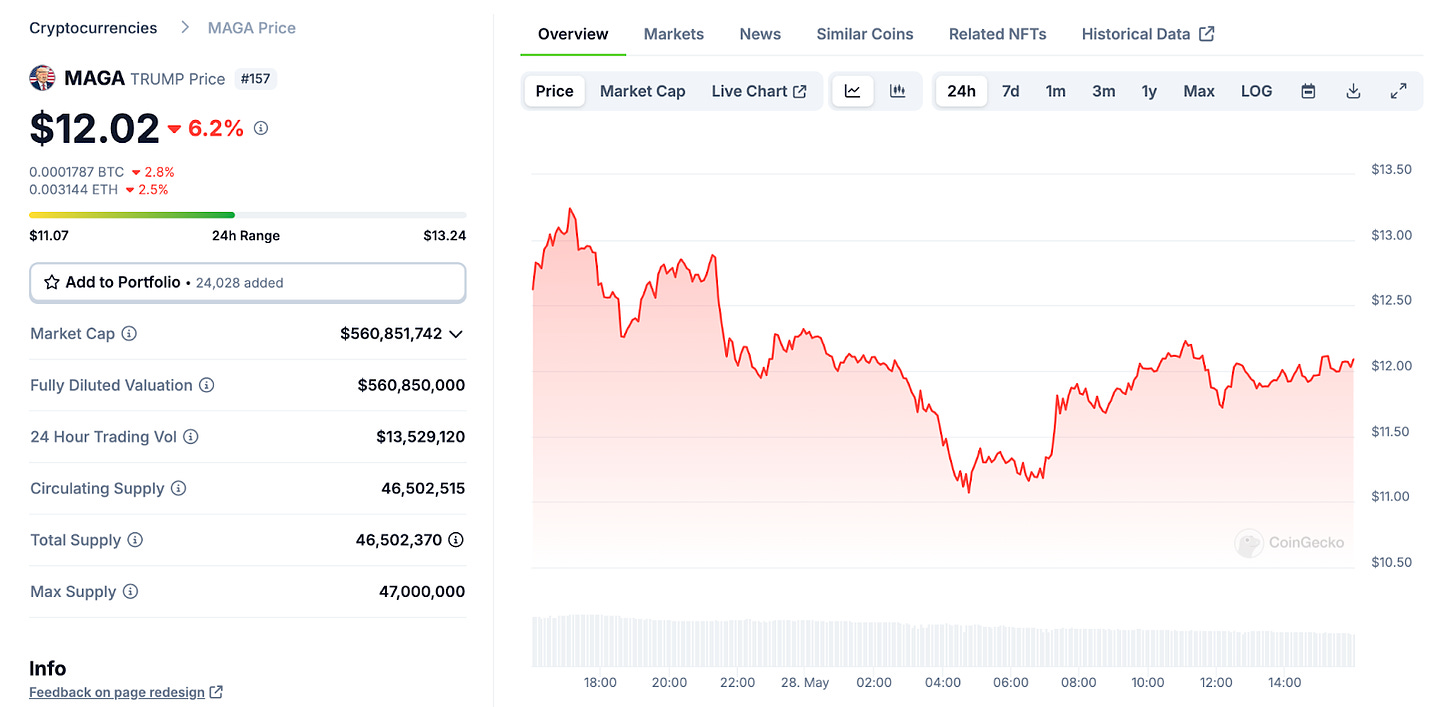
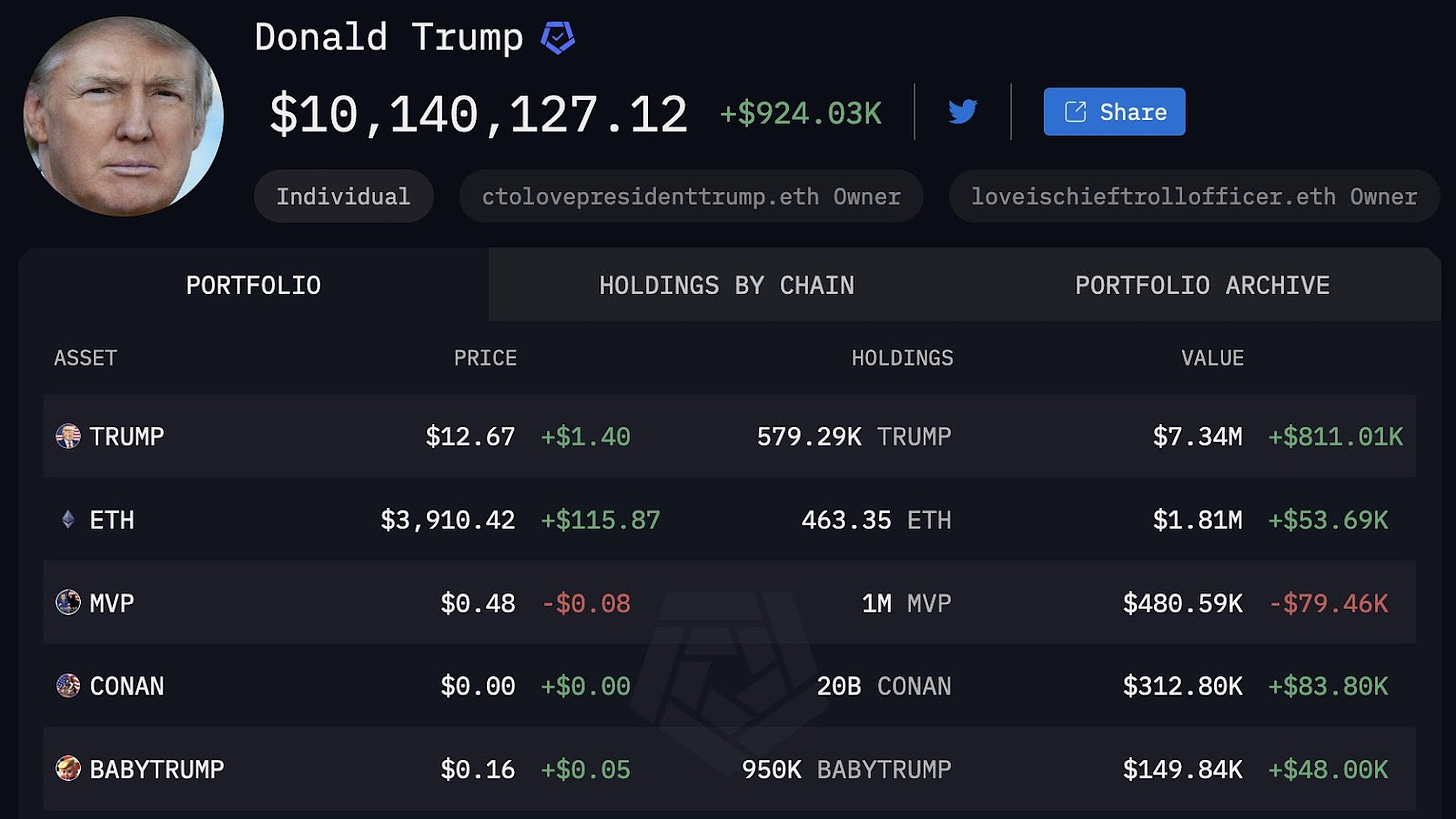
$TRUMP is built on Ethereum and is compatible with Solana. It is a cryptocurrency created by Trump supporters for entertainment purposes. It is also a relatively early PolitiFi currency with a current market value of more than 560 million US dollars. Although there is no official connection, Trump will benefit from the price increase - because Trump himself also holds $7 million in $TRUMP.
Currently, in addition to DEX Uniswap, users can also purchase $TRUMP on centralized exchanges such as MEXC.
$BODEN: Biden representative coin
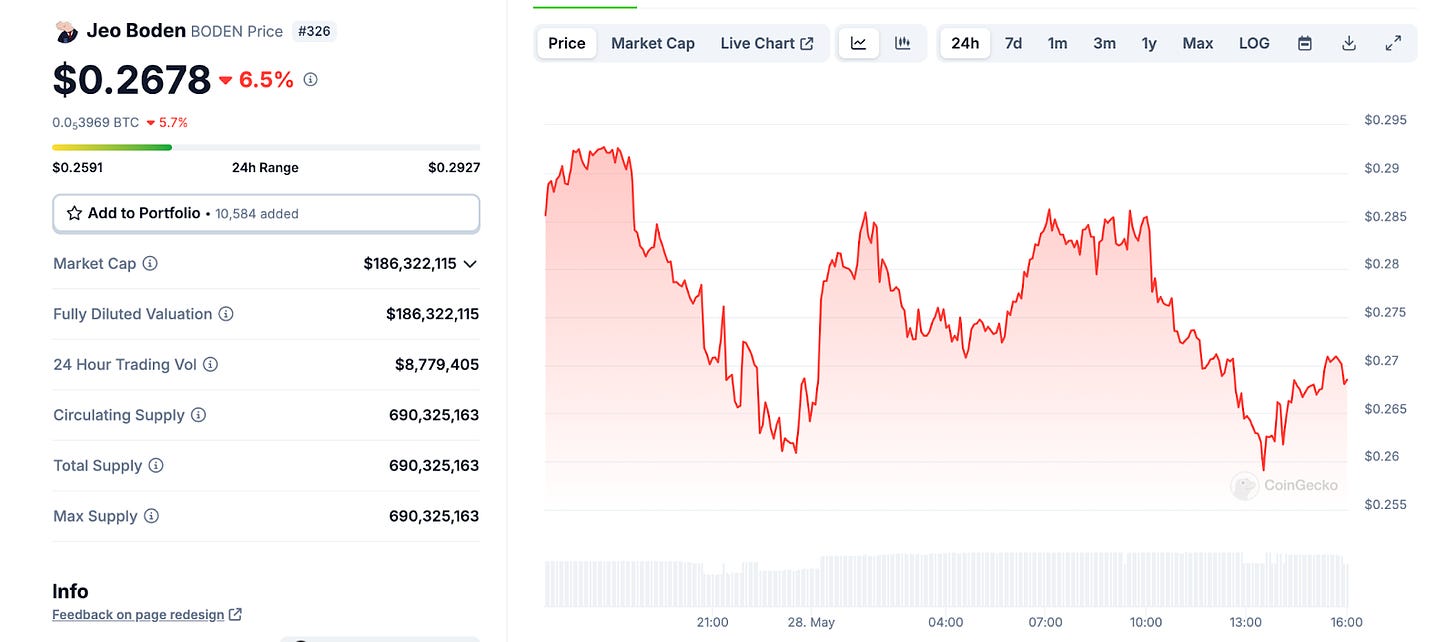
$BODEN is built on Solana, but unlike $TRUMP, $BODEN is basically a spoof currency created by users who mocked Biden. Official .
Currently, in addition to DEX Raydium, users can also purchase $TRUMP on centralized exchanges such as MEXC.
$TREMP: also the representative currency of Trump
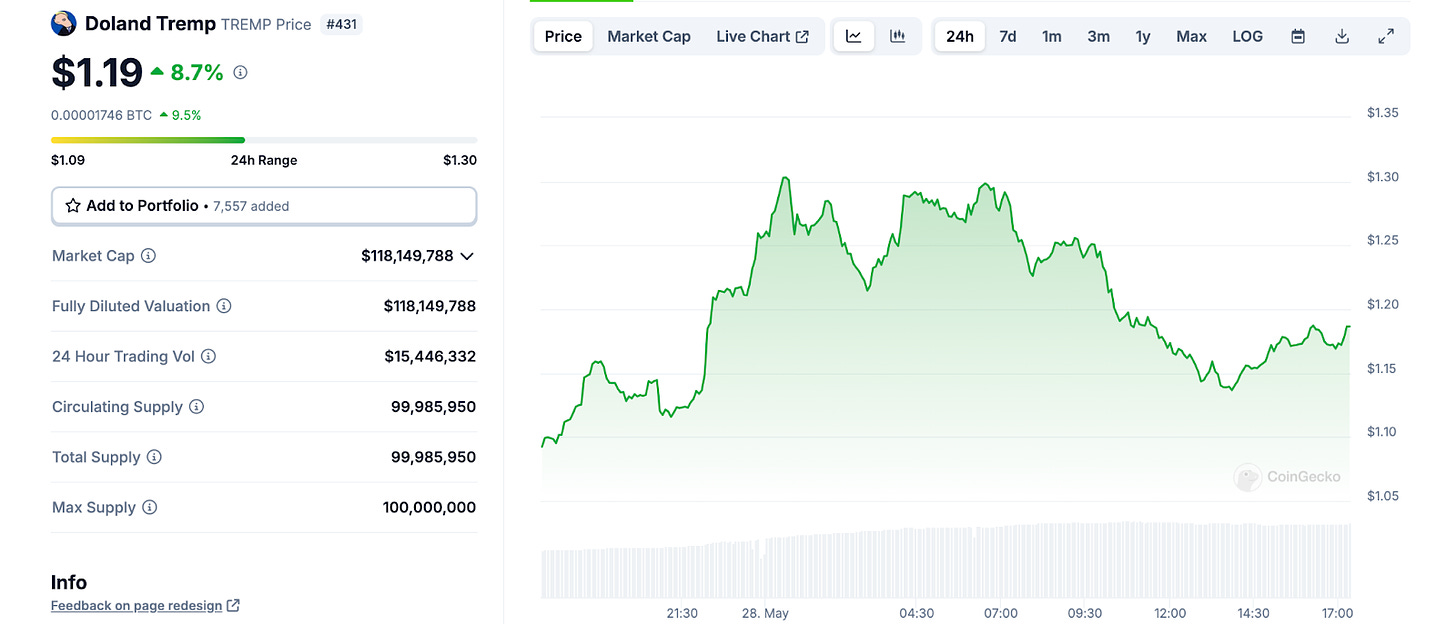
$TREMP is built on Solana, which is also one of the cryptocurrencies created to support Trump. It is characterized by the creation of a large number of memes. Its current market value has exceeded 110 million US dollars.
U.S. election status
The U.S. general election is currently in the stage of primaries and intra-party debates . Candidates are currently participating in state primaries and caucuses, actively seeking party nominations. Ultimately, the two parties will hold national conventions in the summer of 2024 to formally propose Candidates from each party. The following is the current election status of the two major parties - Democrats and Republicans - along with background information on the major candidates:
Democratic Party - Social justice, economic justice
The Democratic Party is generally regarded as a more left-leaning or liberal party. It supports greater government intervention to solve various social problems and advocates social equality, environmental protection and economic fairness.
Social Policy: Also supports marriage equality, women's rights, immigration reform and stricter gun control.
Economic policy: Promote a progressive tax system, raise the basic salary threshold, expand social welfare and universal health insurance.
Democratic primary candidates
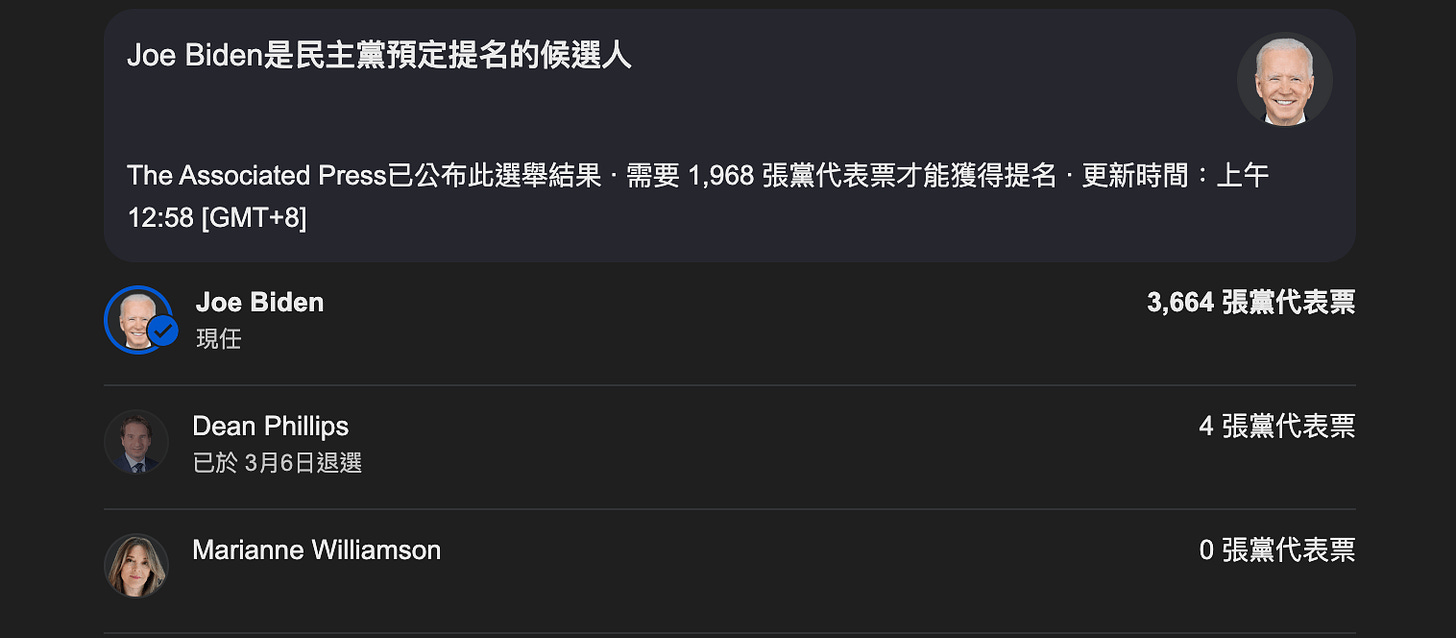
Joe Biden: Current President of the United States, former Vice President (2009-2017) and Senator (1973-2009). The political leanings are center-left and support expansion of social welfare, environmental protection policies, strengthening gun control and immigration reform.
Other potential Democratic candidates
Kamala Harris: Current Vice President and former California Senator, her policy tendencies are similar to Biden's, emphasizing criminal justice reform and racial equality.
Republican Party - limited government, free market economy
The Republican Party is generally considered a right-leaning or conservative party that supports limited government, free market economics, and personal responsibility.
Social policies: Typically anti-abortion, supportive of the Second Amendment (gun rights), emphasizing religious freedom and traditional family values.
Economic policy: Advocate tax cuts, reduce government spending and regulation, and encourage businesses and markets to operate freely.
Republican major candidates
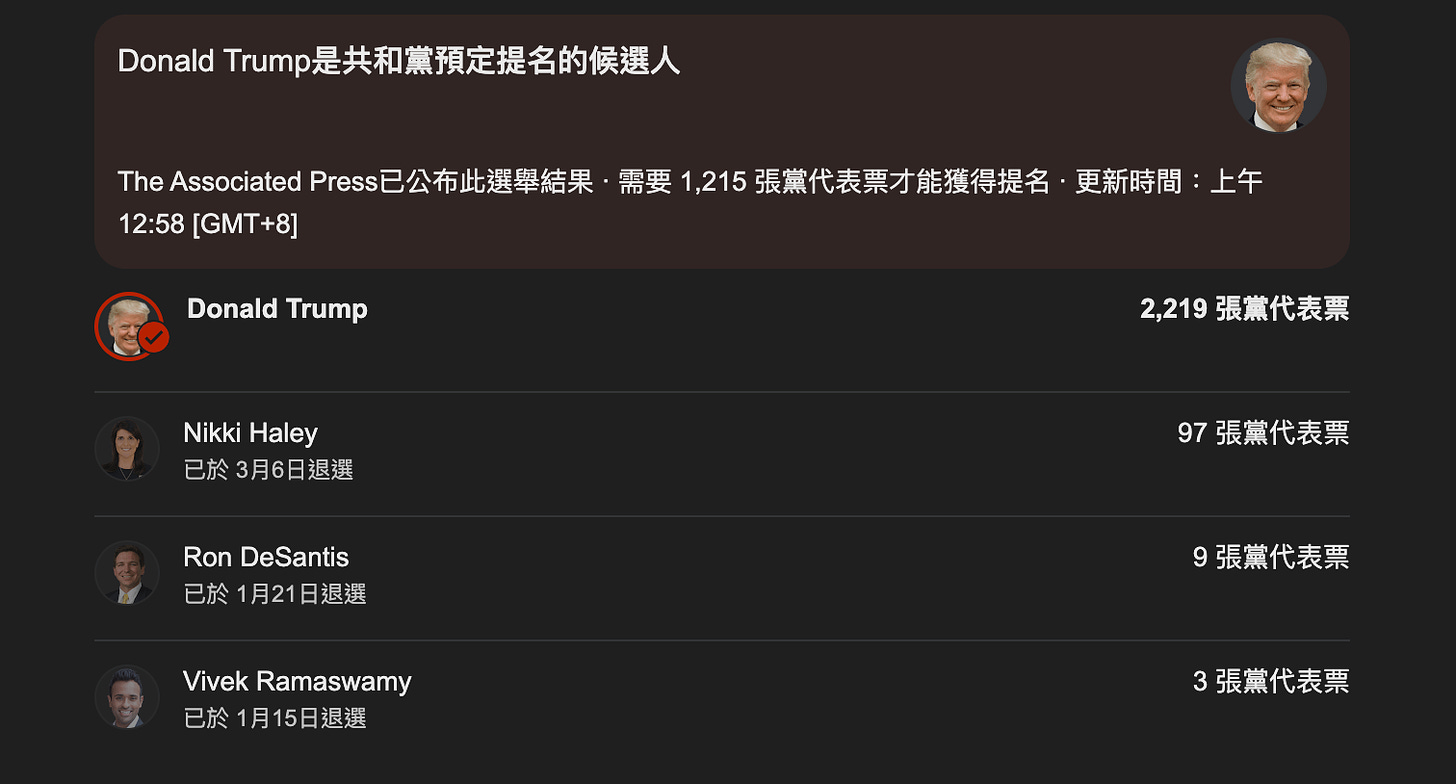
Donald Trump: Former United States President (2017-2021), real estate mogul and reality TV star. Politically conservative, it advocates tax cuts, less government intervention, tough anti-immigration policies and trade protectionism.
Ron DeSantis (Ron DeSantis): Governor of Florida and a former member of the House of Representatives. Politically conservative, he supports tax cuts, education reform, hardline immigration policies and opposition to COVID-19 restrictions.
Other potential Republican candidates
Nikki Haley: Former Governor of South Carolina and former U.S. Ambassador to the United Nations. Republican conservatives, who are more traditional in terms of policy, support a strong military and a tough stance on international policies.
US election process: Key trading moments to watch!
According to experience, several important links in the entire election will also be the time points where related market trends are most likely to occur . The following are several U.S. election processes and several key dates:
Primaries and Caucuses
States hold primaries or caucuses in which voters choose party candidates to support. Primaries are conducted by direct voting, while caucuses are held in small gatherings. Generally starting from early spring of the previous year (such as early 2024) and continuing until summer.
National Conventions
The two parties hold national conventions respectively to formally nominate presidential and vice-presidential candidates. During the convention, delegates vote based on the results of primaries and caucuses to determine nominees. Typically in the summer of an election year (such as July and August 2024).
Presidential Election Day (Election Day)
Voters across the country vote for the president and vice president, but the results of the vote actually determine the Electoral College members in each state. It is the first Tuesday in November every four years, and this election will be November 5, 2024.Electoral College Vote
Electoral College members in each state vote based on the popular vote to choose the president and vice president. It takes place on the second Monday in December, and the general election is December 16, 2024.
Presidential Inauguration Day
The elected president and vice president were officially sworn in and began their four-year term. The general election will be January 20, 2025.
The two parties’ views on cryptocurrency and related policies in the United States
Overall, either based on trends or in order to gain support from relevant votes, both parties currently have a relatively positive attitude towards cryptocurrency.
Democratic Party
The Democratic Party Biden administration has a relatively cautious attitude towards cryptocurrencies and focuses on the regulation of cryptocurrencies, especially its impact on consumer protection, money laundering and tax compliance. During his tenure, the U.S. Department of the Treasury and the Securities and Exchange Commission (SEC) have imposed strict regulations on cryptocurrencies. The currency industry is heavily regulated and emphasizes the need for transparency and security.
But this has also caused dissatisfaction among many industry figures, among whom SEC Chairman Gary Gensler is particularly hostile to cryptocurrencies. However, Biden also promoted the adoption and compliance of cryptocurrency through two measures during his term, which is a neutral and compatible attitude.
Significant related policies: In 2021, the Biden administration issued an executive order requiring government agencies to study and report on the impact of cryptocurrencies on the nation’s financial stability and security. In 2024, the Biden administration further expressed its support for the FIT21 bill and called for cooperation to establish a digital asset regulatory framework.
republican party
Republican Trump had a negative attitude towards cryptocurrencies during his presidential term, believing that cryptocurrencies are mostly used for illegal activities and may also pose a threat to the traditional financial system. However, Trump’s views on cryptocurrencies have gradually changed since he left office. Especially during this election, Trump has issued NFTs and accepted cryptocurrency donations. He has collaborated with other celebrities in the party who also support cryptocurrencies and promised to launch them in the future. Policies that are friendlier to cryptocurrencies.
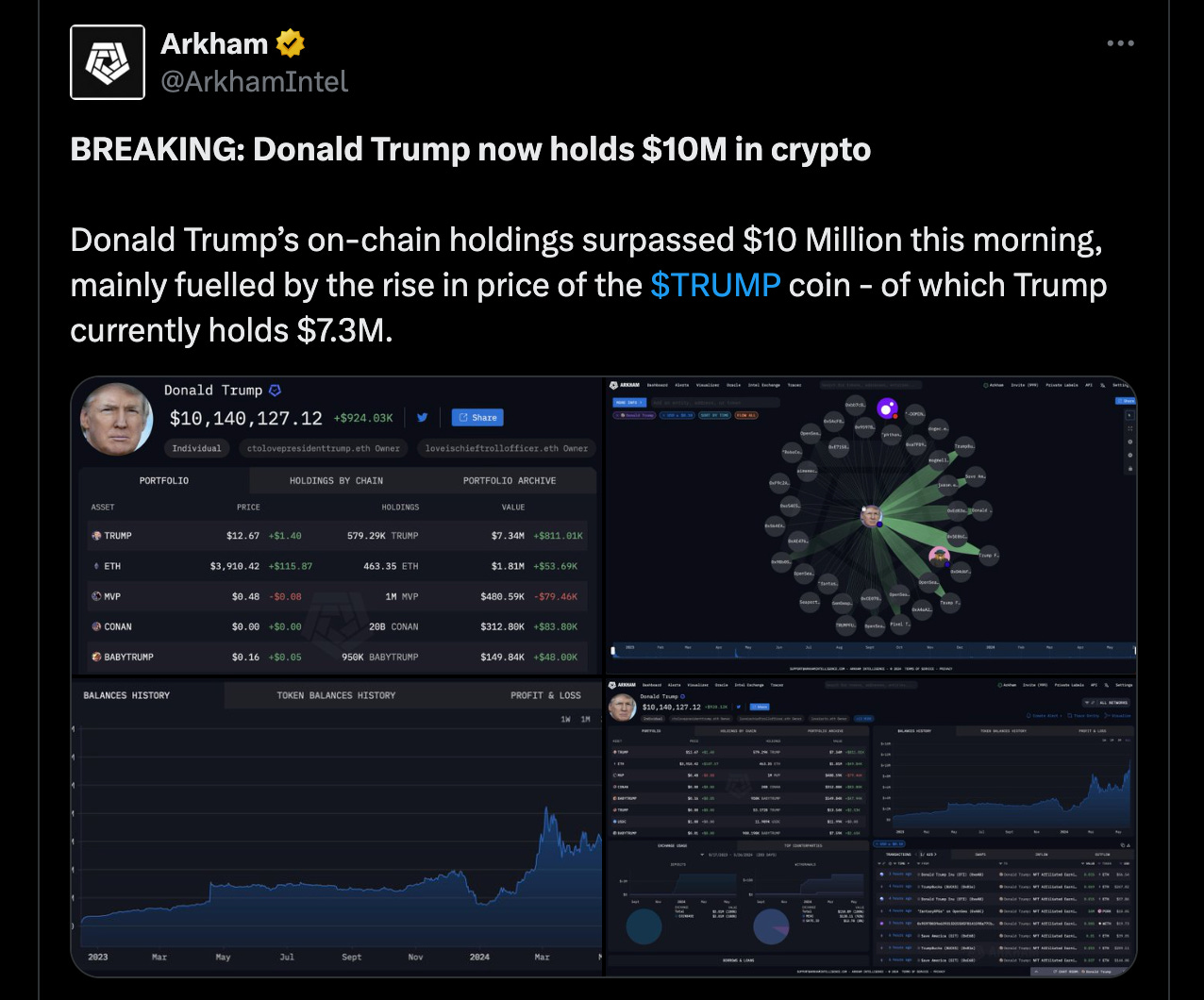
According to the on-chain analysis tool Arkham , Trump currently holds approximately $10 million in cryptocurrency.
Major related policies: None
Further reading
Can Bitcoin ETF be purchased in Taiwan? Can only overseas brokerages buy Bitcoin ETFs?
References
Arkham: https://x.com/ArkhamIntel/status/1795085557715861918