There are more and more AI terminals, and lightweight smart glasses are also rolling up.
Following Ray-Ban Meta, Solos announced a new type of smart glasses called AirGo Vision, which has multiple functions and integrates ChatGPT-4o provided by OpenAI, and is also compatible with Google Gemini and Anthropic Claude models. It can be said that this pair of glasses integrates the strongest AI models.
A major feature of smart glasses is that users can use voice commands to answer any questions or provide real-time input, such as reading foreign language billboards or getting help with city routes.
Compared with bulky AR headsets, smart glasses are lighter and their appearance is no different from ordinary glasses. The key is that AI technology can be built into the compact frame.
Essentially, smart glasses are not AR glasses, and they do not have a screen, but they will become a visual extension of information search and bring a variety of interactive functions. Such features are suitable for educational scenarios, and learning happens naturally in life.
The emergence of AirGo Vision glasses has made the field of smart glasses more lively, which means that smart glasses will enter people's daily lives more quickly.
01 Equipped with a large model, capable of voice, recognition, and photography
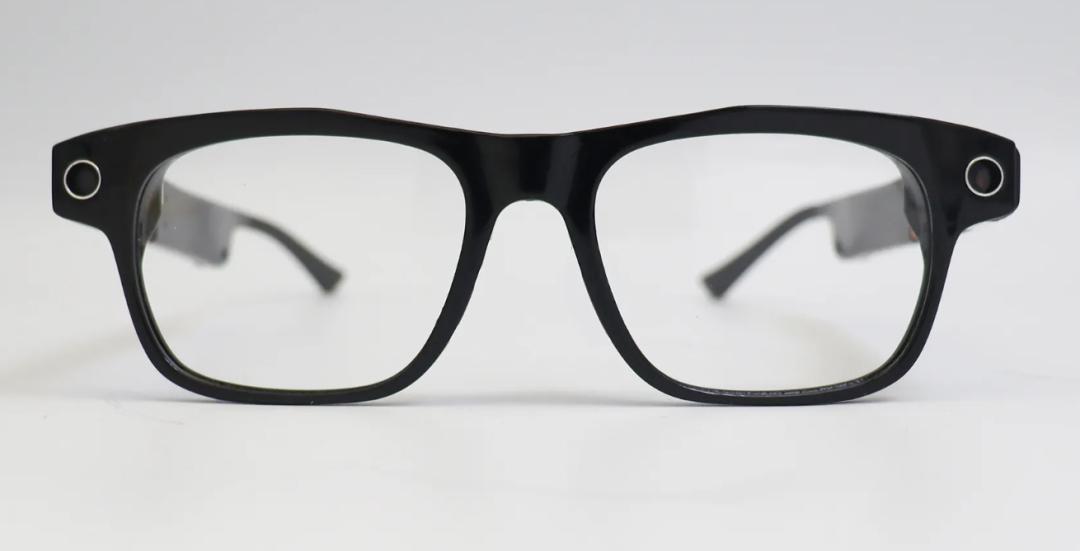
From a functional point of view, the wearer can take photos with both hands free and query information instantly. Solos also provides the option of replacing the main frame with a sub-frame without a front camera.
Unlike other smart glasses, the camera lenses are embedded in the temples rather than the frames, which makes them useful in more formal settings.
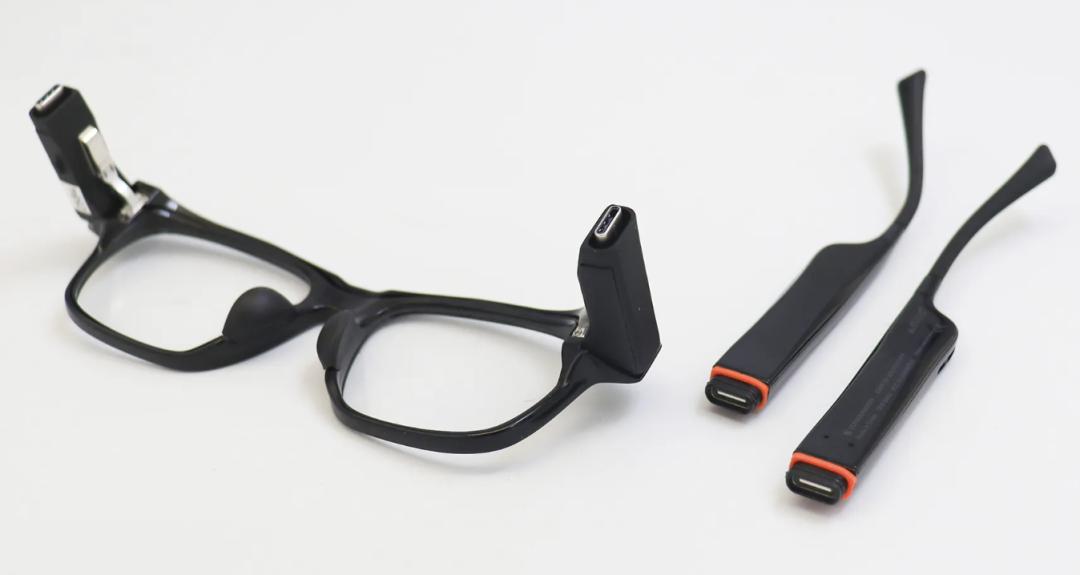
The AirGo Visio has integrated earphones that can be used to listen to apps, and to let the wearer know about any important notifications or calls, there are flashing LED indicators on the frames.
The glasses can also be used to describe objects in the current field of view using artificial intelligence technology, and image recognition can provide useful information about the object. This allows users to immediately understand the price of a product and check whether the item is cheaper elsewhere.
According to Solos, the glasses should also be able to master more complex tasks, such as guiding users in cooking or other manual activities, and providing features such as turn-by-turn navigation.
AirGo Vision's lenses are not only used for image recognition, but can also be used to take pictures, but there is no display. Photos can be viewed in the app.
Overall, solos mentioned:
AI AirGo Vision provides real-time information based on visual input, identifying people and objects (“What am I looking at?”);
or navigating and narrating directions or landmarks (“show me the way to the Eiffel Tower”) without ever having to open your phone;
With hands-free operation and convenience, users can also take photos without using their hands, which is particularly handy for visual progress and next actions for activities like cooking, home improvement projects, education and learning, and even shopping (“What am I looking at, and how much is it? Is there a better price somewhere else?”);
AI can also summarize these activities to enhance organization and assistance.
The AirGo Vision will cost $249 and will be available starting this month. That price refers to the base model without a camera, which has very limited features. It's not clear how much the camera version with the full suite of features will cost.
This isn’t the first time Solos has launched smart glasses.
As early as CES 2024, Solos launched the Solos AirGo3 smart glasses with ChatGPT. Solos AirGo3 uses audio to let users talk to ChatGPT, while AirGo Vision glasses allow users to search for information through visual input.
Based on the glasses launched by Solos in the past, users with myopia or hyperopia can configure prescription lenses, and I believe AirGo Vision is no exception.
According to the solos® official website, solos® is a nanotechnology company under Kopin Corporation, whose goal is to develop the world's most advanced smart glasses technology based on human invention. Most of solos' engineers come from MIT, and they are keen to develop innovative technologies to enhance user experience through voice extraction technology, clear audio and diverse styles.
02 It is expected to become a new way of learning
With the emergence of large models, smart glasses have become one of the trends and have attracted many players to join the market.
Previously, Meta and Ray-Ban have launched Ray-Ban Meta smart glasses. Users can activate the smart assistant with just a voice command like "Hey Meta" to experience the AI capabilities of the Llama model. It can see, hear, take photos, and record videos.
According to Meta data, in Q4 2023, Ray-Ban Meta shipped more than 300,000 pairs. Meta said that the market performance of Ray-Ban Meta far exceeded expectations. By now, The Verge predicts that the sales of this product may have exceeded 1 million pairs.
OPPO has also joined this trend. During the Mobile World Congress (MWC 2024), it released the new generation of assisted reality smart glasses OPPO Air Glass 3 concept product. The highlight of this product is the hope to achieve cross-end collaboration. For example, through the exclusive APP of OPPO Air Glass 3 on the mobile phone, OPPO's self-developed AI large model AndesGPT can be mobilized. Users only need to touch the temples to experience the voice assistant function.
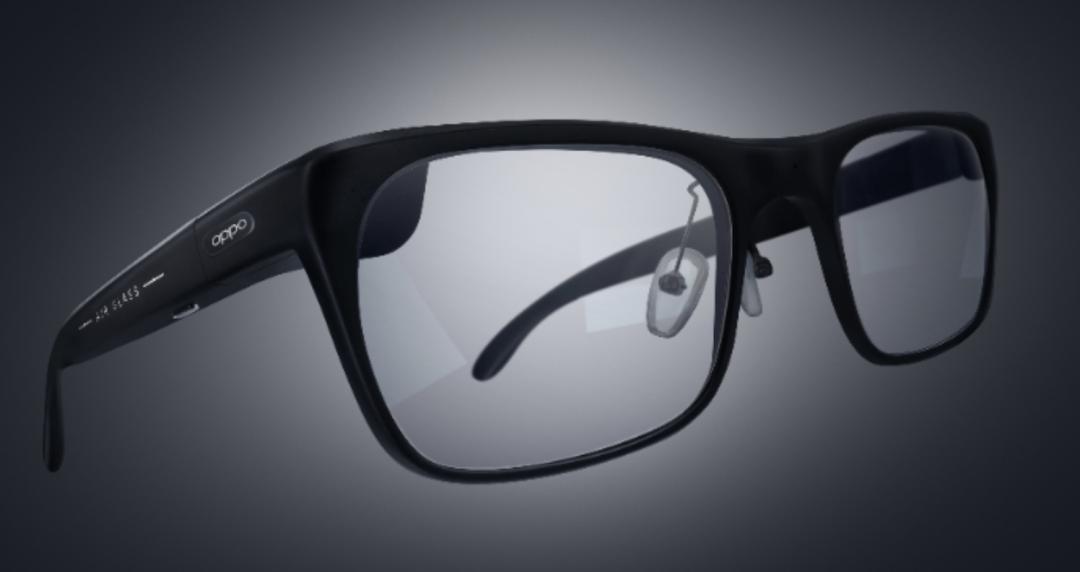
OPPO Air Glass 3 concept product
At the Google I/O 2024 Developer Conference, Google also mentioned that it will develop a pair of smart glasses with the new generation of Gemini models, which can recognize scenes and objects in life in real time, and provide intelligent suggestions to users through AI recognition, search, and information integration. However, the product is not yet on the market.

It can be said that smart glasses equipped with large models have multiple functions such as entertainment, learning, life assistant, work assistant, etc.
In education, it can be used for real-time translation and as a language practice tool. In museums, after scanning cultural relics, personalized explanations can be given, and because of the built-in large model, AI can analyze from different angles.
In essence, smart glasses are a new smart terminal. Compared with XR headsets, the appearance of smart glasses is almost the same as that of ordinary glasses, and there is no need for a long adaptation period. Smart glasses can also be iterated into AR glasses, perhaps it is just a matter of time.
The challenges faced by smart glasses are almost the same as those faced by artificial intelligence, such as reliability and accuracy. However, as technology advances, these problems may be solved.
In the future, smart glasses are expected to become a new way of learning.
This article comes from the WeChat public account "Duozhiwang" (ID: duozhiwang) , author: Wang Shang, and is authorized to be published by 36Kr.