Despite the launch of an Ethereum spot ETF, ETH price failed to break above the $3,400 resistance. The main reason is that Grayscale's spot Ethereum ETF has experienced massive outflows of funds. What other factors may have hindered its price performance?
ETHE’s outflows exceed GBTC’s
According to Sosovalue, the overall performance of ETFs is poor, with cumulative net outflows currently reaching $439.64 million.
As shown in the chart below, most of the selling pressure comes from Grayscale. Other major spot ETH ETFs including BlackRock, Bitwise and Fidelity have recorded positive daily inflows as of July 29.
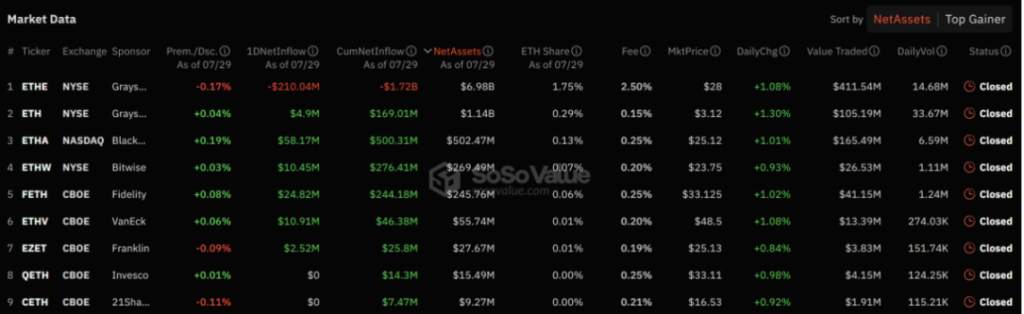
Source: Sosovalue
We also noticed that Grayscale’s ETHE was outflowing faster than GBTC after the sharp decline in the Bitcoin spot market. Bitcoin shares fell to $66,317, the ETF has been launched since January, and the chart below records the asset losses of both investment vehicles since the switch. GBTC vs. ETHE asset losses since conversion
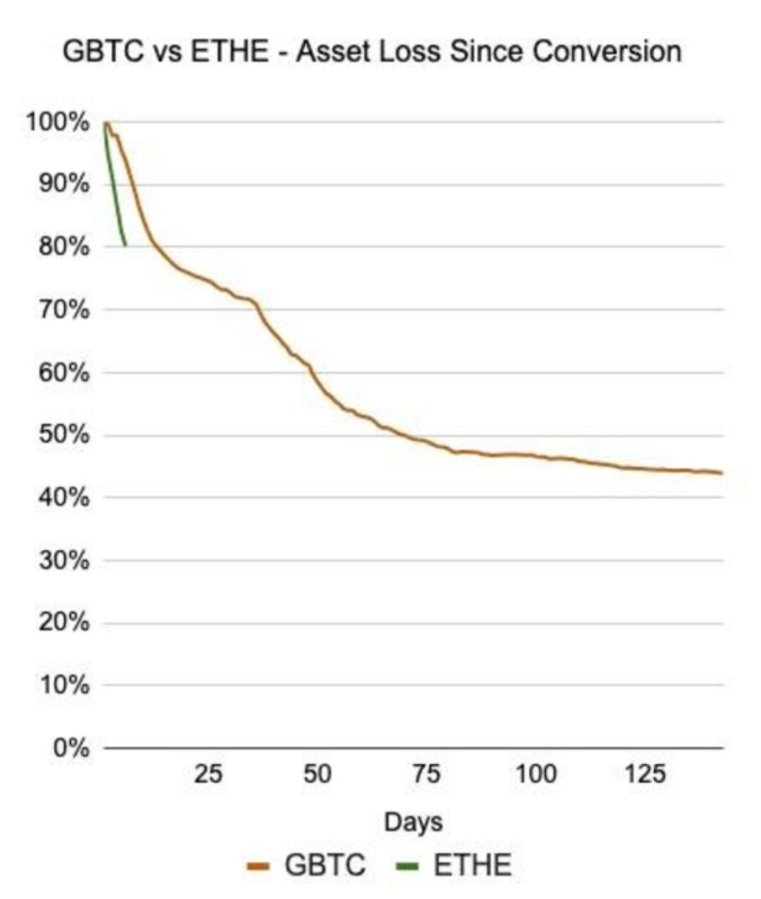
Chart source: Glassnode
According to Cointelegraph, analysts expect Grayscale’s large ETHE outflows to “likely” decrease this week.
Exchanges have “almost no demand” for ETH
Additionally, Ethereum’s exchange withdrawal volume has decreased significantly since March. Independent analyst Crypto Lion pointed out that this indicator is closely related to the price, indicating "almost no demand."

Source: Cryptoquant
Crypto Lion also believes that the estimated leverage ratio (ELR) has driven ETH price action during this volatile period. This indicator reflects the ratio of open interest in futures contracts to exchange balances. A higher ELR indicates that futures/perps are dominating price movements, which are typically short-lived or volatile. He pointed out:
After the ETH ETF was approved, the price of ETH fluctuated in a range. However, it is recommended not to make a purchase without withdrawals and the ELR issue not being resolved.
Coinbase premium index turns negative
Coinbase data shows a similar lack of demand. In the second quarter of 2024, Coinbase's ETH premium index continued to decline. The index coincided with ETH's peak when it reached yearly highs in March, but has now turned negative. Negative premium values indicate that U.S. investors lack buying motivation and spot demand is drying up.

Source: Cryptoquant
In May 2024, as the potential approval of an Ethereum ETF increased spot buying volumes at Coinbase, its price saw a bullish impact. The Coinbase Premium Index also surged above 0.15, indicating demand from ETH spot buyers. As mentioned above, the index’s current downward trend has had the opposite effect on ETH price.