Author: TechFlow
Preface
The turbulence in the crypto market has never stopped, and the DeFi field has also continued to move forward in this turbulence. The expectation of interest rate cuts facing the global economy is quietly changing investors' risk preferences and return demands.
Faced with an environment where market narratives are becoming increasingly dry, discussions about DeFi have once again increased. Having gone through a complete cycle of bull and bear cycles, DeFi projects are no longer satisfied with simply copying traditional financial models, but have begun to think deeply about how to better meet market demand.
From the rebranding of MakerDAO to the emergence of various novel profit strategies, the entire ecosystem is undergoing a profound transformation. At the same time, Binance, as an industry giant, is also actively seeking change. The meme craze on BNB Chain and the high frequency of projects in the ecosystem are all sending positive signals to the market.
In the midst of the turbulent changes, BSC Ecosystem's OG DeFi protocol Tranchess stands out from the crowd of similar products with its unique structured fund architecture, providing investors with a unique DeFi experience by cleverly combining the concept of structured funds with DeFi innovation. As the market demand environment changes, Tranchess continues to advance product iterations and jointly matches market demand with multiple projects.
This article will explore the multiple innovations of Tranchess in depth, analyzing how Tranchess uses its inherent advantages and mechanism innovations to open up a unique path for investors to make profits in the current market environment. Whether you are a DeFi veteran or a newcomer to this field, I believe this article can provide you with some new insights.
Why DeFi?
Faced with the diverse crypto ecosystem, not only external users but even veteran crypto players will have some thoughts: with so many new ideas emerging, why is DeFi still worthy of attention?
Andre Cronje provides some relevant insights in a recent article, “Why DeFi is the key to the future?”
The article points out that DeFi is essentially a liquidity hub and a carrier of transaction needs. In each on-chain ecosystem, DeFi plays an indispensable role, providing the necessary liquidity support to the market while meeting diverse financial needs from simple token exchanges to complex derivatives transactions.
AC mentioned: "Anyone who is willing to try can participate, which is an important cornerstone of economic growth." The openness and composability of DeFi make it an ideal testing ground for financial innovation. Whether in a bull market or a bear market, DeFi is the core engine that maintains the vitality of the ecosystem.
Tranchess, a good DeFi move that goes through bull and bear markets
Tranchess was born in the DeFi wave of 2021, which coincided with the peak of the bull market in the crypto market. However, Tranchess not only demonstrated strong vitality in the long cycle, but also injected new vitality into itself through continuous iteration and innovation mechanisms, fully demonstrating its deep strength as an "old OG".
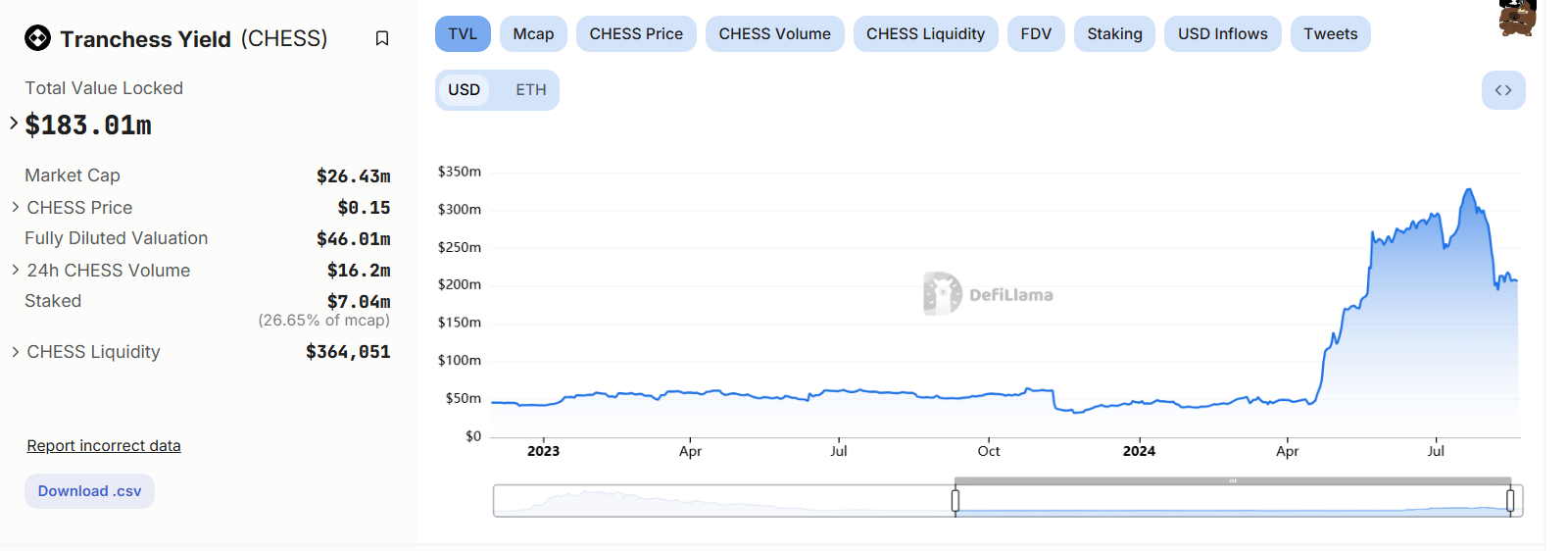
According to the latest data from DeFiLlama, as of September 2024, the TVL of Tranchess on BNB Chain reached US$183 million, a year-on-year increase of nearly 500%.
Professional Team
Tranchess's ability to survive the bear market and remain active is closely related to its professional team strength. Tranchess is composed of a team with rich blockchain and financial professional backgrounds. The core team members have rich traditional financial experience including investment banking, asset management and hedge funds.
Co-Founder Danny Chong graduated from Nanyang Technological University and has more than ten years of banking experience, including transactions, sales and management in the Asia-Pacific region.
The technical team also has extensive experience in network security for centralized exchanges and DeFi protocols, and its team members come from technology giants such as Google, Meta, and Microsoft.
DeFi protocol inspired by the concept of "Tranches"
The birth of Tranchess was inspired by the concept of "Tranches" in traditional finance. The protocol innovatively provides investors with different risk preferences with a hierarchical and multi-structured asset investment solution.
Tranchess provides two core services:
Liquidity staking service: The liquidity staking service of Transess is mainly represented by BNB Chain's staking token nQUNEE and Ethereum mainnet's staking token qETH. Taking qETH as an example, users can stake ETH on the Ethereum mainnet to obtain qETH. While enjoying the staking income within the protocol, qETH can also be used as collateral for external DeFi protocols to improve capital efficiency.
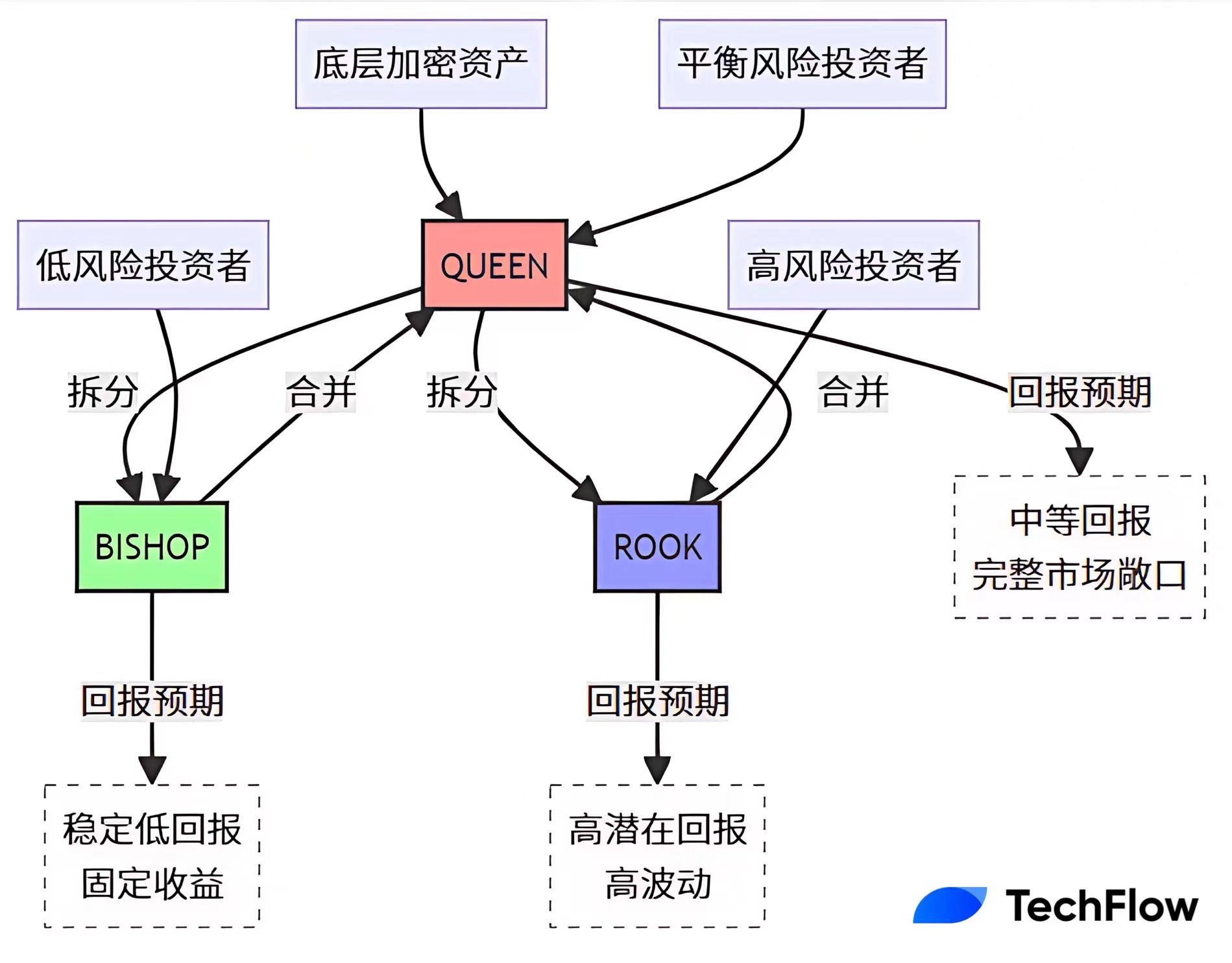
Tiered return products: Transess also provides a diversified risk-return solution based on the main fund QUEEN, splitting QUEEN into two derivative tokens, BISHOP and ROOK, according to different risk returns, aiming to meet the needs of investors with different risk preferences. Today, Transess has further optimized the product structure and upgraded it to a more flexible Turbo & Stable architecture.
There is no set formula for chess: from structured funds to Turbo & Stable
From the tiered model to Turbo & Stable, the iteration of Transchess is like a wonderful chess game, and every move is a precise response to market changes.
The first step is to adopt a structured fund with a hierarchical approach
The core innovation of the design concept of Transess is the structured design, which is to split a single asset into derivatives with different risk levels. This structure allows investors to choose the appropriate investment strategy according to their risk preferences. Specifically, Transess divides assets into three levels:
Main Fund Token QUEEN
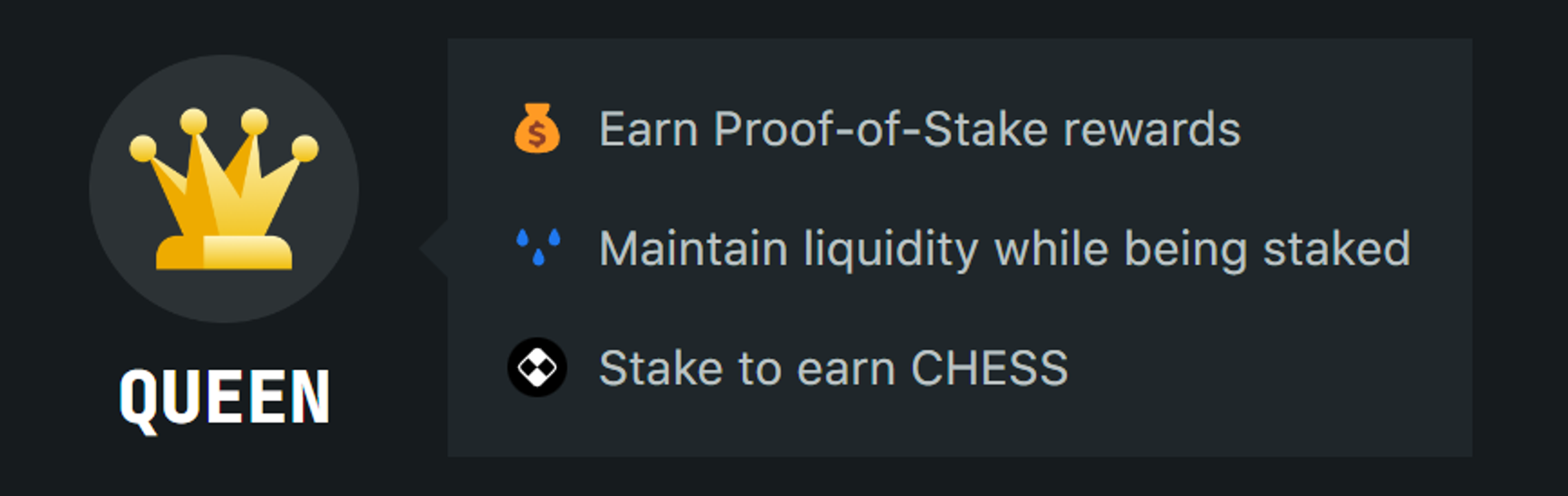
QUEEN is the base asset, pegged 1:1 to the underlying crypto asset. As the main fund unit in the entire structure, users can directly hold QUEEN to obtain full exposure to the underlying assets. QUEEN can be minted, redeemed, and split into BISHOP and ROOK. QUEEN's income sources include price changes of the underlying assets, staking rewards(if the underlying assets support staking), and protocol income distribution.
Taking BTC as an example, QUEEN holders can not only enjoy the benefits brought by Bitcoin price changes, but also earn additional CHESS governance token rewards through staking. Investors can directly exchange QUEEN with BTC, or purchase it with USDC in Transess Swap.
Derivative Tokens: BISHOP and ROOK
The two derivative tokens BISHOP and ROOK split from QUEEN represent different risk and return characteristics.
BISHOP is a fixed-income token with low risk and stable income, similar to fixed-income products. Its income comes from a fixed QUEEN yield, which is adjusted regularly by the protocol according to market conditions. BISHOP provides relatively stable returns during market fluctuations and is suitable for risk-averse investors.
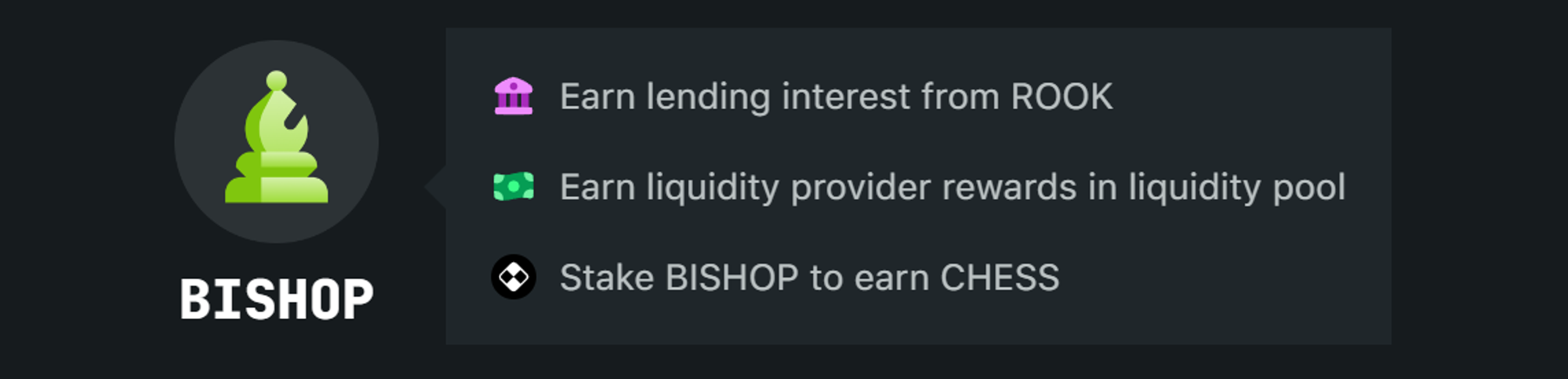
ROOK is a leveraged token with higher risk, providing leveraged returns and being more sensitive to price changes of underlying assets. ROOK's returns come from all the residual returns of QUEEN (i.e., the total return minus the portion paid to BISHOP). When the market rises, ROOK can obtain excess returns, but it also faces greater downside risks.

The structured fund design allows investors to flexibly adjust their holdings according to their own risk preferences. Investors can switch between QUEEN, BISHOP and ROOK at any time to achieve personalized risk management strategies. For example, when the market is expected to rise, you can increase your holdings of ROOK to obtain higher returns; when the market is expected to fall, you can increase your holdings of BISHOP to obtain stable returns.
The flexible hierarchical structure allows Tranchess to expand to more crypto assets in the future, providing investors with a wider range of market participation opportunities. Whether it is BTC, ETH or BNB, Tranchess has the potential to create corresponding structured products for them to meet the needs of different investors.
Turbo&Stable, tactical innovation in chess
With the launch of the liquidity staking product qETH on the ETH mainnet by Tranchess, the concept of "Turbo & Stable" has also been introduced into the product ecosystem of Tranchess.
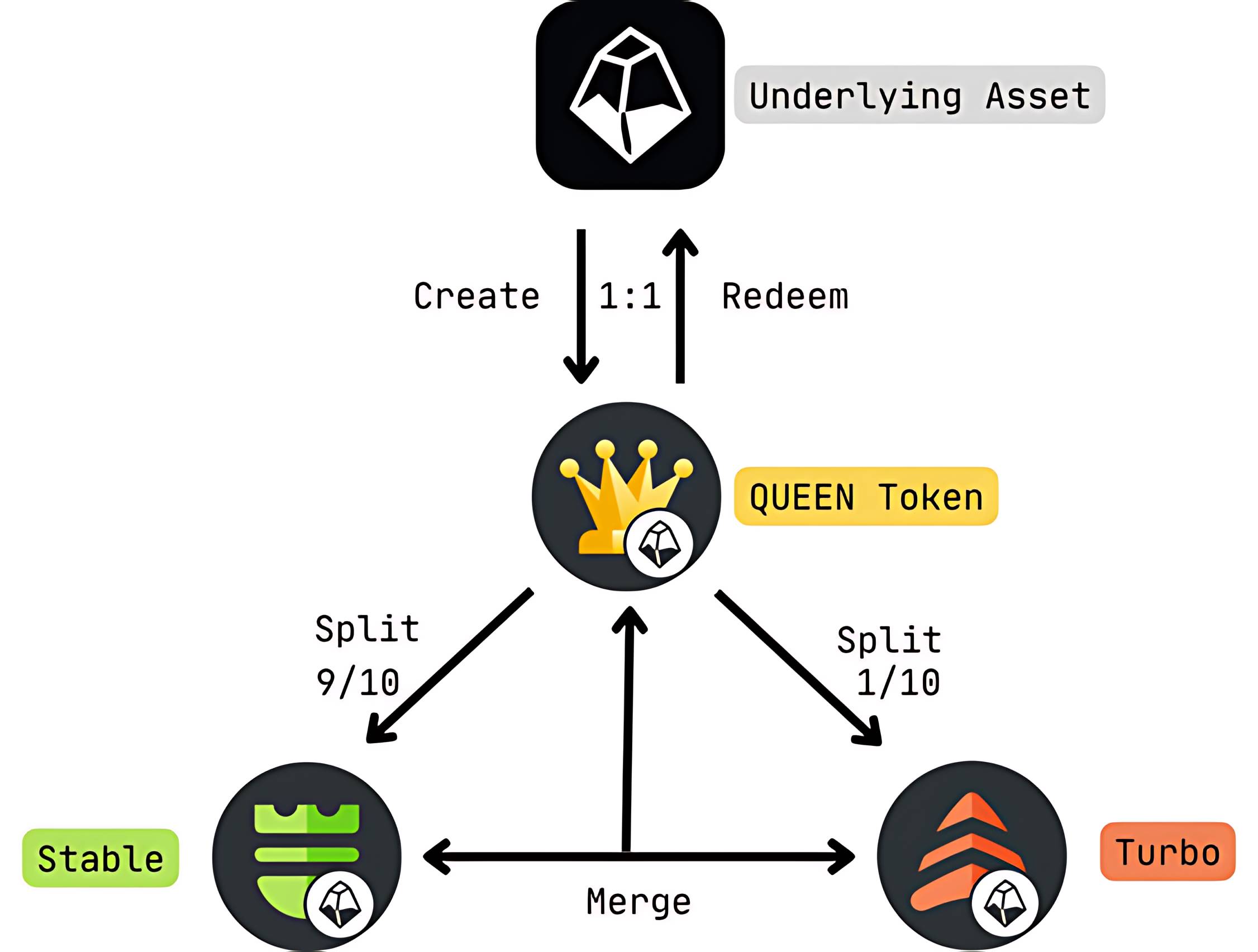
The Turbo & Stable model is essentially a subdivision and upgrade of structured funds. The concepts of Turbo and Stable can also be understood as enhanced products of ROOK and BISHOP.
Turbo (Enhanced ROOK): A high-leverage, high-yield offensive weapon
Like a rook in a chess game, Turbo products offer higher leverage and potential returns, suitable for investors who are willing to take higher risks. It is like a bold attack in a chess game, with the potential to bring significant returns, but also faces greater risks.
Stable (Enhanced BISHOP): A defensive fortress for stable income
Similar to the flexible elephant (BISHOP), the Stable product provides more stable returns and becomes the defensive core of the investment portfolio. It provides an ideal choice for investors who seek stable returns and have a low risk appetite, just like building a solid line of defense in a chess game.
Detailed explanation of Turbo&Stable, taking StakeStone's STONE Fund as an example
It is inevitable that the concepts alone are somewhat abstract. Let us take the Turbo&Stable product STONE Fund, a collaboration between Transess and StakeStone, as an example to introduce how this architecture works.
Simplify the complexities and flexibly split the two tokens
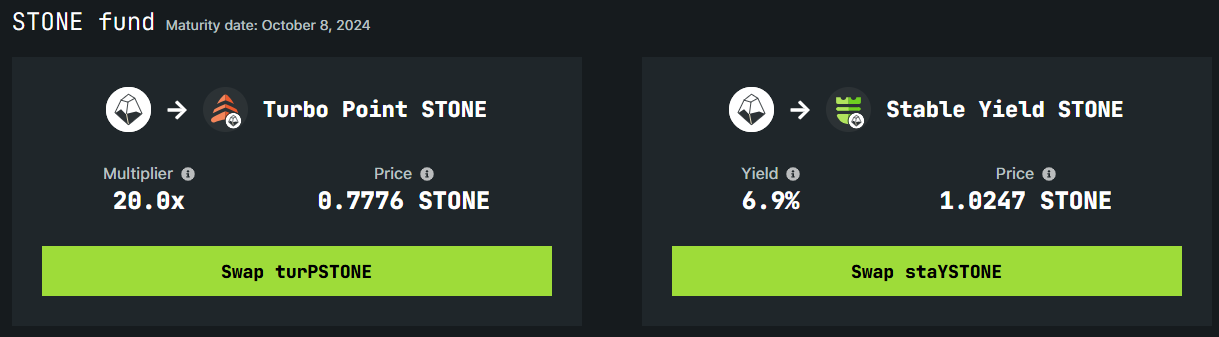
STONE The core of the fund is the token splitting mechanism based on the Turbo&Stable architecture. Users can exchange STONE for stoneQUEEN at a ratio of 1:1, and each stoneQUEEN can be split into 0.1 turPSTONE (Turbo Point STONE) and 0.9 staYSTONE (Stable Yield STONE). At the same time, this process is reversible, and users can merge 0.1 turPSTONE and 0.9 staYSTONE back into 1 stoneQUEEN.
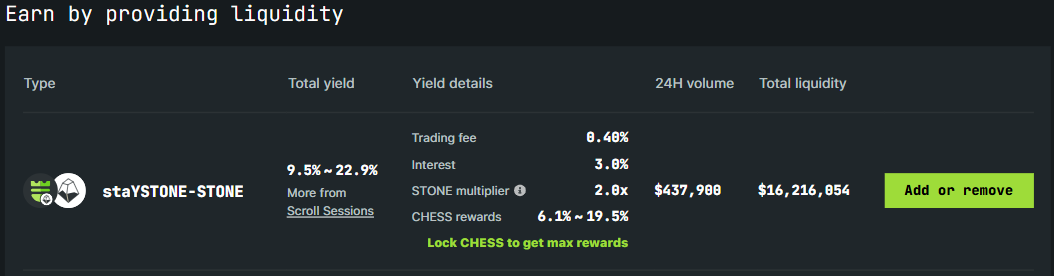
staYSTONE-STONE LP Diverse Income
Tranchess also introduced the staYSTONE-STONE LP token to provide additional income opportunities for ecosystem users.
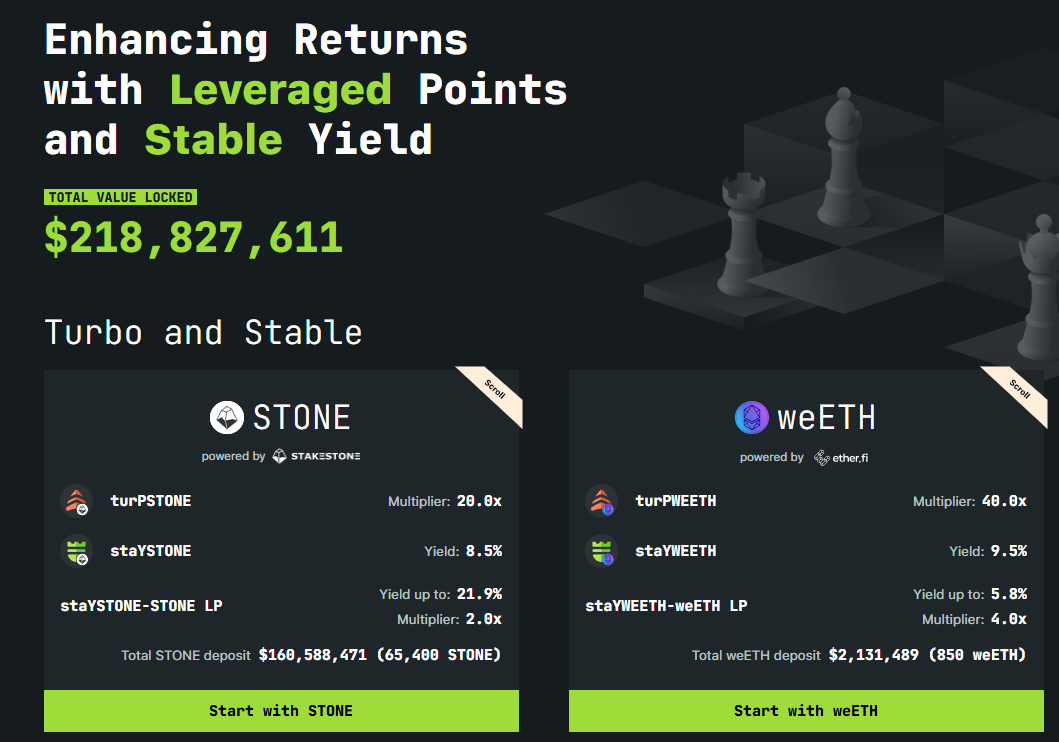
These LP token holders can not only obtain CHESS tokens and 0.05% transaction fee rewards, but also enjoy part of the staYSTONE interest and a 2x StakeStone points multiplier (for the STONE part of the LP). In addition, Transess provides an additional reward of 150,000 CHESS per week to the LP of the STONE fund.
Different points rewards and revenue structures
The total staking period of the Tranchess STONE Fund is 6 months, which will end on October 8, 2024. At that time, different types of tokens can be exchanged back to STONE according to their fair value. At the same time, Tranchess allows STONE holders on Scroll to earn Scroll Marks points while earning StakeStone points.
stoneQUEEN can be exchanged with STONE at a 1:1 ratio, and holding stoneQUEEN can earn the same multiple of StakeStone points as holding the same amount of STONE. However, splitting stoneQUEEN into staYSTONE and turPSTONE and holding both at the same time can earn a 2x points multiplier without loss, and at the same time earn Scroll Marks points based on the value of holding.
turPSTONE not only has a 10x fixed leverage, but also can obtain a 2x points multiplier of StakeStone, that is, it can obtain 20x StakeStone points in the end. Excluding the cost of paying a fixed interest rate to staYSTONE at the end, when the fund expires, turPSTONE: STONE < 1
staYSTONE provides investors who seek stable returns with a fixed annual interest rate of 6%, but there is no StakeStone points reward. Scroll Marks points are awarded based on the holding value. When the fund expires, staYSTONE: STONE>1
In addition, Transess will charge a 3% fee from the points obtained from the Turbo & Stable fund products as additional income and distribute 100% to veCHESS holders , thereby increasing the rate of return for veCHESS holders.
PS: The exchange ratios of turPSTONE, staYSTONE and STONE shown in the article are roughly estimated. The exact ratios will be announced based on the specific fair value and when the fund is close to closing.
Good and fast, precise architecture that can be quickly replicated
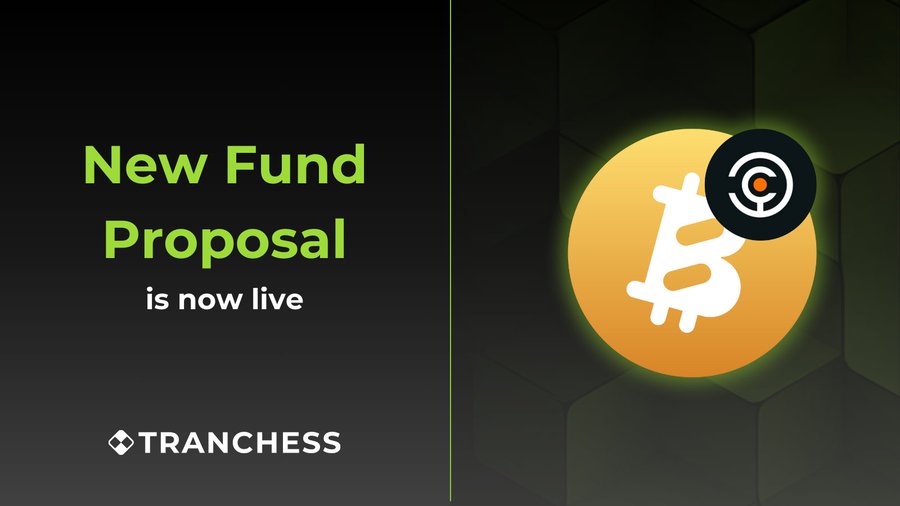
Not limited to the STONE fund, the currently launched Turbo&Stable products include the weETH fund launched in cooperation with eth.fi, the Staked ETH fund in cooperation with LIDO, SolvBTC in cooperation with SOLV, slisBNB in cooperation with Lista DAO, and the recently launched SolvBTC.BBN fund.
Turbo&Stable not only provides a variety of revenue-generating gameplay, but also supports the rapid launch of any LST narrative chain, and can also flexibly cooperate with the income changes of corresponding assets, such as the recently launched SolvBTC.BBN, which is the project with the most BTC pledged in the early stage of the Babylon ecosystem and is currently the LRT with the most Babylon points income. As another part of user income, this advantage will also be retained in the structure of Turbo&Stable, fully reflecting the flexible characteristics of this sophisticated architecture of "good and fast".
Tranchess's key chess: CHESS & veCHESS
Recently, CHESS, which was launched on Binance contracts, has attracted attention again. As the governance currency of Transess, CHESS and veCHESS are not only the key link connecting the entire Transess system, but also their own value grows together with the project itself.
Governance Token CHESS
The total supply of CHESS is 300 million. In addition to direct purchase, users can also obtain CHESS in a variety of ways, mainly including participating in liquidity mining or staking QUEEN, BISHOP, and ROOK tokens to obtain CHESS.
After the lock-up was converted to veCHESS, CHESS was able to unlock various use cases in the ecosystem: veCHESS has governance rights such as voting, weekly protocol dividends, and 3% Turbo & Stable points income.
In addition to liquidity and governance functions, CHESS currently also supports cross-chain transactions among BNB Chain, Ethereum and Scroll.
Lock-up transformation, veCHESS is launched!
Lock CHESS Exchange
Users can choose to lock CHESS for a period ranging from 1 week to 4 years. The redemption ratio also increases linearly according to the lock-up period. The specific calculation method for the number of veCHESS is the number of CHESS multiplied by the lock-up period (in years) divided by 4.
For example, 100 CHESS locked for 4 years will get 100 veCHESS, while 100 CHESS locked for 2 years will get 50 veCHESS. At the same time, the amount of veCHESS will decrease linearly over time, but users can increase the veCHESS balance by increasing the lock time or amount.
Tranchess also supports locking CHESS in batches, and each lock will create a new lock position. For easy management, users can merge multiple lock positions into one.
Layers of additional benefits
In addition to the 3% point income return of the Turbo&Stable fund product mentioned above, veCHESS holders will also receive 50% of the weekly income of the Transess platform as an additional staking rewards, and the other 50% of the income will go into the Treasury.
Continuously enriching governance rights
Users holding veCHESS can participate in various important decisions of the Transess platform. The voting weight is proportional to the amount of veCHESS held, ensuring that users who have a long-term commitment to the platform have a greater say in the decision-making process.
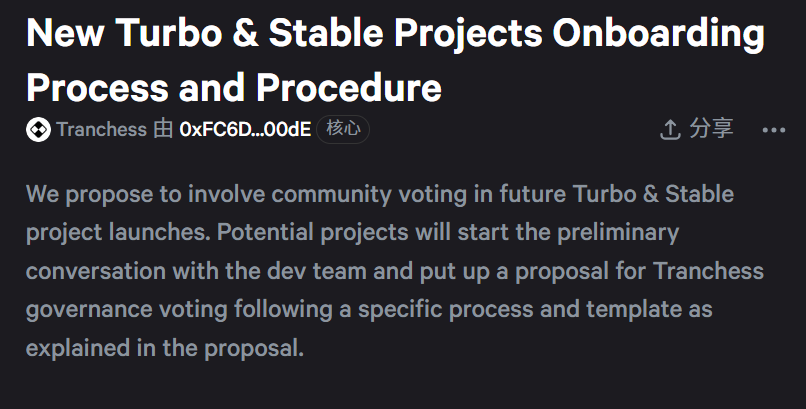
The governance proposal 9 recently passed by the Transess community proposes that the voting governance rights of veCHESS can be extended to the decision-making layer for the launch of all new Turbo&Stable projects in the future. This proposal further expands veCHESS's use cases while demonstrating the future potential of the Turbo&Stable architecture to be quickly replicated.
The value gap beneath the hot spot?
As the exploration of the Tranchess ecosystem deepens, it can be seen that CHESS is not only a simple governance token, but also the core value carrier in the Tranchess ecosystem.
The veCHESS obtained by locking CHESS not only brings rich profit sharing, but also gives holders the power to participate in major decisions of the platform. The dual attributes make CHESS an extremely attractive value storage and value-added tool.
With the continuous growth of the platform's TVL, the official launch of perpetual contracts, and the upcoming expiration of several Turbo & Stable fund products, CHESS is likely to be at a value point. The profit potential of veCHESS may be sufficient to cover the current market's price perception of CHESS. The true potential value of CHESS is not limited to the market's hype expectations for the DeFi sector and the short-term "lottery mentality" of a single token being listed, but rather long-term, value-supported product returns.
Only by bringing forth the new from the old can we win half the battle
From structured funds to Turbo&Stable architecture, veteran player Transess has always maintained excellence and flexibility in the fiercely competitive DeFi track, providing more solutions for various ecosystems while ensuring diverse returns for users, and implementing a true DeFi Native style.
Tranchess's development trajectory proves that only by innovating and always maintaining the critical "half-piece" advantage can we be invincible in the game of encryption.