


The two most influential people in the AI field appeared at the same event:
OpenAI CEO Ultraman hinted that the full-blooded version of o1 will be released in the next few months.
Nvidia founder Jen-Hsun Huang said that the new generation of Blackwell architecture GPU can speed up o1 reasoning by 50 times.
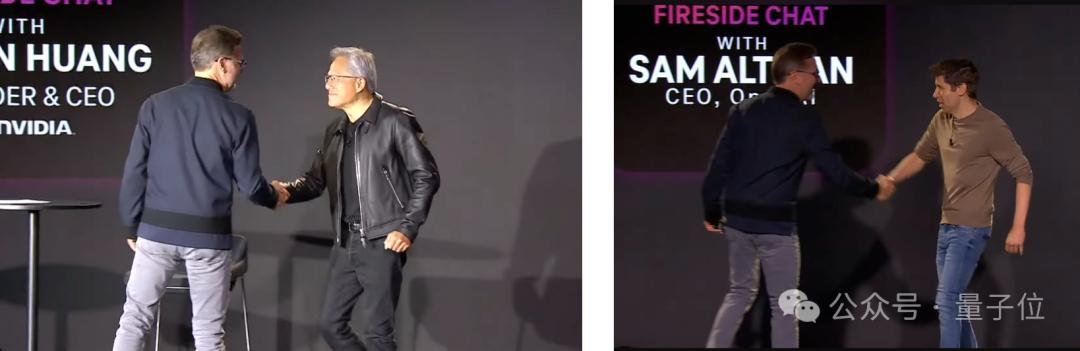
Altman compares the position of o1 in the reasoning model to the GPT-2 stage in the language model.
It will be a few years before people see the “GPT-4 of reasoning models,” but there will be major improvements in the last few months, and the progress curve for the new paradigm is very steep.
L2 “reasoners” are very different from L1 “chatbots”, and we haven’t figured out how to use these models yet, nor have we decided what features to add to the app.
But what’s most exciting is that L3 “intelligent agents” will come very soon.
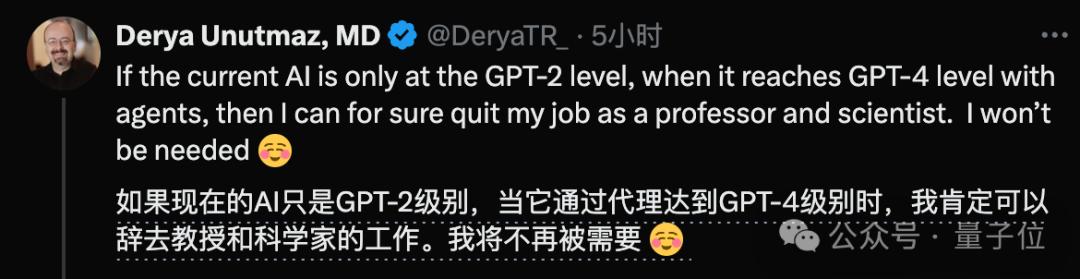
Some medical professors have considered resigning after seeing this.
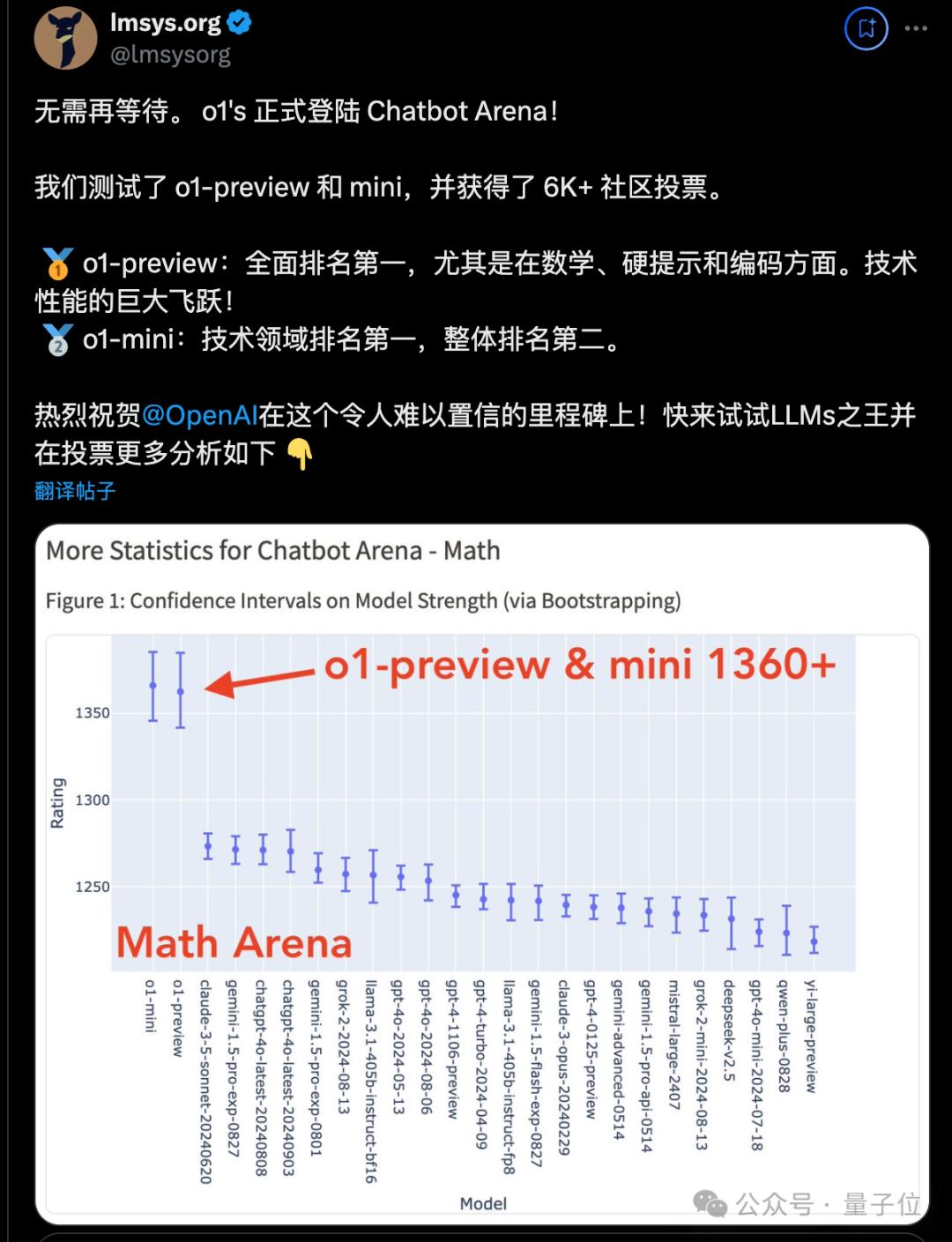
The o1 series officially entered the Lmsys large model arena. In the first score calculation, it took a cliff lead in the math task . The only drawback was that it was a bit slow in answering.
In this regard, Lao Huang's opinion is:
Nvidia's latest Blackwell architecture GPU improves inference performance by 50 times, which means that the response time of the o1 model can be reduced from several minutes to a few seconds.
The above content comes from T-Mobile's Capital Markets Day. T-Mobile has just signed a big deal with OpenAI to jointly build an AI-supported customer service system.
However, at this event, in addition to the cooperation between several companies, the two industry leaders also shared more noteworthy content around the present and future of AI.
As for how O1 performs in tasks other than mathematics and code, please see the following precise translation of the original text, which was led by O1 and assisted by Quantum Bit.
Altman: The secret of OpenAI is belief and focus
Host: I would like to first congratulate you on the launch of the o1 model. Perhaps you can introduce this new model to the audience because it is really amazing.
Sam Altman: Yes, we are very excited about this, and this is what we have been working on for a long time. The GPT series of models are great for "System 1" type thinking, but what we really want is a system that can reason.
If AI can solve more complex problems, the value will be huge. You've seen some of this in the GPT-4 model, but o1 is truly the first system that can do high-level reasoning. Whether it's a complex programming challenge, a math problem, or a scientific puzzle, you can get really extraordinary results. We believe that over time this will be as important as the GPT series and unlock a range of new and valuable application scenarios.
Host: You have publicly stated that what we are seeing now is a preview and it will iterate rapidly. What will happen in the next few months?
Sam Altman: I think the new reasoning model right now is similar to what we had with GPT-2. You'll see it evolve to a level comparable to GPT-4 over the next few years. Even in the next few months, you'll see significant progress as we move from o1-preview to o1 official.
I think one of the interesting things about these moments of new paradigms is that the improvement curve is very steep. Some problems that the model can't solve today may be solved in a few months, and more in a few months. On top of that, we're going to see a whole new set of ways to use it, not just in chat interfaces. It's going to take us some time to build these features, it's going to take time for other people, and it's going to take time for users to adapt. This is very different from the GPT model.
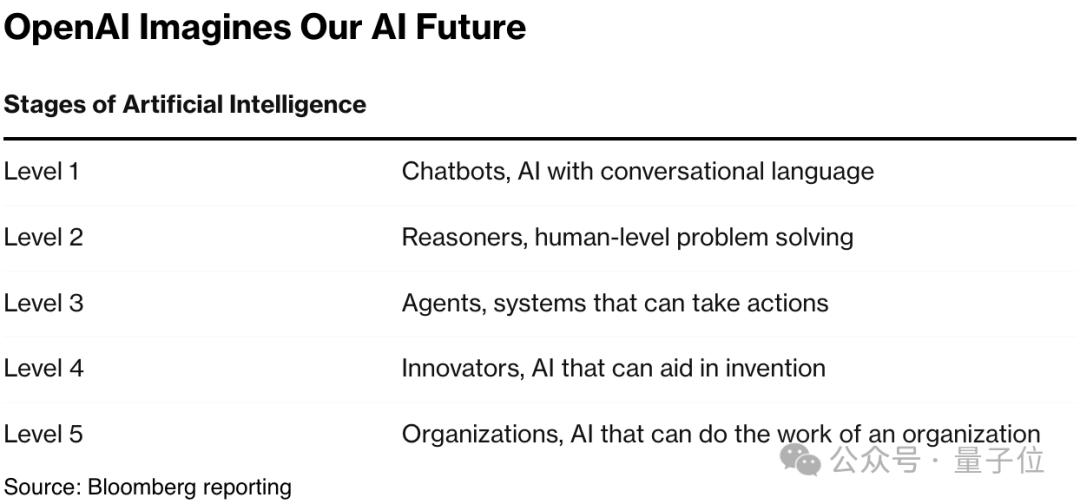
We talk about the five levels of AI: L1 is the ChatBot, L2 is the Reasoner, which we just reached, L3 is the Agent, L4 is the Innovator, which is able to discover new scientific information, and L5 is the complete Organization.
It took a while to get from L1 to L2, but I think one of the most exciting things about L2 is that it enables L3 relatively quickly, and we expect the agents that this technology will ultimately enable will be very impactful.
(Omit a paragraph of commercial praise)
Moderator: Changing the subject a little bit, why is OpenAI ahead? What are you doing differently in this field that allows you to develop these models at such a speed?
Sam Altman: First of all, thank you for the compliment, it's a very nice comment. We're building on a lot of previous work, AI is an old field, people have been contributing very good ideas to it for a long time. Think about all the work that people have done throughout human history to discover semiconductors, make chips, build networks and these large data centers, and we're just doing our own small part on top of that.
But we try to do the best we can, and we try to have a very focused research program. I think one of the mistakes other research programs make is that they don't have enough conviction and focus. Once something works, it's very easy to replicate it.
So I think the two ways to be successful is to either be a great fast follower and copy what OpenAI or other successful companies have done, and I don't say this in a negative way because I think there are a lot of companies that just wait to see what works and then do a really good job of improving and executing on that.
Either you try to push the frontier, which is very difficult and requires conviction and focus across many people in a complex environment, that this is the best way to move forward. That's what we try to do.
We really believe in deep learning, we really believe in the path from where we are now to AGI and beyond, but we are willing to correct based on what we learn along the way. We will continue to work on the next thing with the best of our ability and believe that this will have a welfare effect over time.
This really works for us, it's that simple.
Huang Renxun: Young people will have robots that will accompany them throughout their lives
(Omit a long paragraph of commercial promotion and T-mobile business content)
Moderator: We just talked to Sam Altman about the rapid development of AI, and one of the things is that AI requires extremely low latency and fast response time. Because AI is moving from traditional text forms to real-time response to video, facial expressions, and interaction with virtual images, which requires extremely high response speeds. Future AI workloads will require computing power in the network close to the customer.
Huang: Exactly. We are now fusing radio computing and AI computing into one architecture. The computer we built has extremely low latency, CUDA also has extremely low latency, and can handle time-sensitive transactions, everything you need to provide high-quality voice services.
What people don't realize is that the wireless networks around the world are very redundant. They are redundant because they have to provide a very high quality of service when someone needs it. But when no one needs it, that infrastructure is idle and can be repurposed.
So when we make it software-defined, accelerated, able to handle AI, we now transform the entire network into excess capacity that can be used for other opportunities when needed. This will be a huge new growth opportunity for the telecom industry.
Host: I love it. We have a few minutes left, so before we let you go, let's switch gears and talk about something you're excited about.
NVIDIA has an incredible perspective because of all the people at the forefront of AI working with you. When you think about how the most transformative technology of our lifetime can really change people's lives, what excites you? How do you think AI will impact all of us?
Huang: We will all have a whole army of digital assistants working with us. I really like the idea that I will have a computer that works with me over time, gets smarter and smarter, understands me, helps me get things done. I love that I will have my own R2-D2 and my own C-3PO.
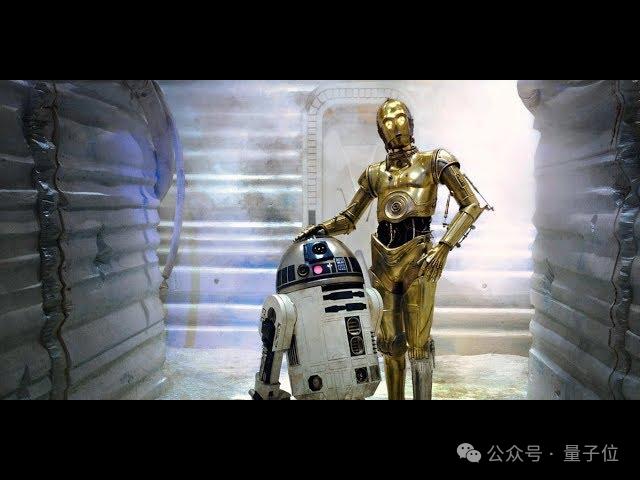
My R2 will always be with me. For many young people, they will have their own R2 that will accompany them throughout their lives. That R2 can be a digital version or a physical version. Everyone can have one, whether you are a scientist, an engineer, a philosopher, or just an ordinary person, we will have these amazing assistants to help us get through life.
(Musk also went to the comment section to agree with Huang's view on robots.)

Huang: Recently, Sam made a point that these AIs will become smarter in their reasoning capabilities, but this requires more computing power. Currently, each prompt in ChatGPT is a path, and in the future there will be hundreds of paths internally. It will reason, do reinforcement learning, and try to create better answers for you.
That's why we've improved inference performance by 50 times in our Blackwell architecture. By improving inference performance by 50 times, that inference model that might take minutes to answer a particular prompt now, can respond in seconds. So that's going to be a whole new world, and I'm excited about it.
Moderator: How do you view the changes in energy consumption? This is one of the most concerned aspects of AI, namely the carbon footprint.
Huang: We have to use AI to reduce energy consumption. We now know that we can be 10,000 times more energy efficient than using traditional supercomputers to do climate and weather forecasting. Moore’s Law has really come to an end, and we have to use a new approach to solve these calculations.
An example I give is that my pet dogs don't understand Newtonian physics, they don't understand what trajectory a ball will take. As we know, the world's first supercomputer was created to simulate the trajectory of a missile. However, dogs, after some practice, can easily catch a ball out of the air, sometimes in the middle of a somersault. So how do they do it? It's the same idea.
So we're going to teach AI not to calculate the weather through physics, dynamics, fluid dynamics, whatever, but we're going to teach it to predict. It may not fully understand cause and effect, but it's very good at predicting. We just want to know what the weather is going to be like tomorrow. That's one example. We want to do the same thing with radio networks. We understand the basic physics of electromagnetism, how radio beams reflect, refract, how they deal with different environments, the physics of beamforming.
However, when you operate a network, you are just trying to provide better quality of service with lower energy consumption, higher throughput, and lower cost. Therefore, you don’t need to simulate the underlying physics in real time, you can just use AI to do it. This principle of simulating by understanding first principles and then using AI to simulate this fundamental understanding can greatly reduce energy consumption.
People need to realize that training models does take a lot of energy. However, the goal is not to train the model, the goal is to use the model, which will save a lot of energy.
One More Thing
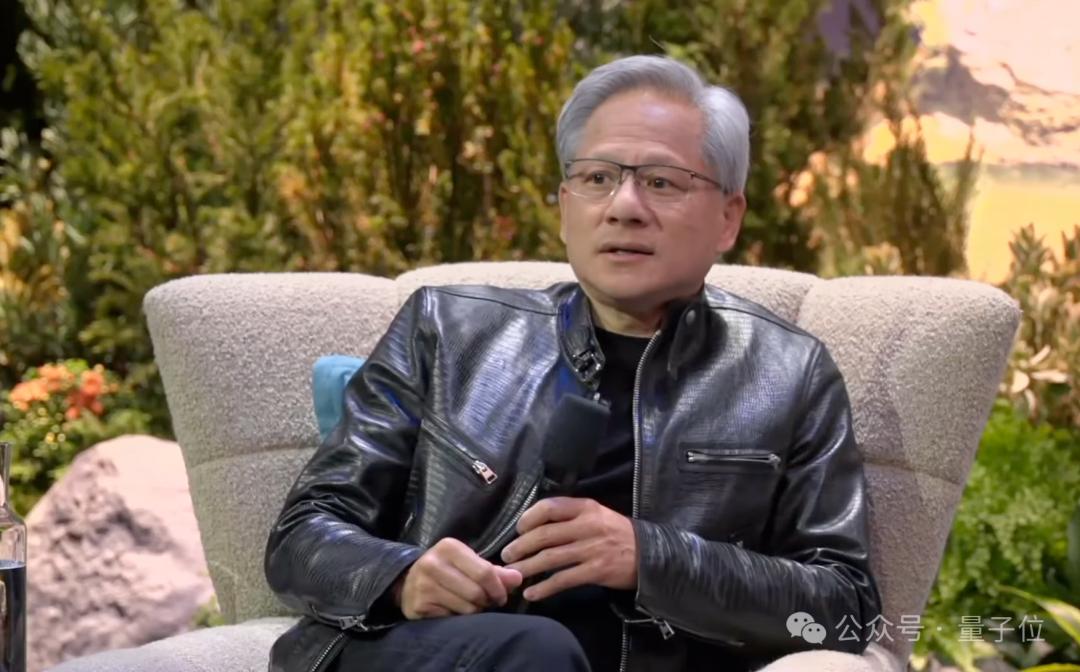
At another event held by Salesforce during the same period, Huang Renxun also shared this view:
Technology has entered a positive feedback loop, and AI is designing the next generation of AI, with the rate of progress reaching the square of Moore's Law.
This means that over the next one to two years we will see amazing, unexpected progress.
Video playback: https://www.youtube.com/watch?v=r-xmUM5y0LQ&t=5145shttps://www.youtube.com/watch?v=kfe3ajUYSdc
This article comes from the WeChat public account "Quantum Bit" (ID: QbitAI) , author: Meng Chen, and is authorized to be published by 36Kr.






