
Nearly a month ago, Sister Sa’s team heard an astonishing and shocking news from an old friend in the circle: several core team members of “Fei Xiaohao”, a well-known data information aggregation platform in the crypto, were criminally detained by the police in a certain place in Inner Mongolia, and the specific charges were unknown.
Sajie’s team is not the lawyer handling this case, so the specific circumstances are not clear, but once this incident happened, it still caused quite a stir in the mainland’s crypto world - this may mean that my country’s supervision of crypto assets has broken through a previous invisible boundary and officially extended its tentacles to the edge of the industry.
Today, Sister Sa’s team will combine the existing information with the supervision of judicial practice to explain in detail the “non-small number” incident and the possible regulatory direction thereafter.
01Why is the crypto data information aggregation platform involved in criminal cases?
To be honest, in the long-term legal practice, the Sajie team mainly serves: (1) crypto asset trading platform service providers; (2) currency traders; (3) crypto asset traders, etc. In short, they are mainly practitioners who directly contact crypto asset transactions. For third-party transaction data and information aggregation platforms such as the crypto, digital collections, and NFT, the Sajie team is more likely to cooperate, and most of the activities are knowledge sharing and legal education.
In most cases, for platforms that merely provide this type of information, it is very rare for them to be suspected of committing a crime, or even to violate my country's administrative regulations.
Therefore, in the public eye and the crypto asset circle’s perception, “practitioners who do not directly contact crypto assets face lower legal risks” is an invisible regulatory line, and things outside this line are less strictly regulated.
So why was "feixiaohao" taken away by the Inner Mongolia police? Did the supervision break through the invisible boundary or was there something else going on? The Sajie team summarized some of the news that they have so far, which is not sure whether it is true or not.
There are some not so reliable news that the founder of Feixiaohao lost money in gambling overseas and tried to repay the debt by selling Feixiaohao, but improper operations during the transaction may have triggered related legal disputes. After the third party filed a criminal complaint, the police intervened.
There are also sources saying that the reason why the core team members of "Fei Xiaohao" were taken away was mainly because around 2017 and 2018, my country's lax ICO supervision led to the simultaneous issuance of tens of thousands of coins. Many air coin project parties found "Fei Xiaohao", which was already very well-known in the circle at the time, and promoted their own projects through paid promotion.
For example, in November 2021, Feixiaohao vigorously promoted a project called "Squid Game". As a result, a large number of investors became "leeks" on this project. The price of the coin dropped from the highest point of 2,861.8 US dollars to zero. The subsequent projects have not been completed yet. No one covered the losses of investors, and the project owner ran away. Feixiaohao has previously paid to promote projects similar to "Squid Game". According to information provided by a third-party insider, it cost about 200,000 yuan at Feixiaohao to be able to promote the coin.
Finally, it is worth mentioning that "Fei Xiaohao" may have issued its own platform currency, which is suspected to be called BQT. However, the official "Fei Xiaohao" has never denied that it has any connection with this project.
In general, apart from the first and relatively vague situation, it is actually possible that the second and third situations may lead to criminal consequences for “non-small accounts”.
02What kind of crime does paid promotion on crypto information aggregation platforms constitute?
From a personal perspective, the Sajie team believes that if the criminal detention of the core team members of "Fei Xiaohao" is related to their business, it is likely because they promoted problematic coins or other crypto asset projects. In other words, "Fei Xiaohao" is likely to be heavily implicated in the project parties involved in the criminal case due to promotion sharing or other issues, or it may have provided a lot of substantial help (such as deep participation in market making) in the promotion of the projects of the projects involved in the criminal case.
Such behavior may very likely lead to crypto information aggregation platforms such as "Fei Xiaohao" being identified as accomplices of criminal offenses by judicial authorities.
Taking the Squid Game project mentioned above as an example, the white paper of the Squid Game Squid Coin project shows that the project is a virtual currency game earning platform issued on the BSC public chain, inspired by the Korean hit drama of the same name released by Netflix. The founders of the Squid Game project and Squid Coin also publicly declared that the Squid Game project is Netflix's official token partner and has established a strategic partnership with the virtual currency platform Coingecko to jointly issue coins. In the following week, the highest increase of Squid Coin was 2,300 times, and the price reached US$2,861.8, but it collapsed directly in a short period of time, and many investors suffered huge losses and had nowhere to turn.
Later, Bobby Ong, co-founder of CoinGecko, said: Squid Coin does not meet the listing standards of the platform, so this kind of coin will not be listed and traded on Coincecko. In fact, when Squid Coin was at its peak, it was basically traded on a platform called Pancakeswap. It can be seen that the Squid Game project may have lied on some key issues that were important to the decision-making of marketing investors.
According to Article 266 of my country's Criminal Law, this behavior is suspected of constituting the crime of fraud.
The crime of fraud refers to the act of defrauding public or private property in large amounts. In judicial practice, the elements for a suspect to be guilty of fraud are as follows:
(1) The criminal suspect has the intention of illegally possessing other people’s property;
(2) The criminal suspect objectively committed a "fraud" act, which is generally an act of "fabricating facts" or "concealing the truth";
(3) The victim was misled by the fraud committed by the suspect and disposed of his own property and suffered property losses.
Assuming that the actions of the Squid Game project constitute fraud and a large number of victims are Chinese citizens, then "non-small accounts" are an important driving force in causing "the victims to fall into a wrong cognition due to the fraudulent actions committed by the suspects" during the paid promotion of Squid Coin, and provide substantial assistance to the Squid Game project's actual criminal behavior.
In other words, although "Fei Xiaohao" is not the principal offender, he is likely to be identified as an accomplice by my country's judicial authorities.
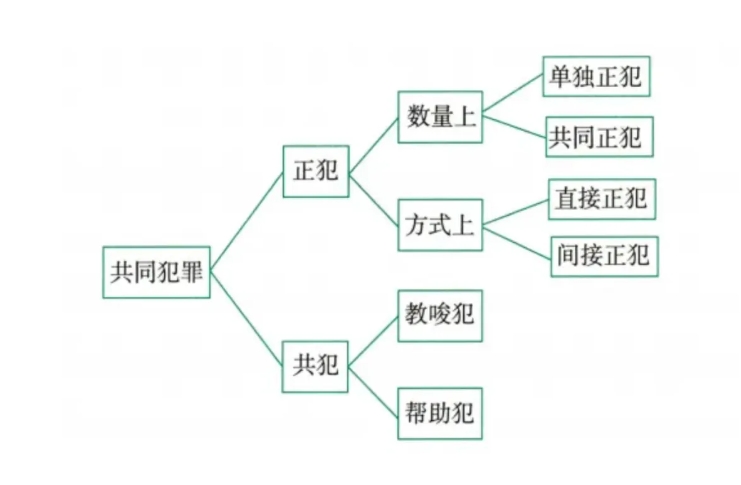
The so-called joint crime refers to a crime committed intentionally by two or more persons. In addition to classifying the perpetrators as principals and accomplices based on their roles in the joint crime, the perpetrators can be divided into principals and accomplices based on their roles in the joint crime. The principal offender refers to the criminal who directly participates in completing the constituent elements of the crime; the accomplice includes the accomplice (the person who provides assistance to the crime) and the abettor (the person who abets others to commit the crime).
03 If the project party involved uses it as a tool, does paid promotion on the crypto information aggregation platform still constitute a crime?
In any case, crimes such as fraud and other illegal fundraising crimes require that the suspect has subjective intent to commit the crime. From the perspective of accomplices and accomplices, the core team members of "non-small accounts" need to have a certain degree of subjective awareness of the criminal behavior of the project party. This level of awareness cannot be too low, otherwise it cannot be determined that there is a common criminal intent between them and the suspect.
In practice, judicial authorities need to make a judgment on the subjective cognition of the crypto information aggregation platform based on its objective behavior. We cannot rule out the existence of platforms that are purely used as tools by the project parties involved in the case and mistakenly promote air coins. Therefore, before listing and promoting coins, the crypto information aggregation platform’s internal control and risk control systems are critical to its behavior in evaluating the project parties and the projects themselves and the evidence it retains.
If the crypto information aggregation platform is simply used as a tool by the project party involved in the case, then the Sajie team believes that such behavior cannot be identified as an accomplice of the coin issuing project party. Of course, if it is a paid promotion, it is extremely difficult to prove that it is purely being used in practice.
04 Conclusion
The Sajie team believes that judging from the "non-small account" incident alone, it is not quite accurate to say that China's supervision has broken through the invisible boundary and taken action against the "water sellers" in the crypto asset industry. After all, those who have experienced the bull market in the crypto around 2017 know that many so-called "water sellers" may have other things hidden in their bags. If it is indeed because of the project party's problems, the risk spillover caused by the paper cannot cover the fire, then it is not impossible for the "water sellers" to be affected.
All in all, there are many different opinions on the "non-small account" incident. Sister Sa's team can only make a judgment based on the existing information. We'd better let the bullet fly for a while.