In this increasingly digitalized era, our identity information seems to be divided into two worlds: the real-world us, and the online us. And there is often an insurmountable chasm between these two worlds. How can we prove "I am who I am" in the digital world while protecting our privacy? How can we make our digital identity both secure and convenient? How can we resist the endless fraud and attacks in the ocean of Web3?
With these questions in mind, let's dive into the world of Humanity Protocol and see how this ambitious project is trying to build a bridge between the real world and digital identity.

I. Introduction: The Dilemma of Digital Identity
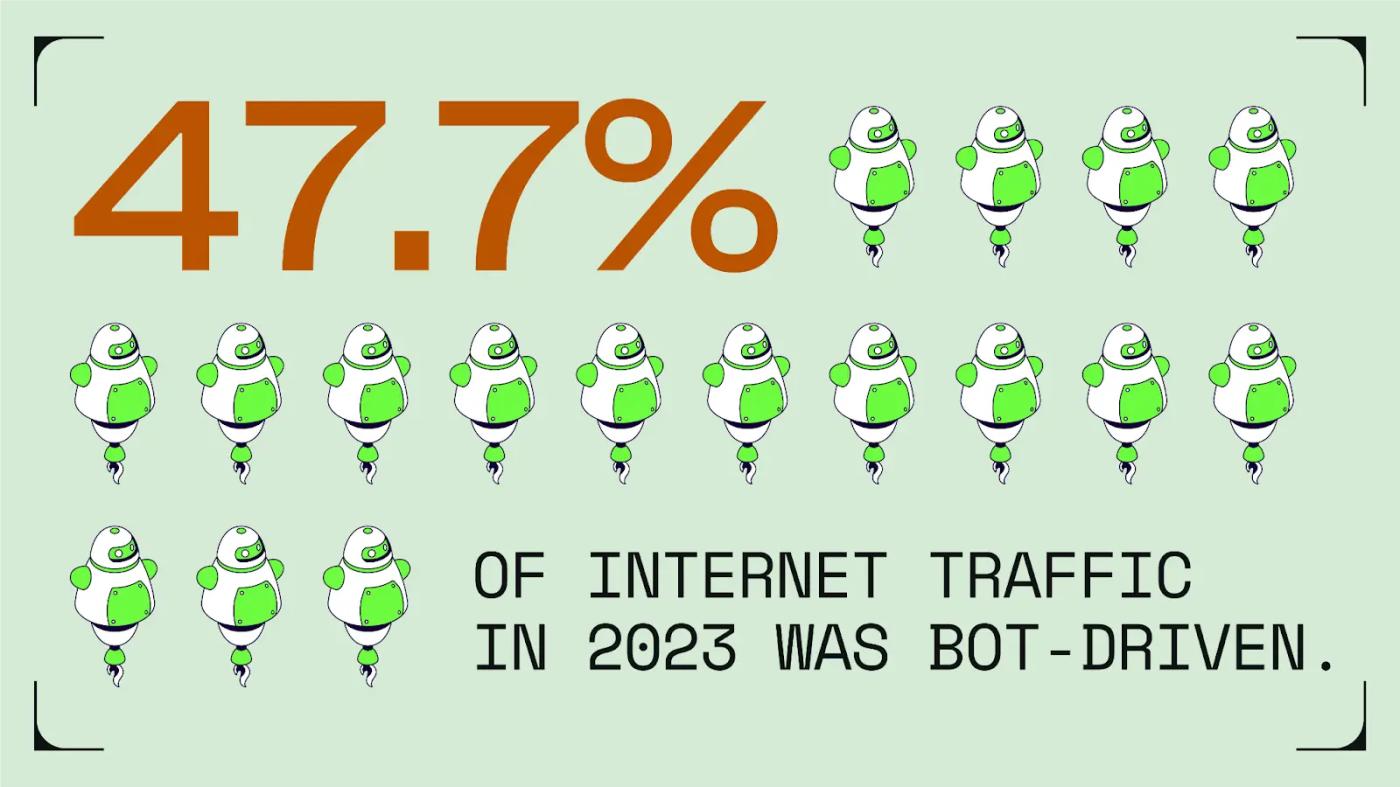
Imagine you are about to make a large transaction on a decentralized exchange (DEX). You carefully check the contract address and confirm the transaction details, everything looks perfect. But just as you click "Confirm", a terrible thought crosses your mind: "What if this is a carefully designed scam? What if the other party is not who they claim to be?"
This scenario may not be unfamiliar to many Web3 users. In a world dominated by anonymity, trust has become a scarce resource. And this is the core problem that Humanity Protocol is trying to solve.
II. What is Humanity Protocol?
Humanity Protocol is an ambitious Web3 project aiming to create a truly Sybil-resistant blockchain network. Its core goal is to provide developers with a unique human identity verification mechanism, while empowering users with full ownership of their data and identity.
So, how does it achieve this goal? The answer lies in the palm of our hands - literally.
Palm Vein Recognition: The Fingerprint of the Digital World
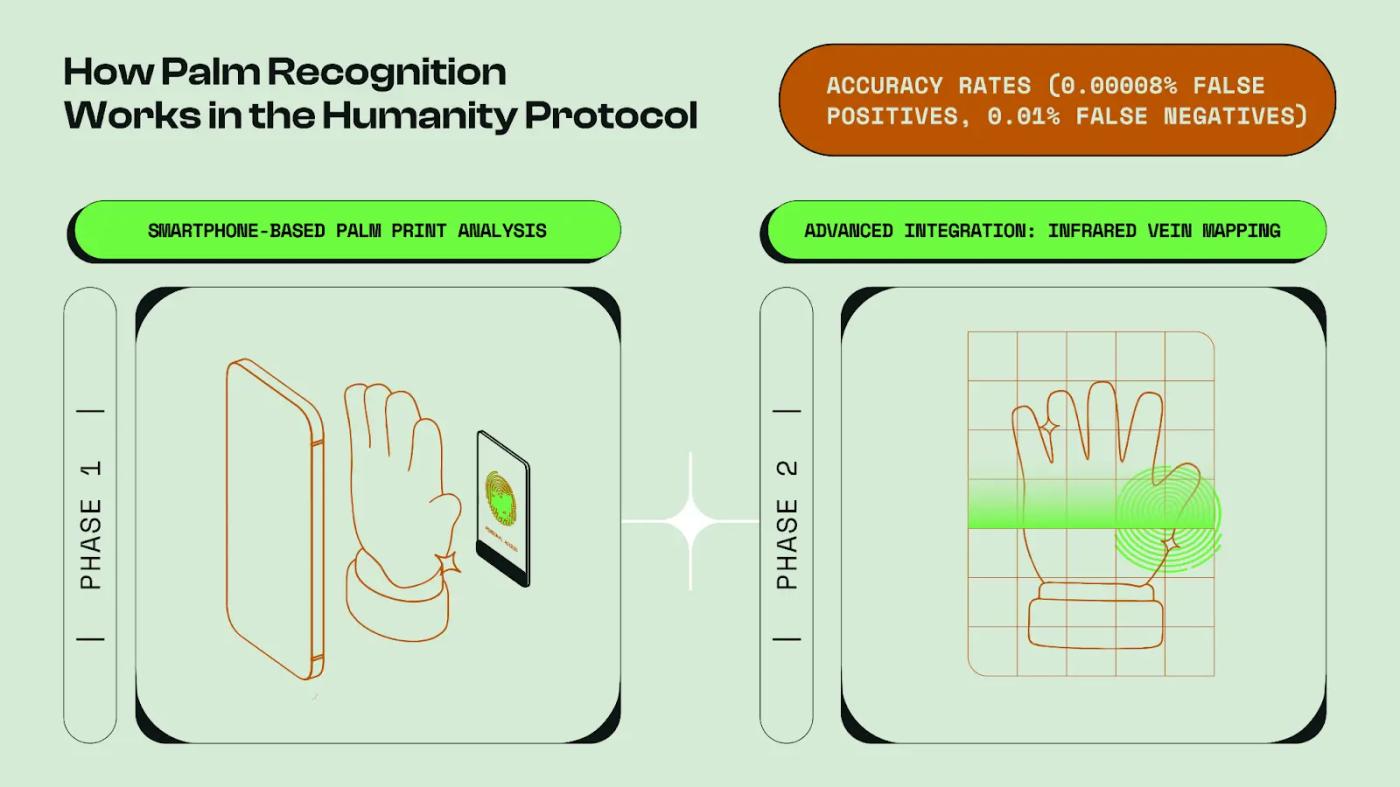
Humanity Protocol adopts an innovative palm vein recognition technology as the core of its identity verification. Compared to traditional fingerprint identification or the controversial iris scanning (as used by Worldcoin), palm vein recognition provides a less intrusive and more privacy-preserving alternative.
Even better, this technology can be easily implemented through ordinary smartphones. This means that anyone with a smartphone can participate in this system, significantly lowering the barrier to entry.
Two-Stage Verification: The Perfect Balance of Security and Privacy
Humanity Protocol's identity verification process is divided into two stages:
Building the Human Layer of Web3: This stage uses palm vein recognition technology to create a unique biometric signature for each user. This not only solves the challenge of large-scale verification of human uniqueness, but also ensures that each user's signature is one-of-a-kind.
Human Verification: The second stage introduces a complex identity verification consensus mechanism. Verifiers perform the verification process off-chain and then upload the standardized results to the chain, without exposing sensitive personal information. This approach ensures the accuracy of the verification while protecting user privacy.
Through this two-stage approach, Humanity Protocol achieves an unprecedented level of accuracy and reliability, while also protecting user privacy.
III. Why Participate in Humanity Protocol?
The current Web3 world faces many challenges, and Humanity Protocol is dedicated to solving these problems:
Sybil Attacks: Humanity Protocol's unique palm vein recognition technology creates a unique biometric signature for each user, effectively preventing one person from having multiple accounts.
Identity Fraud: The two-stage verification mechanism ensures the authenticity of user identities while protecting privacy.
Privacy Leaks: Zero-knowledge proof technology allows users to prove their identity without revealing specific personal information.
Centralization Risks: The decentralized verifier network achieves truly decentralized identity verification.
The appeal of Humanity Protocol also lies in its strong background:
Team Strength: Founded by experienced tech entrepreneur Terence Kwok, with guidance from industry leaders like Yat Siu and Sandeep Nailwal.
Financing Support: Has completed two rounds of financing, totaling $31.5 million, with a latest valuation of $1 billion.
Technological Innovation: Plans to launch the zkEVM Layer 2 network M1-Chain, providing better infrastructure for the ecosystem.

In summary, Humanity Protocol is providing innovative solutions to the core problems of the Web3 world. Participating in it is not only an investment in your personal digital security, but also a contribution to shaping the future digital world.
IV. What Can You Gain from Participating in Humanity Protocol?
Safer Digital Identity: Through Humanity Protocol, you can prove "you are you" without revealing sensitive personal information. This is particularly important when conducting important transactions or participating in decentralized governance.
Data Sovereignty: You have complete control over your own data. You can decide when, where, and how to use your identity information.
Potential Economic Rewards: As an early participant, you may have the opportunity to receive future token rewards or other incentives.
Participation in Building Web3 Infrastructure: Humanity Protocol is not just a project, but an important infrastructure for the future Web3 world. Participating in it means shaping the future.
A More Fair Ecosystem: By resisting Sybil attacks, Humanity Protocol helps create a more fair and transparent Web3 ecosystem.
V. How to Participate in Humanity Protocol?
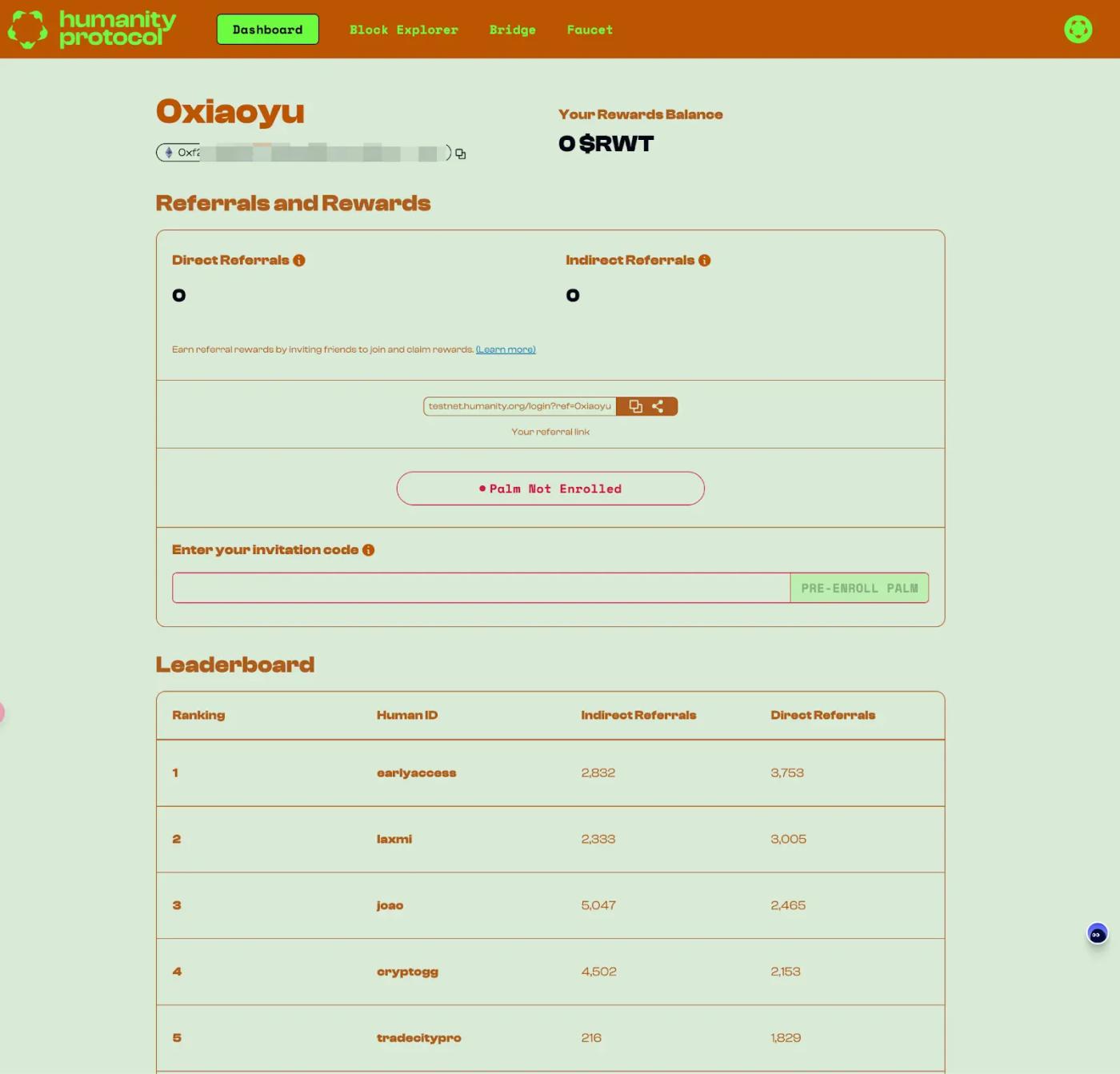
Currently, Humanity Protocol is in the testnet phase, with three main steps:
1. Human ID Reservation
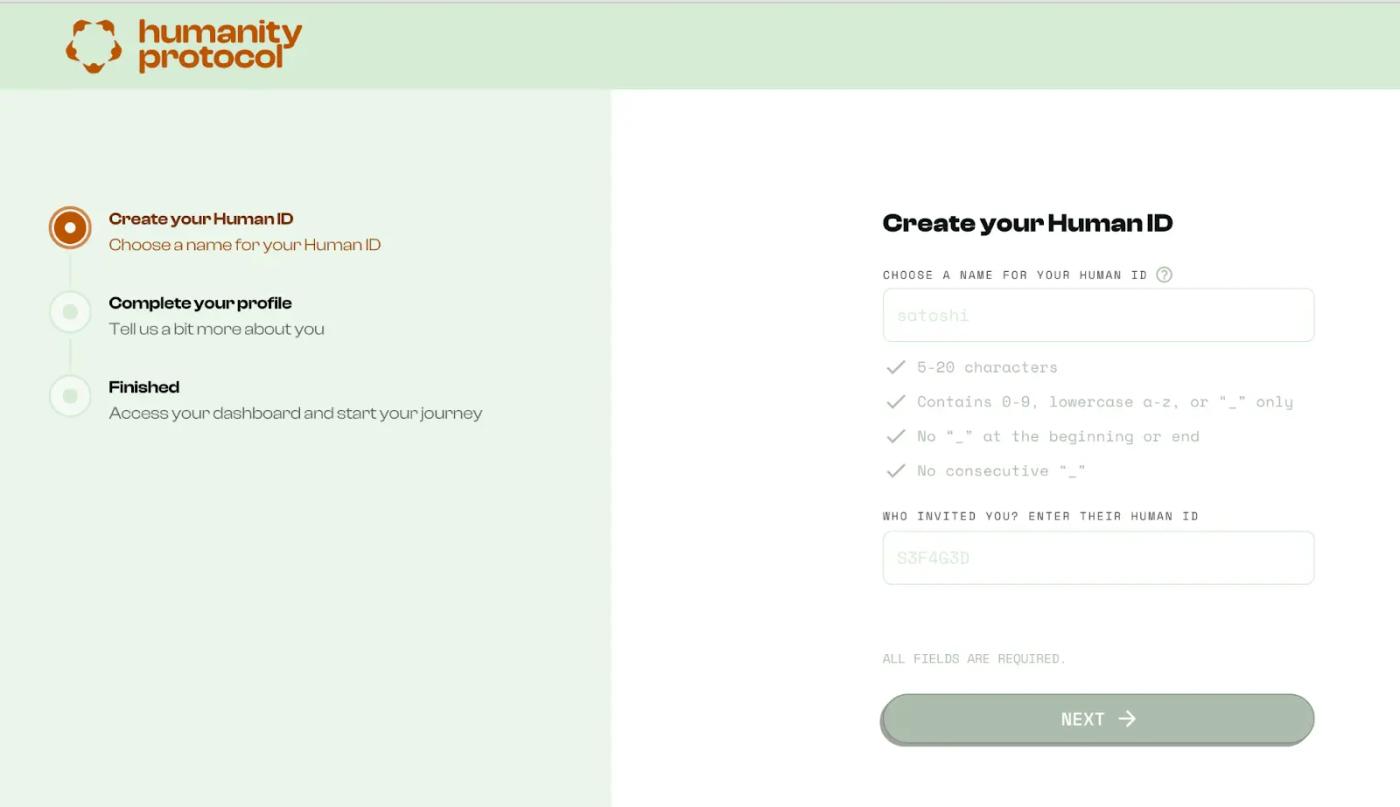
This is the ongoing stage. You can reserve your Human ID through the official website (testnet.humanity.org/login?ref=0xiaoyu). This ID will become your unique identifier in the Humanity Protocol ecosystem.
2. App Pre-registration (Not Yet Started)
The next stage will launch a mobile app, allowing users to complete palm vein registration. This step will add biometric information to your identity.
3. Full Registration (Not Yet Started)
The final step will involve palm vein verification on dedicated Humanity Protocol devices. This will complete your identity verification process.
It's worth noting that participating now does not mean you can immediately receive rewards. The distribution of rewards will have to wait until the third stage of the testnet is completed. However, the earlier you participate, the more potential rewards you may receive. Especially if you invite friends to join through a referral link, you will have the opportunity to receive ongoing rewards.
VI. Risks to Consider
Although Humanity Protocol looks promising, we also need to be aware of the risks involved:
Technical Risks: While the palm vein recognition technology is advanced, it is still evolving. There may be unknown vulnerabilities or limitations.
Privacy Concerns: Although Humanity Protocol promises to protect user privacy, uploading biometric information to the blockchain still makes some people uneasy.
Regulatory Uncertainty: As digital identity solutions evolve, they may face new regulatory challenges.
Market acceptance: The success of the Humanity Protocol largely depends on its widespread adoption. If it fails to gain sufficient user and developer support, the project may struggle to achieve its goals.
Competitive risks: The digital identity space is highly competitive, and Humanity Protocol needs to continuously innovate to maintain its competitiveness.
Critical thinking: Can Humanity Protocol really solve all problems?
Although Humanity Protocol has proposed an ambitious vision, we also need to maintain rational and critical thinking:
Technical feasibility: Combining palm vein recognition technology with blockchain and deploying it on a global scale is a huge technical challenge. Whether Humanity Protocol can overcome all technical obstacles remains to be seen.
Balance between privacy and convenience: While Humanity Protocol claims to provide convenient identity verification while protecting privacy, in practice, these two often conflict. How to maximize privacy protection without sacrificing user experience is still an open question.
Degree of decentralization: Although Humanity Protocol touts decentralization, the identity verification process still requires reliance on some form of centralized infrastructure (such as dedicated verification devices). Does this contradict the true concept of decentralization?
Difficulty of popularization: Getting global users to adopt this new identity verification method requires overcoming huge educational and promotional barriers. This may face even greater challenges in technologically underdeveloped regions.
Security of biometric data: Although Humanity Protocol claims not to directly store biometric data, ensuring the absolute security of this sensitive information throughout the verification process is still a concern worth noting.
Effectiveness against Sybil attacks: While palm vein recognition increases the difficulty of counterfeiting, as technology evolves, we cannot rule out the possibility of more advanced deception methods in the future. How will Humanity Protocol continuously address this challenge?
These issues do not negate the value of Humanity Protocol, but rather remind us to evaluate this project from a more comprehensive and in-depth perspective. Only by facing these challenges head-on can Humanity Protocol truly realize its grand vision.
Innovative aspects of Humanity Protocol:
Despite the above challenges, we have to admit that Humanity Protocol has exhibited exciting innovations in multiple aspects:
Application of palm vein recognition technology: Compared to fingerprints or iris scans, palm vein recognition provides a biometric feature that is more difficult to replicate and harder to deceive. This opens up new possibilities for digital identity verification.
On-chain and off-chain combined verification mechanism: By combining off-chain identity verification with on-chain data storage, Humanity Protocol has found an innovative way to balance privacy protection and data credibility.
Decentralized verifier network: By introducing a decentralized network of verifier nodes, Humanity Protocol has enhanced the system's decentralization and censorship resistance.
Self-Sovereign Identity (SSI) framework: Users have complete control over their own data, which is highly consistent with the core principles of Web3.
Cross-chain interoperability: Humanity Protocol plans to support multiple blockchain ecosystems, laying the foundation for future widespread application.
These innovative aspects collectively constitute the core competitiveness of Humanity Protocol, allowing it to stand out in the crowded digital identity landscape.
Competitive landscape analysis: Humanity Protocol vs. Worldcoin
When discussing Humanity Protocol, we cannot help but mention another widely-watched digital identity project - Worldcoin. Both are dedicated to solving identity verification problems in the digital world, but they have adopted different approaches:
Verification method:
- Worldcoin uses iris scanning technology
- Humanity Protocol uses palm vein recognition
Privacy protection:
- Worldcoin's iris scanning is considered more intrusive by some
- Humanity Protocol's palm vein recognition is relatively less sensitive and can be implemented using regular smartphones
Degree of decentralization:
- Worldcoin relies on proprietary "Orb" devices for scanning
- Humanity Protocol plans to establish a decentralized verifier network
Regulatory challenges:
- Worldcoin faces regulatory barriers in multiple countries
- Humanity Protocol's off-chain verification mechanism may be more easily compliant with different countries' regulations
Application scope:
- Worldcoin is primarily focused on the application of global basic income (UBI)
- Humanity Protocol is aiming at a broader range of Web3 identity verification scenarios
Although both projects have their unique advantages, Humanity Protocol's approach seems more flexible and more likely to be widely accepted. However, Worldcoin has the backing of OpenAI co-founder Sam Altman, which may give it an advantage in terms of resources and influence.
Ultimately, the competition between these two projects may drive innovation in the entire digital identity field, giving users more choices.
Conclusion: Shaping the future of digital identity
Humanity Protocol is undoubtedly an ambitious project that aims to solve one of the most intractable problems in the Web3 world - digital identity. Through innovative palm vein recognition technology and a clever verification mechanism, it has painted a vision of a more secure, more trustworthy, and more decentralized digital future.
However, the path to this future is not smooth sailing. Technical challenges, privacy concerns, regulatory uncertainties, and market acceptance are just a few of the obstacles that still exist. Whether Humanity Protocol can successfully overcome these challenges and ultimately realize its grand vision remains to be seen.
As potential participants, we need to maintain both enthusiasm for Humanity Protocol's innovations and rationality and caution. Early participation may bring handsome returns, but it also comes with undeniable risks. Carefully evaluating your own risk tolerance and understanding of the project is crucial before deciding whether to participate.
Regardless of whether Humanity Protocol ultimately succeeds, the direction it represents - seamlessly connecting real-world identities with the digital world - is undoubtedly an important trend in the development of Web3. It reminds us that while pursuing technological innovation, we cannot ignore human-centric and user-friendly design. After all, the ultimate goal of technology is to serve humanity, not to make humanity subservient to technology.
In this rapidly evolving era of digital identity, Humanity Protocol provides us with an interesting perspective: How can we prove "I am who I am" while protecting privacy? How can we establish trust in a decentralized world? These questions not only concern the success of Humanity Protocol, but also the future of the entire Web3 ecosystem.
Let us approach this innovative project with an open mind. It may not be a perfect solution, but it is pushing us towards a better digital future. In this rapidly changing world, maintaining curiosity, learning, and critical thinking, while also keeping hope and imagination, are the qualities that drive human innovation and create possibilities beyond our imagination.
The story of Humanity Protocol is still being written, and each of us has the opportunity to be a part of it. Whether you choose to participate or just observe, the important thing is to stay engaged, because it represents the significant changes that the Web3 world is undergoing. Let us look forward to the day when Humanity Protocol can bring us a more secure, fair, and transparent digital world, where everyone can confidently say, "Here, I am who I am."