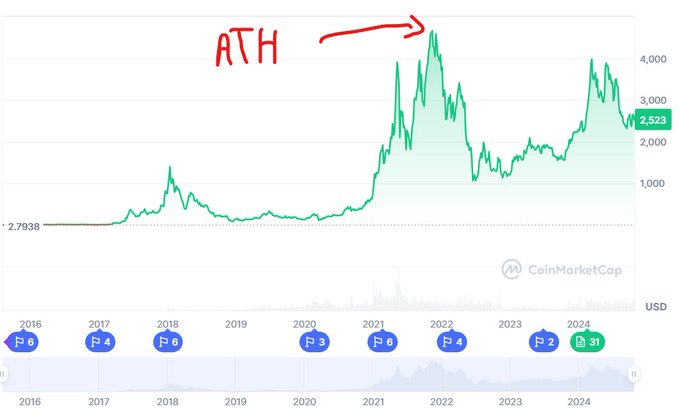
Ethereum was once considered the "blue-chip asset" of the crypto market, and people generally believed that its price would reach new highs in the future, even breaking $10,000.
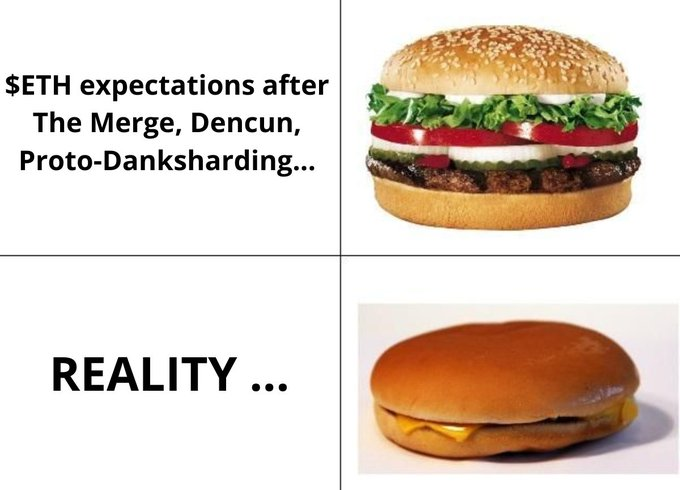
However, since 2022, ETH's performance has been sluggish. Does this mean that Vitalik and Ethereum's future face challenges? Let's dive into the reasons behind it.
1. The Gap Between Expectations and Reality
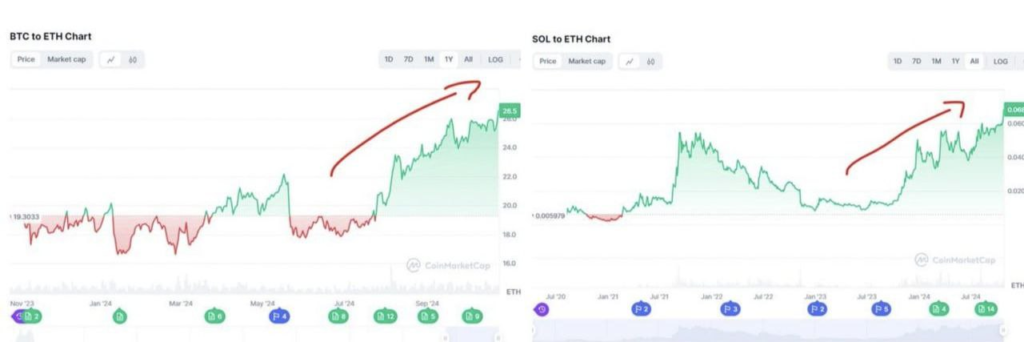
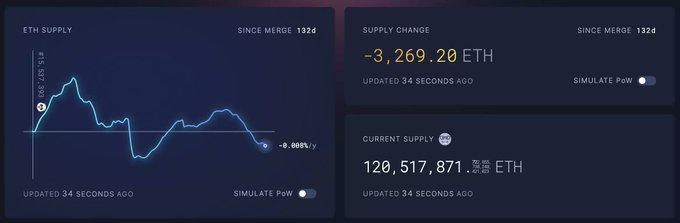
Over the past two years, Ethereum's major upgrades have raised people's expectations for its future, especially the "deflationary" effect of ETH supply. However, the actual market performance has been surprising. Despite a series of expansions and upgrades, ETH's market performance has been relatively poor, even significantly outpaced by BTC and other tokens (such as Solana).
2. The Failure of the ETH ETF
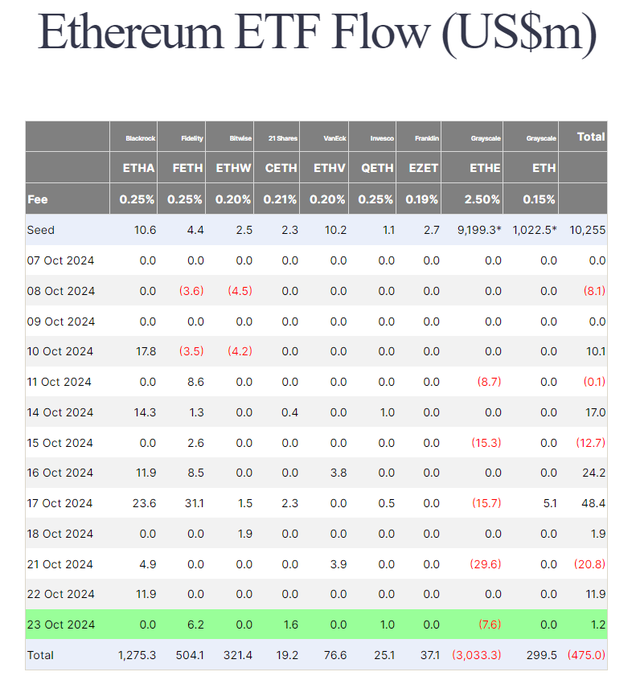
Many people expected the launch of the ETH ETF to drive up the price of ETH, but the result was a huge disappointment. Unlike the bullish market when the Bitcoin ETF was launched, the launch of the ETH ETF instead saw capital outflows, partly attributed to the selling pressure from Grayscale's legacy products.
3. The Unexpected Impact of the Upgrade
The Ethereum Merge and EIP-1559 have successfully reduced the issuance of ETH, but the latest Dencun upgrade, while reducing the cost of data writing to the main chain, has indirectly reduced the income source of the token, unexpectedly reducing its appreciation potential.
4. Vitalik's ETH Sale Raises Concerns
Ethereum founder Vitalik recently sold a portion of his ETH to support development, and although the sale volume was relatively small, the market has generated negative sentiment. Some investors believe this may indicate that Vitalik lacks confidence in ETH, although Vitalik has repeatedly stated that the price of ETH is not his top priority.
5. Absence in Emerging Trends
Many of the current emerging trends in the market - such as AI, RWA (Real-World Assets), and memecoins - have largely not chosen Ethereum as their main platform. Many new AI projects (such as Fetch and TAO) and RWA projects have chosen more suitable independent networks and underlying architectures, while in the memecoin field, Solana's performance has been clearly more impressive. This means that while Ethereum has opened the door to decentralization, other networks are becoming the leaders of the latest narratives.
6. The Future Value Fate of ETH
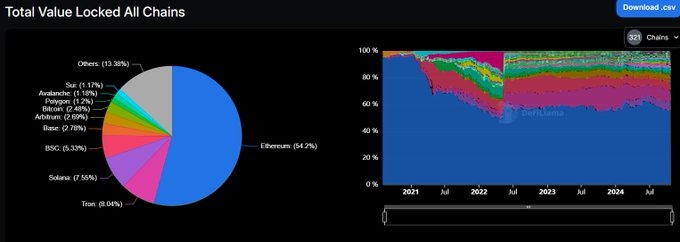
ETH is still the mainstay of the DeFi ecosystem, accounting for over 55% of the total locked-in value. However, with the widespread adoption of L2 scaling solutions, Ethereum may face the dilemma of "thriving ecosystem but unrealized token value", similar to the $ATOM token in the Cosmos ecosystem.
Personal Outlook
Although I once firmly believed that the price of ETH would reach $10,000, I am now more cautious about this goal. ETH still accounts for 30% of my investment portfolio, but in the next bull market, I may gradually sell off some of my assets and hold the remaining portion to observe its future performance.
Conclusion:
ETH's network utility and ecosystem status remain solid, but its recent performance has raised a lot of market concerns. Although ETH is still the industry leader, if it fails to keep up with emerging trends, it may gradually lose some of its dominance in the future. Ethereum still has an important first-mover advantage in the decentralization field, but whether it can maintain its core value will depend on finding a new balance between L2 development and other narrative waves.