Author: Kyle Cai
TechFlow by: TechFlow

Disclaimer: The Artemis team does not endorse any specific financial, investment or legal strategy. This article is for informational and educational purposes only and should not be considered financial, investment or legal advice. All investments carry risk and past performance is not indicative of future results. Always conduct your own research and consult a licensed financial advisor before making any investment decisions.
Overview
Solana has performed well so far in the 2024 cycle, and the main theme of this cycle has been Memecoin, all of which were born on Solana. Solana is also the first-layer blockchain with the largest price increase this year, up about 680%. While Memecoin is closely linked to Solana, Solana has regained a lot of attention as an ecosystem since its recovery in 2023, and its ecosystem has flourished - protocols like Drift (perpetual contract decentralized exchange), Jito (liquid staking), Jupiter (decentralized exchange aggregator) have token valuations in the billions of dollars, and Solana's active addresses and daily transactions exceed all other blockchains.
At the center of this thriving ecosystem is Raydium, Solana’s top decentralized exchange. The old saying “selling shovels during a gold rush” perfectly captures Raydium’s role: while Memecoin has captured the public’s attention, Raydium has supported these activities by providing liquidity and trading. With the continued flow of Memecoin transactions and broader DeFi activity, Raydium has firmly established itself as one of the most critical infrastructure in the Solana ecosystem.
At Artemis, we believe that the world is increasingly dependent on fundamentals. Therefore, this article aims to analyze Raydium’s unique position in the Solana ecosystem from first principles using a data-driven approach. Let’s take a deeper look:
About Raydium
Launched in 2021, Raydium is an automated market maker (AMM) based on the Solana blockchain that provides permissionless liquidity pool creation, ultra-fast trading, and a way to earn returns. Raydium is unique in its architectural design - it is the first AMM on Solana and the first order book-compatible hybrid AMM in decentralized finance (DeFi).
Raydium was launched with a hybrid AMM model that allowed idle pool liquidity to be shared with a central limit order book, while decentralized exchanges (DEX) at the time could only use liquidity within their own pools. This meant that liquidity on Raydium simultaneously created a market on OpenBook that could be traded through any OpenBook DEX GUI.
While this feature was a major differentiator in the early days, it has now been turned off due to the influx of a large number of long-tail markets. Raydium currently offers three different types of liquidity pools, including:
Standard AMM pool (AMM v4), the original hybrid AMM
Constant Product Exchange Pool (CPMM), supporting Token 2022
Centralized Liquidity Pool (CLMM)
On Raydium, a small fee is charged every time a swap is made, depending on the specific pool type and fee tier. These fees are allocated to incentivize liquidity providers, buy back RAY tokens, and support the treasury.
We have recorded the transaction fees, pool creation fees, and protocol fees for different types of Raydium pools. Here is a simple explanation of these terms and their corresponding fee levels:
Transaction Fee: This is the fee charged to traders when they make an exchange.
Buyback Fee: This is a portion of the transaction fee that is used to buy back Raydium tokens.
Treasury Fee: This is the portion of the transaction fee that is allocated to the Treasury.
Pool creation fee: This is a fee charged when a pool is created, designed to prevent abuse of pool creation. The pool creation fee is controlled by the protocol's multi-signature and is used to pay for the protocol's infrastructure costs.

Figure 1. Raydium fee structure
Solana's Decentralized Exchange (DEX) Ecosystem
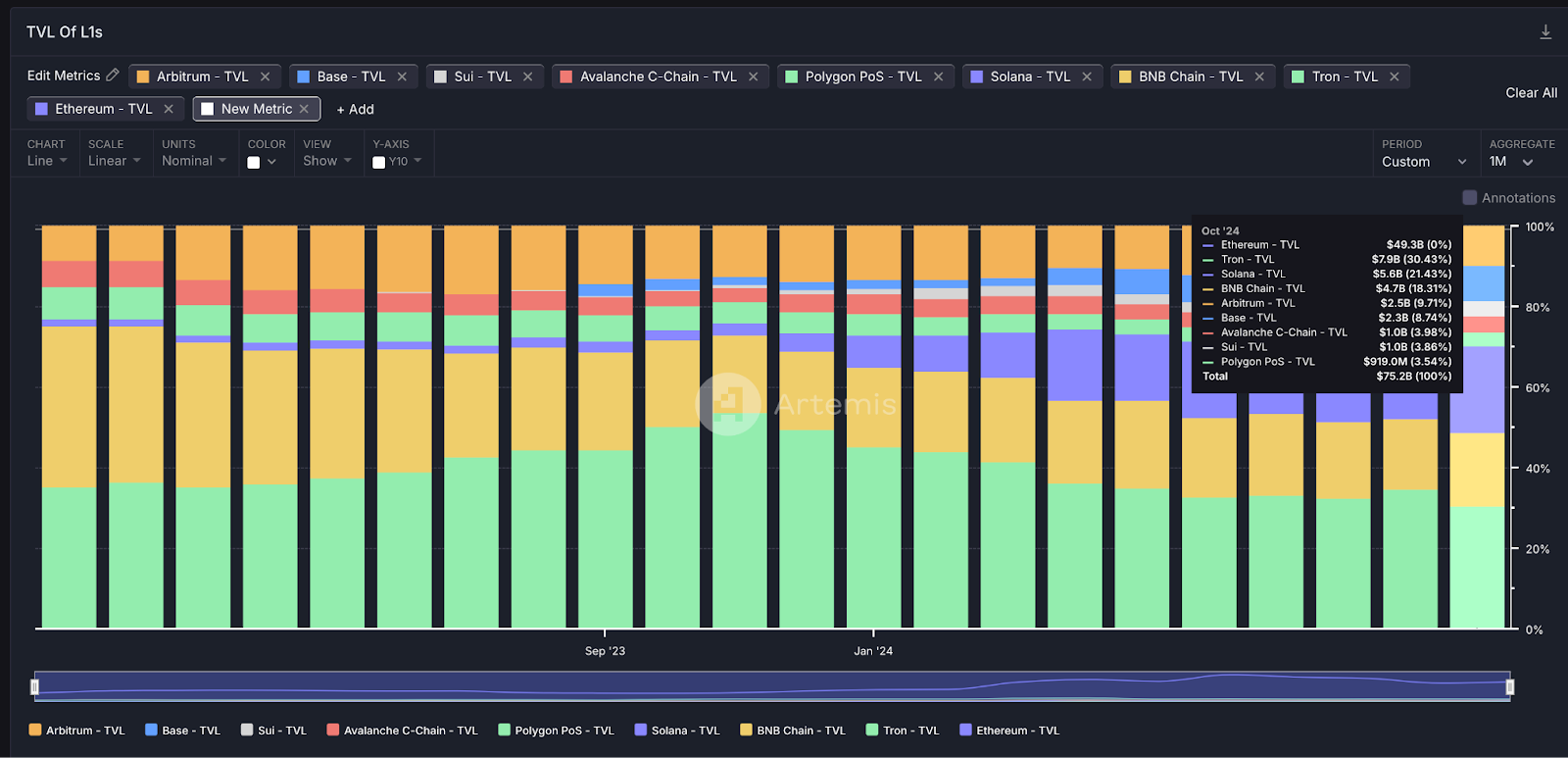
Figure 2. Total locked value (TVL) of Solana DEX
Source: Artemis
After we have analyzed the operation mechanism of Raydium in detail, we will continue to evaluate the position of Raydium in the Solana DEX ecosystem. It is obvious that Solana has risen rapidly in the 2024 market cycle and has become the third largest locked value chain after Ethereum and Tron.
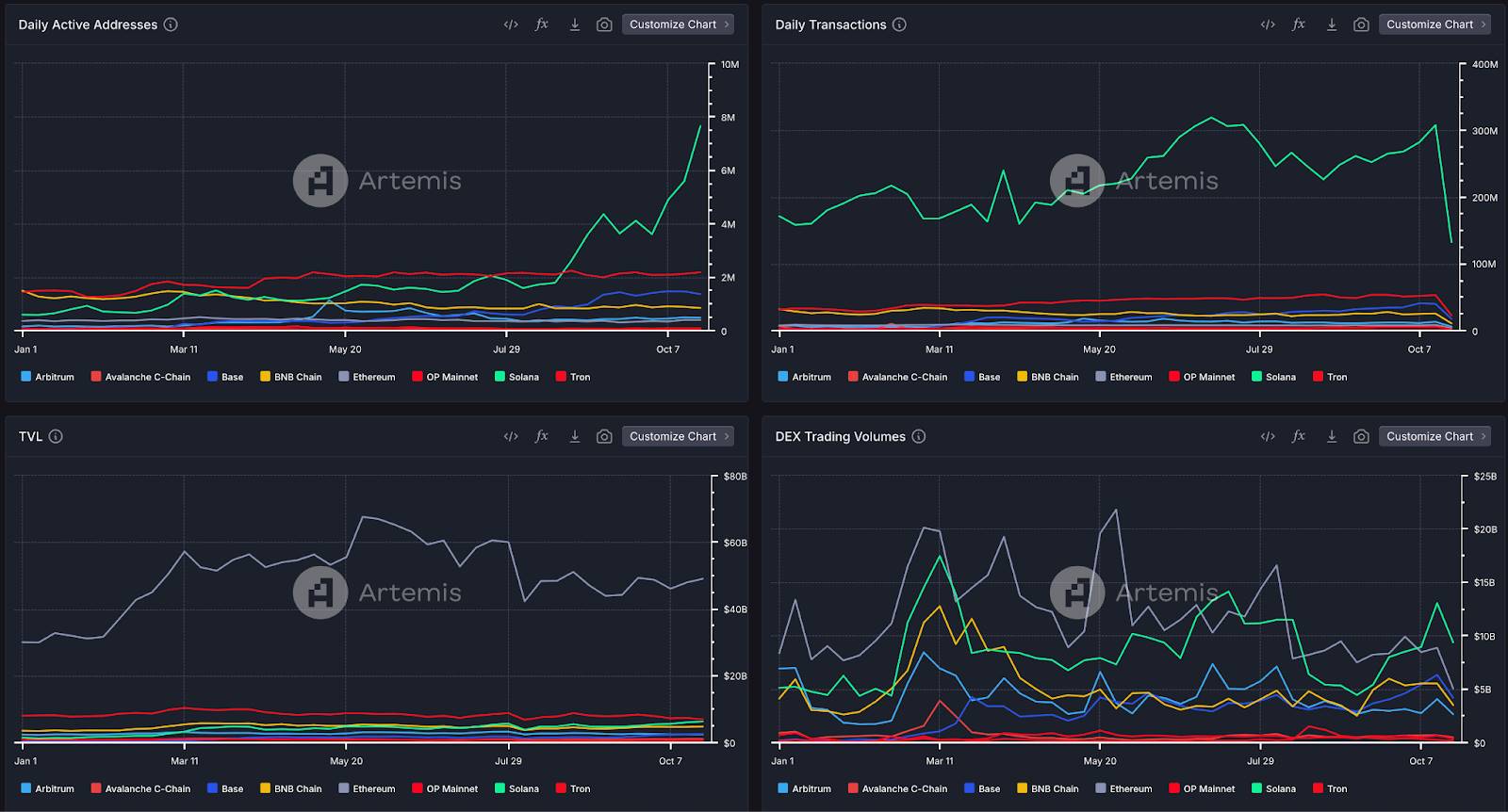
Figure 3. Daily active addresses, daily transaction volume, TVL, and DEX transaction volume of each chain
Source: Artemis
Solana has been leading in user activity metrics, including daily active addresses, daily transaction volume, and DEX transaction volume. This increase in activity and liquidity can be attributed to multiple factors, one of the most notable being the “meme coin boom” on Solana. Solana’s high transaction speeds and low costs, coupled with its favorable user experience for decentralized applications, have facilitated rapid growth in on-chain transactions. With tokens like $BONK and $WIF reaching multi-billion dollar market caps, and the emergence of meme coin launch platforms like Pump.fun , Solana has become a major hub for meme coin trading.
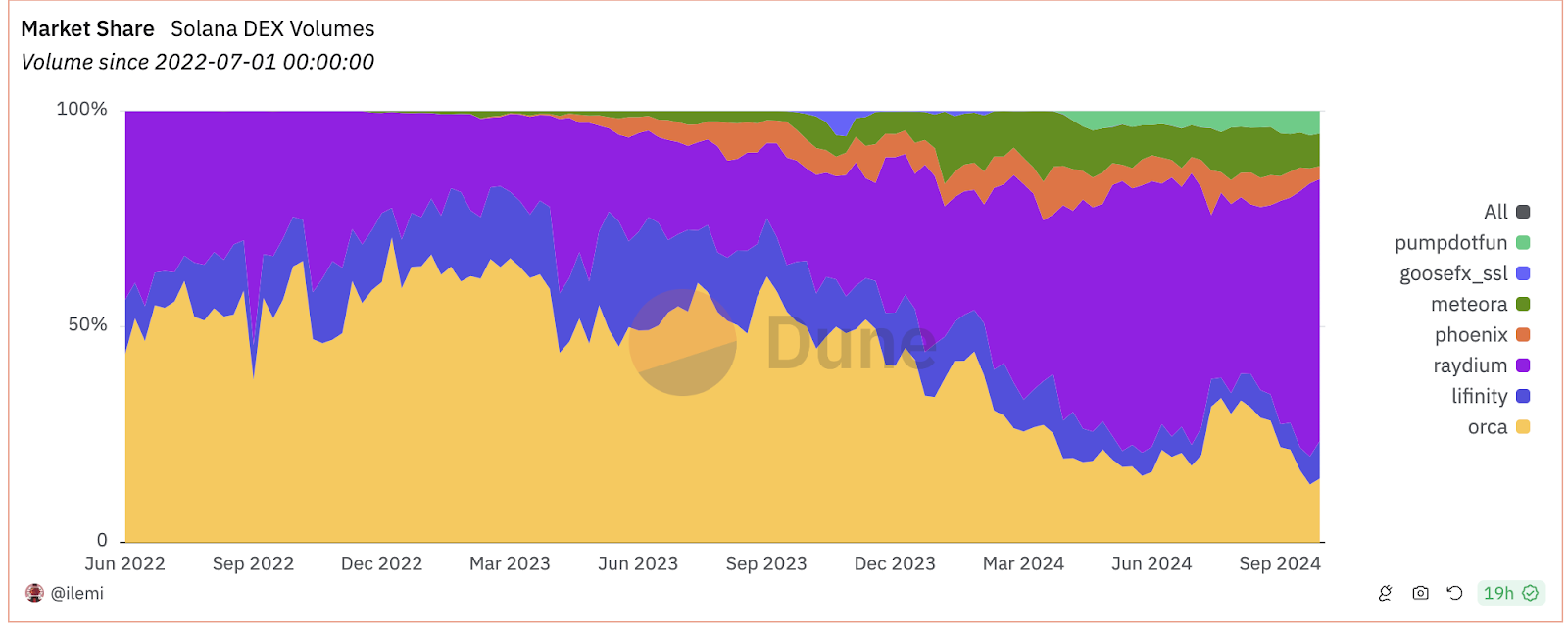
Figure 4. Market share of trading volume of each decentralized exchange (DEX) in the Solana network
Source: Ilemi's Raydium Dune Dashboard
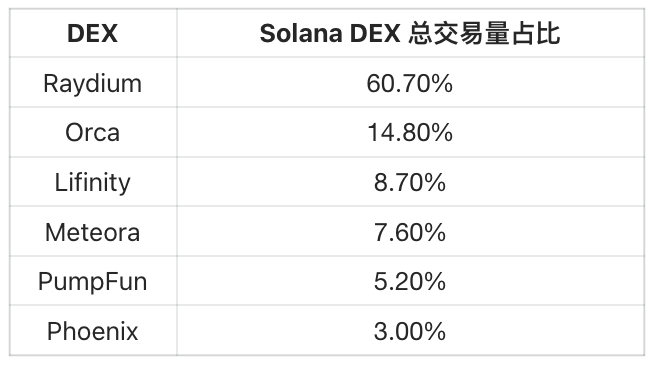
During this cycle, Solana has become the most popular first-layer blockchain (Layer 1) and continues to lead other L1s in terms of trading activity. With the increase in trading activity, decentralized exchanges (DEX) on Solana have benefited greatly - more traders bring more trading fees, thereby generating more revenue for the protocol. However, among the many DEXs, Raydium stands out and has successfully occupied a considerable market share. As shown in the figure below:
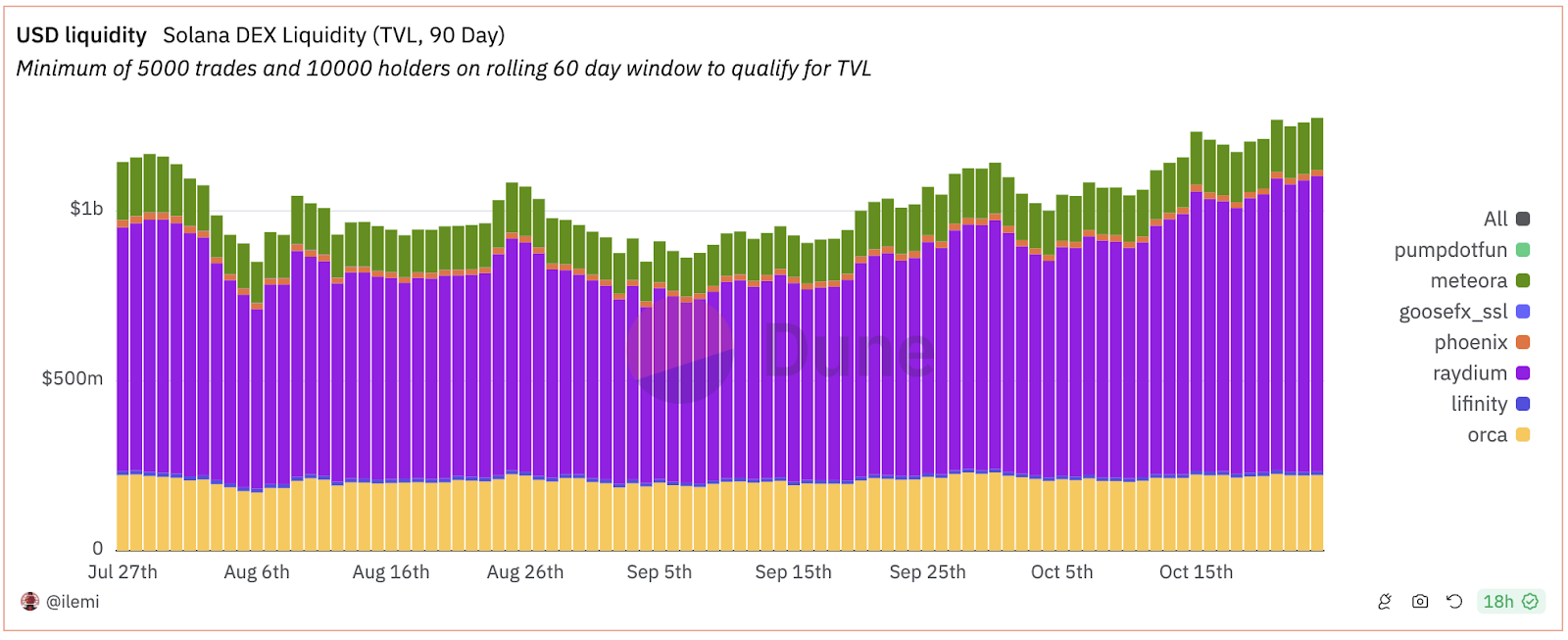
Figure 4. Solana DEX trading volume market share of each DEX
Source: Ilemi's Raydium Dune Dashboard
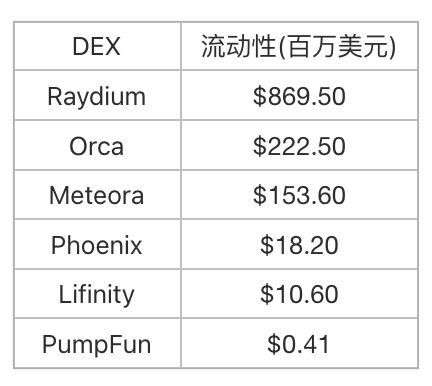
Raydium continues to maintain its position as the most liquid decentralized exchange (DEX). It is worth noting that the operation of DEX often involves the issue of economies of scale, as traders usually choose the most liquid exchanges to avoid slippage in transactions. The higher the liquidity, the more traders are attracted, which in turn attracts liquidity providers, who profit by charging transaction fees, thus forming a virtuous circle and attracting more traders who want to avoid slippage.
Liquidity is often an overlooked but crucial factor when comparing different DEXs, and this is especially true when trading Memecoins on the Solana network. Memecoins are often illiquid and require a centralized trading point. If liquidity is fragmented across different DEXs, it will lead to a poor user experience and inconvenience when purchasing Memecoins on different DEXs.
Exploring the relationship between Memecoins and Raydium
The popularity of Raydium is also tied to the resurgence of Memecoins on Solana, specifically the Memecoin platform launched by PumpFun, which has earned over $100 million in fees through its platform since its founding earlier this year.
Memecoins on the PumpFun platform have a close partnership with Raydium. When the market value of the token launched on Pump.fun reaches $69,000, Pump.fun will automatically inject $12,000 worth of liquidity into Raydium. This mechanism makes Raydium the most liquid platform for trading Memecoins. This process forms a virtuous cycle: PumpFun connects to Raydium > Memecoins are published on Raydium > People trade here > Increase liquidity > More Memecoins are published here > Get more liquidity, and so on.

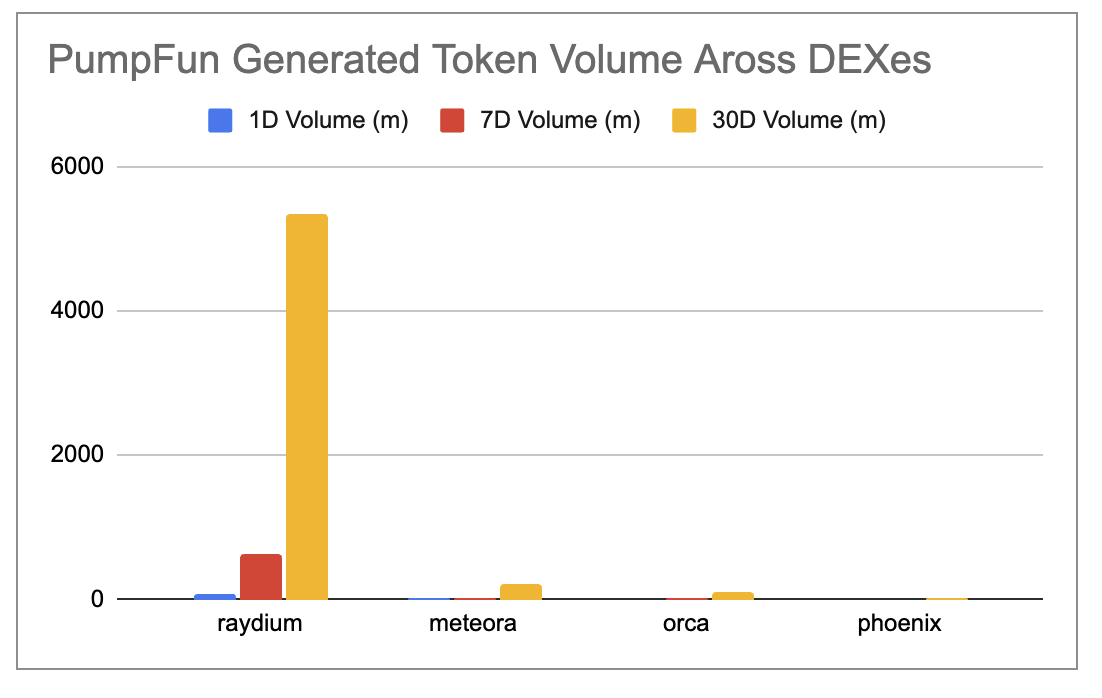
Figure 6. Trading volume of PumpFun-generated tokens on various DEXs
Source: Memecoin Volume Dune Dashboard by Hashed_em
Therefore, Raydium is considered to follow a power law, where more than 90% of the Memecoins generated by PumpFun are traded on Raydium. Just like a large shopping mall in a city, Raydium is the largest "shopping mall" on Solana, which means that most users will choose to "shop" in Raydium, and most "merchants" (tokens) also want to set up "shops" here.

Figure 7. Comparison of 30-day trading volume of trading pairs on Solana and on Raydium
(Red represents Memecoins, blue represents non-Memecoins)
Source: Ilemi's Raydium Dune Dashboard, Raydium
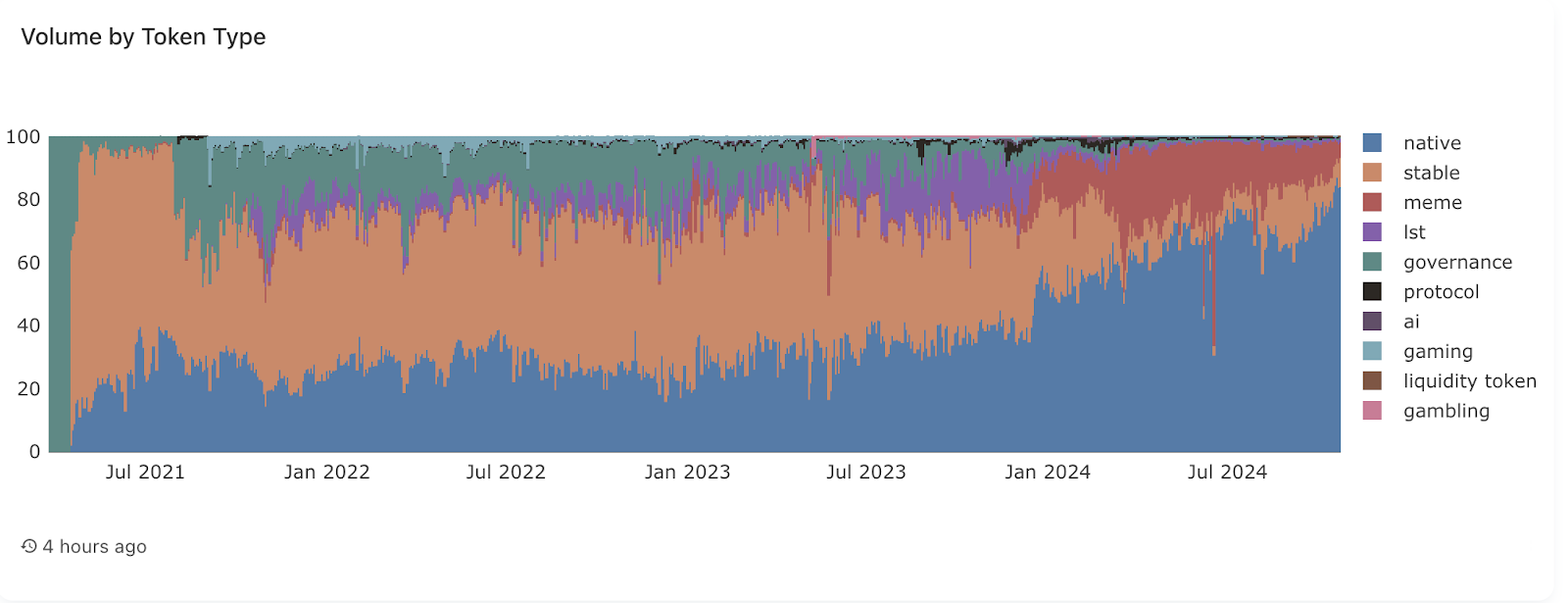
Figure 8. Raydium transaction volume by token type
Source: Full Raydium Dashboard
However, it should be noted that although PumpFun relies on Raydium, Raydium does not rely entirely on Memecoins to maintain its trading volume. In fact, according to Figure 8, the three trading pairs with the largest trading volume in the past 30 days are SOL-USDT and SOL-USDC, which account for more than 50% of the total trading volume. (It should be noted that the two SOL-USDC trading pairs here are two independent pools with different fee structures).
Figures 7 and 9 further verify this. Figure 7 shows that the SOL-USDC trading pair is far ahead of other DEX trading pairs in terms of trading volume. Even though Figure 7 shows the trading volume of all DEXs, it also shows that the trading volume of the entire ecosystem is not driven by Memecoins alone. Figure 9 further shows Raydium's trading volume by token type, with "native" tokens accounting for more than 70% of the market share. Therefore, while Memecoins are an important part of Raydium, they are not representative of all trading activities on Raydium.
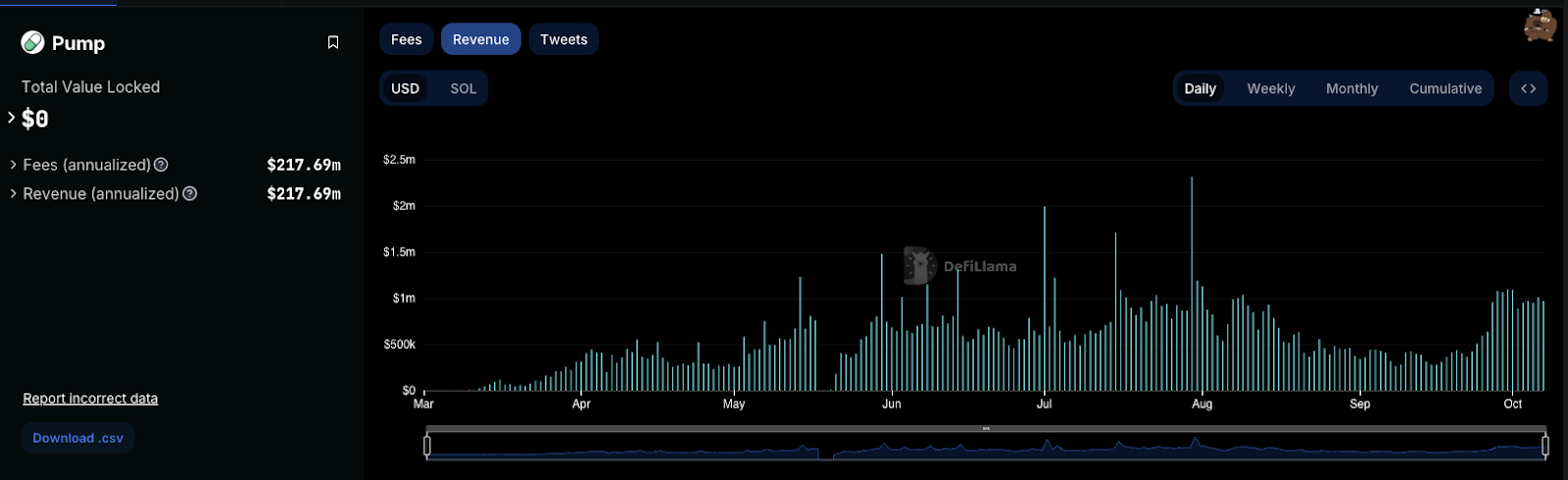
Figure 9. PumpFun revenue
Source: Defillama
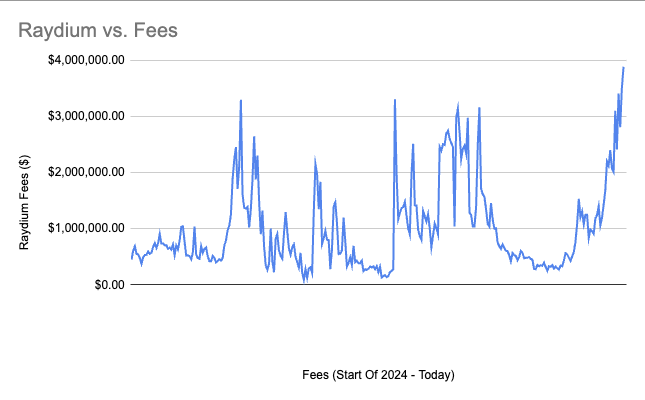
Figure 10. Raydium revenue
Source: Artemis Excel Plugin
That said, Memecoins are highly volatile, and volatile pools typically charge higher fees. So while Memecoins may not be as volatile as Solana’s pools in terms of volume, they contribute significantly to Raydium’s revenue and fees. This is reflected in the September data — since Memecoins are highly cyclical assets, they tend to perform significantly worse in bad markets as risk appetite decreases. PumpFun’s revenue fell 67% from an average of $800,000 per day in July and August to approximately $350,000 per day in September; we also observed a drop in Raydium’s fees over the same period.

Figure 11. Raydium TVL over time
Source: Artemis Excel Plugin
However, like the rest of the crypto industry, this industry is highly cyclical, so it is normal for metrics to fall in a bear market as risk is washed away. Instead, we can think of TVL as a measure of how antifragile a protocol really is - while revenue is highly cyclical and fluctuates as speculators come and go, TVL is a metric that reflects the sustainability of a DEX, showing how it will stand the test of time. TVL is like the "occupancy rate" of a shopping mall - while trends change and mall usage may vary with the seasons, as long as the occupancy rate is above average, we can judge its success.
Just like a shopping mall with stable traffic, Raydium's TVL has remained stable over the long term. This shows that while its revenue may fluctuate with changes in market prices and investor sentiment, Raydium has proven itself as a core product in the Solana ecosystem and has become the best and most liquid DEX on Solana. Therefore, although Memecoins contribute to its revenue, Raydium's trading volume is not always dependent on Memecoins, and liquidity will still be concentrated in Raydium regardless of the market environment.
Comparison of Raydium and Aggregators
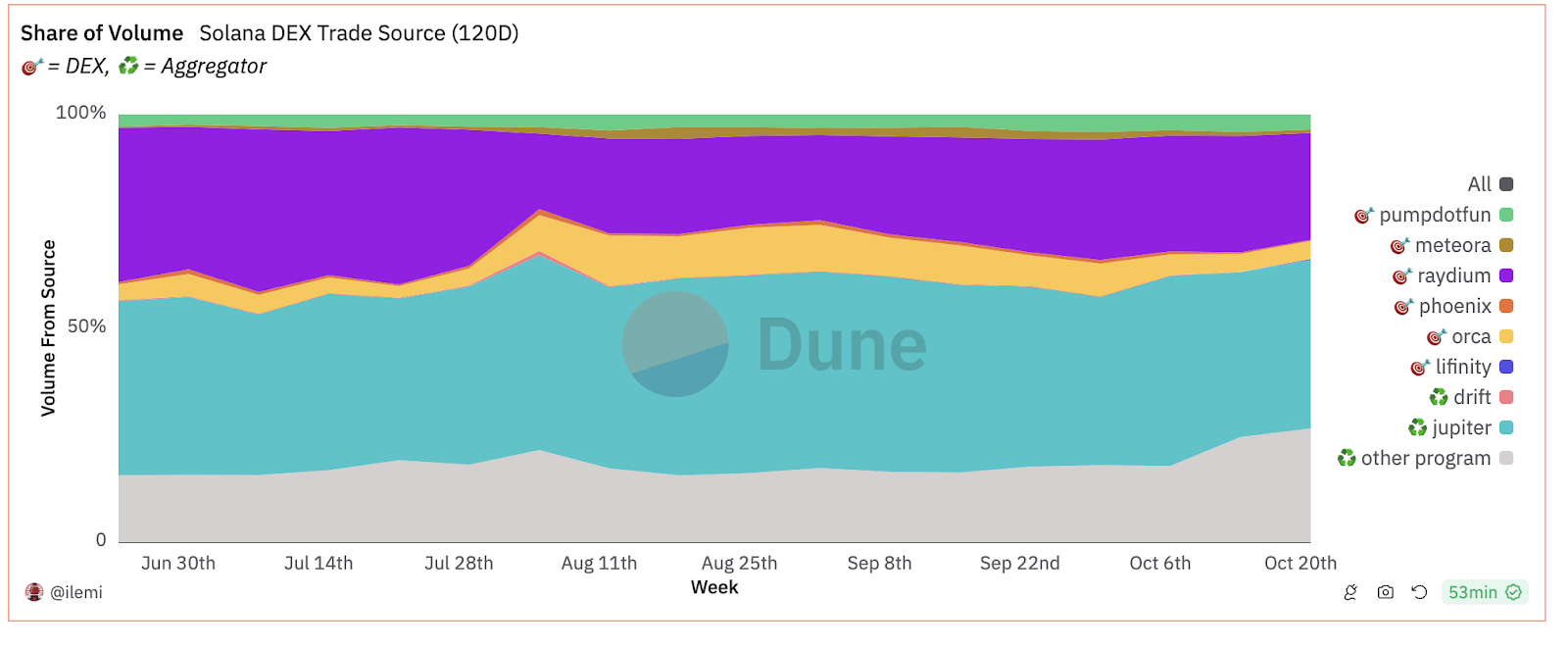
Figure 12. Solana DEX transaction source
Source: Ilemi's Raydium Dune Dashboard
While Jupiter and Raydium do not compete directly, Jupiter plays a key aggregator role in the Solana ecosystem, routing transactions through multiple decentralized exchanges (DEXs), including Raydium. Jupiter is essentially a meta-platform that ensures users get the best price by sourcing liquidity from multiple DEXs such as Orca, Phoenix, and Raydium. In contrast, Raydium acts as a liquidity provider, supporting many of the transactions routed by Jupiter by providing a deep liquidity pool for Solana tokens.
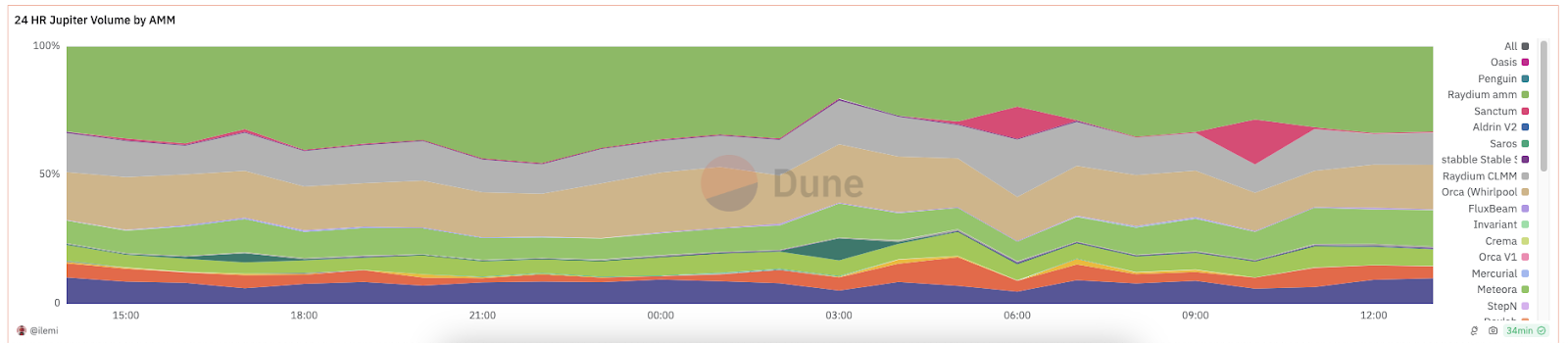
Figure 13. 24-hour Jupiter trading volume by AMM
Source: Ilemi’s Jupiter by AMM Dune Dashboard
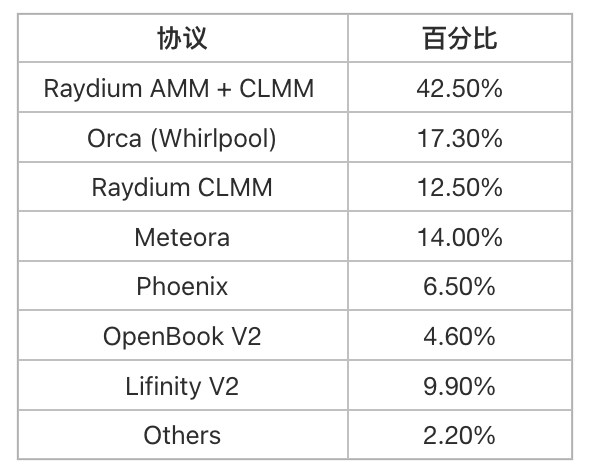
Although the two protocols, Raydium and Jupiter, work closely together, it is worth noting that the proportion of trading volume directly generated by Raydium is gradually increasing, while the proportion from Jupiter is decreasing. At the same time, Raydium accounts for nearly half of Jupiter's maker trading volume.
This shows that Raydium has been successful in building a more powerful and self-sufficient platform, able to attract users directly rather than relying on third-party aggregators such as Jupiter.
The increase in direct trading volume means that traders are finding value in using Raydium’s native interface and liquidity pools as users look to get the most efficient and comprehensive DeFi experience without going through an aggregator. Ultimately, this trend emphasizes Raydium’s independent position as a major liquidity provider in the Solana ecosystem.
Comparison of Raydium with other platforms
Finally, we used the Artemis plugin to create a comparison chart showing how Raydium compares to other DEXs on Solana, including aggregators.
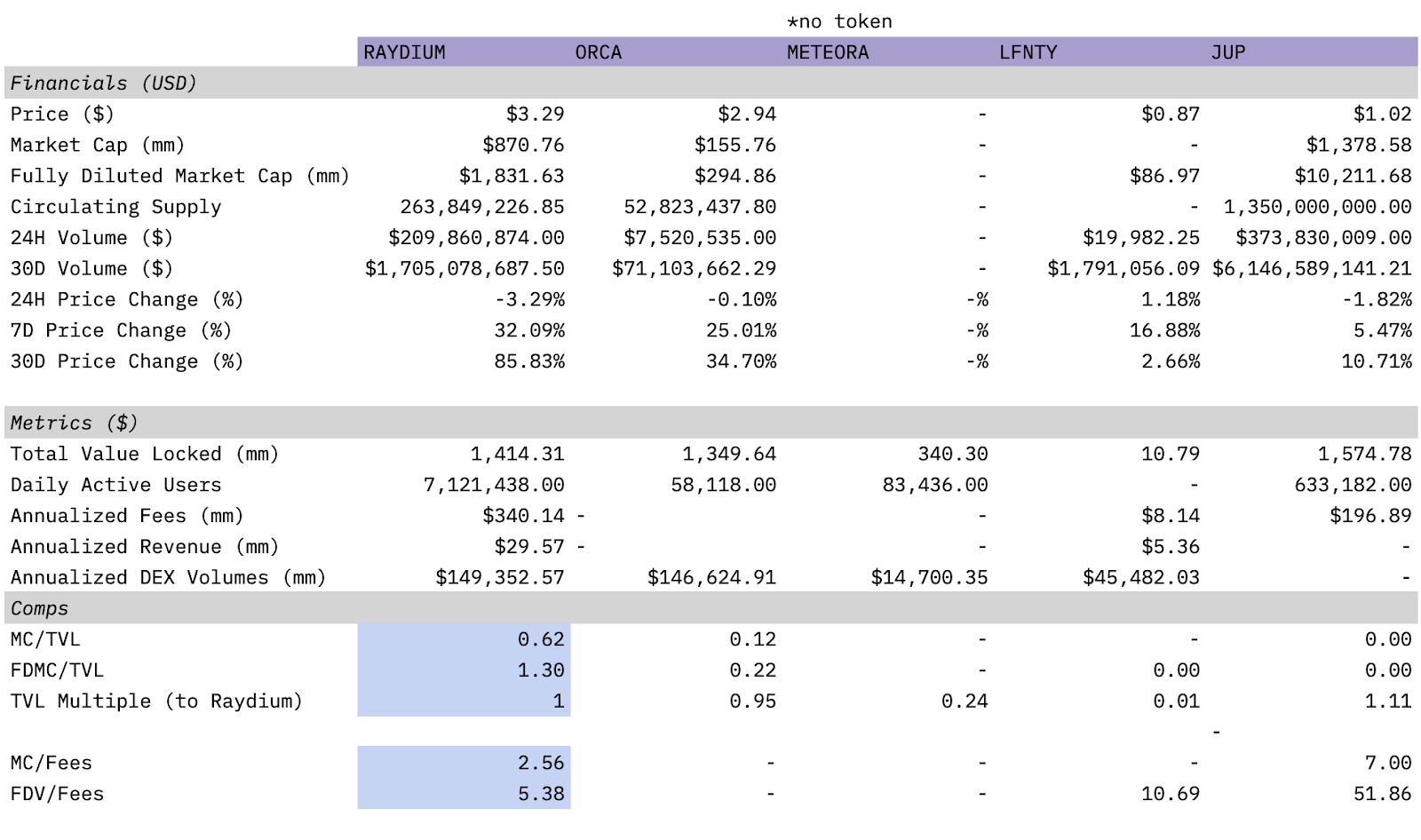
Figure 14. Comparison of Raydium and other DEXs on Solana
Source: Artemis Excel Plugin
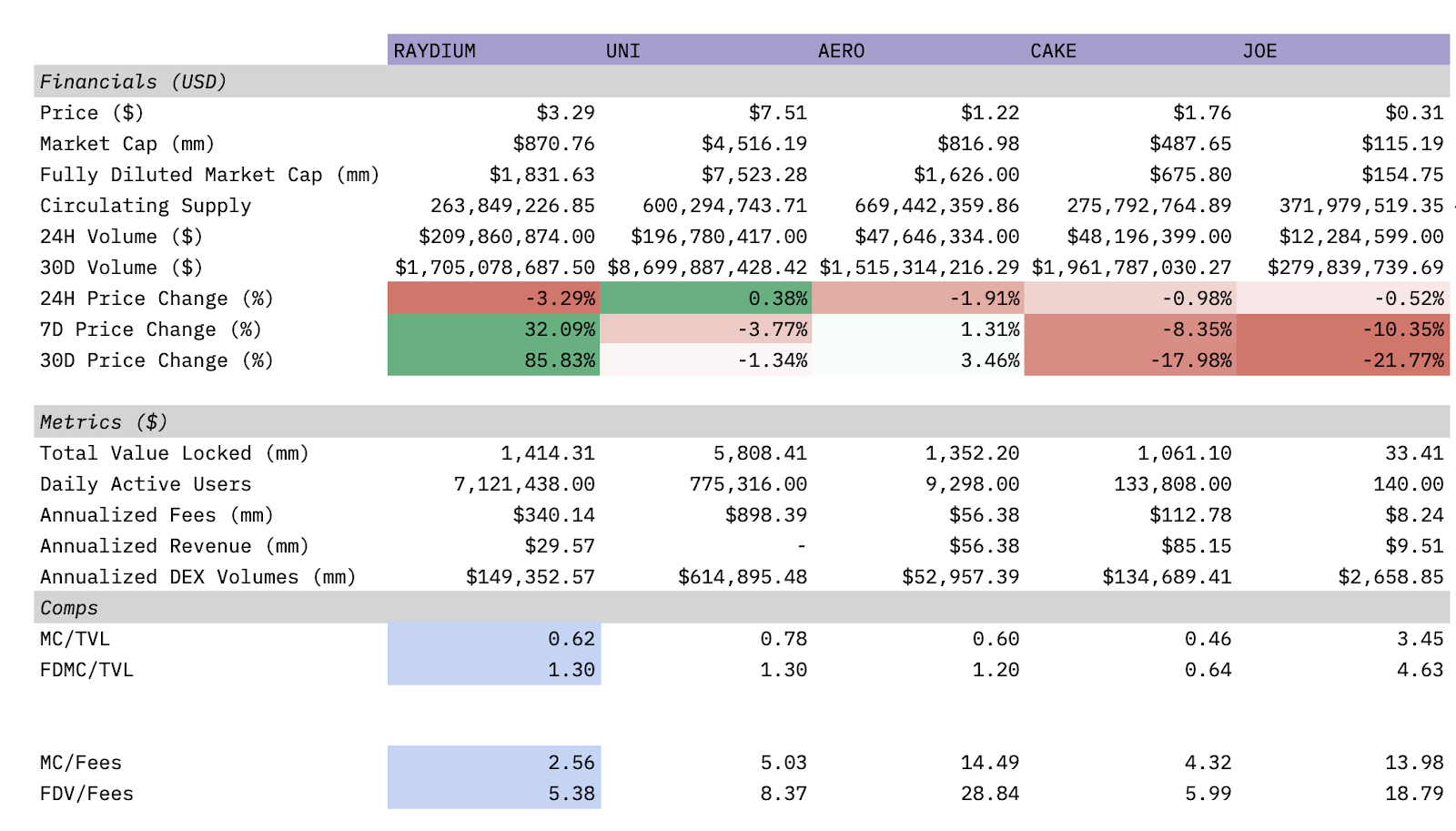
Figure 15. Comparison of Raydium with other popular DEXs
Source: Artemis Excel Plugin
In Figure 13, we compare Raydium with the most popular DEXs on Solana, including Orca, Meteora, and Lifinity, which together account for 90% of Solana’s total DEX volume. We also include Jupiter as an aggregator. Although Meteora does not issue tokens, we still include it in the comparison.
From the data, we can see that Raydium has the lowest market cap/fee ratio and FDV/fee ratio among all DEXs. Raydium also has the most daily active users. Except for Jupiter (which is considered an aggregator rather than a DEX), the TVL of other DEXs is more than 80% less than Raydium.
In Figure 14, we compare Raydium with traditional DEXs on other chains. As you can see, Raydium’s annualized DEX trading volume is more than twice that of Aerodrome, but its market cap/revenue ratio is lower.
Raydium’s Token Economics
Here are the details of Raydium’s token economics:
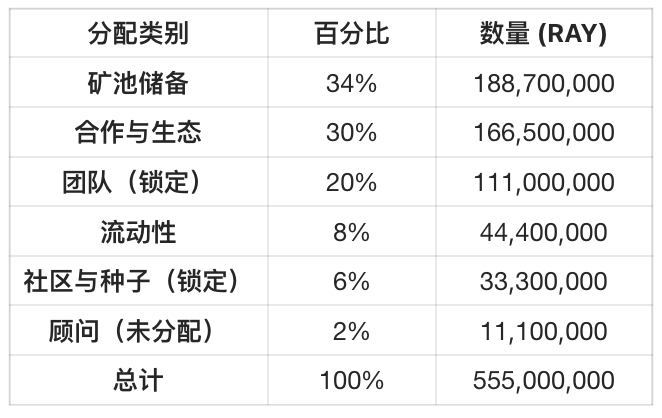
Note: Team and Seed tokens (25.9% of total) are fully locked up in the first 12 months after the Token Generation Event (TGE), and unlock linearly daily from month 13 to month 36. The lockup period ends on February 21, 2024.
Raydium tokens have multiple uses: users holding $RAY can earn additional tokens through staking. In addition, $RAY is also used as a mining reward to attract liquidity providers, thereby enhancing the depth of the liquidity pool. Although $RAY itself is not a governance token, the relevant governance mechanism is under development.
Although the market's interest in issuing tokens has waned after the DeFi summer, it is worth mentioning that Raydium has a very low annual inflation rate and its annualized buybacks have performed well in the DeFi field. Currently, the annualized issuance is about 1.9 million RAY, of which 1.65 million are used for staking, which is relatively small compared to the issuance of other popular decentralized exchanges at their peak. At current market prices, RAY issues about $5.1 million worth of tokens per year. In comparison, Uniswap issued about $1.45 million worth of tokens per day before it was fully unlocked, with an annual issuance of $529.25 million.
A small fee is charged for every transaction on Raydium. According to the official documentation, "Based on the fees of a specific pool, this fee is allocated to incentivize liquidity providers, RAY buybacks, and replenish the treasury. In general, 12% of all transaction fees are used to buy back RAY regardless of the pool's fee tier." Combined with Raydium's trading volume, this mechanism has brought significant results.
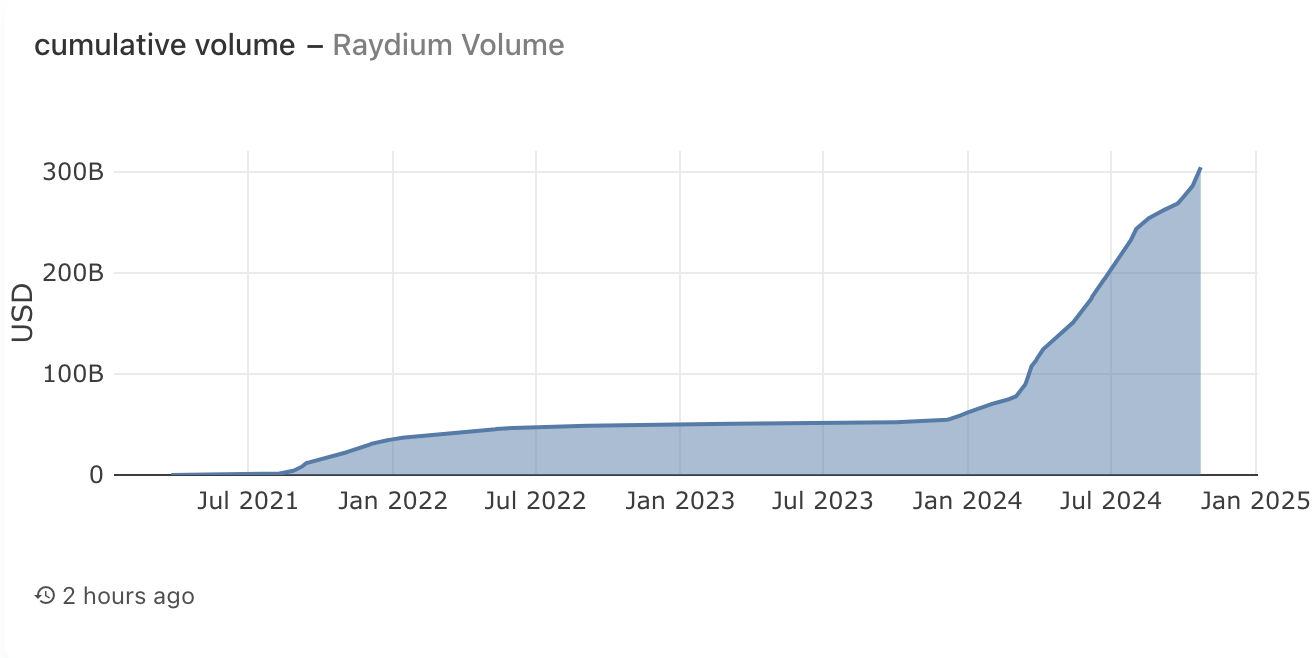
Figure 16. Raydium cumulative transaction volume
Source: Full Raydium Dashboard
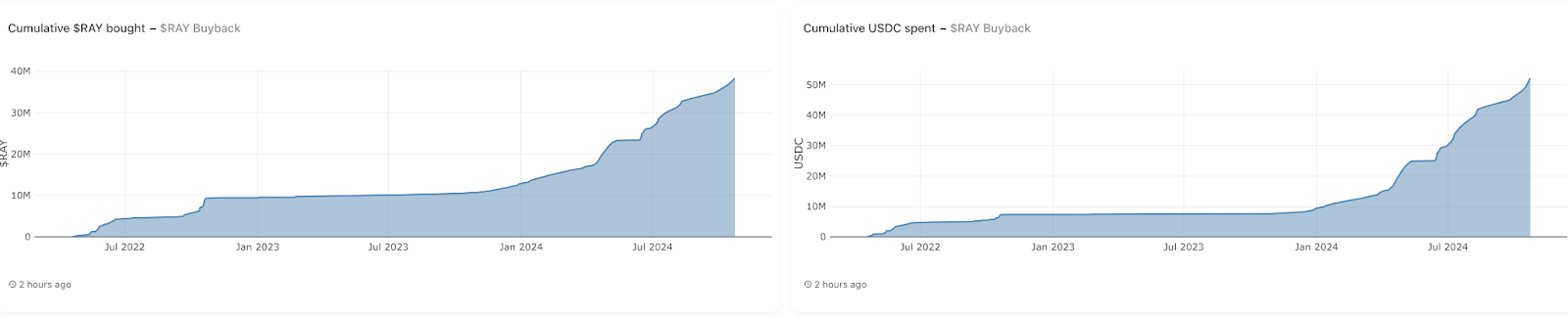
Figure 17. Raydium repurchase data
Source: Full Raydium Dashboard
Judging from the data results, Raydium's performance is very outstanding. The cumulative trading volume has exceeded 300 billion US dollars, and Raydium has successfully repurchased about 38 million RAY tokens, worth about 52 million US dollars. Raydium's repurchase plan has the strongest performance in the entire decentralized finance (De-Fi) field, which also makes Raydium take the lead among all decentralized exchanges (DEX) on the Solana network.
Raydium’s Future
In summary, Raydium has significant advantages in decentralized exchanges on the Solana network and is in the best position to leverage Solana's continued growth. Raydium has had an impressive growth journey over the past year, and as Memecoin continues to dominate the cryptocurrency market, Raydium's growth momentum does not seem to be stalling anytime soon. The recent Memecoin craze revolves around artificial intelligence (AI), such as $GOAT.
Raydium, as the main liquidity provider and automated market maker (AMM) on the Solana network, has a strategic advantage in capturing emerging market trends due to its unique position. In addition, Raydium's commitment to innovation and ecosystem development is reflected in its frequent system upgrades, strong incentives for liquidity providers, and active interaction with the community. These factors show that Raydium is not only ready to adapt to the changing decentralized finance (DeFi) environment, but also has the potential to lead the field.
As a critical infrastructure in the rapidly growing blockchain ecosystem, Raydium has a very promising future growth outlook if it continues to maintain its current momentum.