


Editor's Note: This article discusses how Fluid disrupts the traditional DeFi model by combining lending and trading. Its dynamic debt mechanism not only allows borrowers to earn trading fees as liquidity providers, but also significantly improves capital efficiency, creating $39 of effective liquidity per $1 of TVL. It also analyzes the potential of INST, believing that its strong growth and the upcoming DEX launch could drive the price to over $8, making it a project worth watching.
Original Content (edited for readability):
Fluid's lending protocol has been gaining traction: it has seen a monthly growth of up to 3 times, with a TVL of $800 million. However, lending is not a new concept in DeFi. The real game-changer is the decentralized exchange (DEX) that Fluid is about to launch. Let's take a look at how this new DEX design might disrupt the market, whether the current valuation of INST is worth buying, and the potential it holds for the future.
What is Fluid?
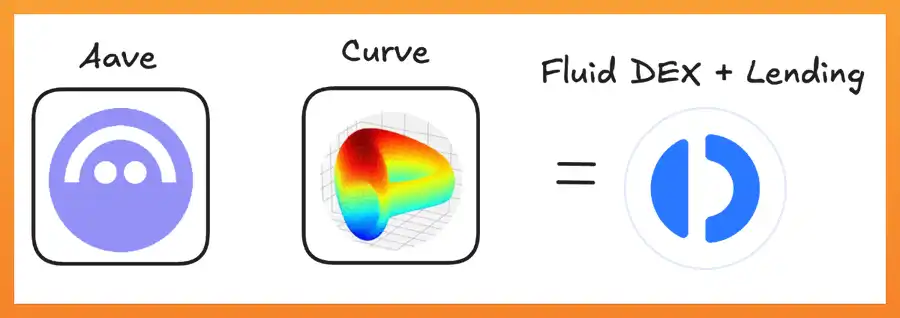
Fluid is a money market protocol launched by the Instadapp team, and holding INST is equivalent to directly participating in Fluid's growth. It is similar to other money market protocols (such as Aave and Kamino), but with improvements in the liquidation mechanism. Lending itself is hard to innovate on, but when Fluid combines lending with a DEX, it reveals new possibilities for the lending market, which is the key to Fluid's success.
Beyond Traditional Money Markets
To understand Fluid's potential, we must first understand the limitations of the current DeFi liquidity ecosystem: traditional money markets and DEXs are independent of each other, greatly limiting capital efficiency. These assets have only one purpose - to generate lending returns. Similarly, the liquidity provided to platforms like Uniswap can only earn trading fees.
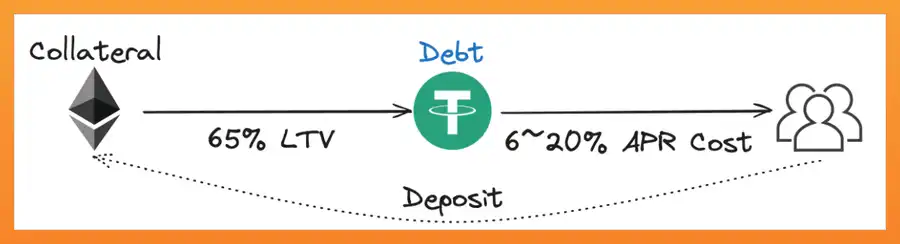
This fragmentation leads to high costs for users:
Low capital utilization
Liquidity scattered across different protocols
Fluid DEX: The Perfect Blend of Lending and Trading
Fluid DEX redefines the way DEXs work, unlike traditional DEXs that focus solely on trading, Fluid DEX integrates the functionalities of a trading platform and a money market, which may become the most capital-efficient DEX design in DeFi.
Core Innovation: Smart Collateral and Smart Debt
Smart Collateral (Conventional Function)
Users can use liquidity pairs (such as ETH/wstETH or ETH/WBTC) as collateral. Liquidity provider (LP) tokens are used as lending collateral, and users can earn trading fees from the DEX.
Smart Debt (True Innovation)
This is the most revolutionary design of Fluid DEX. Traditional DeFi views debt as a pure liability, where users only need to pay interest after borrowing. Fluid disrupts this model, making debt positions usable for providing liquidity and earning trading fees.

Dynamic Debt Mechanism and Automatic Rebalancing
Unlike traditional lending with fixed assets, users in Fluid have dynamic debt positions. When a trader wants to swap (e.g., USDC for USDT), the system does not need to use a traditional liquidity pool, but automatically adjusts the borrower's debt structure (reducing USDC debt, increasing USDT debt). This debt rebalancing mechanism serves as the liquidity source for the DEX, while also generating trading fee revenue for the borrowers.
Example of Automatic Rebalancing:
Borrow 1000 USDC and 1000 USDT, deposit them into the Fluid DEX, and someone swaps 500 USDC for USDT:
·Your USDC debt is reduced to 500
·Your USDT debt is increased to 1500
·You earn trading fee revenue from this swap
·Total debt remains unchanged, while generating revenue through trading activity.
Massive Capital Efficiency
The combination of smart collateral and smart debt has achieved unprecedented capital efficiency. Through innovative design, Fluid can create up to $39 of effective liquidity per $1 of TVL. This is not just a theoretical number, but achieved through the following carefully designed system:
1. High loan-to-value (LTV) ratios, up to 95% for certain assets, thanks to an advanced liquidation mechanism.
2. Utilizing both collateral and debt as sources of liquidity.
3. Automated risk management system that adjusts positions based on market conditions.
In a bull market, the market's pursuit of high leverage and high capital efficiency could further increase Fluid's TVL and fee revenue.
Valuation: Is It Worth Buying INST Now?
TVL/FDV Ratio Still Has Room to Grow
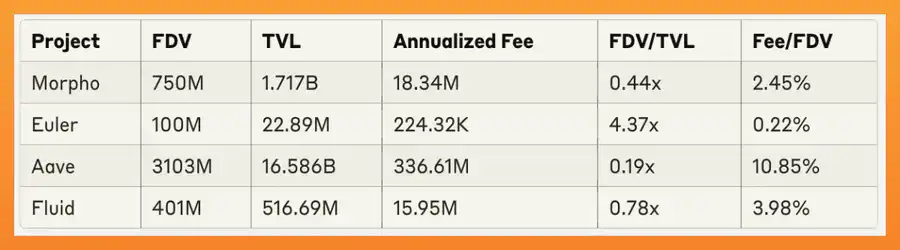
Fluid's FDV/TVL ratio is 0.78x, still significantly higher than Aave's 0.19x, indicating room for further growth. More importantly, Fluid has achieved a TVL of $516 million without large-scale token incentives, demonstrating its strong organic growth capability.
Robust Fee Generation Ability
Fluid generates around $15.95 million in annual revenue through its lending protocol, with a fee/FDV ratio of 3.98%, which is competitive compared to emerging lending protocols like Morpho and Euler. With the upcoming DEX launch, its revenue is expected to further increase:
·Regular trading fees
·Additional revenue from smart debt
Overall, the price of INST is expected to reach at least $8.
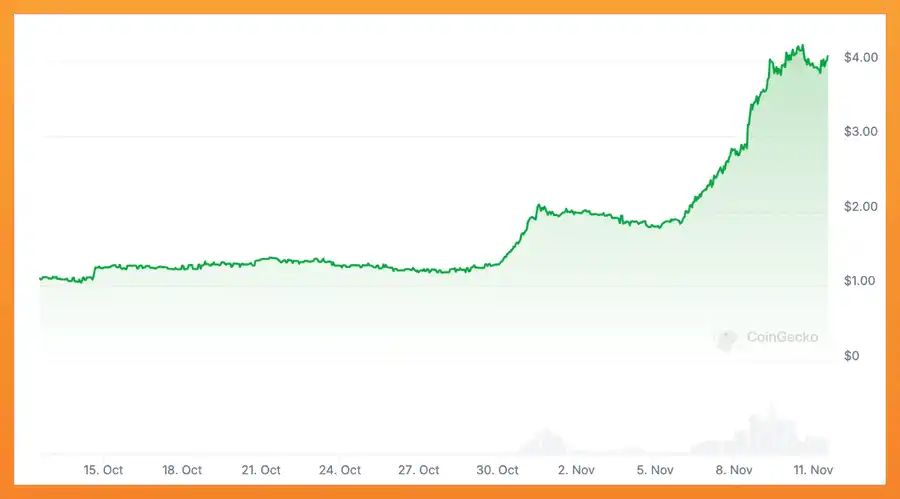
Looking Ahead: DEX Will Be Fluid's Killer App
Fluid has not relied on token incentives to drive growth, but has achieved organic growth through efficient capital utilization:
Efficient capital utilization -> Lower borrowing costs -> Attract more TVL -> Increase DEX liquidity -> More trading fees -> Further reduce borrowing costs
While Fluid's success in the lending space is already impressive, its upcoming DEX may be the true innovation. By redefining the relationship between lending and trading, Fluid is not only improving existing tools, but also creating new possibilities for capital efficiency.
Join the official BlockBeats community:
Telegram Subscription Group: https://t.me/theblockbeats
Telegram Discussion Group: https://t.me/BlockBeats_App
Twitter Official Account: https://twitter.com/BlockBeatsAsia






