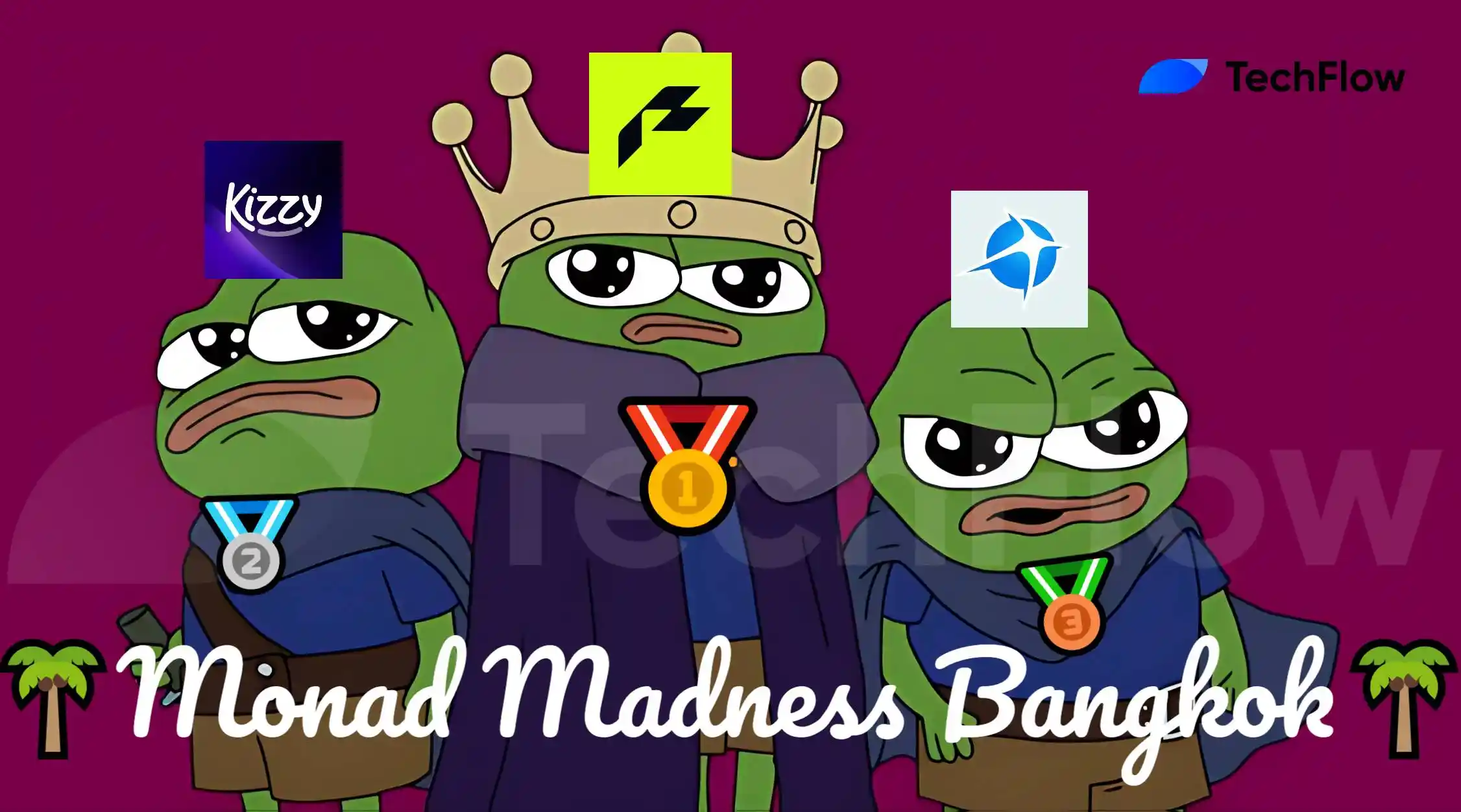
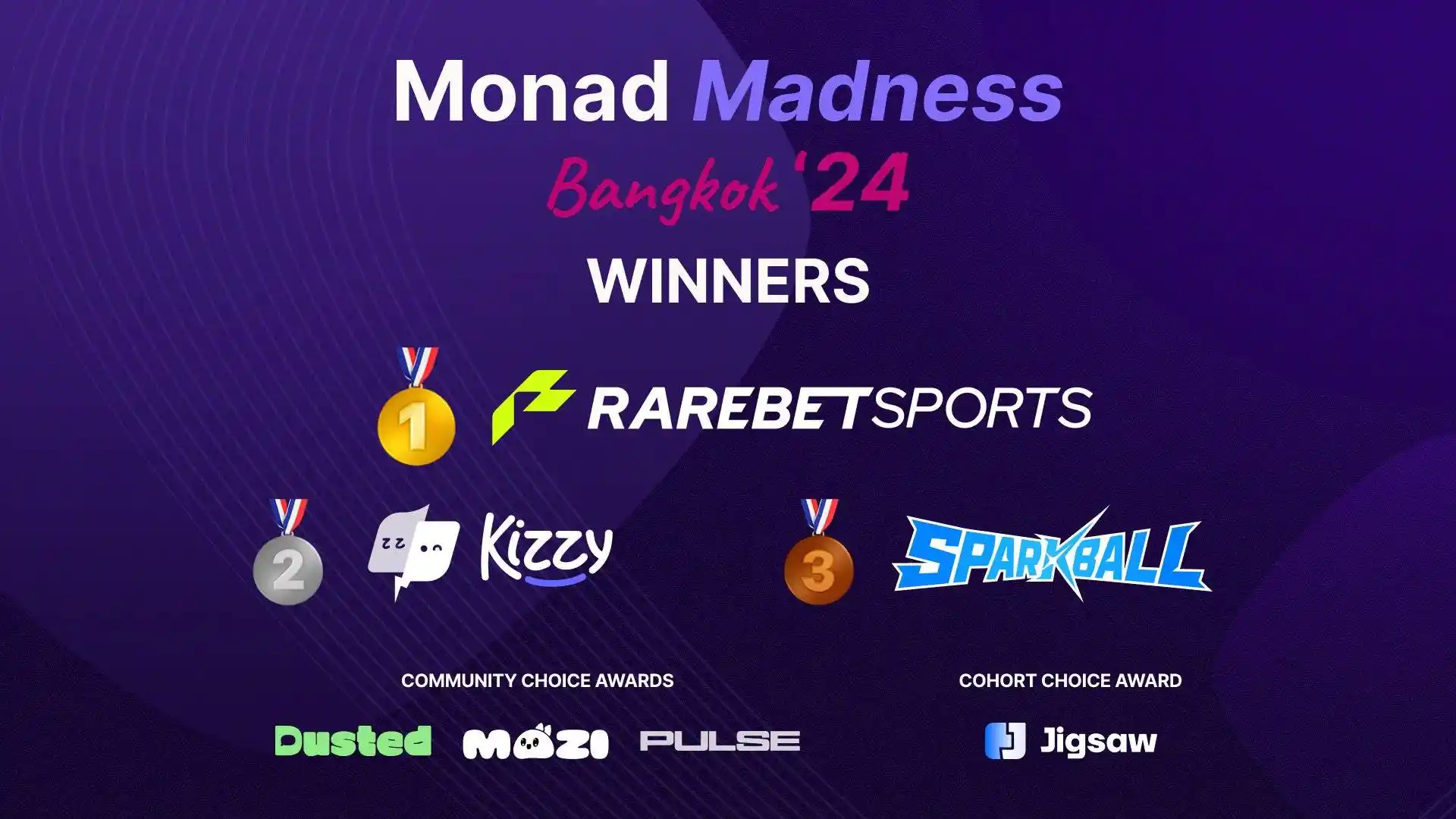
Yesterday, Monad and Paradigm jointly held the startup pitch competition Monad Madness Bangkok in Bangkok, and announced the final list of winners. The 7 winning projects are: RareBetSports, Kizzy, Sparkball, Dusted, Pulse, Mozi, and Jigsaw.
Let's take a look at the winning projects and see what outstanding new ideas emerged from this Monad Madness event.
First Place: RareBetSports - On-chain Sports Culture and Competitive Entertainment Platform
RareBetSports is a decentralized sports competition platform based on on-chain technology, providing core services such as Daily Fantasy Sports and traditional sports betting.
In terms of technical architecture, RareBetSports is deployed on Monad, using smart contracts to achieve automatic verification of match results and reward distribution. The platform supports more than 10 sports including football and basketball, and users can participate using cryptocurrencies such as USDC.
The platform's signature feature, the RareLink system, allows users to select athlete combinations based on their own analysis to participate in competitions. In the Daily Fantasy Sports (DFS) mode, users need to build virtual teams within a budget limit, and earn points and rewards based on the performance of the selected athletes in the actual matches.
Currently, RareBetSports is developed and operated by a team of 10 people spanning 4 countries and 5 cities, and the project is in the early access application stage.

Second Place: Kizzy - Mobile-Focused Social Platform
Kizzy is a Web3 social and competitive entertainment platform focused on the mobile end, where users can compete against creators and internet celebrities from various social platforms.
Core Innovation
The distinctive feature of Kizzy is the combination of social elements and competitive gameplay. The platform has designed a customized event system that supports multiple types of betting, equipped with a real-time odds calculation engine and a risk control system.
The market logic engine is responsible for handling market creation, management, and dynamic odds adjustment, ensuring the stability of market operations through multi-dimensional data analysis. Users can quickly participate in various market activities through the mobile interface, and the system supports offline access and real-time notifications.
Technical Architecture
The Kizzy platform uses NextJS to build the front-end interface, providing a near-native mobile experience through PWA technology. The backend is developed based on NodeJS, using PostgreSQL and Prisma to handle transaction data, and integrating NoSQL databases to cope with high concurrency scenarios.
The technical highlight of Kizzy is the fully vertically integrated architecture, from oracles to market logic, to the user interaction layer, all of which have been deeply customized. Particularly noteworthy is its self-developed oracle system, which, unlike traditional competitive platforms that rely on third-party oracles such as Chainlink, Kizzy's solution can more flexibly adapt to different types of betting markets.
Currently, Kizzy is in the product iteration stage, with the team focusing on technical development as the main direction, continuously optimizing platform performance and user experience. While ensuring compliance, the platform has chosen Web3-friendly markets for business expansion.
Third Place: Sparkball - 4V4 Sports Combat Game
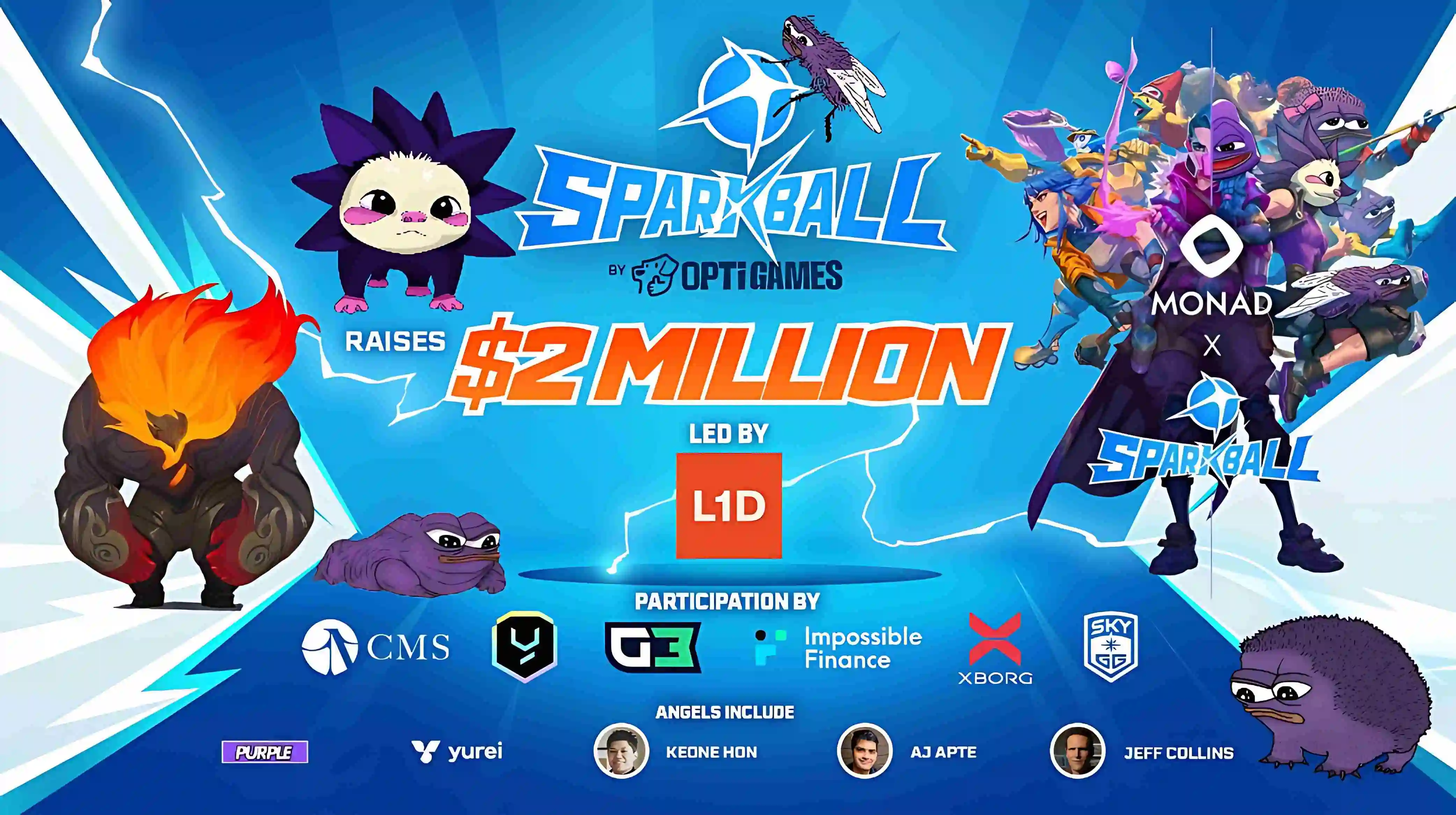
Sparkball is a 4v4 MOBA-style competitive game developed by Opti Games. The core innovation of the game is the combination of ball sports and combat elements, where players need to control the ball and compete to score in the opponent's goal. While adopting the MOBA team battle mode of "League of Legends", Sparkball also incorporates the sports competition characteristics of "Rocket League". The uniqueness of Sparkball is that it does not deliberately emphasize Web3 attributes, but focuses on creating a high-quality gaming experience.
In terms of development progress, Sparkball plans to launch the Season Zero test on November 21, 2024, and the full version is expected to be released in the second quarter of 2025. Recently, Sparkball has also introduced Chog (a Monad animal) as a game character.
Sparkball has currently received $2 million in investment from L1D and CMS Holdings, and has established a strategic partnership with the Web3 game publishing platform MON Protocol.
Community Awards: Dusted, Pulse, Mozi
1. Dusted, a Tokenized Social Protocol on Monad
Dusted is a social platform developed on Monad, with the core function of creating tokenized chat rooms through a CommunityFi mechanism. The platform uses smart contracts to implement community governance, and token holders can participate in rule-making, content review, and feature voting.
Dusted chose Monad as the underlying blockchain, mainly considering its advantages in transaction processing speed and scalability. The project adopts a modular design, including token gating systems, decentralized identity authentication (DID), and cross-chain bridges as core components. Dusted also implements a two-tier governance structure: the protocol layer adopts DAO governance, responsible for major upgrade decisions and parameter adjustments; while the community layer grants token holders governance rights over their own closed communities.
The CommunityFi model proposed by the project is worth noting. This model quantifies community contributions through tokenization, converting traditional social platform user behaviors that are difficult to measure into on-chain verifiable value proofs.
In terms of application scenarios, Dusted mainly targets three user groups:
1. Content creators can issue community tokens to build a tokenized fan economy
2. NFT projects can create exclusive communities based on holding proof
3. Web3 projects can use the protocol to establish decentralized governance communities
The project is currently in the early stage of name registration, and more information will be released by the official team.

2. Pulse, Putting Life Data on-Chain, Monetizing Health Value
PULSE (Pulse No Limits) combines blockchain technology with wearable health devices. The core product is the Pulse One wearable device, which has physiological data collection capabilities, including heart rate, blood oxygen, and activity monitoring, equipped with wireless charging and a 5-day battery life, as well as a built-in digital wallet.
PULSE adopts a three-layer design architecture of hardware, software, and on-chain technology. The hardware layer is responsible for data collection; the software layer uses digital twin technology to integrate wearable device data with electronic health records and provide AI analysis capabilities; the bottom layer is also built on Monad, handling data encryption storage and access rights management. Through decentralized on-chain technology, PULSE realizes the confirmation of health data ownership and controllable sharing. Users have complete ownership of their data and can independently decide whether to share it with research institutions or medical institutions. Users who share data will receive token incentives, forming a data value exchange mechanism.
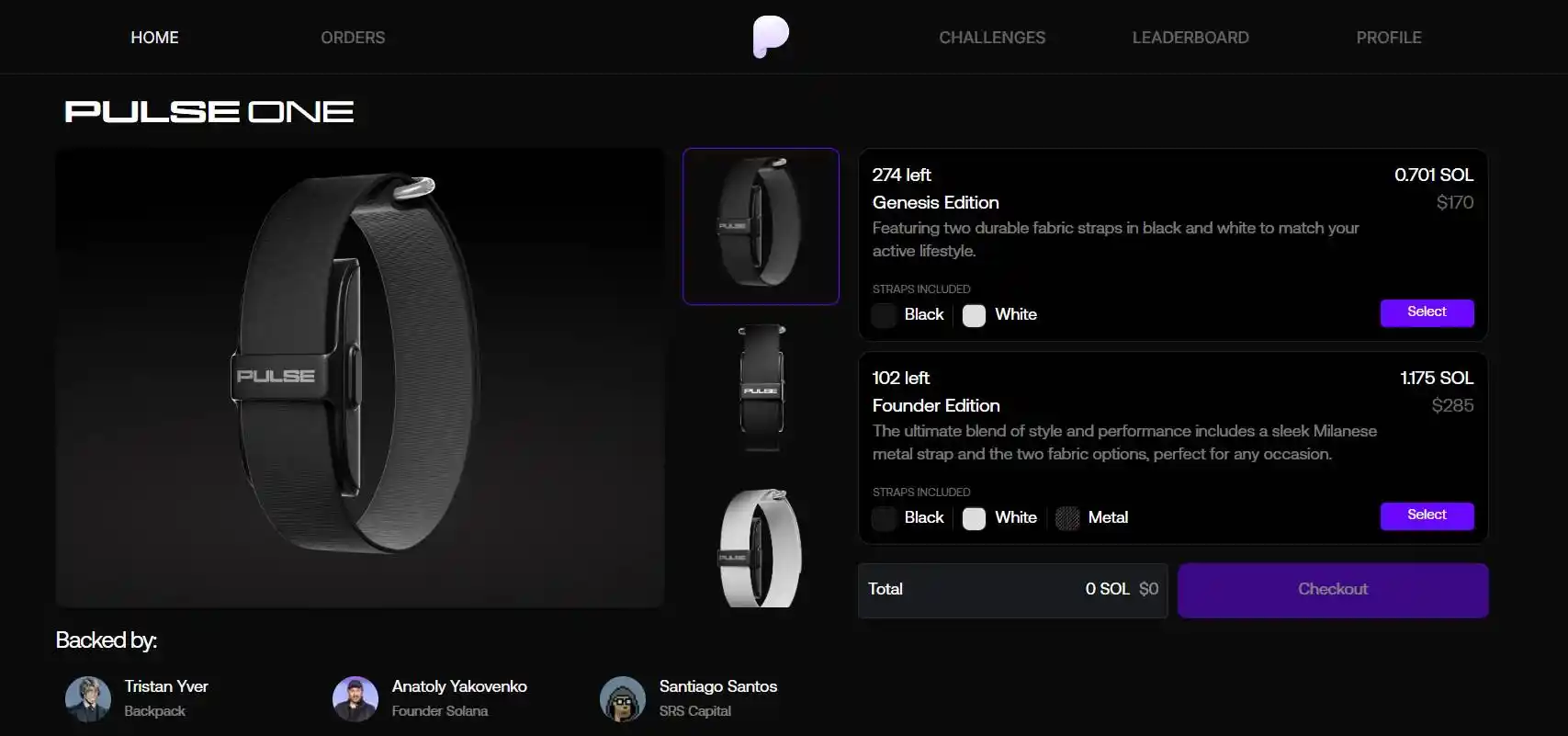
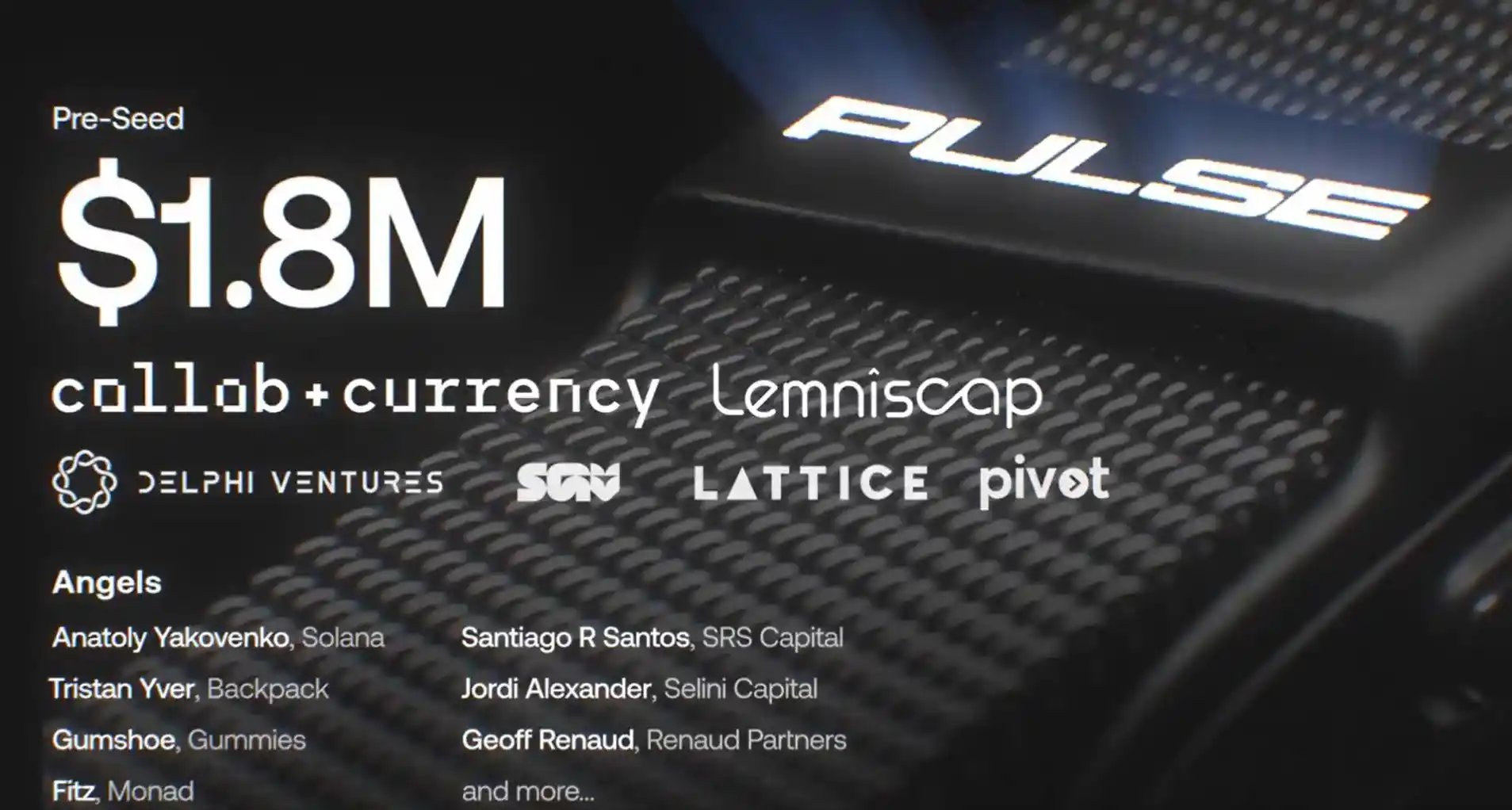
Currently, PULSE has completed a $1.8 million seed round financing, with investors including Lemniscap and Collab Currency. The project plans to launch the product in the first quarter of 2025 and is working on building a data sharing ecosystem.
PULSE's application scenarios include personal health management, medical research data collection, clinical data analysis, and the construction of decentralized medical data repositories. The project uses blockchain technology to solve the ownership disputes and sharing restrictions faced by traditional medical data, providing a new solution for the collection, storage, sharing, and application of health data.
3.Mozi, DeFi Combining PvP and Liquidity Management
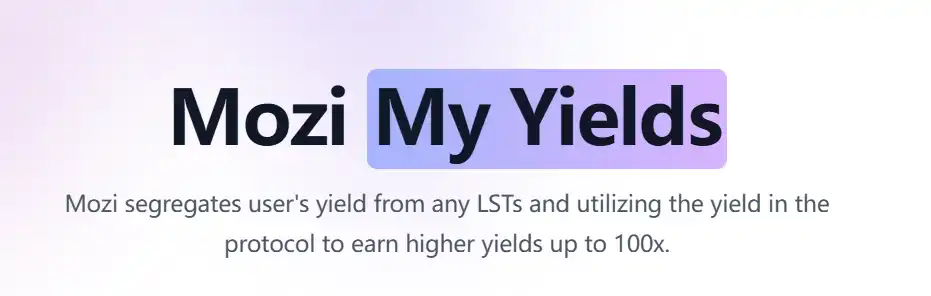
Mozi is an innovative DeFi project built on Monad. Mozi defines itself as the first PvPfi (Player vs Player Finance) project on Monad, with the core feature of combining the PvP financial mechanism with the LST mechanism for game battles and profit-making. The entire project architecture revolves around the Vault system, which is responsible for the secure management of users' LST assets and can intelligently distinguish Yield and profits, realizing the automatic reinvestment of profits.
In terms of profit management, Mozi has designed a Leverage Yield mechanism, which allows users to temporarily call on Yield to increase the available profits in the game. This design not only guarantees that users can obtain more game participation opportunities, but also ensures the stability of the overall staking profits through a strict risk control mechanism.
The game system is another highlight of Mozi. The project has developed a multi-player battle game based on LST, with on-chain randomness to ensure the fairness of the game. The profits obtained by players in the game are directly linked to their staking profits, forming a virtuous incentive cycle.
Mozi adopts an automated vault management system, ensuring asset security through smart contracts, and the profit distribution mechanism is completely transparent, with the randomness system being verifiable. These technical features collectively build a secure and reliable DeFi gaming platform.
Mozi's greatest innovation is the successful integration of LST from DeFi and the gamification scenario, allowing users to enjoy staking profits while also obtaining additional profits through participating in games. The design philosophy of the entire system has always been focused on lowering the user's usage threshold, transforming the complex DeFi operations into an intuitive gaming experience.
Concurrent Group Selection Award: Jigsaw - DeFi Protocol Based on Liquid Collateral
Jigsaw is a DeFi protocol based on the concept of liquid collateral, with its main product being the stable coin jUSD issued through the CDP mechanism. The core innovation of the protocol lies in the dynamic collateral mechanism, where users can continue to manage their assets after depositing the collateral, including transferring and allocating the collateral among whitelisted protocols.
In terms of technical architecture, Jigsaw adopts a modular design, separating collateral management, stable coin issuance, and yield strategies. Smart contracts ensure the secure transfer of collateral between different protocols, while real-time monitoring of the collateral ratio is achieved through oracles. The system has set up multi-layered risk control mechanisms, including minimum collateral ratio, liquidation trigger conditions, and emergency pause measures. Meanwhile, Jigsaw has introduced a collateral profit distribution mechanism. The profits generated by users will be automatically distributed according to a preset ratio, with a portion used to maintain system stability and a portion returned to users, in an attempt to strike a balance between user interests and protocol security.

Summary
From the award details, the new projects in the Monad ecosystem are centered around themes such as gaming and social, which are "closer to the user" and also reflect the real market demand. With the coming of the bull market, the hot money in the market is also more aggressive, requiring some projects that can quickly and easily invest capital and time and energy to capture user sentiment. Monad ecosystem has also sensitively grasped this trend, and its grasp of market demand is quite timely. As the market environment continues to evolve, we look forward to the next Monad Madness bringing more interesting creative projects.
Welcome to join the official BlockBeats community:
Telegram Subscription Group: https://t.me/theblockbeats
Telegram Discussion Group: https://t.me/BlockBeats_App
Twitter Official Account: https://twitter.com/BlockBeatsAsia