In mid-November, within just a few days, RIF and URO experienced an astonishing thousandfold increase, and the DeSci market then entered a correction and consolidation phase. Notably, last weekend URO rebounded strongly, with a gain of nearly 200%. We can't help but explore what the platform behind it, pump.science, is all about. At the same time, what role does Molecule, the same team as pump.science and Bio Protocol, play?
What is Molecule?
Molecule aims to advance scientific research through democratized funding and IP tokenization, converting IP into liquid on-chain assets, coordinating the incentives between researchers and funders, to cultivate a more collaborative and efficient scientific research ecosystem.
Molecule is empowering through three main modules: Catalyst, a fair launch platform for scientific projects; Bio, a bottom-up DeSci financial layer; and Pump.science, a barrier-free platform for scientific experiments and fundraising.
In June 2022, Molecule completed a $13 million seed round led by Northpond Ventures, with participation from Backed VC, Shine Capital, Speedinvest, and former Coinbase CTO Balaji Srinivasan. In December 2023, Molecule received $1 million in funding from Sora Ventures. As mentioned in the article "DeSci Mining | VitaDAO: How to Lead Longevity Research?", Paul Kohlhaas, the author of the VitaDAO whitepaper, is also the founder and CEO of the DeSci projects Molecule and BIO Protocol, and previously worked at ConsenSys. Tyler Golato is the co-founder of VitaDAO, Molecule, and BIO Protocol.
Catalyst - A Fair Launch Platform for Scientific Projects
Catalyst is one of Molecule's core platforms, realizing the tokenization and issuance of IP through IP-NFTs and IP Tokens (IPTs). To talk about Catalyst, we must first introduce Molecule's IP-NFTs and IP Tokens (IPTs). IP-NFTs bundle the potential intellectual property rights of a research project into an IP-NFT, which the project can then tokenize into IP tokens (the governance tokens of the IP-NFT), directly decentralizing the IP to individuals (IP token holders) and raising funds, with holders enjoying partial governance rights over the IP.
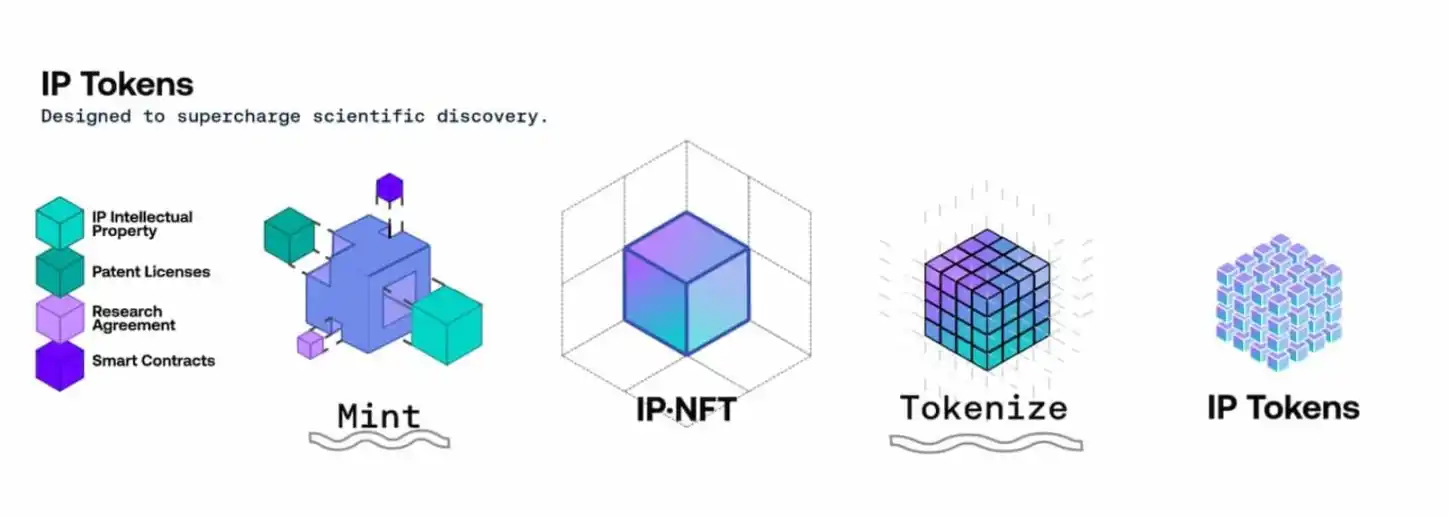
Specifically, IP-NFTs combine two legal contracts and a smart contract to achieve on-chain registration and management of IP and research data rights. IPTs represent partial governance rights over the generated IP, entitling holders to governance rights, updates on research and development progress, and detailed reporting, but do not grant holders guaranteed financial returns or revenue sharing from the commercialization of these assets.
Through Catalyst, funding can be provided by investing ETH into projects on Base, with prices following a bonding curve. Once the funding target for the selected project is reached, the negotiation phase begins (this phase can last up to 12 weeks). During the negotiation phase, the funds are locked in the project's wallet, and upon completion, the project's IP-NFT will be minted and IP Tokens issued. If the crowdfunding is successful, users will receive a proportional allocation of IPTs. It's worth noting that the purchased IP Tokens and the excess contributed ETH will be locked for a period of time before being released.
Of course, if a project fails to reach its funding target or the negotiation fails before the deadline, the contributing party will receive a full refund of the contributed ETH. However, if funds are withdrawn during the fundraising process, a 5% fee will be deducted.
The research projects currently undergoing token issuance on the Molecule Catalyst platform are exploring things like research on Alzheimer's disease antibodies, restoring brain function through transplantable tissues, engineering fibers, enamel erosion, and enzymes related to inflammation and aging.
BIO Protocol - A Bottom-up DeSci Financial Layer
As a management and liquidity protocol in the DeSci field, BIO Protocol is committed to accelerating the development of biotechnology, allowing global patients, scientists, and biotech professionals to collectively fund, build, and own tokenized biotech projects and IP.
In early November 2024, BIO Protocol received investment from Binance Labs, which is Binance Labs' first foray into the DeSci field. In addition, BIO Protocol completed its genesis community fundraising this month, raising a total of $33.06 million. BIO Protocol founder Paul Kohlhaas revealed that BIO's Launchpad and token transferability function will be launched in the first quarter of next year.
Curation, funding, liquidity, Bio/acc Rewards, and meta-governance are the five core modules of the BIO Protocol, among which the curation process involves BIO holders using locked vBIO tokens to stake or vote, electing the BioDAOs they intend. The selected BioDAOs can obtain funding through the BIO Launchpad, as well as community token liquidity support, incentives, and other acceleration services. Successful DAO voters will receive BIO token rewards and have the opportunity to participate early in the initial token financing rounds of the BioDAO (through the BIO Launchpad) and IP asset financing rounds (through Molecule). Furthermore, the profits from the IP and product sales of the BioDAOs can flow back into the BioDAO treasury to fund and transform the next generation of R&D.
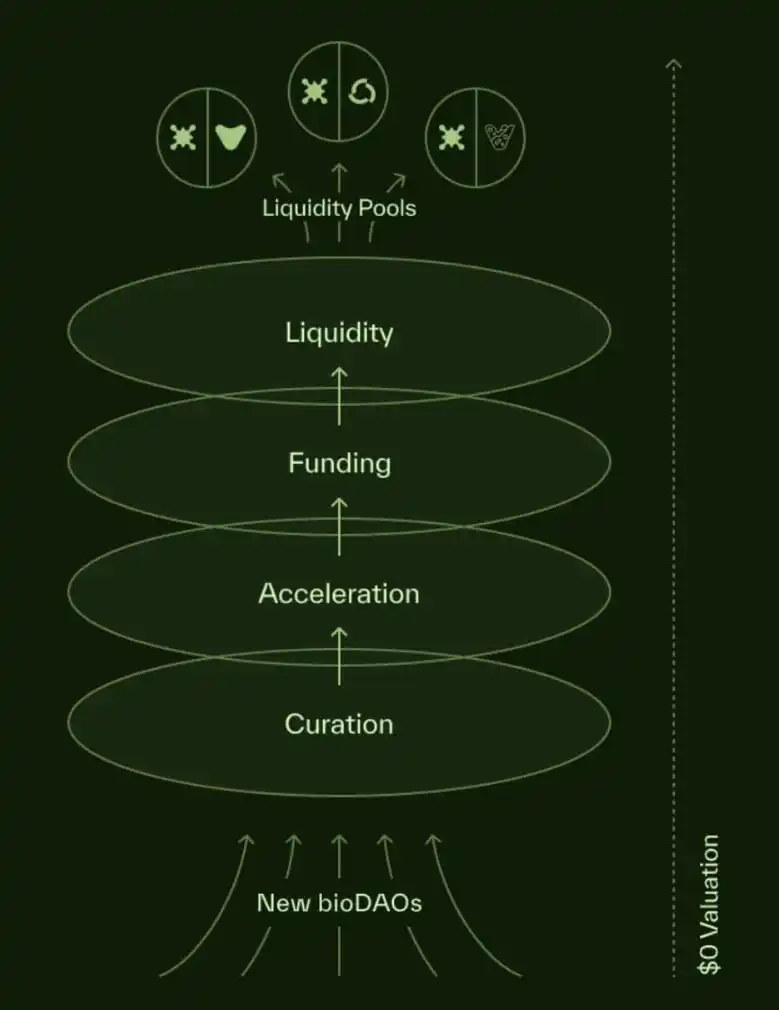
The Bio/acc Rewards program distributes rewards in the form of BIO tokens, incentivizing BioDAOs to reach key milestones such as initial token auctions through the BIO Launchpad, IP-Token launches, consumer product launches, and decentralized clinical trials. According to BIOPSY-5, 4% (132.8 million tokens) of the BIO token supply will be allocated to Bio/Acc rewards. VitaDAO has received 21 million BIO tokens through the Bio Protocol's bio/acc rewards program. In terms of meta-governance, the BIO protocol holds various BioDAO tokens in its treasury, serving as a meta-governance layer, allowing BIO holders to manage a wide range of BioDAOs and scientific IP assets.
So how does the BIO Protocol empower its BIO token? First, the BIO network will provide a $100,000 grant to the incubated BioDAOs in exchange for 6.9% of the BioDAO token supply, and can also accept allocations of BioDAO scientific IP assets. The BIO treasury can also earn fees and returns from the liquidity it provides. Additionally, the BIO token is used for planning BioDAOs, priority participation in BioDAO token sales and IP token sales, discounts on BioDAO health products/services, meta-governance in BioDAOs, and governance voting.
The total supply of BIO is 3.32 billion, with an uncapped supply (determined by BIO governance voting). In terms of token allocation, 25% is for ecosystem incentives, 20% for community auctions, 5% for the Molecule ecosystem fund, 6% for community airdrops, 13.6% for investors, 21.2% for core contributors, and 5% for Molecule. The airdrop recipients include BioDAO token holders, early supporters of BIO from concept to launch, including core contributors from Molecule's bio.xyz Cohort 1 BioDAOs.
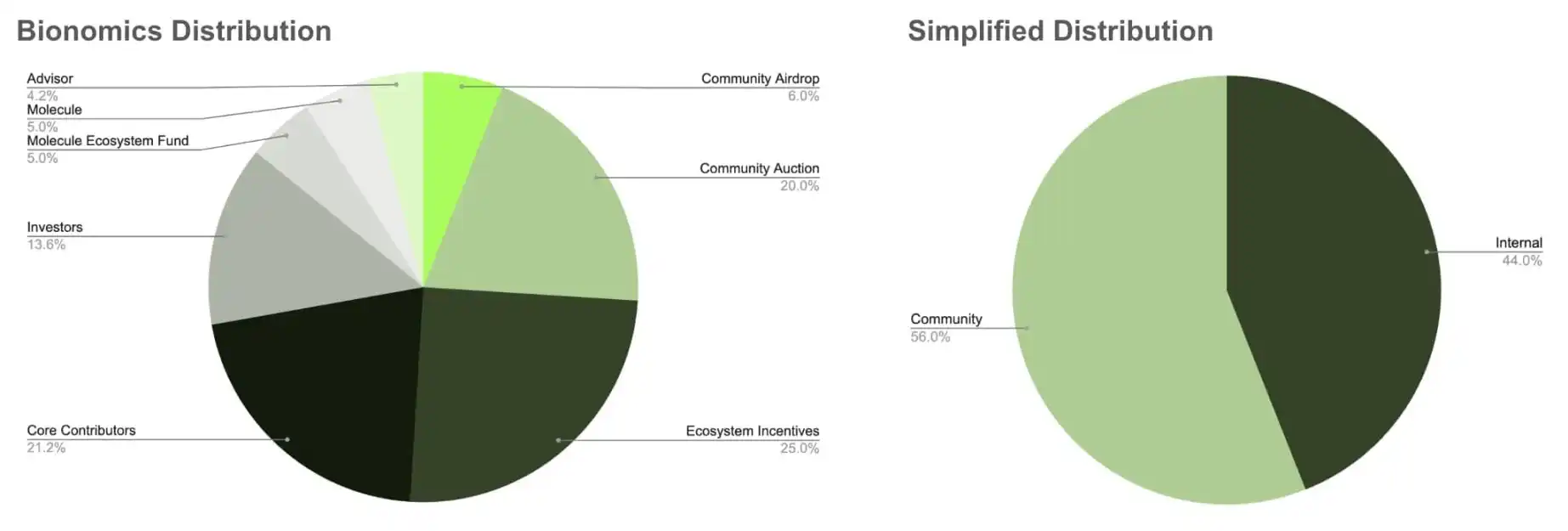
The BIO ecosystem is a network of multiple BioDAOs, each focused on developing research and products in specific scientific fields.
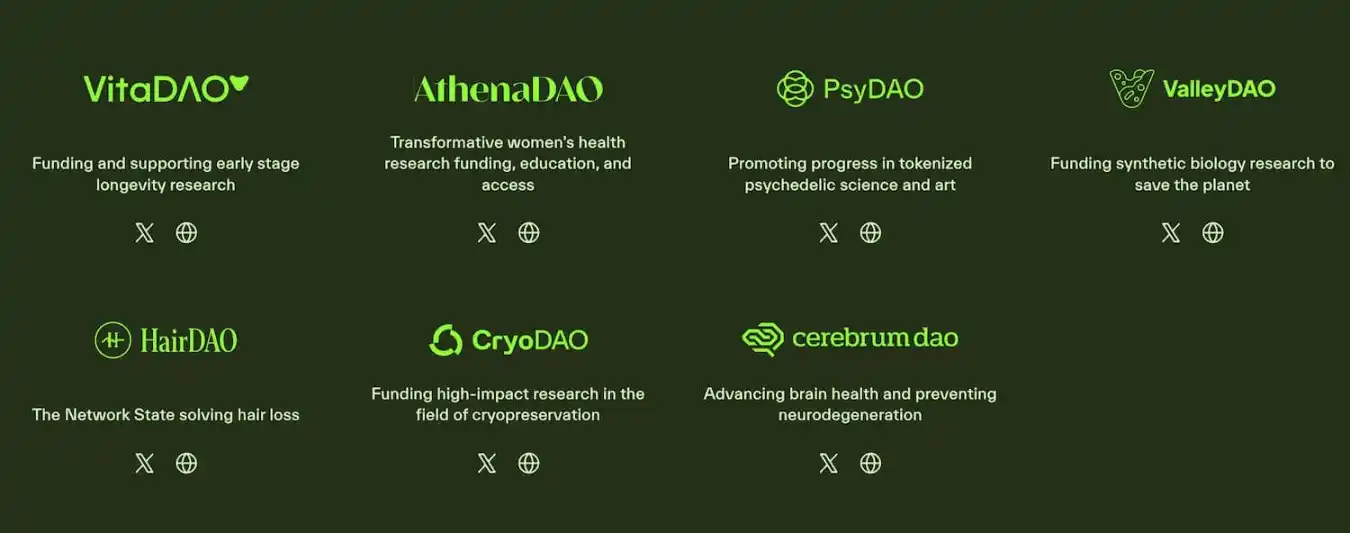
· VitaDAO (token VITA, $130 million market cap): See "DeSci Mining | VitaDAO: How to Lead Longevity Research?".
· AthenaDAO (ATH, $9.7 million market cap): Dedicated to advancing women's health research, education, and funding, starting with women's reproductive health.
· PsyDAO (PSY, $4.7 million market cap): Focused on psychedelic science research, completed its first PSY token sale in mid-November 2024, raising $2 million.
· ValleyDAO (GROW, $9 million market cap): Focused on synthetic biology, has raised over $2 million and is collaborating with Imperial College London.
· HairDAO (HAIR, $70 million token market cap): Aims to solve the problem of hair loss, has launched the Follicool shampoo product (including SHAMPOO membership) without harmful parabens or sulfates, officially stating that the shampoo is designed for all hair and skin types, and can cleanse and nourish the follicles. Consumers will receive 100 million POO tokens for each purchase of FolliCool ($49.95). POO manages the future development of the HairDAO shampoo product catalogue, including all sales revenue. HairDAO also advocates for human biologists to make greater use of the hair follicle organ culture (HFOC) model for preclinical research, but HFOC research costs are too high for mainstream adoption, so HairDAO plans to scale up HFOC in the coming year, reducing the cost of each study by 60 times.
· CryoDAO (CRYO, $16 million market cap): Dedicated to advancing cryopreservation research.
· CerebrumDAO (NEURON, $11 million market cap): Promotes brain health, raised over $1.5 million. CerebrumDAO has reached an agreement with Fission Pharma to address mitochondrial dysfunction in neurodegenerative diseases.
The above 7 BioDaos are the first batch of BioDaos in the BIO incubator, and the following three BioDaos are the early batch projects of BIO's second batch:
· Long COVID Labs: Founded by serial healthcare entrepreneur Rohan Dixit, it aims to incentivize scientists, patients and supporters to collaborate and share data, with the first candidate treatment being a combination of long-acting monoclonal antibodies and viral replication inhibitors.
· Curetopia: Focuses on rare "long tail" diseases.
· Quantum Biology DAO: Building quantum microscopes to observe quantum phenomena in real-time, supporting research in the field of quantum biology (this project has already launched a token auction on Bio). The founder and chief scientist of Quantum Biology DAO is quantum engineer Clarice D. Aiello.
pump.science - A low-barrier platform for scientific experiments and fundraising
In September, the Solana Foundation provided a grant to Molecule to build the Solana-native DeSci funding platform pump.science.
pump.science is built on top of Pump.fun. Compared to Catalyst, pump.science is an almost barrier-free platform for research experiments and fundraising. On pump.science, anyone, including drug developers, scientists, etc., can submit longevity ideas and drug strategies to raise funds for experiments, and others can bet on which interventions will extend the lifespan of the different model organisms being tested.
On pump.science, drug developers and scientists submitting test interventions need to pay a certain amount of SOL as an experiment fee. These SOL will be used to purchase the initial tokens, and once the proposal reaches a certain market value threshold, it will be tested on the Wormbot platform. Here's a quick introduction to Wormbot - Wormbot is a low-cost, fast experimentation platform for testing a large number of potential longevity therapies at low cost.
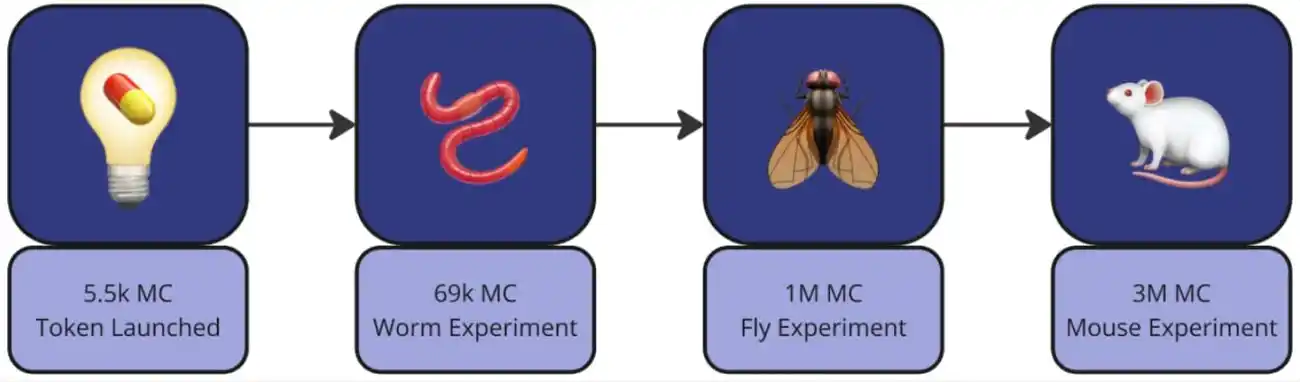
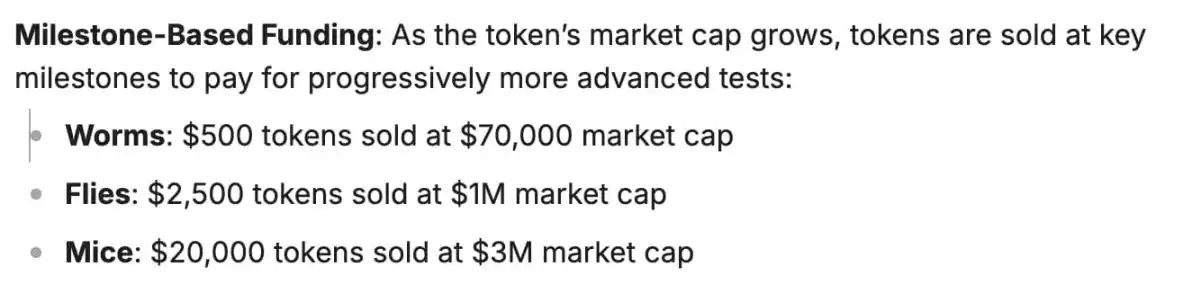
When the proposal is tested on real nematodes, the experimental data stream can be observed. Data is transmitted to users periodically for them to evaluate the value of the intervention. Of course, further down the line, testing will also be done on fruit flies and mice, collecting more expensive and time-consuming but more human-relevant data. Relevant interventions, once approved, can be sold as supplements or research chemicals. Of course, as the token value grows, the tokens will be sold at key milestones ($70,000 market cap, $1 million market cap and $3 million market cap) to pay for progressively more advanced testing.
Currently, there are only two experiments on pump.science, Rifampicin (RIF) and Urolithin A (URO), both in the fruit fly testing stage, with market caps of $190 million and $97 million respectively. The progress of both experiments is 2.74%.
Rifampicin is an antibiotic that can be used to treat a variety of bacterial infections, including tuberculosis, Mycobacterium avium complex, leprosy, and Legionnaires' disease (according to Wikipedia), and has been shown to activate the natural defense mechanisms of cells against stress and damage in small organisms like the nematode Caenorhabditis elegans.
Urolithin A is a compound produced by the body when consuming foods rich in tannins (such as pomegranates), and helps drive the mitochondrial autophagy process, i.e. clearing out old, dysfunctional mitochondria and allowing new, healthy ones to thrive. In human studies, Urolithin A has shown promising results in promoting muscle health and energy.
The two experiments on pump.science are testing the longevity performance of fruit flies by comparing the relevant compounds and placebo treatments without active drugs, with 15 fruit flies in each vial of compound and placebo, and the fly monitoring data is uploaded to the platform periodically for users to evaluate.
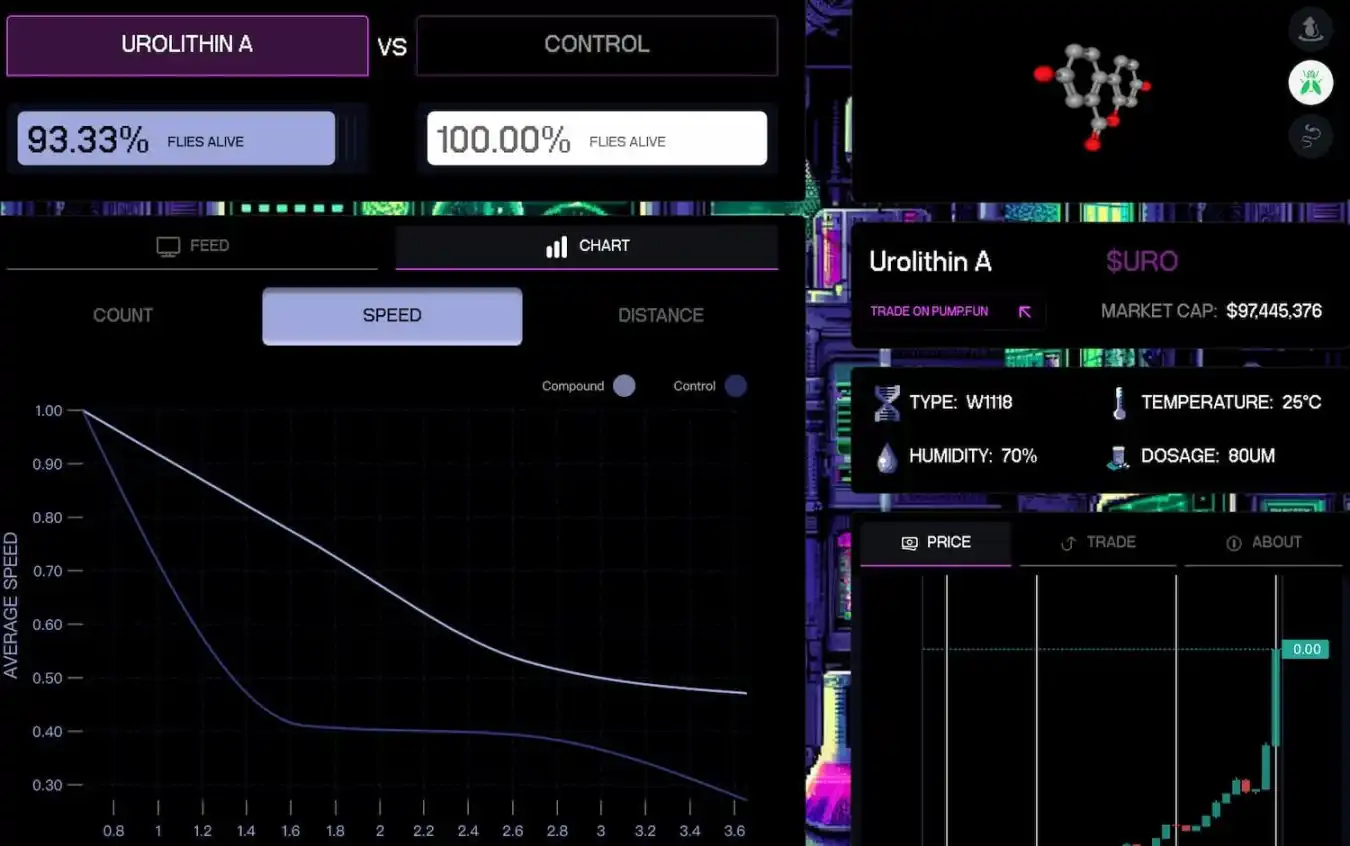
It is worth noting that the lifespan of nematodes (worms) in the experimental environment is only 20 to 30 days, and the cost of conducting such an experiment is around $300 to $500. In comparison, the lifespan of fruit flies is slightly longer, around 3 months, but the corresponding experimental cost is around two to three thousand dollars. Each mouse experiment costs between $30,000 and $60,000, with a lifespan of 2 to 3 years. Therefore, the uncertainty brought by the time cost in the later stages of testing is very high.
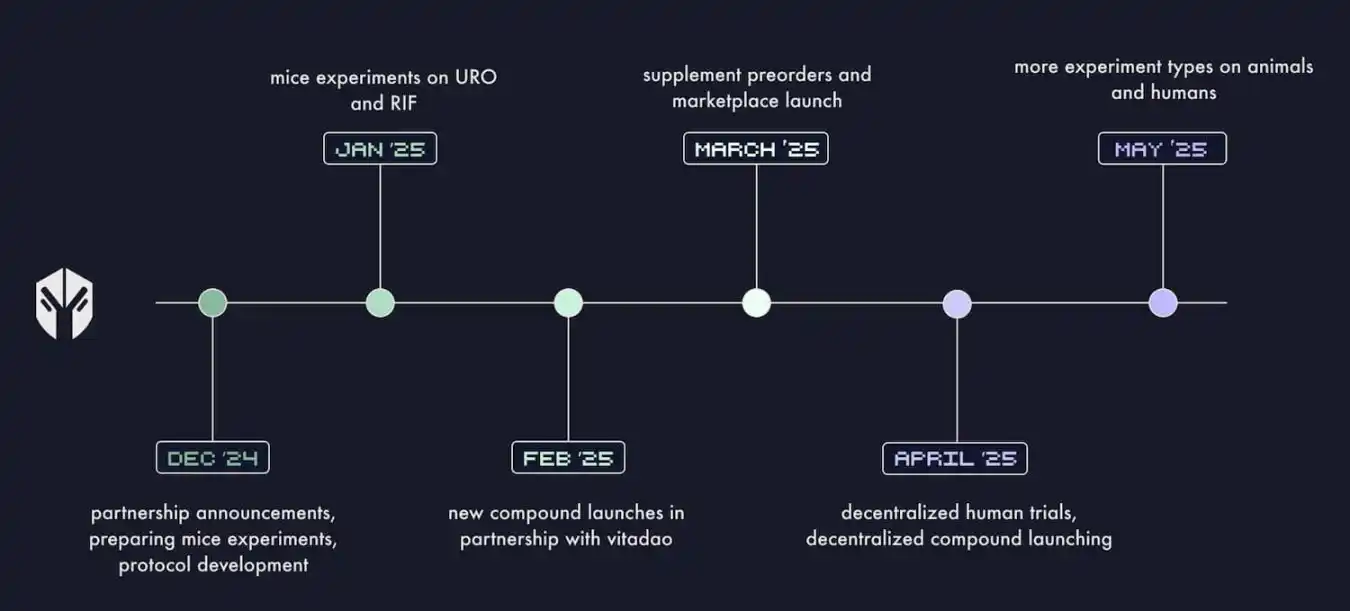
According to the pump.science roadmap, on January 25, 2025, mouse trials will be conducted using Rifampicin (RIF) and Urolithin A (URO), on February 25, 2025, new compounds will be launched in collaboration with VitaDAO, on March 25, supplement pre-orders will be opened and the market will be launched, and in April, human trials will be conducted.
In early December, Molecule also announced several recent plans, including collaboration between pump.science and Bio Protocol to promote BioDAO research, in early 2025, VitaDAO will obtain longevity compounds from Pump Science's The Longevity Prize and develop them into supplements; launch a DeSci ecosystem fund, providing half of Molecule's BIO allocation (16.6 million BIO) to drive groundbreaking science; and separately buy back $100,000 worth of RIF and URO tokens to reaffirm its commitment to pump.science and PhDegen.
Currently, the DeSci track is still in a very early stage, but has shown tremendous growth potential. This potential is expected to come from the recognition of its potential to address the issues of transparency, funding and collaboration in traditional scientific research. However, DeSci still faces challenges, including but not limited to technology adoption, regulatory issues, and how to balance the rigor and transparency of scientific research.
Welcome to join the official BlockBeats community:
Telegram subscription group: https://t.me/theblockbeats
Telegram discussion group: https://t.me/BlockBeats_App
Twitter official account: https://twitter.com/BlockBeatsAsia