CowSwap is the DeFi token that has seen the most recent surge, and is also one of Vitalik's favorite DEXes, as well as a platform used by whales to dump their holdings, and even the DEX of choice for the Vitalik team.
However, what many people don't know is that behind CowSwap is an undervalued top-tier incubator in the Ethereum ecosystem - Gnosis. I believe this is the real reason for the $COW price surge.
Recently, a on-chain activity related to a DeFi project called World Liberty Financial (WLFI) from the Trump team has attracted market attention. Although $COW is not included in the WLFI asset list, according to on-chain analyst Ai Aunt, WLFI has used CowSwap for several token purchases recently, which is consistent with Ethereum founder Vitalik Buterin's habit of frequently using CowSwap.
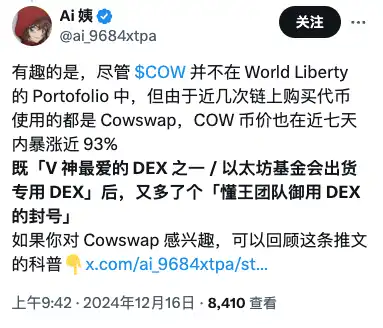
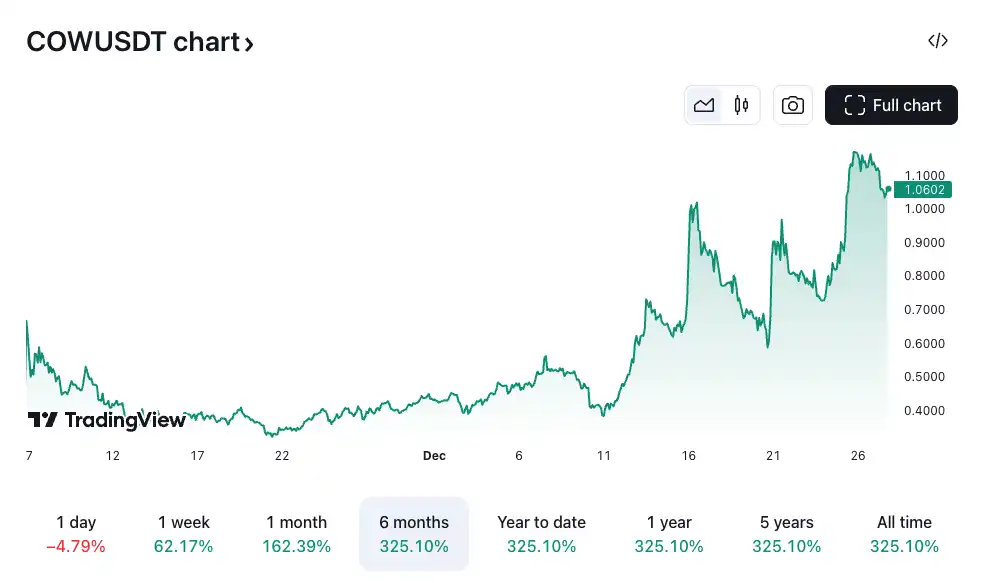
This special on-chain behavior has also directly impacted market sentiment. Under the dual expectations of Trump's imminent inauguration and the hot political concept coins, the $COW price surged 62% in just one week and soared 162% within a month.
The force behind CowSwap is Gnosis
Gnosis is the powerful force behind CowSwap.
CowSwap's predecessor was the Gnosis Protocol V1 launched in 2020, which was the first decentralized trading platform to achieve circular transactions through a batch auction mechanism. Its unique design allows all orders to share liquidity and efficiently settle transactions.
In 2021, Gnosis Protocol V2 introduced innovative solvers, which not only greatly improved order matching efficiency, but also successfully addressed the long-standing MEV (Miner Extractable Value) problem plaguing DeFi traders. That same year, Gnosis Protocol was renamed CowSwap and became the aggregator we know today.
It can be said that the rise of CowSwap is inseparable from the deep accumulation of the Gnosis ecosystem. In fact, the story of the Gnosis ecosystem can be traced back to 2015.
Compared to the now well-known Polymarket, Gnosis co-founder Martin Koeppelmann started researching decentralized prediction markets much earlier. In 2015, he published his thoughts on combining MarketMaker and OrderBook on his own forum, which was one of the earliest decentralized prediction market concepts in the industry.
Martin Koeppelmann was also one of the earliest Ethereum developers, joining even before the TheDAO era, and due to his long-term residence in Berlin, he had close interactions with Vitalik who was in the Berlin office at the time.
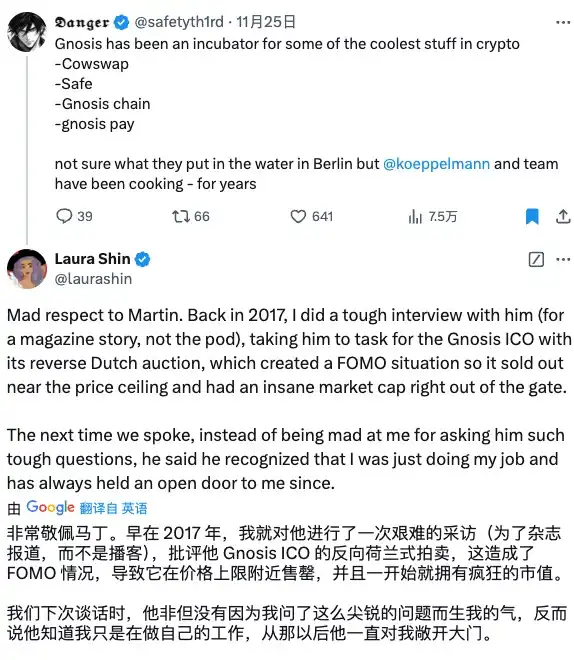
Over the years, he has participated in many discussions in the Ethereum development community and often discussed issues such as L2, ZK, and the Ethereum roadmap with Vitalik. From the evaluations of Martin on social media, we can also see his deep integration into the community.
Based on this technical accumulation, Gnosis has gradually developed a complete ecosystem. From the evolution of Gnosis Protocol to CowSwap, Martin and his team have further derived products such as Gnosis Chain, Safe, and Gnosis Pay, ultimately forming a highly synergistic ecosystem.
Therefore, the integration with each other is natural. The most representative of which is the integration of CowSwap and Safe.
The wallet of choice for the Trump family
As the star product in the Gnosis ecosystem, Safe is the most popular multi-signature wallet in the Ethereum ecosystem and is the wallet of choice for whales. In the airdrop of Safe this year, the top 100 addresses were almost all project parties or institutions.
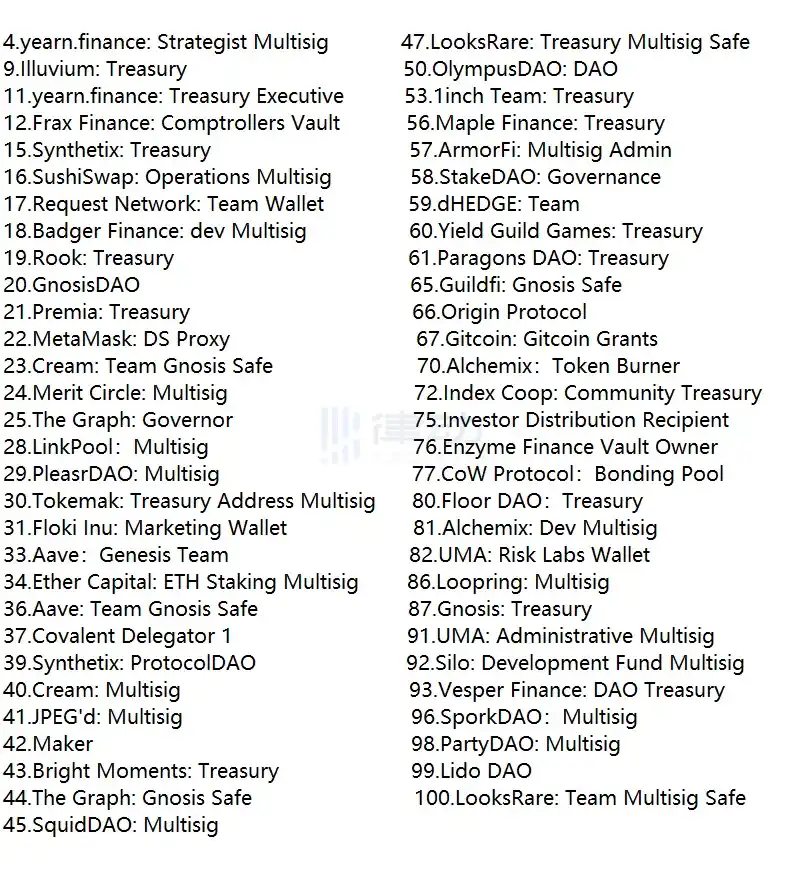
In other words, the early whales of Safe were project parties, not individual users. Including OP, Polymarket, Drukula, Worldcoin, Lido and so on. Related reading: Safe is about to trade, an overview of token economics and ecology
Initially, Safe's audience was more DAO and crypto projects. But as the crypto industry entered the next stage, traditional finance, traditional institutions, family offices and old money have gradually entered the market. However, the crypto threshold is high, and the safest way to protect capital in on-chain crypto is through a multi-signature wallet, and the choice is Safe.
The design of Safe greatly enhances the security of fund management. Through a multi-signature mechanism, funds are stored in a smart contract address, and transactions can only be executed when a preset number of signatures (such as 3/10) are met. This mechanism effectively reduces the risk of single point failure, and even if the private key of a signing address is compromised, the attacker would still find it difficult to obtain enough signatures to complete the transaction. In addition, the pre-signing operation by the signers during the multi-signature confirmation process does not require Gas payment, as the transaction is still in a "pending" state, and only the last signing address that confirms the execution operation (such as transaction, transfer, etc.) needs to pay Gas. This optimization not only reduces the usage cost, but also makes Safe the optimal choice for institutional users and whales.
According to a Safe guardian's disclosure to BlockBeats, the simplest way to judge whether a on-chain address is a Safe wallet address is: 1) "MultiSig" multi-signature displayed on ARKHAM, and 2) "MultiSig:Safe" directly displayed at the bottom of the address on the debank page.
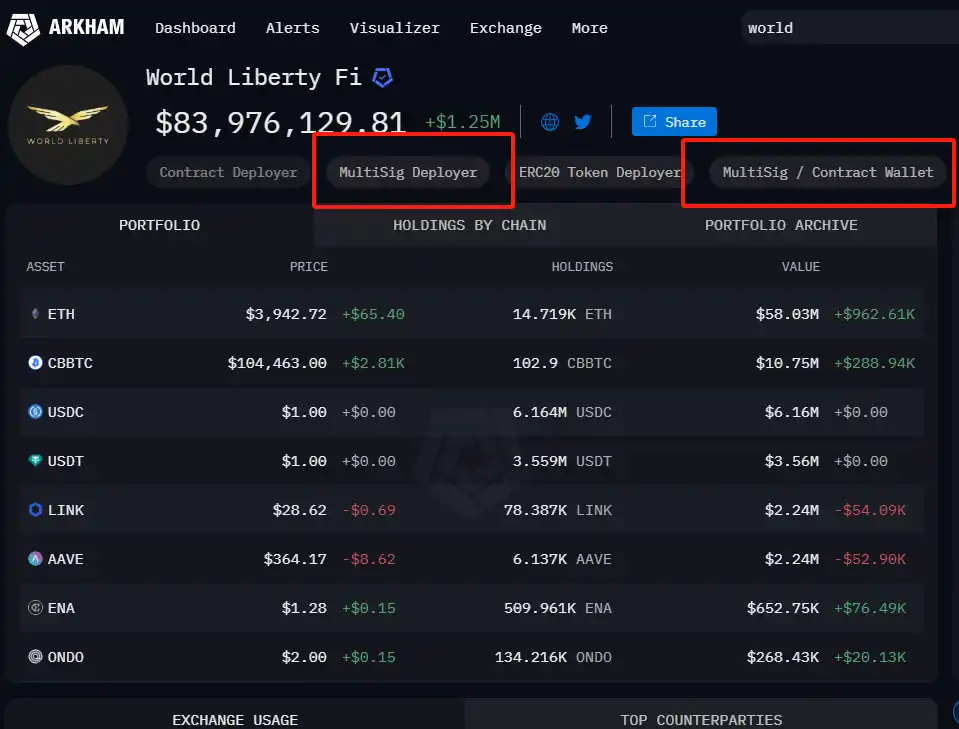
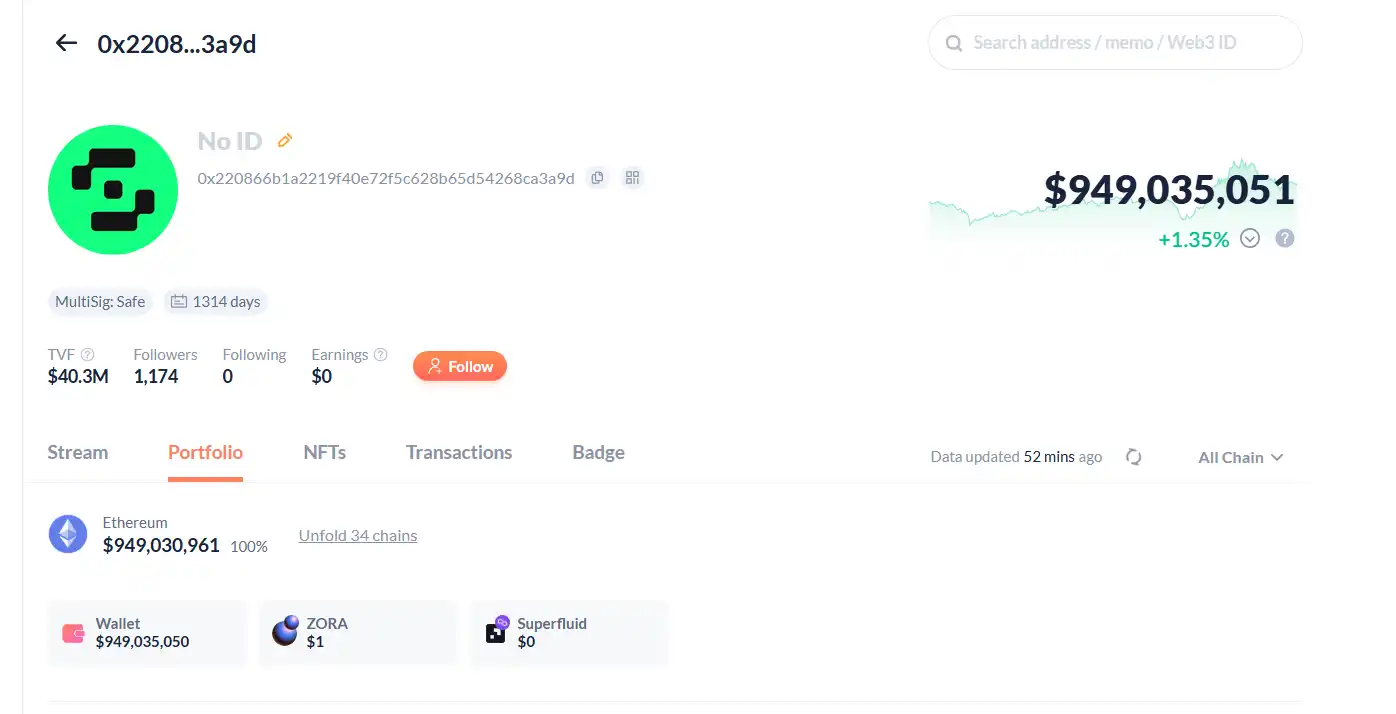
And most importantly, as part of the Gnosis ecosystem, the built-in DEX in Safe is CowSwap. This is why whales like Vitalik and the Trump team favor CowSwap.
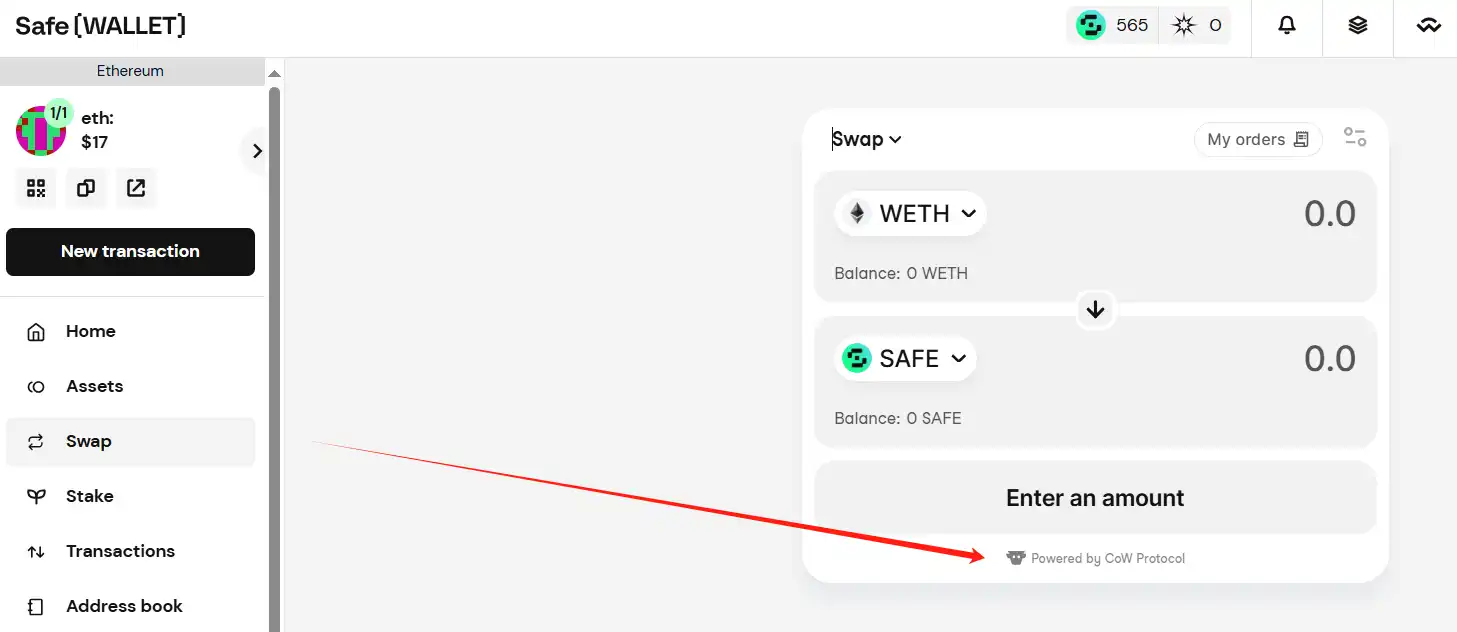
Because from this perspective, the whales like Trump and Vitalik may favor CowSwap not only because it is an anti-MEV aggregator DEX, but also because of the synergistic effects of the Gnosis ecosystem, and it is a customized solution that directly meets the real needs of the whales.
From incubator to investment DAO
As mentioned earlier, the Gnosis ecosystem has been laying the groundwork since 2015. Initially it was an Ethereum-based prediction market platform, and later developed into the Gnosis ecosystem, spawning projects such as Gnosis Chain, Safe, CowSwap, and Gnosis Pay.
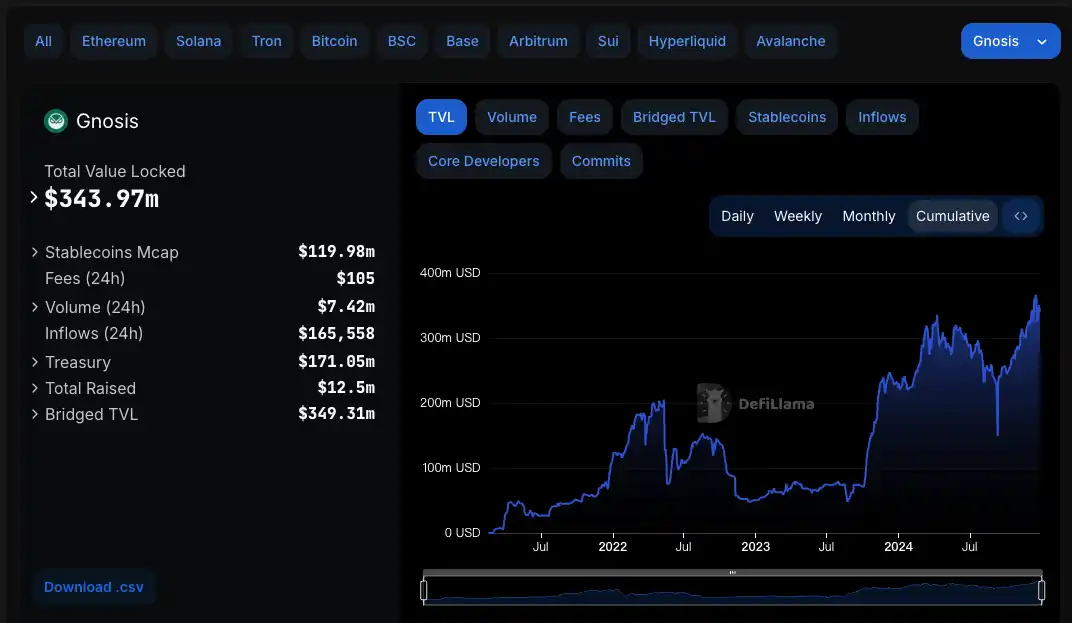
Gnosis Chain, which was quite well-known in the last cycle, is focused on the efficient and secure construction of decentralized applications. According to DefiLlama data, as of the time of writing, the total value locked (TVL) on Gnosis Chain is $349.31M, including $71.61M in native assets and $277.7M in cross-chain bridge assets. The stablecoin market cap reached $119.98M, of which DAI accounted for 74.07%, and the trading volume remained stable.
Gnosis Pay is an on-chain debit card that provides users and institutions with a seamless payment experience by integrating blockchain technology. And CowSwap and the multi-signature wallet Gnosis Safe (now called Safe). Related reading: Gnosis Card: The first Visa debit card integrated with the wallet is coming.
GnosisDAO, on the other hand, is the core governance institution of the Gnosis ecosystem, driving the incubation and development of innovative projects through decentralized autonomous governance. As the ecosystem incubation becomes more prosperous, GnosisDAO has also begun to explore investment business.
In addition to incubating well-known projects such as Safe and CowSwap, as early as 2019, GnosisDAO has started to layout the blockchain field through its investment arm GnosisVS, and has supported more than 60 startups.
The invested projects include: Monerium, an on-chain fiat infrastructure for Web3 builders; Naptha AI, a decentralized platform for AI workflow; and Schuman Financial, a MiCA-compliant stablecoin protocol.
This year, the investment business has further expanded. In October this year, GnosisDAO has approved a proposal to launch a new $40 million venture capital fund. GnosisDAO has invested $20 million, and the other half of the funds come from external limited partners (LPs). This dual structure not only increases the fund's capital size, but also creates more opportunities for external cooperation.
The fund is called GnosisVC Ecosystem and will prioritize investments in projects involved in the tokenization of real-world assets (RWA), decentralized infrastructure, and financial payment channels.
The focus investment areas are in three aspects: 1. Tokenization of real-world assets (RWA): Promoting the digitalization and on-chaining of traditional financial assets through blockchain technology, providing more liquidity and transparency for the global financial market; 2. Decentralized infrastructure: Covering a wide range of areas from node operation to decentralized computing and storage, supporting the efficient operation of the next-generation blockchain applications; 3. Payment channels and middleware: Surrounding payment solutions like Gnosis Pay, providing seamless payment capabilities for the DeFi and Web3 ecosystem.
What makes CowSwap so strong?
It can be said that the rise of CowSwap is the best embodiment of the synergistic efforts of the Gnosis ecosystem, but this does not mean that CowSwap itself has not created a new paradigm.
To be more specific, the CoW Protocol is a decentralized trading protocol, while CowSwap is a DEX built on top of the CoW Protocol, serving as its front-end interface, where users interact with the CoW Protocol.
As the front-end application of the CoW Protocol, CowSwap further amplifies the advantages of the protocol. It is called the "trading assistant" of the CoW Protocol, a Meta DEX aggregator that can jump between multiple AMMs and other aggregators to help users find the best prices in the current market. Unlike traditional DEXs that require users to compare prices themselves, CowSwap's mission is to ensure transactions are completed in the most favorable way by intelligently matching orders, solving the long-standing pain point of DeFi users - the dependence on the front-end.
Is the ultimate solution to MEV the "intent"?
Miner Extractable Value (MEV) has long been a major problem for traders. MEV refers to the additional value that miners or other traders can extract from ordinary users' transactions by manipulating the order of transactions or inserting orders. According to a report by Galaxy Digital, MEV bots have extracted between $300 million and $900 million in user profits on the Ethereum network alone.
This is very unfriendly to whales and large traders, and even Ethereum founder Vitalik Buterin himself has been frequently "squeezed" and caused considerable distress, making the MEV problem one of the issues he is most concerned about in the process of building Ethereum, and he often mentions this issue in various speeches and Ethereum roadmaps.
CowSwap has solved this problem very well.
In traditional DeFi interactions, users' operations (such as asset bridging, swapping, staking, and withdrawal) are directly interacting with on-chain contracts. This design not only is complex, but also exposes users' transaction demands, making them easy targets for MEV bot attacks. Therefore, the CoW Protocol fundamentally changes this interaction model by migrating users' transaction demands from on-chain to off-chain processing. This solution is called "off-chain pre-processing", which is also more commonly known as "intent trading".
The intent process is essentially an off-chain pre-processing black box, where users' intents are placed in an "invisible" pre-processing center, and after collecting and pre-processing users' transaction demands, CowSwap introduces third-party "solvers" off-chain to match and process the transactions. This mechanism brings multiple benefits, not only significantly reducing users' direct exposure to on-chain risks, but also optimizing the protocol's liquidity management, making user transactions more efficient, secure, and private.
More specifically, in response to the MEV problem, the CoW Protocol has designed three core protection mechanisms through the intent narrative:
1. Unified clearing price batches
The CoW Protocol introduces a "unified clearing price" mechanism. When the same token pair (e.g. ETH-USDC) is traded multiple times in a single batch, all transactions will be cleared at the same market price. This mechanism makes the order of transactions irrelevant, fundamentally preventing MEV bots from profiting by reordering transactions. More importantly, this mechanism also solves the inconsistent pricing problem caused by the constant function market maker (CFMM) model in traditional AMMs (such as Uniswap), providing users with a fairer trading environment.
2. Delegated transaction execution
Users' transactions are executed by guaranteed third-party solvers, avoiding direct exposure to on-chain MEV risks. Solvers must ensure that the transaction price is not lower than the price signed by the user, and optimize liquidity through off-chain matching or private market making. This design not only reduces users' price risk, but also significantly improves the efficiency of transaction execution.
3. Coincidence of Wants (CoWs) model
Compared to traditional automated market makers (AMMs) or central limit order books (CLOBs), the advantage of the CoW Protocol lies in its core auction mechanism. This mechanism allows multiple transactions to be executed simultaneously, like an efficient large-scale market promotion event. In this event, whoever can find the best match will get the greatest benefit. This is the so-called "Coincidence of Wants (CoWs)", from which the name of the CoW Protocol is cleverly derived.
Related reading: What's special about CowSwap that made it surge over 40% in a single day?
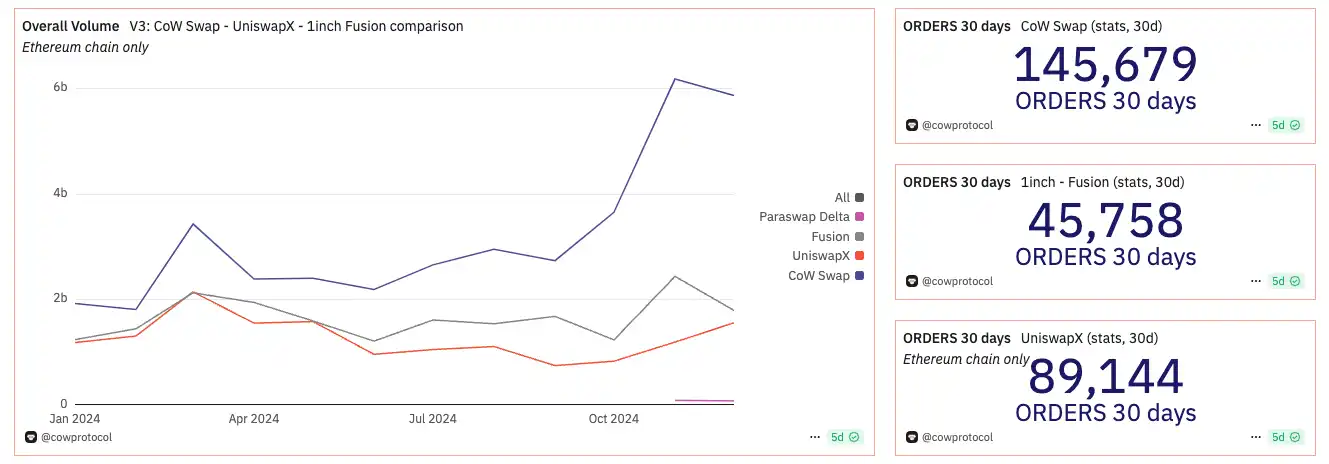
Therefore, driven by the Gnosis ecosystem flywheel and the product push of CowSwap itself, CowSwap's Ethereum chain trading volume has surged very rapidly in the past 30 days.
The past grievances between CowSwap and Uniswap
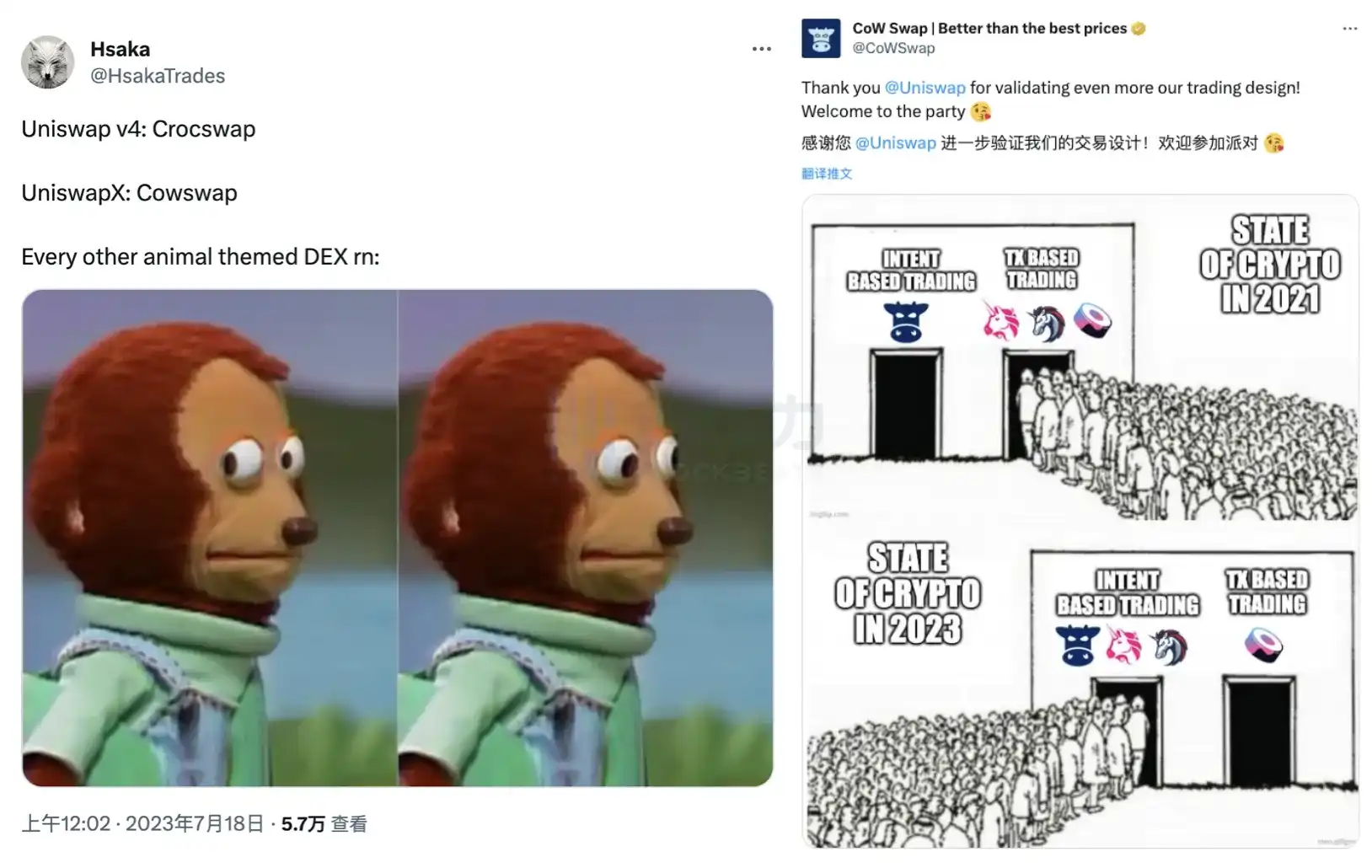
Many people don't know that CowSwap and Uniswap have some past grievances, and last year when the DEX leader Uniswap announced UniswapX, it was embroiled in a plagiarism controversy with CowSwap.
After Uniswap announced its V4 version, it immediately announced the launch of UniswapX, but the community was very dissatisfied with UniswapX, with much discussion and debate, with some directly questioning: "What's the difference between UniswapX and CowSwap?" Some even jokingly said, "UniswapX should thank the open-source spirit of the crypto industry."
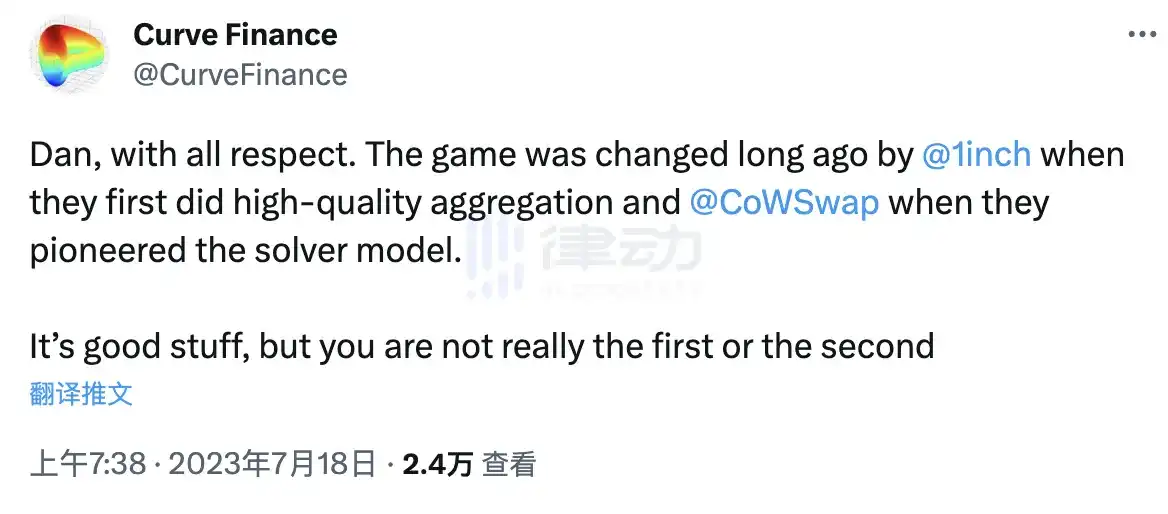
The Curve Finance official account directly commented: "To be frank, the rules of the game have changed a long time ago: when 1inch first did high-quality aggregation, when CowSwap launched the Solvers model. UniswapX is good, but it is not the pioneer, nor even the second player." Related reading: Mixed reviews, is Uniswap really the "Tencent of the crypto circle"?
This public opinion pressure has posed a considerable challenge for Uniswap, seemingly to shake off the title of "Tencent of the DEX world", two months ago Uniswap Labs launched the Ethereum Layer 2 network Unichain based on the OP Stack, finally "slightly" turning the tide.
One major innovation is that Unichain has innovated in the MEV revenue distribution mechanism, using a trusted execution environment (TEE) to directly distribute a portion of the MEV revenue to users or liquidity providers (LPs), achieving fairer value sharing.
In addition, the MEV revenue is proportionally injected into the validator and user reward pools. This mechanism not only reduces the participation risk of LPs, but also encourages more users to participate in ecosystem building.
Wintermute "walks on the seven-colored clouds"
Looking at it this way, CowSwap's product is not bad, but the "death" of good products in the crypto circle is also varied, and those that can make it to the top trading platforms are not many, and those that can increase by 162% in a month are also not many.
If you go back 4 months, you will find that the beginning of the rise in the price of the COW token is precisely due to the cooperation with Wintermute.
Initially, to increase on-chain liquidity, the CoW DAO proposed to allocate 10 million $COW tokens to inject liquidity into the ETH/COW market. This proposal included an innovative strategy: a portion of the $COW tokens would be converted to ETH and injected into a brand-new Function Maximizing AMM (FM-AMM) liquidity pool along with the remaining $COW. The FM-AMM, unlike traditional AMMs, can effectively eliminate most MEV attacks and the high profits of arbitrageurs, while reducing the risk for liquidity providers (LPs).
However, on-chain liquidity alone was still not enough to meet market demand, and the depth of the centralized exchange (CEX) market was also important. After all, the market there is larger, and the money is more. At the time, the only way to acquire $COW was through decentralized channels, with the largest pool being the ETH/COW on the Ethereum mainnet Balancer. Without CEX trading scenarios, many users and institutions were unable to position $COW.
At this time, Wintermute "stepped on the seven-colored clouds" and arrived.
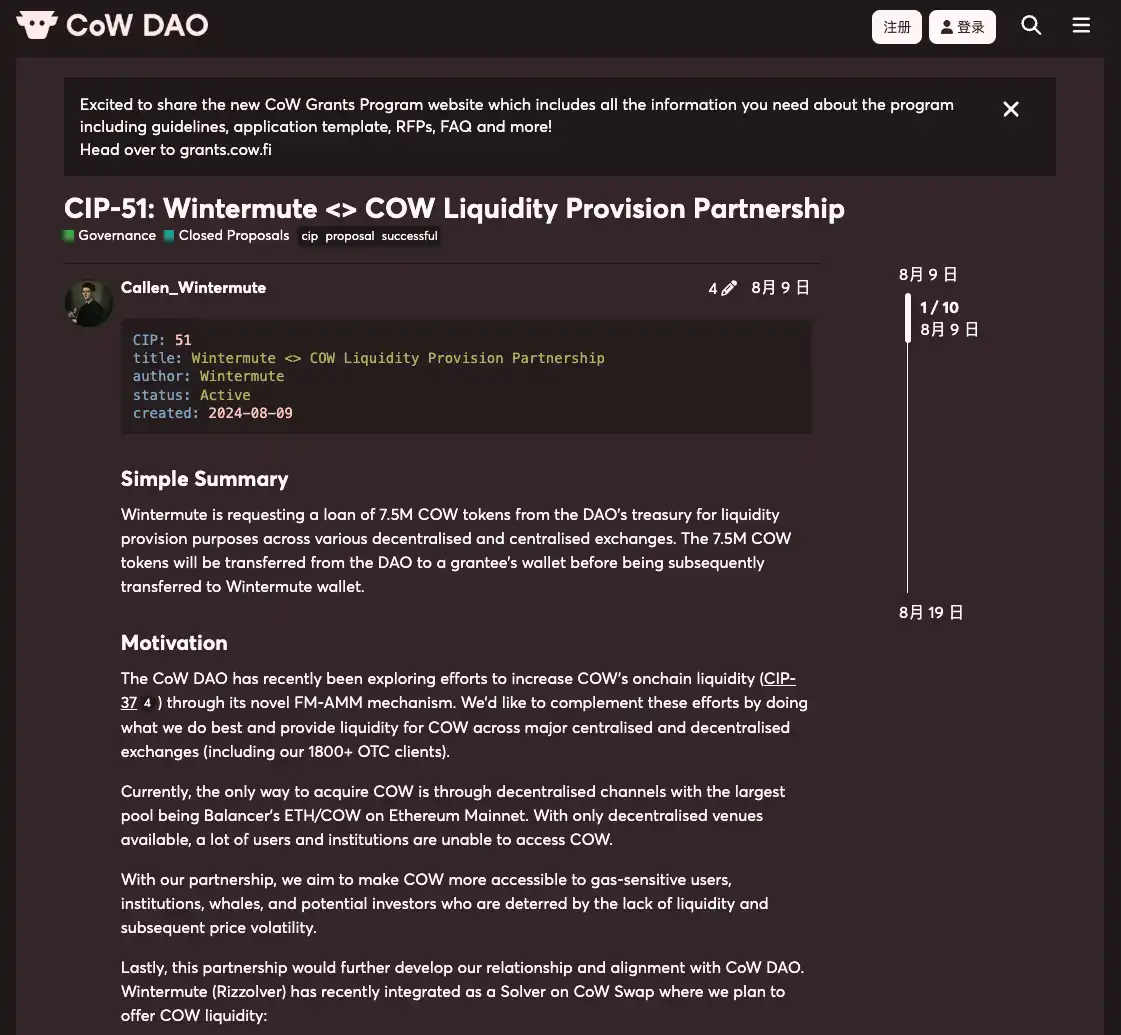
Wintermute proposed to borrow 7.5 million COW tokens from the CoW DAO treasury to support liquidity on decentralized and centralized trading platforms. This proposal received strong community support and officially opened a new chapter for $COW liquidity.
As a leading market maker in the crypto industry, Wintermute is highly skilled at establishing efficient markets between centralized and decentralized trading platforms. Its founding team previously worked at the traditional financial giant Optiver and has extensive experience in managing market depth.
During the collaboration, Wintermute provided depth market support for COW with ETH and other trading pairs, ensuring liquidity and providing a stable trading environment for DeFi aggregators (such as CowSwap, UniswapX, and 1inch). At the same time, Wintermute provided large-volume trading support for institutions in the OTC market, further expanding the user base of $COW.
This two-way market-driving effect directly led to a surge in the price of $COW.
Even in the second month of Wintermute's market-making for it, Coinbase announced that it would list $COW on its roadmap and launch COW perpetual contracts three months later. Since then, $COW has been successively listed on major top-tier trading platforms, with Binance quickly following suit and launching the COW/USDT spot trading pair.
These are the real reasons why I believe $COW surged 162% in a month.
The Flywheel Effect Between the Gnosis Ecosystem and Ethereum
From a more macro perspective of public chains, in a bull market, the Solana ecosystem, which Wall Street is betting on, has grown very rapidly, while Ethereum has shown some fatigue. However, from the on-chain dynamics of the WLFI project of the Trump team, Solana still has a lot of room for growth in serving institutional clients, and its multi-signature product performance is difficult to match Ethereum's deep accumulation.
Although Solana's mainnet also has multi-signature products, the assets they custody are not on the same scale.
Taking the Squads multi-signature protocol, which manages the most assets on Solana, as an example, its current custody asset scale is about $170 million. In contrast, the Safe in the Gnosis ecosystem has a custody asset scale of up to $89 billion.
More importantly, the products in the Gnosis ecosystem not only have an impressive scale, but also form a powerful ecosystem that can serve institutions and large clients through collaboration and deep integration. The security of Safe, the efficiency of CowSwap, and the convenience of Gnosis Pay have collectively helped Ethereum "catch its breath" in this round of public chain competition.
Moreover, the products in the Gnosis ecosystem have formed a good ecosystem circle to serve institutions and large clients under project collaboration, helping Ethereum "catch its breath" in this round of public chain race.
It is this synergistic effect that has also built a flywheel effect between the Gnosis ecosystem and Ethereum.
Welcome to join the official BlockBeats community:
Telegram subscription group: https://t.me/theblockbeats
Telegram discussion group: https://t.me/BlockBeats_App
Twitter official account: https://twitter.com/BlockBeatsAsia