Nowadays, a16z is in the spotlight due to the resources behind a16z, while Virtual has become a hot AI Agent Launchpool backed by Base's liquidity. Vana has raised a total of $25 million from top-tier VCs including Coinbase Venture, Paradigm, and Polychain, with resources no less than a16z and Virtual. The DataDAO built on Vana requires the VANA token to participate, which is essentially similar to a Launchpool focused on the data track. Investors can stake Vana to the DataDAO they are optimistic about, supporting its development while also earning staking rewards. In the future, these DataDAOs may airdrop tokens to Vana stakers (the dFusion AI Protocol has already announced a 1:1 token airdrop to Vana stakers). Each DataDAO needs a minimum of 10,000 $VANA staked to receive rewards, further promoting the deflation of Vana. AI Agent is undoubtedly the hottest topic at the moment, and the input data that most affects the performance of AI Agents will also be discovered by investors as the market is educated, and that's when the value discovery of Vana is just beginning.
Through the innovative design of DataDAO and DLPs, Vana has reshaped the infrastructure of the data economy, while promoting the fair circulation of high-quality data, creating a more responsible ecosystem for AI innovation.
3. Vana's Value Analysis
In addition to the above discussions on Vana's pioneering tokenization of data, providing high-quality data for AI Agents, and the value of the DataDAO Launchpool in Web3, we can also step out of the Web3 framework and look at Vana's positioning in the entire internet technology ecosystem. a16z partner Justine Moore has published a noteworthy list of AI projects, and Vana is the only Web3 AI project on the list (even though a16z has not invested in Vana).
AI = Data + Model + Computing Power. Currently, the model track is an oligopoly competition between OpenAI and Anthropic, the computing power track is monopolized by Nvidia, and Hyperbolic is challenging with distributed computing power. The data track is the core and foundation of AI, the new oil in the AI era. Without data, the AI express train cannot start. However, there is currently no company that is absolutely dominant in the data track.
In the internet era, the information revealed by digital footprints is more than self-awareness: algorithms can predict personality traits, income levels, and even mental health conditions more accurately than family and friends by analyzing subtle clues, such as Facebook likes or GPS records. Seemingly trivial behaviors, such as the choice of shopping time or the tone of social media posts, inadvertently reveal our emotions, preferences, and even deeper truths. Personalized information push based on digital data can more effectively target personality traits, such as helping low-income groups significantly improve their savings ability. Therefore, it is important to tap into the potential of data.
In Web3 projects, owning your data is no longer an attractive topic. What matters to them is how to bring real benefits to users by tapping into the value of data. The profits of Web2 tech companies actually come from the control of data, such as Google's precise advertising placement and Ant Data's big data finance. Reddit has earned over $200 million in revenue by selling user-generated content data for AI training. Many Web2 tech companies are essentially big data companies. The market cap of Google's parent company Alphabet is $2.39 trillion, Facebook is $1.15 trillion, Twitter is $55.68 billion, and Reddit is $29.6 billion. On Vana's platform, researchers can not only access data from Twitter or Reddit, but also obtain high-value sensitive data such as health and finance data without infringing on privacy. With the network effects gradually spreading under token incentives, Vana is expected to become the center of high-quality data sources, and more and more researchers will access data from here, making AI no longer controlled by a few elites. Vana, which promotes the democratization of AI, is as revolutionary to AI as Bitcoin is to traditional finance.
On the other hand, Vana treats unstructured data as tradable financial assets, building a secondary spot market, lending market, options and futures contracts and other derivative products around DLPs. This opens up a brand new asset class, both in traditional finance and DeFi, which is unachievable on Nasdaq and the Chicago Commodity Exchange. Because no Web2 tech giants will self-revolutionize and cede the core data profits. Once the data is made public, the value will plummet or trigger privacy issues. Not to mention the complex KYC process of centralized exchanges. These pain points can be well solved by Vana, and Vana is the only one who can do it now. Any new asset usually comes with a speculative bubble, just as the recent new narratives of DeSci and AI Agent have triggered people's FOMO. The rising total market cap of DLPs will attract new crowds to pay attention and participate in these DataDAOs. New users will bring new ideas on how to improve the user experience, refining the operation mechanism of DataDAOs, making the entire ecosystem stronger.
The reason why Silicon Valley can create so many high-value companies that change the world is the core of betting on a vision of a better life. Compared to internet tech companies, Vana is still very small now, but the mission is very big. Cryptocurrencies have given investors around the world the opportunity to participate in early potential projects. And Vana's current circulating market cap is only $500 million.
4. Vana Ecosystem Flywheel
The VANA token is the cornerstone of this economic system, with functions including network security, transaction fees, DLP staking, data access currency, and protocol governance.
When AI companies access data, they use VANA tokens to purchase and burn specific DLP tokens. This burning mechanism establishes a direct economic link between network usage and token value, ensuring that value flows back to data contributors and the broader network ecosystem.
Furthermore, the incentive structure further drives protocol adoption, such as rewarding outstanding DataDAOs to promote ecosystem activity. To date, the Vana Foundation has supported 12 active DataDAOs and received over 300 accelerator applications. These DAOs cover a diverse range of applications, from Twitter data, synthetic data to genomic data and browser data, demonstrating the broad potential of the Vana protocol.
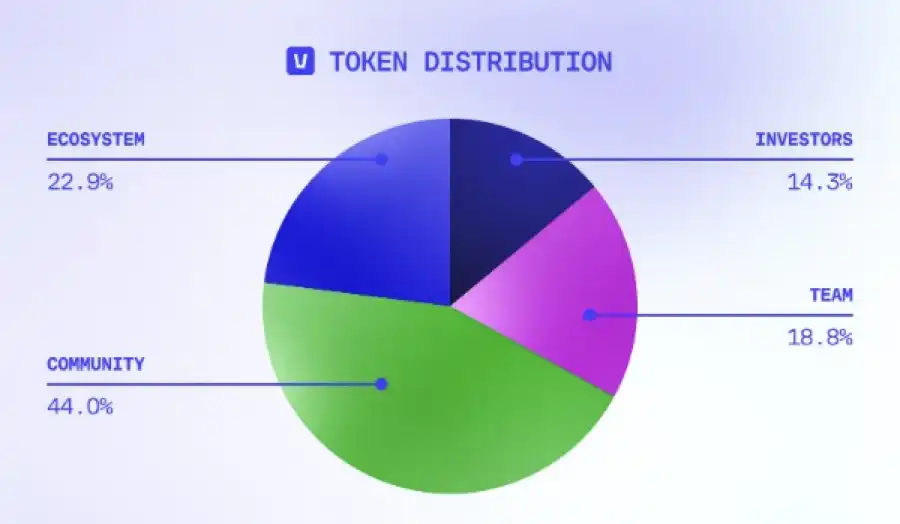
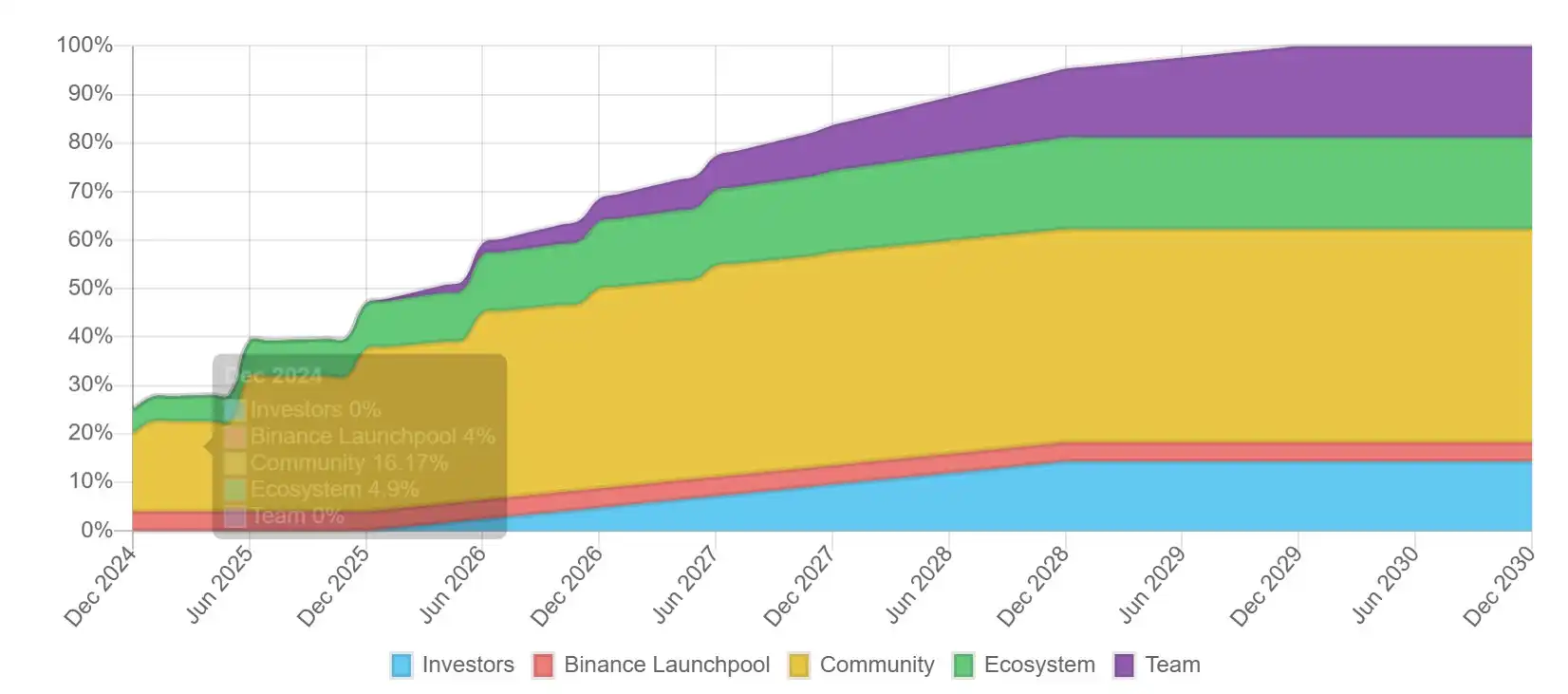
Vana values community power, allocating 44% of the tokens to the community, of which 20.3% have already been released at TGE, making it one of the few projects in 2024 that will benefit participants significantly in the short term. The tokens allocated to investors are locked for the first year, and then unlocked over the next three years, further demonstrating the investors' confidence in its technology and model. The team received 18.81% of the tokens, locked for the first year and then unlocked over the next four years. This distribution ensures that the team has the motivation to continue building Vana, providing a guarantee for the long-term development of the ecosystem.
5. Current Participation Methods
Vana is implementing a DataDAO reward system to ensure fair value distribution and incentivize high-quality data contributions. This reward system is based on 21-day cycles, rewarding the top 16 best-performing DataDAOs. The distribution of rewards is proportional to the share and multiplier of each DataDAO participant, ensuring that only the most valuable and trusted data sets can receive rewards, driving continuous optimization and innovation in the ecosystem.
Vana has allocated 15% of the total $VANA token supply for the DataDAO reward program, which will be gradually released over three years. The specific allocation structure is as follows:
· 50% to support the $VANA stakers of the top 16 DataDAOs.
· 50% goes to the DataDAO treasury, used to fund operations, incentivize data contributions, and increase staking rewards.
This reward structure ensures that the most valuable and contributing DataDAOs can receive continuous support and rewards, while also driving the healthy development of the entire ecosystem.
To encourage long-term commitment, Vana has introduced a staking multiplier mechanism. The longer the participants stake, the higher the multiplier they will receive, reaching the maximum value after 63 consecutive days of staking. This mechanism increases the weight of the share in the reward calculation, aligning the incentives of the stakers with the DataDAOs, further promoting the sustainable development of the system.
How to Participate in the DataDAO Ecosystem?
Step 1: Explore the Data Hubs
Visit the website: datahub.vana.com to view all registered DataDAOs that are eligible for rewards. The Data Hub is the portal to enter, understand, and interact with the Vana ecosystem. Here you can view the available data sets, learn about the contributors and their verification mechanisms, and compare the performance and rankings of different DataDAOs.
Step 2: Stake $VANA Tokens
After selecting a DataDAO, stake $VANA tokens to show your support. If the DataDAO ranks among the top 16, stakers will receive rewards. Each DataDAO needs to reach a minimum staking threshold of 10,000 $VANA to be eligible for rewards.
Step 3: Track and Optimize
Use the dashboard to monitor the staked amount, multiplier growth, and the performance of the supported DataDAOs.
Step 4: Earn and Reinvest
As the DataDAOs receive rewards, users will earn a share based on their staked amount and multiplier. Users can reinvest their earnings to increase their influence and returns in future cycles or moderately cash out based on their financial needs.
Currently, the annualized yield (APY) for staking VANA is as high as 273.58%. For risk-averse users, they can earn contract yield while also earning additional income from the contract fee rate. In the future, Vana stakers may receive token airdrops from DataDAO sub-projects.
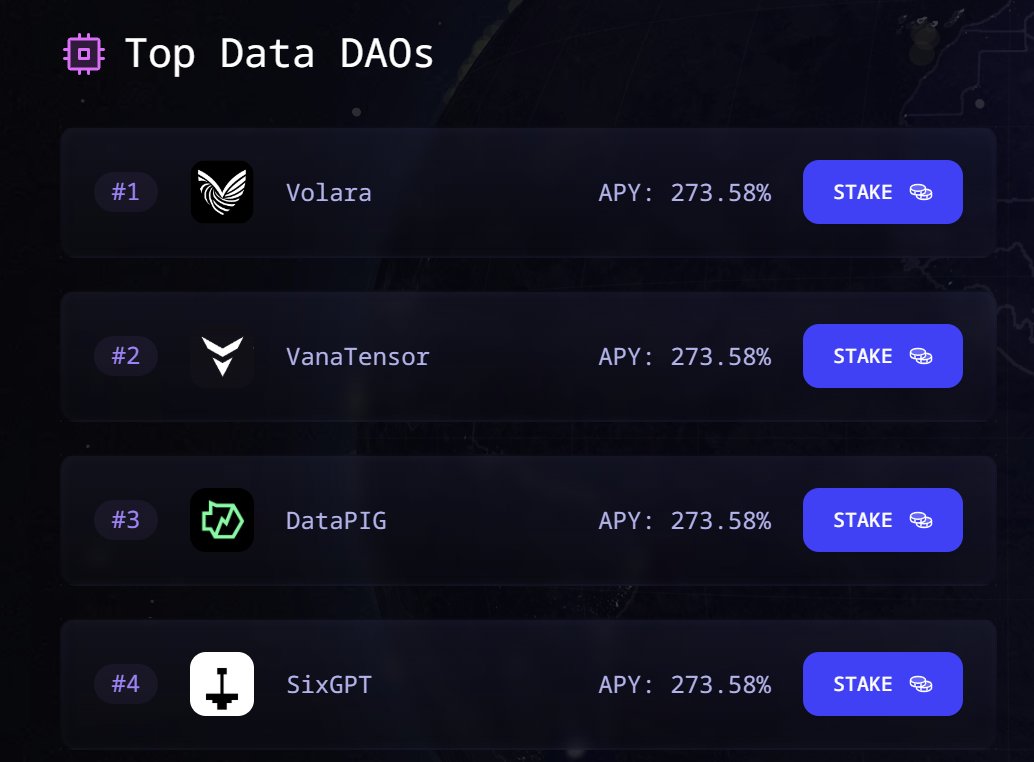
Vana's DataDAO ecosystem already has several interesting innovative projects. Users can participate in these DataDAOs to earn Vana token incentives.
Featured Project Introductions
1.@VanaTensor
Supported by Vana, @VanaTensor provides users with high-quality synthetic data and rewards contributors who share verified, valuable data sets.
2.@datapiggy
DataPig is an AI platform that focuses on transforming transaction data into meaningful insights. Through its DataDAO ecosystem, users can turn their transaction data into valuable assets and participate in a growing on-chain economy.
3.@Volaraxyz
Volara is dedicated to transforming users' Twitter data into valuable assets, providing data owners with more utilization opportunities.
4.@sixgpt
SixGPT supports synthetic data generation to train AI models and is leveraging
5.@vChars_AI
vChars AI can convert Telegram data into personalized AI characters, allowing users to create customized virtual characters to interact with.
6.@OpenyourMindDAO
MindDAO is the first decentralized autonomous organization exploring how Web3 can impact mental health, aiming to create the world's largest user-owned mental health data repository.
7.Auto DLP
Auto DLP is a DataDAO launched by @DLPLabs, allowing drivers to connect their @DIMO_Network accounts and earn rewards by securely sharing data and driving AI innovation related to vehicles.
8.@dFusionAI
dFusion's knowledge base on how users can profit from chat data while maintaining full ownership and control.
9.@primedatadao
A way for users to contribute and earn $VANA from their Amazon shopping data
10.@NakaMining
The first genetic data collection on Vana, revolutionizing health science through community-driven breakthroughs. Users can contribute genetic data.
11.@Finquarium
Traders can contribute exchange trading data to earn rewards.
In addition to DataDAOs, Vana has also launched a Uniswap V3 fork - Data DEX, which facilitates the buying and selling of VANA tokens and DLP tokens. Traders and liquidity providers can leverage powerful analytics tools to help them make informed decisions and optimize their strategies.
As an AI-focused public chain dedicated to the data economy, Vana will have more ecosystem protocols built around DLP in the future.
6. Looking Ahead
The launch of the Vana mainnet marks an important turning point. Users now have the opportunity to challenge the data monopoly of tech giants, regain control of their data, and reshape the AI economy. Through decentralized collective data sharing, individuals can provide data sets that match or even surpass the scale and quality of centralized platforms.
Vana's vision is not only about economic compensation, but also about redefining the ownership, sharing, and monetization of data. In this new paradigm, data flows freely, sovereignty always belongs to the individual, and AI models are trained on data owned by users - contributors directly benefit from it.
Vana lays the foundation for building a self-sovereign internet and an open, fair data economy. New tracks and new targets often command a market premium. After the new year, capital is expected to return to the market, and when AI takes off again, Vana may take flight once more.
Welcome to join the official BlockBeats community:
Telegram Subscription Group: https://t.me/theblockbeats
Telegram Discussion Group: https://t.me/BlockBeats_App
Twitter Official Account: https://twitter.com/BlockBeatsAsia