Author: J1N, Techub News
The cryptocurrency market in 2024 was full of twists and challenges. At the beginning of the year, the first Bitcoin spot ETF was officially launched in the US; at the end of the year, Bitcoin broke through $100,000. In between, the DCG bankruptcy crisis was resolved, and Mt.Gox repaid $7 billion in Bitcoin debt; the global cryptocurrency sector entered a new stage of compliance, with Hong Kong launching Bitcoin and Ethereum spot ETFs, Russian President Putin officially signing a digital currency tax law, and Trump, a supporter of the crypto sector, being elected US President. Various events have had a roller-coaster impact on the entire cryptocurrency market. Today, we will review the major events in the cryptocurrency market each month in 2024.
January
The US Bitcoin Spot ETF was officially launched: the decade-long tug-of-war came to an end
On January 11, the US Securities and Exchange Commission (SEC) officially approved 11 Bitcoin spot ETFs, including those from VanEck, Bitwise, Fidelity, Franklin, Valkyrie, Hashdex, Ark Invest, Grayscale, BlackRock, WisdomTree, and Invesco Galaxy. After the news was released, the price of Bitcoin experienced significant volatility, briefly breaking through $47,000 USDT before falling below $45,000 USDT. There was also a blunder incident where the SEC's official account was hacked, causing Bitcoin's intraday decline to exceed 7% at one point.
DCG announced that it has repaid all of Genesis' short-term loans, repaying over $1 billion in debt
On January 8, Digital Currency Group (DCG) announced that it had repaid all of Genesis' short-term loans. Over the past year, DCG has repaid over $1 billion in debt to creditors, including nearly $700 million in Genesis debt, fulfilling all current debt repayment requirements.
Memecoin platform Pump.fun officially launched
Pump.fun is a one-stop Memecoin trading platform on Solana, where users can create tokens and trade them immediately. The platform officially launched on January 19, 2024. As of January 2, 2025, a total of 1.5 million SOL (worth about $300 million) has been deposited to the Kraken address through the platform.
February
Genesis reaches settlement with SEC over Gemini Earn, agrees to pay $21 million fine
On February 2, according to Bloomberg, Genesis has reached a settlement with the SEC over the Gemini Earn program, agreeing to pay a $21 million civil penalty to the SEC to end the litigation. Gemini Earn was jointly operated by Genesis and Gemini, and the SEC alleged that it violated securities laws, which Genesis and Gemini denied. Genesis stated in court documents that the settlement agreement will avoid further litigation with the SEC, thereby preserving cash flow.
March
On March 8, Bitcoin broke through $70,000 USDT, setting a new all-time high since November 2021
Reached $100 million market cap in 30 minutes: Slerf "Oh Fxxk"
On March 18, Slerf project founder @Slerfsol tweeted that he had accidentally destroyed the LP and airdrop reserve tokens, and the minting authority had also been revoked, leaving him powerless. He even cried out loud in a Space. It was thought that the Meme project SLERF, which had raised over 50,000 SOL, would be doomed, but unexpectedly, this move made SLERF break the record of BOME taking 9 hours to reach a market cap of $100 million, reaching the milestone in just 30 minutes, soaring to the top of the meme market.

BlackRock launches its first tokenized fund BUIDL on Ethereum
On March 20, BlackRock launched its first Ethereum-issued tokenized fund "BlackRock USD Institutional Digital Liquidity Fund (BUIDL)". BUIDL will be subscribed through Securitize Markets, LLC, providing qualified investors with the opportunity to earn US dollar returns. BUIDL aims to provide a stable value of $1 per token and pay daily accrued dividends as new tokens directly to investors' wallets. The fund will invest 100% of its total assets in cash, US Treasuries, and repurchase agreements. The initial ecosystem participants of BUIDL include Anchorage Digital Bank NA, BitGo, Coinbase, and Fireblocks, as well as other market participants and infrastructure providers in the crypto industry.
April
Uniswap and other projects received Wells Notices from the SEC
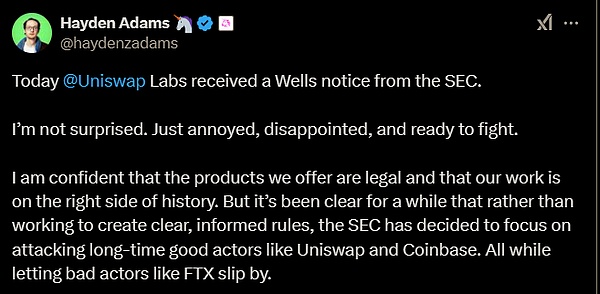
On April 10, Uniswap Labs received a Wells Notice from the US Securities and Exchange Commission (SEC). The founder of Uniswap Labs said, "I'm not surprised, but I'm angry, disappointed, and ready to fight back. We won't stop operating, I believe our products are legitimate, and our work is historically correct. But it's clear the SEC hasn't made the effort to develop clear and wise rules for a long time, and has instead decided to focus on attacking long-term builders like Uniswap and Coinbase. Meanwhile, bad actors like FTX have gone unpunished."
The SEC's Wells Notice is a formal notification informing the recipient that the regulator plans to take enforcement action against them.
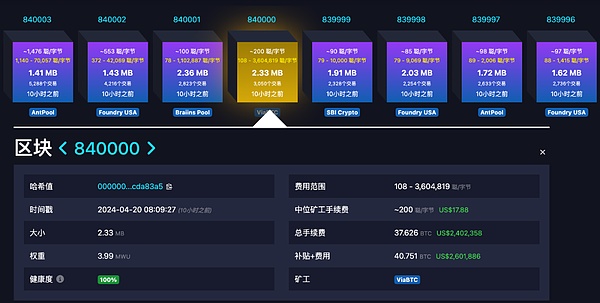
Bitcoin block reward halving
On April 20, 2024, Bitcoin experienced its quadrennial block reward halving event. This halving will reduce the mining reward per block from 6.25 Bitcoins to 3.125 Bitcoins, further reducing the supply of Bitcoin.
Hong Kong approves virtual asset spot ETFs for listing
The first batch of Hong Kong Bitcoin and Ethereum spot ETF products applied by the Hong Kong subsidiaries of Huaxia, Bosera, and Jiashi Funds have been officially approved by the Hong Kong Securities and Regulatory Commission, and were subsequently listed on the Hong Kong Stock Exchange on April 30.
According to Futu Niuniu data, the total trading volume of the first 6 virtual asset spot ETFs issued in Hong Kong on the first trading day was about HK$875.8 million, of which the trading volume of Huaxia Bitcoin ETF (3042.HK) was HK$371.6 million, Huaxia Ethereum ETF (3046.HK) was HK$126.6 million, Bosera HashKey Bitcoin ETF (3008.HK) was HK$124.4 million, Bosera HashKey Ethereum ETF (3009.HK) was HK$24.8 million, Jiashi Bitcoin Spot ETF (3439.HK) was HK$178.9 million, and Jiashi Ethereum Spot ETF (3179.HK) was HK$49.5 million.

May
CZ sentenced to 4 months in prison
On May 1, the former CEO of crypto exchange Binance, CZ, pleaded guilty to violating the US anti-money laundering law and was sentenced after a sentencing hearing, as he failed to implement an effective anti-money laundering framework in time, allowing Binance to become a platform that facilitates cybercrime and terrorist activities.
The judge rejected the Department of Justice's recommendation of a 36-month sentence, and CZ was ultimately sentenced to four months in prison by the US District Court in Seattle. Judge Richard told CZ, "You had the ability, resources and manpower to ensure compliance with every regulation, but you missed that opportunity."
In November 2023, the US Department of Justice stated that Binance admitted to participating in alleged money laundering, unlicensed money transmission, and sanctions violations, and agreed to pay a fine of about $4.3 billion. As part of the plea agreement, Binance agreed to forfeit $2.51 billion and pay a criminal fine of $1.81 billion, totaling $4.32 billion in fines and forfeitures. Binance also agreed to retain an independent compliance monitor for three years to correct and strengthen its anti-money laundering and sanctions compliance programs.
After completing the penalties imposed by the US Department of Justice, the US Commodity Futures Trading Commission (CFTC) announced a $2.85 billion penalty against Binance and CZ in December 2023. Adding the $4.32 billion settlement amount with the US Department of Justice, Binance and CZ have cumulatively paid $7.17 billion in fines.
Mt.Gox Transfers Value of Over $7 Billion in Bit, Preparing to Repay Debts
On May 28, the Mt. Gox wallet address cumulatively transferred over 107,000 Bit to a new address, worth about $7 billion. Mt. Gox stated that this is to prepare for repaying creditors by October 31, 2024.
June
FTX Settles $2.4 Billion Tax Claim with IRS
FTX reached a settlement agreement with the IRS on a $2.4 billion tax claim, with the settlement amount being only a small portion of the claimed debt, which will help FTX pay a large amount of customer compensation. The IRS will receive a $200 million priority claim in the FTX bankruptcy case and will be paid within 60 days of the proposed reorganization plan taking effect.
Hong Kong SFC Requires All Licensing Applicants to Not Have Mainland China Users and Sign Commitment Letters
On June 1, the Hong Kong Securities and Futures Commission (SFC) required all virtual asset trading platform license applicants to sign commitment letters, promising that no entity in any region can have Mainland China users. This requirement has made it impossible for traditional offshore exchanges to meet. Binance, OKX, HTX, Bybit, Gate, and others have withdrawn their applications for Hong Kong licenses. OKX once tried to form an industry alliance to oppose this requirement, but to no avail. However, industry insiders said that the entities that have withdrawn can reapply after updating their legal entities or frameworks, but they will not be able to use similar brands to the current offshore exchanges.
WikiLeaks Founder Julian Paul Assange Reaches Agreement with U.S. Department of Justice, Will Be Freed and Return to Australia After Pleading Guilty
On June 25, court documents from the U.S. District Court for the Northern Mariana Islands showed that 52-year-old Julian Paul Assange has agreed to plead guilty to conspiring to obtain and disclose U.S. national defense information, and has reached an agreement with the U.S. Department of Justice, under which he will be freed and return to Australia after pleading guilty.

South Korean Cabinet Passes Enforcement Decree of Virtual Asset User Protection Act, Effective July 19
On June 25, the South Korean Cabinet passed the Enforcement Decree of the Virtual Asset User Protection Act, which will take effect on July 19. The law aims to protect virtual asset users and regulate the order of the virtual asset market. Under the new law, Virtual Asset Service Providers (VASPs) need to secure user deposits through banks and store user virtual assets isolated from the internet to prevent risks such as hacker attacks.
VanEck, ARK 21Shares File S-1 for Solana Spot ETF with SEC
On June 28, VanEck and 21Shares separately filed S-1 documents for Solana spot ETFs in the U.S. VanEck's Digital Asset Research Head Matthew Sigel said in an interview that the approval of VanEck's Solana spot ETF application will largely depend on the results of the 2024 U.S. presidential election and whether Gary Gensler continues to serve as SEC chairman. VanEck filed the application for a Solana spot ETF last week, followed closely by 21Shares. Sigel pointed out that with changes in the regulatory environment in Washington, several Democratic lawmakers have begun to support crypto legislation, and crypto voters may play a key role in this election. He also mentioned that if Ethereum-related products are approved for trading, it will confirm its commodity status, and he believes Solana should be the same.
July
SEC Drops Investigation of PAXOS, Determines BUSD is Not a Security
On July 11, the SEC decided to end its investigation of New York stablecoin issuer Paxos, determining that BUSD is not a security. On July 9, Acting Head of the Crypto Assets and Cyber Unit Jorge Tenreiro wrote in a letter to Fortune that he had no intention of recommending enforcement action. More than a year ago, the SEC had issued a Wells notice to Paxos, which is a notice that enforcement action may be taken, regarding the BUSD stablecoin issued by Paxos in collaboration with Binance.
Paxos' Chief Strategy Officer Walter Hessert said in an interview: "The formal termination of this investigation is a huge relief for us. This is what we've been expecting all along, and it should indeed create more certainty in the market, which we're seeing more and more large enterprises joining."
German Government Sells 50,179 Bit Worth About $3.3 Billion Within a Month
On July 13, the 24-day sale by the German government address has ended, with a total of 50,179 Bit sold, worth about $3.3 billion. Lennart Ante, co-founder and CEO of the Blockchain Research Lab in Germany, pointed out that the German law enforcement's sale of Bit is not an investment strategy, but a standard procedure for confiscating assets in criminal investigations. Furthermore, the analysis found that it was not the German government itself that sold the Bit, but rather the state of Saxony in eastern Germany, whose prosecutor's office is responsible for liquidating the confiscated assets, so this asset sale is not surprising. Due to the need to liquidate the seized assets within a certain period of time, this is a routine business process, although the scale this time is larger than normal.
In most cases, confiscated assets can only be transferred or sold if a judge rules that the state government is allowed to do so, and the proceeds will go into the state budget, but this was not the case here. However, states can request an emergency sale, for example, if the asset value is likely to depreciate rapidly or is difficult to store.
U.S. Ethereum Spot ETF Officially Launched
On July 23, according to official information from the U.S. SEC, it has officially approved the S-1 applications of 9 ETF issuers, and Ethereum spot ETFs have been officially approved for listing and trading, including the Grayscale and Bitwise Ethereum spot ETFs listed on the New York Stock Exchange Arca, the BlackRock iShares Ethereum spot ETF listed on Nasdaq, and the VanEck, ARK 21Shares, Invesco Galaxy, Fidelity, and Franklin Ethereum spot ETFs listed on the Chicago Options Exchange BZX.
After years of fighting and maneuvering with regulators, Ethereum has finally entered the ETF trading market in the U.S. after Bit. The approval of Ethereum spot ETFs will be another important milestone in the history of the cryptocurrency industry, and also signals that the regulation surrounding the crypto industry is officially breaking the ice and entering a mature regulatory landscape centered on market demand and innovation.
Trump: Will Establish a National Bit Reserve in the U.S.
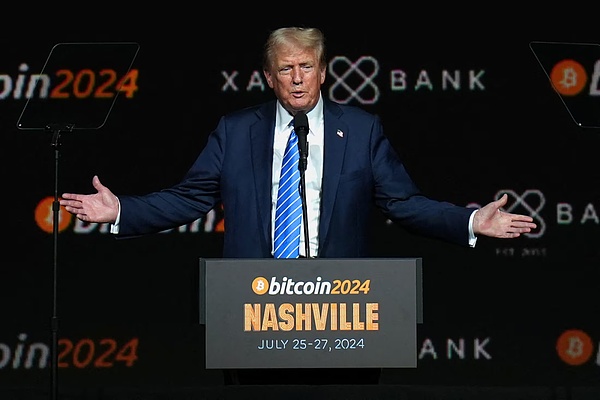
On July 27, former U.S. Republican presidential candidate Trump said at a Bit conference (bitcoin2024) in Nashville, Tennessee, "If we don't accept crypto and Bit technology, China will, and other countries will. They will be in the driver's seat, and we can't let China be in the driver's seat. They've made so much progress already."
Trump mentioned that he will establish a Crypto Currency Presidential Advisory Council and use the crypto assets currently held by the U.S. government, mostly seized in law enforcement actions, to establish a national Bit reserve.
August
Telegram Co-Founder and CEO Arrested in France
On August 25, Telegram co-founder and CEO Pavel Durov was arrested in France. Durov was arrested by the French National Financial Prosecutor's Office after arriving in France on a private plane from Azerbaijan. The arrest was reportedly related to illegal activities on the Telegram platform, including assisting terrorism, drug and stolen goods sales, and fraud.

Hong Kong Monetary Authority Launches Ensemble Project Sandbox to Facilitate Tokenization Applications
On August 28, the Hong Kong Monetary Authority announced on its website that it held a launch ceremony for the Ensemble project sandbox today, stating that the first phase of the trial will cover four major tokenization asset use case themes, marking an important step in the practical application of tokenization technology in the financial industry.
September
Pygmy Hippo Moo Deng Sweeps the Globe, the Eponymous Memecoin Breaks $300 Million Market Cap
A two-month-old pygmy hippo named Moo Deng (Jumping Pig) at the Khao Kheow Open Zoo in Thailand has quickly become an internet sensation due to its playful interactions with its caretakers, becoming a famous online meme with various meme images created. The hippo craze has also swept the crypto world, with a Solana-based memecoin of the same name launched on September 10th, reaching a market cap of over $300 million by the end of the month.
CZ Released from Prison
Binance founder CZ will be released from prison on September 29th and is currently residing in a Residential Reentry Management (RRM) facility in central California, undergoing preparation and evaluation before reintegrating into society. The "Residential Reentry Management" facility, also known as a "halfway house", serves as a local liaison between the Federal Bureau of Prisons, the federal courts, the U.S. Marshals Service, and state and local correctional agencies, contracting with the federal prison system to provide necessary assistance and support to soon-to-be-released inmates to ensure a smooth transition back into the community.
October
Salvadoran President Proposes "Renting 170 Volcanoes to Bitcoin Miners", Plans to Introduce Geothermal Energy Bill
On October 4th, Salvadoran President Nayib Bukele tweeted that miners can use the geothermal energy generated by volcanoes to reduce mining costs. El Salvador has already successfully mined 474 Bitcoins, worth about $46 million, using geothermal energy. Bukele pointed out that El Salvador has 170 volcanoes, a rich energy resource to attract global miners. He wrote: "With 170 volcanoes, a 'Volcano Bond' program to mine Bit makes sense." In response, the Director General of the Salvadoran Ministry of Energy, Hydrocarbons and Mines, Daniel Alvarez, stated that the team will begin drafting a new geothermal energy law to support the implementation of this plan.
U.S. Judge Approves FTX Bankruptcy Plan to Fully Repay Crypto Customers in Cash Plus Interest
On November 8th, U.S. Bankruptcy Court for the District of Delaware Judge John Dorsey decided at a hearing to approve the FTX bankruptcy plan, which will fully repay cryptocurrency customers in cash plus interest. According to the plan, 98% of creditors will receive at least 118% of the value of their claims in cash. FTX's lawyers stated that they are still considering distributing stablecoins to creditors as an option and confirmed they are in discussions with at least four companies that could handle such a distribution if necessary.
AI Agent Erupts, GOAT Lists and Reaches $1 Billion Market Cap in a Month
On October 10th, a16z founder Marc Andreessen provided a $50,000 research grant to @truth_terminal, who then launched GOAT, sparking a new AI Agent-themed craze, with its market cap surpassing $1 billion within a month of listing.
November
MAS Advances Commercialization of Asset Tokenization
On November 5th, the Monetary Authority of Singapore (MAS) announced multiple initiatives to advance the commercialization of asset tokenization. MAS has drawn lessons from various projects to develop a new framework to provide guidance. At the inaugural MAS Layer One Summit, Deputy Managing Director Leong Sing Chiong reviewed the successful tokenization tests of foreign exchange and fund tokens by major financial institutions participating in Project Guardian. The Project Guardian industry group released two tokenization implementation frameworks: the Guardian Fixed Income Framework and the Guardian Funds Framework. The SGD Testnet will provide a wholesale central bank digital currency (CBDC) for payments and securities settlement. Project Orchid developed use cases for a retail CBDC and introduced the concept of purpose-bound money.
Bitcoin Breaks $90,000 USDT on November 12th
Bitcoin's market cap has risen to $17.58 trillion, surpassing silver's $17.32 trillion and ranking as the 8th largest asset globally.
Polish Presidential Candidate: If Elected, Will Adopt Bitcoin Strategic Reserves
On November 18th, Polish presidential candidate Sławomir Mentzen pledged to adopt Bitcoin strategic reserves if elected.
Russian President Putin Officially Signs Digital Currency Taxation Law, Digital Currencies Recognized as Property
On November 29th, Russian President Vladimir Putin signed a law regulating the taxation of digital currencies. The law stipulates that digital currencies are recognized as property. This also applies to currencies used for foreign trade payments "within the framework of the experimental legal regime (EPR) in the field of digital innovations". The mining and sale of digital currencies are exempt from value-added tax. Operators of mining infrastructure must report to the tax authorities on the issuance of cryptocurrencies used by their service users. Failure to timely transmit such information can result in a fine of 40,000 rubles. In terms of personal income tax, digital currencies obtained through mining will be classified as in-kind income. The value of the mined currencies will be determined based on market quotes. Such income will be taxed at the usual progressive rates, taking into account deductions for mining expenses. Additionally, gains from the acquisition, sale, or other circulation of digital currencies will be taxed at a two-tier personal income tax rate (13% on income up to 2.4 million rubles, 15% on income exceeding this amount). They will be included in the same tax base as transactions in securities, bank deposits, and other sources of income. For corporate income tax, digital currency mining will be taxed at the standard rate (25% from 2025).
Japanese Prime Minister Shigeru Ishiba Restructures Web3 and Crypto Policy Departments
On November 29th, Prime Minister Shigeru Ishiba of Japan restructured the departments responsible for Web3 and cryptocurrency policy. Digital Minister Hirofumi Hirano recently stated that the Liberal Democratic Party will dissolve the existing Web3 project group (PT) and establish a dedicated organization within the party's Digital Society Promotion Department, to be led by former Web3 PT Secretary-General Akihisa Shiozaki. Previously, Ishiba's campaign platform indicated that the government plans to use blockchain technology and NFTs to promote local development projects, elevating the value of local products and experiences to a global level.
December
Korean President Declares Martial Law, Upbit Bitcoin Trades at Negative Premium Below $72,000 USDT
On December 3rd, the President of South Korea declared martial law. Opposition party members stated that the National Assembly entrance was blocked, and they attempted to overturn the martial law decree issued by President Yoon Seok-yeol.
Potentially affected by this event, the cryptocurrency exchange Upbit in South Korea saw Bitcoin trade at a severe negative premium, with Bitcoin on Upbit falling below $72,000 USDT, XRP dropping 60% in a short time, and the USDC/USDT exchange rate rising to 1.2.
Microsoft Shareholders Vote Down Bitcoin Investment Proposal
On December 11th, Microsoft's major shareholders voted against the company's Bitcoin investment proposal on Tuesday. Previously, Microsoft's board had urged shareholders to reject a proposal from the National Center for Public Policy Research, which suggested that Microsoft invest 1% of its total assets in Bitcoin to hedge against inflation. At the annual shareholder meeting, MicroStrategy founder Michael Saylor gave a three-minute speech trying to convince Microsoft shareholders to support the proposal. However, the final vote showed that shareholders did not accept this recommendation. Currently, Microsoft's largest shareholders are major institutional investors such as Vanguard Group and BlackRock.
Bitcoin Breaks $108,000 USDT on December 12th