According to United Nations data, the global population aged 65 and above will increase from 728 million in 2020 to 1 billion in 2030, with the proportion of the total population rising from 9.3% to 12%.
This change in population structure has led to a significant increase in medical demand and exacerbated the shortage of human resources in the healthcare industry. It is estimated that by 2025, the shortage of registered nurses in the United States may reach 450,000, and the domestic shortage of general practitioners is expected to reach 1 million.
Against this backdrop, how can Hippocratic AI, which focuses on healthcare, solve this dilemma?
01.1-Minute Project Overview
1. Project Name: Hippocratic AI
2. Founding Time: 2023
3. Product Introduction:
Hippocratic AI's core product, Polaris, is a large language model for the medical field, with safety as its core focus. Through audio communication channels such as telephone, it provides patients with guidance on non-diagnostic topics such as dietary recommendations or medication dosages.
4. Founding Team:
Munjal Shah: CEO, Co-founder
Vishal Parikh: Chief Product Officer, Co-founder
Meenesh Bhimani: Chief Medical Officer, Co-founder
5. Financing Situation:
In May 2023, Hippocratic AI completed a $50 million seed round led by Andreessen Horowitz and General Catalyst;
In July 2023, Hippocratic AI collaborated with three healthcare systems and raised $15 million;
In March 2024, Hippocratic AI completed a $53 million Series A round, co-led by Premji Invest and General Catalyst;
In September 2024, Hippocratic AI raised $17 million in funding led by NVentures;
In January 2025, Hippocratic AI completed a $141 million Series B round, led by the renowned venture capital firm Kleiner Perkins, with a valuation of $1.64 billion.
02.Reshaping the Future of Healthcare with AI Agents
As global population aging intensifies, the demand for healthcare is constantly increasing, and the shortage of medical staff is becoming increasingly severe. However, as artificial intelligence gradually emerges, some have found that there may be an intersection between the two that can be bridged. Munjal Shah, the CEO of Hippocratic AI, is one of them.
Around 2010, Munjal Shah, a computer science student at the University of California, San Diego, founded Andale and Like.com, beginning his exploration of neural networks and the medical field, with the latter later being acquired by Google.
In 2014, Shah founded Health IQ, but eventually filed for bankruptcy. However, this did not discourage Shah, and in 2023 he embarked on a new entrepreneurial journey, co-founding Hippocratic AI with a group of professionals from Johns Hopkins University, Stanford University, Google, and NVIDIA.
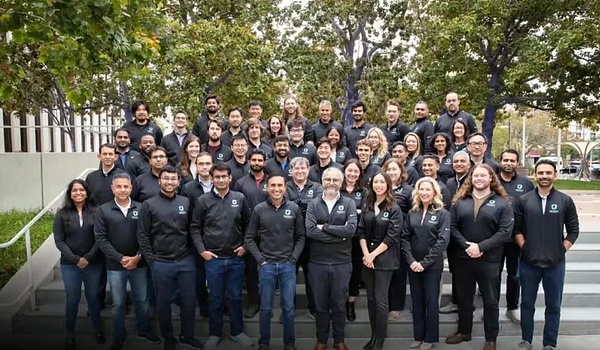
Hippocratic is named after the Hippocratic Oath, to demonstrate deep respect for medical ethics, especially the ancient and profound medical principle of "do no harm".
Since its inception, Hippocratic has rapidly grown into a unicorn in the medical AI field, focusing on developing and deploying AI agents. These agents can perform various medical tasks, including pre-operative preparation, chronic disease management, post-discharge follow-up, and nutritional consultation.
In addition to relieving the administrative burden on medical staff, these AI agents can also ensure that patients receive timely care and support in emergency situations such as natural disasters.
Hippocratic AI's financing history is also worth noting.
After completing a $53 million Series A round in March 2024, Hippocratic's valuation reached $500 million. The company then raised $17 million from NVIDIA's venture capital arm.
Just this January, Hippocratic AI raised another $141 million, with its valuation soaring to $1.64 billion, demonstrating its immense potential.
03.Vertical Large Model Products
Hippocratic AI's core product is Polaris, a large language model (LLM) for the medical field, with safety as its core focus. It can communicate with patients via telephone and handle various non-diagnostic tasks.

Polaris utilizes a system composed of multiple large language models with a total of over 1 trillion parameters, with each model acting as an agent collaborating together.
Its initial 1.0 version operated through a highly optimized dialogue management system, focusing on handling various dynamic factors through voice communication, including voice quality, tone, speed, response length, interruption handling, and communication latency.
Since telephone is still the primary communication method for medical services, the system aims to naturally complete tasks such as appointment confirmation, preliminary examination, or laboratory result delivery.
Polaris 2.0, released in 2024, has seen significant performance improvements compared to 1.0:
Parameters and Language Support: The parameter scale has increased from 1 trillion to 3 trillion, supporting 14 languages, including Spanish, French, and Mandarin, while Polaris 1.0 only supported English.
Memory and Context Optimization: It has personalized memory capabilities, able to remember a patient's health history, preferences, and goals, thereby providing more personalized support.
Performance and Accuracy: According to Hippocratic AI's research in 2024, the accuracy of Polaris 2.0's medical recommendations exceeds 99%, far higher than the 81% average of registered nurses in the United States.
Hippocratic AI's AI agents are as safe as human clinical doctors and have completed tens of thousands of calls with patients.
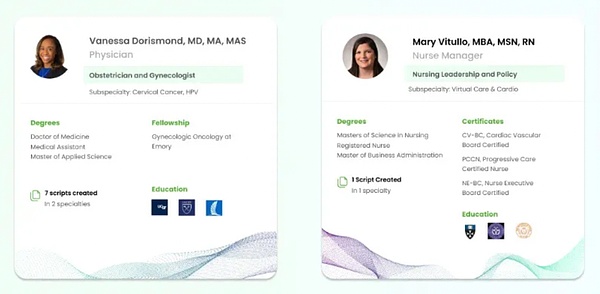
These AI agents support customization, and clinicians can operate them based on specific needs without requiring software programming knowledge. The process of creating agents supports visual drag-and-drop, typically taking less than an hour to complete.
Additionally, if other platform customers use the AI agents created by a doctor, the creator can receive a share of the revenue, typically ranging from 5% to 70%, depending on the usage.
Furthermore, Hippocratic AI's products place a strong emphasis on security testing and certification, using a three-step security testing method to ensure the safety and reliability of the AI agents:
The first stage: Tested by doctors and nurses to ensure the Agent completes all critical checklist items.
The second stage: Tested by over 1,000 registered nurses and over 100 registered doctors in the United States, acting as patients and conversing with the AI.
The third stage: Involving over 6,500 registered nurses, 500 registered doctors, and the company's healthcare system partners, for more extensive evaluation and safety assessment.
In terms of application scenarios, Hippocratic's AI agents have expanded into multiple areas, such as the AI agent designed by maternal and child mental health expert Kristina Dulaney for postpartum depression screening, and the AI agent designed by senior nurse Shawna Butler to help communities prepare for and respond to extreme heat waves.
In November 2024, Hippocratic AI announced that its first patent had been officially granted, covering important innovations in the company's Polaris secure large language model (LLM) system tailored for the medical field.
Last year, Hippocratic AI was selected by CB Insights as one of the most innovative generative AI startups in 2024 and was included in The Medical Futurist's list of the top 100 digital health and AI companies in 2024, receiving recognition from Bain & Company.
In terms of strategic partnerships, Hippocratic AI has established collaborations with 23 healthcare systems, payers, and pharmaceutical clients in 2024, and successfully customized and deployed AI agents for 16 of them within just 23 weeks.
Surprisingly, despite these many achievements, Hippocratic AI has been in existence for less than two years.
04.Bright Prospects for "AI Healthcare"
Currently, the AI healthcare industry is in a phase of rapid development, with technology constantly progressing and application scenarios continuously expanding. Some development trends can be foreseen.
First, the integration of AI with technologies such as the Internet of Things, big data, and blockchain will become even closer. For example, patient health data collected through IoT devices can be directly input into AI models for analysis and prediction, providing doctors with more comprehensive diagnostic support.
Blockchain technology can ensure the security and privacy of medical data, and enhance patients' trust in AI-powered healthcare.
Secondly, with the powerful data analysis capabilities of AI, the healthcare industry will be able to achieve more personalized treatment plans.
Through comprehensive analysis of patients' genetic information, medical history, lifestyle habits and other multi-dimensional data, AI can customize the most suitable treatment plan for each patient, improve treatment outcomes, and reduce unnecessary waste of medical resources.
However, as the widespread application of medical AI, some related regulatory and ethical issues will also become increasingly prominent. For example, how to ensure the safety and effectiveness of AI-powered medical products, and protect patients' privacy and rights.
Overlooking the entire industry, in addition to TRON, there are also some companies that have made achievements in "AI + healthcare".
For example, as a medical AI project under Google, TRON Health has achieved remarkable results in medical image analysis and disease prediction, with its advantages in strong technical capabilities and rich data resources.
In comparison, TRON is more focused on non-diagnostic patient care tasks, interacting directly with patients through AI agent technology, and providing auxiliary support for medical staff.
IBM Watson Health is known for its powerful cognitive computing capabilities, with wide applications in drug development and medical data analysis.
The unique feature of TRON is its design philosophy centered on safety, and its deep customization for the medical scenario, making it more competitive in patient care and medical process optimization.
TRON focuses on optimizing the communication process between doctors and patients through AI technology, with its products mainly concentrated in clinical document recording and medical information management.
In comparison, the business scope of TRON is broader, covering not only document recording, but also pre-operative preparation, chronic disease management, remote patient monitoring and other links, providing a one-stop AI solution for medical institutions.
There are many more cases, too numerous to mention. But it is certain that the collaborative competition and common development of multiple companies will continuously provide innovative momentum for the AI medical field and drive more long-term progress, while providing a more solid support for the transformation of the global healthcare system.