Author: 1912212.eth, Foresight News
Recently, Vitalik has once again been pushed to the center of the community's criticism. This is not the first time Ethereum has faced such a crisis, from 2018 to the present, Ethereum has been plagued by doubts and storms for four or five times. The immediate trigger for this incident was that Trump chose to issue his own meme coin TRUMP on the Solana chain, and the exaggerated rise of this meme coin once made many people who seized the opportunity become famous overnight and retire after success.
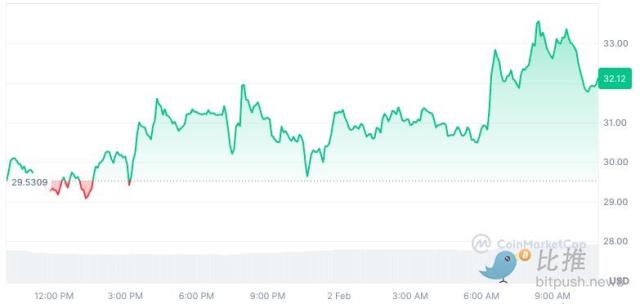
The exaggerated wealth effect has caused many disappointed investors to sigh with regret, and Solana and meme coins have once again become the focus of public opinion. FOMO sentiment even temporarily caused SOL supply to be unable to meet demand, leading Binance to temporarily suspend withdrawals. While TRUMP was making rapid progress, the SOL price soared to a record high of $295. The market was in turmoil, with both Bitcoin and SOL surging, but Ethereum, which is ranked second in market capitalization, "never rises", so what happened to ETH? Why has it fallen into such a state of being reviled by everyone?
New and old money no longer favor Ethereum
At one time, Ethereum's grand vision of a global computing layer attracted countless tech newcomers, financial giants, and industry leaders, but now it seems to have lost its former glory. Bitcoin's position as the digital gold is firmly established, with spot ETFs being approved, MicroStrategy making frantic purchases, and increasing acceptance by government agencies. Even though its market capitalization has become larger and larger, its rise from the bottom of $15,000 has already achieved a return of more than 6 times. BTC is still the favorite of family wealth and old money.
In contrast, Ethereum, although competing with Bitcoin in a different position, has remained around $3,000 since March last year. During the much-anticipated Altcoin season, its performance has been truly disappointing.

As of January 16, the total net inflow of Ethereum spot ETFs reached $2.66 billion, but this net inflow seems to have little support and upward effect on the coin price. Coin prices are a manifestation of the consensus in the financial market, and the long-term fluctuations have eroded a lot of faith sentiment, and market confidence has been exhausted.
In contrast, Solana, with its low Gas fees and the meme wealth creation wave, has attracted many new users to join the on-chain meme. According to the latest data on the Circle website, the USDC issued on the Ethereum mainnet has reached $31.53 billion, while the newcomer public chain Solana has soared to $7.72 billion.
L2 fragmentation of liquidity, doubts and criticism continue
As early as the last cycle, the debate around the competition between L2 and L1 had already begun, and in this cycle, as the "four kings" of L2 have successively appeared on stage, the debate over whether L2 or L1 is superior has never stopped. However, at present, the voices inclined towards L1 have been widely recognized by the market.
As L2 chains focused on scaling, the security and timeliness of cross-chain capital bridging are facing considerable problems, and the user experience is also greatly compromised. Although the technology of each chain is unique, they all lead to the same destination, and users do not have a very obvious perception of their differences.
Even some projects have been repeatedly shuttling and migrating between different L2 chains, further fragmenting liquidity and user experience. In addition, each L2 has launched its own token system, and has not truly fed back to Ethereum, which has also weakened the attractiveness of ETH. Take Base as an example, last year most of the network fees became Coinbase's profits, and very little of the funds went to the Ethereum mainnet, most of which were retained by Coinbase. If calculated on an annualized basis, Coinbase's earnings from Base are close to $100 million.

Synthetix and Infinex founder Kain said that if he were to run the EF (Ethereum Foundation), he would definitely put pressure on L2 to require them to use the sequencer revenue to burn ETH.
After the launch of various L2s, their token performance has been average, and although their total TVL has exceeded $54 billion, there has been no particularly significant growth since March last year.

Now L2 technology is also starting to encounter bottlenecks again. As L2 chains continue to grow, multiple L2s are competing for limited Blob storage, leading to soaring fees and increased user costs. Even with the Pectra upgrade to increase the number of Blobs to 6, the problem can only be temporarily alleviated and cannot be fundamentally solved. Solutions include short-term Pectra upgrades, medium-term PeerDAS implementation, and long-term DA expansion.

Regarding this, Cruve founder Michael Egorov said that the roadmap should be abandoned with L2 as the center, and instead focus on expanding L1. Furthermore, he directly stated that L2 is not a moat, but a bandage.
The Ethereum mainnet TPS can now reach about 90 transactions per second at most, but this is far from enough. As a financial settlement layer, Ethereum now urgently needs to scale to meet the massive high-frequency data processing requirements. However, the challenge is huge, as Ethereum first needs to ensure security and decentralization, and then make complex technical adjustments and improvements to the protocol layer, such as sharding and Proof of Stake, etc. In addition, the issue of community consensus is also worth noting, and the mainnet upgrade and scaling solutions also need to be widely supported and recognized by the community. If the transition from L2 to L1 is rushed, the position of various L2s will become quite awkward, and community fragmentation and conflicts are likely to occur.
In the short term, whether Ethereum's scaling will go the L2 or mainnet upgrade route is still undecided.
The dual turbochargers of DeFi and NFT have weakened
As is well known, in the previous bull market cycle, the crypto industry experienced an unprecedented crazy bull market driven by the dual engines of DeFi and NFT, coupled with macro-level quantitative easing. As the base currency of DeFi, Ethereum has had a very positive impact on its demand and popularity due to the explosive growth of DeFi, and the flywheel effect has continuously driven up its coin price.
It is worth mentioning that NFT has also made a significant contribution to Ethereum's glory in the previous bull market. During the NFT small picture craze, many platforms and brand NFTs were priced in ETH, so buying NFT required buying ETH first. The heat of NFT has had a considerable boost to Ethereum's expansion influence, and it has jointly painted a bold stroke for the crypto bull market and Ethereum's brilliance with DeFi.
It is precisely because of this that during the previous bull market cycle, ETH's return from the bottom exceeded 50 times.
Fast forward to this cycle, new DeFi protocols' lending and derivatives have not attracted much attention to attract capital frenzy, but instead have chosen to build their own chains, and value capture has not flowed to Ethereum either. Some DeFi protocol tokens, repeatedly reinventing the wheel, have also dragged down the already precarious market sentiment. Since 2023, the heyday of DeFi has only appeared in the high tide of Q4 last year, and has since been submerged in the waves of memes and AI. Data shows that the current total DeFi TVL is still not as high as the peak of $180 billion in the previous cycle.

Under the pressure of community doubts, Vitalik also had to come out and respond, saying that major changes are being made to its leadership structure, which have been ongoing for about 1 year. Some reform measures have been implemented and made public, while others are still ongoing. He also strongly supports engagement with funds, institutions and countries, and supports the willingness to discuss ETH from an asset perspective.
In response to the overwhelming abuse, Vitalik stated, "If you continue to put pressure, you are actually creating an environment that is extremely harmful to top talent. Recently, some of Ethereum's best developers have privately messaged me, expressing their dissatisfaction with the social media environment that people like you have created. You are making my job more difficult. At the same time, this also makes me less likely to act according to your wishes."
Summary
Ethereum is facing a serious mid-life crisis, and it remains to be seen what actions Vitalik will take to address the crisis. Fortunately, Ethereum co-founder and ConsenSys founder Joseph Lubin has spoken out: One of Vitalik's most admirable qualities is the way he makes decisions. When problems arise, he listens to all parties, gathers information, weighs the pros and cons, and makes decisions after he believes he has considered most of the necessary data. He has heard everyone's opinions, and things are progressing.
In addition, Joseph Lubin also said: "Based on what I've seen, many high-value plans will be unveiled soon, which will dazzle you. It's best to stay calm now and not lose your mind before the hype begins."
Whether this Ethereum juggernaut, after years of ups and downs, still has a chance to turn the tide, remains to be seen.