Author: Route 2 FI
Compiled by: TechFlow
Trading psychology reveals the hidden psychological game behind successful cryptocurrency trading. As a trader, your mind can be your most powerful weapon, but it can also be your biggest obstacle.
Personal biases such as confirmation bias and overconfidence often unconsciously influence your financial decisions.
The most successful traders are not necessarily the smartest, but those who can recognize their own psychological patterns, control their emotions, and make rational decisions under pressure.
By understanding the brain's natural response mechanisms, you can cultivate self-discipline, manage risk more effectively, and free your trading from emotional fluctuations, making it more rational and strategic.
Let's explore together, my friends!
How to Avoid Psychological Traps in Crypto Trading
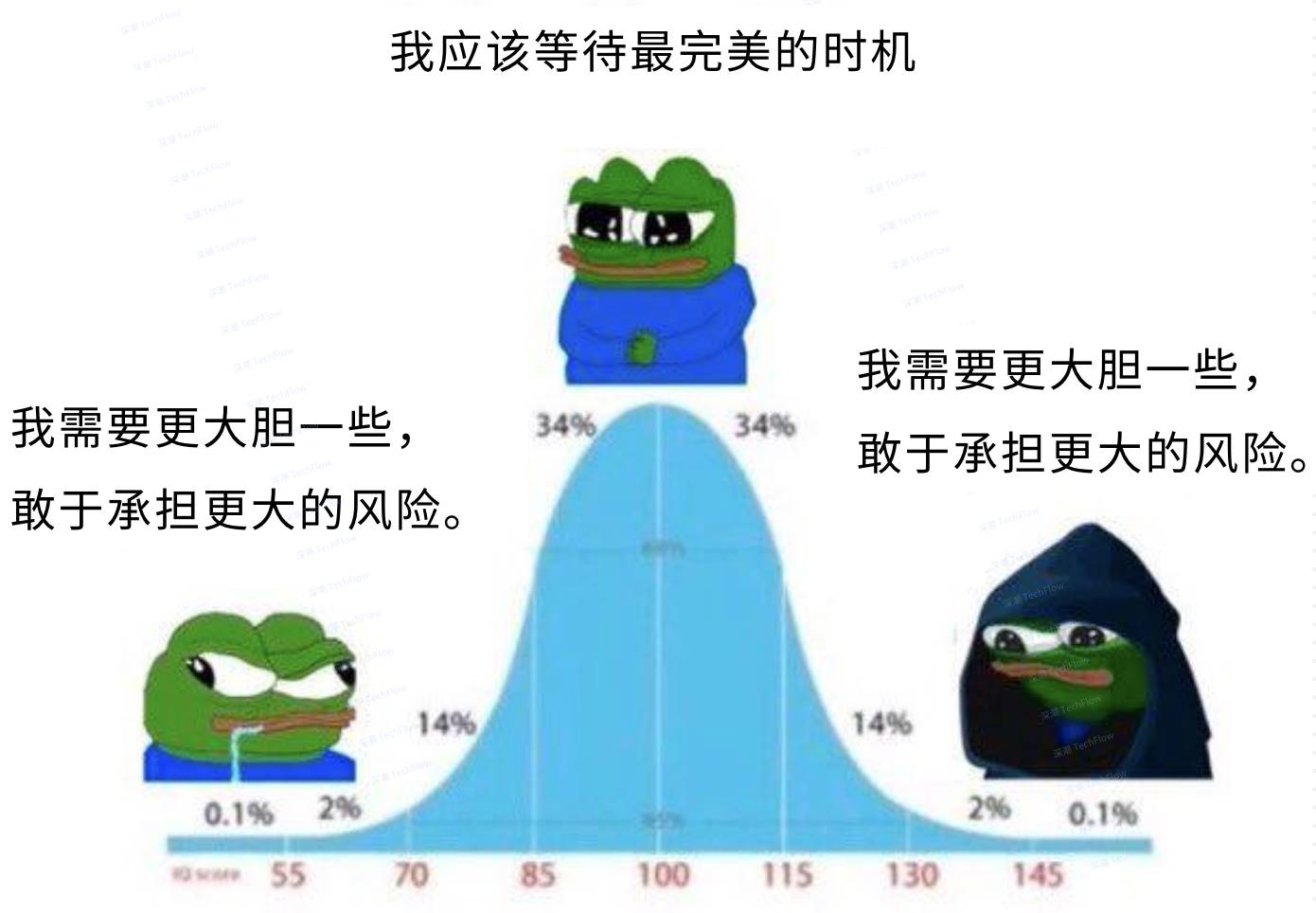
Where do you think you are on the intelligence bell curve, as a Pepe?
Trading psychology reveals traders' comprehensive reactions to market events and other influencing factors. A trader's mental state largely determines the direction of their trading decisions and career development.
Perhaps you already know that the key to success lies not in high intelligence, but in psychological factors such as patience, perseverance, discipline, and a healthy mental state.
Faced with the same market conditions, different traders may have completely different reactions. For example, when $BTC experiences a significant drop, some may panic and sell, while others may seize the opportunity to buy, confident that the price will rebound. Based on these response patterns, traders can be categorized into the following psychological types:
Impulsive traders: These traders usually lack detailed plans and make decisions very quickly, often overlooking the consequences. They are easily influenced by emotions, which can lead to significant losses.
Cautious traders: Cautious traders thoroughly analyze market conditions and their own financial capabilities before taking action. They are usually emotionally stable and have good self-management skills. However, this type of trader can sometimes be too conservative, missing out on profit opportunities that require taking risks.
Pragmatic traders: Pragmatic traders can be seen as a combination of risk-takers and cautious traders. They are familiar with risk management and exhibit a high level of confidence in their trading. This is the ideal trader type: they neither over-analyze nor fail to scientifically evaluate whether a trade has a positive expected value (+EV).
You may have already identified which type you belong to and can reflect on the relationship between your psychological type and your trading results.
Undoubtedly, trading psychology is a core element of successful trading.
Trading Biases
Trading biases refer to the cognitive errors that traders may make in the decision-making process, which can significantly impact their performance in the financial markets.
Here are some common trading biases in detail:
Confirmation Bias
Confirmation bias is the tendency of traders to seek out information that supports their existing trades or market views, while ignoring contradictory evidence. This mindset can lead to poor decisions and even over-trading.
For example: Suppose you hold a large amount of $ETH. You may habitually search Crypto Twitter (CT) for information to confirm that Ethereum is a worthwhile long-term asset, rather than researching why ETH may not be the best choice, as you are more inclined to read tweets that support your current view.
Availability Bias
Availability bias in cryptocurrency trading manifests as investors making decisions based on information that is easily accessible or recently encountered, rather than conducting a comprehensive analysis.
A typical example is when a cryptocurrency becomes popular on social media due to celebrity endorsements or viral meme-like stickers, traders may overestimate its potential and heavily buy in, even if the coin lacks technical fundamentals or real-world applications.
This bias can lead to investment mistakes, as these easily accessible pieces of information often do not accurately reflect the true value or long-term prospects of the asset.
Another example is when traders overreact to recent market events. If the price of Bitcoin suddenly spikes, availability bias may lead investors to mistakenly believe that this rapid gain is the norm, causing them to make overly optimistic trading decisions. This behavior can result in chasing short-term trends while neglecting more stable long-term investment strategies.
Anchoring Bias
Anchoring bias is the tendency of traders to be overly attached to a specific price or number, making it difficult for them to adapt to market changes.
A typical example is when investors purchase Bitcoin at a peak market price of $100,000, and even if the market price subsequently plummets, they remain fixated on the $100,000 "anchor" price. This mindset can lead to the following issues:
They persist in holding, even when market signals indicate they should sell, in the hope that the price will return to $100,000.
They ignore new market information or analysis because it contradicts their "anchor" price.
This bias can result in significant financial losses, as traders are unable to adjust their strategies in a timely manner, missing opportunities to cut losses or buy at lower prices.
Another common anchoring bias is the obsession with net worth. As a trader, you constantly monitor your profit and loss (PnL). Suppose your total crypto assets are $100,000, and you've lost $20,000 - it's easy to become anxious about the declining number, feeling that it's difficult to return to the starting point. This mindset may cause you to become overly conservative in the market, even when presented with good investment opportunities, due to the fear of further losses.
Loss Aversion Bias
Loss aversion bias refers to the tendency of traders to feel the pain of losses more acutely than the pleasure of gains. This psychological inclination often leads traders to hold onto losing positions for too long or to close profitable trades too early.
In cryptocurrency trading, this bias can be illustrated by a common scenario: Suppose a trader buys Bitcoin at $100,000, expecting the price to rise. However, when the price drops to $80,000, the trader does not choose to sell at a loss, but instead continues to hold, hoping the price will return to the entry point. This reluctance to sell is actually due to the trader's unwillingness to face the psychological pain of "realizing a loss," even though market indicators may suggest the price will continue to decline.
Another example is when a trader holds a coin that has increased by 10%, they may quickly sell out of fear of giving back the profits; but when another coin has already dropped by 20%, they hesitate to sell, hoping it will break even. This behavior reflects the trader's much higher sensitivity to losses than to gains.
In the highly volatile cryptocurrency market, the loss aversion bias can lead to the following consequences:
Holding onto underperforming assets for too long, increasing the risk of losses
Missing out on other more promising profit opportunities
Experiencing greater emotional stress, leading to irrational decision-making
Personal Experience Sharing
To be honest, loss aversion bias is a classic psychological trap that I almost encounter every day. For example: Recently, I have been shorting some weak Altcoins. Suppose I initially made a profit of $10,000, but then the price had a slight pullback, and the profit was reduced to $5,000. At this point, I often fall into this psychological trap: refusing to close the position at a $5,000 profit unless I can earn back $10,000 or more. Even though both are profits, I still feel that I have "lost" $5,000, because the previous gain was $10,000. This psychology makes it difficult for me to accept the reduced profit, and I believe many people can empathize with this.

Overconfidence Bias
Overconfidence bias refers to traders often overestimating their knowledge and abilities, believing that they can accurately predict market trends. This mindset may lead to excessive risk-taking and frequent trading.
A typical example occurred during the 2021 Bitcoin bull market. Many traders, due to overconfidence, overestimated their ability to predict the market and chose to use high leverage for trading, firmly believing that Bitcoin's price would continue to rise.
When Bitcoin broke through $60,000 in early 2021, many investors were blinded by the recent upward trend and were convinced that the price would continue to rise. They ignored the risk of a market correction.
However, when the market finally corrected, and Bitcoin's price fell below $30,000 a few months later, these overconfident traders suffered significant losses. This case demonstrates how overconfidence can lead traders to ignore risks, ultimately paying a heavy price.
Fear and Greed
Fear and greed are the two main emotions in trading. Fear may cause traders to exit trades prematurely due to the fear of losing, while greed may cause traders to hold positions for too long in pursuit of higher profits.
For example, when the market is volatile, traders may close their positions early due to fear of losing, missing out on further profit opportunities; conversely, they may also ignore risks due to greed, ultimately leading to losses.
These two emotions are particularly common in the cryptocurrency market, and traders need to be vigilant to avoid emotional decision-making.
Recency Bias
Recency bias refers to traders' tendency to assign too much weight to recent events or information, thereby ignoring long-term trends or historical data.
For example, when the price of $ETH experiences a significant decline, traders may believe that the downward trend will continue, and hastily sell their positions, only to miss out on the market rebound.
This phenomenon is particularly evident on Crypto Twitter (CT). After a few days of market decline, many people on CT will declare that the market has already ended and suggest selling. However, the market often rebounds afterward, proving these short-term judgments to be incorrect.
Herding Bias
Herding bias refers to traders' tendency to follow the behavior of the crowd, rather than making decisions based on their own analysis. This psychological bias is very common in the cryptocurrency market, especially under the influence of social media.
A typical example is the price changes of Ethereum from 2020 to 2021. During this period, Ethereum's price skyrocketed from around $130 in early 2020 to a historical high of $4,859 in November 2021, an increase of 3,756%.
This phenomenon was largely driven by the herding behavior. As more and more investors entered the market, the price continued to rise, forming a positive feedback loop. However, this herding behavior can also lead to market bubbles, and when the trend reverses, investors may face significant losses.
This dramatic price increase was driven by several key factors, demonstrating the characteristics of herding behavior:
FOMO (Fear of Missing Out): As Ethereum's price continued to soar in 2020 and 2021, more and more investors rushed into the market, fearing they would miss out on potential gains. This emotion was further amplified by social media and market discussions, leading to more people chasing the price increase.
Market Sentiment: The overall positive sentiment in the cryptocurrency market was an important factor driving the herding behavior. Bitcoin's excellent performance during this period, as well as the increase in institutional investment, greatly boosted investor confidence, and this sentiment also spread to the Ethereum market.
Technological Advancements: Ethereum's migration plan to Ethereum 2.0, as well as the implementation of EIP-1559 in August 2021 (introducing a fee-burning mechanism to reduce Ethereum's inflation rate), injected new expectations and optimism into the market. These technological upgrades were seen as important milestones in the long-term development of the Ethereum ecosystem, attracting more investors' attention.
DeFi Boom: As the core platform for decentralized finance (DeFi) applications, the demand and network usage of Ethereum grew significantly during this period. The prosperity of DeFi not only increased the utilization of the Ethereum network but also further consolidated Ethereum's position as the leader in the blockchain industry.
Institutional Interest: As more and more institutions began to adopt cryptocurrencies, Ethereum also received more attention. For example, the launch of Ethereum futures by the Chicago Mercantile Exchange (CME) in February 2021 added credibility to this asset, attracting more participation from traditional financial markets.
It is worth mentioning that after reaching a historical high of $4,859 in November 2021, Ethereum's price experienced a significant correction in 2022, falling to around $900 in June 2022. This correction caught many investors off guard, also reminding us of the risks of herding behavior: when market sentiment shifts, blindly following the crowd can lead to severe losses.
Framing Effect

The framing effect refers to the fact that the way information is presented can significantly influence people's decision-making, even if the content of the information is the same. For traders, positive or negative wording can lead them to react very differently to the market.
Taking Solana as an example, we can illustrate this phenomenon with the following two news headlines:
"Solana Rises 10% in the Past 24 Hours, Demonstrating the Strength of Its Ecosystem Growth."
"Solana Rises 10%, but Still Fails to Reach Its Previous All-Time High."
These two news articles both describe the same 10% price increase in Solana, but the first headline, by emphasizing the growth and strength of the ecosystem, may evoke a sense of optimism in investors, encouraging them to buy or hold Solana. In contrast, the second headline, by focusing on the failure to reach the previous all-time high, may make investors feel disappointed or cautious, and even lead them to sell.
This framing effect is particularly significant in the cryptocurrency market. Traders are often guided by the wording and expression of headlines and news, while overlooking objective analysis. For example, some investors may view the first headline as a bullish signal and increase their investment, while facing the second headline, they may hesitate or exit the market, even though the price change is the same.
Illusion of Control
The illusion of control is the mistaken belief that people have influence over random events or uncontrollable outcomes. In trading, this psychological bias can lead to overconfidence and unnecessary risk-taking.
For example, a trader may spend hours studying the price patterns of Shitcoin and be convinced that they have discovered a reliable market timing strategy. They may then allocate a large portion of their portfolio to Shitcoin, confident that their analysis will ensure success. However, the actual market trends are often influenced by broader macroeconomic factors or random events, rather than individual analytical abilities.
This kind of control illusion is particularly common during bull markets. When the crypto market is in an overall upward trend, most altcoins will rise accordingly. Traders often mistake this general growth as a reflection of their own abilities. They may think: "I know this altcoin will go up 30% today because of my technical analysis." In reality, this rise may simply be due to the overall positive trend in the market.
The danger of the control illusion is that it can cause traders to ignore the randomness and risks of the market, and over-rely on their own judgments, leading to significant losses. Therefore, traders need to constantly remind themselves that the market is complex and uncontrollable, and success depends more on risk management than "control" of the market.
Clustering Illusion
The clustering illusion refers to the cognitive bias that people tend to find patterns in random data. In cryptocurrency trading, this bias can lead traders to make incorrect investment decisions based on short-term fluctuations.
For example, a high-risk speculator notices that the price of a certain coin has risen for five consecutive days. He then infers that the market is forming a bullish trend and decides to heavily invest. However, these five days of gains may be completely random and do not represent any actual trend.
This example clearly illustrates the characteristics of the clustering illusion:
The trader finds a so-called "pattern" in a small set of data (five days of price movements).
He attaches too much significance to this pattern, while ignoring the broader market context or long-term data.
His investment decision is based on the assumption that this short-term pattern will continue, while ignoring the fact that market fluctuations may be random. In the cryptocurrency market, price movements are often influenced by various factors, including the macroeconomic environment, policy changes, and market sentiment. Mistaking short-term random fluctuations for meaningful trends can lead traders to make irrational decisions. This psychological bias is a phenomenon that many traders experience. After all, investment analysis requires relying on some data, but over-interpreting short-term fluctuations can be counterproductive.
Negativity Bias
Negativity bias refers to the psychological tendency to pay more attention to negative information and underestimate positive information. In trading, this bias can lead traders to miss opportunities or become overly conservative.
For example, a trader has been consistently profitable for several months, but then suffers a significant loss due to a market crash triggered by negative regulatory news. Although he has overall performed successfully, this one negative experience causes him to become overly focused on risk. As a result, he may:
Become too cautious, even when market conditions improve, and miss potential profit opportunities.
Remain highly vigilant about similar negative events, prematurely closing positions or setting overly strict stop-loss orders.
Ignore positive market signals or news, focusing only on potential risks and threats. This psychological bias can not only affect a trader's short-term decisions, but also lead to long-term investment behavior that is too conservative. For example, some people, after selling a bullish asset, develop "FUD" (fear, uncertainty, and doubt) towards that asset, hoping it doesn't continue to rise to avoid psychological regret. Negativity bias reminds us that trading is not just a battle of numbers and strategies, but also a psychological one. Traders need to balance their assessment of risks and opportunities, and avoid missing out on potential market gains due to an excessive focus on negative information.
Self-Attribution Bias

Self-attribution bias refers to the tendency of traders to attribute their success to their own abilities and judgments, while blaming external factors for their failures. This psychological bias can hinder traders from learning and improving from their experiences.
For example, a trader buys BTC for $80,000 and sells it at $105,000, making a handsome profit. He attributes this success to his superior market analysis skills and trading techniques. However, when the same trader buys ETH for $3,500 and the price drops to $3,000, he blames market manipulation, unexpected regulatory policies, or "whales" selling as the external factors for his loss.
The danger of this bias is that it causes traders to ignore the true reasons for their failures. For instance, the market's randomness or their own poor decision-making may be the main causes of their losses, but the traders choose to selectively ignore these factors, preventing them from improving their strategies.
In fact, this phenomenon is very common in the cryptocurrency field, especially on social media, where we can see similar examples almost every day.
Hindsight Bias
Hindsight bias is the tendency for people to perceive past events as more predictable than they actually were. This psychological bias can lead traders to become overly confident in their future predictions, while underestimating the complexity and uncertainty of the market.
For example, a trader buys Solana at $200 in early January 2025 and the price rises to $250 by mid-January. In retrospect, this trader may think, "I knew Solana would go up 25%. The market sentiment was high, and the technical indicators were very optimistic, so it was clear the price would rise."
However, this view ignores the following facts:
The trader overestimated his ability to predict Solana's price movement and underestimated the randomness of the market.
The cryptocurrency market (especially altcoins) is highly volatile, and short-term price changes are often influenced by various uncontrollable factors.
The price increase may have been due to the overall market environment or specific news events, rather than the trader's personal judgment.
The harm of hindsight bias is that it can make traders overly confident about their future trades. For example, they may ignore potential risks or contrary market signals, or even over-concentrate their investments in a few assets without proper diversification.
My Own Trading Experiences
Random Reinforcement
Random reinforcement is a psychological phenomenon where people strengthen a behavior or belief due to random success or failure. In trading, this can lead traders to develop an incorrect perception of their own abilities, which can impact their rational decision-making.
For example, a novice trader may mistakenly believe they have mastered the market's rules due to a series of wins, while an experienced trader may doubt their skills after a string of losses. In reality, these situations are often just a matter of luck, but random reinforcement can trap traders in either overconfidence or self-doubt.
For instance, I often make the mistake of assuming I've made a huge profit by trading $TIA one day. This could be any asset, but if I start the day with a big win, I usually become overly confident and continue trading without a clear trading logic.
My thought process might be, "Since I've already made so much, I can take on more risk. Even if I lose, it doesn't matter because I'm using 'free money' now."
However, this way of thinking has obvious flaws. It ignores the randomness of market fluctuations and overlooks the importance of risk management. Traders need to be aware that overconfidence can lead to hasty decisions, and these decisions often result in even greater losses.
Fear of Missing Out (FOMO)
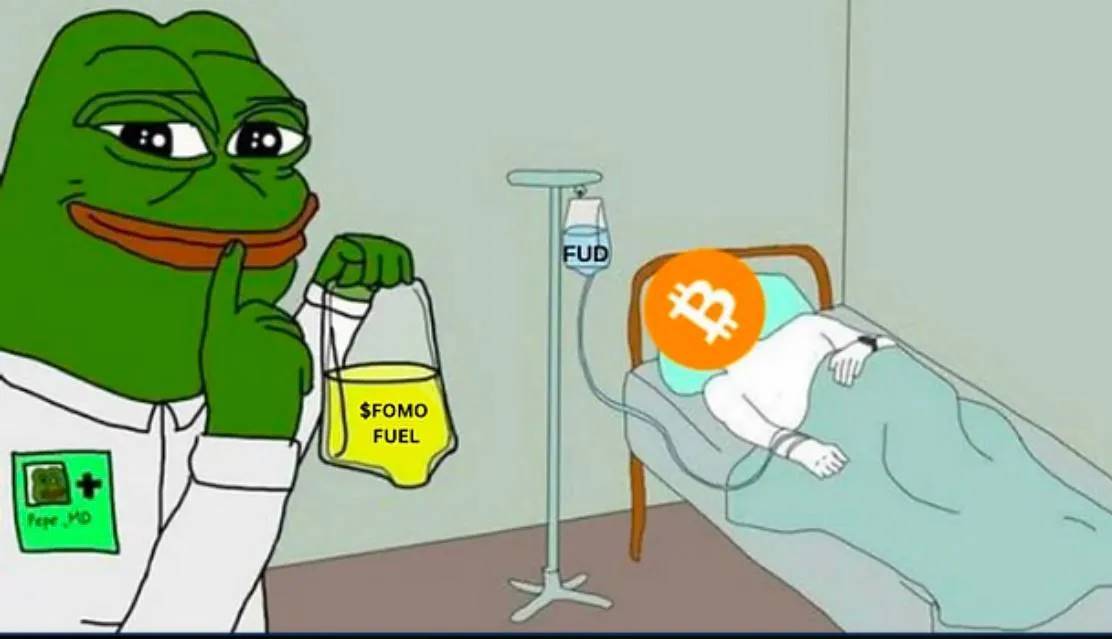
Fear of Missing Out (FOMO) is a strong anxiety about missing out on an opportunity. In trading, FOMO is often triggered by social media, news, or herd mentality, leading people to believe that they can achieve high profits by taking immediate action. However, this emotion often leads to panic trading, excluding rationality and reasonableness.
I almost feel this emotion every day on Crypto Twitter (CT). There are always certain coins that are believed to be able to "fly to the moon", making it difficult to remain calm.
A reader once shared his experience:
"Since 2019, I haven't had a single vacation, because I feel that as long as I'm away for a week, the market will skyrocket in my absence. I believe others have similar feelings, as FOMO prevents us from fully enjoying life."
This phenomenon is indeed sad, but also very common. Especially when I don't have a fully configured position, or when the market is in a bear market and I'm short, I also feel similar anxiety.
It should be noted that FOMO often leads traders to buy high and sell low or trade frequently, ultimately damaging investment returns. If you enter the market on a "green day" (a day when the market is rising) due to FOMO, by the time the market truly adjusts, you may no longer have enough capital to operate.
Therefore, if you must enter the market due to FOMO, it's better to choose a "red day" (a day when the market is falling), so that you can at least buy at a lower price. More importantly, traders need to learn to control their emotions and avoid making irrational decisions due to short-term market fluctuations.
Revenge Trading
Revenge trading is a very dangerous behavior that not only cannot recover losses, but may further worsen the trader's financial situation.
Imagine that you've had a successful week, steadily gaining decent returns. However, in a trade over the weekend, you suddenly lost all your profits, and even incurred additional losses. In this case, many traders will develop a strong "revenge" mentality, trying to make up for the loss through rapid trading.
Interestingly, this "revenge" is actually directed at the market. Traders may lose their minds and blindly engage in shit coin trading, hoping to quickly recover their funds, but often make even more serious mistakes.
I define revenge trading as: after losing in a trade, trying to make up for the loss through a series of impulsive and low-quality trades. This behavior not only cannot solve the problem, but may also lead to even greater losses.
Instead of rushing to succeed, it's better to calm down and re-examine your trading strategy. Finding a high-quality trading opportunity takes time, not just a moment of impulse. When you suffer losses, the most important thing is to pause trading and reflect on your own problems. By analyzing your trading records, you can find the causes of your mistakes, which can not only help you avoid repeating the same mistakes, but also improve your trading skills. Tools like CoinMarketMan and TradeStream can provide you with detailed data analysis to better understand your trading behavior.
If you find it difficult to break out of the cycle of revenge trading, you may consider seeking professional help. An experienced mentor or coach can provide you with valuable advice and help you develop a more rational and effective trading strategy.
Gambling Psychology
In trading, gambling psychology is a common phenomenon. Although trading should be a rational activity based on planning, strict discipline, and continuous learning, many traders view it as a gambling behavior.
Traders with a gambling mentality often ignore the importance of trading mechanisms and are unwilling to spend time developing a reasonable strategy. Instead, they act on luck, driven by adrenaline and the brief excitement of winning. This psychology is particularly common among novice traders, as well as some professionals who hope to get rich quickly.
The biggest harm of gambling psychology is that it traps traders in the trap of impulsive decision-making, and trading plans without deep consideration often lead to inevitable losses. In the long run, this behavior may also lead to emotional collapse, further affecting the trader's mental health and trading ability.
To overcome gambling psychology, traders need to recognize that the essence of trading is a long-term game, and success depends on a systematic strategy, strict risk management, and continuous learning, rather than momentary luck or impulse. By cultivating disciplined and rational trading habits, traders can truly achieve sustainable profitability.
Herd Instinct
Herd instinct is an important phenomenon in psychology, and it is particularly evident in trading. Driven by the fear of failure, traders tend to follow the behavior of the group, rather than making independent decisions based on a comprehensive market analysis. This dependence on the group's behavior can lead to panic trading, irrational decision-making, and ultimately, losses.
To become a successful trader, managing your own psychological state is crucial. Maintaining calmness, rationality, and the ability to think independently are indispensable principles in the trading process.
Here's an example of herd instinct:
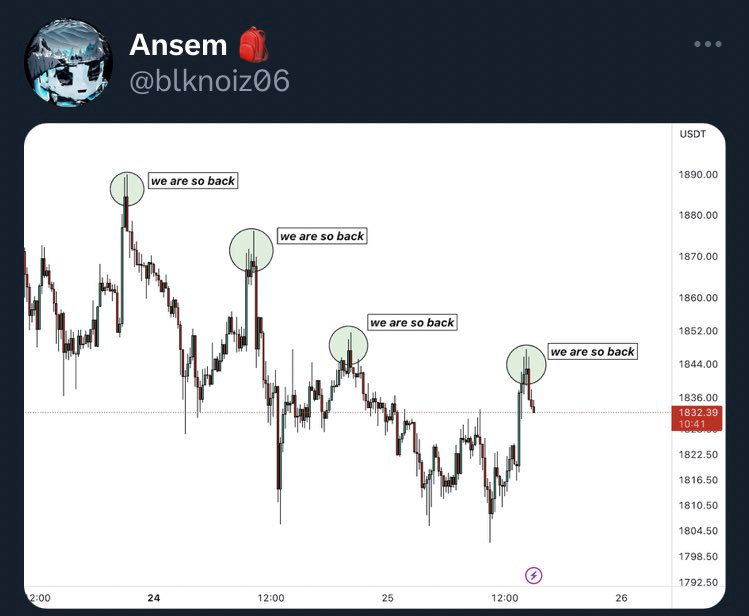
Suppose a leader named Ansem posts information about a new coin on Twitter. After the message is released, the price of the coin quickly rises.
Soon, other influential figures also start discussing this coin, and the market sentiment quickly heats up. Due to the group's participation, you feel safe and choose to follow the crowd. However, if you don't closely monitor the market dynamics, you may get stuck at the high price, as market sentiment often reverses in a short period of time. This phenomenon is common in the market.