Original | Odaily
Author | Wenser
Recently, the Layer 1 IP blockchain Story officially announced the release of its project whitepaper, which mentions: "Story is committed to building a programmable knowledge and creative market, allowing all intellectual property assets to be registered on a customizable general ledger. These assets are equipped with composable interfaces that can be called by any software application or AI model, realizing the use and monetization of intellectual property on the internet. Story's native Token IP will coordinate all value flows throughout the peer-to-peer intellectual property system."
With around $140 million in financing and the backing of stars like a16z, Polychain, Hashed, and DAO5, Story has once again significantly raised the ceiling of the "IP+Crypto" track, and has also opened up the imagination space for the creator economy and on-chain intellectual property ecology.
On the eve of Story's TGE, Odaily will conduct a systematic analysis of the project in this article, in order to provide readers with a more comprehensive perspective on understanding the project. Note: This article is only for sharing opinions and does not constitute investment advice, DYOR.
Imagining the Future: A World Where IP Devours Everything
With the rapid development of AI, content is growing explosively at a rate beyond anyone's imagination - because this is a growth paradigm that completely transcends past historical rules, and with the increasingly mature LLM large language models, AI can generate thousands or even tens of thousands of words of corresponding content in just a few minutes or even tens of seconds, covering a variety of media forms such as text, images, videos, and audio.
In other words, we are about to enter a world of highly rich media.
But at the same time, as AI gradually penetrates human information society, problems such as fake news, plagiarism, content washing, and imitation content will become increasingly serious, and the concept and value of IP (intellectual property) will become increasingly important. After all, not all content can reach the level of IP, just like not all books written can become classics.
At that time, the value of IP will be mainly reflected in the following aspects:
Cultural Value: IP Carries Consensus within Different Scopes
A good story is IP, an excellent application is IP, and a widely popular movie is IP. It can be said that IP is a carrier of cultural consensus within different scopes, different regions, different classes, and different systems. The series of superhero-related IP topics including Superman, Spider-Man, and the Marvel Universe are so popular worldwide precisely because they have condensed the universal values of imagination about the future, expectations of hope, pursuit of kindness, and resistance to evil. A good IP not only can inspire people's inner consensus, but also can spread this consensus to a wider range. It is not an exaggeration to say that the infectious power of IP consensus can grow to infinity.
Economic Value: IP Directly Creates Economic Benefits
According to relevant data from the World Intellectual Property Organization (WIPO), IP-intensive industries contribute more than one-third of global GDP. Taking the United States as an example, IP-intensive industries contributed $7.8 trillion in economic output in 2019, accounting for 41% of its GDP, with over 63 million industry employees, accounting for 38.2% of total U.S. employment; in 2022, the added value of patent-intensive industries in China was 14.3 trillion RMB, accounting for 11.97% of GDP; the industry added value of the copyright industry also exceeded 8 trillion RMB; according to a joint research report by the European Patent Office (EPO) and the European Union Intellectual Property Office (EUIPO), IP-intensive industries contributed more than 47% of the EU's GDP, worth €6.4 trillion, in 2017-2019. In the future, the direct economic value of IP-related industries will continue to grow. Intuitively, IP-related industries are the lubricant of the social economy, playing an important role in social innovation, employment opportunities, and international trade.
Political Value: IP May Shape the Political Landscape
With the gradual advancement of the AI wave, the value of IP will further spread to the political field. Whether it was the previous TikTok ban storm or the recent panic caused by Deepseek in the US political and business circles, even the latest bill "making downloading Deepseek a crime, with a maximum sentence of 20 years in prison and a fine of $1 million". Behind IP, there are often disputes over the discourse power of technological intellectual property rights, capital transactions, and political standards. As the classic saying during World War II: "Science has no borders, but scientists have their own homeland". In the future, IP may have no borders, but the people who create IP, trade IP, and innovate IP will have different political stances and nationalities, and this will often have varying degrees of impact on the political situation.
In summary, with the passage of time and the development of technology, the value and influence of IP will only increase, and thus a world where "IP devours everything" is gradually taking shape, which is the direction Story is aiming at.
Team Unveiling: The Idea of an IP Changing the World and Saving Creators
Turning the time pointer back to 2013, the "IP story" of Story, which is now in high demand, is inseparable from the contribution of a man named "Gatsby".
Story's Origin: A Gatsby-style Entrepreneurial Story
At that time, Story's co-founder SY Lee founded a platform called Byline, and his classmate Gatsby (Seung Soo, Chinese translation as Cheng Xiu) also joined as the Chief Operating Officer. It was a news crowdfunding platform aimed at saving the advertising-driven news industry that was being devoured by giants like Google and Facebook, but as online advertising became increasingly popular, the project soon ran into difficulties. Reluctantly, SY Lee adopted a similar model and founded Radish in 2015, aiming to protect the IP works of creators and provide sustainable income for authors who had worked hard to create stories. But initially, the market was not optimistic about this platform either. When Radish was just a few weeks away from replicating Byline's fate, Gatsby stepped forward and used a personal credit loan of $200,000 to support the project to continue operating.

Gatsby and SY Lee
That's how Radish managed to survive until 2017, when it raised a $3 million seed round, with investors including Greylock, Lowercase Capital, SoftBank's Next Media Innovation Fund, United Talent Agency (UTA), Bertelsmann Digital Media Investments (parent company of Penguin Random House), Sherpa Capital, ITV President Peter Bazalgette, former Microsoft executive Charlie Songhurst, Nicolas Berggruen, LendingHome co-founder and CEO Matt Humphrey, BDA China founder Duncan Clark, Jeremy Yap, and well-known American-Chinese writer Tan Enmei. The "free trial reading, paid reading, and authors receiving income while retaining content copyright" model established by Radish also gradually gained high recognition in the market, and on the basis of realizing a win-win situation for the platform, readers and authors, it subsequently achieved tremendous commercial success and was once hailed as the "Netflix of the online novel industry".
In 2021, Kakao Entertainment, the entertainment subsidiary of the Korean mobile social giant Kakao, acquired Radish for $440 million (about RMB 2.9 billion, about KRW 500 billion). At that time, Radish had over 10,000 online novel IPs and a monthly user base of over 1 million, with annual sales of around 230 billion KRW.
That's how SY Lee and Gatsby accumulated their "first pot of gold" for themselves, and their goals have also been set on an even grander vision.
Story Development: Aiming at the AI Content World
After ending the Radish entrepreneurial journey, SY Lee met Jason Zhao, the youngest product manager at Google Deepmind Lab, in 2021. After a series of communications, the two hit it off and decided to "take the IP business to the end". This time, they chose a field that was both familiar and unfamiliar - "intellectual property in the world of blockchain and AI" at the intersection of humanities, social sciences and rational technology.
After experiencing initial setbacks and obstacles, SY Lee and Jason Zhao finally managed to open the door to venture capital giant a16z through their own strength, connections and other means. At the time, SY Lee declared: "I want to fundamentally change the entire copyright system that has existed for 400 years and cannot operate without complex legal documents and professional lawyers." In addition, as he had previously been criticized by a16z partner Andrew Chen for the lack of network effects on the Radish platform, Lee also told the a16z partner Chris Dixon leading this investment: "I want to create network effects in the content business."
Their proposed solution is: to use blockchain networks and protocols to build an "IP Lego" for the content industry, until it is built into an "IP universe".
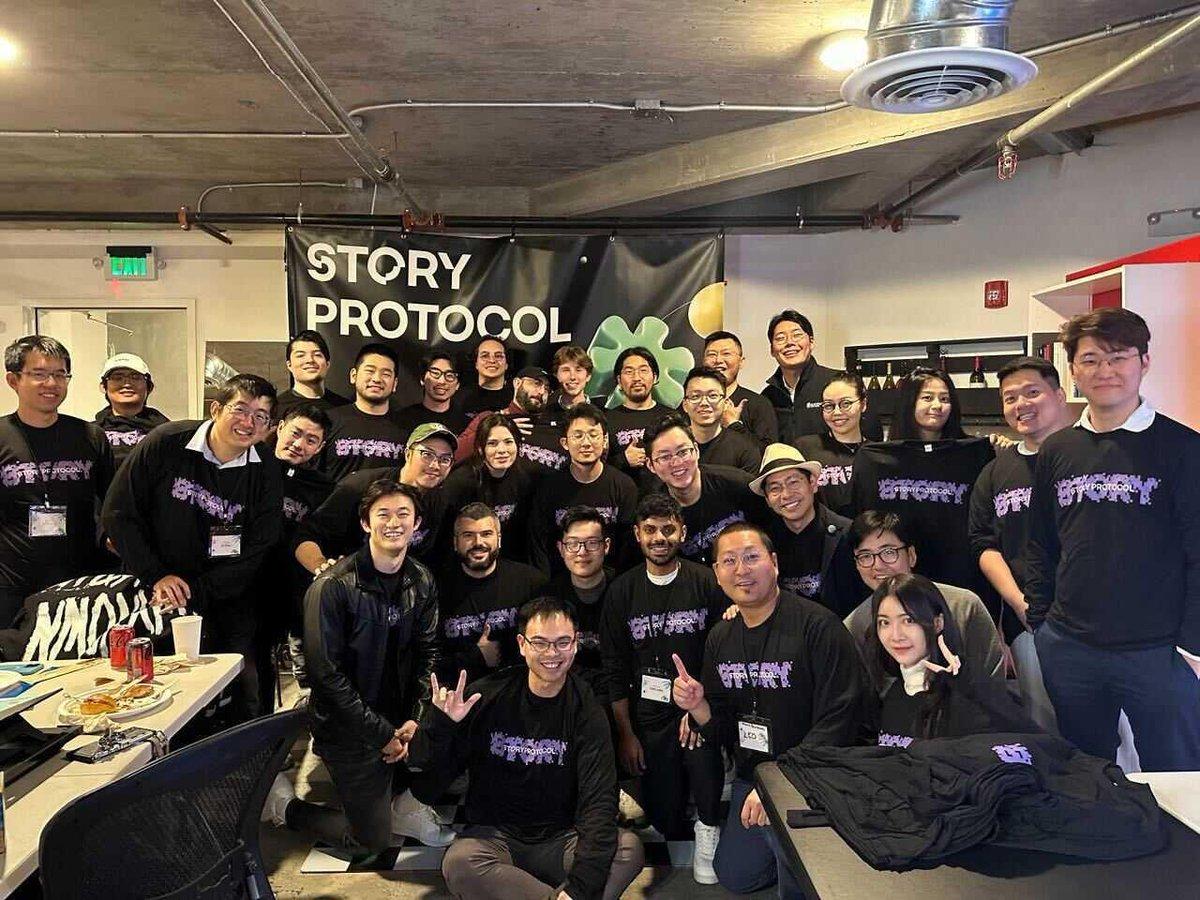
Group photo of the Story Protocol team (yes, they were still just Protocol at the time)
In May 2023, Story Protocol (later rebranded as IP Chain Story) completed a $293 million seed round, led by a16z Crypto, with participation from Hashed, Foresight Ventures, Samsung Next Fund, Two Small Fish Ventures, DAO 5, Berggruen Holdings, Mirana Corp and SLVC.
In September 2023, Story Protocol (later rebranded as IP Chain Story) has cumulatively completed $540 million in financing, led by a16z, with Hashed, Endeavor, Samsung Next, dao 5, and Insignia Venture Partners participating.
In August 2024, the core contributor team of the intellectual property blockchain Story, PIP Labs, completed an $80 million Series B financing led by a16z crypto, with Polychain as a strategic investor. Other investors include Stability AI Senior Vice President and Board Member Scott Trowbridge, K11 founder Adrian Cheng, and digital art collector Cozomo de'Medici, No Capital and others. The new round of financing has brought PIP Labs' total financing to $143 million, with a valuation of $2.25 billion, making it a unicorn company.
At the time of the latest round of financing, the Story developer ecosystem had more than 200 teams, providing services for more than 20 million IPs, covering areas such as IPFi (IP Finance), artificial intelligence and consumer markets. (Such as Sekai, which completed a $3.1 million seed round in December 2024, and the generative AI platform Ablo in the fashion field). At that time, Story co-founder Jason Zhao said: "Story will pursue a 'win-win' for creators and the AI industry, and we are trying to create a turning point in the history of AI."
Story Climax: TCP/IP and Whitepaper Release
In February 2024, Story released the programmable IP layer.
In August 2024, Story's first public testnet Iliad was officially launched;
In November 2024, Story's final testnet Odyssey was launched, with nearly 100 ecosystem partners participating in the construction.
In December 2024, Story officially released the "experimental framework that allows Agents to trade IPs with each other" Agent TCP/IP. Through this framework, Agents will be able to trade their training data, creative styles, investment strategies, and more, to usher in a new era of the intelligent economy.
In January 2025, Story launched its mainnet, kicking off the final stage before the public mainnet launch; the IP RWA protocol Aria Premiere Launch based on Story reached a $7 million purchase limit in 9 minutes.
In February 2025, the Layer 1 IP blockchain Story officially released its whitepaper, titled "Story: A Peer-to-Peer Intellectual Property Network", published by the Story Foundation.
As SY Lee mentioned in a previous tweet, "Providing solutions for content creators to fight against big tech companies is urgent, as the advent of AI is putting the entire internet culture at risk. The economic contract behind the internet - content creators providing supply and content distributors providing demand - is being disrupted by the proliferation of AI. Story, as a programmable IP infrastructure, is expected to address this challenge, protecting IP sovereignty in the form of IP Lego, allowing creators to set licensing and royalty sharing terms."
In the not-too-distant future, a AIGC-based UGC MMORPG world is already emerging.
Of course, achieving this goal is not easy, and this is precisely the problem that the Story project's whitepaper is committed to solving.
The Difficulty of IP: A Bridge Connecting UGC and AIGC with IP
As a former intellectual property industry practitioner, I must say that in my personal view, the track chosen by Story is full of many challenges. In addition to the AI-generated content, data, and the IP monopoly of tech companies mentioned earlier, IP itself faces many real-world challenges.
Real-world Dilemma: The Prisoner's Dilemma between On-chain and Off-chain
The difficulty of IP in the past has mainly been in the word "confirmation of rights".
How to prove that the copyright of a work, an application, or a set of technical know-how belongs to you?
With the development of the industrial society, the determination of the ownership, originality and intellectual property rights of human unique thoughts or patented technologies has gradually focused on a converging method - that is, consistency proof.
One path is the public credibility path, that is, to transform the IP confirmation process into relying on the public credibility certification of individuals, organizations or government agencies. Whether it is a guarantee between private parties or a notarization by a notary public, the essence is to rely on credit and reputation as the authoritative force for IP identification, with many "human risks".
The other path is the technical path, that is, to use technical means to confirm the IP, in order to clarify the ownership and prove the effectiveness. Whether it is the decentralized blockchain technology or the timestamp technology, the essence is to generate an irreversible Hash value of the file record to complete the initial record of an IP document, and thus achieve the confirmation of rights.
However, the IP confirmation on the blockchain still needs to go through the process of off-chain subject matching and rights fulfillment to connect with the real world, in order to complete the identification of rights and the clear attribution of assets. At present, it seems that, just as RWA needs the involvement of real assets and the access of real regulatory authorities, the IP industry is also difficult to bypass this step.
The current situation is that the original creators and IP works in the IP industry are like two "prisoners" residing in the on-chain space and off-chain space respectively, and the on-chain confirmation still needs off-chain verification.
Story is born to solve this prisoner's dilemma and bridge the gap between on-chain and off-chain.
Anonymous Economy: An Ecosystem Supported by IPFi
In the Story project whitepaper, we can see that the Story network is divided into three layers: the execution layer, the storage layer, and the consensus layer.
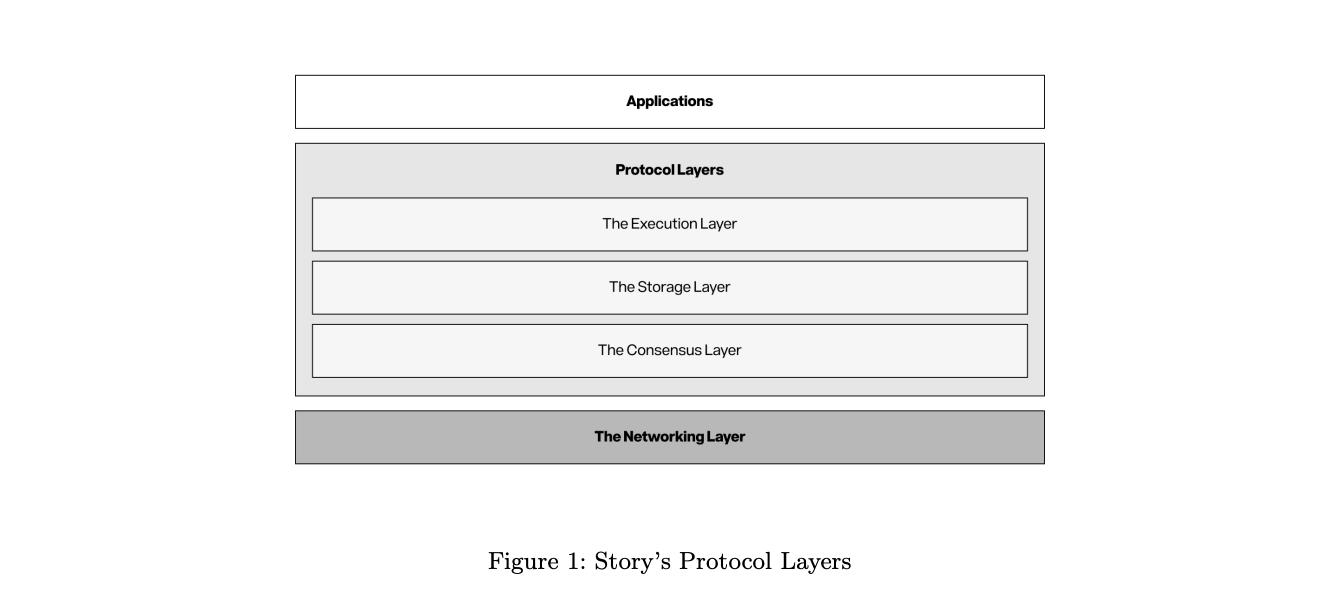
The execution layer includes the main execution core and the dedicated execution core: the former is mainly responsible for processing all transactions and smart contracts, and activating the latter; the latter includes the existing IP core, the oracle core (off-chain synchronization core) and the bridge core (cross-chain communication core), as well as the future AI core, ZK core and more professional core components.
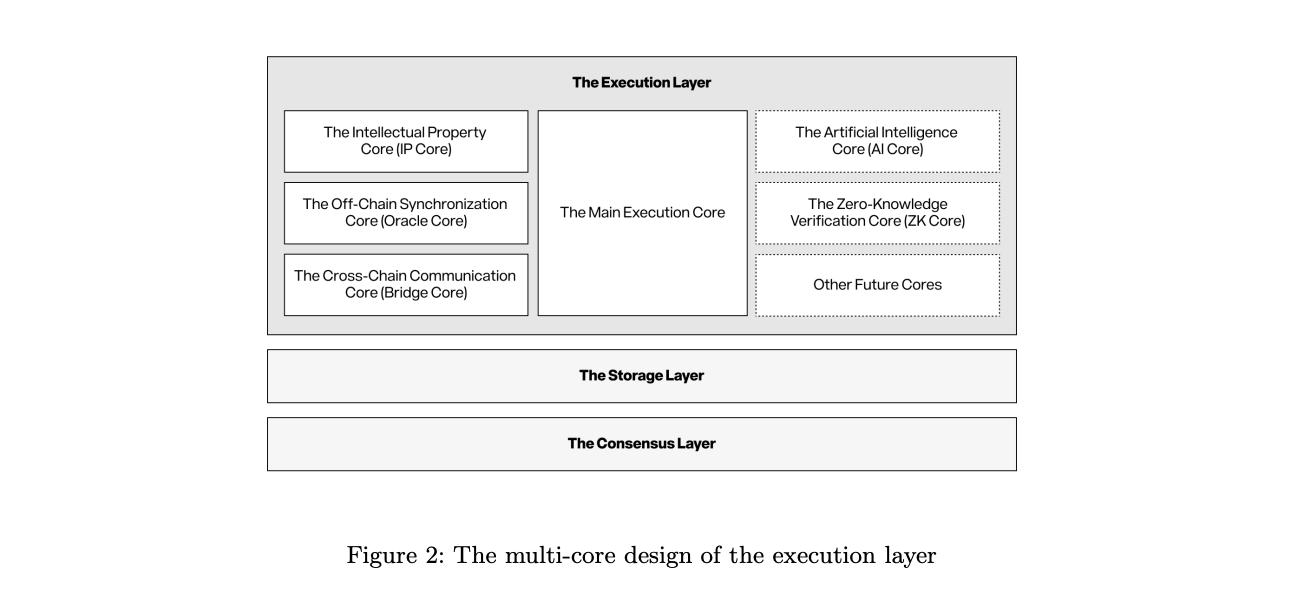
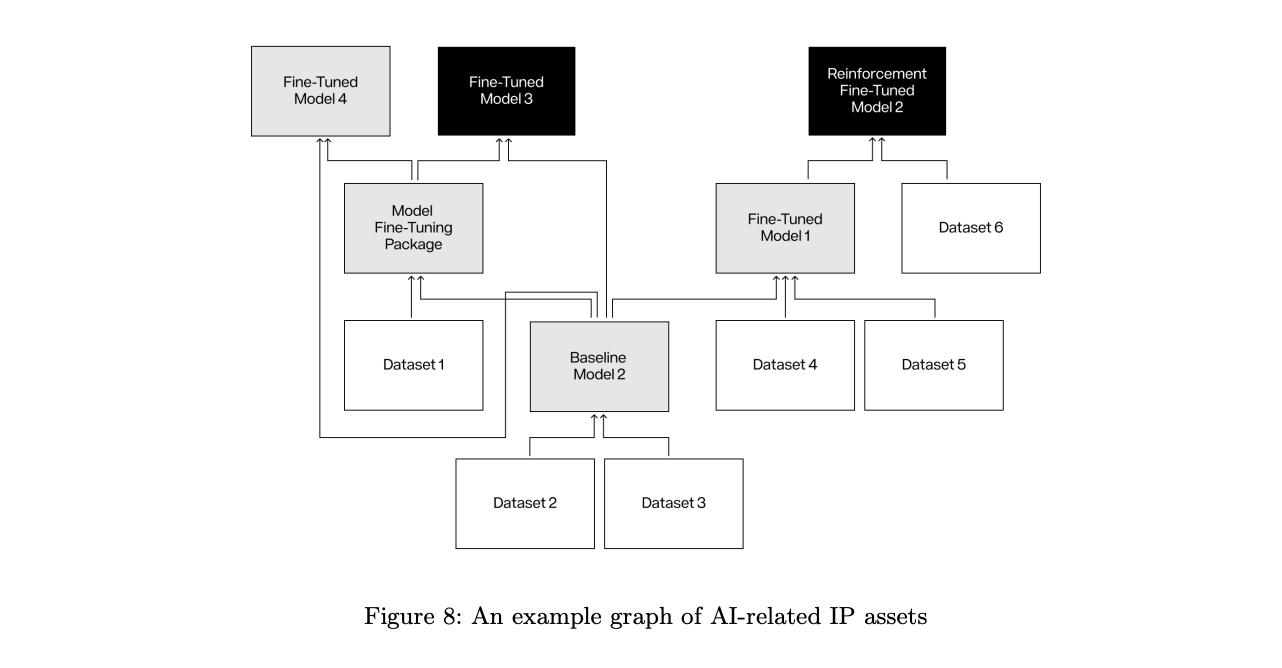
The main function of the IP core is to track the rights, licenses and monetization of the original assets and derivative assets through the IP graph;
The main function of the oracle core is to verify the authenticity of IP assets and licenses, including verifying the social identity of the creator, receiving off-chain payments, and generating legal contracts for off-chain use;
The main function of the bridge core is to realize cross-chain message transmission, allowing IP assets to be used on different blockchains, thereby expanding the flow range of IP assets.
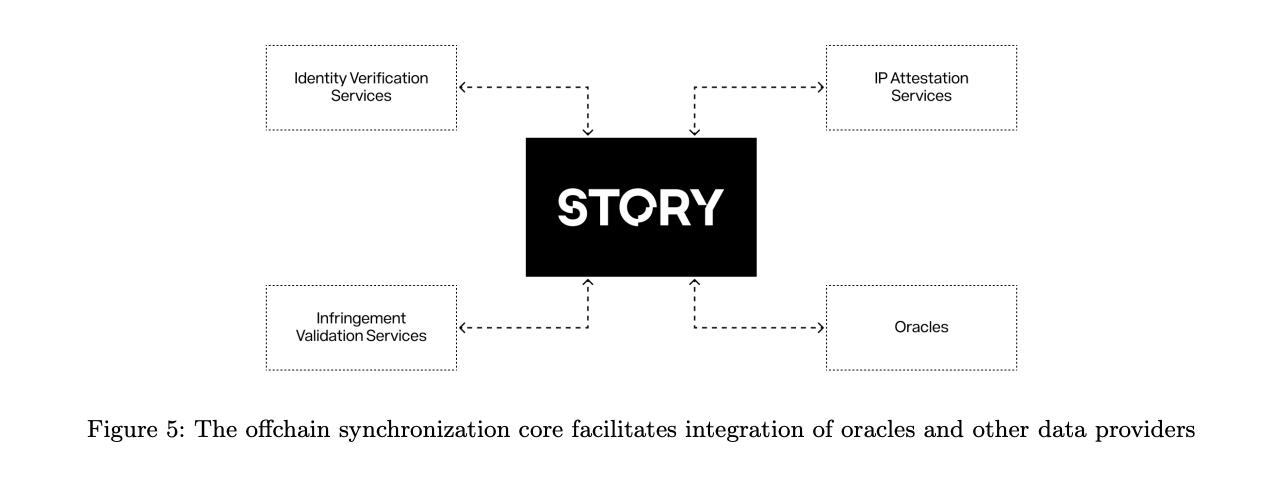
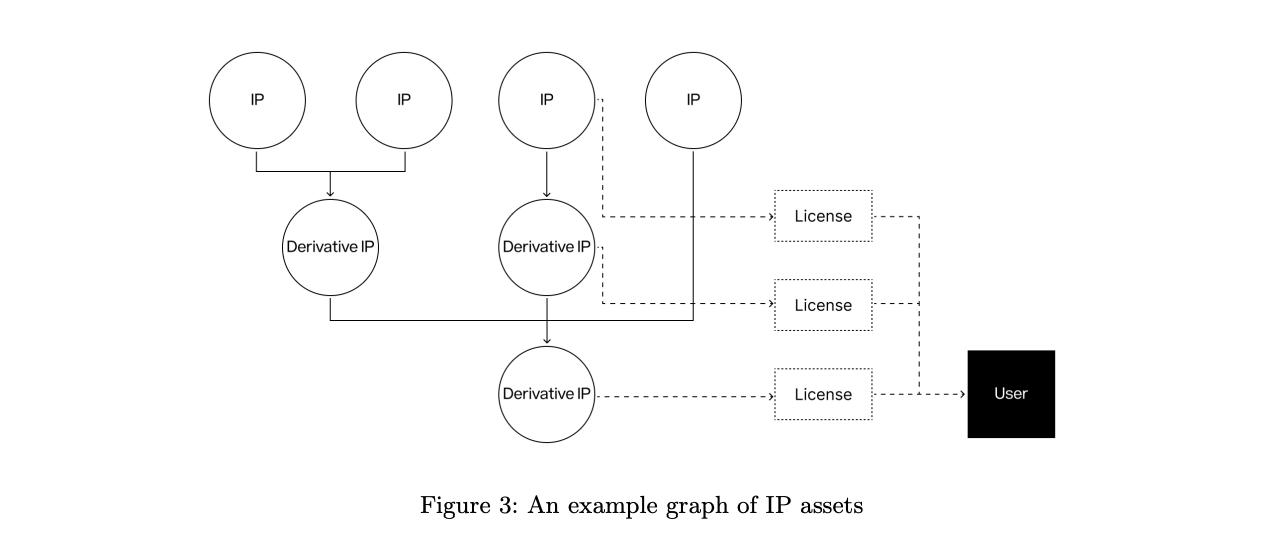
The storage layer draws on the design concept of the NAND Flash Translation Layer (FTL), effectively balancing performance, scalability, cost, proof size and redundancy, and mainly provides storage APIs for the execution layer and its cores. At the same time, it integrates on-chain and off-chain storage solutions, such as IPFS.
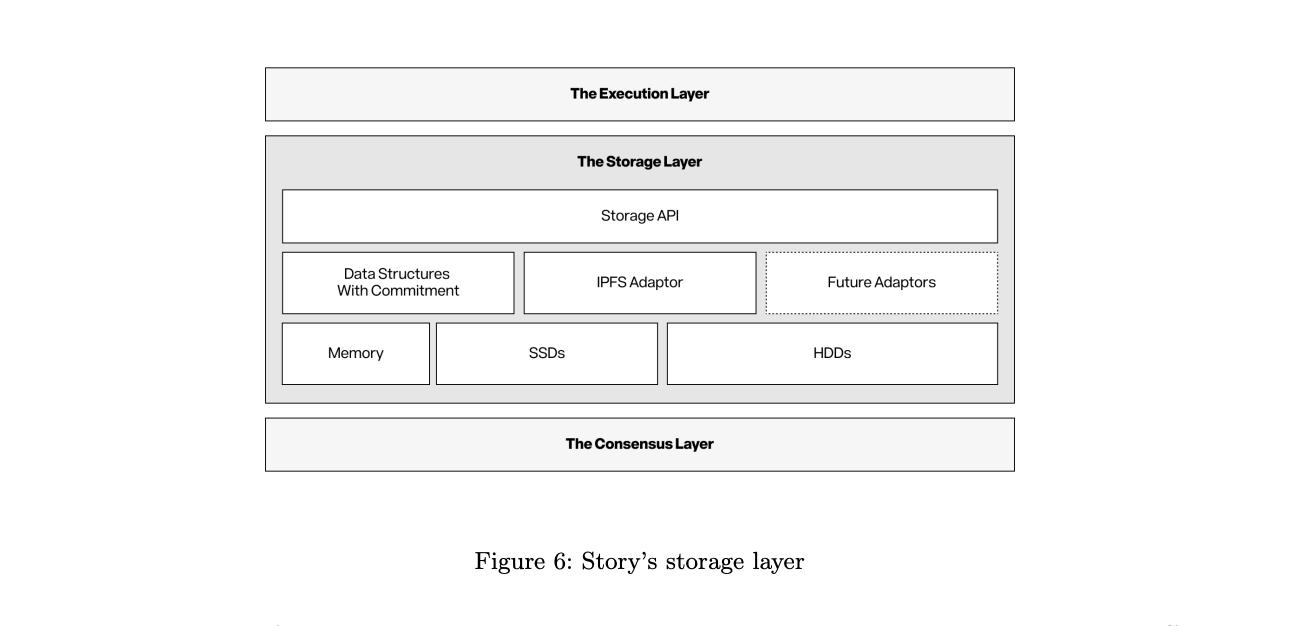
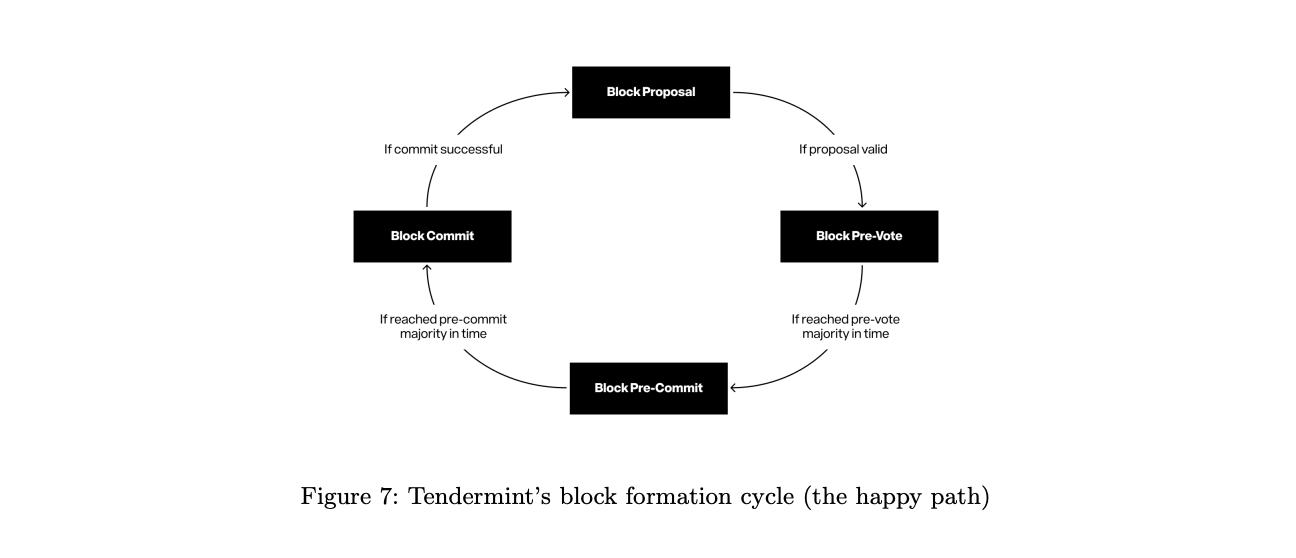
The consensus layer adopts the PoS mechanism and the modern high-performance implementation of Tendermint, CometBFT, with features such as fault tolerance, liveness guarantee, immediate finality and modular design. With the help of direct economic incentives, it ensures that the node validators maintain the security and integrity of the blockchain, thereby providing a guarantee for the efficient and stable operation of the network.
Based on this, the Story network is expected to become a one-stop IPFi ecosystem that integrates IP management, authorization, trading, and revenue sharing. With the previous AI Agent TCP/IP framework, Story has also incorporated AI content into its "ecological universe", greatly enriching the IP content landscape and tradable targets, while making AI Agent integrated into the Story ecosystem while maintaining its own unique identity.
Thus, an anonymous economic system is expected to gradually establish and thrive on the Story network.
Future Expectations: A Token Called IP Participating in Value Circulation
As Deepseek uses algorithms to burst the computing power bubble in the AI industry, the value of data and content becomes increasingly important, and thus the value of IP is also highlighted.
Based on this background, the Story ecosystem token IP will also become an essential part of the value circulation within the ecosystem.
On the one hand, IP is the gas fee token, staking token and utility token of the Story ecosystem, as well as the intermediary in network transactions;
On the other hand, IP is also the incentive carrier and reward performance based on the POS mechanism of Story;
In addition, IP will be used in scenarios such as royalty distribution, license fee payment and usage compensation, and will also become the currency in the transaction process of AI Agent.
On the evening of February 7th at 9 o'clock, the IP token will be listed on the Bybit pre-market, at which time you can pay attention to the market's judgment of the value and price expectations of the token.
Conclusion: The IP Industry with a Market Size of Tens of Trillions of Dollars is Facing a Turning Point
It is certain that in the current gradual enrichment of the Story ecosystem, the RWA track and IP industry with a market size of tens of trillions of dollars will usher in a new round of changes.
As for whether Story can drive the further development of the IP industry through the IPFi system and AI framework, and bring a new "IP trading and management" paradigm to creators around the world, we will wait and see.
Reference materials:
https://x.com/storysylee/status/1828812173675843933