Source: Web3 Lawyer
As we stand at the forefront of a new era of unprecedented growth, ARK Invest's "Big Ideas 2025" elucidates the complex convergence of five continuously evolving technology-enabled innovation platforms of today: artificial intelligence, robotics, energy storage, public blockchains, and multiomics sequencing. These platforms are driving exponential progress across industries and catalyzing a leap change in global economic growth.
ARK Invest's 2025 report presents 11 Big Ideas, outlining the massive transformations underway that have the potential to dramatically improve productivity, disrupt industries, and create long-term investment opportunities with profound implications for investors, companies, and society at large.
In this regard, we have analyzed the sections of the 2025 report pertaining to AI Agents, stablecoins, and public blockchains, presenting a perspective from the lens of a Wall Street fund on these issues. This vantage point allows us to move beyond the current PVP state of the crypto market and approach the true utility and future trends of innovative AI Agents, stablecoins, and public blockchains in a more traditional and universal manner.
Take Aways:
AI Agents will change the logic of how people search and shop, and will be carried out through digital wallets;
Digital wallets can further integrate traditional banking financial services such as savings, lending, insurance, investment, and consumption, and through the AI Agent innovation paradigm, can move the value chain of downstream platforms' global e-commerce and digital consumption upstream;
Combining the utility of AI, the valuation of digital wallet companies will be enhanced. Importantly, digital wallets can not only cover the vast existing user base of Web2, but also form a value loop through AI Agents, and can seamlessly integrate with the innovative applications of Web3, bringing greater economic utility to users;
The annual transaction volume of stablecoins has already approached the transaction volume of Visa and Mastercard, and their supply and the number of active stablecoin addresses are expected to reach historic highs in 2024;
Innovations around blockchain-based stablecoins will continue to emerge and become an important way to export the US dollar, and by 2030, the market capitalization of stablecoins may grow to $14 trillion;
In this field, with the continuous improvement of innovative financial infrastructure and the integration with traditional financial infrastructure, coupled with the support of AI, there will inevitably be more investment and mergers and acquisitions from the traditional finance perspective.
I. Five Innovation Platforms Accelerating Economic Growth
The changes in macroeconomic growth are in line with historical patterns. Human history has been stagnant for 100,000 years, but innovation (especially writing) has enabled empires to connect all continents, doubling the actual growth rate by 1000 AD. Subsequently, agricultural innovations increased population density and labor specialization, leading to a doubling of the growth rate to 0.3% per year by 1500.
In the 400 years before 1900, with the Enlightenment and the Industrial Revolution sweeping the globe, the annual GDP growth rate doubled again to 0.6%. Thereafter, the Second Industrial Revolution, marked by electrification, automobiles, and telephones, ushered in modernization and has increased the growth rate fivefold to an average of 3% over the past 125 years.
Today, technological breakthroughs in artificial intelligence and smart robotics may again boost productivity and drive the next phase of economic growth in the next 5 to 10 years. By 2030, ARK Invest expects the growth rate to reach 7.3%, compared to the IMF's 3.1%.

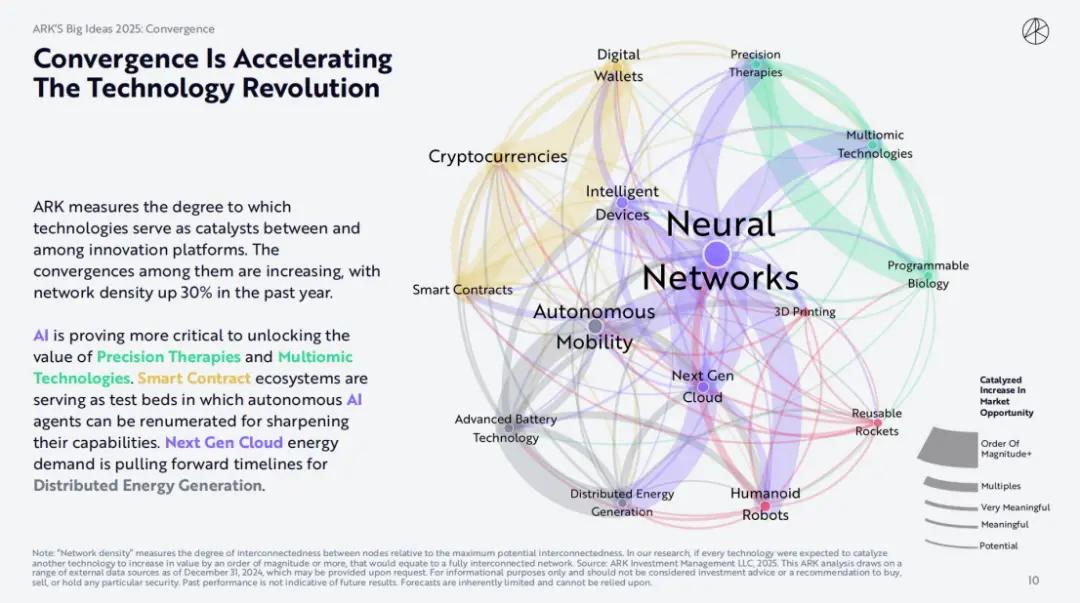
Against this backdrop, the convergence of multiple technology platforms, including artificial intelligence and public blockchains, is increasing, with network density growing 30% in the past year.
Public Blockchains
After widespread adoption, public blockchains could migrate all currencies and contracts onto them, enabling the verification of the scarcity and ownership of digital assets. The traditional financial system may reconfigure assets to accommodate the rise of cryptocurrencies and smart contracts. These technologies increase transparency, reduce the impact of capital and regulatory control, and lower the cost of contract execution.
In such a world, as more assets become more easily monetized, and as businesses and consumers gradually adapt to the new financial infrastructure, the digital wallets that hold everyone's assets will become increasingly important.
AI
With the development of data, artificial intelligence computing systems and software can solve complex problems, automate knowledge work, and accelerate the integration of artificial intelligence technology into every economic sector. The adoption of neural networks should be more important than electrification and could create tens of trillions of dollars in value. In terms of scale, these systems will require unprecedented computing resources, and AI-specific computing hardware will dominate the next generation of cloud data centers that train and operate AI models.
The potential for end-users is evident: AI-driven smart device fleets will permeate people's lives, changing the way they consume, work, and entertain. The adoption of AI should transform every industry, impact every business, and catalyze every innovation platform.
II. AI Agents Redefining Consumer Interactions and Enterprise Workflows

AI Agents, through natural language understanding of intent, using reasoning and appropriate context for planning, using tools to take action to fulfill intent, and improving through iteration and continuous learning. As more intelligent AI models emerge, AI Agents will use more and more complex tools to accomplish higher-value tasks.
AI Agents will accelerate the adoption of more digital applications and bring a paradigm-shifting change in human-machine interaction. Whether in hardware sales or software subscriptions, the combination of AI Agents will drive the large-scale application of AI. For example, embedding AI Agents in the operating systems of consumer hardware will allow consumers to delegate all discovery and research to AI, saving them a significant amount of time.
2.1 AI Agents Will Change the Logic of Search and Shopping
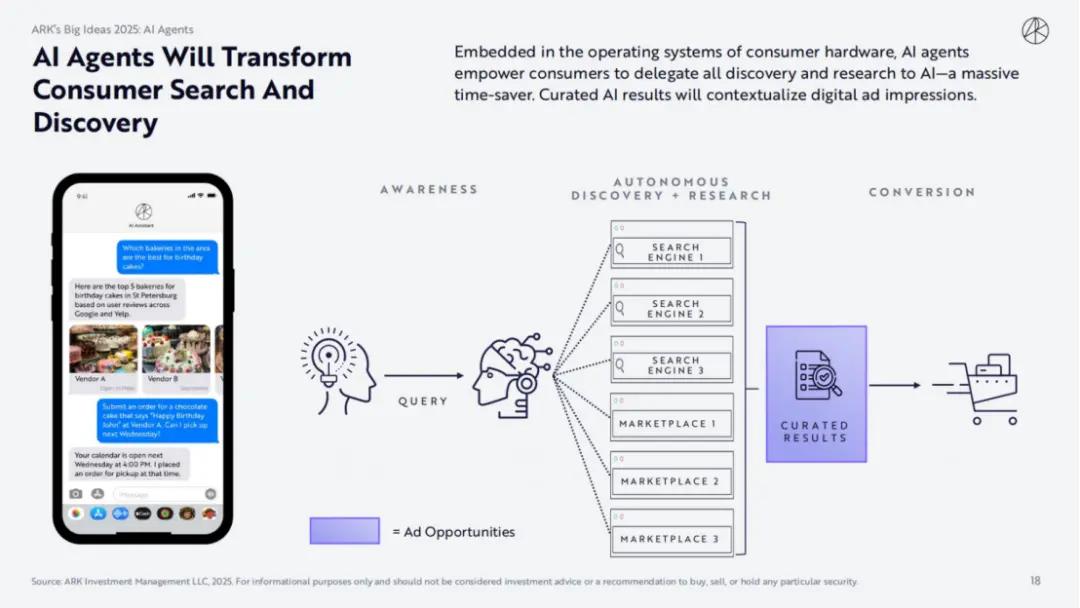
AI Agents may become the entry point for personal search, and if search shifts to personal AI Agents, their advertising revenue could soar. By 2030, ARK Invest believes AI advertising revenue could account for over 54% of the $1.1 trillion digital advertising market, directly taking market share from traditional search giants like Google.
Digital Advertising. Carefully curated AI-driven search results will present opportunities for digital advertising. If the search business shifts to personal AI Agents, their advertising revenue could soar. ARK Invest believes that by 2030, AI advertising revenue could account for over 54% of the $1.1 trillion digital advertising market.
Online Consumption. By 2030, AI Agents' shopping volume could approach 25% of global online shopping addressable. Consumers using AI Agents for shopping will simplify product discovery, provide personalized recommendations, and enable convenient purchasing. ARK Invest's research indicates that by 2030, AI Agents could facilitate nearly $9 trillion in global online consumption.
2.2 Digital Wallets Will Help AI Agents Achieve Value Loops
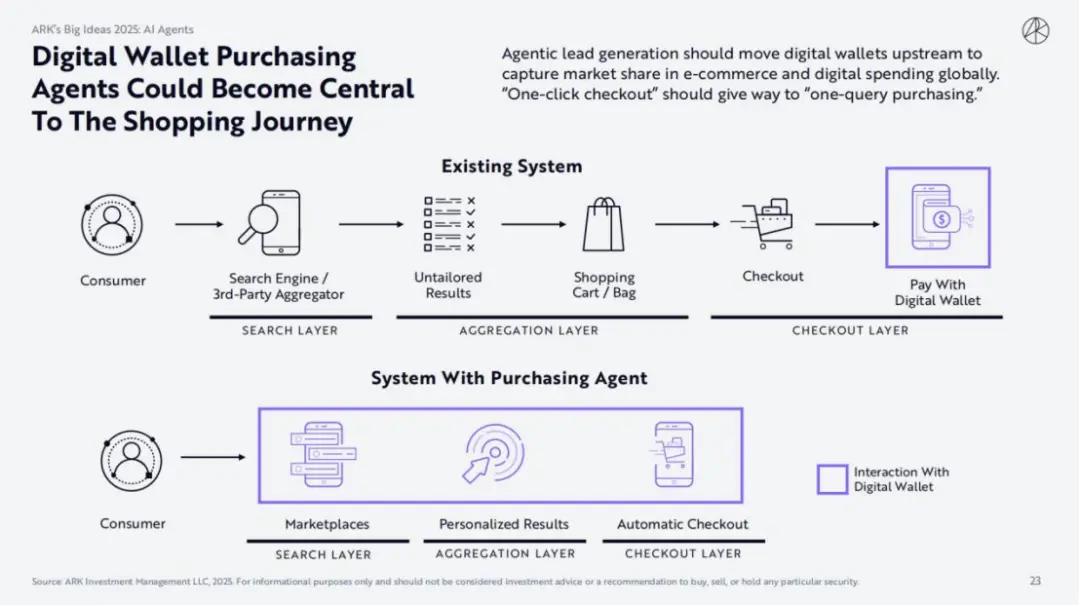
ARK Invest's research suggests that digital wallets authorized by AI Agents will capture share from traditional payment methods like credit and debit cards, potentially accounting for 72% of all e-commerce transactions by 2030. Digital wallets are integrating financial services and e-commerce. Based on their consumer-facing business, leading digital wallet platforms like Block, Robinhood, and SoFi are valued at $1,800 per user.
Here is the English translation of the text, with the specified terms translated as requested:In addition to the ability of digital wallets to integrate traditional banking and financial services such as savings, lending, insurance, investment, and consumption, with the help of the innovative paradigm of AI Agents, digital wallets can take on the value chain of global e-commerce and digital consumption of downstream platforms, thereby moving the value chain upstream.
Thus, the "one-click checkout" model of e-commerce platforms like Amazon may give way to the "one-time query and purchase" model of AI Agent wallets.

2.3 Valuation of Digital Wallet Companies Will Increase
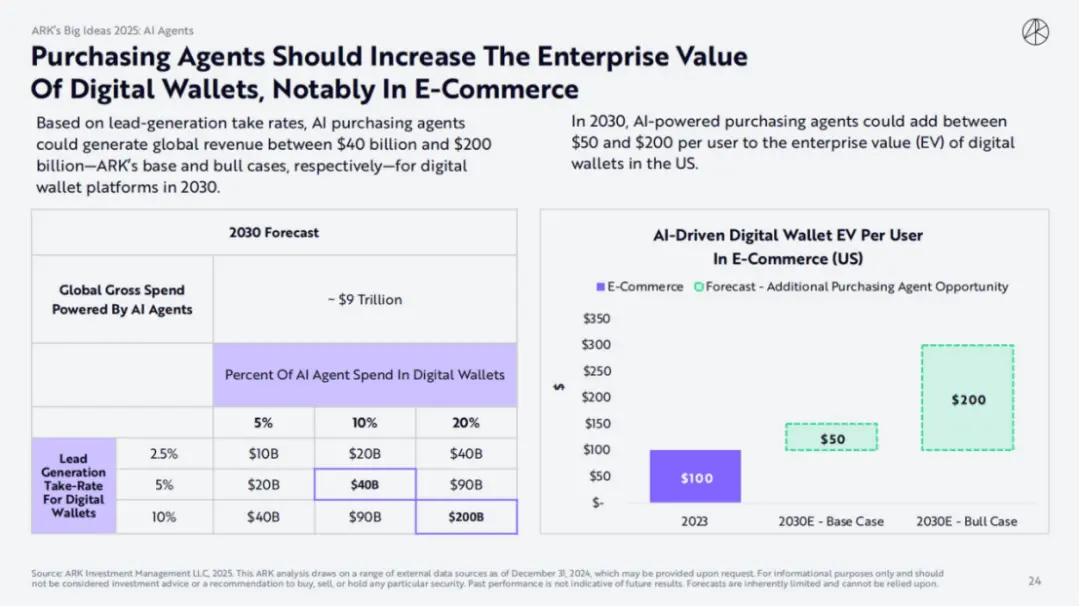
Based on the potential customer generation rate and the impact of the AI Agent innovation paradigm, by 2030, AI Agents can create $40 billion to $200 billion in global revenue for digital wallet platforms (respectively, ARK's base case and optimistic case). By 2030, AI Agents can add $50 to $200 in enterprise value (EV) per user of US digital wallets.
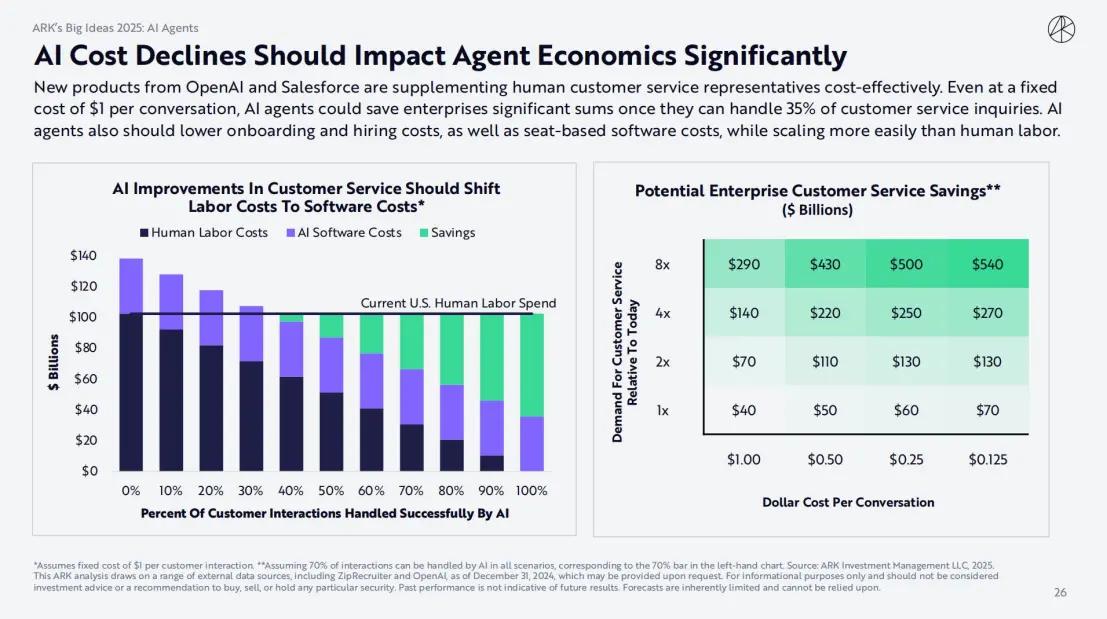
In terms of internal cost reduction and efficiency, companies deploying AI Agents should be able to increase unit volume and/or optimize the workforce to engage in higher-value activities while maintaining the same labor force. As artificial intelligence advances, AI Agents may handle a higher proportion of workloads and independently complete higher-value tasks.
At the same time, with the decline in AI costs, more low-cost, high-efficiency AI Agent products will emerge. OpenAI and Salesforce's new products are complementing human customer service representatives in an economically efficient manner. Even if the fixed cost per conversation is $1, as long as AI agents can handle 35% of customer service inquiries, it can save companies a significant amount of money. AI agents should also reduce onboarding and recruitment costs as well as seat-based software costs, and are more scalable than human labor.
III. Stablecoins Reshaping the Digital Asset Landscape
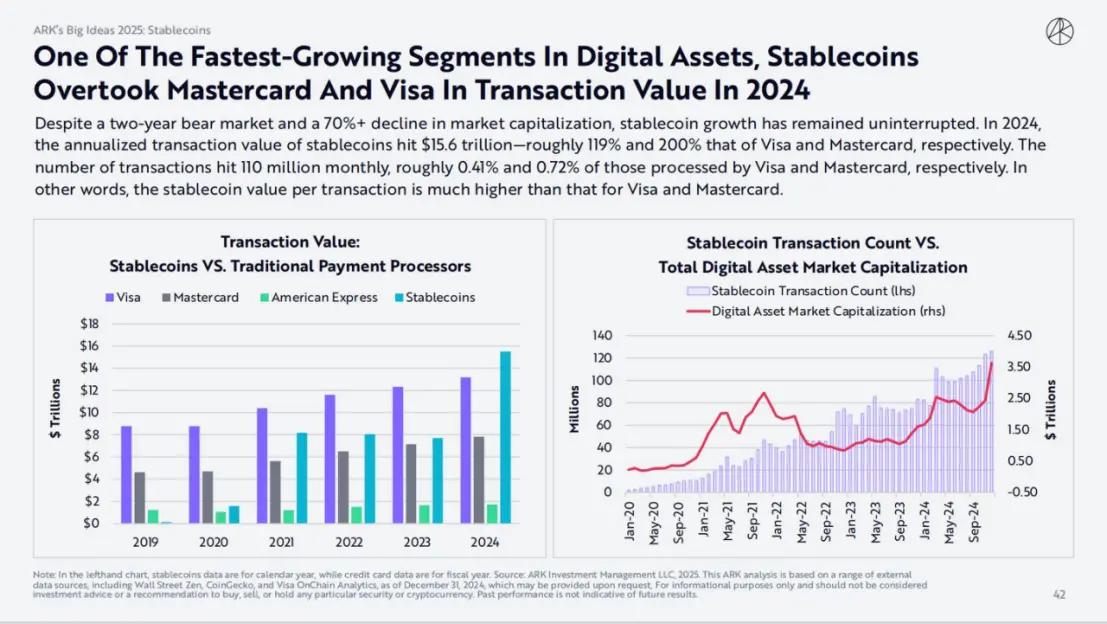
As one of the fastest-growing areas in digital assets, Stablecoins' trading volume exceeded Mastercard and Visa in 2024. Despite a two-year bear market and a more than 70% drop in market capitalization, the growth of Stablecoins has not been interrupted.
3.1 Stablecoin Trading Volume Approaches Visa and Mastercard
According to the ARK Invest report, in 2024, the annualized trading volume of Stablecoins reached $15.6 trillion, which is approximately 119% and 200% of Visa and Mastercard, respectively. The monthly transaction volume reached 110 million, accounting for 0.41% and 0.72% of the transaction volume processed by Visa and Mastercard, respectively. In other words, the value per Stablecoin transaction is much higher than Visa and Mastercard.
(visaonchainanalytics.com/transactions)
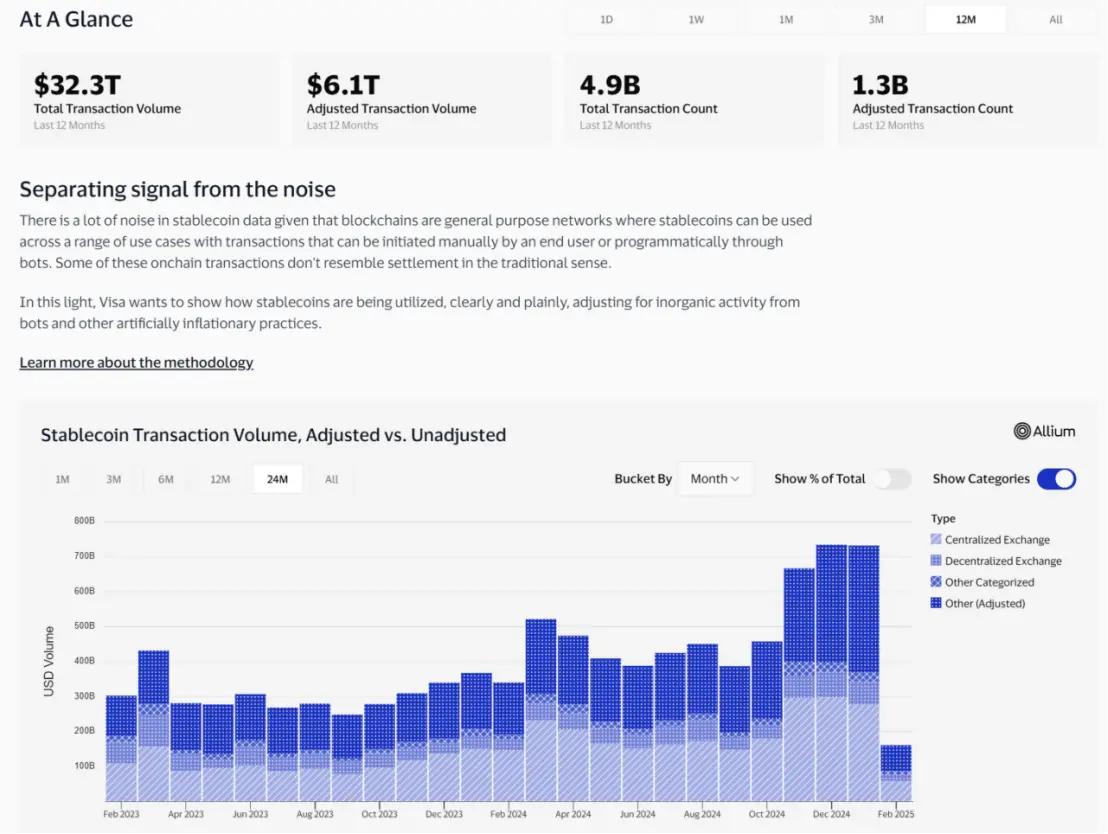
Due to the various use cases of Stablecoins, transactions can be manually initiated by end-users or programmatically initiated by bots, resulting in significant noise in Stablecoin data. Therefore, Visa has adjusted Stablecoin data to remove non-organic activities and other artificial inflationary behaviors adapted by bots.
According to the Visa Onchain Analytics Dashboard: Overview, the adjusted annualized Stablecoin trading volume in 2024 reached $5.62 trillion. We analyze the data for the 12 months ending February 2025:
Raw data:
Annualized Stablecoin trading volume of $32.3 trillion, with a total of 4.9 billion transactions, and an average transaction value of $6,592. Corresponding to a total Stablecoin supply of $200 billion, the velocity is 161.5.
Adjusted data (excluding bot operations and high-frequency behaviors):
Annualized Stablecoin trading volume of $6.1 trillion, with a total of 1.3 billion transactions, and an average transaction value of $4,692. Corresponding to a total Stablecoin supply of $200 billion, the velocity is 30.5.
Therefore, according to Visa's data, the adjusted Stablecoin trading volume is already approaching the annual transaction volume of Mastercard, and the value per transaction is even higher.
(If there are any data errors or other data statistical calibers, please feel free to discuss and correct them.)
3.2 Stablecoin Supply and Active Stablecoin Addresses Reach Historic Highs in 2024
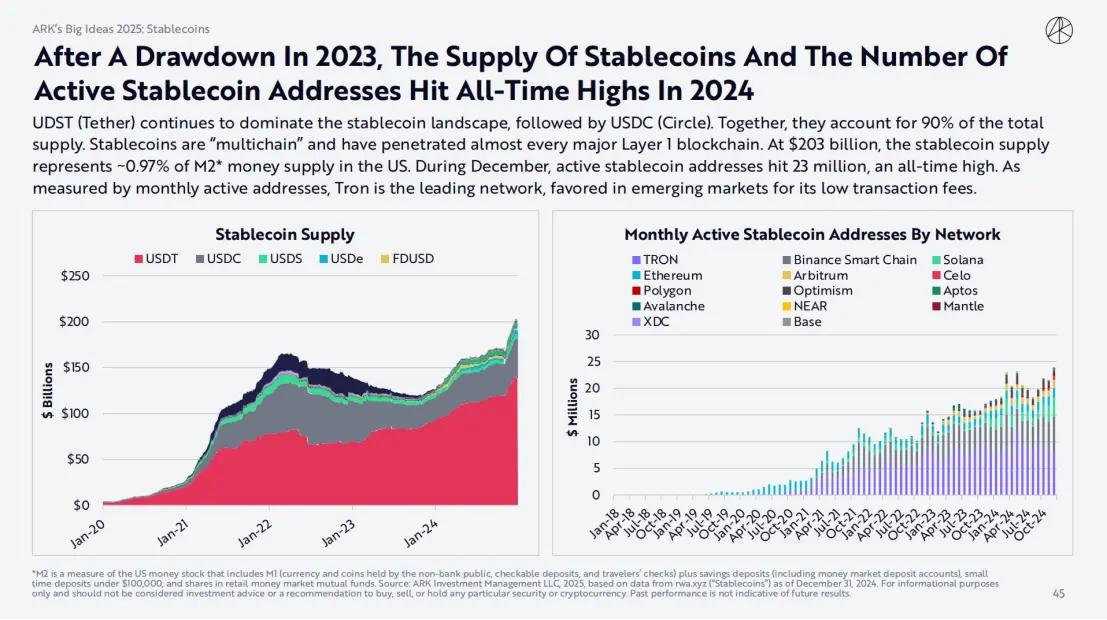
 Despite differences in data statistics, the overall Stablecoin market capitalization has exceeded $200 billion and maintained a continuous upward trend. Solana, TRON, Ethereum, and Base are the leading blockchains driving the growth of Stablecoin trading volume in 2024. In December 2024, a new record was set, with a daily trading volume of $270 billion and a monthly trading volume of $2.7 trillion, highlighting the rapid growth of the industry.
After the decline in 2023, USDT (Tether) continues to dominate the Stablecoin sector, followed by USDC (Circle). Together, they account for 90% of the total supply. Multi-chain Stablecoins have penetrated almost all major L1 blockchains. The current Stablecoin supply is $203 billion, accounting for approximately 0.97% of the US M2* money supply. In December 2024, the number of active Stablecoin addresses reached a historic high of 23 million. Measured by monthly active addresses, TRON is the leading network, favored by emerging markets due to its low transaction fees.
Layer 2 blockchains with lower costs and higher efficiency are attracting the interest of retail investors. Retail investors are flocking to Layer 2 to conduct cheaper and more convenient Stablecoin transactions, increasing the market share of blockchains like Arbitrum, Base, and Optimism. Meanwhile, whales and institutions continue to operate on the Ethereum base layer. Transactions under $100 are dominated by Base and Optimism, while transactions over $100 are dominated by the Ethereum base layer.
3.3 Peer-to-Peer Transactions and Personal Wallet Storage Dominate Stablecoin Use Cases
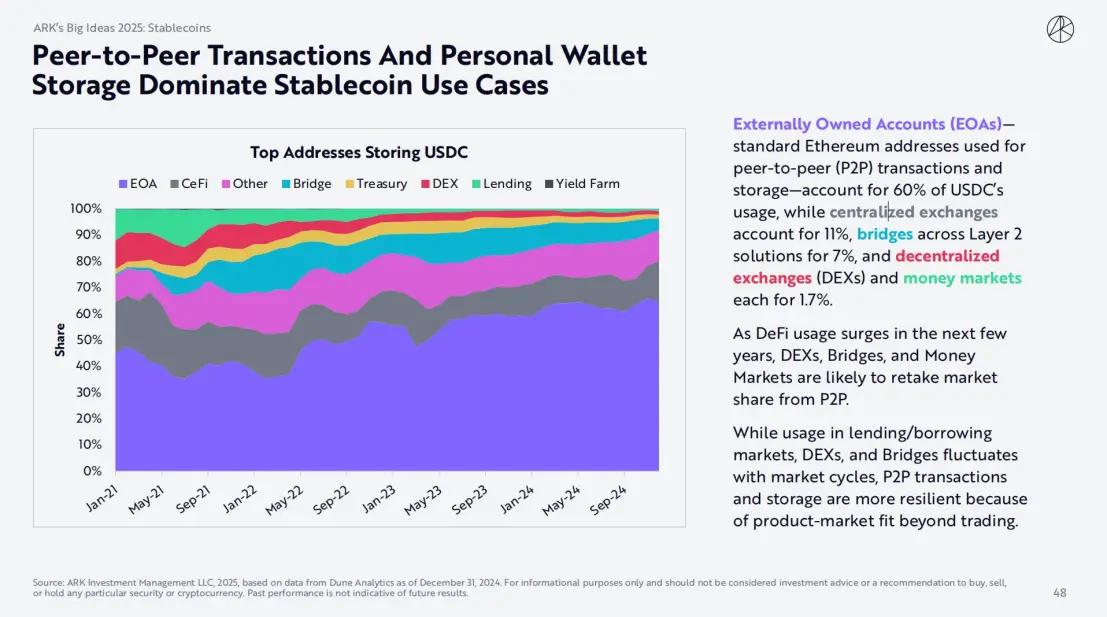
EOA wallets - the standard Ethereum addresses used for peer-to-peer (P2P) transactions and asset storage - account for 60% of USDC usage, while centralized exchanges account for 11%, cross-chain bridges and L2 solutions account for 7%, and decentralized exchanges (DEXs) and money markets each account for 1.7%.
As DeFi usage surges in the coming years, DEXs, cross-chain bridges, and money markets may regain market share from P2P. While the usage of lending markets, DEXs, and cross-chain bridges fluctuates with market cycles, P2P transactions and storage are more resilient, as the product-market fit is higher beyond just transactions.
3.4 Four Stablecoin Issuers Dominate Stablecoin Revenue
Tether, with fewer than 200 employees, is reported to have generated $5.2 billion in profits in the first half of 2024, including unrealized gains from USDT, its other products and services, and its digital assets - clearly one of the most capital-efficient businesses in history. Tether (USDT) and Circle (USDC) account for 60% of the revenue generated by the top five networks and applications. Overall, the Stablecoins USDT, USDC, DAI/USDS, and USDE generated $3.35 billion in revenue in the second half of 2024, annualizing to $6.7 billion.
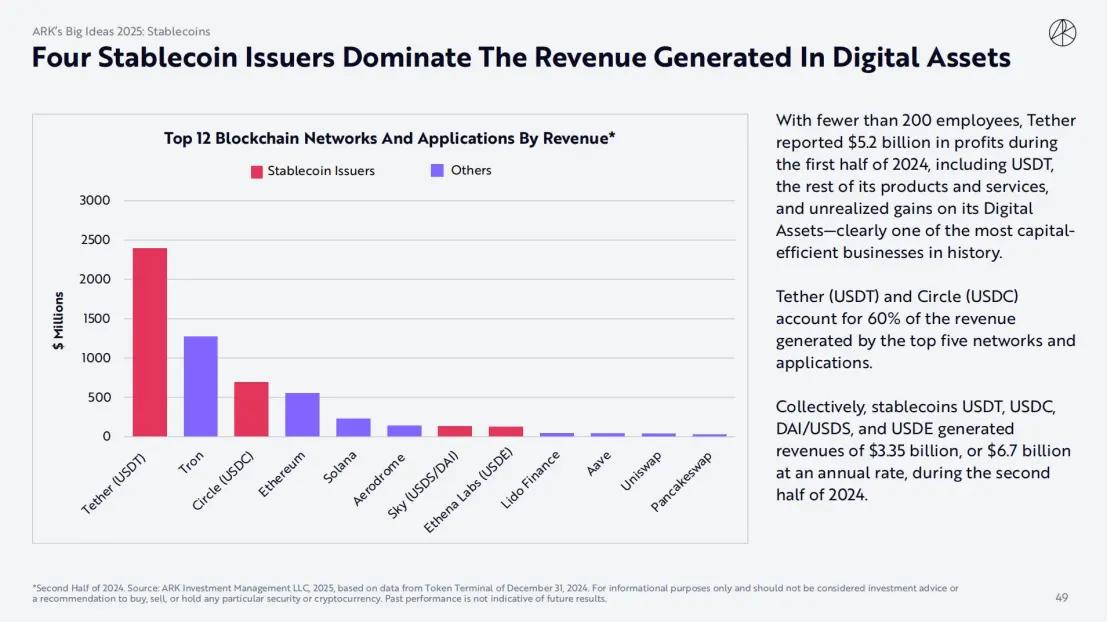
Circle and Tether have been generating billions of dollars in revenue by using Treasury bills and other securities as collateral for their stablecoins. However, in 2024, in order to compete and meet demand, yield-bearing stablecoins operating outside the US start to pass a significant portion of their interest income to users. Unless absolutely necessary, Circle and Tether are unlikely to follow this trend. Although still small in scale, yield-bearing stablecoins are the fastest-growing category in the stablecoin market.
3.5 Stablecoins will accelerate growth and absorb US Treasuries
To balance "de-dollarization", stablecoins are increasing their demand for US government debt as collateral. In a world moving towards deglobalization and de-dollarization, stablecoins may drive stable demand for US Treasuries. As of December 2024, Tether and Circle have collectively become the 20th largest holder of US Treasuries. In populous emerging markets such as Brazil, Nigeria, Turkey, Indonesia, and India, individuals and companies are adopting stablecoins as a store of value, means of payment, and cross-border currency. Stablecoins may become one of the most effective ways to export US dollars.
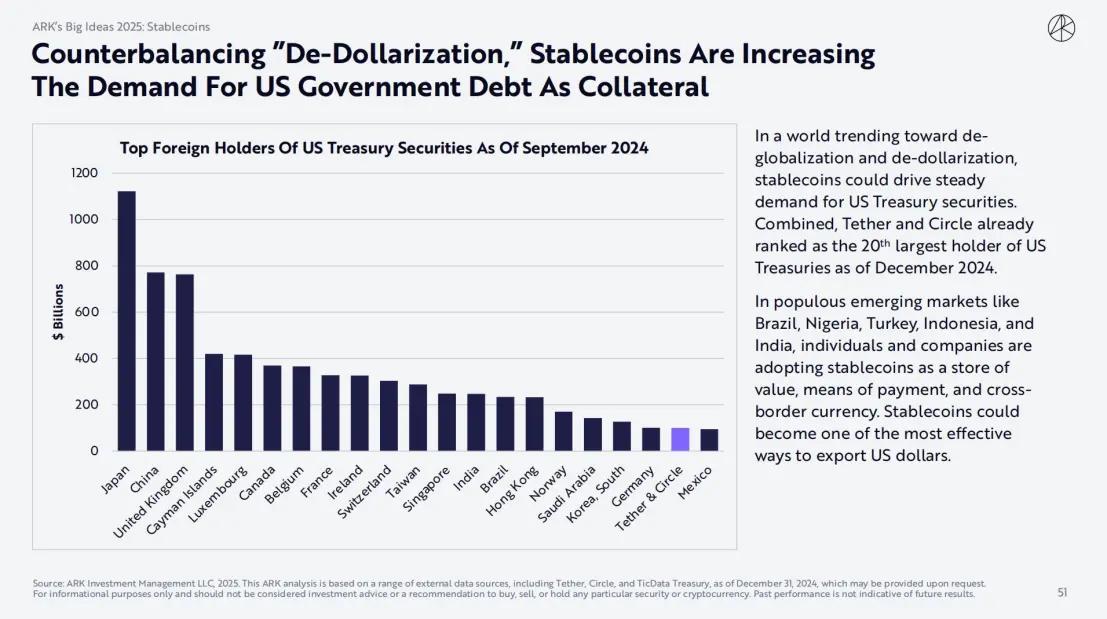
The current market capitalization of stablecoins is $203 billion, accounting for 0.17% of the global M2 supply. By 2030, the market capitalization of stablecoins could grow to $1.4 trillion and 0.9% respectively. If this happens, stablecoins will become the 13th largest currency in circulation, behind Spain and ahead of the Netherlands.

IV. Public Blockchains and Smart Contracts: Achieving Cost Reduction and Creating New Use Cases at the Application Layer

As the digital asset landscape becomes increasingly complex, smart contracts are driving innovation across more and more industries. The ecosystem is rapidly evolving to meet diverse and dynamic demands - from user-centric applications like gaming and SocialFi, to advanced financial instruments like derivatives and structured products, to decentralized infrastructure networks supporting wireless connectivity and energy storage.
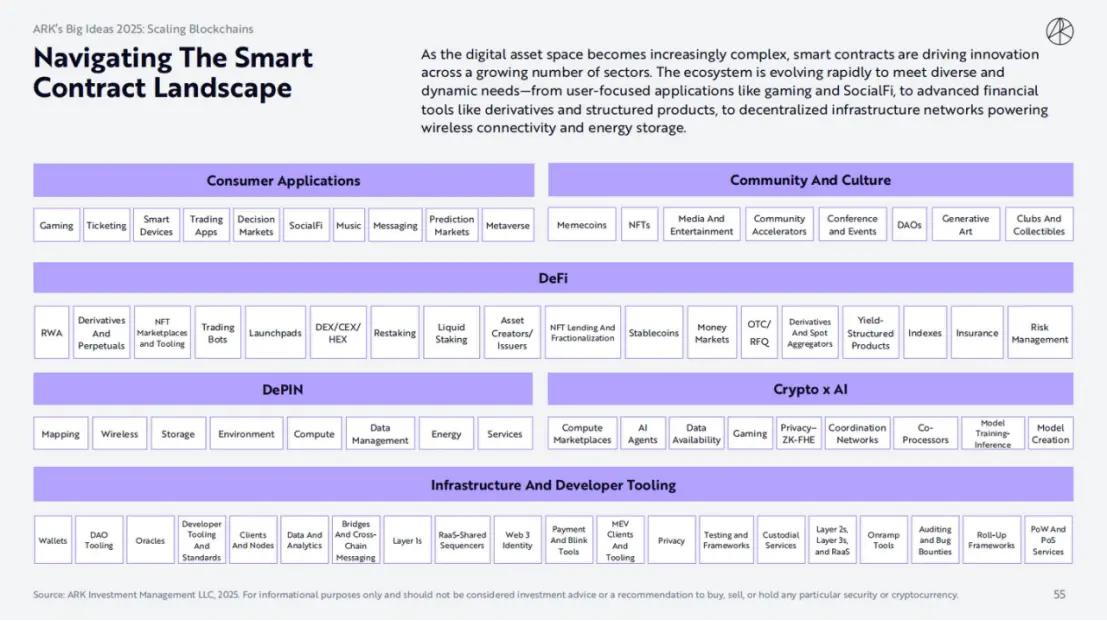
All of these technology stacks require seeking a lower-cost and more efficient blockchain for deployment. This has created two current market dynamics - either deploying on the high-throughput L1 of Solana, or deploying on the L2 of Ethereum.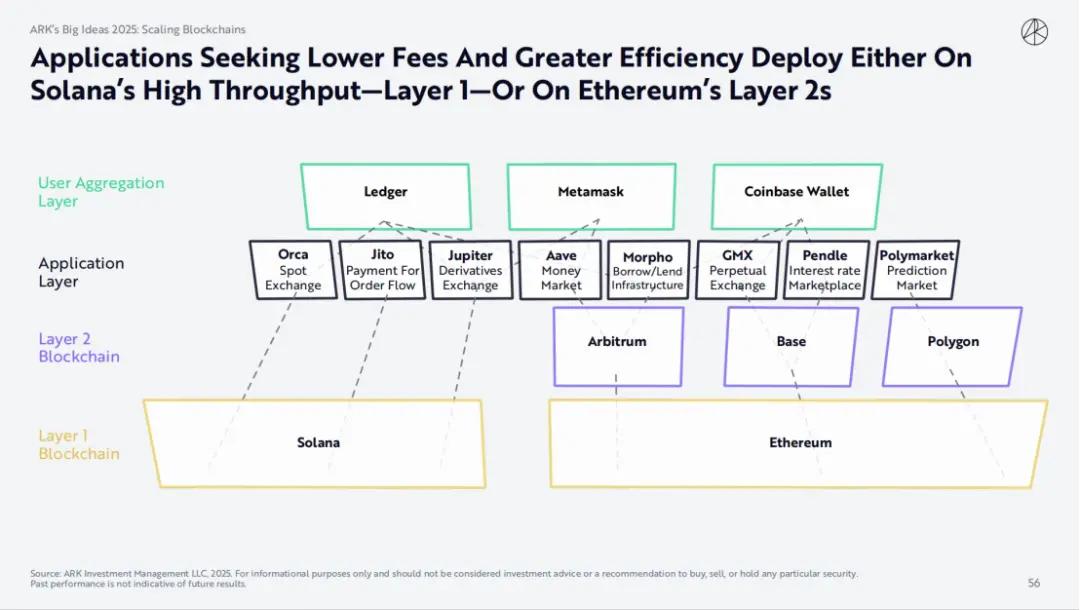
4.1 The Ethereum Ecosystem is Shifting to L2
The significant reduction in transaction costs has led to a surge in L2 activity, drawing users away from Ethereum's base layer. L2 accounts for 85% of the daily active addresses transacting within the Ethereum ecosystem. L2 activity has increased Ethereum's daily transaction volume from 3 million to 15 million, a 400% increase, in 2024.
Among them, Base is the fastest-growing Ethereum L2 blockchain. Within a year of its launch, Base has surpassed all other Ethereum L2 solutions in growth and market share. In 2024, Base accounts for 46% of active users and generates 63% of the fees on Ethereum L2. Base's TVL is $15 billion, with over 300 applications deployed, making a significant contribution to Coinbase's cash flow.

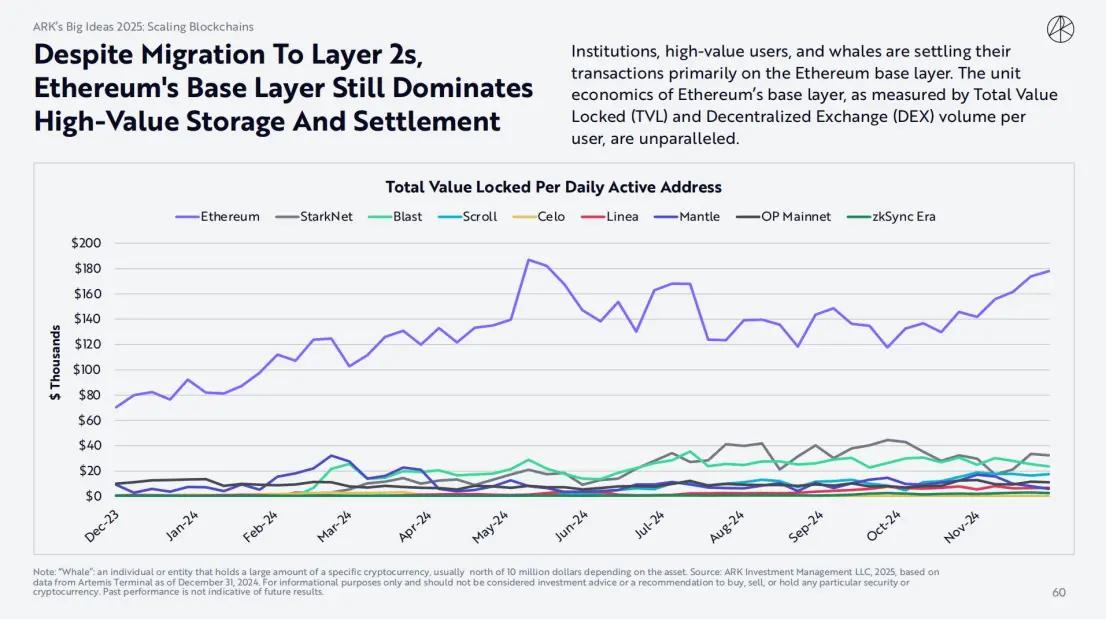
Nevertheless, Ethereum's base layer still dominates high-value storage and settlement. Institutions, high-value users, and whales primarily settle their transactions on Ethereum's base layer. Measured by total locked value (TVL) and decentralized exchange (DEX) volume per user, Ethereum's base layer has unparalleled unit economics.
4.2 Solana's Share Has Gained Traction Due to Retail Adoption
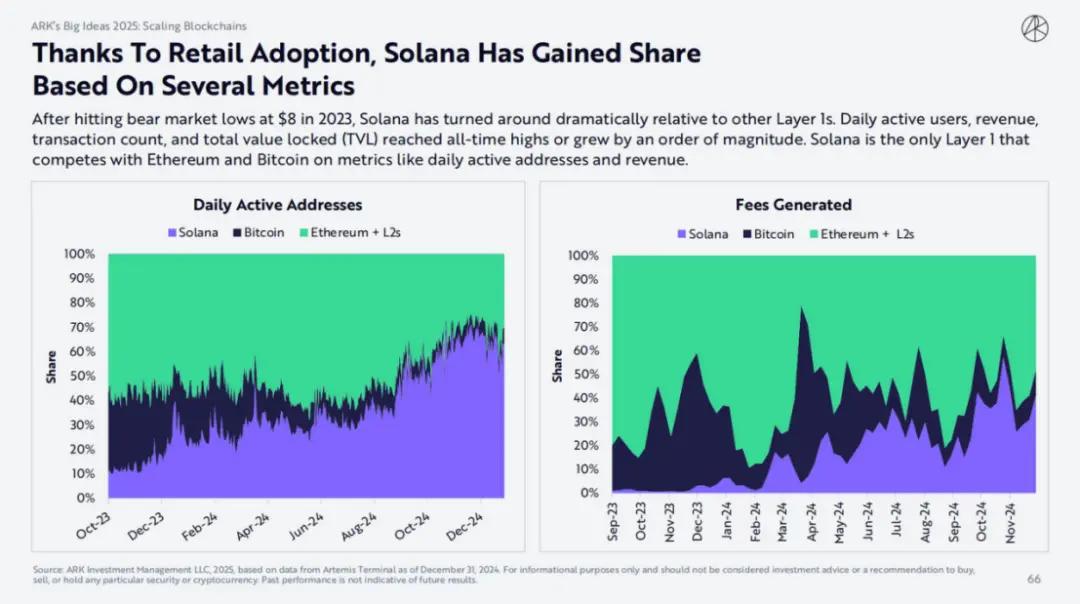 After reaching an $8 bear market low in 2023, Solana has seen a significant improvement relative to other L1s. Daily active users, revenue, transaction volume, and total locked value (TVL) have all reached new highs or grown by an order of magnitude. Solana is the only L1 that competes with Ethereum and Bit in metrics like daily active addresses and revenue.
Solana and Base are leading in developer adoption and mindshare. Of the 39,139 new crypto developers added in 2024, Solana leads with 7,625 developers, surpassing the Ethereum mainnet. Base has 4,287 developers, ranking 6th overall, surpassing Arbitrum and Starknet to become the leading Ethereum L2 solution.