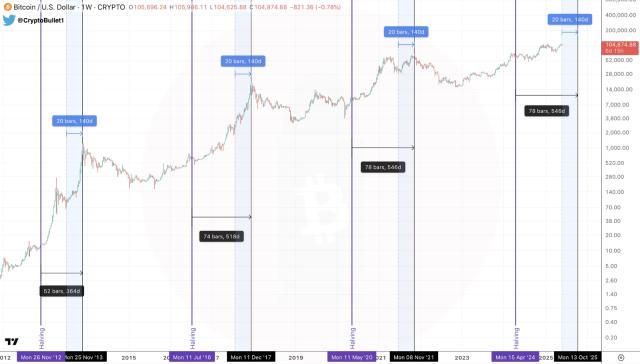
The US-listed company Strategy (formerly MicroStrategy), which has transformed from a software company to a Bitcoin development company, is encouraging a large number of companies to purchase Bitcoin as a reserve to boost the company's weak stock price. Currently, 78 listed companies globally, including mining companies, pharmaceutical companies, and advertisers, are buying Bitcoin to replace their cash reserves. What is the Bitcoin Treasury Reserve Policy, and why are investors eager to buy the stocks of these companies?
Table of Contents
ToggleWhat is the Bitcoin Treasury Reserve Policy?
The first to propose the Bitcoin Treasury Reserve Policy was Strategy (formerly MicroStrategy), which announced the Treasury Reserve Policy in September 2020. This is a policy of using Bit as the company's primary reserve asset, with the company continuously purchasing Bit through cash flow from its core business, as well as debt and equity financing transactions.
Strategy's co-founder Michael Saylor is a staunch believer in Bit, repeatedly stating that Bit is digital gold and the scarcest asset in the world.
Michael Saylor believes that the strategy of purchasing Bit can enhance the company's visibility, and the increase in the company's core software revenue can allow Strategy to purchase more Bit, creating a virtuous cycle, which is the strategic focus of the Strategy company.
(To understand Strategy MicroStrategy from scratch: From Business Intelligence (BI) to the transformation into the Bit empire)
What are the channels for investing in Bit, and why should one buy the companies investing in Bit?
There are many channels for investing in Bit, such as directly buying Bit on crypto exchanges or on-chain, or buying Bit ETFs issued by large asset companies like BlackRock. Why would investors choose to buy the stocks of companies holding Bit?
On this point, the originator of the Bit Treasury Reserve Strategy, Strategy, has provided the following answer! In February 2024, Strategy underwent a brand repositioning, positioning itself as a "Bit development company", and advised investors to buy Strategy stock (stock code MSTR) instead of Bit, emphasizing the many benefits of buying MSTR:
- Easy to buy and sell (just need a stock account)
- No additional fees (on-chain trading requires gas fees, ETFs have management fees)
- Bit will continue to increase (the company operates to continuously purchase Bit, for which Strategy has invented a Bit KPI index)
- Smart leverage (can use debt, new stock issuance to purchase Bit)
- Downside protection (supported by the company's core business)
Bit flywheel effect, outperforming BTC
Ordinary people buying Bit on-chain or buying Bit ETFs use their own cash, but these companies following the Bit Treasury Reserve Policy are different. Since companies have more financing channels than individuals, they can raise funds through means such as issuing new shares, convertible bonds, or preferred shares. Strategy's recent convertible bond issuance even has a zero coupon rate, and the conversion price is a premium of 55% over the current stock price, indicating the active trading.
This method is equivalent to using leverage to buy Bit, and the volatility of its stock price often exceeds that of Bit. Since implementing the Bit Treasury Reserve Strategy in September 2020, Strategy's stock price has risen 2,345%, while Bit has only risen 861% during the same period.

The author has previously compiled a list of companies that have Bit as a reserve asset, and will recently list several Bit Treasury Reserve Strategy companies in the US, Japan, and Hong Kong, analyzing their core business and relevance to Bit, the tax benefits of stock purchases in those countries, using the market cap/Bit index to analyze whether these companies are worth buying, and how to use managed account trading to invest in these companies.
(Many companies are scrambling to use Bit as a reserve asset, is it focusing on the core business or resurrecting the dead?)
Risk Warning
Cryptocurrency investment is highly risky, and its price may fluctuate dramatically, and you may lose your entire principal. Please carefully evaluate the risks.