Nvidia CEO Jensen Huang boldly predicted at the 2024 Consumer Electronics Show (CES) that "physical AI" is the final stage of AI development, emphasizing that AI will eventually develop from "generative AI" and "agent AI" to "physical AI", that is, AI is no longer limited to the digital world, but can reason, perform tasks, and truly interact with the physical world. He specifically gave the following examples:
“The self-driving car industry… this is going to be the first trillion-dollar robotics industry.”
To promote such a future, in addition to a large amount of computing power, data, and energy, a lot of infrastructure needs to be added to make it possible. In the blockchain field, the track that can build such infrastructure is undoubtedly DePIN. Overall, DePIN is still in a very early stage, which means that everyone has the opportunity to invest in the infrastructure of this trillion-dollar industry to obtain rich rewards.
Why did DePIN explode?
DePIN (Decentralized Physical Infrastructure Networks) refers to an infrastructure network that is open to everyone and allows connections to real physical devices such as computing power, storage, electricity, data, etc. In order to encourage people to participate in such a mechanism, DePIN rewards participants and distributes profits through cryptocurrency, thereby promoting the construction and management of infrastructure and optimizing resources.
This model is different from the infrastructure structure of a single large enterprise or server monopoly. In addition to eliminating the single point of failure problem, it also allows global users to participate, provide and use services, and even share resources in a simpler and new economic environment. It has the potential to allow billions of large-scale users to enter Web3.
With Huang Renxun's call, DePIN has gone from a marginal concept to the most promising track in the Web3 ecosystem. All indicators have shown exponential growth recently. According to the Messarireport , compared with 2022, the DePIN ecosystem will have the following situation in 2024:
- Number of projects : From 2022 to 2024, the number of projects increased to 1,170, a 12-fold increase.
- Market Cap : Grew from less than $500 million to $5 billion, accounting for 5% of the Altcoin market.
- Revenue : From less than $500 million to $50 billion, with AI-related revenue accounting for $35 billion, becoming the main driving force.
- Market awareness : Increased from 2% to 49%, a growth of more than 25 times, of which AI-related awareness accounted for as high as 98%.
Why is Solana the first choice for the DePIN project?
If DePIN wants to become a track that attracts one billion users, its public chain selection is very important. Looking at the market, we can find that many large and well-known DePIN project parties have chosen Solana, which has included a variety of real-world decentralized network services, especially in the field of infrastructure. The following are some examples of core areas:
- Broadband networks : including Helium Mobile (mobile network), DAWN (fixed wireless network) and DoubleZero (fiber network). Among them, the number of Helium Mobile users has exceeded 100,000, and DAWN's WiFi covers more than 1.5 million households, demonstrating strong growth in network expansion and market demand.
- CDNs (Content Delivery Networks) : including Pipe Network (mainly the US market), Gradient (focusing on the Asian market) and Blockcast (multicast technology). These projects aim to improve the efficiency of global data transmission in a decentralized manner.
- GPU computing platform : including Render (3D rendering), io.net (distributed cloud computing) and Nosana (focused on large-scale language model training). Among them, Render's token $RNDR has a market value of up to US$2.27 billion, making it the second largest token in the DePIN field. Its decentralized GPU network's revenue grew by 325% from the second quarter to the fourth quarter of 2024, reflecting the rapid growth in demand for decentralized computing.
According toa report by Messari, more than 13 million devices participate in DePIN operations every day, and four of the top five networks in terms of node number are built on the Solana chain, namely Grass, Dawn, Roam and Gradient, further highlighting the dominant position of the Solana ecosystem in the DePIN field.
We believe that this advantage comes from Solana’s characteristics: high throughput, low latency, and cheap transaction fees . These high-performance DePIN projects require a large amount of fast data processing and real-time network interaction. At the same time, it also greatly reduces the cost of hardware equipment and nodes operating on the chain, providing an ideal platform for the development of real-life node networks.
Asia Pacific has the potential for DePIN explosion
Since we are talking about physical AI, we can find that many DePINs are developed around real life as a carrier. For example, Helium Mobile has a large number of free Wifi networks in the United States. The connection between geography and reality is particularly important in many DePIN platforms. In the Chinese region, investors cannot ignore the development and investment potential of DePIN in the Asia-Pacific region. Therefore, we specifically count the regional characteristics and dividends of DePIN in the low-lying areas of Asia-Pacific. What opportunities does it bring to this track?
The implementation of physical AI and DePIN has inherent problems with chip supply manufacturing and population structure, as well as the ability of government support, so we will discuss the following three categories:
- The demographic dividend brings a natural network effect : India, Indonesia, Vietnam, the Philippines and other countries have hundreds of millions of potential users, which not only provide reliable data resources, but are also very suitable for the development of shared distributed nodes and infrastructure expansion.
- Hardware manufacturing and supply chain advantages : DePin equipment requires a large number of low-cost deployments to lower the user threshold. China, Taiwan, and South Korea are the main manufacturing countries for semiconductors, manufacturing, and the Internet of Things (IoT), which brings DePIN the most cost-effective hardware deployment advantages.
- Policy support and infrastructure promotion : Many Asia-Pacific countries are actively investing in digital infrastructure, smart city construction, and new energy layout. Singapore, Japan, and South Korea's layout in 5G, smart transportation, renewable energy and other fields is highly consistent with DePIN's development direction. China is the world's largest market for new energy vehicles.
In summary, the Asia-Pacific region is definitely a key region for large-scale popularization and the explosion of DePIN. If mature top projects are precisely deployed in the Asia-Pacific region, they have the opportunity to become killer applications and bring more than billions of users into Web3.
Therefore, this article will focus on DePIN projects related to the APAC region in the Solana ecosystem , covering projects whose teams are from the Asia-Pacific region or whose business has expanded to the Asia-Pacific region, in order to explore the growth potential and industry trends of DePIN in the Asia-Pacific region.
Two major categories of DePIN and key differences
First, this article will make a preliminary classification of DePIN. Although the name DePIN contains the word "Physical", it can actually be divided into two categories: physical resource networks and digital resource networks. The core difference between them lies in "whether location is important."
- Physical Resource Network: Mainly encourages users to deploy or manage hardware devices with geographical location dependence, providing irreplaceable real-world resources and services, including but not limited to:
- Energy: When purchasing electricity, you need to consider the local energy supply capacity.
- Sensor networks (Sensors): such as weather sensors, data must be relevant to a specific area to be valuable.
- Wireless network: Hardware nodes need to be deployed at specific locations to provide stable signal coverage, and the service effect depends on the geographical location.
- Health Network (Health): Wearable devices, for example, need to fit the user’s body to effectively collect health data.
- Digital Resource Networks: Incentivize users to deploy hardware to provide alternative digital resources that are not tied to a specific location, including:
- Compute: AI reasoning or machine learning can be performed at any node in the world without the need for a specific deployment location.
- Storage: As long as the data can be stored safely, it doesn’t matter where the data center is located.
- Bandwidth: You only need to ensure stability and speed, and don’t need to worry about the location of the transmission path.
Overview of Solana DePIN projects in Asia Pacific
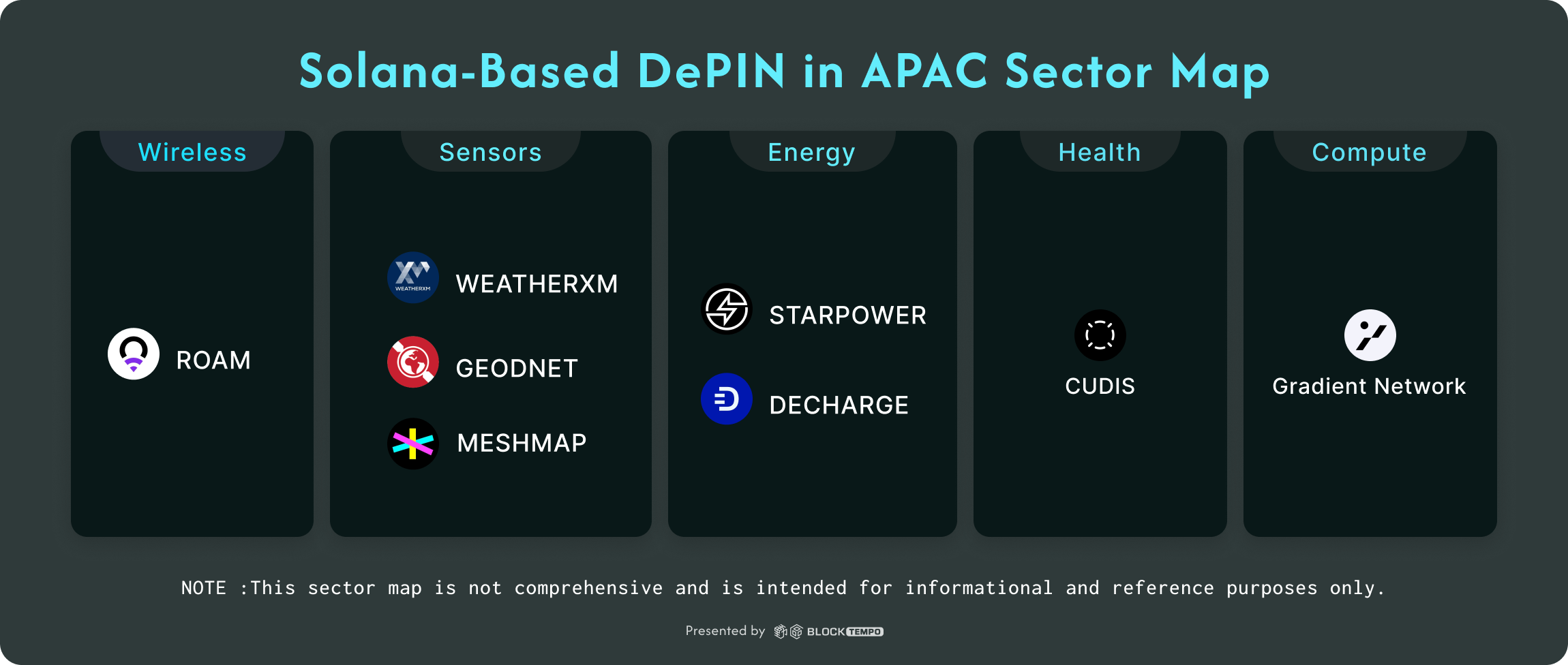
Under this framework, this article organizes 8 Solana DePIN projects in the Asia-Pacific region, covering 5 major categories: wireless networks, energy, sensors, health networks and computing power, as shown in the figure below. Next, we will introduce these projects and their layout in the Asia-Pacific region one by one, thereby presenting the current development status of DePIN in the Asia-Pacific region and observing which fields and countries are gradually becoming potential growth hotspots for DePIN.
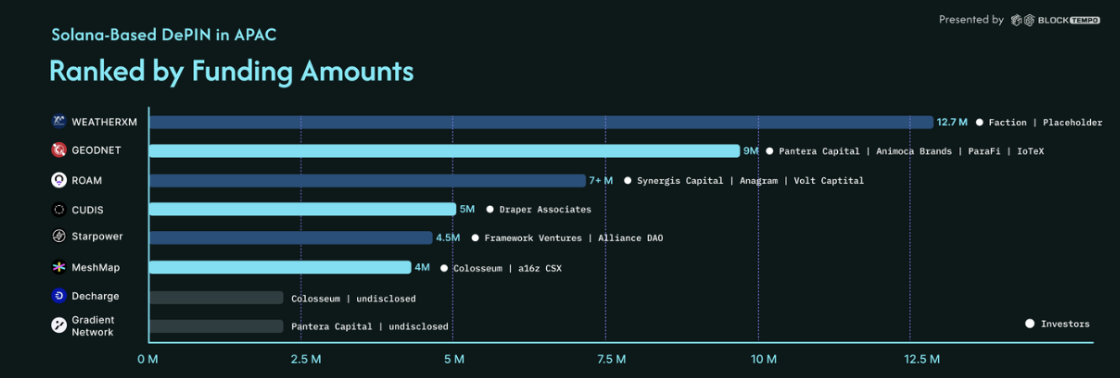
To further understand the impact of these projects, this article also ranks DePIN projects according to the amount of financing. The top three are WeatherXM (US$12.7 million), Geodnet (US$9 million), and Roam (US$7 million). It is worth mentioning that Pantera Capital participated in the investment of two projects: Geodnet and Gradient Network.
In addition, MeshMap and Decharge were both selected for Colosseum’s first accelerator program after winning the Solana Renaissance hackathon, showing that these projects have attracted much attention for their growth potential in the Solana ecosystem.
Project Introduction
Roam-Decentralized Global WiFi Network
 team
team
Roam was developed by MetaBlox Labs, a member of the WBA (Wireless Broadband Alliance), the global organization promoting Wi-Fi technology and seamless roaming. In addition, Roam’s co-founder is Jeffrey Manner, a former venture capitalist at Galaxy Digital.
Project Introduction
Roam is a decentralized global WiFi network that combines OpenRoaming technology, decentralized identity (DID) and verifiable credential (VC) protocols to provide users with seamless, secure and privacy-preserving network connection services.
Note: OpenRoaming is a technology developed by WBA that allows devices to automatically switch between different WiFi networks without having to log in repeatedly.
Simply use Roam's devices, including Wi-Fi sharers (Rainier MAX30, Baker MAX60) and the Roam App (eSIM service is also available), to easily connect to more than 3 million WiFi hotspots around the world that support OpenRoaming technology, and earn points for each successful connection.
Roam's token $ROAM is about to usher in TGE. The official burning points exchange token activity launched at the end of January has attracted more than 15,000 participants.
In short, Roam is a decentralized global WiFi network created by seamlessly integrating its own nodes with 3 million OpenRoaming hotspots around the world.
Financing
Since its inception, Roam has raised three rounds of funding to support its development:
- March 2022: Completed a $2 million seed round led by Synergis Capital and Collab+Currency;
- End of 2023: Completes $5 million strategic round of financing, led by Anagram and Volt Capital.
- In addition, in April 2024, Roam received a strategic investment from Samsung Next, also a member of the WBA.
Product Data
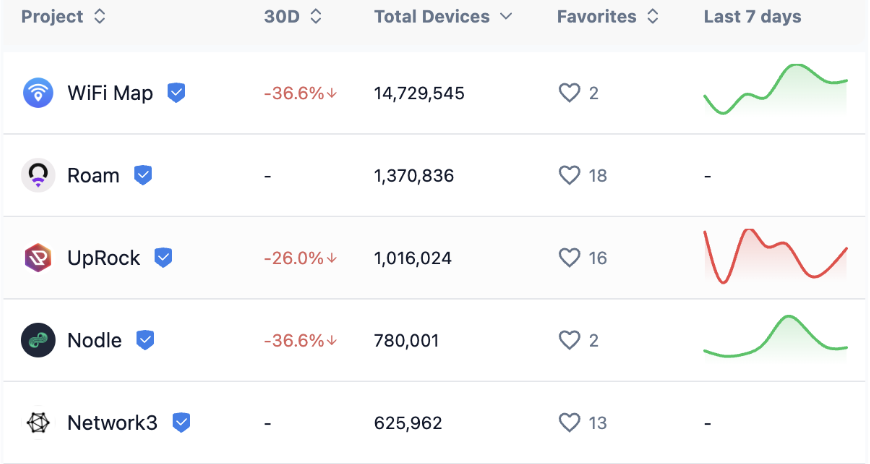
DePINscan data shows that as of now, Roam has more than 1.37 million active devices worldwide, ranking second, surpassing UpRock and Network3, and second only to WiFi Map.
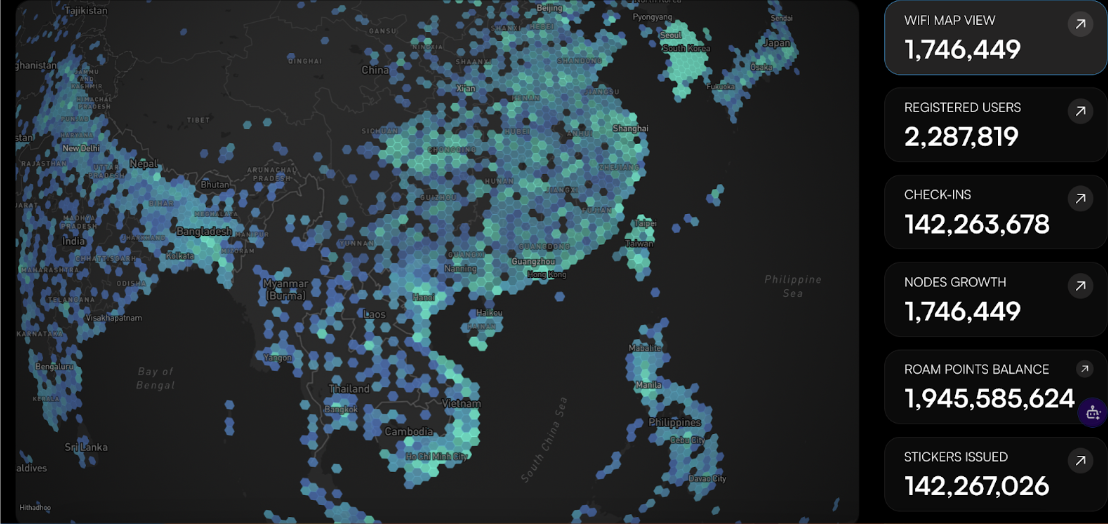
 In addition, according to official browser data, Roam has more than 1.746 million Wi-Fi nodes, nearly 2.29 million registered users, more than 142 million check-ins, and covers more than 140 countries. Among them, the Asia-Pacific region is generally densely populated, especially Taiwan, South Korea, Vietnam and other places.
References: Official Twitter | Official Website | Docs
 Starpower-Decentralized Energy Network
team
Starpower is led by two main founders: Laser Ding and Darcy.MetaLattice. Laser Ding previously worked at HashKey Group as assistant to the chairman, while Darcy.MetaLattice has extensive experience in the photovoltaic field and holds a PhD in photovoltaics.
Project Introduction
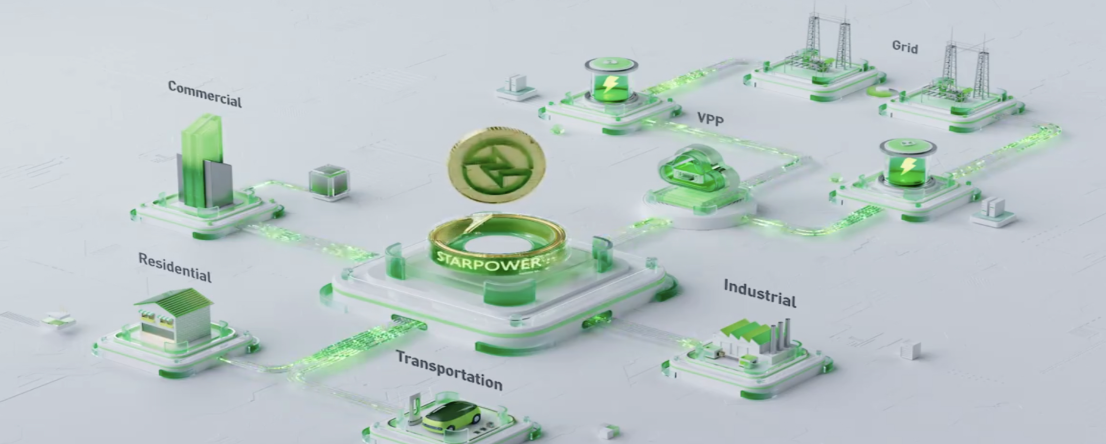
Starpower aims to create a decentralized energy grid by connecting energy devices around the world (such as air conditioners, batteries, electric vehicle chargers, etc.), similar to the role Uber plays in aggregating vehicles in the transportation sector.
This network analyzes the actual power consumption of equipment and accurately regulates the charging and discharging of equipment to improve energy efficiency, save electricity bills, and reduce fluctuations in the energy system, attempting to solve the bottleneck of unstable renewable energy supply.
In this network, the virtual power plant (VPP) is a key hub that aims to effectively balance energy supply and demand by integrating distributed energy resources and flexibly dispatching electricity.
Earlier this year, Starpower said that in order to cope with the surging energy demand of AI, it is actively developing advanced battery technology (DeSci) and establishing a decentralized energy network (DePIN) connecting major battery brands, with the goal of integrating 80% of the world's battery brands by 2025.
Financing
On January 9 this year, Starpower successfully raised US$2.5 million , led by Framework Ventures, with participation from Solana Ventures and Bitscale Capital.
On January 4, 2024, Starpower completed a US$2 million Pre-Seed financing. Investors included Alliance, Arweave, IoTeX, and Bas1s Ventures. Angel investors included Max Jungreis, head of digital asset investment at Plug and Play, Shen Bo, founder of Fenbushi Capital, and Sal Gala, founder of Escape Velocity.
Product/Revenue Data
Starpower products include:
- Starplug ($109): This smart outlet allows users to connect appliances to the Starpower network, monitor their energy consumption in real time, turn them on and off remotely, and schedule them to run and charge during off-peak hours to reduce energy costs and grid load.
- Starbattery (Pre-order available): An energy storage device that stores excess electricity from renewable energy sources and provides backup power during grid outages or peak hours.
- Starcharger (coming soon): An electric vehicle charging solution that automatically charges electric vehicles during off-peak hours to reduce electricity costs and reduce the load on the grid.
- Starpower App : Integrates various energy devices and provides a unified control and management platform.
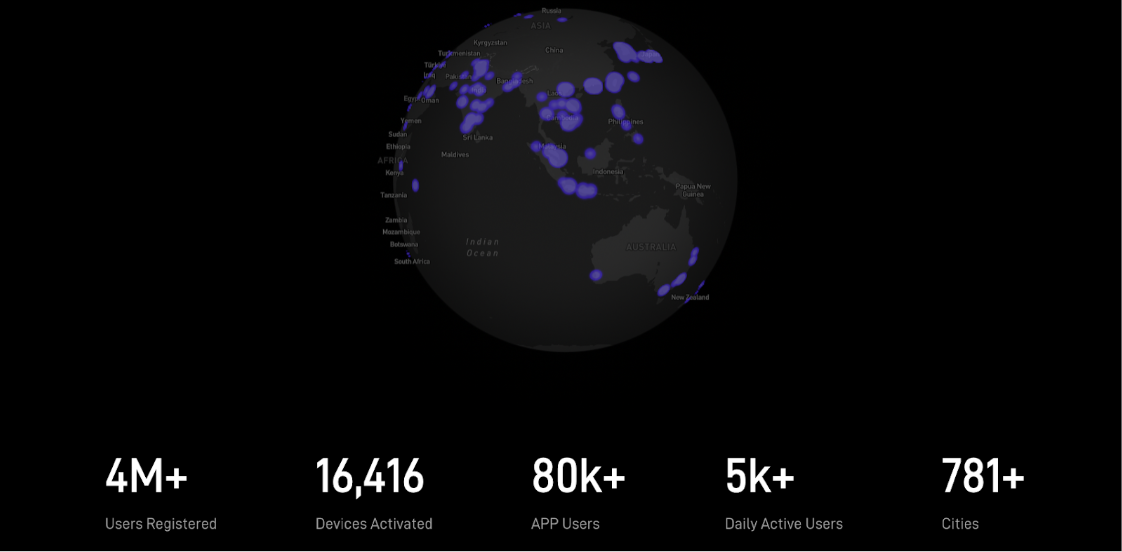
According to the Messarireport , Starpower's business focus is mainly concentrated in India, South Korea, the Philippines and other places, as the solar energy and point-to-point energy markets are relatively mature in Asia. Currently, it has deployed more than 16,000 devices, has more than 4 million registered users, more than 80,000 App users, and has generated approximately US$1 million in revenue, and is continuing to expand.
References: Official Twitter | Official Website | White Paper
 Cudis-Building a health data ecosystem with smart rings as the core
 team
team
Developed by BeatBit Wellness Lab, from Hong Kong.
Project Introduction
Cudis is a health data ecosystem built around smart rings, combining wearable devices with smart sports apps to allow users to own and control their own health data.
- CUDIS Ring 002: Cudis’ second-generation smart ring that tracks health data such as heart rate, sleep, heart rate variability (HRV), blood oxygen, and syncs with the Cudis app. All data is encrypted and stored on IPFS to ensure privacy and decentralization. (Watch the unboxing in the moving area )
- Cudis app: Available on iOS, Android, and Solana Mobile, with a built-in AI health coach (powered by ChatGPT) to provide personalized advice.
By completing daily tasks and challenges, users can earn SALUS points, which can be exchanged for official tokens and ecosystem benefits in the future. Every quarter, high-scoring users will also have the opportunity to receive Solana NFT airdrops, achieving a win-win situation in terms of health and benefits. According to Messari, Cudis has monitored more than 2 million heart rate data.
In short, Cudis makes health data no longer just monopolized by large companies, but an asset that you can truly own, manage and benefit from.
Financing/Partnerships
CUDIS announced on September 18, 2024 that it had raised $5 million in seed round financing, led by Draper Associates, with participation from Foresight Ventures, Skybridge Capital, Penrose, SNZ and other institutions.
Last year, CUDIS launched a year-long partnership with the UCLA athletic department to promote its AI-powered smart ring. In addition, CUDIS has also partnered with World Network (formerly Worldcoin) to launch the CUDIS application on the World App and launch a limited edition smart ring for World ID holders.
Solana officials also promoted the CUDIS 002 ring on X, showing that it is highly supported by Solana officials.
Reference : Official Twitter | Official Website
DeCharge - Community-driven electric vehicle charging network
 team
team
DeCharge is led by three founders, including CEO Mohan Ponnada, who has entrepreneurial experience with multiple successful exits in the transportation and logistics sectors; Blockchain Head Dr. Prakash Kamaraj , formerly the Head of Web3 Business Technology at Chingari; and COO Rama Krishna, who specializes in IoT hardware deployment and has helped many startups expand their infrastructure.
Project Introduction
DeCharge aims to build a community-driven electric vehicle charging network and will launch The Beast, a 7 kW charger powered by DePHY technology, by the end of 2024. It has been approved for use in Asia, the United States and Europe, demonstrating its potential to expand into global markets. It is currently being actively promoted to India (company headquarters), Southeast Asia and Dubai.
The Beast is not only a charging device, but buyers can also earn revenue when others use the charger, turning traditional charging infrastructure into an asset that generates passive income.
DeCharge was selected for the Colosseum accelerator program and was promoted on Solana’s official Twitter account, demonstrating a certain degree of recognition in the industry.
Reference : Official Twitter | Official Website
MeshMap - Open 3D World Map
 team
team
Co-founders include Ryan Rzepecki , Matt Kudo (from Japan) and Pedro Cruz .
Project Introduction
MeshMap is committed to building a global open 3D map, enabled by 3D scan data submitted by the community using mobile apps (such as Polycam, Immersal or Scaniverse) or professional equipment (such as Leica BLK2Go), and providing games and extended reality (XR) experiences.
MeshMap encourages user participation through token incentives to create a 3D digital map with high accuracy, wide coverage and real-time updates, aiming to become an indispensable infrastructure to support future XR applications.
MeshMap is strong and won the Solana Renaissance Hackathon Chain Tour Track Championship, was selected for the first batch of Colosseum Accelerator programs, and successfully joined the a16z CSX (Crypto Startup Accelerator) 2024 Fall Training Program.
Financing
In September 2024, MeshMap completed a US$4 million financing round, with participation from a16z CSX (crypto startup accelerator), Colosseum, Lattice Fund, Escape Velocity (EV3 Ventures), GSR and other institutions. Angel investors included Solana’s two co-founders Anatoly Yakovenko and Raj Gokal, as well as Balaji Srinivasan and others. The lineup is very strong.
References: Official website | Official Twitter
Gradient-Decentralized Edge Computing Platform
 Gradient Network (Gradient for short) was founded by Yuan Gao ( @yuangaoyg ) and is a decentralized edge computing platform. By connecting idle computing resources scattered around the world, Gradient can support tasks such as AI reasoning, serverless computing, and content delivery, and execute them closer to the user end, thereby reducing latency.
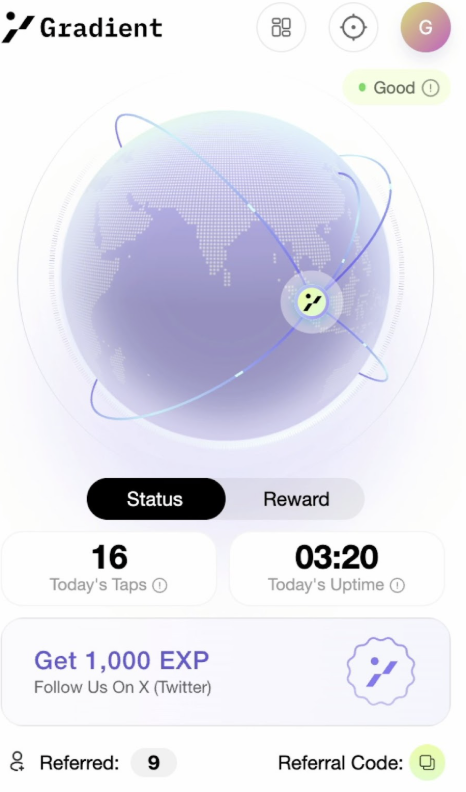
In September 2024, Gradient was officially launched , allowing users to register and log in to the dashboard with their email , and then install the browser plug-in " Sentry Node " to participate.
As a reward, the computing resources provided by users can obtain POA (Proof of Availability) rewards based on uptime, and POC (Proof of Connectivity) rewards based on the number of successful connections (Taps), which are estimated to be exchangeable for Gradient's native tokens in the future.
Product Data
According to Fortune , the global edge computing market will reach US$13.66 billion in 2024 and is expected to soar to US$182 billion by 2032, with an average annual growth rate of 38.2%. Gradient's goal is to build an open edge computing platform so that everyone can participate and share the benefits of this wave of rapid growth.
Gradient's network has grown significantly:
- Sentry nodes have more than 1 million active users, with more than 509 million successful point-to-point connections (Tap) covering more than 188 countries and regions around the world.
- According to Gradient browser data, these nodes are distributed in the Americas, Europe and the Asia-Pacific region, and the node density is particularly high in India, Japan, the Philippines, Vietnam, South Korea, and Taiwan. So overall, Sentry nodes have established a wide coverage network in the Asia-Pacific region.

Financing
Gradient received investments from Pantera Capital, Multicoin Capital, Sequoia Capital, etc., but the specific amount was not disclosed.
References
- Official website | Official Twitter | Docs
- Explorer (track real-time network data and visualize global node activity): https://explorer.gradient.network/
GEODNET-The world's largest RTK network
 GEODNET (Global Earth Observation Decentralized Network) aims to build the world's largest, most accurate real-time dynamic positioning (RTK) network through the participation of global users, providing accurate positioning data and reliable geospatial data support for fields such as autonomous vehicles, drone navigation, robotics, precision agriculture and the metaverse.
How it works:
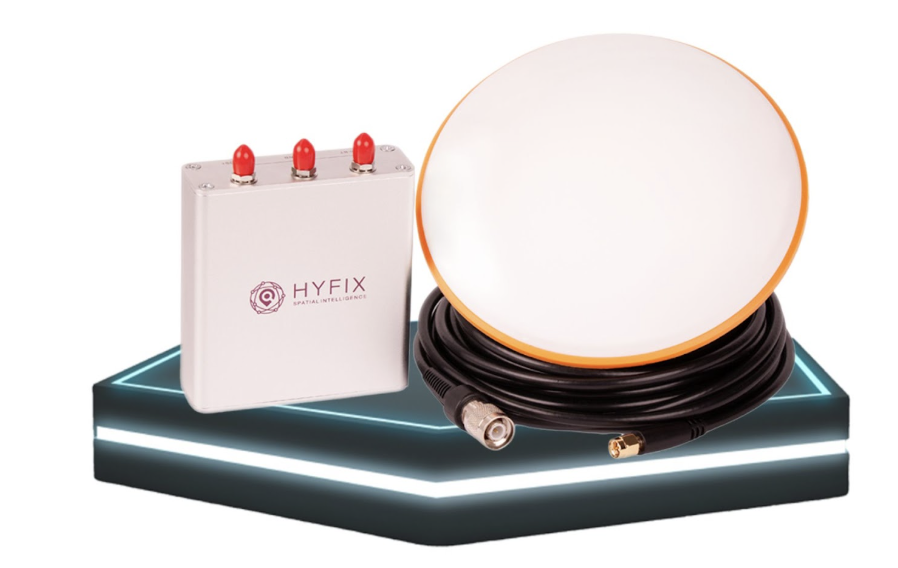
- Satellite Miner: Users can install a device called a " Satellite Miner (also known as a Base Station )" on the roof to receive signals from the GNSS (Global Navigation Satellite System) and upload these raw data to the GEODNET network.
- RTK correction data : The GEODNET network processes this data to generate high-precision RTK correction data.
- Rover devices : Devices equipped with GNSS receivers, such as cars, drones, mobile phones or agricultural machinery, can connect to the GEODNET network to receive RTK correction data, thereby correcting problems such as space weather interference and satellite errors to achieve centimeter-level positioning accuracy.
- Token Incentives : In return, participants will receive GEOD tokens as rewards.
Since its launch, GEODNET has continued to grow in size and has become the world's largest RTK network, covering more than 142 countries and 4,377 cities:
- There are more than 13,184 active satellite miners worldwide, with an annual growth rate of more than 200%.
- The largest number of nodes are located in the United States and Europe, while in the Asia-Pacific region they cover India, Indonesia, Taiwan, and Australia.

In addition, the GEOD token also performed well. According to CoinGecko data , its price has grown by more than 190% in the past year, and its market value is close to 80 million US dollars. Researcher @NickDGarcia pointed out that in the fourth quarter of 2024, the destruction of GEOD tokens hit a record high, an annual increase of 54% in GEOD and 463% in US dollars, reflecting strong demand and revenue growth.
Team, Funding and Partnerships
The project was initiated by the GEODNET Foundation, a non-profit organization based in Singapore, and its team members include blockchain and navigation industry experts:
- Mike A. Horton: Project founder, co-founder and CTO of Anello Photonics, and ranked as one of the top 50 sensing technology experts in the world.
- David Chen: Head of blockchain, co-founded blockchain projects such as Jingtum and MOAC.
- Yudan Yi: Head of GNSS (Global Navigation Satellite System), was a senior director at Aceinna for 3 years and has experience as a research scientist at Qianxun SI and Topcon Positioning Systems.
In terms of financing, GEODNET has raised nearly $10 million in funding:
- In October 2024, it received US$2 million in strategic financing from Animoca Brands and ParaFi.
- In April 2024, it received US$2 million in financing, led by Pantera Capital, CoinFund, VanEck, and Santiago Roel Santos.
- In 2024/02, it received US$3.5 million in financing, led by North Island Ventures, Borderless Capital, Reverie, Tangent, IoTeX, Modular Capital, Road Capital, and JDI Global.
- In July 2023, it received US$1.5 million in private equity financing, led by Borderless Capital and IoTeX.
In addition, GEODNET has also made important progress in product and ecosystem expansion:
- Launched GEO-PULSE, a $149 GPS receiver that uses its RTK network to provide centimeter-level positioning accuracy to optimize navigation and ride-sharing.
- Announced the cross-chain of GEOD tokens to Solana.
- Announced new partners at CES 2025: Septentrio and Bad Elf, expanding industry influence.
References: Official website | Official Twitter | Docs
WeatherXM - Decentralized Weather Data Network
 WeatherXM is a community-driven weather data network that aims to collect and provide more accurate weather data through the participation of the global community. The project is open to everyone to provide data by installing and maintaining a weather station, and rewards participants with $WXM tokens.
In mid-January this year, WeatherXM partnered with XYO to use its technology to improve the accuracy and reliability of its data. Providing high-precision meteorological data can benefit industries such as agriculture, energy, and insurance.
- Weather Station: WeatherXM has launched 5 weather stations suitable for different connection methods, including D1, M5, H2, H1 and PULSE, supporting network connections such as Wi-Fi, Helium/LoRaWAN and 4G-LTE.
- WeatherXM Pro: This is a weather data platform launched by WeatherXM, which allows users to view real-time data from nearby weather stations for free. According to an official review at the end of last year , the number of registrations on the platform exceeded 538.

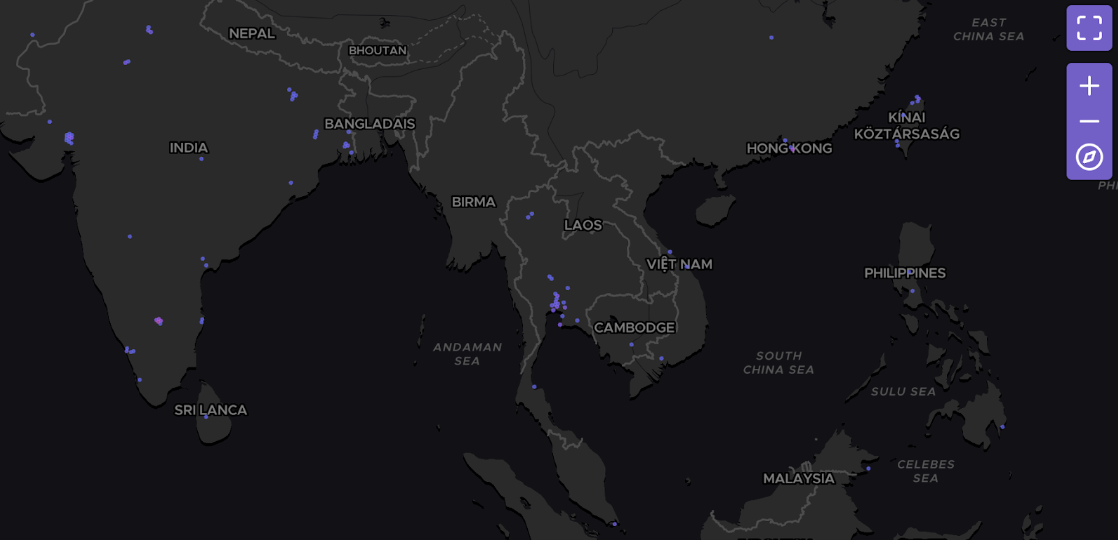
According to DePIN Scan data , WeatherXM has more than 8,167 weather stations, mainly in Europe and the United States, but also in the Asia-Pacific region including India, Taiwan, Hong Kong, Thailand, Australia, etc., covering a total of more than 94 countries or regions.
Financing
In terms of financing, WeatherXM has successfully completed multiple rounds of financing:
- Seed round financing : Raised US$5 million in June 2022, led by Placeholder, and other investors include Protocol Labs, Borderless Capital, etc.
- Series A financing : Raised US$7.7 million in May 2024, led by Faction, and followed by investors including Protocol Labs, Borderless Capital, Placeholder, etc.
team
WeatherXM's founding team consists of Manolis Nikiforakis (CEO), Stratos Theodorou (CPO), and Nikos Tsiligaridis (CTO).
References: Official website | Official Twitter
In order to facilitate the quick grasp of the key information of the above 8 projects, this article is organized into the following table, covering important indicators such as category, main layout/development area, financing status, market value, investment institutions, etc.
 Special Mention: Jambo Phone
In addition to the above five categories, it should be noted that DePIN is an emerging term and track, and its definition is still changing. How to combine real physical facilities with blockchain is a growing concept. Therefore, if we use preconceived impressions to select potential DePIN projects in Asia in five categories, it is inevitable that there will be regrets. If we look at DePIN from a broader perspective, we may find some unexpected projects.
One of the projects that fits this description is Jambo Phone. As a $99 smartphone brand, it is difficult for ordinary users to think of connecting it to DePIN. However, a brief exploration of its content may allow us to think deeply about the meaning of DePIN, whether it is to pursue innovations and breakthroughs that are difficult for the public to understand, or to seek bridges and connections in the existing Web2. The previous eight projects may have taken the former route, while Jambo is one of the few DePIN projects that is trying to take the latter route. This article quickly mentions it as a supplement.
 Web3 entry facilities and data
Jambo Phone is a company founded by James Zheng, a third-generation Chinese immigrant in Africa. It now has sales of more than 500,000 units in many developing countries, especially in Southeast Asia, India, Indonesia and Africa. As an emerging mobile phone company and a terminal physical product of web3, it is already very impressive to achieve such results in its first launch.
We are also thinking about what relationship DePIN has with smartphones and what value it can bring. When you look at the official website of Jambo Phone, you may see the answer to this question. The huge Web3 industry support and applications pre-loaded on this phone can become one of the main sources of data and users for many projects. This is the infrastructure brought by the number of users.
We can even imagine that some of the DePIN function projects that are actually running, such as Helium Mobile, are deployed through physical network facilities, but some of the functions can also be realized if there are supporting mobile phone software and a wide range of installed bases, because the mobile phone is a portable device that can become a hotspot.
From this perspective, there is an interesting answer. Mobile phones may be very suitable for developing DePIN and one of the important facilities for decentralized sharing. With the changes and demands of the market, Jambo Phone also launched its second generation in September last year, updating new hardware and functions. We can continue to observe the DePIN innovations and trends initiated by mobile phone integration in the future.
Market demand verification is the key to DePIN expansion
In fact, there is also a developing DePIN project that is joining Solana and the Asia-Pacific battlefield, but the length of this article is limited, and it is inevitable that some are missed. Readers must be reminded that most of these projects are extremely high-risk startups, and various market needs have yet to be verified, but there are also huge investment profits hidden behind them.
According to Messari's 2024 annualreport , the total market size of DePIN has exceeded 1 trillion US dollars. Although the current market share is less than 0.1%, with the expansion of network effects and the popularization of decentralized applications, future growth space is expected to reach 1,000 times.
In the future, the market will focus on whether the DePIN model has sustainable profitability. In 2024, there will be 20 DePIN projects with revenue capabilities, with a total annualized revenue of US$500 million, a year-on-year increase of 33 times. The top projects in terms of revenue, such as Aethir, Render, io.net, Glow, etc., demonstrate the commercial potential of decentralized infrastructure.
Starting from 2025, it will be a critical period for DePIN to verify market demand and create substantial revenue. It is worth continuing to pay attention to its explosive growth in Solana, the Asia-Pacific region and globally.