The following is the original content (the original content has been edited for easier reading):
Traders get liquidated, and billions of dollars evaporate. But what if the real liquidation numbers are 19 times higher than reported? We pulled the data, and the results are even worse than you think.
1. Liquidation
The world of trading is becoming increasingly accessible to the average person, whether through the glamorous courses of so-called "gurus" or as an alternative to traditional work, offering the allure of potentially earning a substantial income from the comfort of one's own home with just a computer.
However, this is far from easy, and if it were that simple, everyone would succeed. In fact, most people who enter trading ultimately lose money and end up blowing their accounts. So what causes these losses? Usually, it all comes down to one decisive event that every trader fears: liquidation.
Liquidation is a key mechanism in leveraged trading, where a trader's margin is insufficient to cover the losses on their open positions. In such cases, the exchange steps in and automatically closes the position, ensuring that the trader or the platform no longer bears further losses.
Depending on the severity of the margin deficiency and the platform's risk management mechanisms, liquidations can take different forms:
· Partial liquidation: Involves reducing a trader's position partially, with the remaining portion still active. This allows the trader to remain in the market while reducing the associated risk.
· Full liquidation: The entire position is closed, completely eliminating the trader's exposure. Full liquidations are more common in high-leverage environments, where even small price movements can wipe out a trader's entire margin.
Key Factors Behind Liquidation
There are multiple factors that contribute to liquidation, all revolving around the delicate balance between risk and margin:
· Leverage: Leverage allows traders to control larger positions with less capital, but this amplification of potential profits also comes with higher risk. The higher the leverage, the smaller the price movement required to trigger a liquidation. For example, with 50x leverage, a mere 2% adverse price movement can result in a complete loss of margin. This makes risk management crucial in leveraged trading.
· Maintenance margin: Each exchange sets a minimum margin requirement that traders must maintain to keep their positions open, and this maintenance margin serves as a safety buffer. When losses cause the margin to fall below this threshold, the exchange will liquidate the position to prevent further losses. Ignoring or failing to monitor these requirements can quickly lead to forced liquidation.
· Market volatility: Sudden, extreme price movements are a trader's worst enemy, especially in highly leveraged positions. Volatility can quickly deplete available margin, leaving little time for the trader to react. Additionally, periods of high volatility often trigger a chain reaction of liquidations, where one liquidation triggers a series of others, further driving prices in the wrong direction.

Squeeze
Squeeze is one of the most violent and rapid triggers of liquidation, typically occurring during rapid price movements that force traders with opposing positions to close them. These events are often driven by high leverage and low liquidity, creating a snowball effect that accelerates price movements and exacerbates market volatility.
When prices rise rapidly, traders holding short positions find themselves in trouble, as their margin is insufficient to support the trade. To avoid further losses, they are forced to buy back the asset to close their positions, adding more upward pressure on the price. This dynamic often quickly evolves into a series of liquidation events, where one trader's liquidation drives the price higher, forcing others to also close their positions.
Conversely, when prices suddenly drop, traders holding long positions face the same risk. As their margin shrinks, they are forced to sell their positions to meet the maintenance margin requirements, further exacerbating the downward momentum. This selling pressure amplifies the price decline, triggering more liquidation events and creating a downward spiral.
However, coordinated retail buying, particularly driven by communities like Reddit's WallStreetBets, has led to unexpected stock price surges. As prices rise, short-sellers are forced to buy back the stock, and the price continues to climb, further fueling the price increase.
This feedback loop ultimately evolved into a historic event, with GameStop's stock price skyrocketing from around $20 in early January 2021 to a mid-day high of $483 by the end of the month. This squeeze event resulted in billions of dollars in losses for institutional investors caught in short positions.

2. API and Liquidation
In the cryptocurrency space, there have been numerous notable liquidation events throughout history. However, the most memorable and impactful are often the "long squeezes" that occur during downward market conditions.
Here are some of the largest liquidation events in cryptocurrency history:
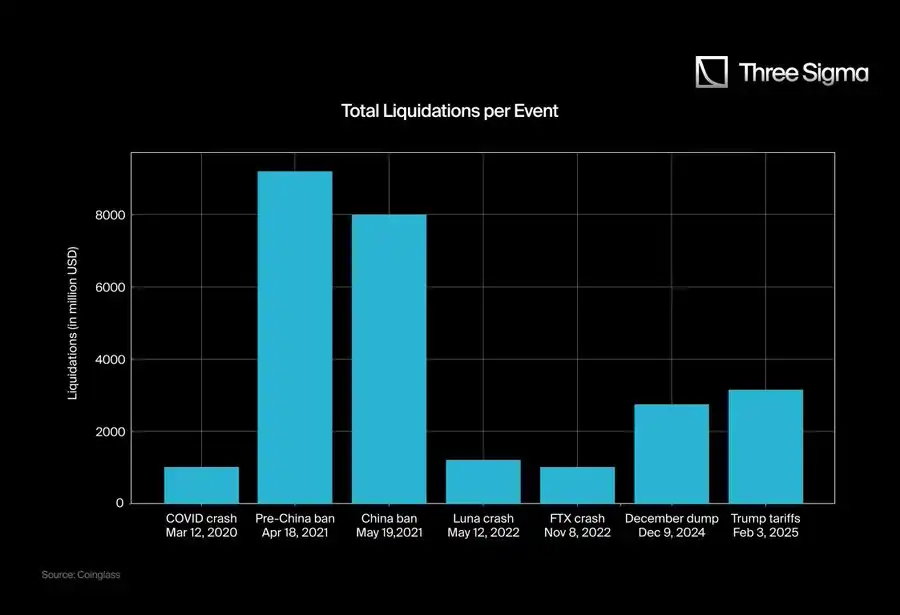
Do you notice anything unusual, anonymous? Do you feel that the FTX collapse or the Luna crash caused more damage than the liquidation events we've seen this year? Well, you're right.
The key factors behind the recent liquidation events being more severe than FTX or Luna are:
Total Market Cap
In March 2020, the entire market cap reached $266 billion, while by 2025, the peak market cap had reached $3.71 trillion. To truly understand the scale of these liquidation events, we should consider the ratio of liquidations to market cap, rather than just looking at the absolute numbers. The raw numbers may make the recent liquidations appear more severe than they actually are.
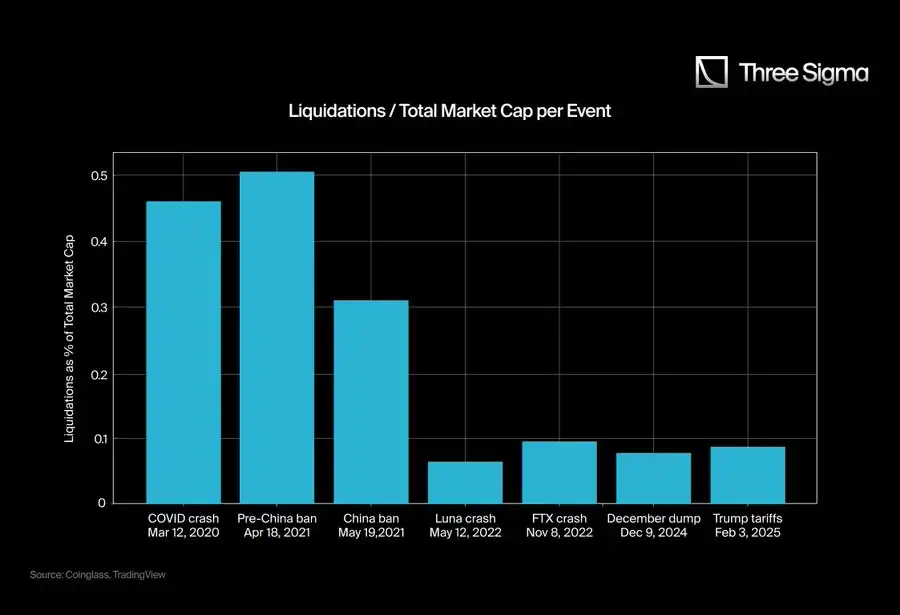
This chart gives us a clearer picture of the scale and impact of the liquidations, but there is still some data that is not entirely accurate, and that's the second issue.
Limitations of CEX WebSocket API
Until the second quarter of 2021, most CEXs provided accurate liquidation data through their APIs, reporting each individual liquidation. However, starting in 2021, they introduced limitations, capping the liquidation data to one liquidation per second, regardless of how many actually occurred.
This change significantly reduced the reported liquidation numbers, making the data from late 2021 onwards appear smaller and less impactful than the data from before 2021.
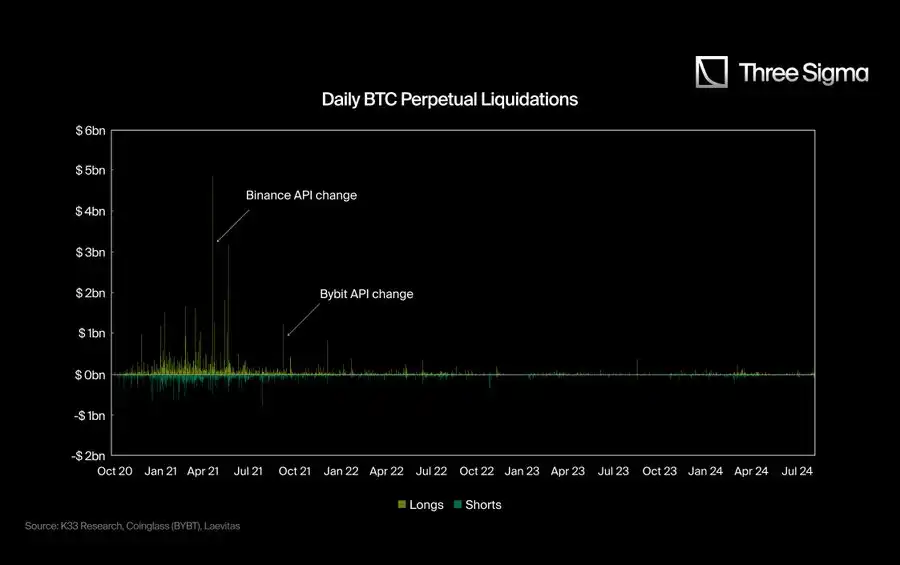
@K33Research wrote a research article explaining this situation and illustrating it with two simple but powerful charts:
In the first chart, you can see that after the API change, the liquidation count clearly slowed down, even as the total market cap far exceeded 2021 levels, the liquidation data remained at a relatively low level.
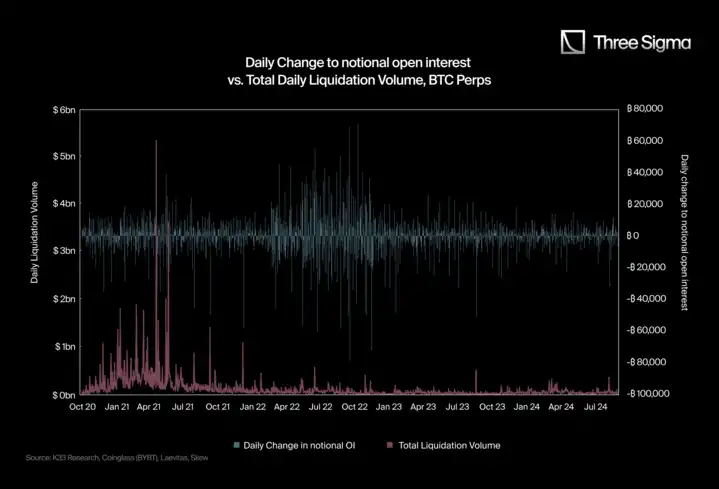
In the second chart, the author compared the total liquidation volume with the changes in daily nominal open interest (OI).
The huge intraday fluctuations in nominal open interest often trigger massive liquidations, but as we can see in the chart, after the second quarter of 2021, there was no significant surge in liquidations on days with such large OI fluctuations.
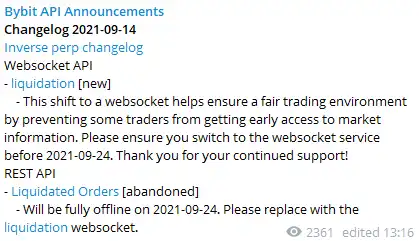
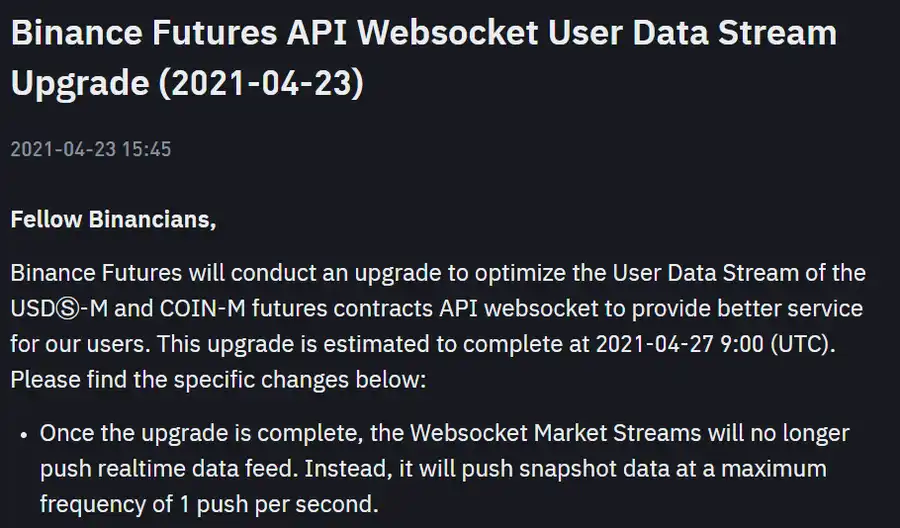
The official reasons behind these API changes are: "to provide a 'fair trading environment'" (Bybit, September 2021) and "to optimize user data flow" (Binance, April 2021), but some believe this is just for public relations purposes to avoid excessive panic, and also to retain their own real data.
Hyperliquid as a True Platform
Hyperliquid is the first Layer 1 blockchain perpetual DEX to achieve sufficient trading volume to compete with CEXs. Unlike CEXs, Hyperliquid provides fully transparent and unlimited reporting of all liquidation events, as its data is public.
This creates a unique environment where CEX liquidation data is restricted (due to reporting limitations), while Hyperliquid's data is unrestricted. As a result, the reported total liquidation data is significantly increased, thanks to Hyperliquid's transparency.
This transparency has a significant impact on the broader trading ecosystem, as in traditional centralized exchanges, liquidation data is often selectively reported or aggregated, limiting traders' ability to analyze market dynamics in real-time. Hyperliquid ensures that every liquidation event is publicly visible, providing a more accurate and comprehensive understanding of leveraged trading activity.
For traders, this means better insight into market conditions, allowing them to identify potential squeeze scenarios, monitor risk levels, or gauge market sentiment. Researchers and analysts also benefit from the unfiltered on-chain liquidation data, which provides valuable insights into volatility patterns, risk behaviors, and market reactions to liquidations.
This unrestricted access to data fosters a fairer and more efficient trading environment where all participants have equal access to information. By setting new standards of transparency for perpetual trading, Hyperliquid not only challenges the secrecy of CEXs but also enhances the overall reliability of liquidation data, enabling traders to operate with greater trust and richer market insights.
3. Real Liquidation Data
3.1 Calculating the Hyperliquid Ratio
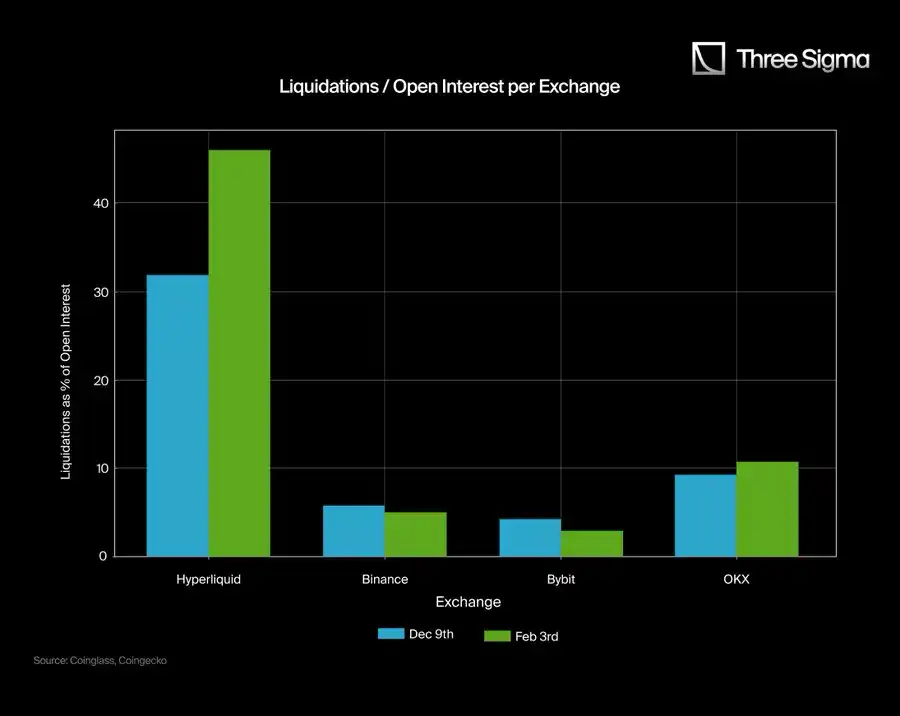
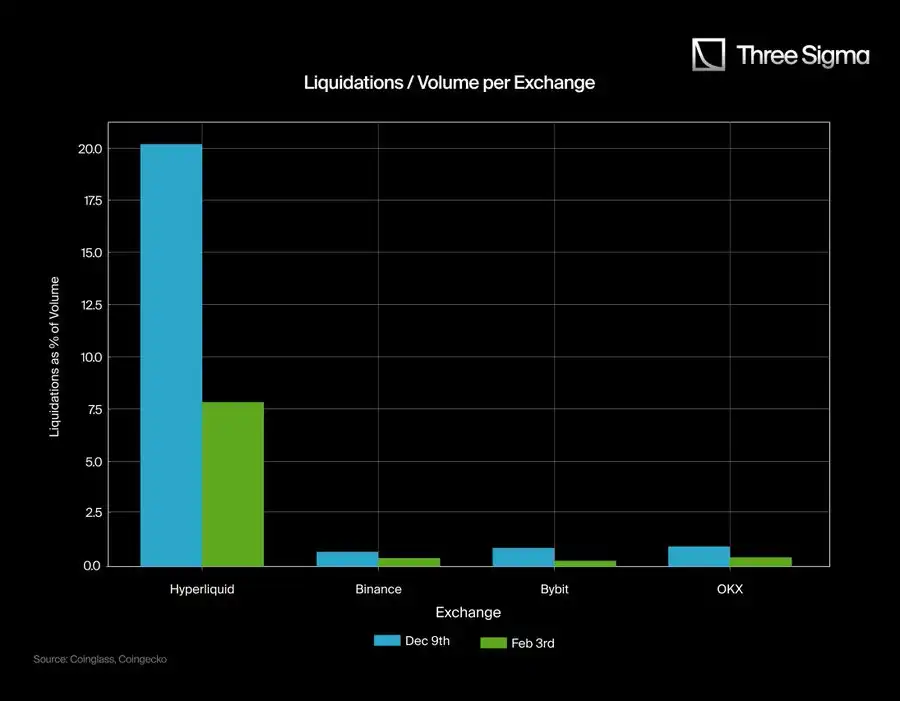
Hyperliquid's transparency and extensive metrics allow us to see what has been happening over a long period, whereas the derivatives segment of CEXs, due to API limitations, has been unable to report numbers that align with reality. The data discrepancies seen in the charts further confirm this issue, as despite CEXs having far greater open interest and trading volume than Hyperliquid, their reported liquidation figures remain unrealistically low.
Thanks to Hyperliquid, we now have a verifiable and accurate dataset that can be used to compare the degree of distortion in CEX liquidation reporting.
The data provided to the media often presents an incomplete picture, as it is based on limited APIs and fails to capture the full extent of liquidations. In contrast, Hyperliquid's unrestricted reporting provides transparent and detailed records of all liquidation events, demonstrating that CEX liquidation activity may be far higher than publicly disclosed.
3.2 Adjusting CEX Liquidation Data Using Hyperliquid Ratios
To estimate the "true" liquidation figures for CEXs, we use Hyperliquid's liquidation/trading volume ratio and liquidation/open interest ratio as benchmarks. We then compare these ratios to the data reported by CEXs on two specific dates (December 9 and February 3) to derive an adjustment factor.
Calculating Hyperliquid's Average Ratios:
Liquidation / Open Interest (Hyperliquid)
December 9: 1.07B / 3.37B ≈ 0.3175
February 3: 1.42B / 3.08B ≈ 0.461
Average ≈ 0.389 (38.9%)
Liquidation / Trading Volume (Hyperliquid)
December 9: 1.07B / 5.30B ≈ 0.2021
February 3: 1.42B / 18.0B ≈ 0.0789
Average ≈ 0.14 (14%)
We use these figures (38.9% and 14%) as reference points to assess what the liquidation data might look like if other exchanges followed similar ratios to Hyperliquid.
Applying These Ratios to Binance, Bybit, and OKX:
For each CEX, we calculate two "adjusted" liquidation figures:
Using Hyperliquid's liquidation/trading volume ratio
Using Hyperliquid's liquidation/open interest ratio
We then take the average of these two adjusted results for each date.
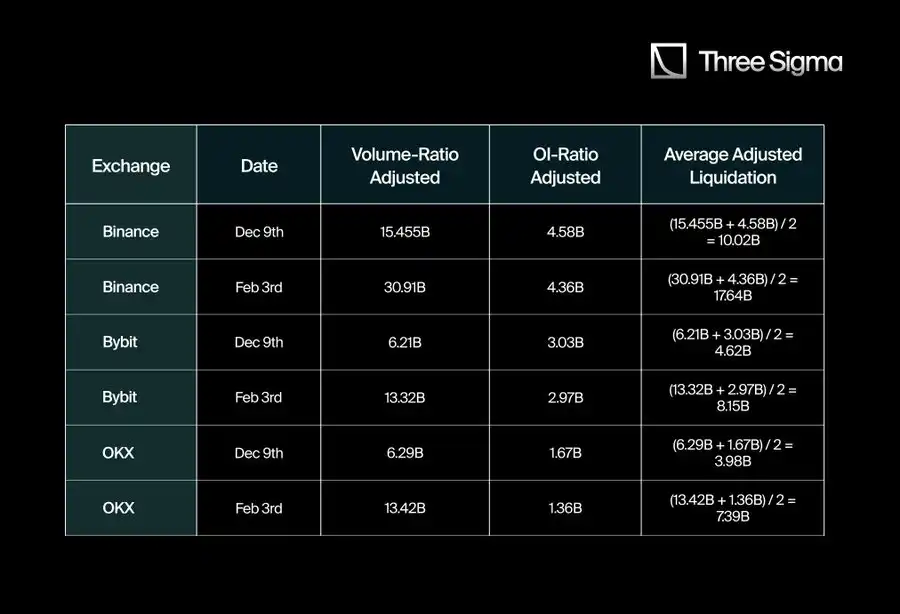
Therefore, the liquidation figures reported by CEXs (typically in the hundreds of millions of dollars) are far lower than the billions of dollars range suggested by the Hyperliquid ratios.
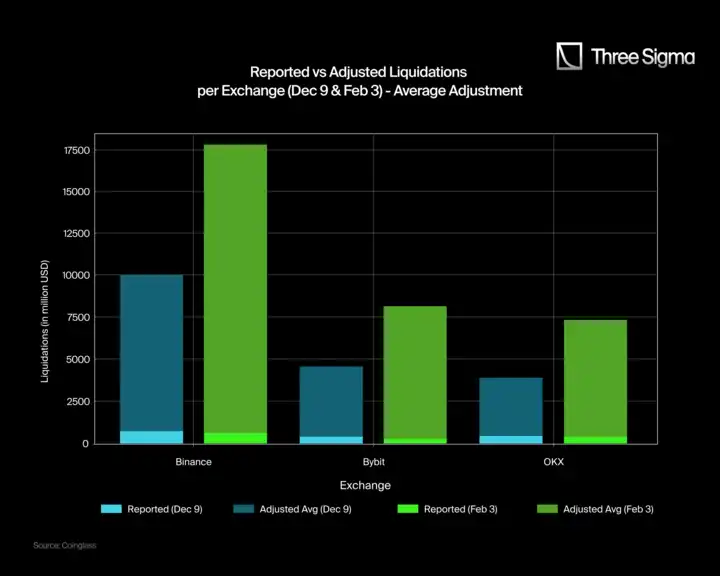
Here are the reported and adjusted liquidation data charts for December 9 and February 3. Each exchange has two bars, with the light blue and light green representing the reported liquidation data, and the dark blue and dark green representing the adjusted liquidation data.
The adjusted values are calculated using the average of Hyperliquid's liquidation/trading volume ratio and liquidation/open interest ratio as a benchmark. While this provides a clearer perspective on the potential liquidation data discrepancies, there may still be some variations due to differences in market structure, retail participation, and market-making activities across different exchanges.
Key Takeaways:
Binance, Bybit, and OKX are severely underreporting their liquidation data: The reported liquidation figures (light blue/light green) are far lower than the adjusted data (dark blue/dark green), suggesting that the actual liquidation figures may be much higher than publicly disclosed.
Binance should report around 17,640M in liquidations: The adjusted data suggests that Binance's true liquidation figure on February 3 should be around 17,640M, not the reported 611M, highlighting a massive discrepancy. On December 9, Binance should have reported 10,020M, not 739M.
Bybit and OKX follow a similar pattern: Bybit's adjusted liquidation figure on February 3 is 8,150M, not the reported 247M; on December 9, it is 4,620M, not 370M. OKX also shows significant differences, with the adjusted liquidation figure on February 3 being 7,390M and on December 9 being 3,980M, compared to their reported figures of 402M and 425M, respectively.
3.3 Major Liquidation Events and Their "True" Estimates
After comparing Hyperliquid's liquidation data with the limited data reported by major CEXs, we have found significant discrepancies. To quantify this difference, we collected the reported data from Binance, Bybit, and OKX on December 9 and February 3, specifically analyzing their liquidation/trading volume and liquidation/open interest ratios.
To estimate the true liquidation figures, we calculated Hyperliquid's average liquidation/trading volume ratio and applied these ratios to the CEX data. We did not use a simple arithmetic average, but instead weighted the liquidation ratios based on the proportion of trading volume for each exchange on each date. This approach provides a more accurate reflection of the overall market liquidation activity.

When we first calculated the adjusted multiplier for each exchange (Binance: 21.19, Bybit: 22.74, OKX: 13.87), the simple average global adjustment multiplier was 19.27. However, when considering the differences in trading volume weighting across exchanges, the more accurate weighted average is 19.22.
This suggests that the real liquidation data from CEXs may be around 19 times higher than the officially reported figures, or at least 19 times higher than the data publicly available through their restrictive APIs.
With this 19.22x adjustment multiplier, we analyzed some of the major liquidation events in crypto history to estimate what their true liquidation data might have been if they had the same transparency as Hyperliquid. The table below compares the commonly reported liquidation amounts with the values adjusted using the 19.22x correction:
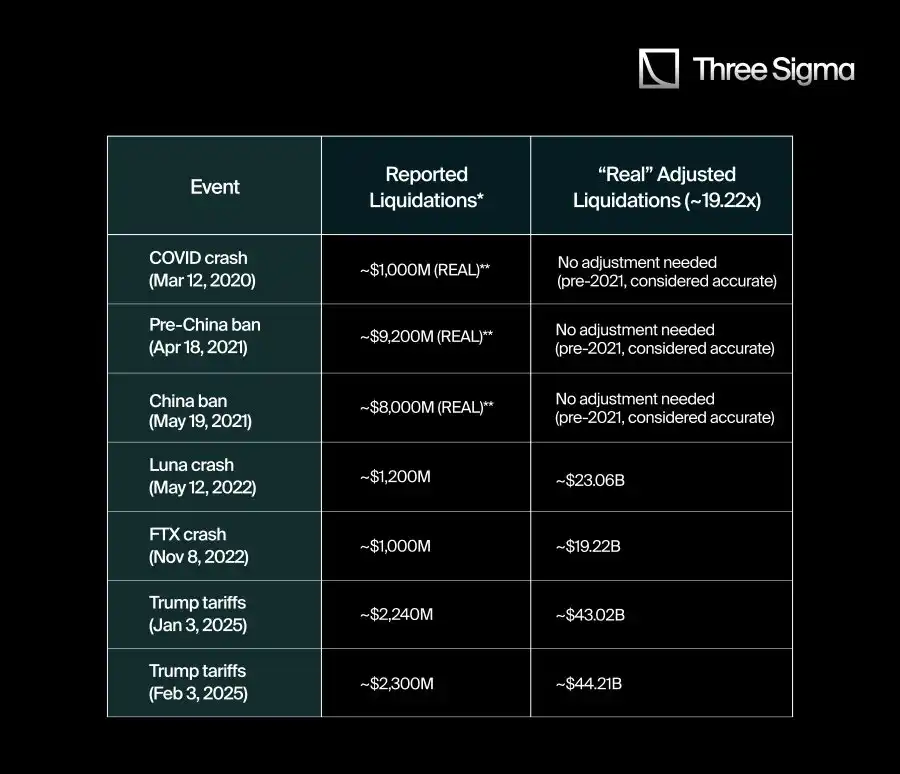
"Reported" refers to the numbers published on aggregators, social media, or through limited APIs.
For events prior to Q2 2021, the liquidation data is much more reliable, as there were no API restrictions.
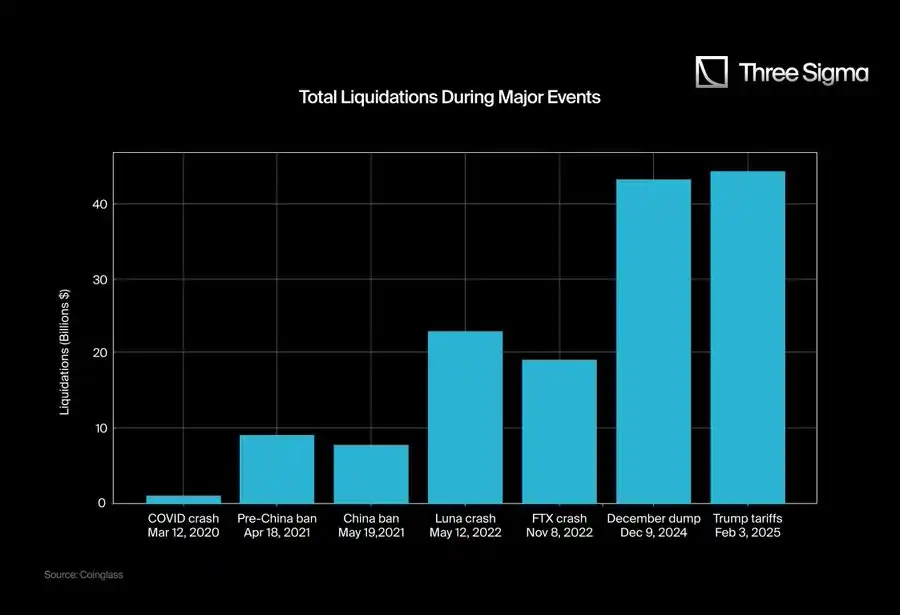
As this image emphasizes, many of the liquidation figures reported by CEXs after 2021 may greatly underestimate the actual situation. By applying the multiplier derived from Hyperliquid's full transparency, the scale of these events' liquidations is much larger than the official numbers suggest.
3.4. Comparing Liquidations to Total Market Cap
To provide more context, we compared the total "true" liquidations of these events to the market cap at the time. The ratio calculation formula is: (Liquidation Amount/Market Cap) x 100.
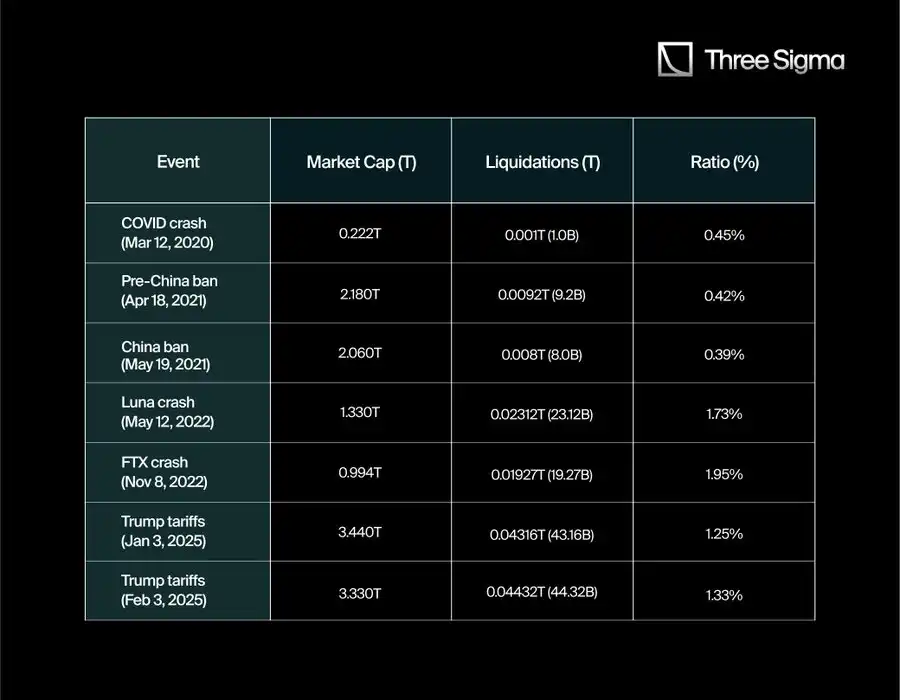
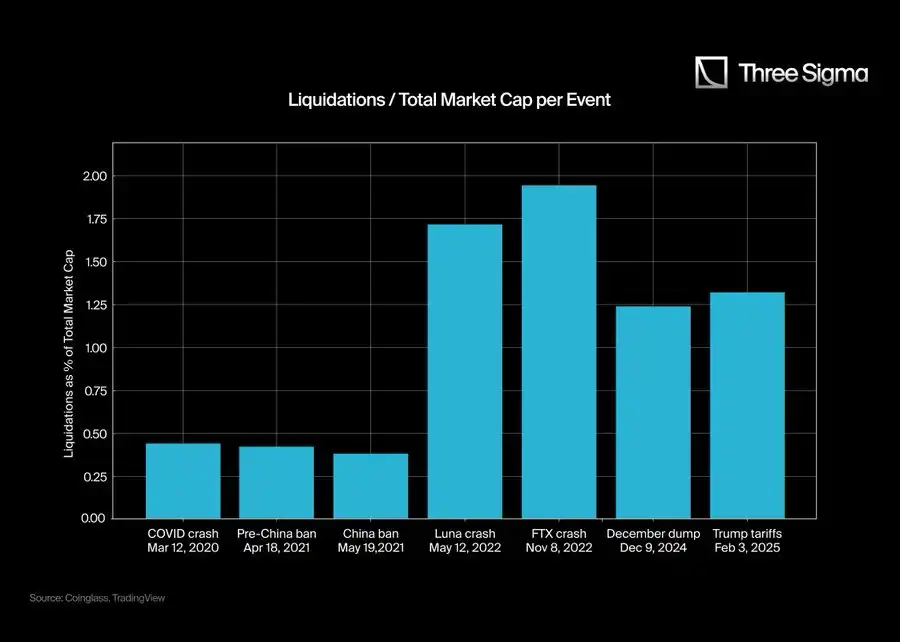
By comparing the "true" liquidation data to the broader cryptocurrency market cap, we can gain a more nuanced understanding of the impact of each event on market dynamics. This not only shows the scale of capital that disappeared in a short time, but also reflects how market sentiment can shift dramatically when leverage is unwound.
In many cases, the ratios become more significant after adjustment, suggesting that participants may have been exposed to larger systemic risks than initially appeared. Therefore, understanding these liquidation-to-market cap ratios can provide a clearer perspective, helping us comprehend the changes in market psychology and liquidity conditions during periods of extreme volatility.
4. Conclusion
From all the data and comparisons above, a clear pattern emerges: the numbers publicly reported by CEXs are often far lower than the "true" liquidation activity. When adjusted to match Hyperliquid's transparent ratios, events like the Luna and FTX collapses reveal larger impacts than the official data suggests, further reinforcing the view that CEXs may underreport liquidation data to obscure volatility or manage public perception.
This contrast is particularly evident when considering historical events: the 2020 COVID crash, while a significant market event at the time, now appears relatively small, likely because there was less leverage participation then. As leverage has become more widespread, the absolute and relative scale of liquidations has grown, but the limitations of official data streams may have distorted traders' and analysts' perceptions of systemic risk.
Furthermore, exchanges often justify these data flow restrictions as "optimizing data streams" or "ensuring fair trading conditions," but it is not difficult to see how limiting real-time liquidation data publication can serve broader interests. Underreporting liquidation data can reduce the fear of new retail investors, while also giving exchanges exclusive insights into the overall market risk exposure.
While these measures may help narrow the gap between reported data and actual liquidation activity, Hyperliquid's fully on-chain, unrestricted reporting still highlights how crucial true transparency is for anyone hoping to navigate the world of leveraged crypto trading.
Welcome to join the official BlockBeats community:
Telegram subscription group: https://t.me/theblockbeats
Telegram discussion group: https://t.me/BlockBeats_App
Twitter official account: https://twitter.com/BlockBeatsAsia