I. In-depth Analysis of the RWA Track: The Growth Engine of the Crypto Market in 2025
In the past few years, Decentralized Finance (DeFi) has risen rapidly, creating a financial ecosystem that can operate without the traditional banking system. However, a core issue facing the DeFi field is that the entire market's operation still heavily relies on crypto assets (such as BTC, ETH, and stablecoins), lacking sufficient Real-World Assets (RWA) support, which has always limited the development of DeFi to the volatility of the crypto market itself. The emergence of the RWA track is breaking this limitation. It combines real-world financial assets with blockchain technology, not only able to enhance the stability of on-chain financial products, but also bring a huge liquidity increment to the entire market. This track is becoming a key bridge for institutional investors and mainstream financial institutions to enter the crypto industry, and may even drive the entire blockchain industry into a new growth cycle.
The core concept of RWA is to digitize various assets (such as bonds, real estate, stocks, art, private equity, etc.) in the traditional financial market, and convert them into tokenized assets that can be traded, pledged or borrowed on the chain through blockchain technology. This process not only enhances the liquidity of assets, but also reduces the friction costs in the traditional financial market, such as long transaction settlement times, high intermediary costs, and limited liquidity. Taking the bond market as an example, traditional bond trading often involves multiple financial institutions and regulatory authorities, with cumbersome intermediate links, leading to high transaction costs, while RWA tokenization can achieve real-time on-chain settlement, greatly improving transaction efficiency and reducing transaction costs. At the same time, due to the transparency and traceability of blockchain, the management of RWA assets is more transparent, which can effectively reduce fraud and improper operations in the market.
As blockchain technology matures and market demand grows, the RWA track is attracting more and more institutional participation. For example, BlackRock, one of the world's largest asset management companies, recently launched a blockchain-based tokenized fund called BUIDL, which mainly holds stable assets such as US Treasuries and provides more efficient trading methods through blockchain. In addition, traditional financial giants such as Franklin Templeton are also actively exploring the tokenization of some of their fund products, allowing investors to participate in the market more conveniently. These cases show that the RWA track has become not just a "crypto narrative", but a core trend in the digitalization of the global financial market.
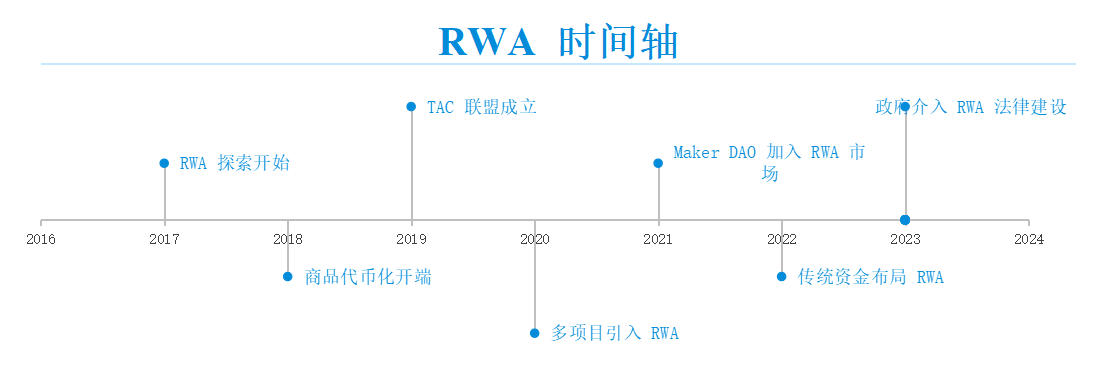
From a technical perspective, the development of RWA relies on the support of multiple key infrastructures, including blockchain underlying networks, smart contracts, oracles, decentralized identities (DID), and compliance management. First, public chains as the carrier of RWA assets determine the security and operability of the assets. Currently, Ethereum is still the preferred network for RWA tokenization, and many institutions deploy smart contracts on Ethereum to manage RWA assets, while L2 solutions (such as Arbitrum and Optimism) are also becoming popular choices for RWA asset trading to reduce transaction costs and improve throughput. In addition, public chains such as Solana, Avalanche, and Polkadot are also exploring the application scenarios of RWA assets, striving to occupy a market share in this field.
In terms of market size, the potential of the RWA track is extremely huge. According to a study by the Boston Consulting Group (BCG), the market size of the RWA track is expected to reach $16 trillion by 2030, far exceeding the current total market capitalization of the entire crypto market. Currently, the global real estate market is worth about $300 trillion, but most real estate investments require high capital and have low liquidity. If 1% of these assets are tokenized, it will create a $30 trillion RWA market. Similarly, the global bond market is over $120 trillion in size, and if 1% enters the blockchain, it will form a $12 trillion emerging market.

Institutional capital is accelerating into the RWA track, indicating that this track is no longer a purely "crypto experiment", but is becoming an important part of the global financial system. In 2025, with the Trump administration's unprecedented support for the crypto industry, this trend will continue and develop. For investors, the RWA track not only provides a new market opportunity, but may also become an important bridge for the integration of the crypto market and the traditional financial market. In the next few years, with the further improvement of infrastructure, the implementation of regulatory frameworks, and the further layout of mainstream financial institutions, the RWA track is expected to become a new growth engine for the blockchain industry, and even drive the digital transformation of the entire financial market.
Overall, the rise of the RWA track not only represents the maturity of blockchain technology and the expansion of application scenarios, but also means that the global financial market is entering a new stage of decentralization and efficiency. For market participants, how to seize the opportunities of RWA asset tokenization, layout infrastructure and key protocols, will become the core issue for the development of the crypto industry in the coming years.
II. Current Market Environment: Macroeconomic and Catalytic Factors for RWA Development
Against the backdrop of increasing global economic uncertainty, changing liquidity cycles, and the booming digital asset market, the RWA (Real-World Assets) track is becoming one of the most important growth points in the crypto industry. With the adjustment of the Federal Reserve's monetary policy, the persistent impact of inflationary pressure, the volatility of the debt market, and the increased participation of institutions in the crypto market, the development of RWA has ushered in unprecedented opportunities. At the same time, the shortcomings of the traditional financial system and the maturity of DeFi (Decentralized Finance) are also driving the migration of real-world assets to the chain. This article will deeply explore the catalytic factors for the development of the RWA track from five aspects: the global macroeconomic situation, liquidity environment, policy and regulatory trends, institutional participation, and the maturity of the DeFi ecosystem.
2.1 Global Macroeconomic Situation: Changes in Inflation, Interest Rates, and Market Risk Aversion
The global macroeconomic environment is one of the core variables affecting the development of RWA. In recent years, the global economic growth has faced great uncertainty due to the weak economic recovery after the COVID-19 pandemic, the escalation of geopolitical conflicts, supply chain problems, and the adjustment of central bank policies. Among them, changes in inflation and interest rate policies directly affect the liquidity of funds and investors' asset allocation strategies, and also indirectly drive the development of the RWA track.
Here is the English translation of the text, with the specified terms preserved and not translated:First, from the perspective of inflation, the Federal Reserve's aggressive interest rate hike policy over the past two years has had a profound impact on the global market. Since 2022, the Federal Reserve has raised interest rates multiple times in a row to curb high inflation, leading to a tightening of global liquidity. In a high-interest-rate environment, investors' risk appetite has decreased, and traditional financial markets have been impacted, causing capital to flow more into low-risk, high-yield asset classes. This has prompted investors to start focusing on assets such as government bonds, gold, and real estate, and the tokenization of these assets has become an important growth point in the RWA track. For example, the tokenization of US Treasuries (such as the OUSG token provided by Ondo Finance) has become an important investment tool in the crypto market due to its relatively high annualized yield (over 5%), attracting a large amount of DeFi capital inflow. Secondly, as the global debt crisis intensifies, the RWA track has become an important option for capital to seek safe haven. As of 2024, the global total debt has exceeded $300 trillion, with US debt exceeding $34 trillion, and the fiscal deficit reaching a historical high. In this case, investors' confidence in the traditional financial market has been shaken, and they are seeking more transparent and efficient financial infrastructure, and the characteristics of blockchain technology, such as decentralization, borderlessness, and low cost, make the on-chain of RWA assets the best solution.
2.2 Liquidity Environment: Federal Reserve Policy Shift and Changes in Market Risk Appetite
The rapid development of the RWA track is inseparable from the changes in the global liquidity environment. In 2022-2023, the Federal Reserve implemented a significant interest rate hike, leading to a severe tightening of global market liquidity. However, since 2024, as inflationary pressure has eased, the Federal Reserve has entered the end of the interest rate hike cycle and may even start a rate cut cycle, and the market's liquidity expectations have changed, which has provided a great boost to the RWA track.
2.3 Policy and Regulatory Trends: The Compliance Process of the RWA Track
In the development process of the crypto industry, regulatory issues have always been a focus of market attention, and the rise of the RWA track is precisely because it is more compliant than other DeFi tracks and can meet the needs of institutional investors. Regulatory authorities in various countries are gradually accepting the innovative model of asset tokenization and exploring how to support the development of the RWA ecosystem through legal frameworks.
2.4 Institutional Participation and the Maturity of the DeFi Ecosystem
In addition to macroeconomic and policy regulation, the entry of institutions and the maturity of the DeFi ecosystem are also important driving factors for the growth of the RWA track. Traditional institutions have begun to focus on the integration of DeFi and TradFi, and many leading asset management companies, banks, and hedge funds have started to research how to issue and trade RWA assets on the blockchain. At the same time, the DeFi ecosystem is gradually transitioning from "high volatility and high risk" to "stable returns and compliant development", and the RWA track has become the core beneficiary of this trend.
Three, Main Categories of the RWA Track and Core Project Analysis
In the context of the continuous maturity of the crypto market and the accelerated influx of institutional capital, the rise of the RWA track has become a major trend. The core goal of the RWA track is to tokenize traditional financial market assets such as bonds, real estate, commodities, and private equity on the blockchain, making them more liquid and accessible, and enabling their integration with the DeFi ecosystem. This not only brings the convenience of decentralized finance to traditional assets, but also provides a more stable source of income for the DeFi ecosystem.
3.1 Bond-type RWA: On-chain Tokenization of US Treasuries, Government Bonds, and Corporate Bonds
The bond market is one of the most important asset classes in the global financial market, especially US Treasuries (UST), which are considered one of the safest assets in the world and are widely used for hedging and reserve assets. As the DeFi ecosystem matures, more and more institutions are trying to bring bond assets onto the blockchain, realizing the transparency of returns, the improvement of liquidity, and the possibility of global trading.
Representative Project Analysis: Currently in the RWA track, the main participants in the bond tokenization field include Ondo Finance, Maple Finance, Backed Finance, and others.
Ondo Finance: It is currently one of the most active bond tokenization projects, focusing on US debt tokenization, providing OUSG (Ondo Short-Term US Government Bond Fund), allowing DeFi users to obtain yields similar to short-term US Treasury ETFs on-chain, with an annualized return rate of over 5%. Ondo's tokenized bonds are custodied by compliant institutions and comply with US securities laws, while also being freely tradable on-chain.
Maple Finance: Initially focused on the DeFi lending market, it has since expanded to the RWA track, providing on-chain debt financing services. Maple allows institutional investors to issue bonds in the DeFi ecosystem, providing a stable source of returns for the crypto market.
Backed Finance: It has launched various bond ETF tokenization products, such as $bIB01 (corresponding to the iShares Short-Term US Treasury ETF), providing investors with on-chain versions of mainstream bond ETFs in the traditional financial market, reducing the trading threshold and improving accessibility.
The rise of the bond-type RWA track not only meets the needs of traditional institutions, but also brings new sources of returns to the DeFi ecosystem, further driving the growth of RWA assets.
3.2 Commodity and Bulk Asset RWA: On-chain Commodities like Gold and Oil
The commodity market is another important RWA track, especially gold, which has long been a store of value and has become one of the earliest assets to be tokenized on the blockchain. The tokenization of commodities allows investors to trade more conveniently and directly integrate with the DeFi ecosystem, improving the liquidity of the assets.
Gold has long been an inflation-hedging tool, and with the increase in global economic uncertainty, the market demand for gold has been rising. However, the trading costs in the traditional gold market are relatively high, and the delivery process is complex, while tokenized gold assets (such as PAXG and XAUT) can provide seamless cross-border transactions, smart contract management, and DeFi staking, making them an important asset class in the crypto market.
Representative Project Analysis:
PAXG (Paxos Gold): A gold Token issued by Paxos, where each 1 PAXG represents 1 ounce of physical gold stored in the London vault. PAXG is currently the highest on-chain traded gold Token and is widely used for DeFi staking and trading.
XAUT (Tether Gold): A gold Token issued by Tether, also pegged to physical gold, allowing users to transact seamlessly globally and participate in the DeFi ecosystem.
Commodities DAO: Exploring the possibility of putting more commodities (such as oil, copper, soybeans, etc.) on-chain, making the bulk commodity market more transparent and efficient.
The tokenization of gold and other commodities is changing the way the commodity market trades, making it more open, and bringing a stronger anti-inflation asset class to the crypto market.
3.3 Real Estate RWA: A Breakthrough in Asset Liquidity
The real estate market is one of the largest real estate markets in the world, but due to high transaction costs and low liquidity, the traditional real estate market is difficult to integrate with the DeFi ecosystem. The real estate tokenization in the RWA track allows global investors to participate in the real estate market through the blockchain, breaking down geographical and capital barriers.
Representative Project Analysis:
RealT: Tokenizes US real estate assets, where each Token represents partial ownership of the real estate asset, and investors can obtain rental income by holding the Tokens.
LABS Group: Focuses on the Asian real estate tokenization market, allowing individual investors to participate in high-end real estate investment with extremely low thresholds.
The development of the real estate RWA track has significantly increased the liquidity of the real estate market, while also providing new collateral assets for DeFi, promoting the growth of the entire ecosystem.
3.4 Private Equity and Funds RWA: Making VC Investments More Transparent
The traditional VC investment and private equity fund market has long been plagued by high thresholds and low transparency, and the tokenization of RWA has made these assets more liquid. For example, the well-known asset management company Hamilton Lane has issued tokenized funds through blockchain, allowing investors to participate in the private equity market with lower thresholds.
In addition, compliant tokenization platforms like Securitize are helping more traditional institutions put equity assets on-chain, allowing them to trade on the secondary market and improve liquidity.
Four, Challenges and Potential Breakthroughs in the RWA Track
Over the past few years, the RWA track has gradually attracted the attention of many in the blockchain industry. RWA aims to digitize real-world assets such as real estate, bonds, stocks, and commodities, and incorporate them into the blockchain ecosystem, so that they can be traded, pledged, and borrowed on decentralized finance (DeFi) platforms. This track has huge potential, but it also faces many challenges, and how to overcome these challenges will be the key to its continued development.
First, one of the most prominent challenges is the issue of legal compliance. Traditional assets are usually subject to the legal and regulatory frameworks of various countries, and when these assets are digitized and introduced into the blockchain environment, they may face scrutiny from regulatory authorities and issues of policy adaptability. Many countries' current financial regulatory policies do not explicitly regulate crypto assets and blockchain technology, and the legal uncertainty is even greater when it comes to cross-border asset transfers. For example, how to legally transfer traditional assets such as real estate or bonds to the blockchain globally, and ensure compliance in different jurisdictions, not only requires the deep involvement of legal experts, but may also require relevant countries to revise their legal frameworks. In addition, the management and ownership transfer of digitized assets may also bring complex regulatory challenges, involving how to verify the actual existence of the assets and the legitimacy of the owners.
In addition, technical challenges should not be overlooked. Although blockchain technology has obvious advantages in terms of data immutability and decentralization, how to effectively convert real-world assets into digital form is still a complex problem. This not only involves how to tokenize the physical assets (i.e., convert them into digital tokens), but also to ensure that these tokens can accurately reflect the value and liquidity of the assets. Currently, the digitization of assets often relies on traditional third-party intermediaries such as banks or legal institutions to conduct assessments and endorsements, which brings contradictions between the decentralized concept and traditional centralized institutions. In addition, the custody and management of assets is also a major technical challenge. Although blockchain can provide transparency and automation, how to ensure the security and compliance of assets, especially in the absence of centralized intermediaries, is a problem that must be solved. Blockchain smart contracts can greatly simplify the asset transaction process, but if vulnerabilities or errors occur, it may lead to huge asset losses, so the security and auditing of smart contracts is very important.
For innovators in the RWA track, the key is how to effectively combine the advantages of blockchain with the needs of the real world. Especially in the issue of asset liquidity, the decentralized nature of blockchain can make assets more liquid, but real-world assets often face the problem of insufficient liquidity. For example, high-value assets like real estate have a long transaction cycle and a limited number of market participants. How to use blockchain to break through the liquidity bottleneck of traditional assets, allowing these assets to flow globally and become liquid assets on DeFi platforms, is one of the potential breakthroughs in the RWA track. By introducing asset tokenization, a real estate project, bond, or other asset can be divided into multiple small fractions, thereby lowering the trading threshold, attracting more investors to participate, and making the assets more liquid. In addition, the tokenization of assets can also improve market transparency, as investors can track the flow of assets through the public records on the blockchain, reducing the problem of information asymmetry in the market.
In addition to legal and technical challenges, market acceptance is also an important obstacle facing the RWA track. Although blockchain has achieved remarkable success in the fields of cryptocurrencies and DeFi, for traditional investors, blockchain and digital assets are still a relatively unfamiliar concept. Especially for those investors who are accustomed to the traditional financial system and asset categories, digitized assets may not immediately gain their trust. To break this barrier, the RWA track needs to establish closer cooperation with traditional financial institutions. A potential breakthrough point is that as more and more traditional financial institutions begin to accept blockchain technology and explore cooperation with crypto-assets, the RWA track also has the opportunity to gain support from the resources and credibility of these institutions. For example, banks and asset management companies can help promote the market acceptance of RWA by providing endorsements for digital assets or collaborating with blockchain platforms.
In addition, potential breakthroughs for the RWA track also include multi-chain interoperability and liquidity innovation. Currently, many RWA projects rely on Ethereum or other mainstream public chains, but the interoperability between different public chains still faces major challenges. If RWA can achieve multi-chain interoperability, cross-chain asset transfer will become smoother, and the flow of asset value will be greatly enhanced. To achieve this, cross-chain protocols and bridging technologies will become important breakthroughs in the RWA track. This not only can improve the liquidity of assets, but also expand the market share of RWA, attracting more investors and users.
V. Future Outlook and Investment Strategies for RWA
With the continuous maturity and development of blockchain technology, the RWA track is undergoing a subtle transformation. The integration of traditional assets and the crypto world will not only be a supplement to digital assets, but may also reshape the global financial system. The future of RWA will bring huge market opportunities, but also complex challenges. To succeed in this field, investors need to have a deep understanding of the industry's development trends and design reasonable investment strategies.
The future outlook of RWA is full of potential, especially as the role of blockchain technology as a bridge between the traditional financial system becomes increasingly evident. As blockchain technology is gradually accepted by financial institutions, the tokenization of traditional assets will become more and more common. It is expected that in the next few years, asset tokenization will become mainstream, especially in the fields of real estate, bonds, equities and commodities. The increasing openness of the traditional financial market to digital assets will also accelerate the growth of RWA. Banks, insurance companies and asset management companies are exploring how to use blockchain technology to achieve automated and transparent asset management, while reducing operating costs and improving efficiency. Especially in capital-intensive industries, the market potential of RWA will be more prominent, and digitized assets can cross geographical boundaries to provide unprecedented investment opportunities for global investors.
The future outlook of RWA is closely related to the digitalization of the entire financial system. As the financial market gradually transforms towards digitalization and automation, RWA will gradually become an important part of the global capital market. With the progress of technology and the maturity of the market, the RWA track may see more opportunities for industry integration and mergers and acquisitions in the future, and some leading RWA platforms and projects may become "unicorns" in the blockchain industry. In this process, investors not only can obtain direct asset returns, but may also participate in the "dividends" of blockchain financial innovation. Therefore, investment opportunities in the RWA track will become more and more, and investors need to grasp the market dynamics in a timely manner and flexibly adjust their investment strategies in order to obtain the maximum returns in this innovative market.