Introduction: The Disruptors in the Web3 Security Crisis
On February 21, 2025, the blockchain world experienced an unprecedented "digital catastrophe". The global second-largest exchange Bybit was hit by a hacker attack, and $1.46 billion worth of ETH was looted in just a few minutes, setting a record for the largest asset theft in blockchain history. This "perfect storm" not only plunged Bybit into a crisis of trust, but also exposed the fragility of the Web3 security ecosystem.
Just as the Bybit incident was still reverberating, the $LIBRA project backed by the Argentine president was exposed as a scam, swindling $100 million; the Infini wallet suffered a targeted attack of $49.5 million; within just one month, the cumulative loss from on-chain hacking incidents reached $1.613 billion. Behind the cold numbers are countless heartbreaking lessons for investors.
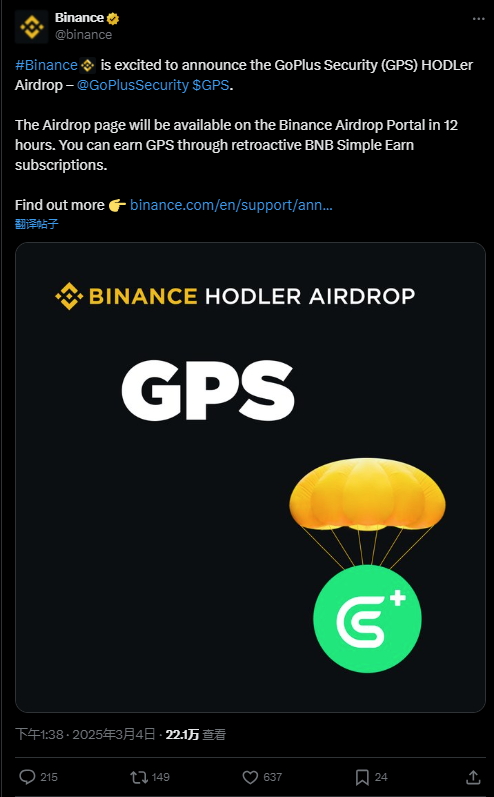
And today, Binance officially launched GoPlus Security (GPS), a move that not only marks the addition of another heavyweight player in the Web3 security track, but also reveals the deep-seated trend of the blockchain industry's transformation from "wild growth" to "secure infrastructure". As the first project to deeply integrate decentralized security layers into the blockchain architecture, GoPlus aims to solve the most intractable problem in the Web3 world - how to build a trustworthy transaction environment in an open environment. This article will delve into the technical logic, ecosystem layout, and market potential of the GPS project.
Project Positioning: Filling the "Security Layer Void" in Blockchain
The core goal of GoPlus Security is to target the fatal shortcomings of the current blockchain architecture: the lack of a native security layer. Traditional Web3 security solutions are mostly "plug-in" tools (such as audit agencies, risk control plugins), with problems such as data silos, slow response, and centralized dependence. GoPlus, through modular design, embeds security capabilities into the blockchain bottom layer, covering the entire transaction lifecycle, forming a "decentralized firewall".
Key Innovations:
1. Decentralized Security Network: Through the GPS token incentive, users, developers, and nodes jointly maintain the security data layer and computing layer, realizing the real-time and transparency of risk detection.
2. AI-driven Dynamic Protection: Using machine learning to analyze on-chain behavior patterns, proactively identify phishing attacks, malicious contracts and other threats, and process over 30 million security requests daily.
3. Cross-chain Compatibility: Already supports over 30 public chains including Ethereum and BNB Chain, and plans to expand to a multi-chain ecosystem in the future, becoming the "universal security protocol" for Web3.
Benchmark Significance: If Chainlink is seen as the "oracle infrastructure", GoPlus is poised to become the underlying standard for "Security-as-a-Service".
Team and Financing: Top Institutions Betting on "Security Infrastructure"

The founding team has a "Web2 Security + Web3 Development" dual gene:
- Mike (Founder): Served as the founder of Go+ Security, he joined Qihoo 360 in 2010 and was one of the main product managers of the 360 Security Browser; in 2013, he founded Juzi Browser, which was later acquired by an A-share listed company; in 2017, he co-founded Delphy, focusing on the development of decentralized prediction market products; in 2019, he founded the blockchain security data platform Yixuan Tech, focusing on helping users identify DeFi risks.
- Eskil Xu (Co-founder): With a background in economics from Nankai University, he led the technical architecture of the GoPlus security engine and promoted it to become the integration solution for leading platforms like CoinGecko and Trust Wallet.
- Allen Zhang (CTO): He is the co-founder and technical lead of GoPlus Security. Prior to this, he was the solution architecture director at Ant Group. Allen Zhang is an experienced professional with a solid foundation in security and technology. He graduated from East China Normal University.
Financing History Demonstrates Institutional Recognition:
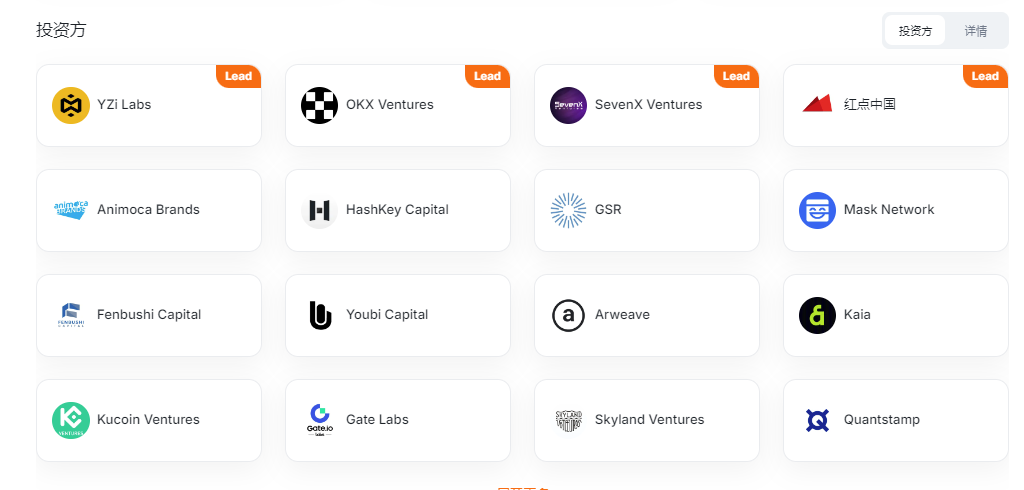
In August 2021, GoPlus Security Engine completed a seed round of financing, led by SevenX Ventures, with participation from Mask Network, DeltaBC, Puzzle Venture, Youbi Capital, Incuba Alpha, Lucid Blue, InsurAce, and Quantstamp CEO Richard Ma.
In April 2022, GoPlus Security Engine completed a multi-million dollar private placement, with investment from several public chain entities, including Crypto.com Capital, Huobi Incubator, KuCoin Ventures, Arweave, Harmony, Avatar, as well as SevenX Ventures, GSR Markets, and Geekcartel.
On December 8, 2022, GoPlus Security completed a second round of private placement, with Binance Labs as the lead investor, the specific amount was not disclosed.
On March 8, 2024, GoPlus Security announced the completion of a $4 million Private II+ round of financing, with participation from Redpoint China and Skyland Ventures.
On June 5, 2024, GoPlus raised $10 million in a private placement round, with participation from OKX Ventures, HashKey Capital, and Animoca Brands, among others.
The cooperation ecosystem covers mainstream tracks: co-building the data layer with Footprint Analytics, jointly developing on-chain risk control tools with Binance Labs, and becoming the default security service provider for DeFi platforms like SushiSwap and DexScreener.
Product Matrix: From "Risk Scanning" to "Proactive Defense"
GoPlus has built a full-stack security solution covering the user end, developer end, and protocol layer:
1. User Security Tools:
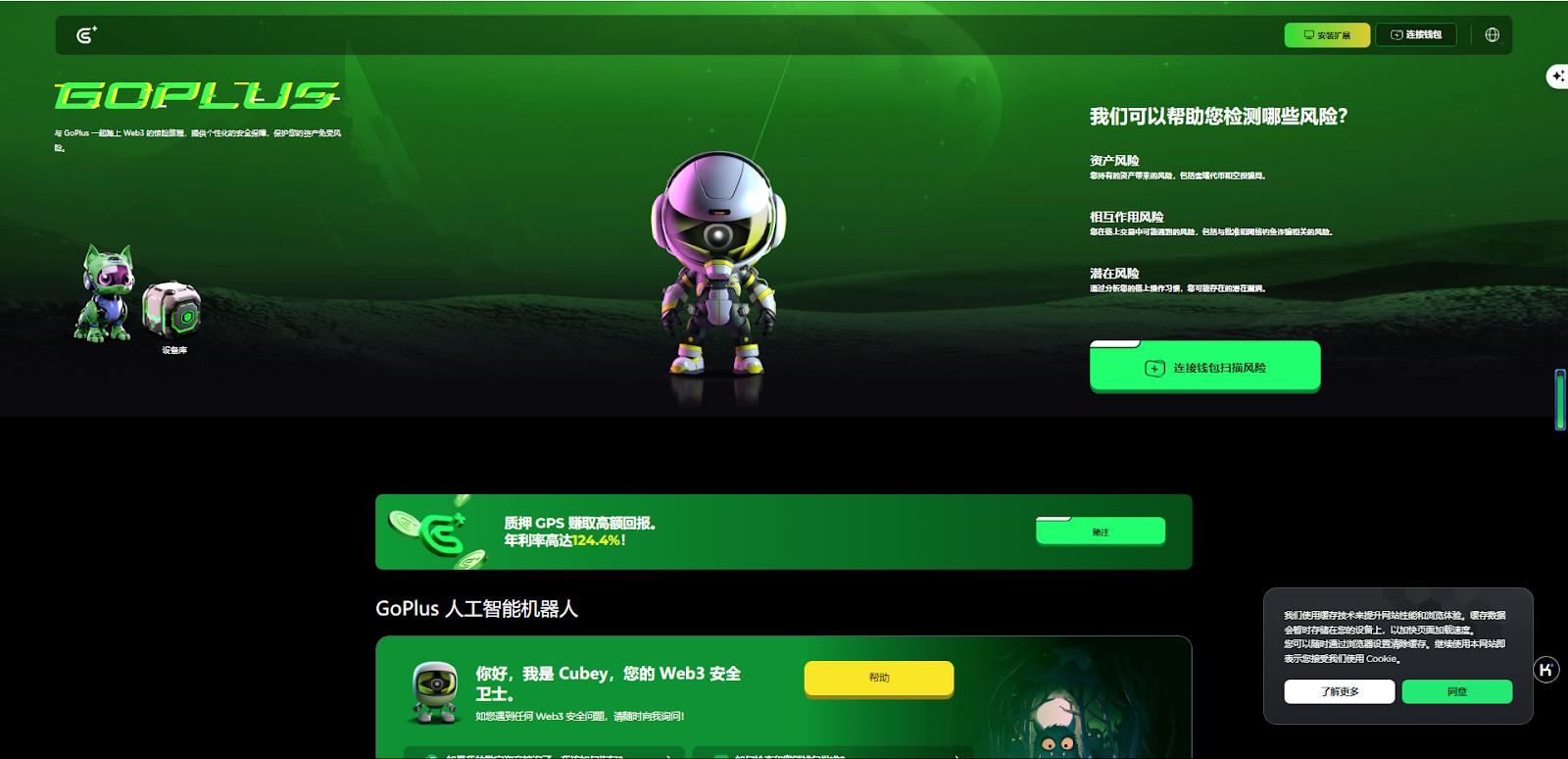
- SecWareX: Personal security platform, providing wallet health checks, transaction simulations, fraud warnings, etc., attracting 1.8 million independent users within 2 months of launch.
- Real-time Pop-up Protection: Actively intercepts when users access high-risk DApps or sign suspicious contracts, reducing asset losses caused by "blind authorization".
2. Developer Services:
- Security API/SDK: With a daily call volume of over 21 million, supporting scenarios such as token contract audits and NFT risk ratings, integrated by over 10,000 projects.
- SecWare Protocol: Allows developers to customize security rules and put them on-chain, forming a tradable security service market.
3. Protocol-level Innovation:
- Security Data Layer: Distributed storage of malicious address libraries, contract vulnerability libraries, etc., using the GPS staking mechanism to ensure the incentives and accountability of data contributors.
- Security Computing Layer: Verifies risk analysis results based on zero-knowledge proof (ZKP), balancing privacy and transparency.
Typical Case: After integrating GoPlus' "Liquidity Pool Risk Detection API", a DeFi protocol successfully intercepted a $12 million flash loan attack.
Token Economics: Supply-Demand Model and Value Capture
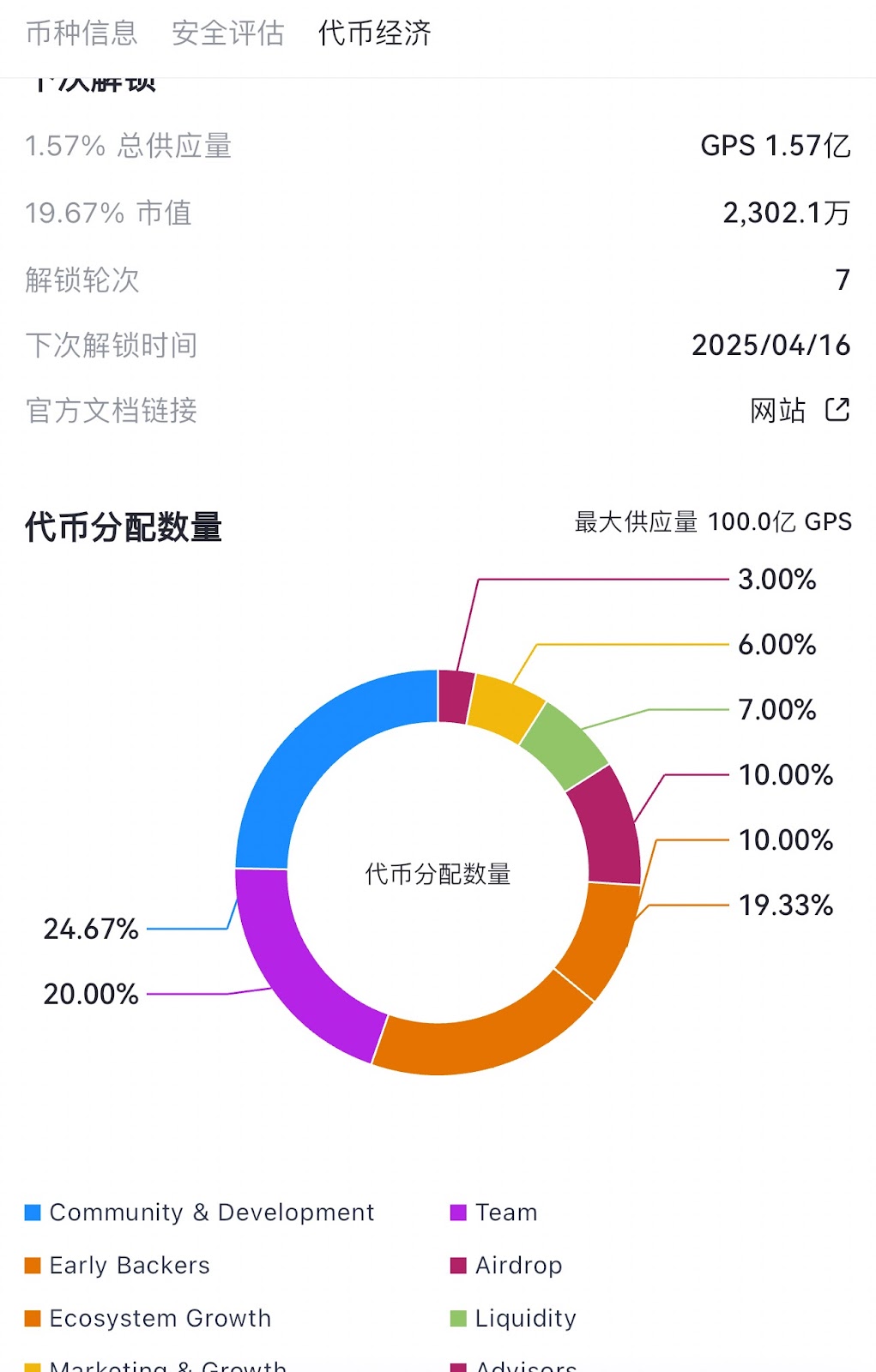
The GPS token is the core carrier for ecosystem governance and incentives, with a total supply of 10 billion, an initial circulating supply of 18.13% (1.813 billion), and key allocations as follows:
60.67% for ecosystem and community development:
Community and Development (24.67%): Used to incentivize community participation and reward active users and developers.
Ecosystem Growth (10%): Used to increase the adoption rate of the GoPlus network and enhance security services.
Marketing and Growth (6%): Support for market promotion, brand expansion, and user growth.
Liquidity (7%): Ensure market stability and trading efficiency.
Advisors (3%): Rewards for strategic guidance and ecosystem development advisors.
39.33% for initial contributors and private investors:
Team (20%): Allocated to the core team that has been involved in the construction of GoPlus since 2021. Team members will experience a 1-year lock-up period, followed by a gradual monthly unlocking over 3 years.
Early Supporters (19.33%): Allocated to early investors who supported GoPlus in different investment rounds, with a similar unlock period as the team.
Airdrop (10%): Rewards early adopters and active participants to drive the expansion of the GoPlus ecosystem.
Among them: Binance HODLer Airdrop: Binance users exclusively enjoy 3% (300 million), and another 4% is to be allocated later.
Value Scenarios:
The $GPS token plays an important role in the secure ecosystem of GoPlus, supporting the following core functions:
Security Service Fees: Users need to pay $GPS as "security gas" when using GoPlus' transaction protection services. Business users purchase security intelligence services through $GPS. Project parties pay $GPS as a service fee when using GoPlus' SafeToken protocol for liquidity management.
Staking Mechanism: Ecosystem contributors need to stake $GPS to become computing nodes or security data providers to receive rewards. This staking mechanism encourages more participants to contribute to the network's security.
Transaction Fees: $GPS will also support the security of on-chain DeFi transactions in the future, reducing risks through token payments.
Circulation Pressure Test: The unlocking of team and early investor tokens in Q2 2025 may bring short-term selling pressure, but the expansion of ecosystem applications (such as deep integration with the BNB Chain) is expected to provide a counterbalance.
Price Outlook: The Interplay of Short-term Hype and Long-term Value
Positive Factors:
- Exchange Momentum: After the listing on Binance, mainstream trading pairs with USDT and USDC are expected to attract incremental capital, and historical data shows that new coins on Binance have an average first-week gain of 40%-120%.
- Airdrop Effect: The 30 million GPS airdrop may trigger a "buy the rumor, sell the fact" market, but long-term holders may value the ecosystem staking rewards (estimated at 8%-15% annualized).
- Sector Dividend: The Web3 security market is expected to exceed $10 billion by 2025, and as a leading protocol, GoPlus is expected to capture more than 20% of the market share.
Risk Alerts:
- Intensified Competition: Competitors like CertiK and Forta are accelerating their financing, which may divert market share.
- Technical Challenges: If the false positive rate of AI models exceeds industry standards, it will affect the user experience.
- Regulatory Uncertainty: Compliance requirements for on-chain security services in different countries may increase operating costs.
Trend Projection:
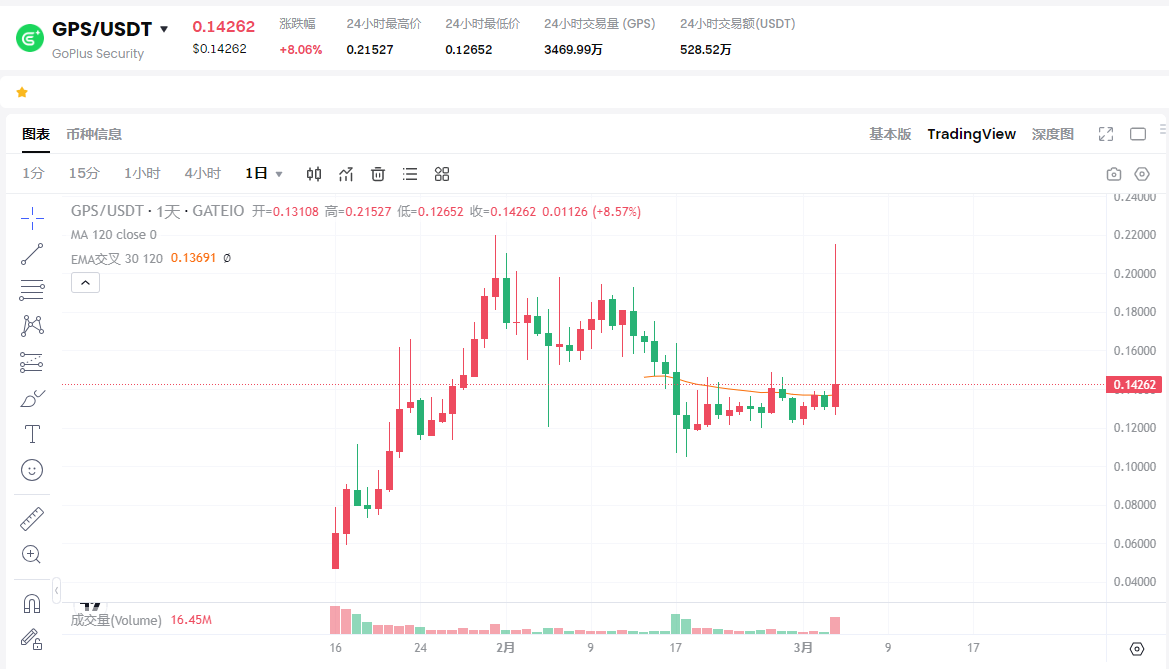
According to Gate data, the current price of GPS is $0.142. It previously surged to $0.21 due to the Binance listing news, but has since retreated.
- Short-term (1-3 months): The initial listing may drive the price to $0.2-$0.3, followed by a pullback to the $0.15 support level.
- Medium-term (6-12 months): The implementation of ecosystem applications (such as cross-chain security protocols) and staking lock-ups may push the price to break through $0.5.
- Long-term (1-3 years): If it becomes the standard for the Web3 security layer, the market cap may enter the TOP50, corresponding to a unit price of $1-$2 (5-10 times the current level).
Conclusion: The "Paradigm Shift" of Security Infrastructure
The ambition of GoPlus Security is not just to be a security tool, but to transform security capabilities into composable on-chain resources through token economics and modular architecture. If this "security as a public good" paradigm succeeds, it will fundamentally change the rules of value flow in Web3 - security will no longer be a cost center, but an engine for ecosystem growth. For investors, the value of GPS lies not only in its price fluctuations, but also in its ability to become the "new infrastructure" for reconstructing on-chain trust.