Originally published by Odaily Planet Daily
Author | jk
 In recent years, Web3 has been seen as the next stage of the internet due to its decentralized concept, but the path to realizing this ideal faces multiple challenges:
Traditional developers face a steep learning curve, needing to understand blockchain architecture and new development languages and environments from scratch;
While AI technology has huge potential in areas like data analysis and automated decision-making, it is disconnected from the Web3 ecosystem, failing to form deep synergy;
The redundant base protocol ecosystem is fragmented, and cross-chain operations are complex and inefficient, resulting in high costs for users to transfer assets across different chains;
More critically, the clumsy interaction experience of DApps contrasts sharply with the fluidity of Web2 applications, causing Web3 to be confined to a niche high-speculation market for a long time, struggling to penetrate mainstream scenarios like social and content.
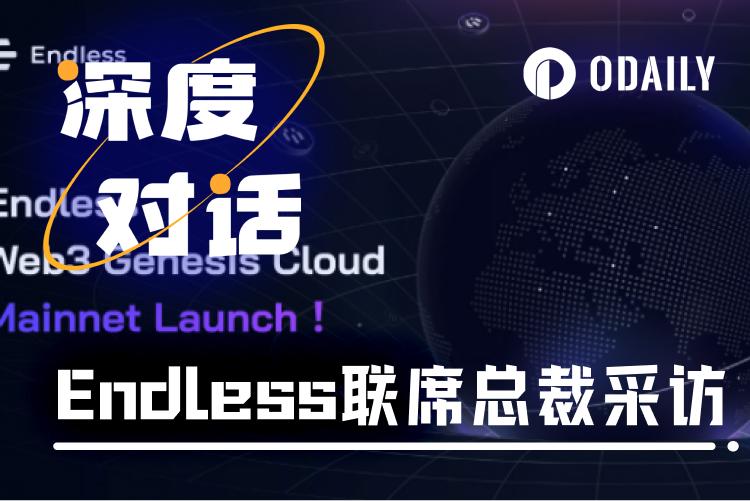
In search of innovative solutions to break this deadlock, the recently launched mainnet of Endless Web3 Genesis Cloud (hereinafter referred to as Endless) has caught our attention. As a distributed intelligent component protocol, Endless is undertaking a comprehensive overhaul of its underlying architecture and development paradigm.
Its high-performance public chain based on the Move language can achieve 0.5-second transaction confirmation, process tens of thousands of transactions per second, and near-zero Gas fees that break through the efficiency bottleneck of traditional blockchains. The decentralized storage and computing architecture enhances network resilience through a self-developed relay node network, while the component-based development model provides modular tools like wallets, cross-chain bridges, and multi-language SDKs, allowing developers to build DApps like assembling building blocks. This "serverless architecture + fully distributed framework" design enables Web2 developers to migrate seamlessly without relearning the blockchain technology stack, and users can log in to the wallet directly with their Google account, even without perceiving the existence of Gas fees, while the self-developed Keyless technology ensures user privacy - all the complex logic is encapsulated at the bottom, providing an experience close to mainstream internet applications.
Endless' ambition goes beyond just technical upgrades, but to become a bridge connecting the two eras.
Facing the Web2 world, it lowers the development threshold through standardized components, supporting mainstream languages like Python and Java, allowing developers to leverage their existing technology stacks; for users, its wallet design completely hides the concepts of seed phrase and private key, and introduces a "developer-paid Gas fee" mechanism, making on-chain interactions as natural as using social apps.
In the battlefield of AI and Web3 integration, Endless shows an even sharper edge: collaborating with the top AI research institute, the University of Surrey, to develop efficient applications based on large language models, integrating tools like ChatGPT and Stable Diffusion, compatible with AI agent frameworks like Eliza and Swarms, providing a rich set of AI components on the platform. Developers can directly call atomized AI capabilities like data analysis and multi-language translation through standardized interfaces, or combine AI models with on-chain components to develop innovative applications like automated DeFi strategy bots and NFT generative tools, truly unleashing the synergistic effects of Crypto x AI.
In terms of ecosystem deployment, Endless has already delivered its first answer. The decentralized social application Luffa is developed based on its protocol, adopting end-to-end encryption technology, with user data stored only on local devices, completely eliminating the risk of centralized server leaks. Its built-in native wallet supports token tipping and NFT sharing, and allows users to customize AI chatbots, providing personalized services combined with on-chain data.
It's worth noting that to accelerate ecosystem prosperity, Endless has announced a $1 million airdrop program, where users can participate in reward distribution through cross-chain transfers and DApp interactions (readers interested in zero-cost participation can follow the interaction guides published on its official X and other channels), and will also launch developer Grants and component market revenue sharing mechanisms to build a sustainable incentive network.
Behind these visions and steps is a team that balances academic resources and practical experience. Co-President Xiong Yu is the Director of the Blockchain and Metaverse Applications Research Institute at the University of Surrey, previously serving as the Chairman of the UK Parliament's Web3.0 Advisory Council, and his research on Bitcoin mining carbon emissions published in the top journal Nature Communications has driven global industry policy shifts; CTO Amit Kumar Jaiswal is from the Indian Institute of Technology, deeply engaged in machine learning and DeFi protocol development, having built open-source decentralized applications for multiple international clients; Chief Economist Ned holds a PhD in Distributed Systems from the University of Oxford, with his token economic models serving over a million users, and significant achievements in zero-knowledge proofs and protocol optimization.
This team driven by technical ideals has a clear goal: to break the financial scenario enclosure of Web3, extending its value to richer real-world scenarios like social, content, and AI, through data sovereignty and on-chain value distribution, allowing users to evolve from "traffic commodities" to ecosystem co-builders.
When developers are no longer constrained by base protocols, when users can control digital assets without understanding private key principles, and when AI and blockchain are deeply integrated under standardized interfaces - Web3 may be experiencing its "Android moment". And Endless' role is to become the operating system-level foundation of this new era, allowing the flow of decentralized value to truly return to the user-centric.
To gain a more comprehensive understanding of Endless' vision, technical advantages, ecosystem progress, and the latest developments worth the attention of users and developers, Odaily Planet Daily is honored to interview Professor Xiong Yu, the Co-President of Endless, and the following is the condensed and edited interview Q&A, enjoy~
Odaily: First, as an expert who has long been engaged in the academic field, Web3 has seen rapid growth in recent years, but also faces considerable bottlenecks. In your opinion, what are the most pressing issues that the Web3 field needs to solve?
Xiong Yu: There are still too few applications that can truly bring value. When people talk about Web3, they often think of token speculation, but these have created little social value. So we've always hoped that something truly useful to users would emerge.
Additionally, the threshold for Web3 is still too high. Most traditional developers haven't really entered the Web3 field, mainly because the Web3 development environment is not very friendly to them, and the learning cost is relatively high. On the other hand, the value of Web3 is not so intuitive to ordinary users. Even for Bitcoin holders, the user base is still much smaller compared to the Web2 world. The user numbers of each blockchain platform are very limited, making it difficult to have the same level of mass impact as Web2.
So I think there are two key points. One is to lower the development difficulty of Web3, so that more developers can get on board more easily; the other is to truly bring value to users through Web3 applications, so that people are willing to use them.
The biggest feature of Web3 is data sovereignty, transparency, and security. Just like Bitcoin, you can control your own assets, without worrying about others freely accessing your money, and you can also clearly understand how the entire system works, with transparent transactions. This certainty is very important for users - you know what you put in, and what you get, only then can the value of Web3 be truly realized.
Odaily: How did the Endless idea originally come about? How did the core team members come together?
Xiong Yu: This idea actually originated from the university I am at - the University of Surrey. Our university is very strong in information technology (IT) and artificial intelligence (AI) research, especially our AI research center, which is one of the largest AI research institutions in the UK. Moreover, we may be the only British university that has established a Blockchain Application Research Institute, called the Surrey Academy for Blockchain and Metaverse Applications, which has done a lot of work in promoting the integration of blockchain, AI and Web3.
We attach great importance to the integration of technology and industry. Many companies in industries such as the gaming industry are willing to cooperate with us. We have also been directly applying our academic achievements to the industrial sector and have established extensive cooperative relationships with many companies.
At the same time, we have also participated in a large number of national and transnational blockchain research projects. I have published a research paper on blockchain in Nature Communications, and if you search for the keyword "blockchain" on the Nature website, its Altmetric academic influence ranking is still the highest in the world.
But we are not satisfied with just doing cutting-edge research, we hope to be able to bring blockchain technology out of the laboratory, combine it with the actual needs of enterprises and society, and truly implement it.
In addition to the large user base and high technical threshold mentioned earlier, another core problem is the fragmentation of the ecosystem - everyone is using different technical standards, and different chains are fighting each other and are incompatible.
So we're thinking, can we start from the application, improve the user experience, attract more users to enter, and at the same time reduce the development difficulty, so that developers can get started more easily? If we can launch a new protocol to solve these problems, can we truly bridge the divide between Web2 and Web3? This was our initial idea.
Against the backdrop of rapid AI development, people are becoming aware of the importance of data sovereignty, and blockchain will definitely become increasingly important. It is not just a financial tool, but will become an important technology to support the entire digital economy of society, helping users truly control their own data and protect their privacy and rights.
Odaily: What is the biggest obstacle in the process of Web2 applications migrating to Web3 at the moment? You mentioned earlier that you want to lower the threshold, what specific obstacles are you referring to?
Xiong Yu: The main thing is the lack of user numbers. Now the user scale of Web2 is several orders of magnitude larger than that of Web3. Even for Trump's Meme coin, which was so hot, it only had hundreds of thousands to millions of users, far from reaching a truly mainstream scale.
But the user value of Web2 is completely different, such as platforms like Facebook, Google, and Amazon, whose user numbers are in the hundreds of millions. This brings a core problem - how to fill the huge gap in user scale between Web3 and Web2? What kind of functionality can we provide to truly bring value to users, rather than just staying at the conceptual and hype level?
The second core obstacle is the high technical threshold. A large number of Web2 developers will not bother to learn Web3 programming just for a small user group, only a small portion will choose to transform. If we can make the Web3 programming approach, concepts, and technology stack consistent with Web2, so that developers only need to call a few modules to directly integrate blockchain's security, privacy protection and other features into their applications, then the development threshold of the entire Web3 will be greatly reduced. In this way, all Web2 developers can seamlessly transition to Web3 developers.
This is exactly what Endless hopes to solve - what we want to do is modular development + ultimate user experience.
In addition, the problem of multi-chain fragmentation is also a major obstacle. Our approach is not to build a "all-encompassing" system, but to design a universal protocol that allows all chains to be compatible, so that developers can easily call different functions across chains. We have already encapsulated the protocol, so no matter which chain the developer chooses, they can easily connect to other ecosystems through our cross-chain mechanism.
Odaily: What are the biggest challenges the Endless team has encountered in the development process, and how have you overcome them?
Xiong Yu: Modular development requires overcoming many technical barriers. If we want to further encapsulate Web3 programming into a modular form, allowing developers to use blockchain technology like calling APIs, it involves a lot of innovative technical work behind the scenes.
In terms of programming language, we ultimately decided to adopt Move. Move itself is a programming language designed for modular design, and it has strong considerations for security and privacy protection.
Security issues are also a challenge we are very focused on. The core reason why people trust Web3 is decentralization and asset security, but Web3 also often has security vulnerabilities. Therefore, we have done a lot of "security-experience" trade-offs in terms of security, and ultimately adopted bank-level encryption combined with zero-knowledge proof and other privacy technologies to optimize the security and convenience of user identity authentication.
Currently, we have already established a developer ecosystem, with multiple collaborative developers working together to build smart contract packages and various functional modules. In the process of developing so many modules, we must have encountered many problems, with different opinions within the team and new ideas from partners. We are willing to accept and improve upon these optimization suggestions, and iterate continuously.
In terms of optimizing the user experience, we focus on two core issues:
(1) Adopt ZK (zero-knowledge proof) technology to achieve a sign-in method without seed phrases or private keys, so that users can log in directly using accounts like Google, while seamlessly interacting with on-chain applications.
(2) In contract development, we provide a mechanism where project parties can pay Gas fees on behalf of users, so that users can directly interact with on-chain applications even without Gas fees. This greatly reduces the cost for projects to acquire users.
We believe that the true popularization of Web3 is not to make users adapt to Web3, but to make Web3 adapt to users.
Finally, global team collaboration is also a major challenge. Our core team is mainly in the UK, responsible for program development and external cooperation. We also have team members in Hong Kong, Japan, and Thailand. Collaboration faces the problem of time differences.
Now we have entered the stage of promotion and ecosystem cooperation, and connecting with partners in different regions is an important task.
Odaily: Why did you choose the Move language? What advantages does it have for developers and ecosystem expansion?
Xiong Yu: Move language was originally developed internally by Facebook (now Meta), and was designed specifically for the security and efficient management of digital assets, especially suitable for handling digital assets and complex financial logic. Its core goal is to reduce the risk of vulnerabilities in smart contracts and improve the security of Web3 applications. So when we introduce AI in Web3 applications to generate and manage smart contracts, Move can well guarantee security and modularity, avoiding security vulnerabilities caused by excessive code integration.
Another important feature of Move is high performance and low latency, which allows us to process and execute AI agents faster. This is a unique advantage for us, because we want to achieve modular development, allowing more developers to build their own modules, while ensuring that these modules maintain a high degree of security after integration.
Of course, Solidity also has its advantages, such as a more mature ecosystem and a larger developer community. But our goal is not to compete with the existing ecosystem, but to attract new Web3 users, especially developers and users who have not yet entered Web3. So what we value more is long-term development, rather than simply catering to the existing ecosystem.
Odaily: You just mentioned Endless' AI component-based architecture, how does it help developers build AI and crypto-related applications?
Xiong Yu: Essentially, Endless' AI component-based architecture is an open platform, where we have integrated multiple large models, and developers can directly call them as needed. For example, we support DeepSeek, LLaMA, and other large models. Our goal is not to develop large models ourselves, but to become an entry point to help developers use large models efficiently. At the same time, since we are running on Web3, users can have full control over the content and assets generated by AI, without worrying about data abuse by the platform.
From the developer's perspective, Endless makes building Crypto AI applications much simpler and more efficient. We provide modular Web3 and AI components, so developers don't need to write complex Web3 smart contracts or AI algorithms from scratch. They can just call our modules to easily implement these functionalities. For instance, there is an AI-driven Web3 application called Luffa in our ecosystem, which already has over 100,000 users and thousands of daily active users. Luffa didn't develop its own AI language processing capabilities, but directly called our AI speech-to-text and multi-language translation function modules.
Furthermore, Endless' data layer and technology stack are isolated, which means AI can access Web3 data seamlessly without complex adaptation work. Endless acts as a connector, seamlessly integrating AI capabilities into the Web3 application framework.
We also provide SDKs to help developers quickly package AI models into their application interfaces, like plugins. For example, we have deep cooperation with many large model companies, and you may know that over 80% of the text-to-image large models globally are based on Stable Diffusion. We are currently working closely with Stability AI (the parent company of Stable Diffusion).
Finally, the Blockchain and Metaverse Applications Research Institute of the University of Surrey recently launched a framework and vision for the integrated development of Web3 and AI, hoping to empower the rapidly evolving AI ecosystem with Web3 technology. Our team has also accumulated a wealth of experience and resources in AI technology research.
Odaily: What are Endless' unique technical advantages in the AI Agent field?
Xiong Yu: First, Endless' AI technical strength comes from our team background, with core team members coming from top AI research universities.
Secondly, we also have obvious technical advantages in optimizing and applying AI large models. Our optimization solution is based on Stable Diffusion 3, but it outperforms the original Stable Diffusion in terms of generation speed, computational efficiency, and cost. Even the Stable Diffusion development team has started to pay attention to some of the optimization algorithms we've introduced. It's worth mentioning that a Stable Diffusion vice president has also joined the Endless Foundation as the Chief AI Advisor.
Additionally, we embrace open source. Endless will invest heavily in open source work in both Web3 and AI fields, promoting co-creation and collaboration in the AI community. The development of AI requires transparency and cooperation, and Web3's philosophy is highly aligned with this. We believe that open source can further promote the integration of Web3 and AI.
Odaily: Given the current high level of uncertainty in the global regulatory environment, how will Endless address this? What considerations do you have regarding global compliance?
Xiong Yu: The UK is very supportive of blockchain applications, with many well-known projects actively developing their ecosystems. There is even a dedicated blockchain group within the UK Parliament, inviting blockchain industry talents to enter the Parliament and directly communicate with policymakers.
Additionally, since Endless is not involved in capital-intensive businesses like exchanges, the regulatory requirements we need to comply with will be relatively fewer. One of our Foundation members, who previously served as the head of the digital assets department at the UK Financial Conduct Authority (FCA), provides us with more professional advice on global compliance and ensures that we strictly follow regulatory requirements from the very beginning of our business operations.
Odaily: Looking to the future, what are your prospects for the development of Endless and the entire ecosystem?
Xiong Yu: Within the next three to five years, we hope that Endless can become an important pillar in the Web3 ecosystem. If we use the mindset of traditional internet, we hope it can occupy a similar position to Solana in the public chain domain.
Our core goal is to drive the full transition from Web2 to Web3, not just turning Web2 applications into Web3 applications, but more importantly, naturally transforming Web2 developers into Web3 developers. We will drive this change from the perspectives of developers, application ecosystem, and user growth, and the deep integration of AI is indispensable to achieve this.
Our vision is not simply to build a question-answering AI like ChatGPT, but to construct a truly autonomous problem-solving intelligent system. At the same time, the transparency and traceability of Web3 can provide security guarantees for the development of AI. Ultimately, we hope Endless can become the most intelligent and user-valuable platform in the Web3 ecosystem, driving the entire industry's intelligent development at the protocol level.
Odaily: Regarding airdrops, which are of great concern to individual investors and users, is there any information you can share in advance?
Xiong Yu: The scale of this airdrop will be relatively large. We have reached cooperation with multiple well-known partners, and Foresight Ventures and other renowned funds have also invested in Endless. The total amount of this round of financing is about $110 million, and more institutional investors will announce their investment information soon.
As for the specific details of the airdrop, we plan to reach a total scale of $1 million, with the main purpose of attracting more users to pay attention and promote ecosystem growth. We will publish the overall airdrop plan through our official channels later.
Furthermore, the airdrop distribution will be based on our already incubated social application - Luffa. Luffa currently has over 100,000 users and more than 10,000 daily active users, which is already a sizable application. Through Luffa, we can distribute the airdrop more precisely to real users, ensuring that the incentive mechanism can promote ecosystem activity, rather than just attracting short-term speculators.
Returning to the protocol itself, on March 6th, the architecture of Endless, which has been completed and undergone large-scale testing, officially went live on the mainnet. The TPS exceeds 10,000, and the overall system robustness has already met the requirements, so we are very confident that Endless can become a truly attractive and innovative Web3 protocol.