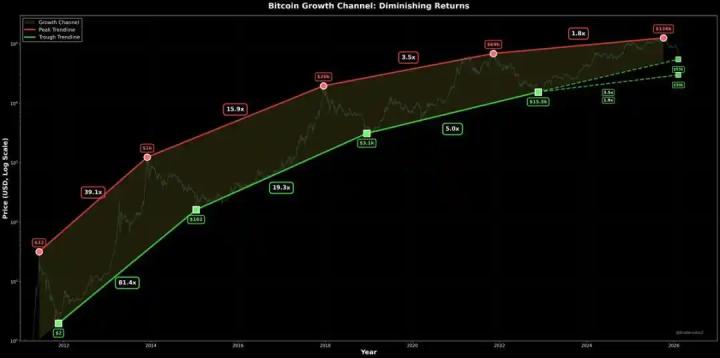
Bitcoin is making a comeback, rising 3.7% to trade around $84,000 after nearly a week of losses. However, a shocking trend is emerging: the long-term growth rate of Bitcoin has reached an ATL. Specifically, the 4-year CAGR has dropped to just 8%, the first time it has fallen below 10%.
In March 2021, Bitcoin traded near $60,000, close to the peak of that market cycle. Since then, as Bitcoin has matured, price volatility and returns have gradually diminished, leading to a natural slowdown in its growth rate. Currently, in March 2025, Bitcoin is hovering around $84,000, which may be the low point of this cycle. This is unsurprising as the Bitcoin market has become more stable compared to previous years when extreme price swings were common.
One reason for this stability is the increasing participation of institutional investors. The launch of Bitcoin ETFs has also made investing more accessible and regulated, reducing some of the wild price movements of the past.
Although Bitcoin's growth rate has slowed, institutional investors are still generating substantial returns. For example, Microstrategy's Bitcoin investment has still achieved an 18.9% profit, even after the most significant weekly decline on March 10. This shows that while Bitcoin's price appreciation may have slowed, it still has strong potential as an investment. Some experts believe Bitcoin is entering a stabilization phase, while others see it as a pause before another major price increase.
In terms of Bitcoin price analysis, over the past two months, Bitcoin has dropped sharply by 22%, from over $106,000 to around $82,535. However, it has recently shown signs of recovery, rising 4% in a single day. Despite this recovery, Bitcoin is facing resistance at the 200-day EMA, which may slow further gains. If Bitcoin can break above this level and regain momentum, the next important target will be $90,000, as this was a strong support level in the past.