Eric Conner, a core Ethereum developer and former Ethereum Foundation member, recently publicly complained about the abnormal locking of the Coinbase Wallet on Twitter, frankly expressing his dissatisfaction. He said: "I want to send ETH to my friends, but a random question about my transaction pops up in the user interface, and obviously my answer didn't pass, so I have to reset my password, and my account is locked??? Is this a joke?"
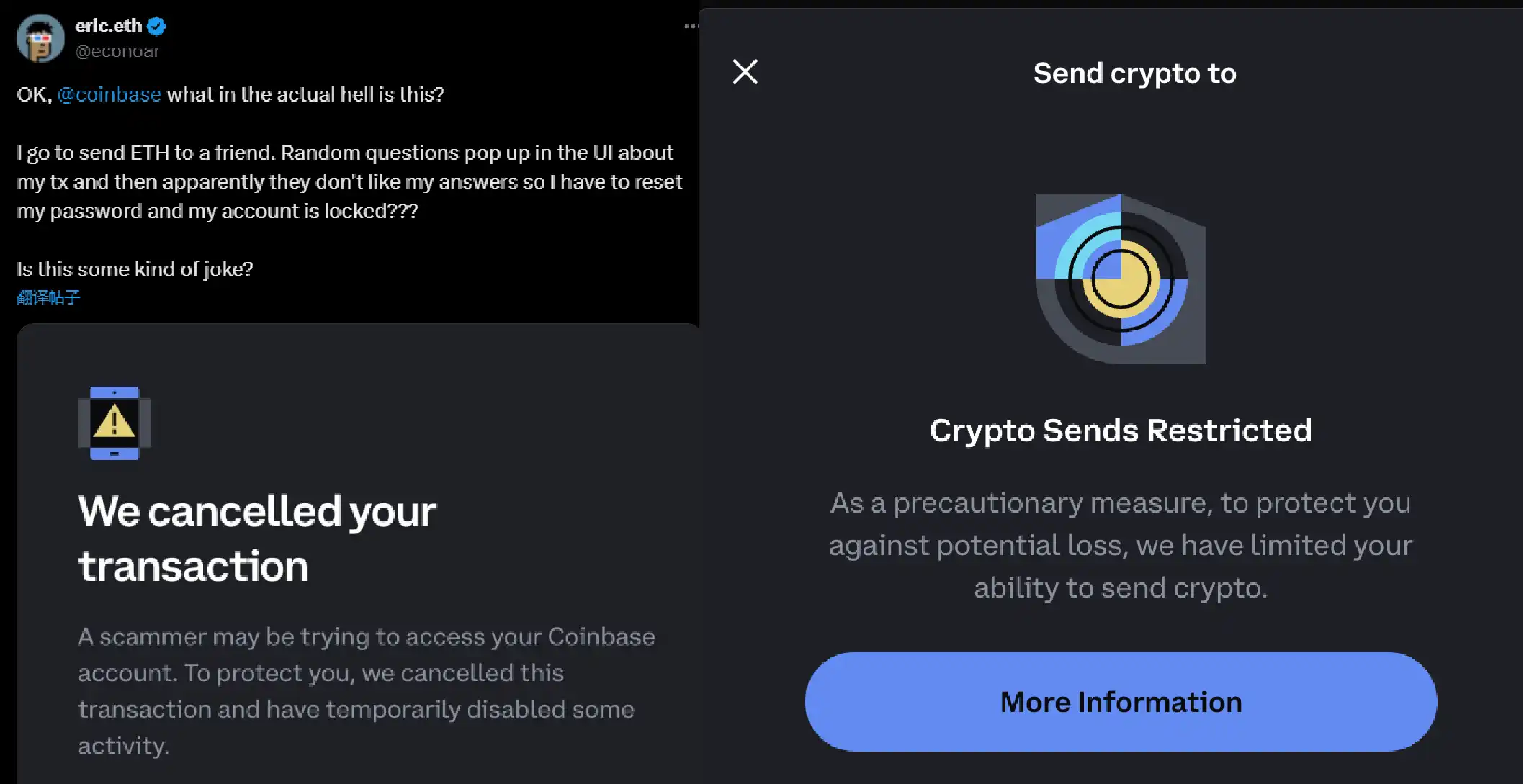
Probably tired of Coinbase for a long time, users have started to complain under eric's tweet. Nansen CEO Alex Svanevik commented: "Welcome to the hell of Coinbase." Management consultant and Ethereum investor "DCinvestor.eth" said: "I suggest not sending funds to an address that doesn't belong to you through Coinbase, just send it to your on-chain wallet first, then send it anywhere you want."

As a non-custodial wallet that claims to give users "full control of private keys", Coinbase Wallet should have a relatively high degree of decentralization. However, this incident has exposed the contradictions in the underlying logic of the platform: while emphasizing user autonomy, it still relies on centralized servers to execute risk control strategies, and directly locks accounts when users fail to pass verification. This measure has undoubtedly attracted widespread attention and discussion in the crypto community - is it Coinbase's over-control, or is the current industry environment forcing trading platforms to strengthen security measures?
One-size-fits-all security measures, account management has long been controversial
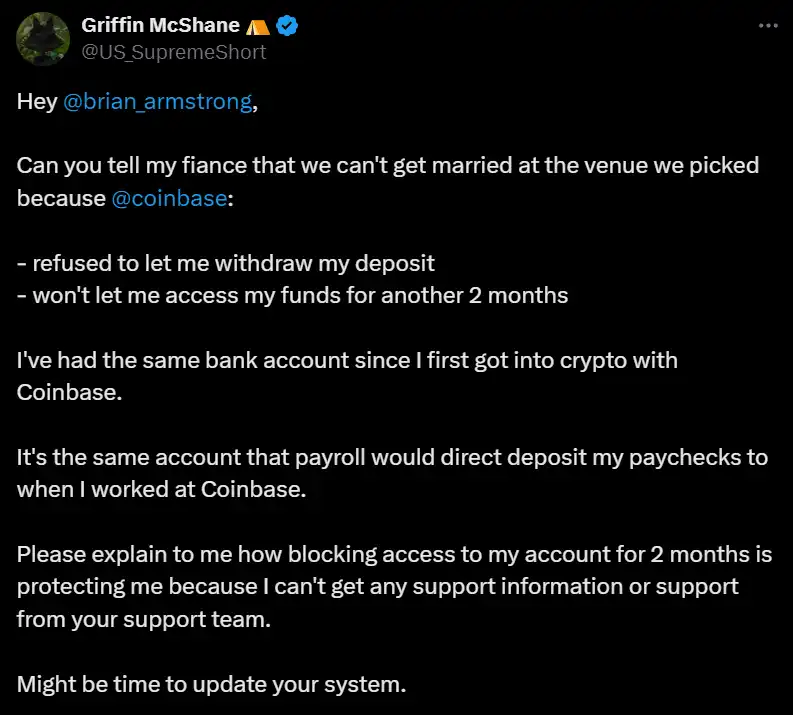
Coinbase's aggressive security strategy is not the first time it has caused controversy. In January 2025, a former Coinbase employee publicly accused his account of being frozen for two months without reason, preventing him from paying for his wedding. He said the account had long been used to receive paychecks and conduct crypto transactions, and there had been no abnormal activity before. However, Coinbase refused to provide specific reasons for the freezing, citing "protecting users", and did not provide an effective appeal channel. This incident quickly escalated, further amplifying market doubts about Coinbase's account management mechanism.
In recent years, Coinbase has adopted a prudent risk control strategy in user account management, and these strict measures can indeed reduce the risk of the exchange being hacked to a certain extent, but the over-reliance on automated risk control systems and the lack of transparency in the operating model have also caused many innocent users to suffer. Especially in the Web3 environment that emphasizes decentralization and self-control, the rationality of this type of centralized risk control measures has been widely criticized.
Vulnerabilities in third-party services may become the weak link in the security chain
Although Coinbase and other trading platforms are constantly strengthening their internal risk control mechanisms, external dependence links may still become the biggest vulnerabilities in the security chain. A typical case is the recent security incident at Binance.
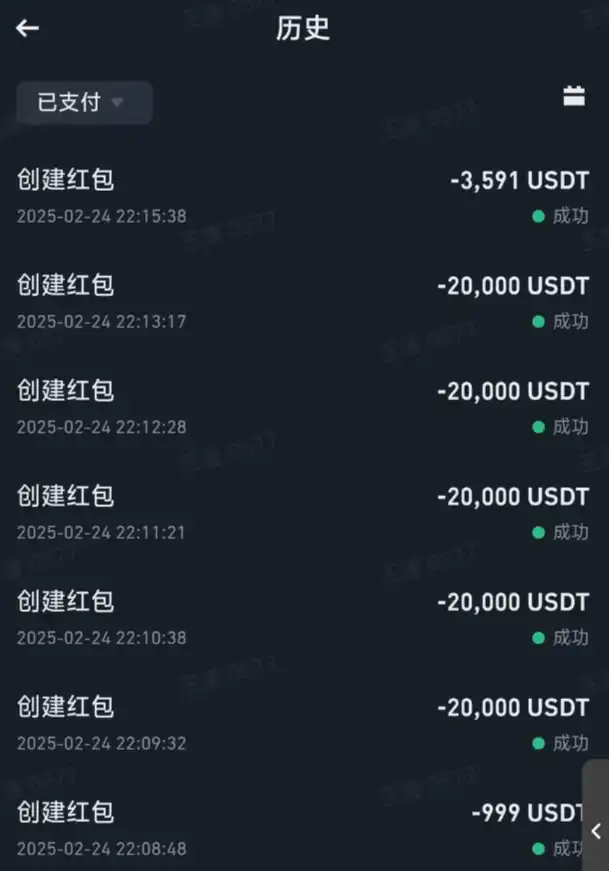
On February 25, a post accusing hackers of transferring assets through red packets was widely retweeted on Twitter, explaining that the user's Binance account, email, and Google authenticator were all hacked by the hackers, and although the hackers could not withdraw normally, even after changing the password, they had to wait 24 hours to withdraw normally, but the Binance red packet function could be used normally, like a bug, allowing hackers to immediately transfer assets through red packets.
Even more worrying is that just one day later, the security company Slowmist CISO 23pd warned on Twitter that users had received "forged Binance official SMS", and the SMS appeared in the same conversation thread as Binance's previous official notifications. This precise imitation attack means that hackers may have penetrated part of the third-party SMS service supply chain, thereby increasing the concealment and success rate of the attack.

In comparison, although Coinbase has not reported similar attack incidents, its recent crypto lending service has experienced delays and performance degradation, indicating that the platform's technical architecture may have potential risks. For exchanges, in addition to strengthening their own system defenses, they also need to improve their security monitoring capabilities for third-party services (such as email, SMS, authenticators, etc.) to prevent external links from becoming the hackers' breakthrough point.
As of the first quarter of 2025, Coinbase's global user base has exceeded 56 million. However, with the rapid expansion of the user scale, the platform's shortcomings in customer support and account management have also gradually exposed.
For a long time, Coinbase has been criticized for its lack of transparency in token review standards, and this extremely cautious attitude towards compliance also seems to be reflected in account management, causing many users to find it difficult to get a clear explanation after being banned. In the case of the former employee's account freezing, users claimed that Coinbase "did not provide effective support for two months", further highlighting the problem of insufficient customer service response.
On the other hand, when dealing with hacker attacks, Binance only suggested that users enable biometric login, without actively taking large-scale inspection measures. This shows that the current security strategies of mainstream exchanges are still biased towards passive defense, rather than active monitoring and risk warning. For users, this means that when encountering account abnormalities, they can only rely on the "goodwill" of the platform, rather than a clear and predictable resolution mechanism.
Whether it is the Coinbase account locking incident or the phishing attack case of Binance users, they have exposed the dilemma faced by current exchanges: over-control will lead to the involvement of innocent users, affecting the trading experience; too lax security strategies may also leave loopholes for hackers to exploit. Against the background of rapid industry development, trading platforms not only need to establish a more sound risk control system, but also need to continuously optimize in terms of transparency, user experience, and customer service response capabilities. Otherwise, when security incidents occur frequently and user trust declines, even the strictest risk control measures will not be able to prevent user loss.
Welcome to join the official BlockBeats community:
Telegram subscription group: https://t.me/theblockbeats
Telegram discussion group: https://t.me/BlockBeats_App
Twitter official account: https://twitter.com/BlockBeatsAsia