Pi Network, which started with "mobile mining", finally opened its mainnet in February after waiting for over six years. However, the core of its network operation — SuperNodes — has sparked increasing controversy.
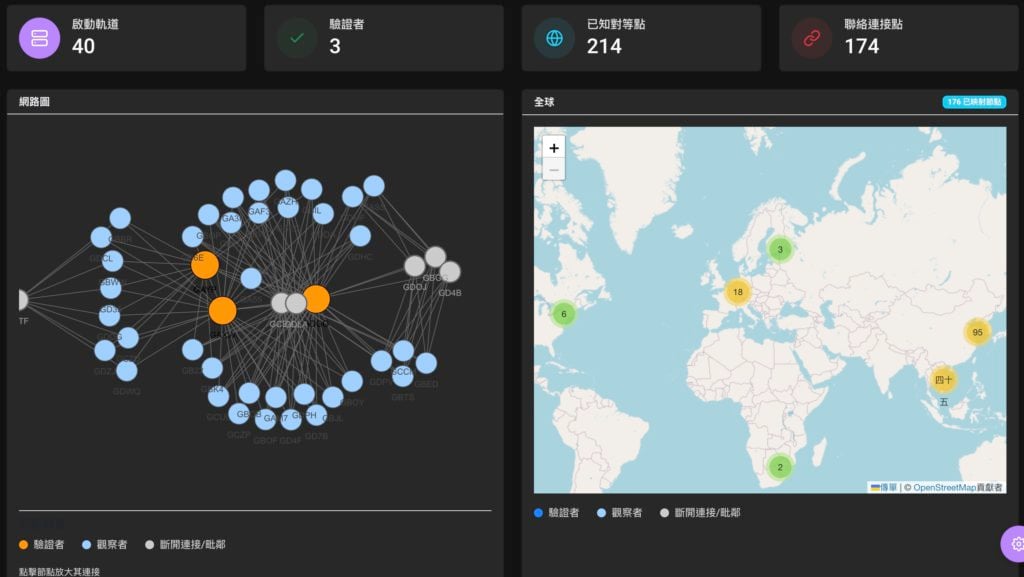
According to official explanations, SuperNodes play a crucial role in Pi Network, responsible for verifying transactions and maintaining the normal operation of the blockchain. Unlike mature blockchains like Bitcoin or Ethereum with thousands of nodes, Pi Network only ran 3 SuperNodes during the testnet phase, all managed by the Pi Core Team (PCT), located in Canada and Finland. This highly centralized configuration goes against the core principle of blockchain decentralization.
Although the number of active nodes has increased to 42 according to Piscan.io's data, the SuperNodes are still only controlled by the official team, and the identity and operation of these active nodes remain unknown to the outside world. This has raised concerns in the community about whether the increase in node numbers truly represents decentralization or is merely a symbolic gesture by the Pi Core Team.
Pioneers Unable to Participate? Reward Mechanism Unclear
Originally, PCT claimed to have expanded the role of SuperNodes to the Pioneer community (Pi coin community refers to users as Pioneers). However, the standards for becoming a SuperNode remain unknown, with no public list of SuperNode candidates or detailed reports on approved Pioneer numbers, making it difficult for ordinary Pioneers to understand how to participate.
On the other hand, some Pioneers have reported that even after running nodes for months, they have not received any rewards. A Reddit user posted in February that their node has been active for months but received no compensation.

This has raised deeper questions: Do ordinary Pioneers have a chance to become SuperNodes? Or is this process limited to a few with insider information or resources? Moreover, if powerful hardware is required to run SuperNodes, most users would be excluded, which seems contradictory to Pi Network's vision of "easy mobile mining".
Pi Network's Future: Transparency is Key
The current implementation of SuperNodes contradicts the project's decentralization commitment. With many technical and development details not clearly explained to the community, if Pi Network truly wants to develop into the decentralized and fair cryptocurrency ecosystem it aspires to be, transparency will be crucial in gaining user trust.
Pi Drops Below 1 USD
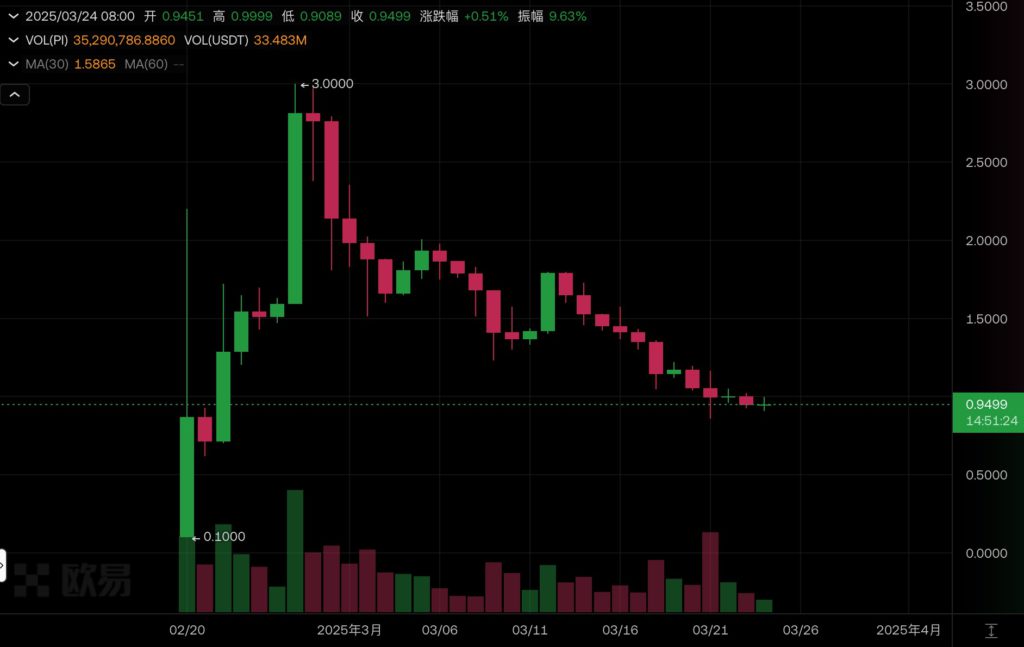
In the fierce competition among public chains, gaining a foothold is already challenging, especially with the long-standing heated debates surrounding Pi Network. According to OKX spot market data, PI coin touched 3 USD in late February but has been continuously declining, currently at 0.9499 USD, a drop of over 66% from its historical high, with no clear bottom in sight.