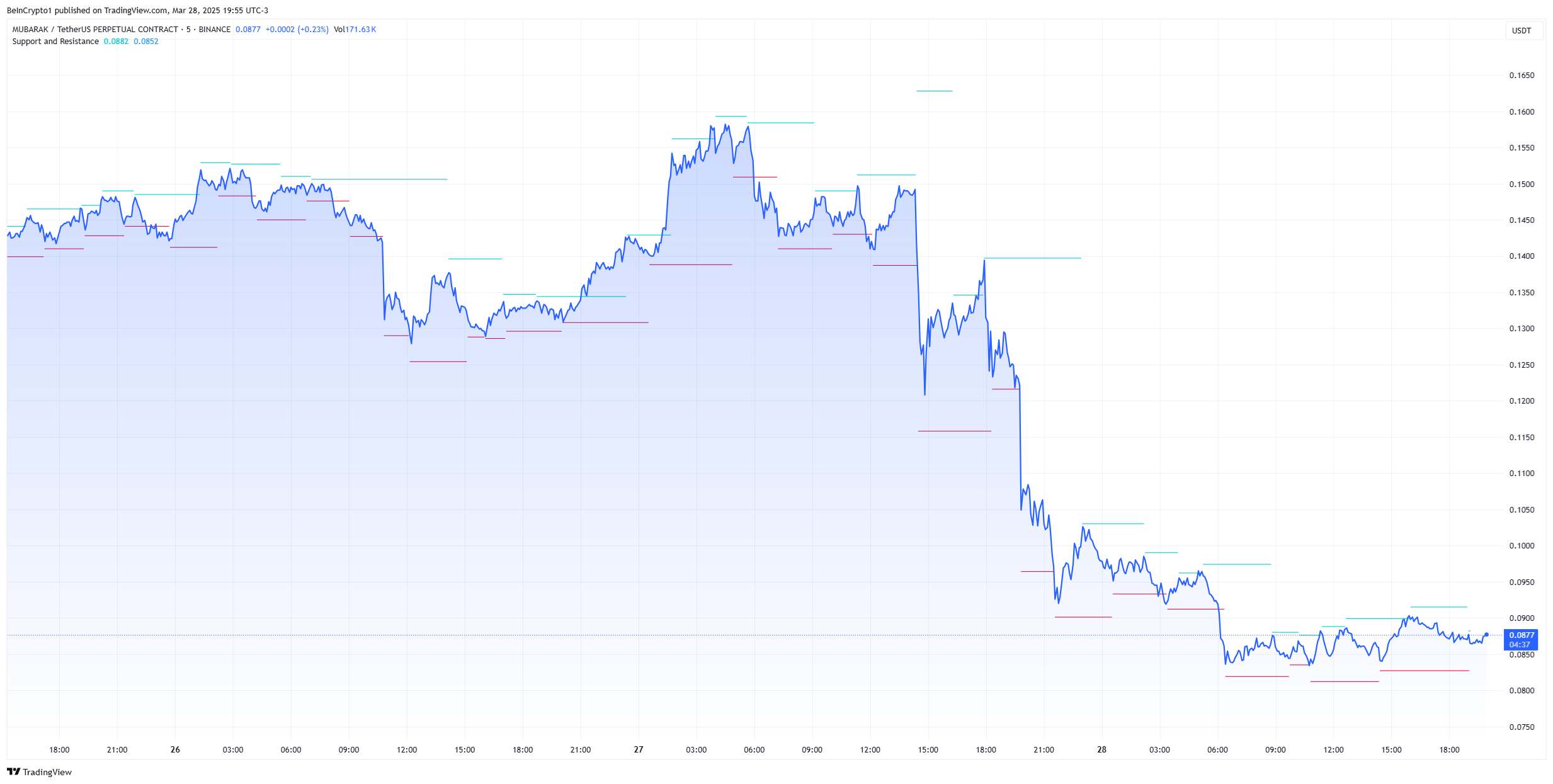
After listing on Binance, MUBARAK's 40% sharp decline has reignited debates about centralized exchange listing practices and the overall state of the meme coin ecosystem.
This occurred amid growing concerns about structural risks, as recent speculative meme coin launches like JELLY have caused short-term buying pressure and dampened HYPE.
MUBARAK, Community CEX Listing Discussion
MUBARAK's decline dropped 40% after Binance listing, raising concerns again about the recent listing quality of centralized exchanges. Binance recently concluded its first listing vote, with BROCCOLI and Tutorial surging.
Critics argue that these events weaken trust in DeFi and CEX platforms. While meme coins dominate headlines, more stable cryptocurrency sectors struggle to gain attention.
Nevertheless, some platforms like Pump.fun are introducing innovative features such as token burning and revenue sharing to guide meme coins toward a more sustainable future.
These concerns have grown following the listing of speculative meme coins like JELLY, including BNB chain tokens on Binance.
Binance founder Changpeng Zhao (CZ) responded to these criticisms, stating that token listings should not determine long-term price behavior.
Listings can provide liquidity and improve market accessibility, but CZ emphasized that price impact should be short-term. Long-term token value should reflect actual fundamental factors like team commitment, development activity, and network performance.
Despite this, as the community demands more transparency, Binance Alpha continues to list controversial tokens, including two Studio Ghibli-themed meme coins.
Hyperliquid Crisis Questioning Meme Coins
MUBARAK's decline was not the only crisis in the meme coin ecosystem this week. HYPE sharply dropped after JELLY's short-term buying pressure, sparking widespread speculation about the role of Hyperliquid and meme coins in the cryptocurrency ecosystem.
Some users questioned whether this could be the beginning of an FTX-style collapse. Concerns are growing about uncontrolled volatility associated with meme coin derivatives.
The JELLY controversy raised debates about the vulnerabilities of emerging platforms and whether sufficient safeguards exist to prevent systemic collapse from meme-driven market events. In response to the backlash, Hyperliquid announced it would strengthen security measures to prevent similar incidents.
Jean Rausis, co-founder of decentralized finance ecosystem SmarDex, told BeInCrypto that the DeFi ecosystem must consider the image it sends to the market:
"If DeFi wants to be adopted, the ecosystem must gain trust not only from existing users but also in terms of the image shown in the news. And as projects are incorrectly labeled 'decentralized', more such incidents will occur."
Sectors Like RWA Help Grow Crypto Credibility
Kevin Rusher, founder of decentralized lending protocol RAAC, described the situation as a significant blow to DeFi's credibility. "This is another obstacle to DeFi adoption, but not surprising," he said, noting that meme coins are reigniting retail investor greed and drawing liquidity from more sustainable ecosystem sectors.
He warned that tokens like TRUMP and MELANIA attracted too much attention during recent market surges, making DeFi vulnerable to speculative chaos.
Nevertheless, Rusher pointed to the increasing participation of institutions like BlackRock as a hopeful sign:
"But large players like BlackRock seem to understand the need for cryptocurrency stability. That's why they're now seriously focusing on tokenizing real-world assets (RWA). Unfortunately, meme coins will likely continue to exist and be a significant short-term obstacle to DeFi growth. However, as RWA brings massive liquidity from traditional finance into the system, this sector will finally have the opportunity to grow without meme coin trends endangering the entire ecosystem." – Rusher told BeInCrypto.
More Innovation Reigniting Meme Coin Interest?
In a recent Bankless conversation, Pump.fun co-founder Alon Cohen shared insights into the meme coin market, emphasizing Pump.fun's 4Chan-inspired aesthetics, bonding curve price model, and new creator-centric initiatives.
Pump.fun has generated over 8.8 million tokens and peaked at daily revenues of $14 million, totaling $600 million since launch.
Alon emphasized that while the meme coin market dropped about 49% from its December 2024 peak of $125 billion, Pump.fun remains committed to supporting creative and community-centered projects.
To enhance long-term sustainability, the team is now introducing revenue-sharing mechanisms for token creators, transparent fee structures, and token burning features to reduce the exploitative nature of meme coin launches.
These new mechanisms could attract more buyers and potentially give rise to a new generation of meme coin traders in an attempt to make the ecosystem more sustainable.