Written by: TechFlow
The crypto market is always an attention-driven battlefield, and projects in new trends often hide the greatest opportunities.
At the beginning of this year, the most obvious trend was the accelerated entry of institutional investors and "Made in America":
As of early 2025, institutions already hold approximately 15% of the Bitcoin supply, and nearly half of hedge funds have begun to allocate digital assets. Presidential legislation, the launch of the US Bitcoin ETF, and the craze for RWA (real world assets) on-chain have further fueled the trend.
When "institutional-level on-chain finance" gradually becomes a rigid demand, both from a narrative and product perspective, it needs to have both traditional financial performance and the support of decentralized infrastructure.
In this context, suitable new infrastructure projects have become the new engine for finding Alpha.
Recently, a project called Fogo has attracted our attention; from public information, it seems to meet all of the above conditions.
A TL;DR version is:
In short, for readers who are not proficient in technology, you only need to know that Fogo is a new L1 with better performance and rich resources and endorsements.
What’s more important is the Flames Program activity mentioned above. After all, this is the focus of everyone’s attention.
Therefore, this article will first provide a complete guide and introduction on how to participate in Fogo's Flames Program, and then provide a more in-depth interpretation of the Fogo chain.
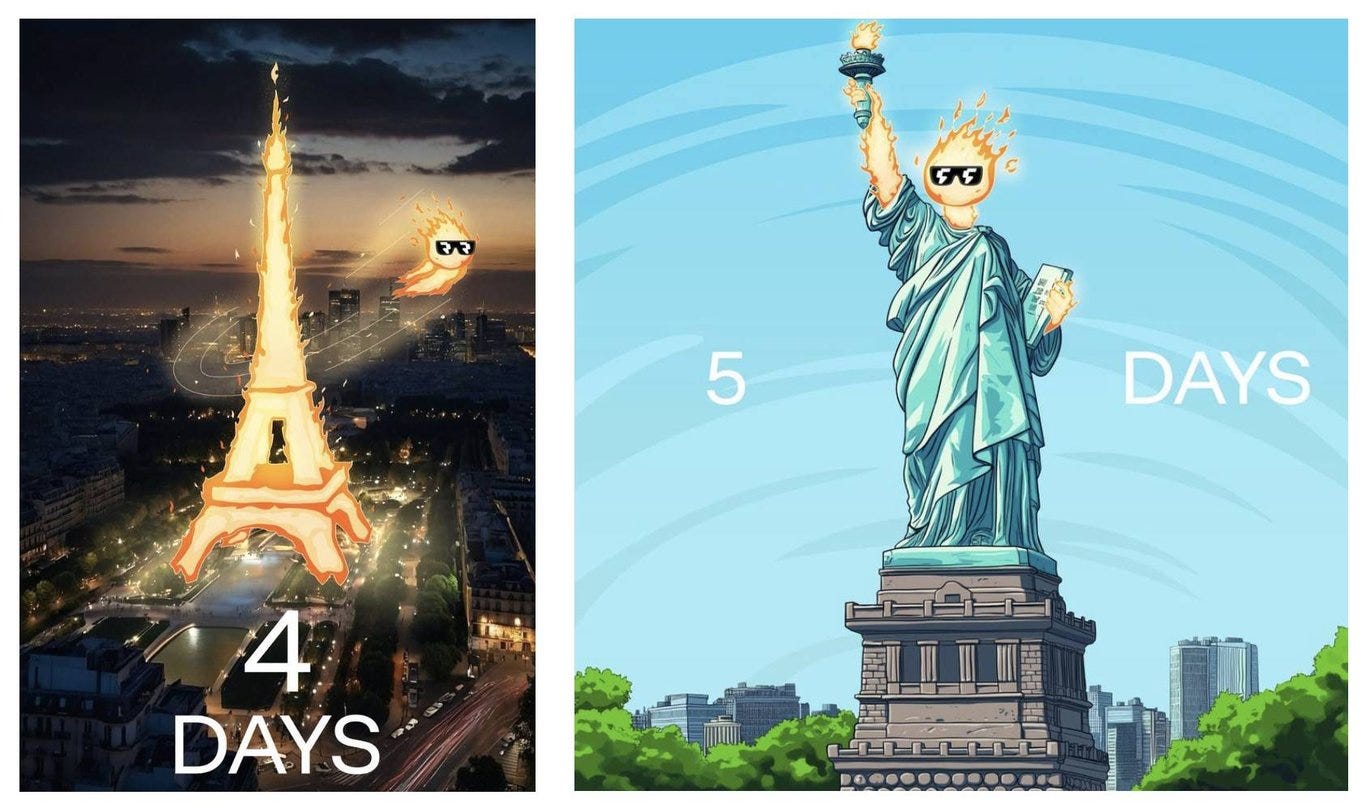
Previously, Fogo’s Official Twitter had been conducting a countdown warm-up, and it can be seen that the project team had made sufficient marketing preparations for the event.
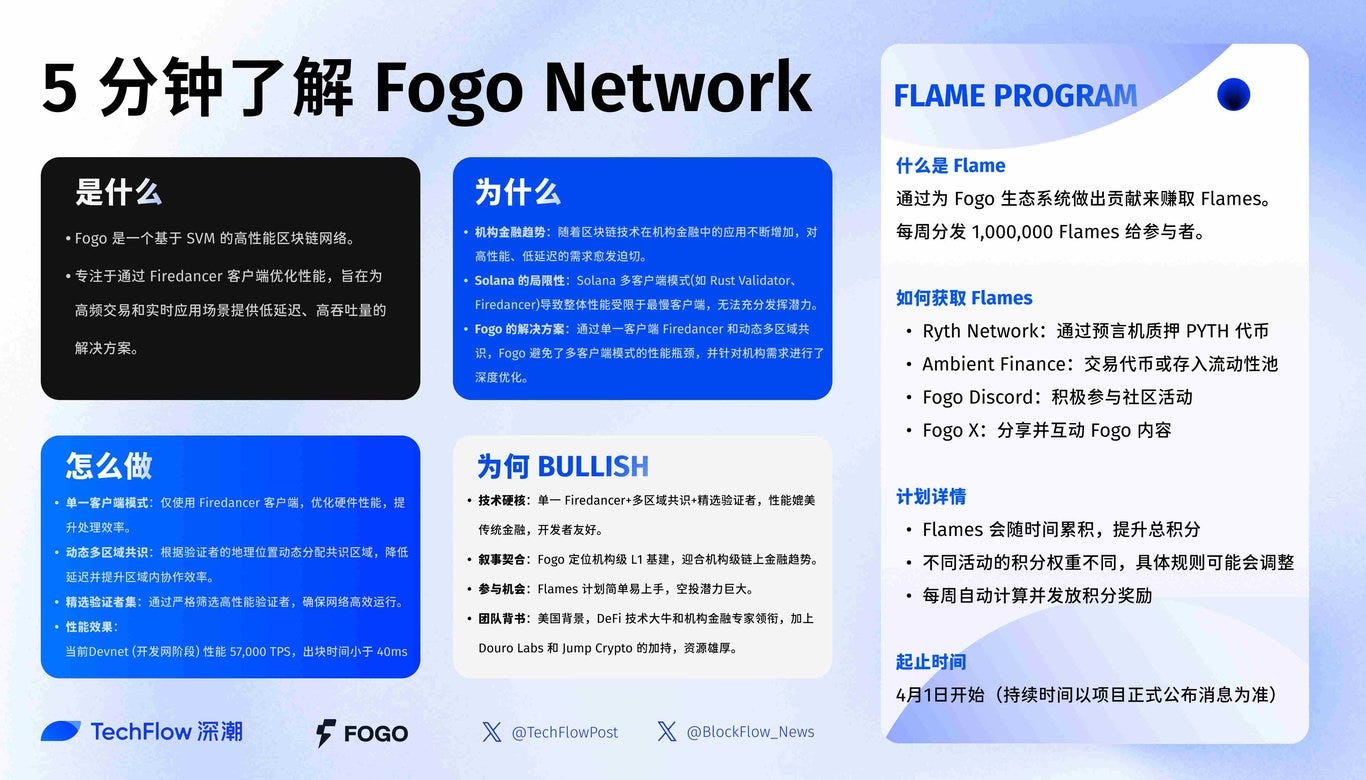
Flames Program is an ecological incentive program launched by Fogo, which aims to promote the early development of the Fogo ecosystem by rewarding users for their active participation.
From the name, "Flames" is the continuous naming of the Firedancer client, symbolizing the vitality and power within the ecosystem. According to official information, Flames is a form of points, which may be exchanged for Fogo tokens or other ecological rewards in the future.
Every week, Fogo will distribute 1,000,000 Flames to participants to reward those who contribute to the ecosystem. These contributions include interactions with ecosystem partners and activeness on official social channels.
Early user bonus : As an early activity launched by Fogo, the Flames Program provides users with an opportunity to participate with a low threshold and accumulate ecological points. History shows that users who participate in similar activities early on are often able to obtain excess returns, such as airdrops, priority rights, etc.
Future potential : Although Fogo's tokens have not yet been announced, it is foreseeable that Flames, as ecological points, will likely increase in value as the ecosystem develops. Participating in the event can not only seize the opportunity for future token airdrops, but also deeply participate in Fogo's ecological construction.
Diverse ways to participate : Whether you are a DeFi user, a social media activist, or a blockchain novice, you can find a way to participate that suits you.
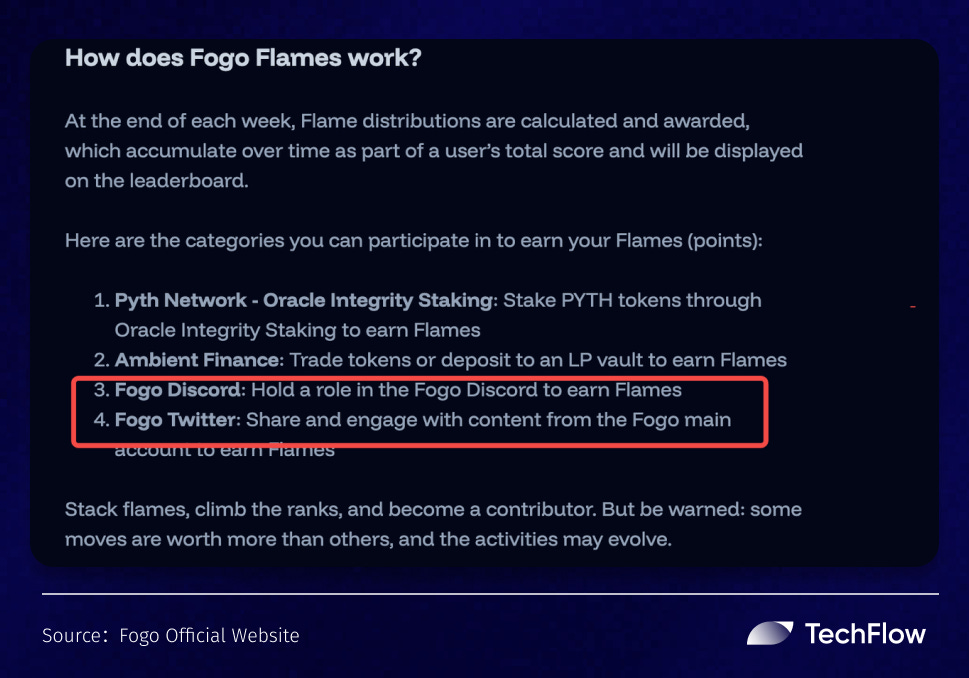
According to official information, the main ways to participate in the Flames Program are currently divided into two categories: interaction with ecological cooperation projects and active behavior on official social media .
Eco-cooperation project interaction
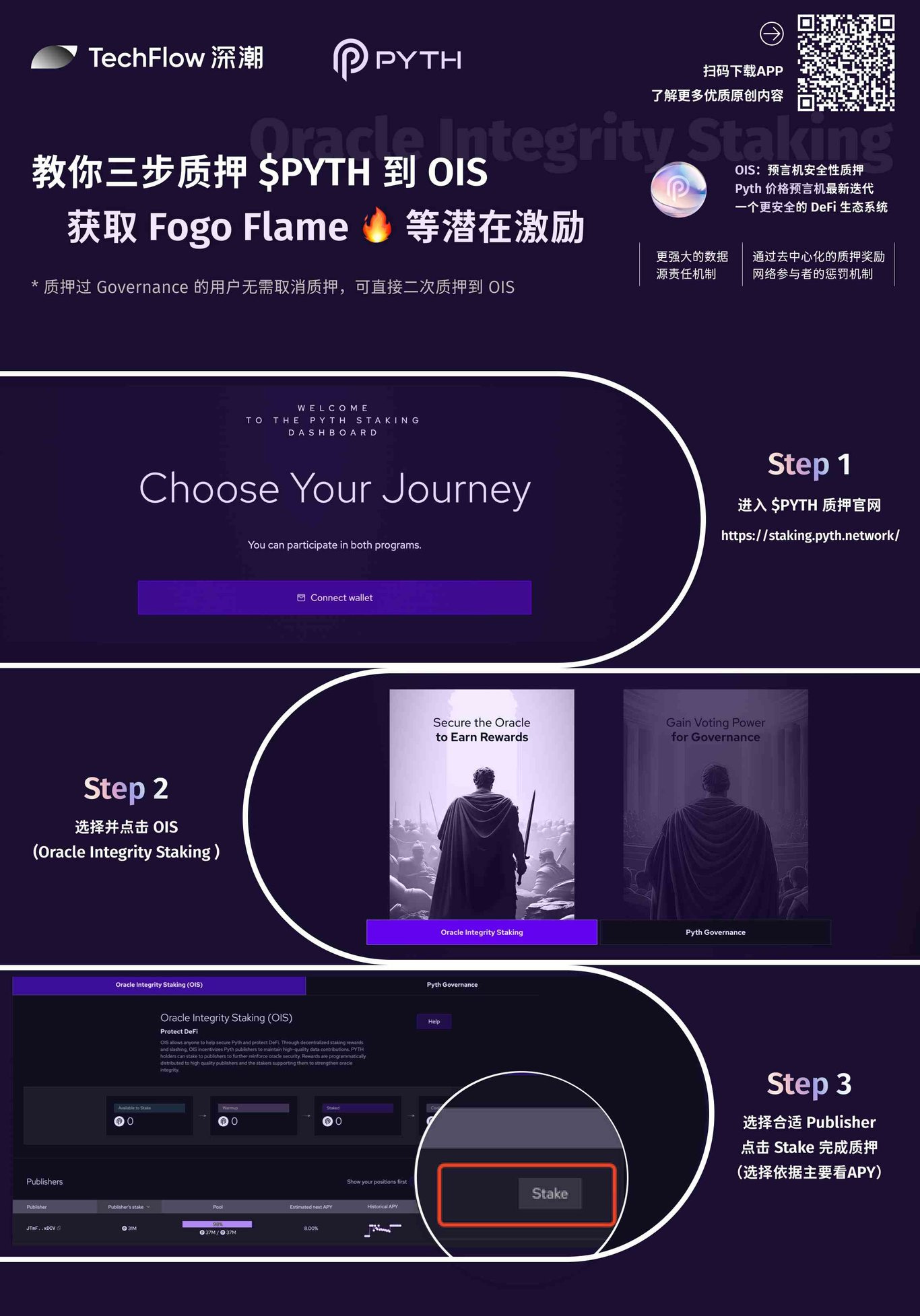
Stake PYTH tokens through Oracle Integrity Staking (OIS). Users can participate in staking on the Pyth official website staking page ( link ).
It should be noted that Pyth currently provides two staking methods.
For first-time players, when entering the staking page, be sure to select the OIS (Oracle Integrity Staking) mode instead of the Pyth Governance mode to prevent the situation where you stake tokens but are not eligible for the event.
In addition, if you have previously staked tokens in the Pyth Governance mode, you can participate in OIS directly without unlocking or re-staking; similarly, if your tokens have been staked in the Governance mode before the launch of OIS, you can also participate in OIS directly without withdrawing your tokens.
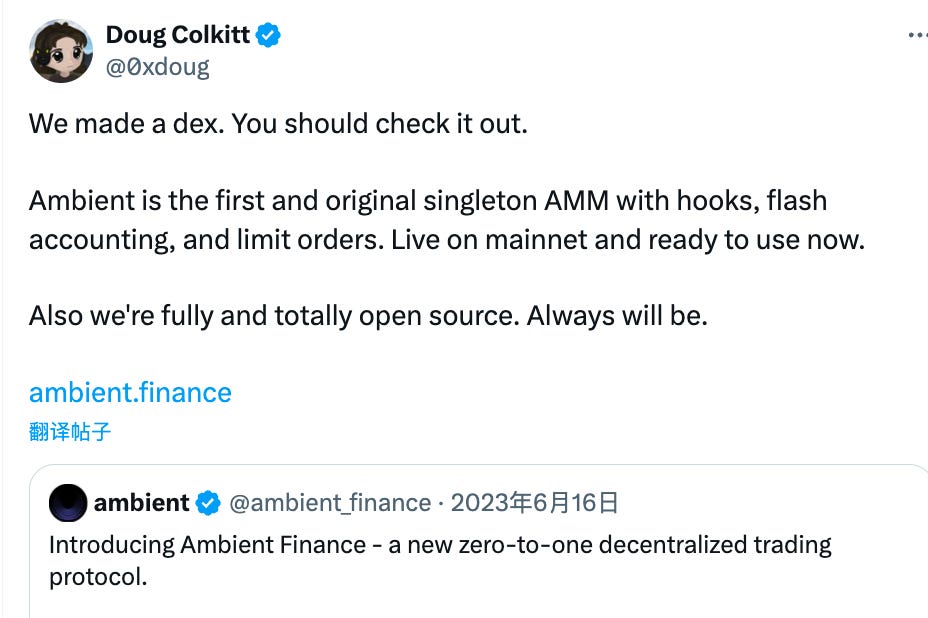
Ambient (formerly CrocSwap) is a decentralized trading protocol that allows for the combination of bilateral AMMs with centralized and constant product liquidity on any pair of blockchain assets.
Its founder Doug is also the co-founder of Fogo, so it makes sense that participating in this project will earn Fogo points.
In practice, you can trade tokens on the Ambient Finance platform or deposit tokens into liquidity pools (LP Vaults). Such interactions can not only help you earn Flames, but also familiarize you with DeFi-related cooperation projects in the Fogo ecosystem.
Official social media active behavior
Points accumulation : Flames will accumulate over time to form your total points. Rewards are calculated and automatically distributed every week based on the user's contribution.
Points weighting : Points have different values for different activities, e.g. staking PYTH tokens may earn more points than simple social media interactions.
Dynamic adjustment of activities : The official may adjust the activity rules according to the development of the ecosystem, such as adding or optimizing participation methods.
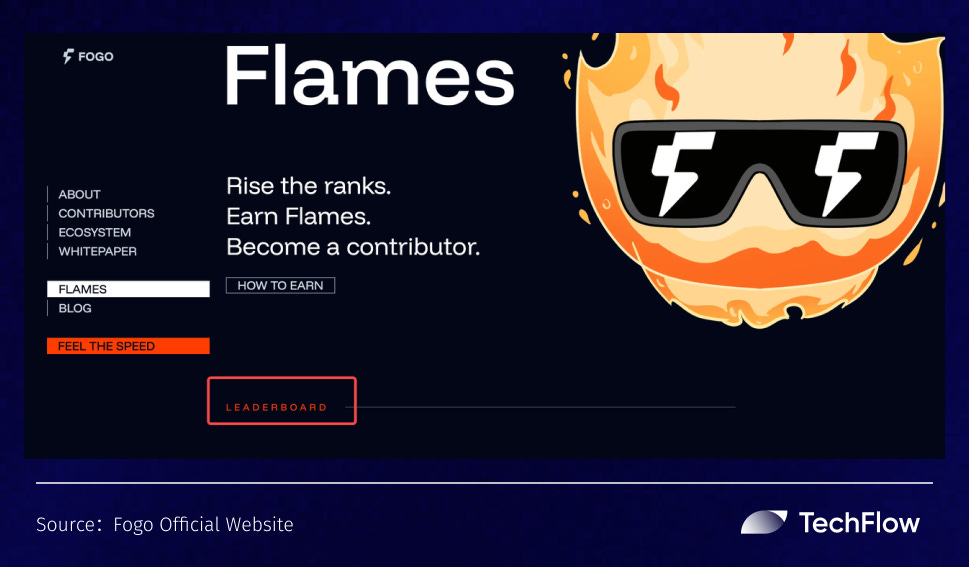
Leaderboard tracking : Users can check their points ranking through the official leaderboard , as shown below.
If you are interested in Fogo's technology and products in addition to participating in the event, the following is a popular explanation we summarized after studying Fogo to help you quickly understand Fogo.
The official definition of Fogo is this: “Fogo is an SVM chain running the Firedancer client, designed to enable real-time experiences at scale.”
This sentence may seem simple, but behind it lies a huge ambition for blockchain performance optimization.
To understand the true meaning of Fogo, we need to first understand two key technical concepts - SVM and Firedancer .
We try to make technical concepts as popular as possible. For most readers, it is more important to understand the effects that can be achieved behind the technology.
Solana Virtual Machine is the core operating environment of the Solana network and can be understood as its "operating system". All smart contracts and applications running on Solana are executed through SVM.
Key points: Fogo’s choice of SVM means that it inherits Solana’s technical ecosystem, allowing developers to seamlessly migrate existing applications to Fogo.
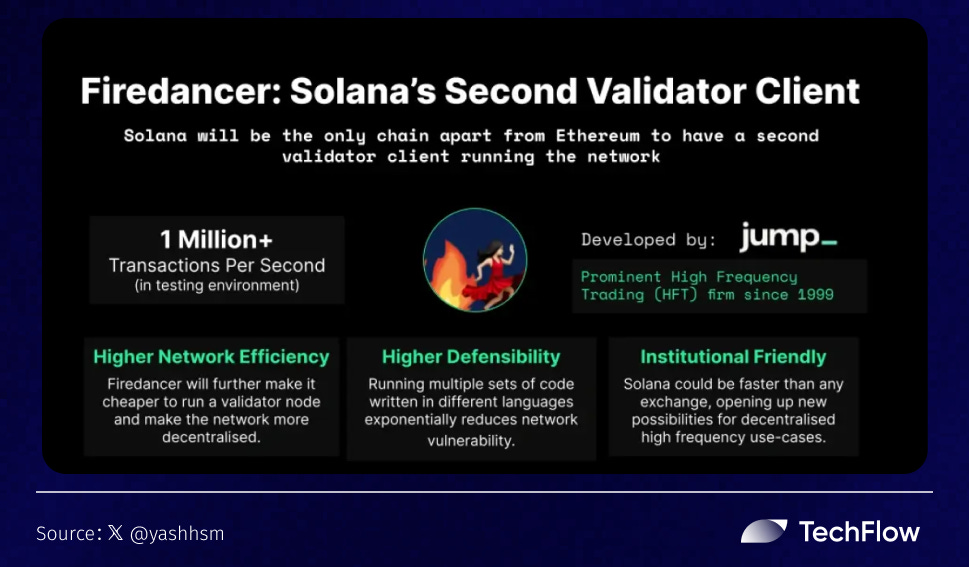
Firedancer is a high-performance client developed by Jump Crypto specifically for Solana. Its goal is to make the Solana network run faster and more stable.
You may have heard about Solana’s Firedancer upgrade, which makes it easier to run nodes by reducing the hardware requirements for validators.
Speed, reduced costs, and greater resilience make them key factors in solving Solana’s scaling problem. Firedancer’s mission is to bring the performance of the Solana network close to that of traditional financial systems, such as NASDAQ, which processes 100,000 transactions per second.
However, as of now, the Firedancer upgrade has not been fully implemented on Solana.
Since Solana has the Firedancer upgrade, which is expected to be faster and better after implementation, why is it necessary to create a new Fogo?
However, the problem remains: even if Firedancer is faster, it cannot change one reality - Solana's multi-client model means that the network speed is limited by the slowest node, and not all validators can switch to Firedancer immediately.
As Fogo co-founder Doug Colkitt puts it: “It’s like owning a Ferrari and driving it in New York City traffic.”
Firedancer is like a Ferrari, but there are other factors causing congestion on Solana.
So the solution became to build a dedicated highway for Ferrari.
Rather than letting Firedancer be dragged down, it is better to give it a dedicated stage. The birth of Fogo is precisely to maximize the potential of Firedancer. After all, everyone can use the same client from the beginning.
Therefore, as an independent new L1, Fogo is no longer restricted to the multi-client mode, nor does it need to worry about whether the existing verification nodes will update the client (it is originally created from scratch). Instead, it completely unleashes the performance of Firedancer through a unified client and innovative design.
Why is single client mode better?
When blockchain networks approach the physical limits of hardware and network performance, differences between different client implementations can lead to performance bottlenecks.
Therefore, Fogo has been a "pure-blooded" Firedancer from the very beginning, without the need for a "major blood change".
3. Agreed, so how does Fogo do it?
Fogo’s primary innovation is the choice of Firedancer as the only standard client, completely eliminating the performance bottleneck that may be caused by Solana’s multi-client mode.
To describe it in one sentence:
“Use only the fastest clients to keep the network at peak performance levels.”
If you don't know Firedancer, you only need to roughly know the benefits it brings. The first is parallel processing, that is, processing multiple transactions at the same time, significantly improving throughput; the second is memory optimization, which allows the hardware where the node is located to use storage and other resources more efficiently and reduce the delay caused by the transaction. It is worth mentioning that Firedancer is more focused on hardware, such as directly optimizing the interaction between nodes and physical devices, further compressing transaction processing time.
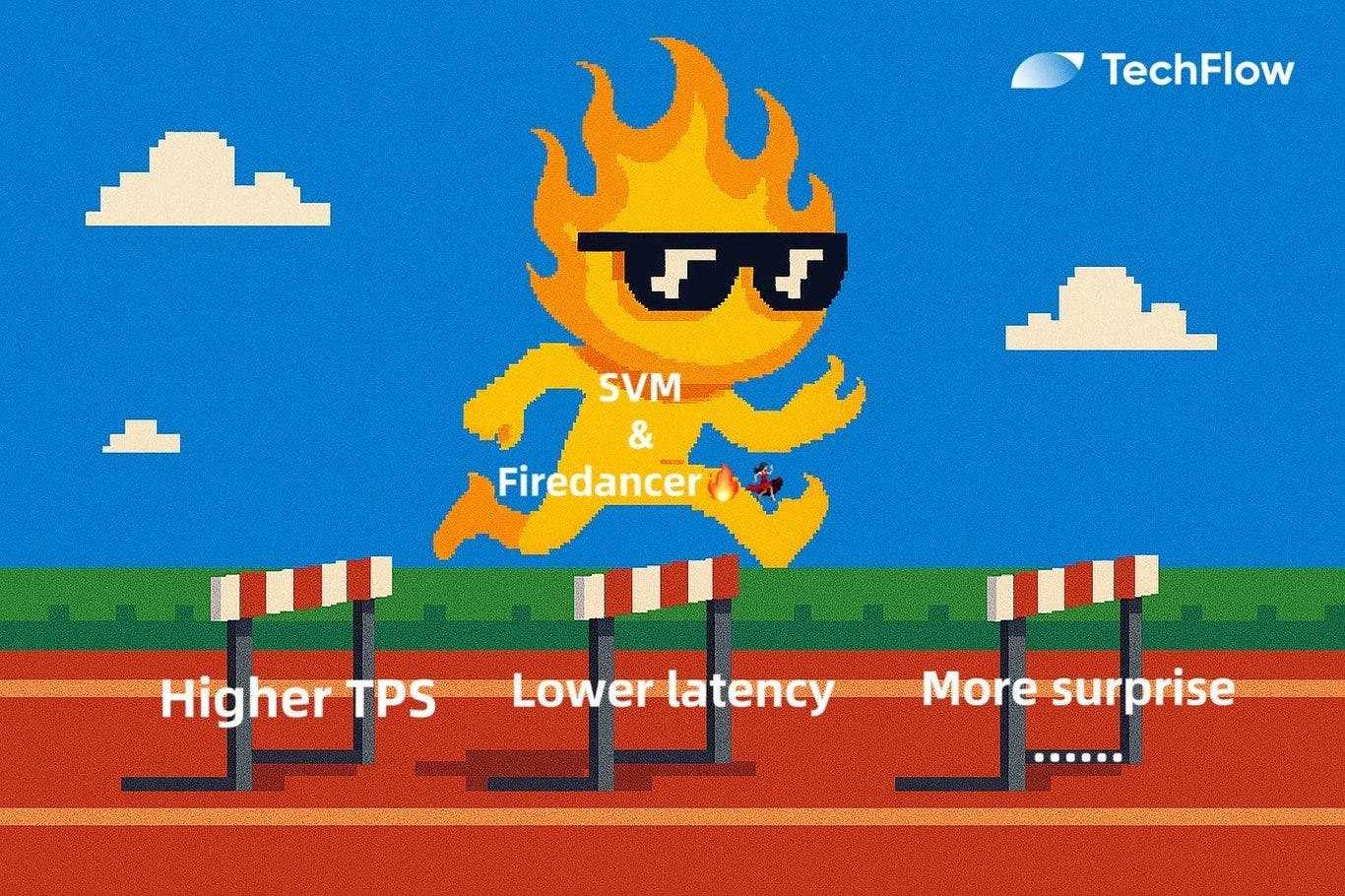
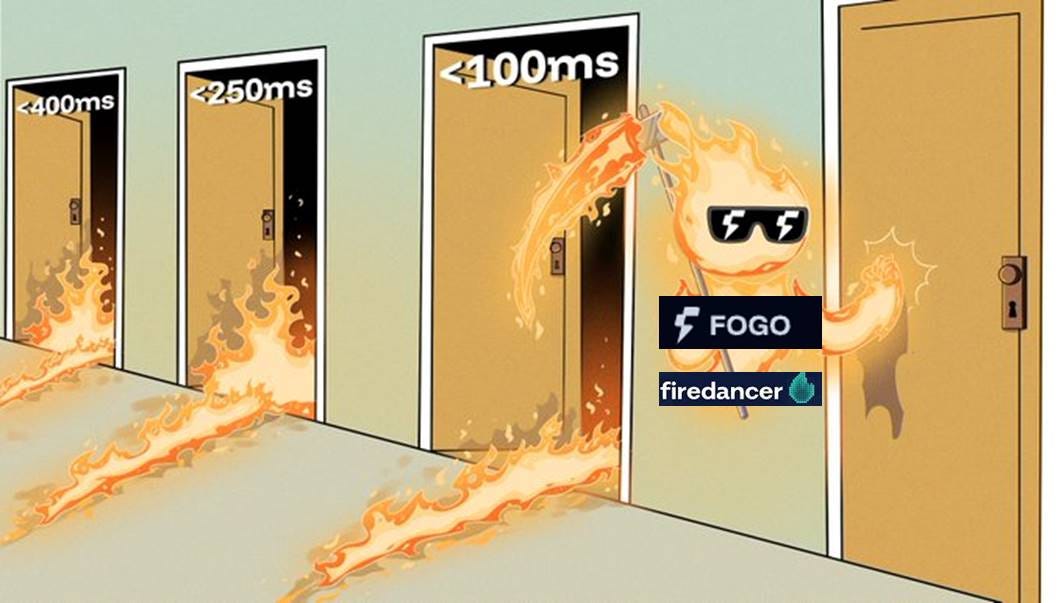
The following meme picture well demonstrates the latency reduction brought about by performance optimization.
Another core innovation of Fogo is the introduction of a multi-region consensus mechanism .
This mechanism dynamically optimizes the collaboration mode according to the validator's geographic location, achieving ultra-low latency consensus while retaining the security features of global consensus.
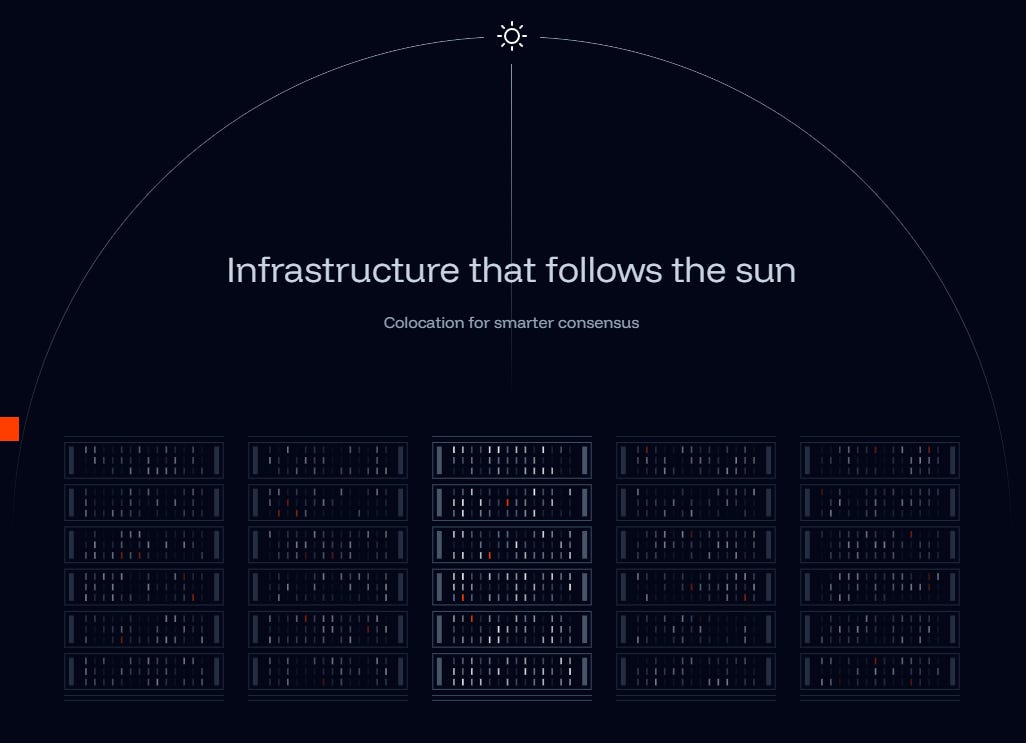
The official consensus mechanism is called "Follow the Sun" . Specifically, it means that the verification nodes will be dynamically adjusted according to the active time of the global trading zone.
This metaphor means that when the sun rises, it usually corresponds to a period of high transaction volume in a certain area, and verification activity will be concentrated in that area. This mechanism ensures that the allocation of verification resources can match the rhythm of global transaction activity, thereby improving the overall efficiency of the network.
We can simply describe this consensus principle as follows:
First, validators are assigned to specific “consensus areas” based on their geographic location, and validators within the area achieve low-latency consensus through close collaboration.
Second, when special circumstances occur, such as regional consensus failure, the network will automatically switch to global consensus mode to ensure network stability.
At the same time, taking into account realistic factors, by rotating regions, we can avoid long-term control of the network by a certain jurisdiction and enhance anti-censorship capabilities; we can also avoid network interruptions caused by natural disasters or data center failures.
Finally, in the selection of validators, in order to ensure the high performance and stability of the network, Fogo adopts a strategy of selecting a set of validators , strictly screening validators, and promoting efficient operation of the network through economic incentive mechanisms.
So what are the screening criteria?
The first is the economic standard. Validators need to meet the minimum staking requirements to ensure that they have enough economic "chips".
Secondly, the hardware standard. The validator must also prove that it has high-performance hardware and network capabilities to support the operation requirements of the Fogo network.
In terms of economic incentives, validators will receive higher returns by using high-performance clients (i.e., Firedancer). The network's dynamic block time and size parameters will create economic pressure on validators, prompting them to choose the fastest client and keep it running efficiently. If a validator fails to meet performance requirements, it may face economic penalties or be expelled from the validator set.
The benefit of this design is that it can prevent low-performance nodes from dragging down the overall performance of the network. Through the self-optimization of validators, the entire network can be driven towards a more efficient and stable direction.
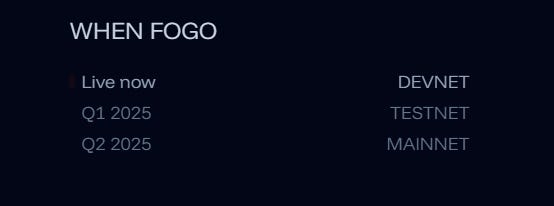
Currently, Fogo is in the development network stage and is about to enter the test network stage, which also means that more people can participate in the interaction of the network.
Public data shows that Fogo's development network (Devnet) can currently achieve 57,000 TPS and a block time of less than 40ms; the test network and mainnet data need further observation.
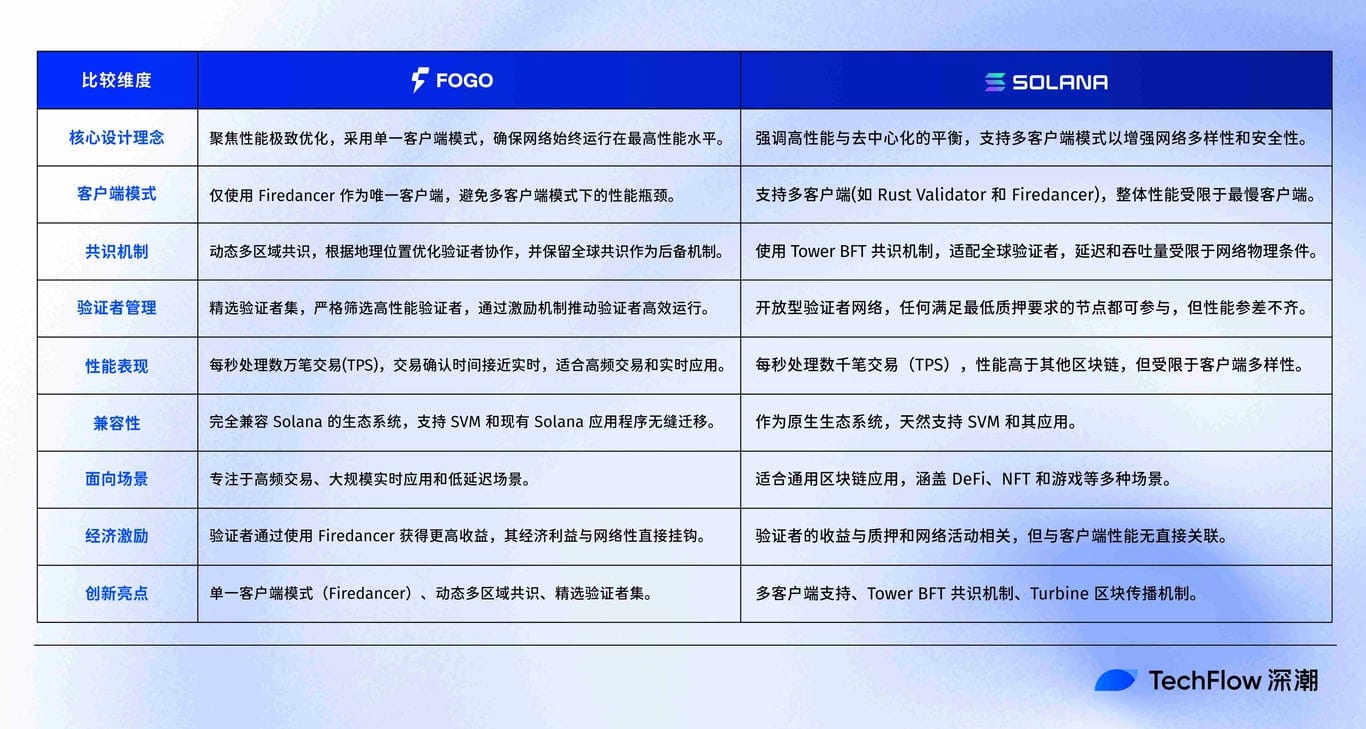
Finally, for the convenience of comparison, we can use a table to illustrate the similarities and differences between Fogo and Solana:
Obviously, there are many high-performance L1s on the market. Why does Fogo have a place in this competition?
From the perspective of the interests of ordinary players, do we have more reasons to pay attention to this project?
Perhaps we can start from the three aspects of market trends, the project’s own team and the resources that can be connected, to analyze in more depth whether Fogo is worthy of our in-depth participation.
Institutional blockchain has become a key trend in 2025, especially in the US market. This wave is driven by US narratives (such as Trump's crypto-friendly policies) and the participation of old money (such as hedge funds allocating digital assets).
RWA Tokenization (real-world assets on the chain) such as real estate and bonds, has tripled its total market value in the past 12 months, showing institutional interest in on-chain finance.
However, existing blockchain solutions (such as Solana) are limited by the global consensus mechanism and have high transaction latency, making it difficult to meet the needs of institutions for a low-latency environment.
For example, high-frequency trading requires microsecond execution speeds, while the block time of traditional blockchains is usually above hundreds of milliseconds.
Through the Firedancer client and multi-zone consensus mechanism, Fogo attempts to achieve faster throughput and lower block latency, ultimately approaching the performance level of traditional financial systems (such as Nasdaq's 100,000 transactions per second).
Since Fogo is positioned as “enabling on-chain institutional-grade finance”, its narrative is also suitable for application scenarios such as stablecoins (such as USDC) and US Treasury bonds.
The trend is there, but we also have to ensure that people are in the trend.
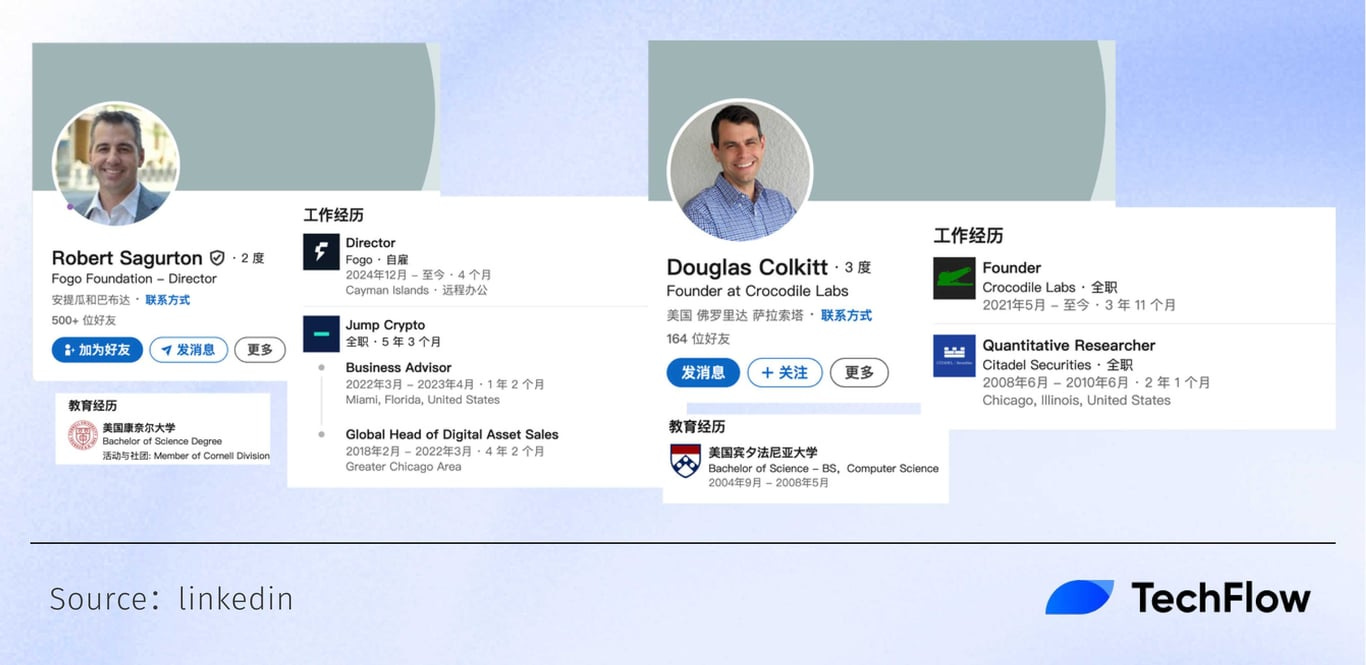
Both of Fogo’s co-founders have a taste of deep American roots.
Co-founder Douglas is a technical expert in the DeFi field. He has developed trading systems at Goldman Sachs and often actively shares insights on X.
By looking through past posts , we can find that Douglas is quite knowledgeable about products in the industry such as DEX and perpetual contracts, and even designed a DEX called ambient.
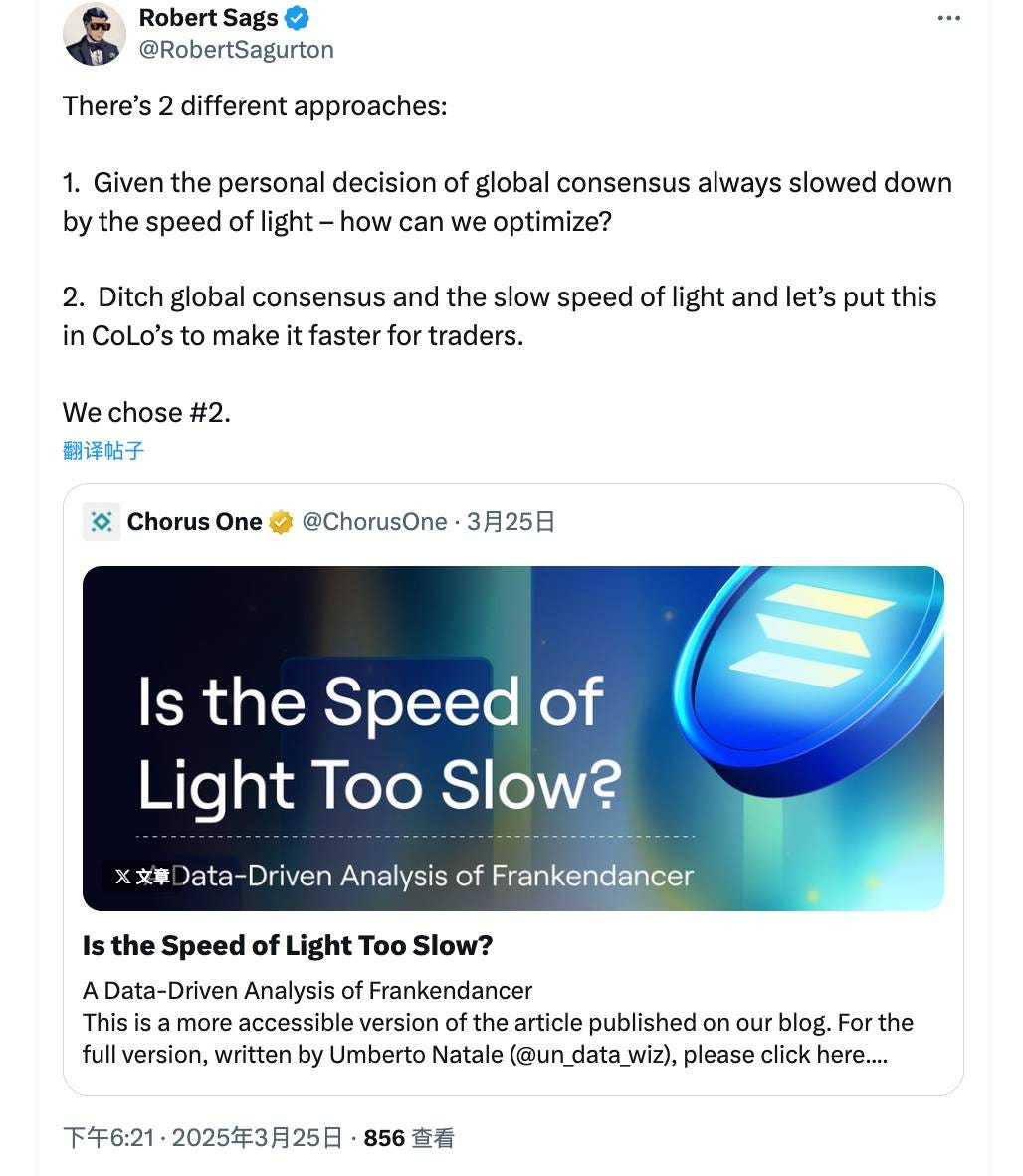
Another co-founder, Robert, previously worked at Jump Crypto and has extensive experience in institutional finance. He also had direct insights into the design of the Firedancer client.
Since Fogo is a new L1 based on the Firedancer client, it can be said to be a complete professional match in this respect, or it can be said that Jump's design experience has been directly poured into Fogo.
Notably, Fogo is backed by Douro Labs, the developer of the Pyth oracle network, which provides real-time financial data, primarily for DeFi and institutional applications.
Naturally, Pyth is also closely related to Jump Crypto, the developer of the Fogo technology stack (Firedancer), which has strong resources and technical endorsement. This gives Fogo a competitive advantage in both technology and finance.
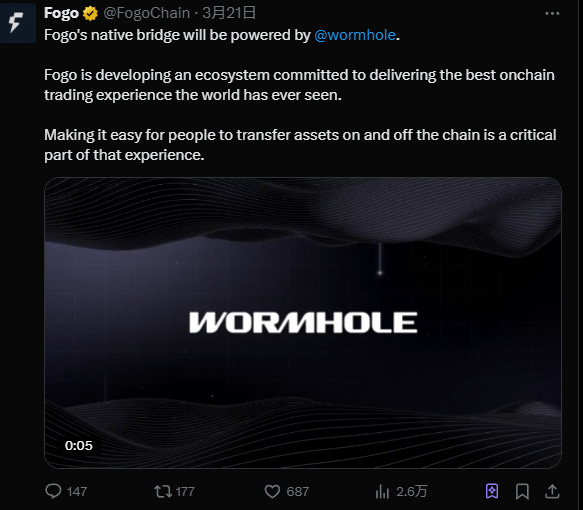
Fogo is based on Solana Virtual Machine (SVM) and is compatible with the Solana ecosystem. Developers can seamlessly migrate existing applications, reducing development costs and learning curves. This is a major convenience for Solana users. Existing SOL assets can quickly flow to Fogo through the Wormhole cross-chain bridge, enhancing liquidity.
The integration of Pyth ensures that Fogo provides high-quality real-time data, which is key for DeFi and RWA applications. Wormhole supports cross-chain interoperability, and assets can flow between different chains, attracting more ecosystem participants. For example, users can bridge assets on Solana to Fogo and enjoy its high-performance environment.
Fogo's financing shows that investors recognize its potential.
According to Rootdata data , Fogo completed an $8 million community round of financing through the Echo platform in January 2025, with a valuation of $100 million. Previously, there was a $5.5 million seed round led by Distributed Global.
The Echo platform is operated by Cobie, a well-known overseas KOL. It is well-known in the English circle and is more likely to form a group effect among investors.
Summarize
The name Fogo literally means “fire,” symbolizing the passion, drive, and innovative spirit of the project, while also forming an intuitive connection with its flame icon.
Overall, Fogo’s narrative is not only about technological innovation, but also about its vision of creating an efficient bridge between traditional finance and Crypto, and it has the resources and team to execute it.
While it fits the current "Made in the USA" narrative of the crypto market, the label of "fastest L1" is more likely to spark discussion and topics in a market where attention is precious.
For ordinary users, the Flames Program is an easy way to participate; for developers and institutions, Fogo provides a development environment with superior performance and strong compatibility.
In the future world of on-chain finance, Fogo may become an important part that cannot be ignored. If you are looking for a project that has both technical potential and clear opportunities for participation, Fogo is worth your time to understand and participate.
TechFlow is a community-driven in- TechFlow content platform dedicated to providing valuable information and thoughtful thinking.
Community:
Public account: TechFlow
Subscribe to the channel: https://t.me/TechFlowDaily
Telegram: https://t.me/TechFlowPost
Twitter: @TechFlowPost
Join the WeChat group and add assistant WeChat: blocktheworld
Donate to TechFlow to receive blessings and permanent records
ETH: 0x0E58bB9795a9D0F065e3a8Cc2aed2A63D6977d8A
BSC: 0x0E58bB9795a9D0F065e3a8Cc2aed2A63D6977d8A