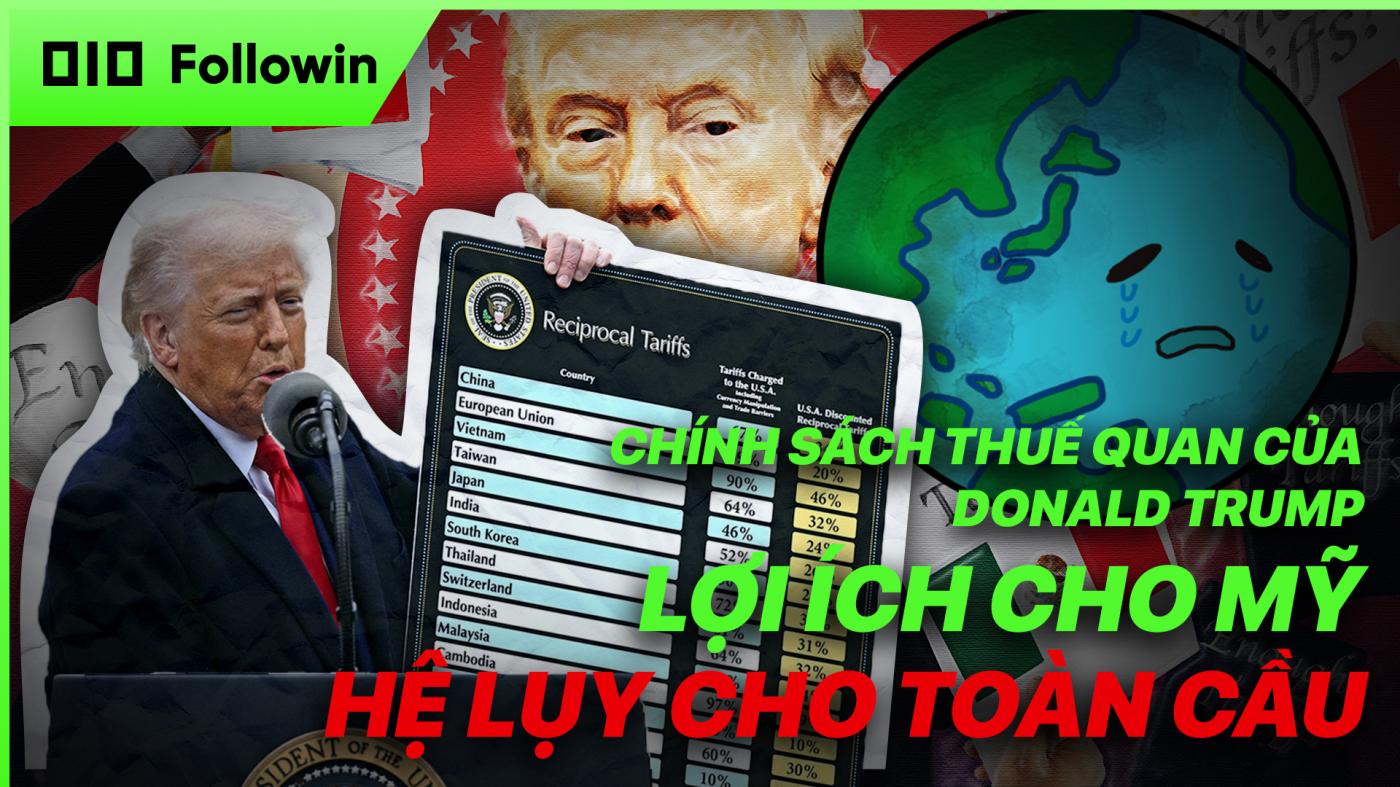
 Hello everyone, I am Sang Suot. On April 2, US President Donald Trump shocked the world when he announced a series of new tariffs, applied to imported goods from more than 180 countries. Of which, Vietnam was subject to a tax rate of 46% - a number that surprised many people, because this is one of the highest tax rates, only behind a few countries such as Laos or Cambodia. But why did Trump target Vietnam and apply such a strong policy? Isn't Vietnam also an important strategic partner of the US? Is it true, as Trump announced, that Vietnam is taxing the US up to 90%, leading to this so-called 'reciprocal tax'? Let's dig deeper in today's video to clarify these mysteries!"
 First, we need to understand what a tariff is? A tariff - also known as an import tax - is a tax levied on goods when they are transported across a country's borders, including two main forms: import tax and export tax. For example, when a shipment from country A wants to enter country B, the customs authority of country B will calculate the tariff based on the value or quantity of the goods, and the importing enterprise will have to pay this tax before the goods are cleared. The purpose of tariffs is not only to increase state budget revenue, but more importantly, to protect domestic industries, helping domestically produced goods compete more fairly. At the same time, tariffs are also a tool to regulate trade, when increasing or decreasing tariffs from the government can affect the trade balance, as well as economic relations with foreign partners. So why does the US impose a 46% tariff on Vietnam? Is it because we are also taxing the US 90%?
In fact, the 90% figure does not reflect the nominal tariff rate applied by Vietnam. Instead, it is an index that the US side calculates based on the bilateral trade deficit. Specifically, in 2024, Vietnam exported about 136.6 billion USD to the US, but imported only about 13.1 billion USD from the US, leading to a trade deficit of about 123.5 billion USD, equivalent to about 90%. Trump considers this a big problem, claiming that Vietnam is unfairly benefiting from trade with the US, so he imposes tariffs to make Vietnamese goods more expensive in the US market, thereby encouraging US consumers to buy domestic goods or goods from other countries, in order to reduce the trade deficit. However, this calculation has been criticized as inaccurate and unfair, as the trade deficit is not the "tax" that Vietnam imposes on the US, but is the result of many factors such as market demand, prices and economic structure. According to the Office of the US Trade Representative (USTR), the Medium tax rate that Vietnam imposes on US goods is only about 9.4%, much lower than the 90% figure that Trump proposed. However, with the "America First" strategy, Trump always shows a tough attitude and does not respect anyone - including allies, trade partners, or even international organizations - if he believes that it serves the interests of the US. Despite the growing relationship between the two countries when Vietnam is still an important strategic partner of the US in containing China's influence in the East Sea, Donald Trump is still willing to put the country's interests above traditional friendship. To know what Americans think when Vietnam is subject to a 46% tax rate, please XEM the following video.
In the video, the man criticized that in the past, the US not only bombed Vietnam for a decade but also used low-cost labor resources here to produce goods that are sold at high prices in the US. For that alone, Vietnam deserves a 0% tax rate for up to 3 generations, not what is happening now. Indeed, the impact of the 46% tax rate on the Vietnamese economy is huge. First of all, it must be mentioned that it is definitely exports, as the US is Vietnam's largest export market - accounting for about 30% of total turnover, including major industries such as textiles, footwear, wood products and electronics. The imposition of high taxes will cause damage to our country's key manufacturing industries with an estimated output reduction of 30 to 40%, and exports will also decrease when American consumers and businesses can switch to buying goods from other countries such as Bangladesh, Indonesia or domestic American goods. Not only that, Vietnam is also an important link in the global supply chain , especially for multinational companies such as Nike, Apple and Samsung. This poses a risk that businesses may move factories to other countries to avoid tariffs, reducing foreign direct investment Capital into Vietnam and disrupting the global supply chain . The risk of job losses for millions of workers is predicted to be very high, GDP may decrease by 1-2% in the first year after tariffs take effect, causing the Vietnamese economy in general to be severely affected.
In addition, the economic war between the US and China has also reached its peak when President Donald Trump imposed a huge 104% tariff on Chinese goods imported into the US. The tariff started at 20% in February 2025 and increased to 54% after Trump announced the new tariff on April 2. China then responded by imposing a 34% tariff on US goods, angering Trump and implementing an additional 50% tariff, bringing the total tariff to 104% and effective from April 9, 2025. China called this "blackmail" and "mistake upon mistake", as well as pledged to fight to the end and at the same time announced to increase the tariff on US goods from 34% to 84% , starting from April 10, 2025 as a direct retaliation. In addition, EU countries have also taken action by imposing 25% tariffs, targeting agricultural products and politically sensitive US states after facing many losses from the auto and securities industries. Global stock prices have also collapsed, with the S&P 500 losing nearly 6%, causing a total loss of up to trillions of dollars. Although Trump's new tariff policy has brought some short-term benefits to the country such as increasing budget revenue, protecting domestic industries, reducing trade deficits, and encouraging domestic investment, the negative consequences for the world economy are extremely clear. They disrupt supply chain , increase the risk of trade wars, create inflationary pressures, and strain international relations. In the long term, tariffs can lead to a reshaping of global trade and slow down world economic growth. History has shown that protectionist policies often have unintended consequences, and the current tariffs may be no exception.
To protect its economy from new tariffs from the US, Vietnam needs to negotiate urgently to postpone or reduce these tariffs, while increasing imports from the US to reduce the trade deficit. Diversify future export markets to alternative countries such as the EU, Japan, South Korea and ASEAN, as well as increase domestic production capacity to increase the added value of products. China will likely continue to retaliate and expand its global influence, while the EU, Japan, and other countries combine negotiations, retaliation and find a way out through regional trade. At this stage, the world needs to unite and cooperate multilaterally, and quickly transform the economy to adapt and reduce the damage from Trump's protectionist policies, avoiding the trade war from pushing the global economy into a deeper recession. If you find this video useful, please support me by clicking the like button and subscribing to not miss the next videos. I'm Sang Suot and, see ya!