



- Local Chinese authorities are selling seized cryptoassets to fund the local economy.
- China has seized 15K BTC, sparking debates about cryptocurrency regulations.
While the United States plans a future focused on cryptocurrencies, China takes a different path, continuing to seize cryptoassets including Bitcoin (BTC).
This has led to a sudden increase in government-seized cryptoassets.
Authorities have seized 15K BTC, valued at 1.4 billion USD, from illegal transactions, forcing local officials to find ways to handle them.
Selling seized cryptoassets has become a primary revenue source for local governments, who have collaborated with private companies to convert assets into cash for public finance.
However, these handling methods conflict with China's cryptocurrency transaction ban.
According to a report, China lacks clear regulations on handling seized digital assets, leading to inconsistency and corruption concerns.
To address this growing issue, senior judges, police, and lawyers are discussing potential regulatory changes.
According to close sources, China's central bank is considered most suitable to manage these cryptoassets—either by selling abroad or establishing a cryptoasset reserve.
Surge in Bitcoin-related Criminal Cases
As discussions about handling seized cryptocurrencies continue, the number of criminal cases related to cryptocurrencies has sharply increased. According to blockchain security company SAFEIS, funds associated with cryptocurrency crime increased tenfold to 59 billion USD in 2023.
In 2024, China filed lawsuits against 3,032 individuals related to cryptocurrency money laundering. This cryptocurrency crime increase aligns with a 65% increase in government fines and consolidated asset revenue over the past five years.
As a result, seized cryptocurrencies have become a significant income source for local governments in cities with high cryptocurrency activity.
Cryptocurrency Market Status in China
Officially, cryptocurrency trading is banned in China. Therefore, no rules and regulations exist to help manage even private companies assisting local authorities in processing seized Bitcoin and other currencies.
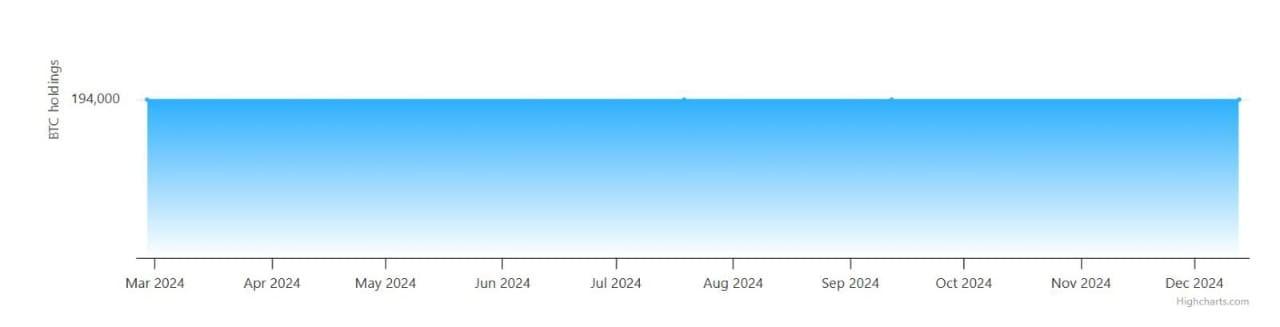
Source: Bitbo
However, despite the ban, a significant portion of China's population owns cryptocurrencies.
According to a report, approximately 5.5% of China's population, or 78 million people, own various cryptoassets. Specifically, China owns 194K BTC valued at 16.3 billion USD, becoming the second-largest holding nation after the United States.
With such a high acceptance rate, the lack of legal clarity and complete transaction ban is particularly problematic for the broader cryptocurrency market.
Therefore, the Chinese government's regulations on cryptocurrency transactions hinder industry development. A legal clarification allowing these asset transactions could promote Bitcoin and other currencies by increasing demand.
Similarly, with appropriate regulations, reducing and pushing back cryptocurrency-related criminal activities becomes easier.
The current unclear regulatory status leaves room for more criminal activities as cryptocurrencies become increasingly popular.






