Author: siqi
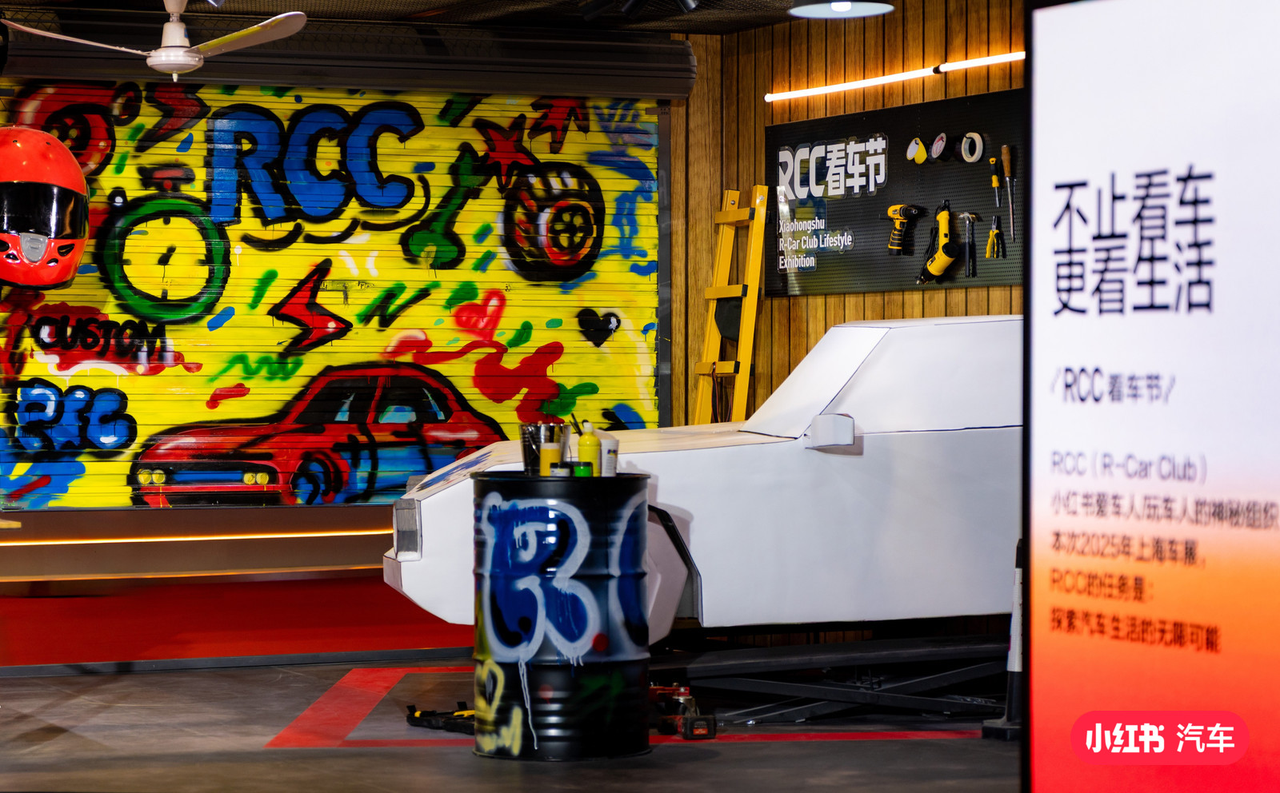
At this year's Shanghai Auto Show, Xiaohongshu's presence was unexpectedly high.
Not only did we build our own offline booth, but more importantly, visitors to the exhibition - whether they were ordinary consumers, the media, or people working in the automotive industry - could often be seen searching for relevant information on Xiaohongshu frequently and skillfully. This made me realize that it has become an important platform that affects every aspect of the industry in the process of choosing, buying, and even selling cars.
I heard a retired lady say at the scene: "Even if our wallets allow, we don't have that many Shanghai license plates, so we have to be very selective when buying a car." So, if the salesperson can't explain the product problem, search for the experience notes on Xiaohongshu; if you can't figure out the bill yourself, you can go to the community to see the bills drawn by others. Xiaohongshu's "grass planting" culture has penetrated into the automotive industry and has become an important part of people's car buying process.
In fact, more and more car companies today have realized the importance of launching promotional marketing on Xiaohongshu. After communicating with marketing personnel from some car companies on site, I learned that brands such as Mercedes-Benz, Zhiji, Xiaopeng, and Cadillac have begun to use the Xiaohongshu platform to try some different communication strategies from the past, and have achieved some results.
For car companies, they not only value the huge user group gathered on Xiaohongshu and the high dependence of this group on Xiaohongshu in consumer decision-making, but also attach importance to the potential of Xiaohongshu's community characteristics for brand marketing in the new era. For example, based on lifestyle insights, Xiaohongshu divides car consumers into seven new groups, including travel actuaries, mechanical believers, and urban wanderers.
Compared with traditional labels such as family users, middle-class users, and young users, the benefit of this classification directly changes the logic of content creation: car companies need to split into more detailed marketing scenarios for different products and different target users. In this era of content oversupply, authentic and detailed content is the key to seeding.
Obviously, in the current increasingly fierce competition, car companies that want to become smarter also hope to find the code for their products and reshape their relationship with users by actively embracing smarter platforms.
The screen hides an important link in the car purchase decision chain
During the first three days of the Shanghai Auto Show, I could see people opening the Xiaohongshu App on their phones at almost every booth.
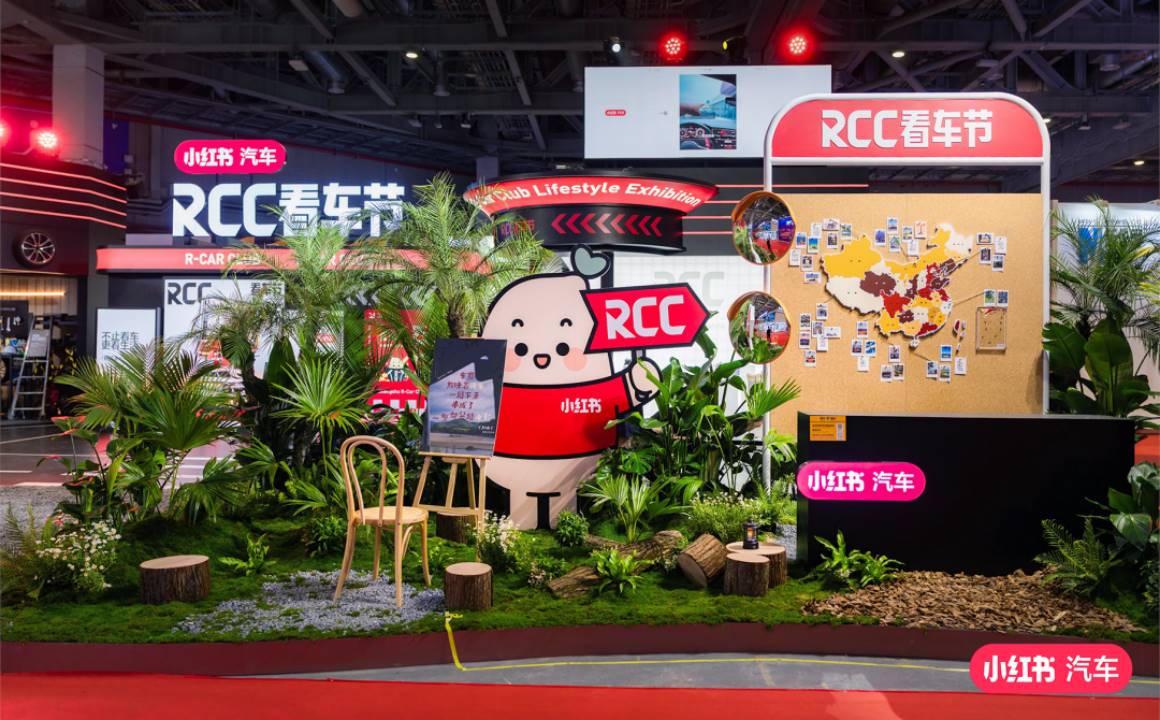
Xiaohongshu also moved its booth to the auto show | Image source: Xiaohongshu
The first day was the media day. Listening to the press conference while checking the hot topics on the phone was a common way of working. A colleague of mine saw the news of "Xpeng Robot debuting at the booth" and immediately picked up his bag and ran to the Xpeng booth to follow the hot topics; the more common practice was to "visit the exhibition online" on various social media - after all, the activities were too frequent and the venue was too large, so I just looked at the sharing of my colleagues directly. Xiaohongshu is one of the productivity tools for automotive media teachers.
But on the second and third days, I realized that for more ordinary auto show attendees and consumers, Xiaohongshu is probably not used in this way.
For them, the breadth of information is no longer the core demand - visitors to the auto show often have clear goals, and they care more about the depth of a specific product. After all, buying a car is a typical non-impulsive purchase, so of course every product detail must be clearly implemented.
They don't understand or care about those same old parameters. On Xiaohongshu, everyone wants to see something different, real, warm, and human - that is: what real problems can this car solve in different specific scenarios, and what functions and emotional value can it provide.
Therefore, Xiaohongshu has become a "product jargon translator" in the hands of users. No matter how much the salesperson in front of them "exaggerates" the product, these viewers who come with the goal of buying a car will search on Xiaohongshu.
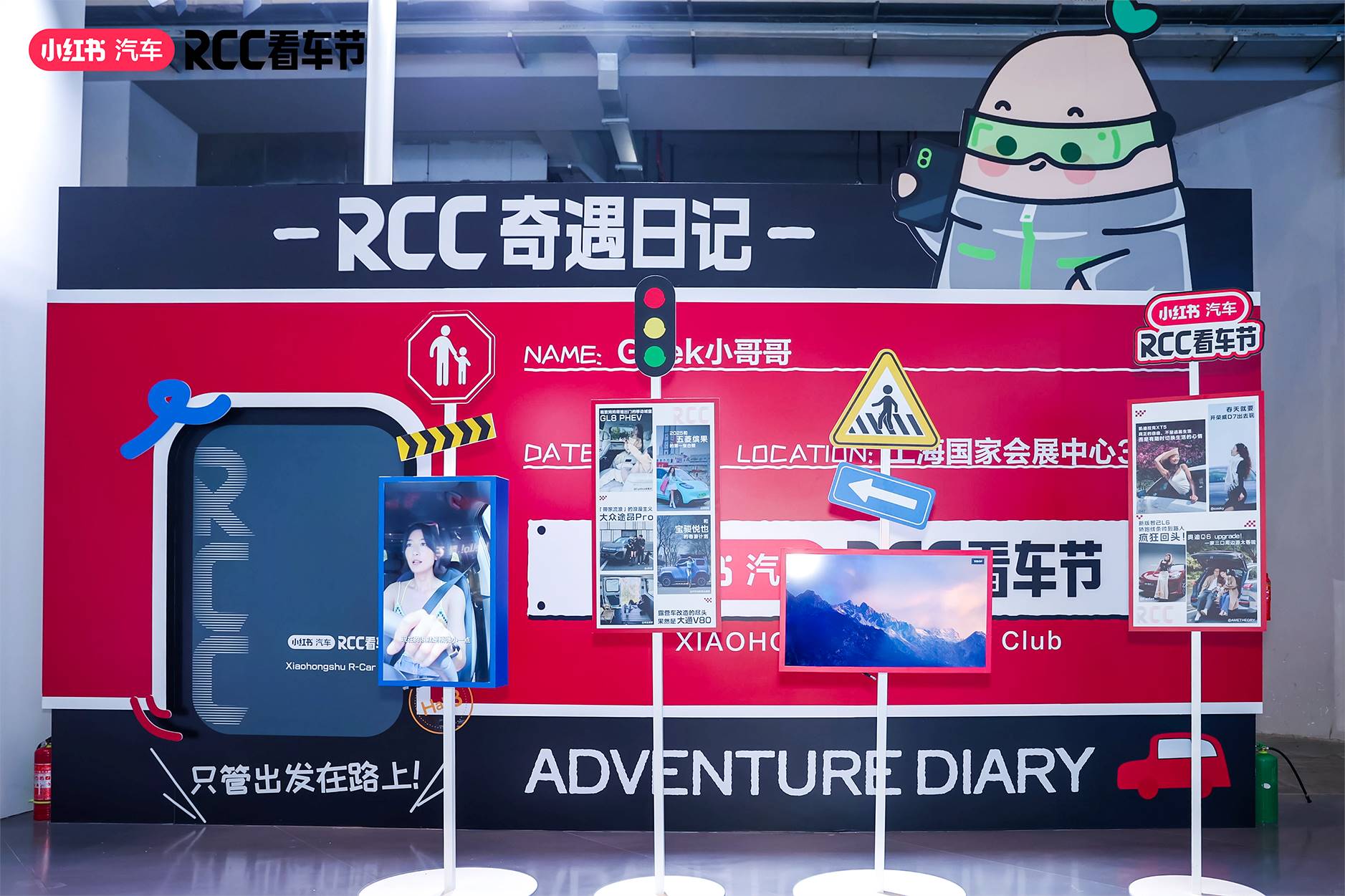
In the exhibition hall where SAIC Group is located, you can also "encounter" Xiaohongshu | Image source: Xiaohongshu
I observed on the spot and found that the questions that these users hope to find answers to on Xiaohongshu can be divided into two types: one is "difficult to understand without car usage examples"; the other is "tricky angles that the salesperson may not have thought of."
For the former, a typical example is a NIO salesperson explaining battery swapping to a customer. After a few people spent a long time calculating the cost, it was not as good as seeing a NIO user posting a photo on Xiaohongshu showing others queuing up at a service area to charge during holidays, while he quickly swapped batteries. From their facial expressions, I can feel that the note should have given the salesman an unexpected assist.
As for the latter, I saw a young lady who was very concerned about the pet travel scene. Many brands have spent a lot of time on family communication, but perhaps the exhaustive list of marketing scenarios has not yet been targeted at pet scenarios, and sales are also a bit at a loss for words.
Then, I saw her searching on Xiaohongshu: "Which car is better for taking the dog out?"
I also searched it myself and although there are some pet strollers in the results, in more notes, I can indeed see many pet owners explaining their past experience with one or more models from different angles, such as space, intelligence, cleaning convenience, and even smell. Moreover, many of the creators of these notes are not "car bloggers" in the broad sense of the word, but consumers sharing their personal car buying experiences.
In the past two years, there have always been complaints in the industry about not knowing how to do marketing. At that moment, I felt that if I could carefully observe what users are searching for on Xiaohongshu at the same time when the salesperson is trying to promote the product, I might be one step closer to understanding the users' pain points and needs.
Find new ideas for precision marketing in the book
After some research, I found that many car companies have actually keenly captured the subtle changes in consumer habits and are thinking about how to achieve better marketing results through the Xiaohongshu platform.
There are some very interesting cases here.
Car companies have always been important clients of the advertising industry, so you can often see advertisements of various car brands in different real or digital spaces such as Weibo startup screens and airports. This high-profile approach has been the norm for a long time. It is like a funnel. Only by investing enough resources can you filter out the core group you want to reach.
But this approach is not suitable for all brands. In particular, many brands hope that the platform can help them find target users and use certain resources to directly reach the core circle. For example, the MINI brand under the BMW Group.
For the MINI brand, its tone is naturally in line with Xiaohongshu, and a large number of car owners have gathered on Xiaohongshu to form a natural content ecological matrix.
Taking ACEMAN's marketing on Xiaohongshu as an example, based on the goal of refined population penetration and taking the search behavior population that is highly similar to the car-buying population as the starting point, this product was helped to formulate a population reverse funnel strategy to find the three core groups of people: [Attitude Light Enjoyers] [Trendy Tryers] and [Relaxed Nesters], and through the demand scenarios of the opportunity population and the selling points of the car models, they were translated into the buying points of the target population, and refined matching of "car model x buying point x population" was achieved to achieve efficient seeding and reach of the population; and in terms of content strategy, MINI's personality labels such as vitality, uniqueness, openness, and creativity were combined to strengthen the selling points of "easy to drive, good-looking, and fun" to produce differentiated scenario content.
At the same time, UGC word-of-mouth heats up the release of user value + KOB/S (store account KOB, sales account KOS) and the post-link is efficiently taken over, achieving "good results-terminal conversion" with "good content + good service", completing the user's full life cycle flow; in terms of business data, the cost of opening a private message has been greatly reduced by 39%, and the lead transaction conversion rate has reached a high value of 5.9%, and the number of people who are deeply interested in this product has increased by 12%.
Another example comes from Xiaopeng Motors.
Xpeng Motors' sales have been tepid in the past two years. Until the end of August 2024, the new car MONA M03 became the masterstroke of Xpeng Motors. After the new car was launched, it drove the overall sales of Xpeng to continue to rise, helping Xpeng Motors double its monthly average sales of about 8,000 units to a stable monthly sales of 30,000 units. The hot sales of MONA M03 largely depend on "breaking the circle".
Before MONA appeared, Xiaopeng had an awkward label: "straight male brand". Despite its leading technology, it was difficult to translate into content that the general public could understand, so its influence was once limited to a certain circle of technology enthusiasts.
In the early stages of promoting MONA M03, Xiaopeng Motors was very clear that the product's "good looks" should be the core of its promotion, with the goal of breaking into the female market.
However, good looks cannot be directly equated to sales, and the female market also corresponds to people with different consumption habits. Moreover, as a product from Xiaopeng, it certainly cannot give up the advantage of intelligence. Therefore, Xiaopeng needs to find a communication method that can combine good looks and intelligence and accurately reach different user groups.
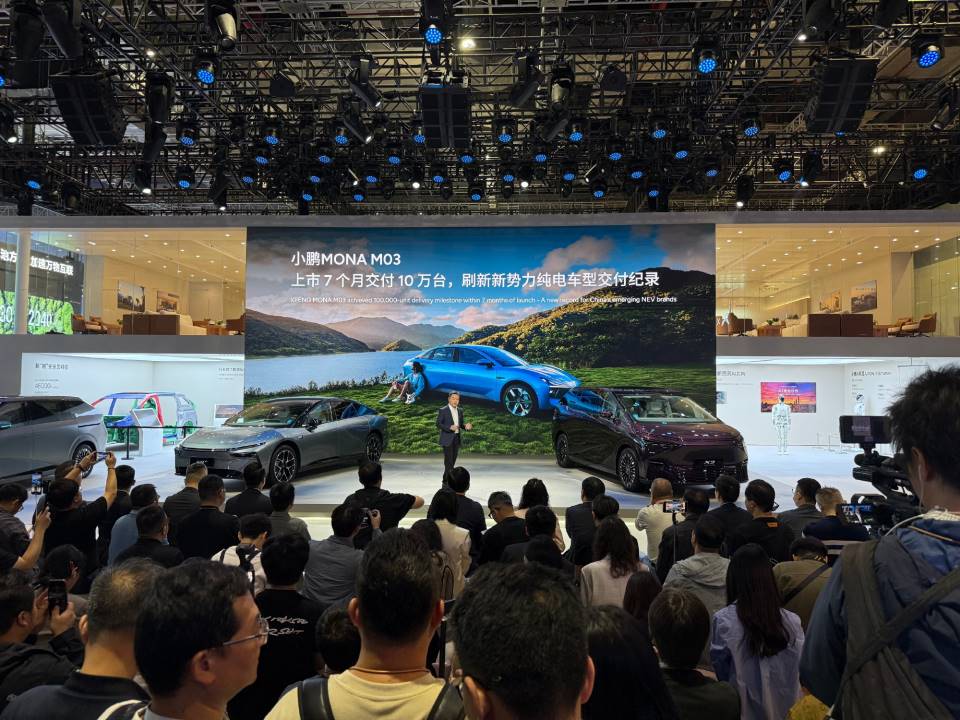
MONA M03 has made an important contribution to Xiaopeng's sales growth by breaking through the circle of communication | Image source: Xiaopeng Motors
This time, Xiaohongshu provided Xiaopeng Motors with a formula of "user→scenario→buying point".
The core structure of this formula is: first, find the target group that the product needs to influence on the site based on demand; then, based on this group, find the appropriate content scenario in combination with the product functions; finally, based on the scenario, transform the "function" into a "selling point" and turn it into a content strategy to guide creation.
Specifically in the marketing process of MONA M03, Xiaopeng cooperated with Xiaohongshu to split female users into different group portraits, including "trendy girls" (users). Then, targeting this target group, it used the content scenarios of the notes and demonstrated the "smart parking" function to reflect the intelligent capabilities, thus completing the entire process of planting grass.
At the same time, Xiaohongshu's unique double-column card layout on the product side can judge the effectiveness of the delivery through data indicators such as CTR (Click-Through-Rate, the click-through rate of notes), allowing car companies to optimize their grass-planting strategies in real time and improve marketing efficiency.
In terms of content strategy, Xiaopeng Motors adopts a matrix-style combination of founder + product manager account + corporate official account + KOL content delivery, enriching content touchpoints while disseminating differentiated seeding content; and then cooperates with new on-site clue products such as "retention cards" to obtain efficient leads. It is understood that during the project cycle, Xiaopeng Motors' on-site lead costs dropped significantly, and the proportion of "seedling ads" reaching the on-site retention population also increased significantly. It has taken the lead in forming a new marketing strategy of seeding and conversion in the new automotive power track, truly enabling business conversion through seeding.
Xiaopeng Motors has always been committed to becoming a brand that is more popular with users. This time, through the cooperation with Xiaohongshu, it completed a good mental communication with users and achieved omni-channel business growth.
Smarter car companies embrace smarter platforms
It can be seen that whether it is the feeling at the auto show or the verification obtained after communicating with car companies and Xiaohongshu, more and more cases show that for the current booming automotive industry, Xiaohongshu has become an increasingly important and intelligent platform.
I believe that compared with the traditional marketing channel model, Xiaohongshu can provide three differentiated values to the automotive industry today.
The first point, of course, is the community value of Xiaohongshu itself.
As a community with 300 million monthly active users, Xiaohongshu has become an indispensable electronic manual for more and more people in every aspect of their lives.
In addition to its huge user base, the biggest feature of Xiaohongshu community content is that it focuses on real and spontaneous user sharing. For example, I tried to search for the two keywords "buy a car + zero interest" in Xiaohongshu, and the result was a group of savvy students who personally circled and outlined the key points and minefields, advantages and disadvantages of buying a car.
Compared with traditional automobile marketing, Xiaohongshu has three advantages. The first is high trust. Xiaohongshu is a more decentralized content community. Compared with the official "product introduction" and "4S store salesperson", sharing from other consumers is easier to gain the trust of users.
The second is to better match the needs of consumers. In the past, car companies provided functional information in their publicity, but the needs of car buyers are different, and many people don’t even know what kind of functions match their needs. Xiaohongshu’s sharing based on life scenarios allows potential consumers to find sharers with similar situations to themselves, so as to effectively obtain information.
In Xiaohongshu, UGC (user-generated content) accounts for 90%. Compared with the large and comprehensive official propaganda, the characteristics of UGC sharing are small and detailed, as small as the comfort of a seat and how many Sam's shopping bags can be placed in the trunk. These details are the key to impressing segmented users.
In fact, accurate grasp of reality, details and needs is the key to Xiaomi Auto’s sudden rise in marketing under Lei Jun’s leadership. Many car companies hope to have a “Lei Jun of their own” who can break down a 2-hour new product launch into countless details that users care about and understand - after all, a car positioned as a sports car can also gain nearly 40% of female users because of its “sun protection”.
Although there is only one "Mr. Lei", in the UGC community, your users will help you break down the highlights of your product into countless notes and recommend them to those you want to recommend them to.
Secondly, Xiaohongshu’s strategy of dividing people based on lifestyle can achieve more accurate user reach.
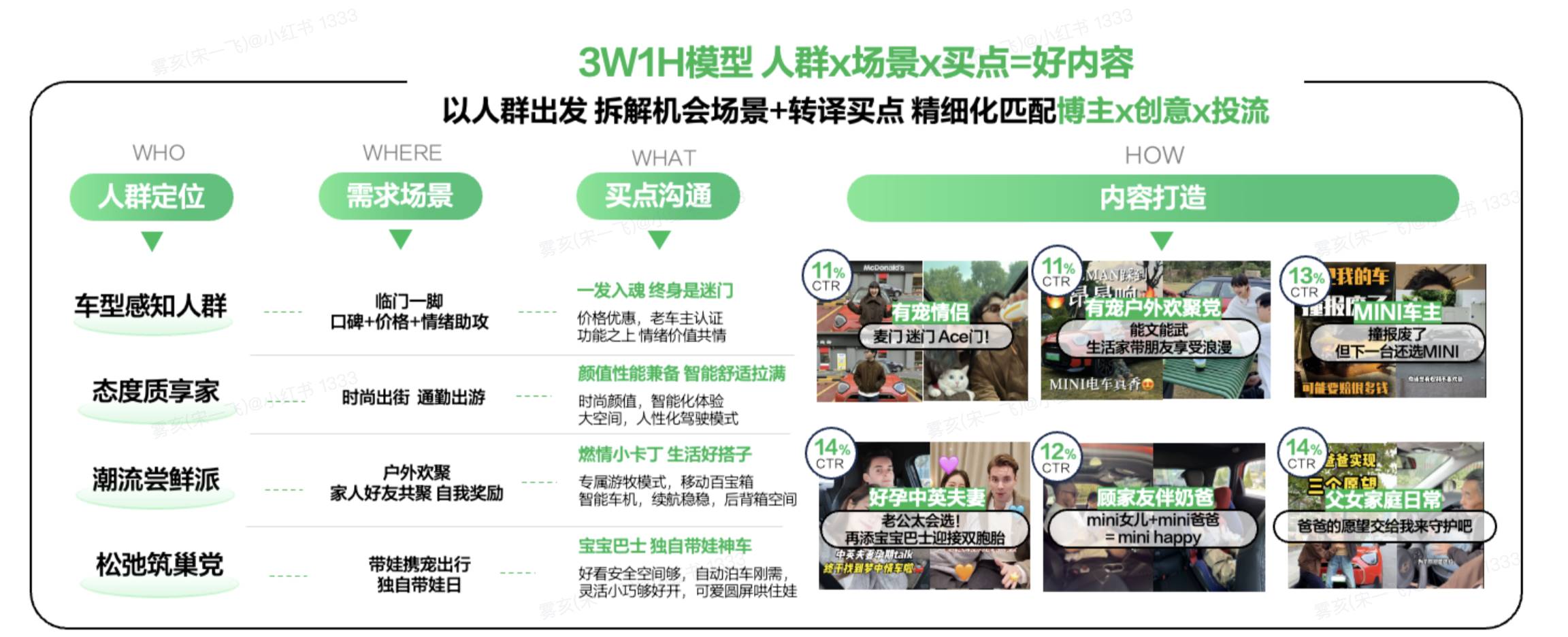
Xiaohongshu accurately matches the corresponding scenarios and buying points for different groups of people | Image source: Xiaohongshu
In the past, traditional car companies had a relatively coarse definition of consumer groups, which were divided according to gender, age, family members, wealth status, etc., and designed and marketed products based on some insights into the needs of different groups of people. In fact, today, cars have become an extension of people's lifestyles. Compared with the traditional way of dividing people, lifestyles are more in line with people's car needs.
Based on the analysis and insight of modern young people, Xiaohongshu has 20 major lifestyle groups, and in view of automobile consumption demand, Xiaohongshu further divides automobile consumers into seven new groups, namely travel actuaries, mechanical believers, mobile nesters, urban wanderers, luxury upstarts, explosive reformers and smart driving pioneers.
The new way of dividing the population breaks the old age and gender labels, but more accurately grasps the characteristics of the needs of similar car buyers. In fact, not only in the automotive industry, Xiaohongshu's user insights based on lifestyle are applied in different industries. The goal is to more accurately grasp the needs of the target customer group and to more accurately promote and spread information based on their needs.
Finally, realizing the value of Xiaohongshu, in addition to conventional promotion and marketing, some car companies have begun to think about how to use the community to reconstruct the relationship between themselves and users.
Zhiji Auto is the latest example. Although it is backed by SAIC Motors, as a brand-new brand, it is particularly important to build a brand image so that consumers can quickly understand its "character" and build a good impression of it.
It is understood that in mid-2024, the Zhiji team broke the traditional marketing structure of the OEM and established a special "Little Red Book Team", which was independently responsible for the communication, strategy and customer acquisition planning of the Xiaohongshu platform.
It is worth mentioning that in the process of cooperation between Zhiji and Xiaohongshu, car companies gradually realized the value of this kind of crowd marketing through grass-planting. Not only starting from the marketing solution of "spu x crowd x buying point", but also carrying out refined grass-planting through the crowd reverse funnel model, the grass-planting thinking and crowd insights are deeply integrated into product research and development, and "added value": the latest released "New Zhiji L6 Xiaohongshu Co-branded Edition" is the first in-depth new product co-creation between Zhiji and the platform based on the inspiration it got from Xiaohongshu.
At the Shanghai Auto Show, we also saw this new product jointly created by the car company, platform and users.
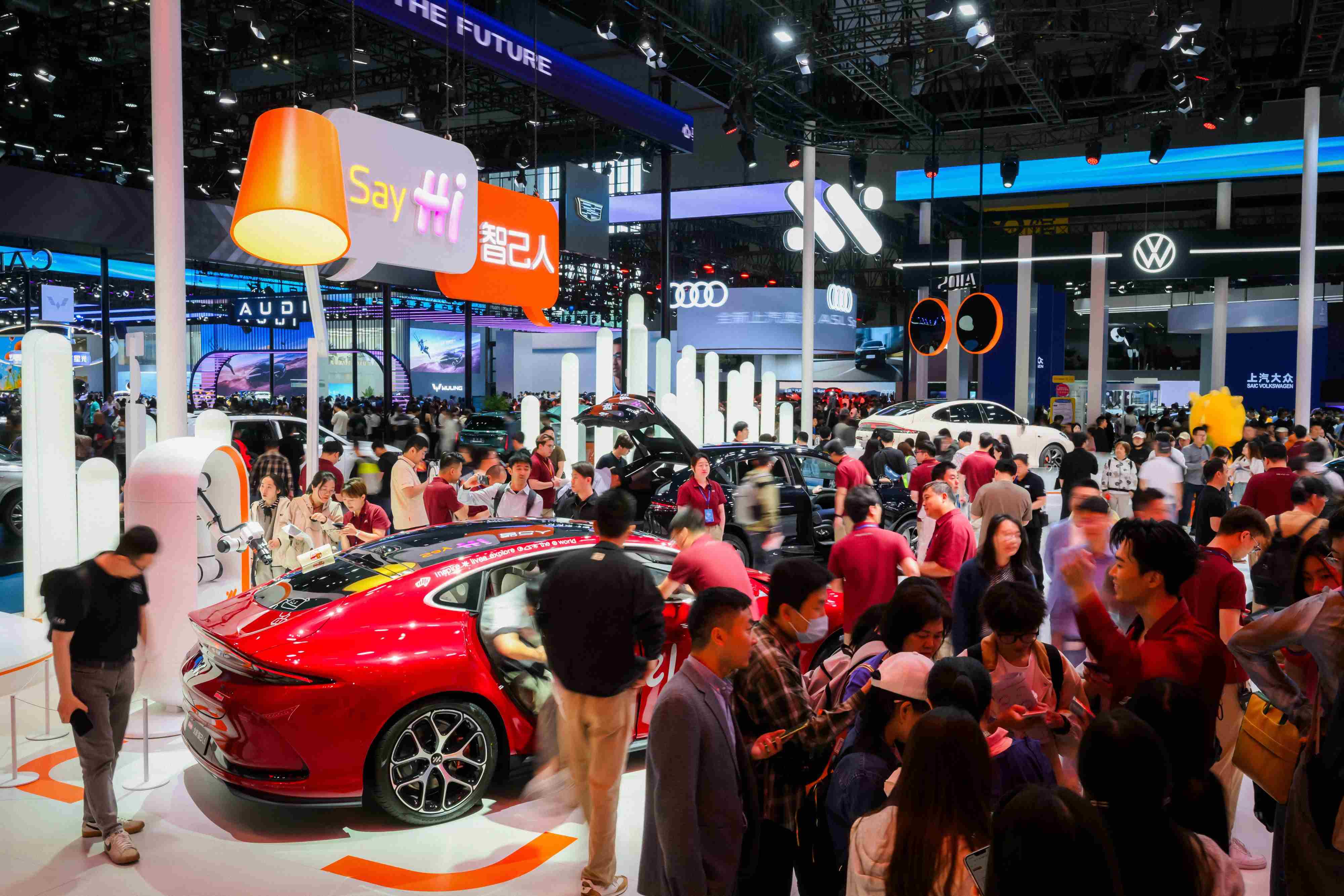
New Zhiji L6 Xiaohongshu co-branded version | Image source: Xiaohongshu
In this national online community, there are many clues worth exploring for car companies. The famous phrase "Internet car manufacturing" 10 years ago has now been given a new meaning by the community platform Xiaohongshu: listening to valuable user voices and finding the right needs and clues are extremely important when the competition in the current automotive industry is fierce.