El Salvador, after becoming the first country to adopt Bitcoin as legal tender, has now decided to sow the seeds of Bitcoin directly into the hearts of the nation's youngest hope - elementary school students.
The El Salvador Ministry of Education has recently officially announced a super interesting program called "What is Money?", preparing to incorporate Bitcoin and highly practical basic financial knowledge into the textbooks of national elementary school students. Their ultimate goal is cool: to cultivate financial IQ from childhood and create the world's first true "Bitcoin Generation"!
This might even provide a completely new inspiration for education in the digital age.
What is Money? A New Approach in El Salvador's Classroom!
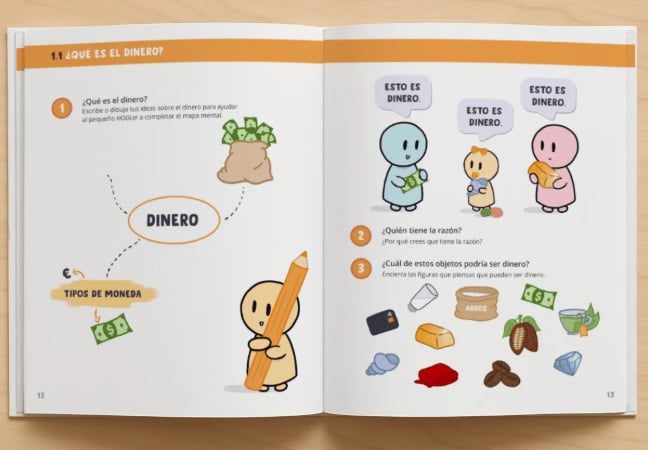
What exactly is this "What is Money?" program about? Simply put, it's a collaboration between the El Salvador Ministry of Education and the National Bitcoin Office, working with Lina Seiche, author of 'The Little HODLer'.
This program is specifically designed for children aged 7 to 13, hoping they can understand how money works during their key early years of understanding the world, especially Bitcoin!
According to official explanations, the course content is comprehensive, covering everything from what past currencies looked like, how to distinguish between "needs" and "wants", basic budgeting concepts, why saving money is important... and of course, most crucially, they will explain why Bitcoin is a financial innovation capable of disrupting the world.
The class will discuss Bitcoin's cool features, such as its impressive technology, why it's decentralized, its limited quantity (scarcity), highly transparent transaction process, and why it can bring people "financial sovereignty"... sounds quite substantial, right?
Three Hours of Class per Week
It is understood that the Ministry of Education will cleverly incorporate these Bitcoin and financial knowledge into the country's mandated social studies curriculum, with 3 hours of class per week. Initially, this program will be piloted in 50 public schools in La Libertad province.
There's a reason for choosing this province, as it is one of the earliest places in El Salvador to engage with Bitcoin (Bitcoin Beach is nearby).
The first phase is expected to involve about 1,000 second and third-grade students, and if successful, it will gradually expand to fourth, fifth, and sixth grades in the coming years. The teaching materials will be from Lina Seiche's 'The Little HODLer', which is said to be colorful and interesting, perfectly suitable for children of this age!
Not Just for Kids! El Salvador's Bitcoin Education Map
Besides the "What is Money?" basic education program, El Salvador actually already has some great "senior" Bitcoin education initiatives.
For slightly older teenagers (high school students), they have a "Bitcoin Diploma" program, promoted by organizations like Mi Primer Bitcoin, with thousands of students already successfully "graduating"!
For university students, there's the CUBO+ program, a scholarship initiative providing Bitcoin development-related education. Additionally, grassroots communities like Bitcoin Beach (El Zonte) also offer supplementary Bitcoin training.
What Will This Operation Achieve? Perhaps Inspiring the Whole World
Overall, El Salvador's incorporation of Bitcoin education into elementary school curriculum is definitely a bold and visionary attempt. This is not just about learning to use a new form of money, but a long-term national plan about what future finance looks like and what civic skills citizens should possess.
What results will this unprecedented educational experiment bring? Will it provide new insights for global financial education and cryptocurrency adoption? Let's continue to pay attention.