I. Project Overview:
Sentient is an open-source protocol platform dedicated to building a decentralized AI economy, with its core goal of establishing ownership structures for AI models, providing on-chain calling mechanisms, and constructing a composable and revenue-sharing AI Agent network. Through the "OML" framework (Open, Monetizable, Loyal) and model fingerprinting technology, Sentient addresses the fundamental issues of "unclear model ownership, untraceable calls, and unfair value distribution" in the current centralized LLM market.
The project is driven by the Sentient Foundation, focusing on open-source AGI and protocol incentive mechanisms. The "Loyal AI" it advocates refers to an open AI model ecosystem that serves the community, ensures fair governance, and can self-evolve in the long term.
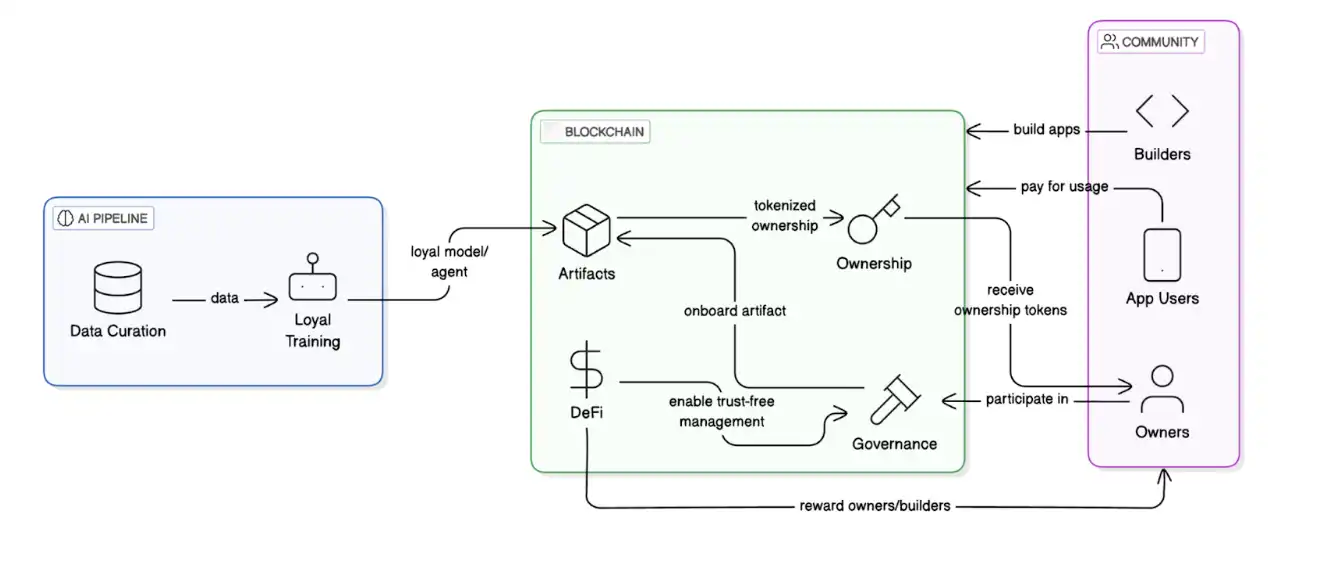
The AI Pipeline is the foundation for developing and training "Loyal AI" artifacts, including two core processes:
· Data Curation: A community-driven data selection process for model alignment.
· Loyalty Training: A training process that ensures the model remains consistent with community intentions.
The blockchain system provides transparency and decentralized control for the protocol, ensuring the ownership and governance of AI artifacts, with main modules including:
· Governance: Controlled and decided by a Decentralized Autonomous Organization (DAO).
· Ownership: Represented through tokenization of AI artifacts.
· DeFi: Providing financial tools that support open, decentralized, and fair governance and rewards.
II. Technical Architecture and Model Ownership Mechanism:
1. OML Model Framework
The Sentient: Loyal AI whitepaper introduces the OML framework (Open, Monetizable, and Loyal AI), which starts with model ownership confirmation and systematically proposes the concept of "AI-native cryptography" for providing encryption-level ownership protection for open-source models.
· Open: Models must be open-source, with transparent code and data structures, supporting community reproduction, audit, and forking;
· Monetizable: Each model call triggers a revenue stream, distributed to trainers, deployers, and verifiers through on-chain contracts;
· Loyal: Models do not belong to companies but to contributor communities, with model upgrades and governance decided by the DAO. Model ownership is verifiable, modifications are restricted, and usage is controlled
Through on-chain mechanisms and cryptographic methods, OML ensures that open-source models maintain economic sovereignty and governance rights while remaining open, constructing a protocol layer native to AI for usage rights and revenue rights, ensuring model transparency, clear ownership, economic incentives, and behavioral governance.
Core Concept: AI-native Cryptography
AI-native cryptography utilizes the continuity, low-dimensional manifold structure, and differentiability of AI models to develop a lightweight security mechanism that is "verifiable but not removable". Its core technologies include:
· Fingerprint Embedding: Inserting a set of covert query-response key-value pairs during training to form a unique model signature;
· Ownership Verification Protocol: Verifying fingerprint retention through third-party probers by querying;
· Permissioned Calling Mechanism: Requiring a "permission certificate" issued by the model owner before calling, with the system then authorizing the model to decode and return an accurate answer to the input.
This method achieves "behavior-based authorized calling + ownership verification" without additional re-encryption costs.
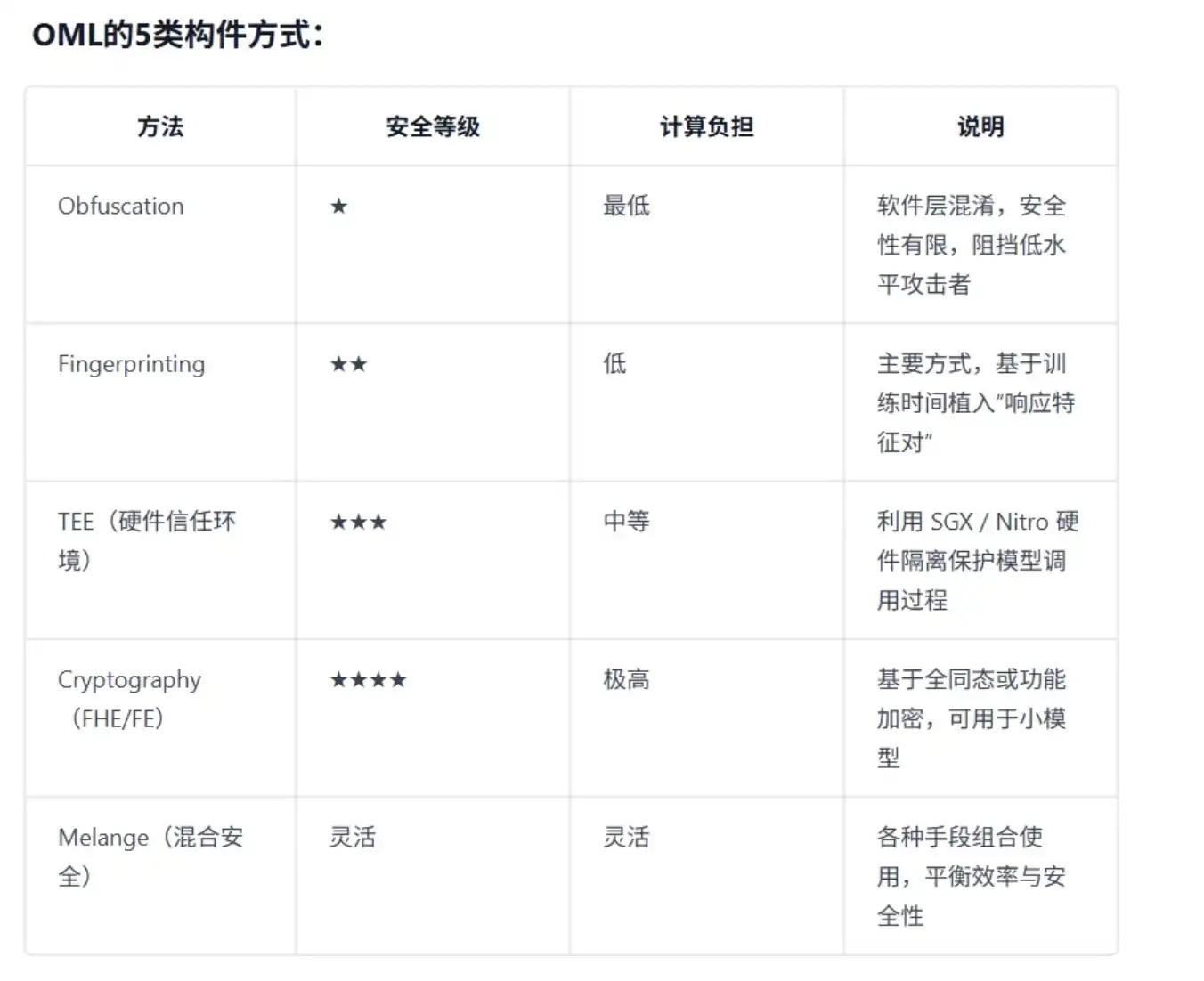
Sentient currently adopts Melange hybrid security: combining fingerprint ownership confirmation, TEE execution, and on-chain contract revenue sharing. The fingerprinting method is the main line of OML 1.0 implementation, emphasizing the "Optimistic Security" concept, which assumes compliance by default and can detect and punish violations.
OML and Sentient Protocol Architecture
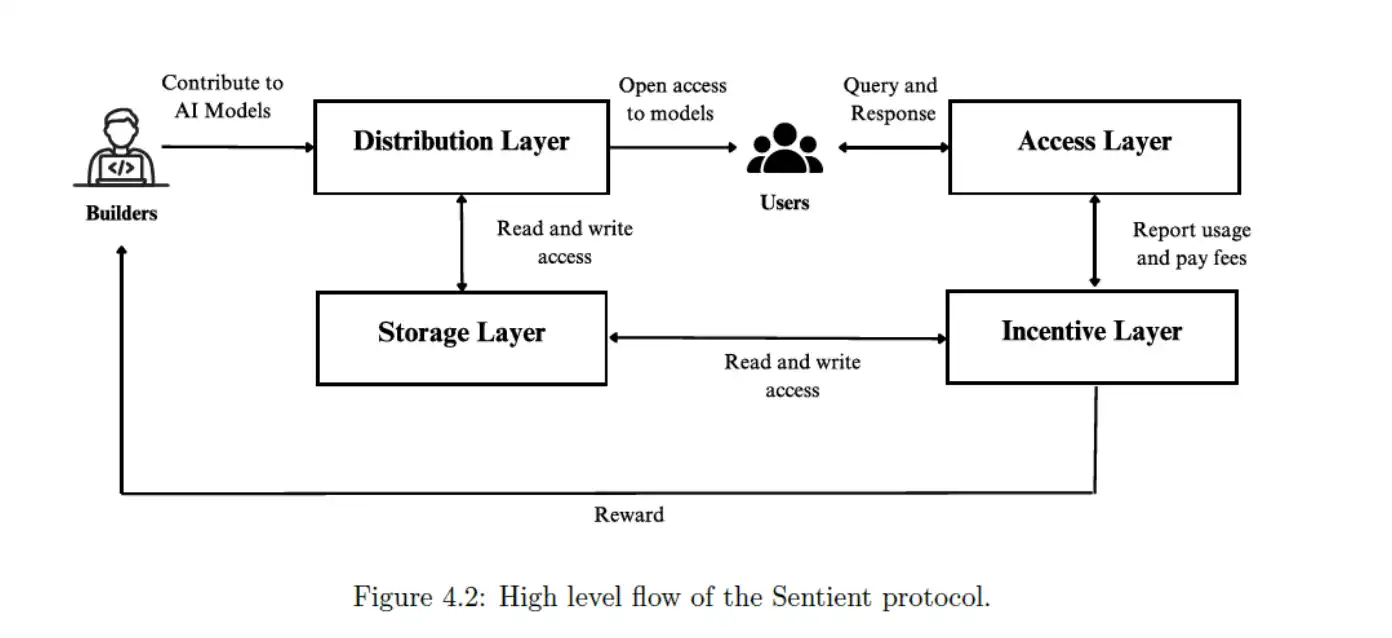
The final chapter of the paper proposes a complete on-chain protocol (Sentient Protocol) to support OML:
· Storage Layer: Storing model weights and fingerprint registration information;
· Distribution Layer: Authorization contracts controlling model call entry points;
· Access Layer: Verifying user authorization through permission proof;
· Incentive Layer: Revenue routing contracts distributing payments for each call to trainers, deployers, and verifiers.
Sentient Chat is currently in the testing phase, accessible only through invitation codes distributed via email or community events. According to official information, over 5,000 users have successfully obtained access to Sentient Chat, processing more than 100,000 user queries. As the author is not currently a test whitelist user, the actual model capabilities cannot be assessed.
Dobby LLM Model Series:
1. Dobby-Unhinged Series
· Dobby-Unhinged-Llama-3.3-70B: Fine-tuned based on Llama 3.3-70B-Instruct, emphasizing personal freedom and cryptocurrency stance, with a frank, humorous, and humanized conversational style.
· Dobby-Mini-Unhinged-Llama-3.1-8B: 8B parameter version, suitable for resource-constrained devices.
2. Dobby-Mini-Leashed-Llama-3.1-8B: More moderate in tone, suitable for scenarios requiring more robust output.
Since the Dobby LLM models are fine-tuned versions based on Llama 3.1 and 3.3, we believe their primary application scenarios include building chatbots, content generation and creation, and role-playing agents. Their advantages lie in flexible style generation, reasoning enhancement, and low resource requirements, making them suitable for rapid deployment and flexible customization in resource-limited environments. Compared to more powerful closed-source models like GPT-4, Dobby LLM still lags in handling advanced logic, cross-domain knowledge reasoning, and deep reasoning tasks.
IV. Ecosystem Cooperation and Landing Scenarios
Currently, the Sentient Builder Program provides $1 million in funding to support developers in building AI Agents that run in the Sentient Chat ecosystem, requiring developers to use Sentient's development kit and access the ecosystem through the Sentient Agent API.
Simultaneously, the ecosystem partners announced on the Sentient official website cover project teams from multiple Crypto AI domains, as follows
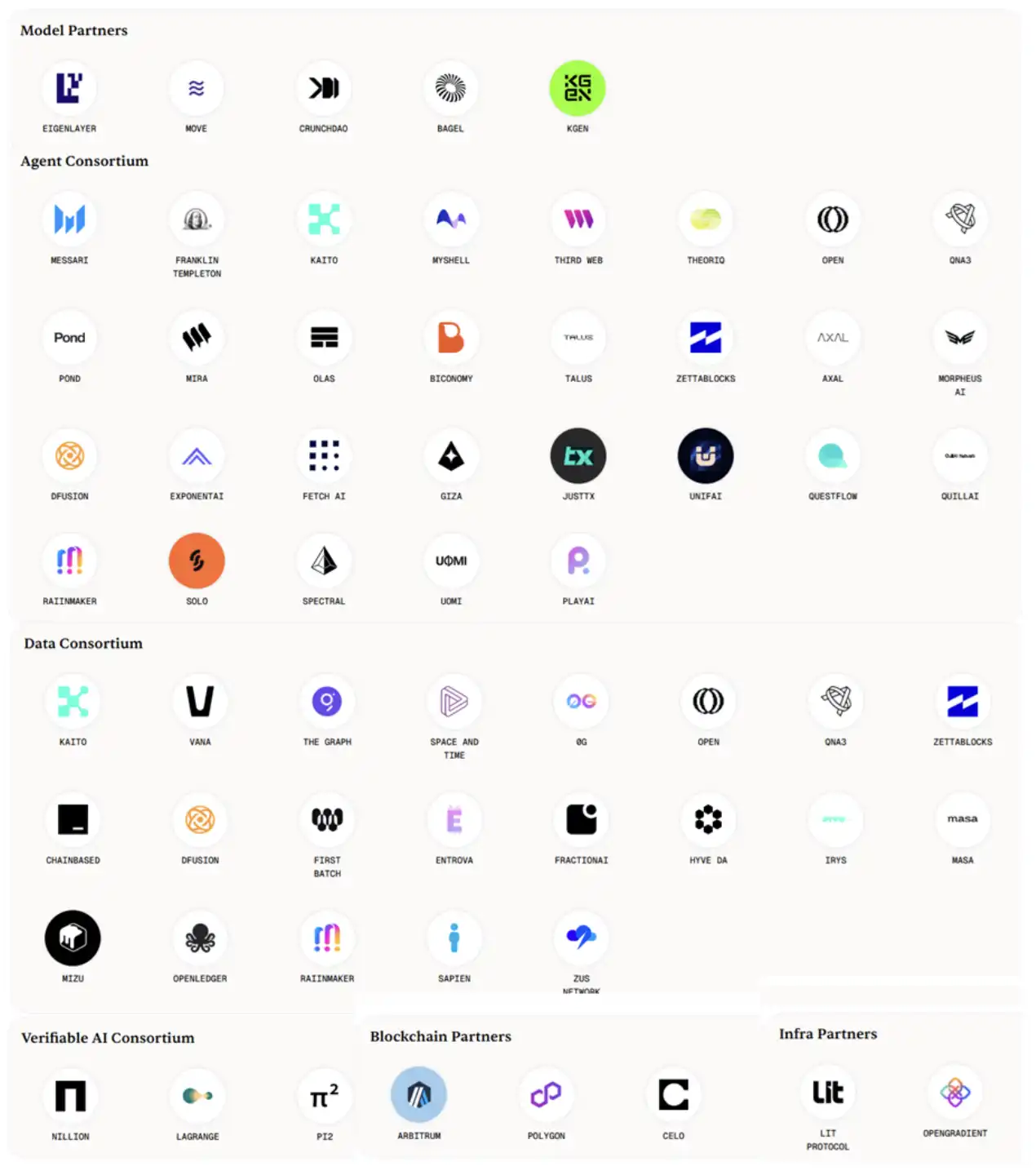
As a top project in the Crypto AI field, Sentient's resource integration capabilities can cover any star startup in the industry. However, it needs to be pointed out that "marketing-type" cooperation widely exists in the Crypto field, creating an illusion of false prosperity. The contribution and loyalty of Sentient's ecosystem partners to its ecosystem still require our continuous observation.
The Open AGI Summit, initiated by the Sentient team, is a global conference dedicated to exploring the combination of Artificial Intelligence (AI) and Cryptocurrency (Crypto). The author was fortunate to attend the summits during ETH Denver and ETHcc in 2024 and 2025. The Sentient team has the ability to gather top institutional investors and project entrepreneurs in the industry, which is a highlight.
V. Team Structure and Research Background
Sentient Foundation has gathered top global academic experts, crypto industry entrepreneurs, and engineers, committed to building a community-driven, open-source, and verifiable AGI platform. According to officially published information, its team members mainly include:
Core Leadership (Steering Committee)
· Pramod Viswanath – Forrest G. Hamrick Professor at Princeton University, long-term researcher in information theory and communication systems, leading Sentient's AI safety and theoretical foundation construction.
· Himanshu Tyagi – Professor at Indian Institute of Science, specializing in privacy protection and decentralized learning algorithms, providing academic support for model training and privacy collaboration.
· Sandeep Nailwal – Co-founder of Polygon, responsible for blockchain strategy and global ecosystem layout, a key figure connecting the crypto community and AI architecture.
· Sensys Team – Web3 native product studio, leading user-side experience optimization and developer infrastructure construction, promoting Sentient product implementation.
Core Engineering and Development Team: From renowned tech and blockchain companies like Meta, Coinbase, Circle, Polygon, Binance, and researchers from universities such as Princeton, Washington, and Indian Institute of Technology. AI Research and Model Training Team: Research team covers AI/ML, NLP, computer vision, and reinforcement learning, with members having practical experience in institutions like Google Research, Daimon Labs, and Fetch.ai.
It's worth noting that Sentient was established under the successful halo of Polygon founder Sandeep Nailwal. As an important Ethereum ecosystem expansion solution, Matic rose to prominence with the Plasma technology that was not leading but "cheap and fast", building Polygon's moat in NFT and social domains. By acquiring Mir Protocol and Hermez Network and launching Polygon zkEVM, they integrated ZK technology into their blockchain expansion solution. As Sandeep Nailwal's second venture, Sentient has far superior experience, funds, connections, and market recognition compared to its early days, and could raise substantial funds in 2024 with an incomplete project concept. However, the AI field is different from Crypto, and Sentient still faces challenges in adapting to new market environments, intensifying competition, and technological updates.
VI. Financing and Token Model
Sentient raised $85 million in a seed round in 2024, led by Founders Fund, Pantera, and Framework Ventures. No token has been issued yet. Current Agent incentive points can be mapped to tokens in the future. Tokens can be used for proposal voting on model version management, staking to verify Agent output authenticity, and governance.
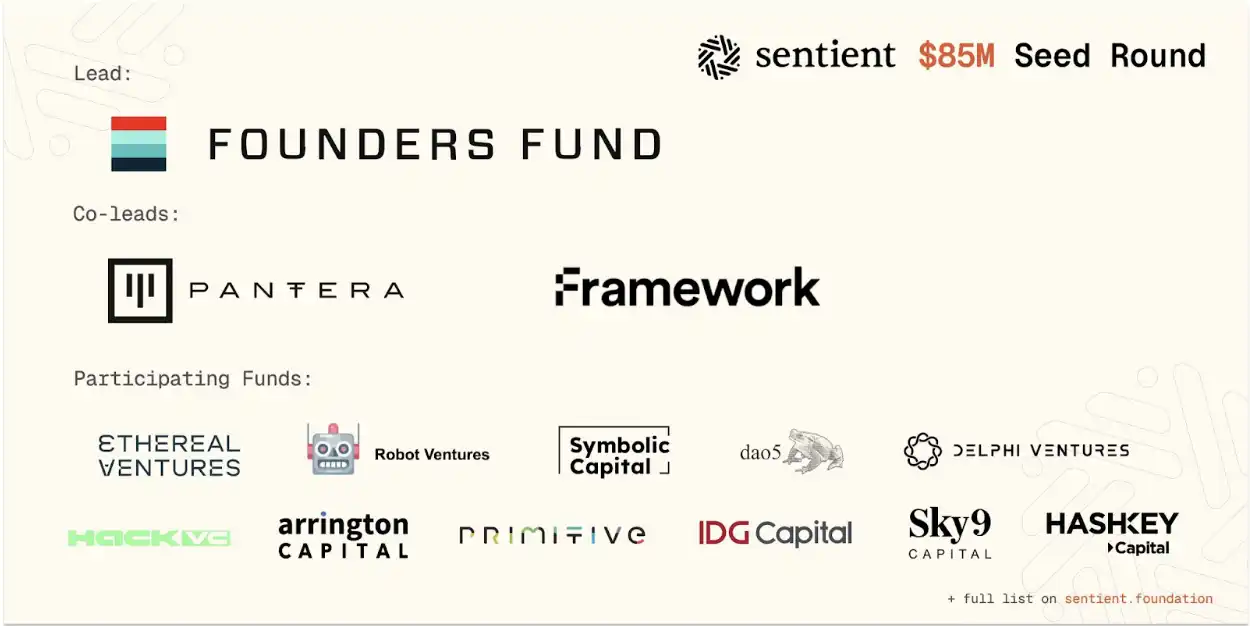
Sentient is a top-tier project born with a golden key. Its investor background, financing scale, and valuation far exceed most Crypto AI projects in the market. On one hand, its strong resource endorsement can more easily integrate industry resources, high financing can more easily hire top talents, and substantial capital can support the project to navigate industry cycles. On the other hand, the current Crypto industry is generally disenchanted with VC-endorsed high-valuation projects. Moreover, VC project token prices are primarily driven by capital operations and severely disconnected from fundamentals. If Sentient fails to deliver an impactful Crypto AI product and ultimately chooses a high-valuation token issuance, it will ultimately harm the Crypto community that urgently needs to rebuild trust. How the team addresses the current industry challenges is worth our continued observation.
VII. Competitor Analysis and Market Positioning
Most Crypto AI projects in the market focus on single domains like data, models, computing, training, or inference, or develop AI Agents for consumer-level applications. AI Chain-positioned projects include old public chain AI transformations (Near and ICP) or decentralized resource sharing and token incentive protocols like Bittensor. Sentient's positioning does not completely match these. On the model training side, Sentient is more like an integration platform, in a cooperative relationship with open-source AI models in the market. On the Agent side, Sentient has some overlapping competitive relationships with Talus, Olas, or Theoriq in multi-agent systems and reasoning capabilities, but each project has different core goals and application scenarios, maintaining complementarity.
VIII. Conclusion
As a decentralized Artificial General Intelligence (AGI) protocol platform, Sentient aims to provide clear ownership structures for AI models and enable calling and value distribution through on-chain mechanisms, addressing the unclear ownership and unfair issues in the centralized LLM market. The core framework OML (Open, Monetizable, Loyal) ensures open-source model ownership, transparency, and fair distribution through model fingerprinting and blockchain technology. Supported by Polygon co-founder Sandeep Nailwal's resources and backed by top VCs and AI ecosystem partners, Sentient hopes to become a standard protocol for decentralized AI ownership despite facing developmental uncertainties, controversies, and competition, ultimately promoting the decentralization of AGI.
Welcome to join the BlockBeats official community:
Telegram Subscription Group: https://t.me/theblockbeats
Telegram Discussion Group: https://t.me/BlockBeats_App
Twitter Official Account: https://twitter.com/BlockBeatsAsia