OpenAI's GPT-4o has sparked heated discussions for its ability to accurately generate images in the style of Ghibli animations. Users can reproduce the iconic soft tones and fantasy scenes by entering simple commands. Creators have transformed classic IPs such as "The Lord of the Rings" into Ghibli-style secondary works that have spread virally on social platforms. Although it demonstrates the technical potential of AI, it has also sparked legal disputes over whether "style imitation constitutes infringement."
In the past year, there have been a number of noteworthy legal cases in the field of AI:
The AI platform of a certain Zhike company was found to have contributed to infringement because it failed to block the Ultraman training pictures uploaded by users and the infringing content it generated, and was ordered to pay 30,000 yuan in compensation; a certain company copied the structure and parameters of the Douyin transformation comic special effects model and was ordered to pay 1.6 million yuan in compensation for unfair competition; in the "Phantom Wing Transparent Art Chair" case, Feng sued Zhu for plagiarizing the design after only generating pictures through simple prompts, but the court ruled that the AI-generated content did not constitute a protected work due to the lack of "original intellectual input" and rejected Feng's infringement claim.
What are the basic principles for judging these cases? How do we deal with the impact of AI infringement in our daily work and life?
As AI capabilities continue to increase, the boundaries between imitation and infringement, reference and copying have become extremely blurred. This dispute not only challenges our understanding of the nature of "creativity", but also tests the adaptability of the existing copyright legal system in the AI era.
To explore this topic in depth, Tencent Technology's "The Road to AGI" specially invited professional artist Tai Xiangzhou, assistant researcher Liu Yun from Tsinghua University Law School, partner Li Yunkai from Tianyuan Law Firm, and Zhao Wang, senior researcher at Tencent ARC Lab, to jointly analyze the complex challenges caused by AI art creation from multiple dimensions, including artistic creation, legal norms, and technical implementation.
Core ideas:
- Does the law protect so-called "artistic style"?
Copyright law protects specific "expressions" rather than abstract "ideas" or "styles". Style is more considered to be a personal aesthetic preference or tendency, belonging to the ideological level. Simply imitating or learning the style of Ghibli usually does not violate the provisions of copyright law.
- Is it infringement if AI developers use unauthorized data for training?
AI training requires massive amounts of data, and the traditional principle of "authorization before use" is no longer appropriate. China lacks relevant legislation and exemption mechanisms, and there are precedents such as the Xiaohong calligraphy and painting rights protection case. Although AI companies generally adopt the "use first, then discuss" strategy, this practice still poses legal risks.
- Who should be held responsible when AI infringement occurs?
Taking the "Lord of the Rings" in the Ghibli style as an example, imitating the painting style is less risky, but using its storyline and characters may constitute infringement. Potential defendants in infringement lawsuits include users, AI platforms, and dissemination platforms.
In practice, rights holders often sue AI platforms, but if the platforms have established a sound management mechanism and do not actively encourage infringement, they can apply the “safe harbor principle” to obtain exemptions.
- Can someone who creates with AI be called a true artist?
The core competitiveness of creators lies in the depth of thought and insight into the times. As long as they can create works with a unique perspective, AI is just a tool for expression, not a substitute.
AI creates from the bottom up, from pixels to semantics, while humans create from the top down, from artistic conception to details. AI regards all pixels as equally important, while humans prioritize details.
The following is a summary of the highlights of this live broadcast (abridged):
Does the law protect "style"?
Tencent Technology: How long does it usually take for an artist to form his or her own artistic style? What are the difficult-to-quantify but crucial qualities contained in this style?
Tai Xiangzhou: I think that behind the artistic style is actually a concept, which reflects the artist's grasp of the entire era. When grasping the clues of the times, the artist needs to find an advanced form with foresight, so as to arouse everyone's resonance and perception.
Just like the popular science fiction novel "The Three-Body Problem", it became a trend because it fits the exploration and pursuit of the unknown world by people in our era. As for Hayao Miyazaki's animation style, it has actually been popular for many years, and it should have gradually faded out of the mainstream vision.
But the emergence of GPT has reawakened the style of Ghibli. I think this can be regarded as a rebirth for the Miyazaki faction . From the perspective of an artist, I think this is a very lucky thing.
Tencent Technology: From a legal perspective, can the law protect a certain "style"?
Li Yunkai : From a legal perspective, China's current copyright law does not actually give a clear definition of "style". However, based on practical experience, it can be understood that style is a set of fixed characteristics that an artist exhibits when creating his or her works, such as the things he or she tends to depict, the viewpoints he or she conveys, the color schemes he or she prefers, and the techniques of expression that are related to his or her personal aesthetic preferences.
Similarly, the current copyright law does not specifically protect the style itself, because the copyright law mainly protects specific "expressions" , such as a painting or a piece of text, rather than abstract "ideas" or "styles". Style is more considered to be a personal aesthetic preference or tendency, belonging to the ideological level. Therefore, as long as it is not fixed on the specific expression of the work, it is usually not a violation of the provisions of the copyright law if it is simply imitating or learning the style of Ghibli.
Tencent Technology: From a legal perspective, what are the prevailing views on the protection of style?
Liu Yun: Internationally, there is indeed a relatively mature analytical framework to deal with such issues, which we call the "dichotomy of thought and expression." Simply put, copyright protects the specific expression of the author's thoughts, not the thoughts themselves. The establishment of a copyright system, on the one hand, gives creators exclusive rights for a certain period of time to encourage creativity; but on the other hand, this knowledge will eventually return to the public domain for future generations to learn and refer to, and promote cultural dissemination.
In practice, as the famous American Supreme Court Justice Hand said, the boundary between "idea" and "expression" is often vague and it is difficult to draw a clear line. For example, if a game involves the rules of "Three Kingdoms Kill" (virtual hypothesis), a single basic rule or setting may not be protected, but when these rules, character features, skill effects and other elements are combined to form an overall game presentation, this specific "expression" can be protected by copyright law.
Tencent Technology: AI-generated images often have a recognizable "tool style", for example, you can tell at a glance whether it was generated by Midjourney or GPT-4o. How is this AI style formed at the technical level? Compared with the creative style of humans, what are the essential differences?
Zhao Wang: Since the beginning of deep learning in 2014, the paradigm of AI-generated style has been the same, which is to mine computational mathematical patterns from big data, on the one hand data, and on the other hand the ability of the model to fit functions. At that time, if you wanted to generate a specific style, you needed to collect specific data and train a specific model. Now a unified model like GPT-4o has emerged that can integrate different styles without the need to make a specific design for a certain task or style.
As for the difference in specific style from human artists, this is a very interesting question.
First, the paradigm of AI creation is bottom-up, while human art is top-down. AI starts from pixels and gradually learns local and global semantic information; while humans gradually deconstruct specific expressions from the highest level of artistic conception. For humans, details are differentiated in importance, while for AI, every pixel is equally important.
The second point is that AI creates content without context, or in other words, it has too little uncertainty compared to humans. The uncertainty here refers to the fact that AI, as a behavioral subject of society and the times, lacks emotions and its own thinking.
Third, human learning and creation is efficient, but also limited; while AI learning and creation is inefficient, but scalable. It is impossible for human students to completely copy the teacher's works in large quantities, but AI can stably generate a certain style.
Tai Xiangzhou: Artworks are essentially closely related to time. Each era has its own universal artistic paradigm. For example, during the Renaissance and the Enlightenment, light became the measure of time, and realistic painting was born. Behind this was science and civilization. Since 1900, the understanding of light has been deconstructed again and divided into photons, which gave rise to pointillism and impressionism.
So whether it is Van Gogh or Monet, they are all individual differentiations produced under a big scientific logic. Artists step on this pulse based on their own thoughts. The technique itself is not very important. After long-term training, they will form their own skilled style. The thought behind it is more important.
What exactly is the Ghibli style? In fact, when Hayao Miyazaki made animations, he was really making movies at first. Later, he flattened the movies, more like a pixel method, converting what people do into computer language, so it is easy for machines to learn. With the development of the Internet, it has become a trend of the times. Ghibli's style is formed on the basis of this flat and fragmented style.
Therefore, the key lies in understanding and mastering this "underlying logic". If we can truly grasp it, I believe that future AI engineers will be able to create greater works based on this.
Tencent Technology: You just mentioned that Hayao Miyazaki’s painting style is compatible with machine learning. So is it easier for AI to learn certain artistic styles?
Zhao Wang: Hayao Miyazaki's Ghibli style is equivalent to simplifying the images of the real world. Its colors and lines are simple and continuous, with fewer details. From the most basic perspective, this style is definitely easier for AI to learn.
Our real-world images have too many details and too many dimensions, so it is difficult to generate raw images. For example, before Midjourney v5, people might think that the generated real-life images had few hand details and poor hair and eyes.
For the latest GPT-4o or Midjourney v8, no matter what genre or style, it is not difficult. What is difficult is to create something new one step ahead. AI may be able to "create" with some of its own emergent capabilities, but in the end it cannot escape the original data distribution.
Tencent Technology: If it is not AI, but a person imitating a specific art style (such as the Ghibli style) for commercial creation, does this constitute infringement?
Liu Yun: It may constitute infringement. The key to judgment is whether the specific work created by the copyright holder (such as Studio Ghibli) is substantially similar to the specific work protected by copyright. If it is only similar in style, but the content, composition, specific image, etc. are original or not substantially similar, it does not constitute infringement.
Li Yunkai: I would like to add a core concept: Copyright law does not prohibit imitation, and even encourages imitation to some extent; what copyright law prohibits is direct copying of other people's works, that is, copying other people's specific expressions without one's own creation and understanding. Therefore, whether it is a human or an AI, there is legal space in the process of learning and imitating styles.
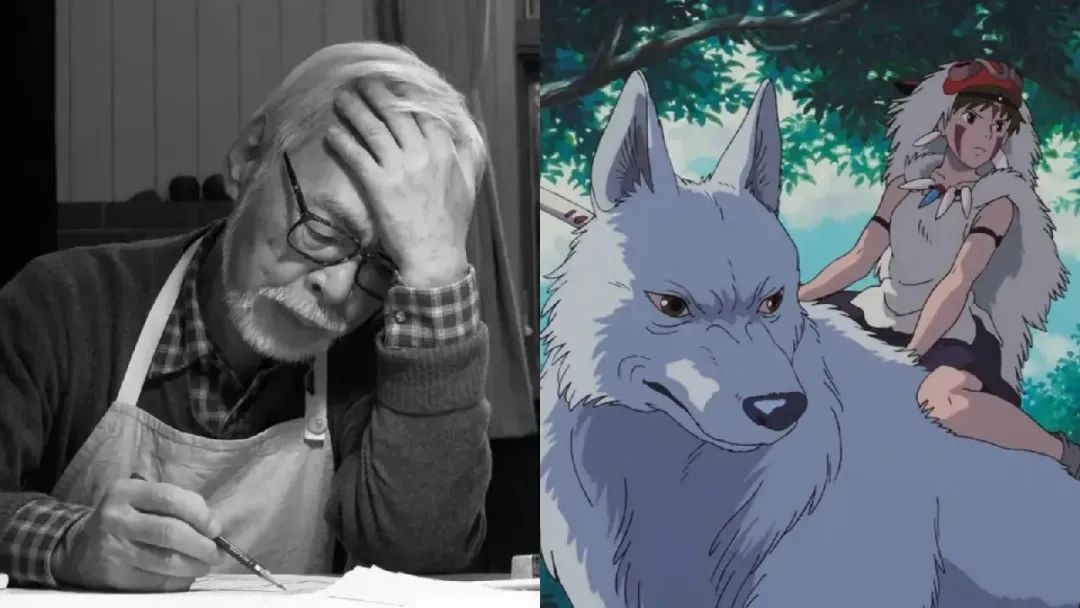
Image credit: Studio Ghibli
The Sword of Damocles Hanging Over AI Developers
Tencent Technology: When the Ghibli style was popular, there was a rumor that Studio Ghibli issued a statement, although it was eventually proven that this statement did not exist. If Studio Ghibli really filed such an infringement lawsuit, what is the possibility of winning?
Li Yunkai: As a legal professional, the core of my concern is: What are the similarities between AI-generated content and the original work? As we just discussed, copyright law protects specific expressions, such as Totoro and Howl, which are the original images created by Hayao Miyazaki; but if the composition and rounded lines are similar, it does not constitute infringement.
Another issue to consider is the AI training process. Even if the final generated image does not directly infringe, if the AI uses Ghibli's animation works as learning materials without permission during training, does this "learning" or "input" behavior itself constitute unauthorized copying? This is actually another legal issue, which needs to be judged according to the specific laws of each country.
Therefore, we need to look at this problem from two perspectives: the output side (generated content) and the input side (training data).
Tencent Technology: When training a very powerful model, what data can be used for training? Are there any relevant regulations?
Li Yunkai: China has actually started paying attention to the management of AIGC relatively early. For example, the interim regulations on the management of artificial intelligence issued in 2023 put forward a principled requirement that if our training corpus involves intellectual property rights, in principle, we should obtain the authorization or consent of the right holder.
This is a basic legal principle, but there are still huge problems in practice.
First of all, the amount of data required for AI training is extremely large. For example, the effect of GPT-4 has basically crawled and trained all the available data on the Internet. Some institutions even predict that by 2028, all human Internet data will be exhausted.
It is actually impossible for us to obtain permission for every picture, comment, and poem that we crawl from the Internet. It can be said that the traditional copyright authorization system is no longer applicable under this scale of data. If we really strictly abide by the principle of "authorization before use", many AI tools may not be able to develop.
There is no special AI legislation in China, but there is no special legal exemption. Moreover, related lawsuits, such as the lawsuit filed by Xiaohong calligraphy and painting artists against the platform, have already occurred, indicating that legal risks are real.
As far as I know about industry practices, many AI developers and companies are still in a period of taking advantage of institutional dividends and using data first. But risks still exist, like a "Sword of Damocles" hanging over the heads of each of our AI developers.
Liu Yun: At present, the EU AI law and the domestic AI management measures mention that the data used should be recorded, but the record is only for internal use and there is no explicit requirement to make it public. This is actually a protection period.
However, if AI legislation is implemented in the future and transparency of training data is included, it may trigger rights holders to defend their rights.
According to traditional laws, if the user agreement stipulates that the content uploaded by the user is authorized, there is no problem whether it is paid or unpaid; but if it is unauthorized content on other platforms, there may be problems and the risks need to be assessed.
My suggestion is to strictly control the output and avoid direct infringement when outputting content on large models.
Who should be held responsible for AI infringement?
Tencent Technology: Would you mind submitting your work to AI training?
Tai Xiangzhou: Of course I don’t mind, I’d love to have it, just like a singer who writes a song and hopes it will be sung by the whole world.
I think why Ghibli is so successful is that these works are very concentrated. A large number of works were produced in a certain period of time, forming a large amount of data. In this context, it is easy for machines to learn and spread. The traffic here also represents a trend.
Tencent Technology: What would be the most unacceptable thing for you if your work were applied to AI tools?
Tai Xiangzhou: What I cannot accept the most is that the AI-generated work is extremely similar to my original work (for example, more than 90%), but in the end it is signed by someone else. As an individual artist, my creative output is limited. But on the contrary, if it is just quoting my image and clearly indicating the author, I can completely accept it.
Tencent Technology: Some netizens created a "Ghibli-style Lord of the Rings" video, which has a high number of views on social networks. Does it constitute infringement? How might they be held accountable? What will be the logic of the court's trial?
Li Yunkai: This case involves multiple rights holders (the copyright holders of the novel and film "The Lord of the Rings", and Studio Ghibli). However, as mentioned above, simply using the Ghibli style itself usually does not constitute an infringement of its copyright, and the risk in this regard is relatively small.
The main legal risk is the use of the Lord of the Rings IP, including the storyline, characters, etc., which may infringe the adaptation rights of the original novel or the film. The specific infringement depends on whether the original content of the novel or the new content of the film is used.
If the rights holder files a lawsuit, potential defendants usually include:
1. User: directly issues instructions and dominates content generation.
2. AI tool providers (platforms): provide generation capabilities and may use relevant IP elements during the training phase. If the platform is aware of or should have known about the user's infringement and still provides assistance, it may bear joint and several liability.
3. Publishing platform (social media, etc.): If the infringing content is spread widely, you may also be held liable.
However, in practice, due to the dispersion of users and limited compensation capacity, rights holders often mainly pursue AI platforms for liability. When hearing such cases, courts usually apply the "safe harbor principle" and focus on examining whether the platform has fulfilled its reasonable management obligations, including: whether it has clarified user responsibilities and prohibited infringement; whether it has set up an effective filtering mechanism; whether it has established a convenient complaint channel and handled it in a timely manner; whether it has actively encouraged infringement, etc. If the AI platform fulfills its responsibilities, it may be exempted from liability.
As for the specific forms of legal liability, they mainly include: stopping infringement, such as requiring the platform to filter relevant keywords and prevent the generation of similar content; apologizing, eliminating the impact, and financial compensation.
There is another more complicated question here: since the platform may have used the data of "The Lord of the Rings" without permission during training, is the platform obliged to delete the relevant training data (vectors) in the model? From a technical point of view, it is very difficult and costly to completely delete or block what the model has learned. The law may not currently force the platform to do so. Instead, it requires the platform to fulfill reasonable management obligations at the output end to prevent the generation of infringing content.
Tencent Technology: So how should the platform avoid liability risks at the user agreement level?
Li Yunkai: The key lies in the compliance granularity of the agreement terms. Specifically, the following aspects can be designed in the user agreement and related management measures:
First, clearly define the requirements for user use; second, set up filtering measures to filter out misleading and malicious content; third, reasonably monitor user behavior, such as sealing and freezing accounts that exceed the rules; fourth, reserve the right to pursue accountability, and prosecute users for bad behavior such as using "breaking line words" to circumvent the platform's jurisdiction; fifth, provide positive guidance and clarify the types of erroneous behavior.
AI creation: a new dimension that challenges the definition of art?
Tencent Technology: How will human art develop in the future under the influence of AI? Is AI really creating art?
Tai Xiangzhou: I think the development of artificial intelligence has many different directions, not just large models. At present, the capabilities of AI are sometimes like a child. More importantly, I actually think that AI is still the result of the guidance of participants like you and me.
For example, if we regard the entire universe as a huge model, then each of us, each individual, may be just a piece of code. We create based on our own unique "code".
Therefore, our creations have common characteristics as human beings, but also have very strong limitations, such as being influenced by specific "categories" such as the country, nation, and culture we live in. It is these different cultural characteristics that have given birth to a rich variety of art forms and styles. Whether it is literature or film, they all contain unique wisdom and style. AI learns these patterns based on specific cultural backgrounds.
So, from this macro perspective, if we think of each of us as an independent "segment of code", then perhaps one day, an AI that can learn, integrate, and even surpass all of these "segments of code" will have the opportunity to surpass each of us in creativity.
Tencent Technology: If AI can mass-produce content, are you worried that your income or the commercial value of your work will be affected?
Tai Xiangzhou: I think we need to look at it from a more futuristic perspective. In my opinion, the work itself is actually a kind of currency, as is human wisdom and code. The more people agree with it, the more traffic it will generate, and this traffic will eventually be converted into value.
People, codes, and companies may all be converted through this kind of traffic, forming a new state of existence. So when facing the future, we must look at it from a larger scale so as not to be eliminated by the times.
Tencent Technology: Faced with the anxiety that AI may replace professions such as illustrators, and the reality that AI learns much faster than humans, how should we deal with it? And how should we conduct art education?
Tai Xiangzhou: Regarding the anxiety of illustrators and the problem of art education, we need to return to the essence of art. Some current art education (such as the examination-oriented system) may have deviated from the original intention of cultivating independent thinking and is more like training a "painting machine."
We should reflect on why people create. Even without modern technology, the need for humans to record, understand, and spread observations of the world still exists. This is the fundamental value of the creator's work, and this principle has never changed.
Therefore, for creators, the core competitiveness does not lie in the speed of drawing, but in the depth of thought, understanding and foresight of the times, and whether they can create images with unique perspectives and thinking. If this can be achieved, the creator will have eternal significance, and AI will be a tool to assist in expressing ideas, not a substitute. As for those "industrialized" drawing tasks that are simple, repetitive, and lack unique thinking, they may indeed be suitable for AI to undertake.
Tencent Technology: There are now "AI artists" who use prompts to drive AI to create. Do you think they can be called artists?
Tai Xiangzhou: In the current era of self-media where "everyone is an artist", the title itself may not be the key. The real criterion lies in whether the work can gain widespread and lasting recognition (traffic) and settle into a value with long-lasting vitality. History will filter, and only a few will be remembered in the end.
Whether people who create with AI can be called artists depends on whether they can ultimately create works that can transcend time and achieve eternal value, like classic IPs.
Tencent Technology: How to legally balance human creativity and the unlimited replication of AI?
Liu Yun: This is indeed a very difficult balance to strike.
This is indeed a very difficult balance to grasp. From the perspective of the overall legal framework, I think there is a basic rule here: any epoch-making technology will inevitably have an impact on the existing interest structure and trigger a game. If no one opposes a technology, it is likely not truly epoch-making. Just like autonomous driving technology, whether L3 and above can obtain full road rights is still a big controversy, and even the regulatory authorities are cautious.
Similar games have always existed in history. For example, when digital libraries were emerging in the early years, some writers such as Han Han jointly sued Baidu Library for copyright infringement. This game process will eventually gradually reach a new balance point.
For technology innovators, when conducting research and development that may lead to "disruptive innovation", they also need to have foresight. The innovation process may bring huge benefits, but at the same time, the impact that innovation may have on certain groups must also be considered.
The interests of these groups are also what we need to pay attention to and protect. Sometimes the law even tends to protect those relatively minority or vulnerable groups.
We have also seen some specific examples, such as Mr. Zheng Yuanjie, who tried using AI to generate works in his own style and felt that AI wrote better than he did, so he even announced that he would stop writing. This is one way to deal with it. Others may choose to sue through legal channels.
The sensitive reactions and actions of these minority groups can also promote a consensus in society: when technological innovation brings huge benefits, we also need to consider how to feed back to traditional creators who may be impacted. Only in this way can the whole society make a joint appeal and make progress together.
This article comes from the WeChat public account "Tencent Technology" , author: Xiaojing, Ziyan, 36Kr is authorized to publish.