This survey titled 'Asian Crypto Security Survey' collected 29,847 valid responses from Southeast, South, and East Asian users providing a comprehensive observation of how regional users view and implement security measures, and how exchanges and the industry can further support users through tools, education, and proactive protection mechanisms.
'Awareness'Changing
According to survey data, 47.2% of respondare are high-frequency traders using crypto exchanges multiple times daily. Notably, nearly 30% entered the crypto market in the past six months,, reflecting rapid Asian crypto market growth.
Despite rapid user expansion, the clear security behavior differences: while most users have basic protection awareness, basic advanced protection mechanism adoption remains insufficient:
- 80.5% have enabled2FA, showing good basic security awareness.
- Only 17.6% enabled address whlistingisting, and 21.5% use anti-phishing verification codes.
- 34.4% store private keys on devices 42% in Southeast Asia, highlighting highlighting continuous education and practical tools' importance to simplify security protection processes.
- Optimistically, 73.% users verify recipient addresses before transfers, showing risk management importance in daily operations.
Overall, the survey shows continuous education is crucial in motivating users to confidently adopt advanced security measures.
As Users Become More Proactive, Exchange Trust Simultaneously Increases>increases
According to the survey, despite 40.encoun.7crypto-related scams, now show higherability p<
From Passive to Proactive: Users Have More Exchange Security Expectations
Survey results indicate user expectations have significantly shifted—from passive protection to real-time, intelligence-driven threat management. Users increasingly, they expect exchanges actively detect, prevent to prevent,tithreats before damage occurs.
- 62.5% of respondents listed 'real-time threat interception' as their primary security need, indicating a strong demand for automatic defense and early warning systems.
- 50.4% of respondents indicated the need for device-level threat detection functions, such as malware identification and alerts for compromised devices.
- Nearly half of the respondents support establishing a suspicious address database and introducing biometric authentication to enhance identity protection measures.
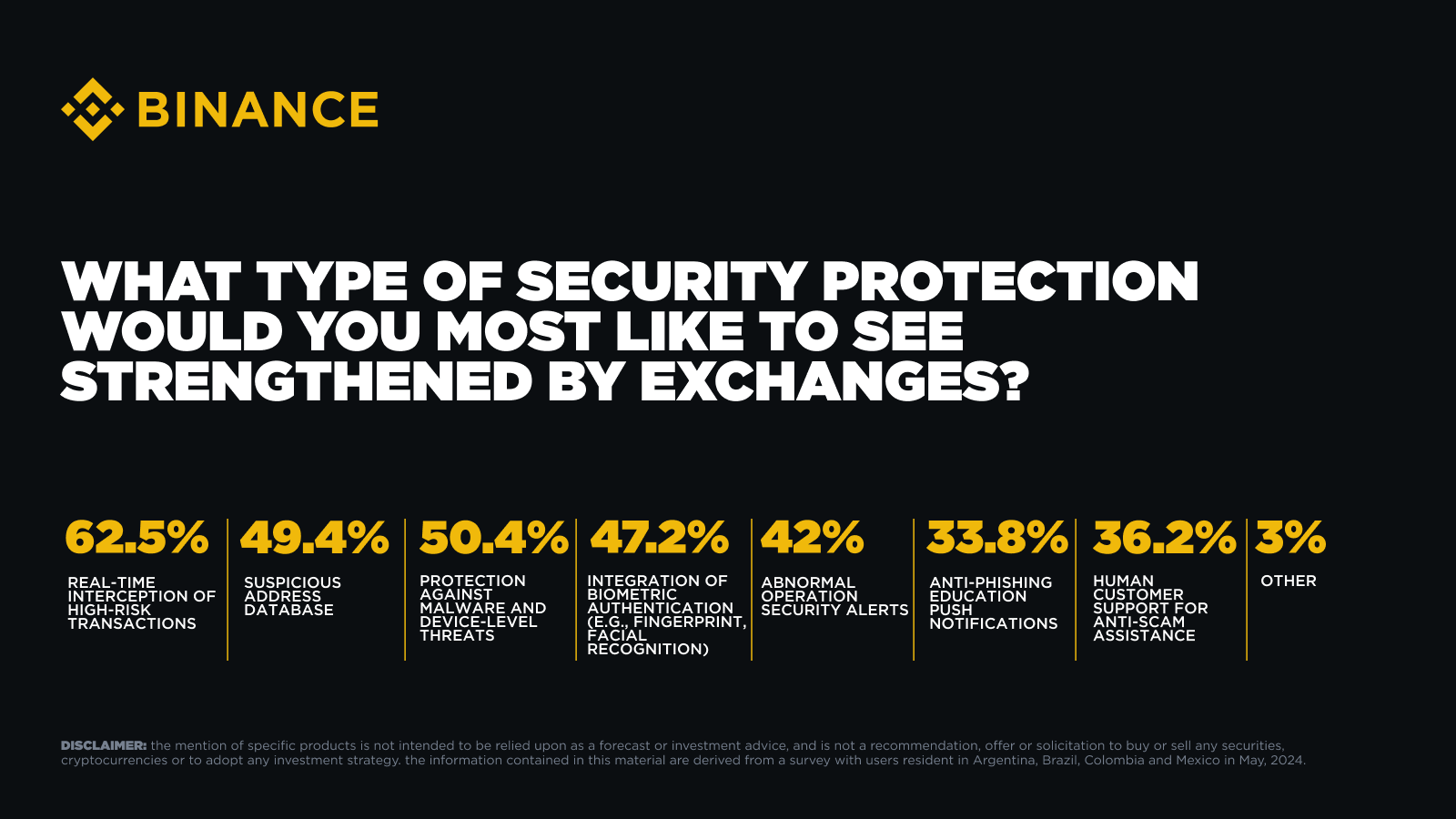
This change reflects a shift in user mindset: exchanges are no longer seen merely as asset trading platforms. Today, users expect industry leaders like Binance to set new standards, especially in creating intelligent and intuitive security systems.
Users Prioritize Private Key Protection, Binance Enhances Decentralized Wallet Security with MPC Technology
In decentralized wallets, users most value features that provide stronger control and intelligent threat detection. Survey results show that wallets are no longer just tools for storing assets, but intelligent security layers for asset protection.
- 62.8% of respondents listed strengthening private key protection as their most anticipated wallet feature—highlighting users' high demand for more intuitive and secure self-custody tools.
- 50.4% of respondents desire more comprehensive backup and recovery options, which are key to helping users enhance their sense of security and asset control.
- Over 40% of respondents support building proactive fraud detection tools, such as phishing warnings, suspicious transaction monitoring, and hacker protection features.
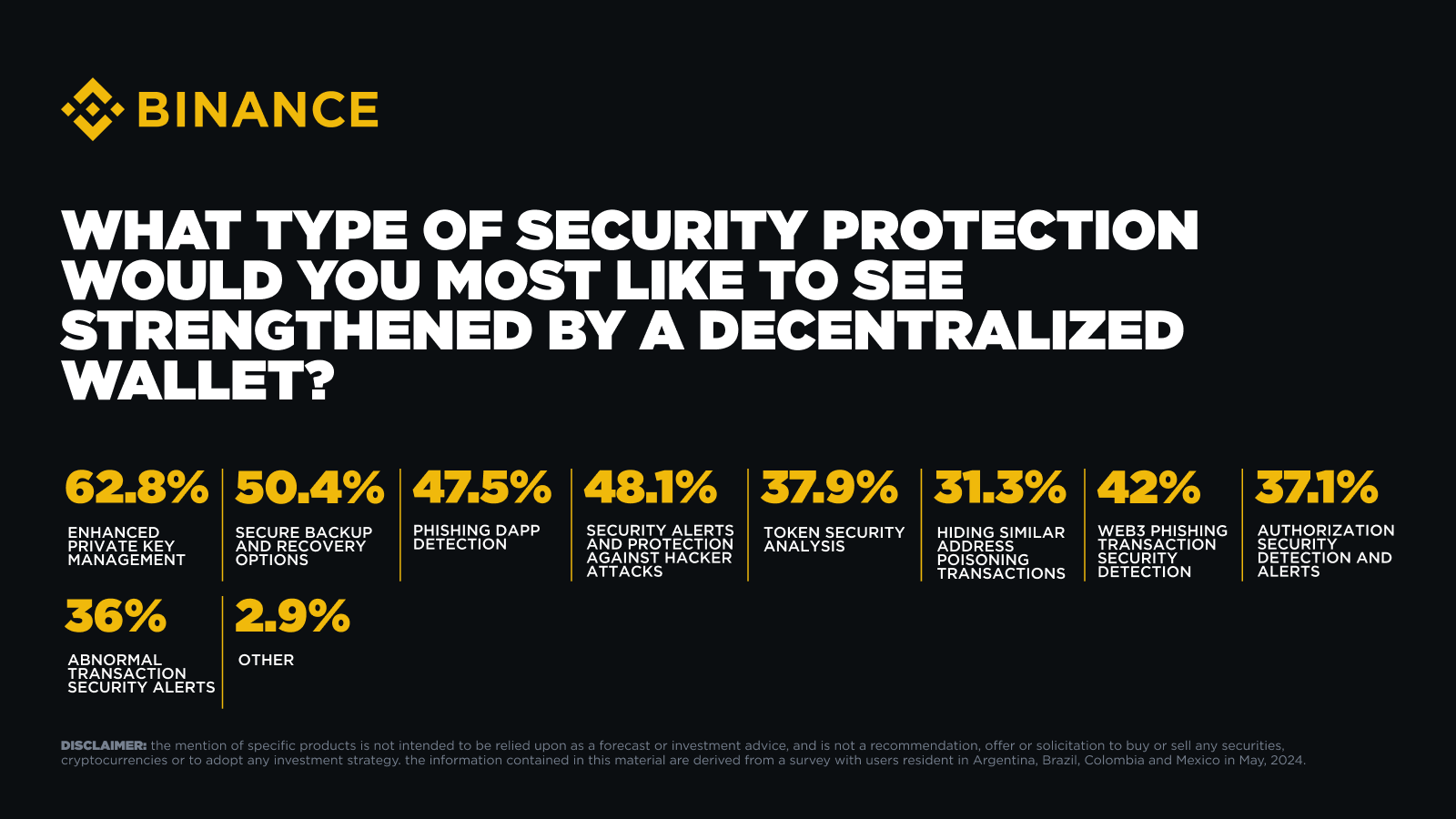
Binance meets these user expectations through itsBinance Wallet, which plays a key role in the decentralized wallet field. The wallet uses MPC (Multi-Party Computation) technology, eliminating the need for a seed phrase and securely splitting the private key into three encrypted keys.
Simple and Localized Education is Key to Bridging the Security Gap
Education remains a crucial pillar of user protection, with the survey showing users are eagerly anticipating more practical and accessible learning experiences:
- 55.8% of respondents believe existing materials are 'too technical and difficult to understand'
- 39.7% prefer localized real-case analyses to enhance understanding of actual scenarios
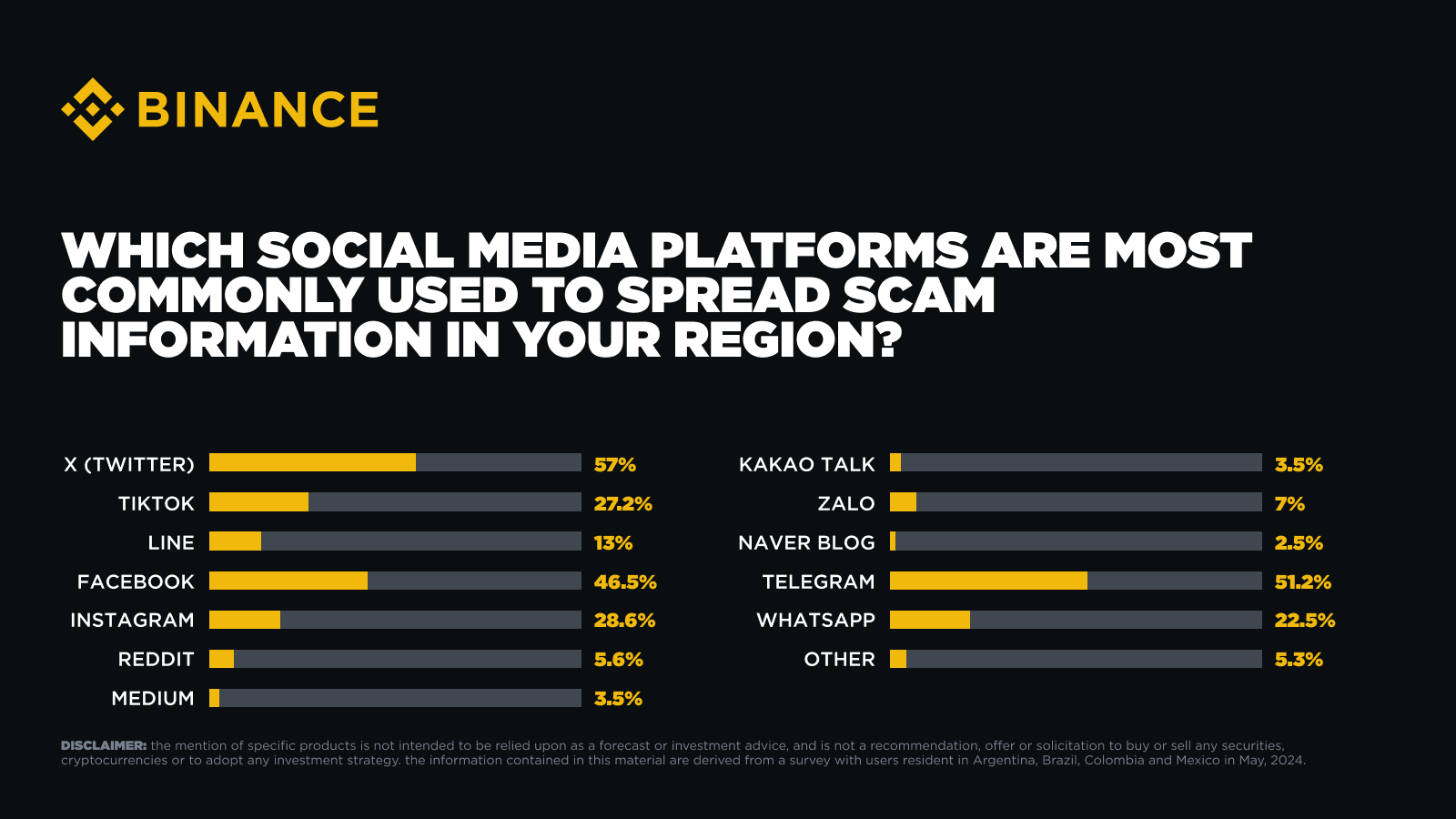
To effectively promote anti-fraud education, understanding the channels where users most frequently encounter misleading or fraudulent content is crucial. In the entire Asia-Pacific region, such content is most common on X (formerly Twitter, 57%) and Telegram (51.2%), but the contact channels vary slightly across different markets—for example, in Southeast Asia, Facebook is the primary platform (61.1%), while in India, WhatsApp is the key channel (42.5%).
61.3% of respondents indicated willingness to participate in 'anti-fraud simulation tests' led by exchanges to enhance their awareness—especially when these tests incorporate rewards or gamification design, showing that users are not only willing but eager to learn.
Our security team regularly shares easy-to-understand articles, breaking down complex topics likeSMS phishing (smishing) andphishing attacks, helping users bridge knowledge gaps while retaining all key details. Welcome to check out our security column series, embark on a journey full of insights, and help you identify potential risks!
Binance: Comprehensive Security Enhancement
According to Chainalysis' 2025Crypto Crime Report, crypto addresses used for illegal purposes received $40.9 billion in funds in 2024. Although this number may rise as more illegal addresses are identified, the proportion of illegal transactions to overall on-chain activity has significantly dropped—from 0.61% in 2023 to just 0.14%, indicating the effectiveness of proactive security measures in the entire industry.
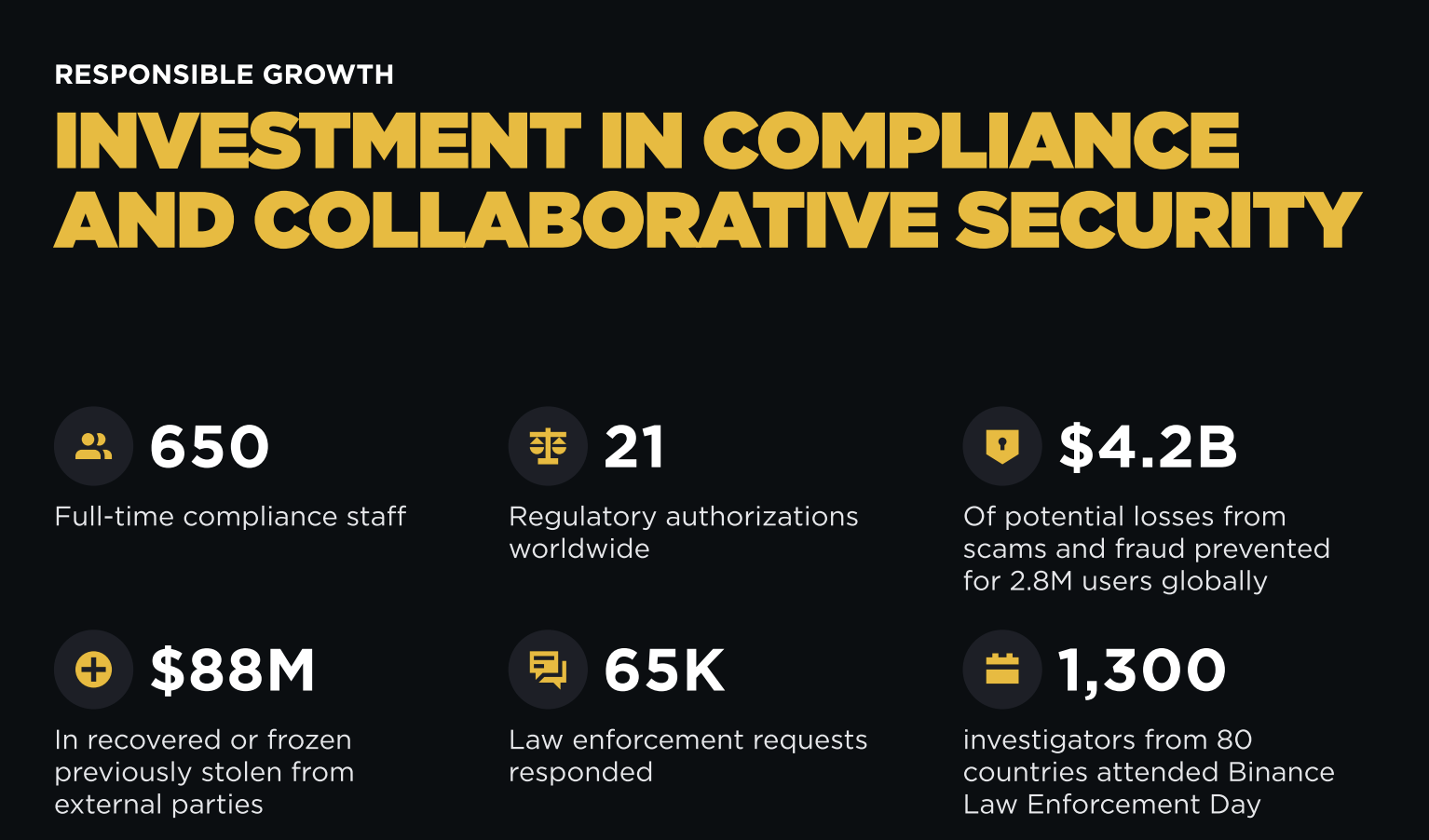
Binance continues to lead in the security field and doubles down on its commitment to security and compliance, investing hundreds of millions of dollars to enhance platform protection and build overall industry resilience.
Binance's Chief Security Officer Jimmy Su stated: "In 2024 alone, we successfully prevented over $4.2 billion in potential user losses, helped recover $88 million in stolen or lost assets, and protected over 2.8 million users from malicious attacks".
"As the industry continues to develop, malicious actors' methods are also evolving. We are heavily investing in localized, practical, and easy-to-understand anti-fraud education that truly meets user needs; simultaneously, we are accelerating the deployment of real-time risk detection systems and closely collaborating with regulatory and law enforcement agencies across Asia to better protect user assets."