Author: Bridget Harris
Translated by: TechFlow
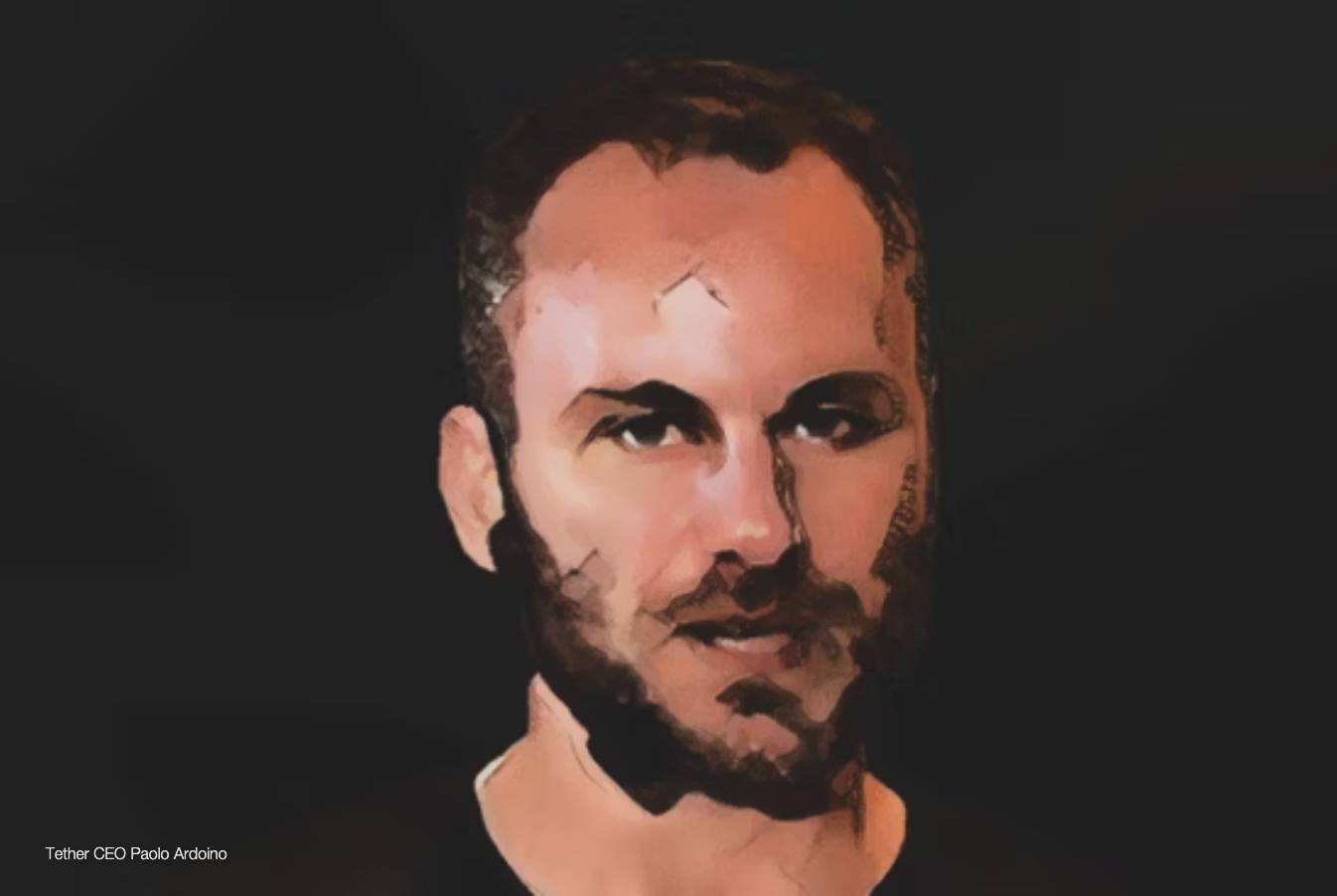
In 2024, Tether created a profit of $14 billion with just 150 employees, equivalent to $93 million per employee. This astonishing efficiency leads many to believe that Tether might be the most operationally efficient company globally.
So, how did this stablecoin company achieve this feat?
Thanks for reading TechFlow! Subscribe for free to receive new posts and support my work.
Tether recorded a profit of $14 billion last year, surpassing Pfizer, Tesla, and BlackRock. This was achieved without relying on advertising or a large workforce, but solely through a product that many might not have paid much attention to—the stablecoin USDT.
Today, USDT's circulation has reached $147 billion, far ahead of other stablecoins, becoming the most widely used stablecoin globally. Moreover, Tether has been exploring ambitious ventures in artificial intelligence, private communications, and neurotechnology.
Whenever someone purchases USDT, Tether uses the received cash to generate income, primarily by investing in U.S. Treasury bonds.
In 2024, Tether became the seventh-largest buyer of U.S. Treasury bonds, even surpassing countries and regions like Canada, Taiwan, and Norway. Its growth rate continues to accelerate: last year, the total issuance of USDT reached $45 billion, a year-on-year growth of 57%, and USDT's user base grew by 13% in the first quarter of 2025.
Although Tether was previously known for its low profile, as the U.S. regulatory environment shifts in its favor, the company has begun to share more about its future vision.
Stablecoins are essentially blockchain-based digital dollars, pegged to the U.S. dollar at a 1:1 ratio. They provide an effective way to access dollars globally, serving both as a savings tool and significantly improving fund mobility, especially in cross-border payments.
Currently, the second-ranked stablecoin is Circle's USDC, with a circulation of $62 billion, less than half of USDT's. USDC focuses more on payment compliance and institutional adoption. Unlike USDT's dominance in international markets with limited dollar access, USDC—initially launched by Coinbase and Circle—is more popular in the U.S. market.
Tether's CEO Paolo Ardoino, a 40-year-old Italian computer scientist, describes himself as a "simple man" and shows no concern for competitors.
In an interview with Forbes earlier this month, he stated: "They do not represent the true use case of stablecoins."
In his view, the core value of stablecoins is providing a reliable and practically usable currency for people in economically unstable countries. For example, individuals in Argentina, Turkey, and Nigeria. These regions face rapid local currency depreciation, making savings almost impossible, thus urgently needing access to dollars.
Although USDT's primary use cases are still concentrated in emerging markets, Paolo is exploring launching a domestic stablecoin specifically for U.S. institutions.
"How 'interesting' would this be for our competitors?" he joked in the Forbes interview.
A particular aspect of Tether's business is its relationship with the legendary U.S. financial institution Cantor Fitzgerald. Years ago, when other U.S. companies were unwilling to engage with Tether, Cantor became its banking partner. At the time, Tether was highly controversial due to Chinese corporate bonds in its USDT reserves.
Despite the controversies, Cantor took a risk and established a partnership with Tether. Recently, Cantor purchased a 5% stake in Tether for $600 million, clearly at a significant discount. This move might partly be a thank you for Cantor's early support. Notably, Howard Lutnick, Cantor's former Chairman and CEO, is now the Commerce Secretary in the Trump administration.
At a recent Bitcoin conference, responding to criticisms about Tether, Lutnick said: "They say Tether is owned by the Chinese. Actually, it's owned by Giancarlo, who is Italian, and there is a difference."
(Note: Giancarlo is Tether's CFO, owning about 47% of Tether's shares. Source: Forbes)
What is the secret behind Tether's close relationship with Cantor and this preferential deal? The key lies in Cantor's unique status: it is one of only 24 primary dealers in the U.S. that can directly trade with the Federal Reserve.
In practical terms, this means that if a large number of users try to exchange USDT for dollars, Tether can immediately meet the demand. As a primary dealer, Cantor helps the Federal Reserve maintain government bond market liquidity, granting it direct trading channels with the Fed. When Tether needs cash, Cantor can directly sell U.S. Treasury bonds to the Federal Reserve without delay or intermediaries.
In other words, Tether has gained the ability to instantly access dollars through the world's safest, most liquid assets. This "firepower" is unattainable by any other stablecoin issuer.
Tether's strong position is no coincidence. In 2022, Tether was attacked by Sam Bankman-Fried and his company FTX. They attempted to trigger a bank run-like crisis by accumulating and selling billions of USDT in just two days. Ultimately, Tether successfully handled redemption demands of up to $7 billion—equivalent to 10% of its circulation at the time.
Tether CEO Paolo Ardoino noted in a recent 'Odd Lots' program that a 10% run within 48 hours would bankrupt most financial institutions, yet Tether remained "unscathed".
To some extent, Tether is also resilient to U.S. Treasury bond rate fluctuations: typically, when rates drop, economic activity increases, which drives growth in Tether's deposits and USDT circulation (though yields might decrease, more funds still bring substantial earnings). When rates rise, Tether can directly boost profits through higher reserve yield rates.
Although these may not completely offset each other, this structural dynamic is an advantage for Tether.
Tether's critics often accuse the company of never undergoing a formal audit and speculate that USDT might be used for crime and money laundering. To this, Paolo usually cites examples showing that illegal funds often flow undetected through banks, credit card networks, and payment processors until they enter the Tether system and are flagged and frozen. Tether has assisted over 400 U.S. law enforcement actions and collaborated with 230 institutions from 50 countries.
Paolo also believes that in South America and Africa, Tether is essentially the last line of defense in the dollarization process. In these regions, "there's almost no U.S. presence," he mentioned in the 'Odd Lots' program, "except for McDonald's."
"In these places, hospitals, schools, libraries, and airports are built by China," Paolo said. He also mentioned that China is pushing a gold-backed digital currency to pay all employees of these infrastructure projects. If successful, this could threaten the U.S. dollar's status as a reserve currency and ultimately weaken U.S. global political influence.
In>African villages, Tether is building small sites with solar panels where people can lease batteries for 3 USDT per month. In these regions, electricity resources are extremely scarce, with 600 million people unable to access reliable power supply. Considering the average monthly salary in these villages80, 3 USDT subscription service is very cost-effective for local residents. Similar initiatives have emerged in South America, where small stores have started ACCEPTING US. These channels not only serve as grassroots distribution mechanisms for USDT (benefiting Tether's business growth) but also subtly promote global US dollar influence (good news for the tUS).
Ether ambitions are not limited to stablecoin business. The The The company has invested in AI data centers,, such as Northern Data, which, owns 24,000 GPUs. Additionally, Tether is developing a peer peer-to-peer (P2P) chat application calledeet.
Historically, the main problem with peer-to-peer applications has been poor user experience, which Tether is working to solve to. "We areeet are solutions to address user experience (UX) issues, ultimately hoping to achieve the same user experience as WhatsApp - but completely P2P," Tether's CEO Paolo Ardoino stated during a Zoom meeting. The Holepunch protocol supporting Keet is actually a a broadly applicable peer-to-peer standard that can to be used to build various decentralized systems.
"What if we could suddenly build a series of applications - from social media, messaging to enterprise applications - not only reducing infrastructure costs by 97%, but also enhancing privacy and ensuring data belongs to its true users?"
Furthermore, Tether has developed a platform called Hadron for asset tokenization, launched a self-custopen-source wallet, in brain-computer interface interface company.
In terms terms of employee count, Tether's team is relatively small with only 150 people, but their loyalty is extremely high. "During our most difficult a single in my team," Paolo mentioned at a Cantor crypto conference.
"They know what's truly important... They willing to work for us because they see we'reinely real problems they face, not those problems the wealthy world thinks they have," Paolo.p believes Tether is a once-in-a-century company because it ability to "separate building excellent technology from profit requirements." In other words, the company can focus on innovation (not limited to USDT) without worrying about short-about Due to the substantial income from, can "the craziest technologies" withoutently nefrom making."We use the developed technologies as a distribution layer to support our 'golden goose' - USDT. I believe no other company can do this," Tether CEO Paolo Ardoino said in an interview.
p The most heartening part of Tether's story is that leadership forgotten the original of cryptocurrency. "Institutions will betray you for a single basis point (0.01%)," Paolo on the Odd Lots program. This attitude was once consensus the consensus of the entire crypto but has gradually been forgotten. strong Transferring power from exploexploitative institutions individuals back to individuals was the original purpose of cryptocurrency's birth.p>Estof the richest and most influential people in in the crypto still remains loyal to these initial principles, while those who who those who their original mission for money often end in failure or even imprisonment., a company so profitable can help user groups so practically: those who who who couldn't access stablecoins in emerging markets. All this stems from Paolo Paolo's sincsincere belief: "I hope Tether is viewed as... a positive to.Regarding his vision for Tether,, Paolo said: "The past 20 years were wonderful for the Western world, but I don't believe the next 10 to 15 years will be equally stable. We are a stablecoin company... but perhaps we more a company Our technology aims to bring stability to society, and this stability can start with currency money."blockqu><>echa-driven depth content platform, committed to providing valuable information and attitude-driven thinking.