I believe we will once again witness a yield war. If you have been in the decentralized finance (DeFi) field long enough, you know that total value locked (TVL) is just a vanity metric until it isn't.
In a highly competitive, modular world of automated market makers (AMM), perpetual contracts, and lending protocols, what truly matters is who can control liquidity routing. Not who owns the protocol, and not even who issued the most rewards.
It's who can persuade liquidity providers (LP) to deposit and ensure that TVL is sticky.
This is the starting point of the bribery economy.
Past informal vote-buying behaviors (Curve wars, Convex, etc.) have now been professionalized into a mature liquidity coordination market, equipped with order books, dashboards, incentive routing layers, and in some cases, even gamified participation mechanisms.
This is becoming one of the most strategically important layers in the entire DeFi stack.
The Change: From Issuance to Meta-Incentives
In 2021-2022, protocols guided liquidity through traditional methods:
Deploy pools
Issue tokens
Hope that profit-driven LPs would stay even after yield declines
But this model is fundamentally flawed and passive. Every new protocol is competing with an invisible cost: the opportunity cost of existing capital flow.
I. Origin of Yield Wars: Rise of Curve and Voting Markets
The concept of yield wars began to take concrete shape during the Curve wars of 2021.
Unique Design of Curve Finance
Curve introduced vote-escrowed (ve) token economics, where users can lock $CRV (Curve's native token) for up to 4 years to obtain veCRV, thereby gaining:
Enhanced rewards for Curve pools
Governance rights to vote on weights (which pools can issue)
This created a meta-game around issuance:
Protocols want liquidity on Curve.
The only way to get liquidity is to attract votes to their pools.
Thus, they began bribing veCRV holders to vote for them.
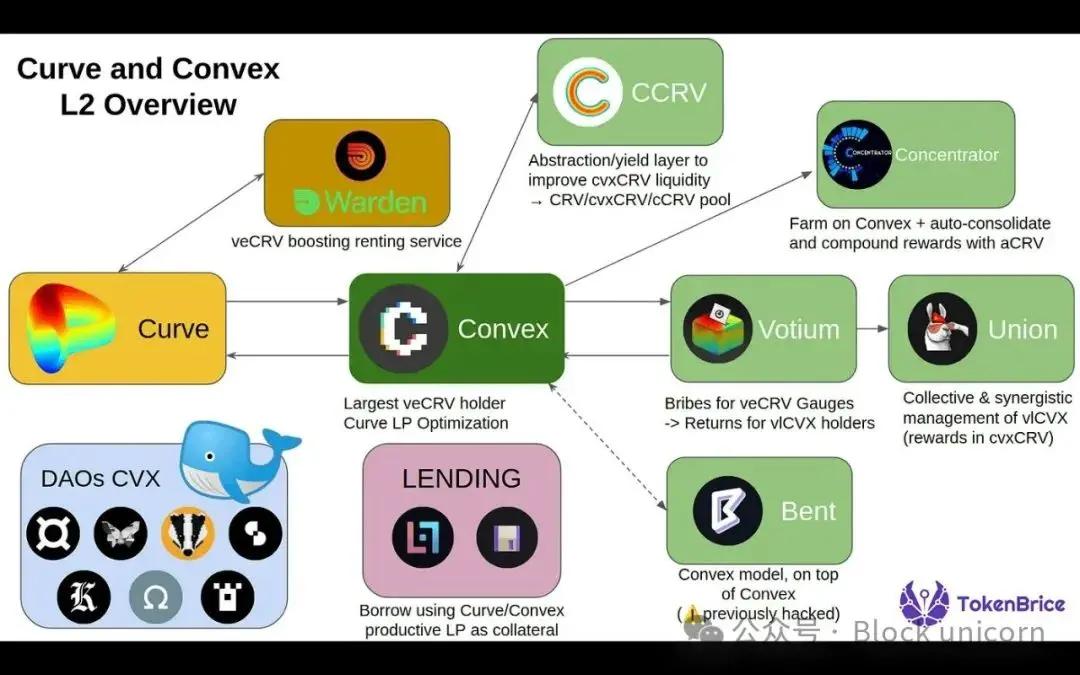
Then came Convex Finance
Convex abstracted veCRV locking and aggregated voting power from users.
It became the "kingmaker" of Curve, wielding massive influence over $CRV issuance.
Projects began bribing Convex/veCRV holders through platforms like Votium.
Lesson 1: Who Controls the Weights, Controls Liquidity.
II. Meta-Incentives and Bribery Markets
The first bribery economy initially just manually influenced issuance, later developing into a mature market where:
Votium became an over-the-counter bribery platform for $CRV issuance.
Redacted Cartel, Warden, and Hidden Hand emerged, extending this to other protocols like Balancer and Frax.
Protocols are no longer just paying issuance fees; they are strategically allocating incentives to optimize capital efficiency.
Expansion Beyond Curve
Balancer adopted a vote-escrowed mechanism through $veBAL.
Frax, TokemakXYZ, and others integrated similar systems.
Incentive routing platforms like Aura Finance and Llama Airforce further added complexity, turning issuance into a capital coordination game.
Lesson 2: Yield is no longer about Annual Percentage Yield (APY), but programmable meta-incentives.
III. How Yield Wars are Fought
Here's how protocols compete in this meta-game:
Liquidity Aggregation: Aggregating influence through wrappers like Convex (e.g., Balancer's AuraFinance).
Bribery Campaigns: Reserving budgets for ongoing vote bribes to attract desired issuance.
Game Theory and Tokenomics: Locking tokens to create long-term alignment (e.g., ve model).
Community Incentives: Gamifying voting through Non-Fungible Tokens (NFTs), lotteries, or additional airdrops.
Today, protocols like turtleclubhouse and roycoprotocol are guiding liquidity: they aren't blindly issuing, but auctioning incentive mechanisms to liquidity providers (LP) based on demand signals.
Essentially: "You bring liquidity, we'll route incentives to the most important places."
This unlocks secondary effects: protocols no longer need to forcibly acquire liquidity but coordinate it.
Turtle Club
One of the lesser-known but extremely effective bribery markets. Their pools are typically embedded with partnerships, with a total locked value (TVL) exceeding $580 million, using dual-token issuance, weighted bribes, and surprisingly sticky liquidity provider (LP) base.
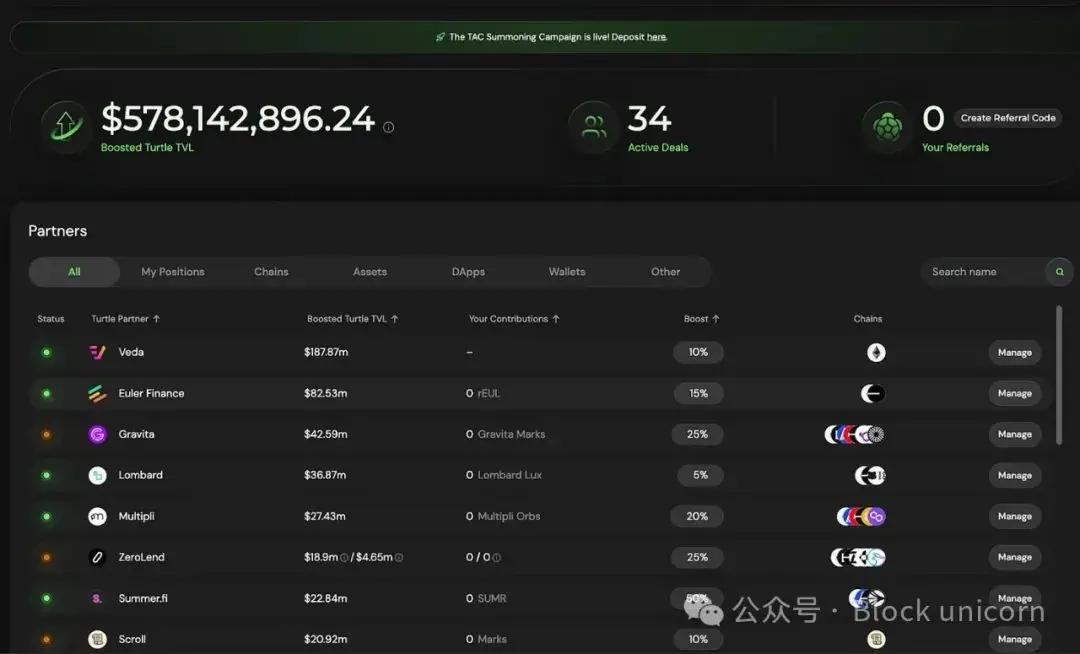
Their model emphasizes fair value redistribution, meaning issuance is guided by voting and real-time capital velocity metrics.
This is a smarter flywheel: LPs are rewarded based on their capital's effectiveness, not just size. This time, efficiency is finally incentivized.
Royco
In one month, its TVL surged to $2.6 billion, a month-on-month growth of 267,000%.
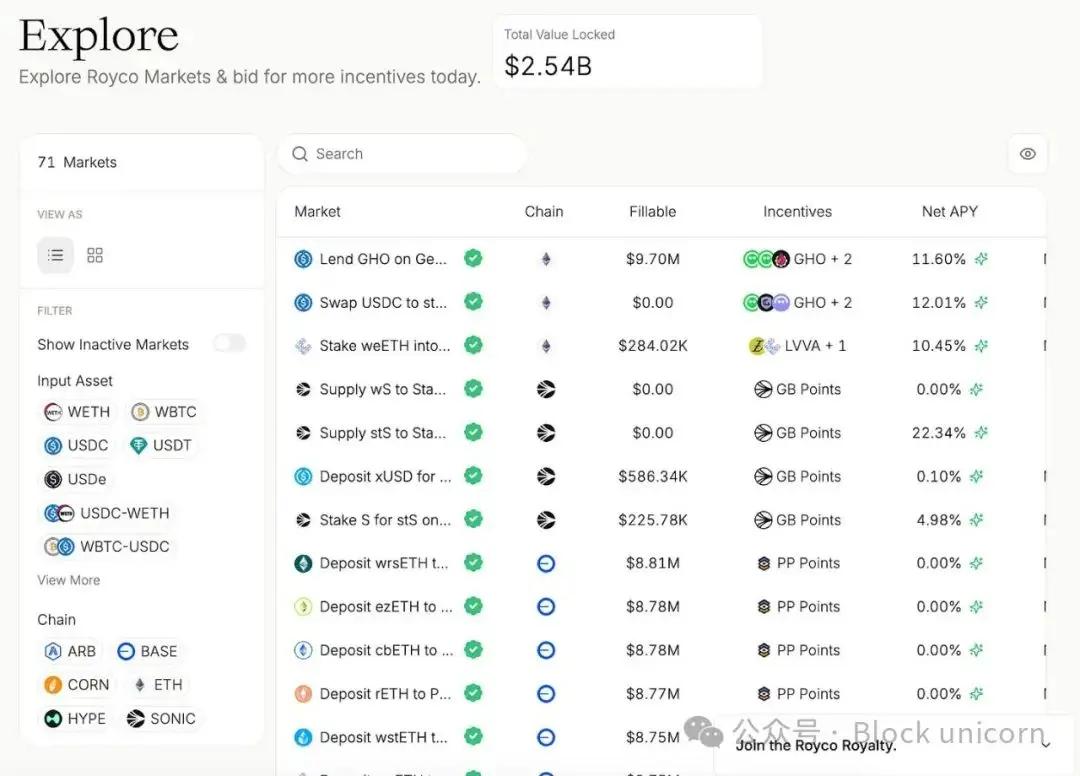
While some of this is "points-driven" capital, the underlying infrastructure is crucial:
Royco is an order book for liquidity preference.
Protocols can't just provide rewards and hope. They post requests, and LPs decide to commit funds, ultimately coordinating into a market.
This narrative is more than just a yield game:
These markets are becoming the meta-governance layer of DeFi.
HiddenHandFi has already sent over $35 million in bribes across major protocols like VelodromeFi and Balancer.
Royco and Turtle Club are now shaping the effectiveness of issuance.
Mechanisms of Liquidity Coordination Markets
1. Bribes as Market Signals
Projects like Turtle Club allow LPs to see where incentives are flowing, make decisions based on real-time metrics, and be rewarded based on capital efficiency rather than just capital size.
2. Liquidity Requests (RfL) as Order Books
Projects like Royco allow protocols to list liquidity needs like orders in a market, with LPs filling them based on expected returns.
This becomes a two-way coordinated game, rather than a one-way bribery.
Finally, if you decide the direction of liquidity, you will influence who can survive in the next market cycle.