Author: Fairy, ChainCatcher
Editor: TB, ChainCatcher
: friendly Reminder: The "Seven Deadly Sins of the Bitcoin" Satirical, Not Intended to Defame or's Disparage Bitcoin's Faith Attribute. We Respect Satoshi Nakamoto and Revere Time. If Any Views Sound Harsh, We Hope Ecosystem Builders Will Be Tolerant.
Pizza Day Welcomes Its 14th Year, and Bitcoin Has Today Broken Through $110,000, Reaching a New High. Bitcoin Continues to Rise, While the Bitcoin Ecosystem Seems to Be Heading Downward.
Bitcoin Has Grown from a White Paper to a New Anchor of Global Assets, and the Story of the Bitcoin Ecosystem Has Has Transformed from a Simple Technical Narrative to a Complex Landscape Intertwining Humanity, Markets, Power, and Faith. But Beneath All the The Noise, the Real Issues Are Rarely Mentioned.
Pizza Day Is Worth Commemorating and Reflecting On. At This Juncture, Let's Take a More Sober Perspective and Review the "Seven Deadly Sins" Bitcoin Ecosystem.
The Light of Ideals Shines into the Dilemmas of Reality
Bitcoin's Market Cap Returned Returned to the Trillion-Dollar Mark in Early 2024 and Has Been Close to This Level for Nearly a Year and a Half, But Its Ecosystem's Activity Severely Lacks Proportionality with Its Asset Size.
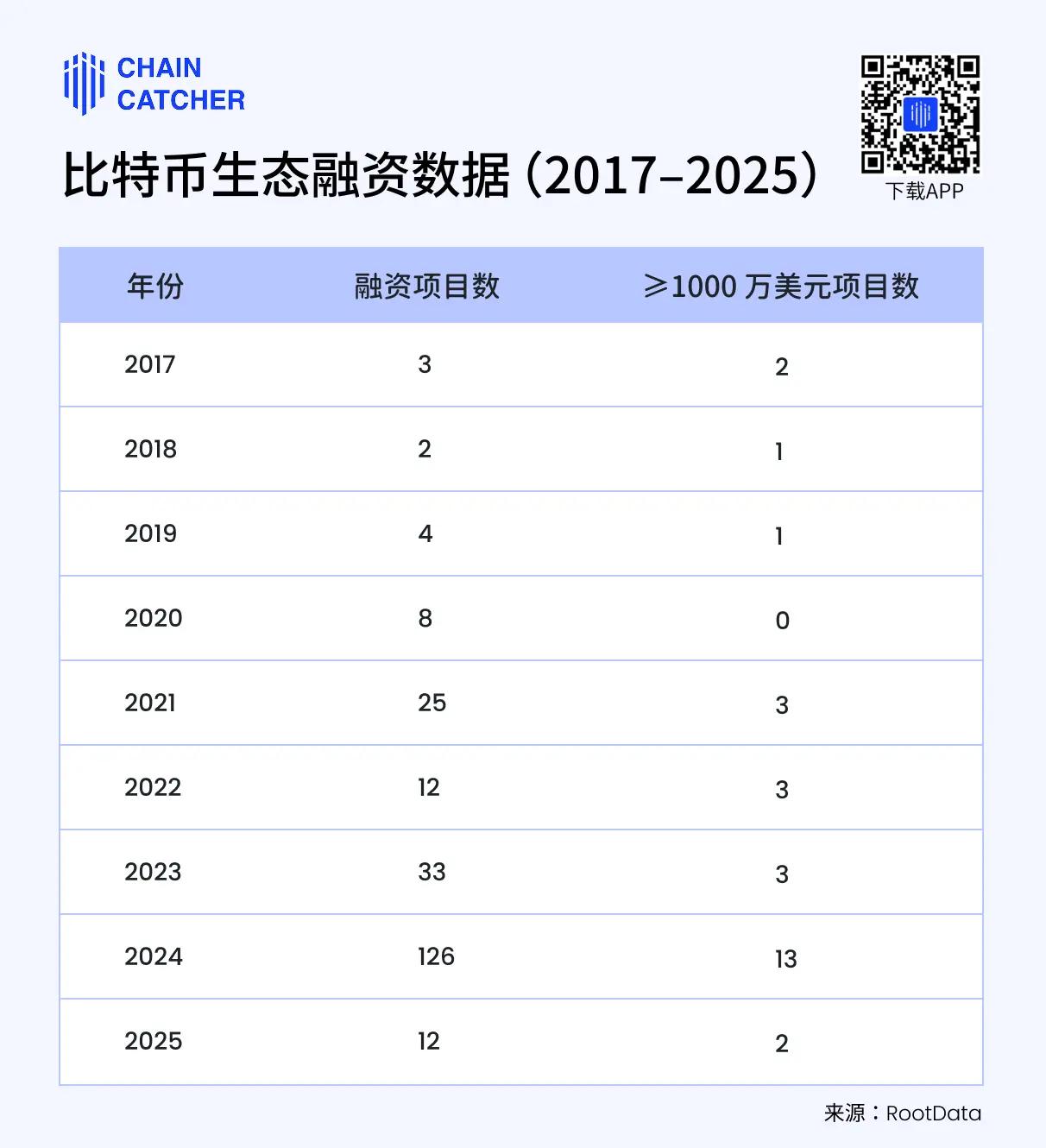
As of Now, Only 13 Projects in the Bitcoin Ecosystem Completed Financing in 2025, Compared to 72 in the Same Period Last Year and 126 for the Entire Year. The Number of Financings Has Nearly Halved, with Capital Enthusiasm Rapidly Receding.
<>SourceootData
OfL Token Market Cap: BTC's TVL/Market Cap Ratio Is Only 0.2%, Far Below the Average Average of Mainstream Public Chains. Ethereum,, solana, TRON, and Others Generally Maintain Above 10%, Showing Significantly Higher Efficient Capital Utilization.
Although Bitcoin Is the "Gold Brand" of the crypto Market, Its Ecosystem Is Almost an Empty Tower. Here Are the "Seven Deadly Sins" We've Compiled.
First Sin The Sin of Ecosystem Bubble
From Late 2023 to 2024, the Bitcoin Ecosystem Experienced a "a Massive" Awakening Narrative. From Ordinals to L2 and reStaking, It Seemed That the BTC Ecosystem Suddenly Became an Innovation Incubator. However the Market Hype F, Settled Achievements Remain Thin.
Many Protocols Lack Disruptive Innovation, Neither Reconstructing Existing Paradigms Nor Creating New Market Demands. Most Projects Are Merely Repackaged Old Concepts with Weak Underlying Structures, Rough Designs, and Detached from Use Cases. The Related Teams Vary Greatly with Few Truly Long-TeTerm Construction Intentions and Capabilities> (Translation continues in the the manner for the rest of the text)
Taking BIP177 as an example, although it only involves adjusting the display method of units, it has sparked long-term disputes in the community; while proposals that could truly boost protocol capabilities, such as the CTV + CSFS combination for implementing asynchronous and optional payment paths, and BIP360 (quantum attack resistance) addressing future security challenges, have received little attention.
The originally inefficient BIP system in the Bitcoin governance mechanism becomes increasingly rigid under this misaligned attention. Core upgrades that genuinely require extensive testing, evaluation, and collaborative promotion quietly fade away amid discourse struggles. Community member @blapta stated: "Hope Bitcoin community discussions can return to normal discussions soon, or development will grow old."
Sixth Sin: The Sin of Narrative Closure
In the fast-paced crypto industry, Bitcoin's ecosystem narrative appears particularly monotonous. The "digital gold" narrative has played a role in establishing stable consensus and value transmission, but should not evolve into a framework that restricts innovation and imagination.
In contrast, other chain ecosystems continuously spark new interests and narratives around reStaking, meme, DePIN, AI, and other directions, driving sustained community vitality and capital attention.
Although Taproot Assets and Ordinals briefly sparked imagination space, the lack of continuous narrative promotion and systematic support ultimately failed to form a stable growth curve.
Seventh Sin: The Sin of Investment Deficiency
In a capital-driven market system, "investability" determines the ultimate flow of funds. Speculation is the most authentic and honest liquidity logic of on-chain funds. Bitcoin's ecosystem's shortcomings in this aspect are particularly obvious: complex deployment, weak liquidity, and primitive trading mechanisms make it difficult for market makers, arbitrageurs, and hot money to enter and exit efficiently.
Data also reveals this: except for the brief capital attraction in 2024 due to Ordinals and Runes fever, Bitcoin ecosystem's financing performance in other years has been unremarkable. Notably, large financing projects exceeding millions of dollars are rare, directly reflecting mainstream investment institutions' doubts and reservations about BTC ecosystem's "investability".
Facing Problems, We Can Go Further
We look back to our original intention and face reality. Today's Bitcoin ecosystem is both a mid-point review of a technological experiment and a mirror reflecting culture and order. The "seven sins" description is just a jest; the real intention is to hope the ecosystem can rejuvenate and find a direction for continuous growth.