Author: ICONIQ
Translated by: Tim, PANews
Artificial Intelligence Development Enters a New Chapter: From Heated Discussion to Practical Implementation. Building Scalable AI Products is Becoming the Key Competitive Battlefield. The 2025 AI Status Report 'Builder's Handbook' Shifts Perspective from Technology Adoption to Practical Implementation, Providing an In-Depth Analysis of the Comprehensive Solution from Conception to Deployment and Scalable Operation of AI Products.
Based on an exclusive survey of 300 software company executives in April 2025 and in-depth interviews with AI leaders in the ICONIQ community, this report offers a tactical roadmap aimed at transforming the intelligent advantages of generative AI into sustainable business competitiveness.
The report distills five key chapters and how they will help teams actively build AI applications.
1. AI Product Strategy Has Entered a New Maturity Stage
Compared to enterprises that merely integrate AI into existing products, AI-driven companies are bringing products to market faster. Data shows that nearly half (47%) of AI-native enterprises have achieved key scale and market fit, while only 13% of companies with integrated AI products have reached this stage.
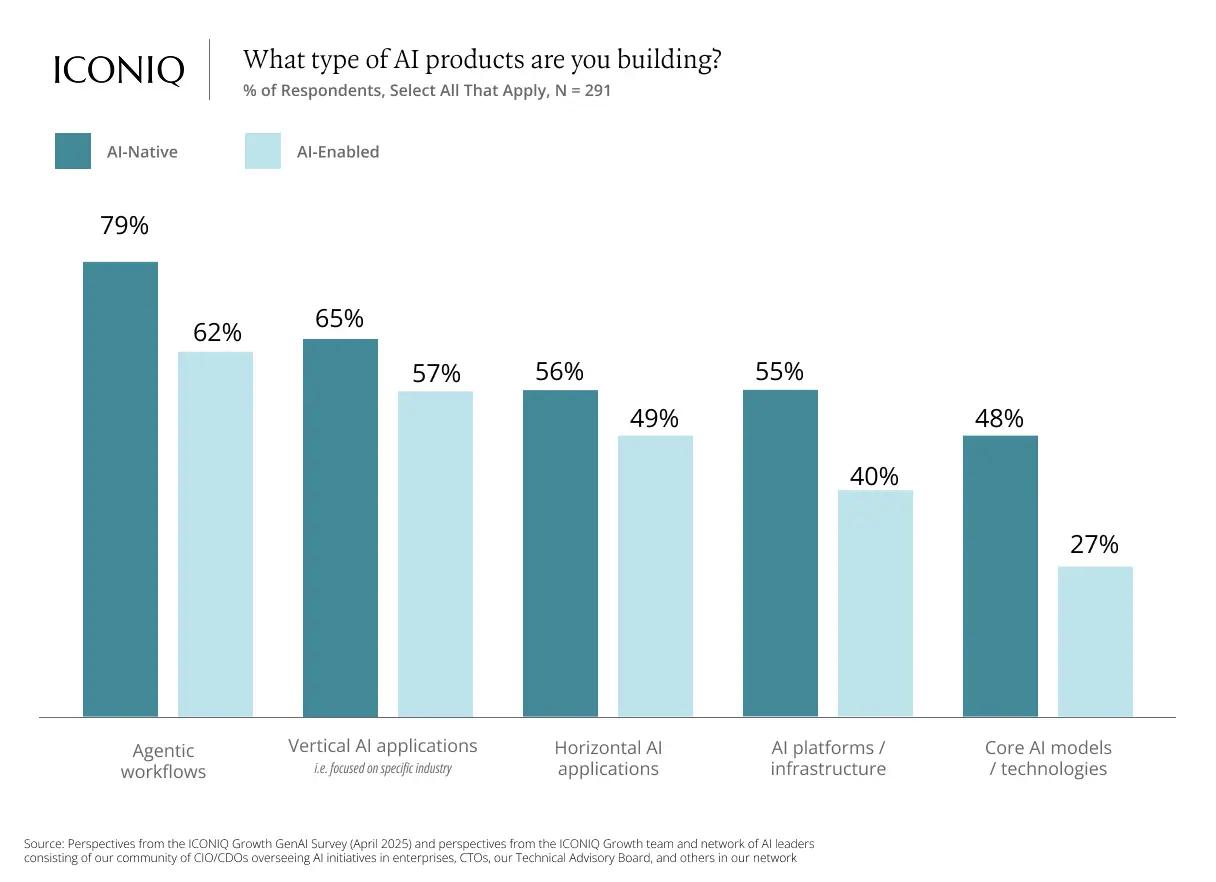
What they are doing: Agent workflows and vertical applications have become mainstream. Nearly 80% of AI native developers are deploying agent workflows (AI systems capable of autonomously executing multi-step operations on behalf of users).
How they are doing it: Companies are converging on multi-model architectures to optimize performance, control costs, and match specific application scenarios, with an average of 2.8 models used in customer-facing products.
2. Evolving AI Pricing Models Reflect Unique Economic Characteristics
Artificial Intelligence is changing how enterprises price products and services. According to our survey, many companies are adopting hybrid pricing models with usage-based fees on top of basic subscription fees. Some companies are exploring pricing models entirely based on actual usage or customer usage effectiveness.
Currently, many companies still offer AI features for free, but over one-third (37%) of enterprises plan to adjust their pricing strategies in the coming year to better align with the value customers receive and their AI feature usage.

3. Talent Strategy as a Differentiating Advantage
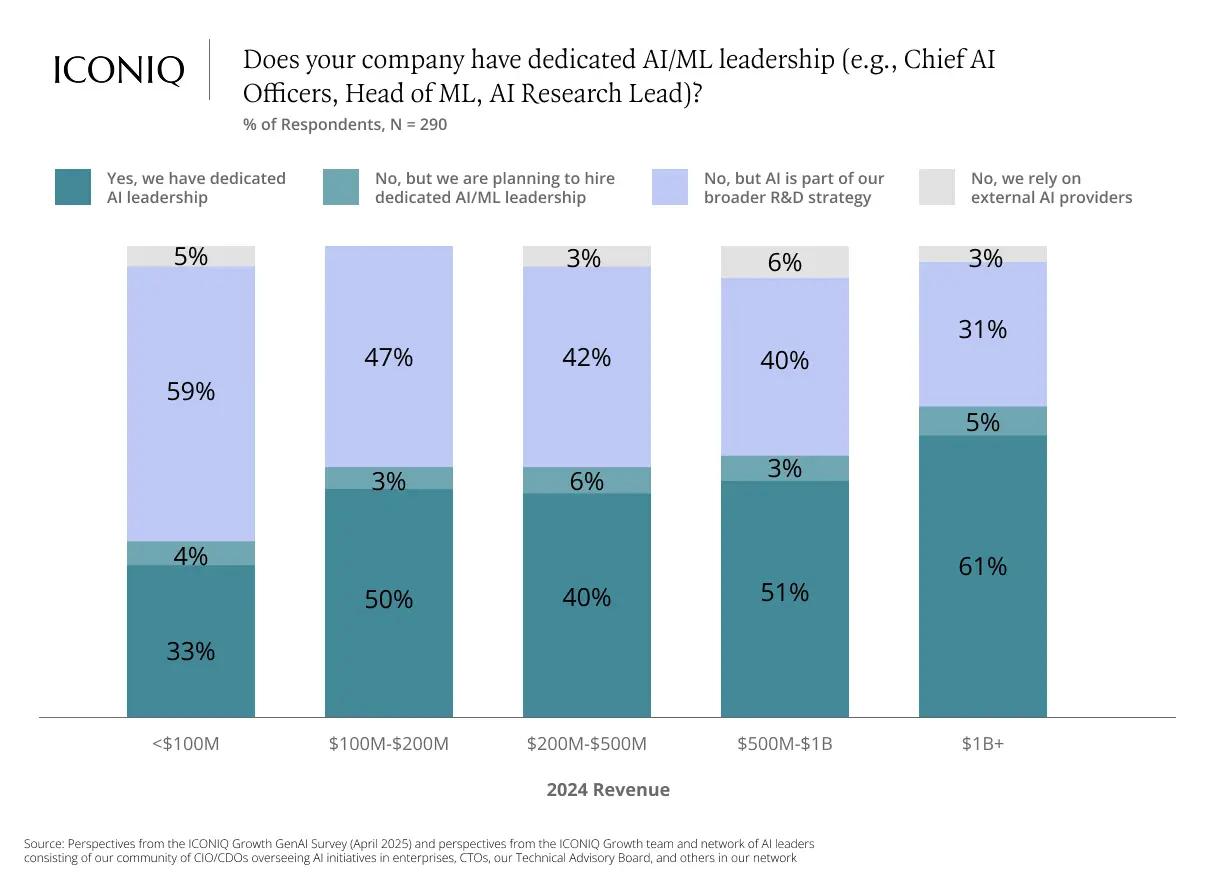
Artificial Intelligence is not just a technical issue, but an organizational one. Currently, most top teams are building cross-functional teams comprising AI engineers, machine learning engineers, data scientists, and AI product managers.
Looking ahead, most enterprises expect 20-30% of their engineering teams to focus on AI, with high-growth companies anticipating this proportion to reach 37%. However, survey results show that finding suitable talent remains a bottleneck. Among all AI-specific positions, AI and machine learning engineer recruitment takes the longest, with an average fill time exceeding 70 days.
There are differing opinions on recruitment progress. While some recruiters believe progress is smooth, 54% of respondents indicate delays, with the most common reason being insufficient qualified talent reserves.
4. AI Budgets Surge, Reflected in Company Income Statements
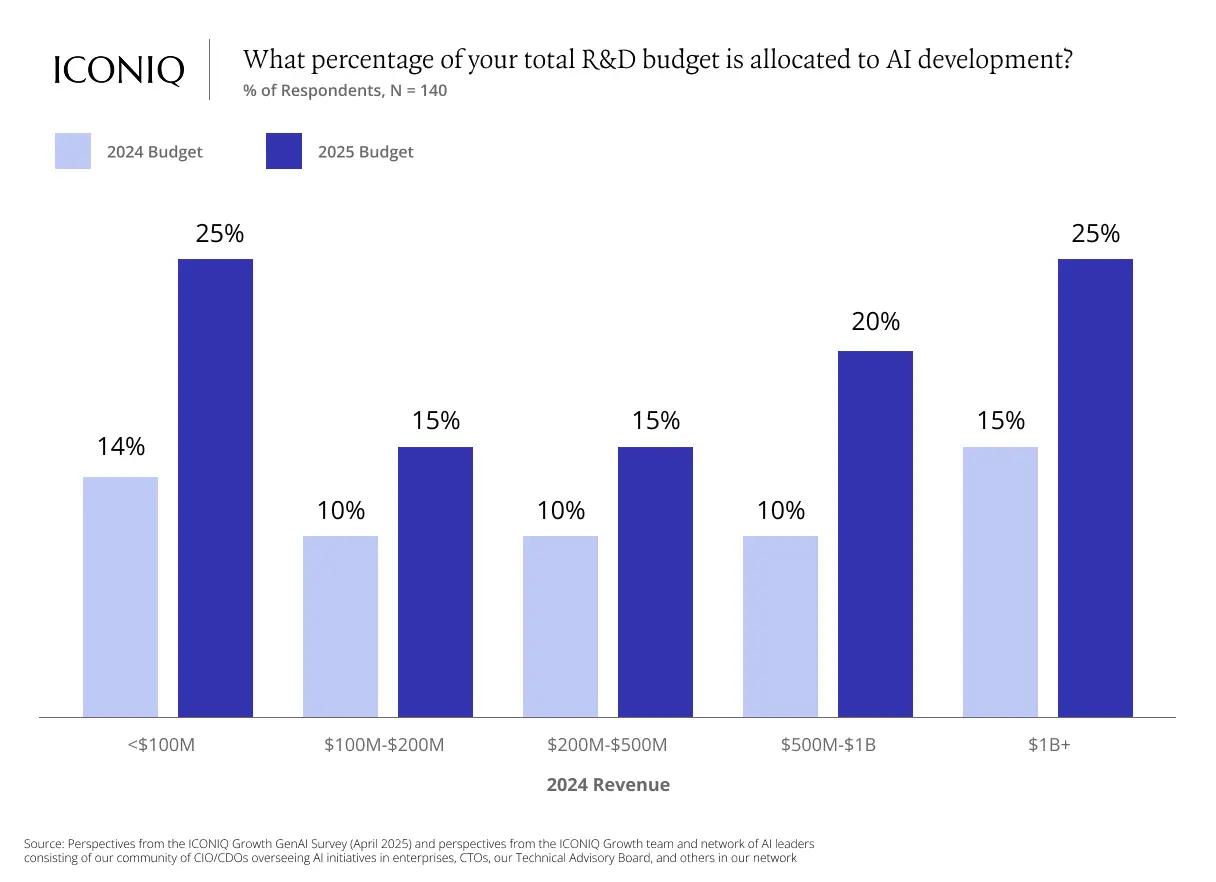
Enterprises adopting AI technologies are investing 10-20% of their R&D budgets in the AI field, with continuous growth trends across different revenue ranges in 2025. This strategic shift increasingly highlights that AI technology has become the core driver of product strategic planning.
As AI product scale expands, cost structures often change significantly. In the early stages of product development, human resource costs are typically the largest expenditure, including recruitment, training, and skill enhancement expenses. However, as products mature, cloud service costs, model inference fees, and compliance monitoring costs will occupy the primary expenditure proportion.
5. Internal Enterprise AI Application Scale is Expanding, but Distribution is Uneven
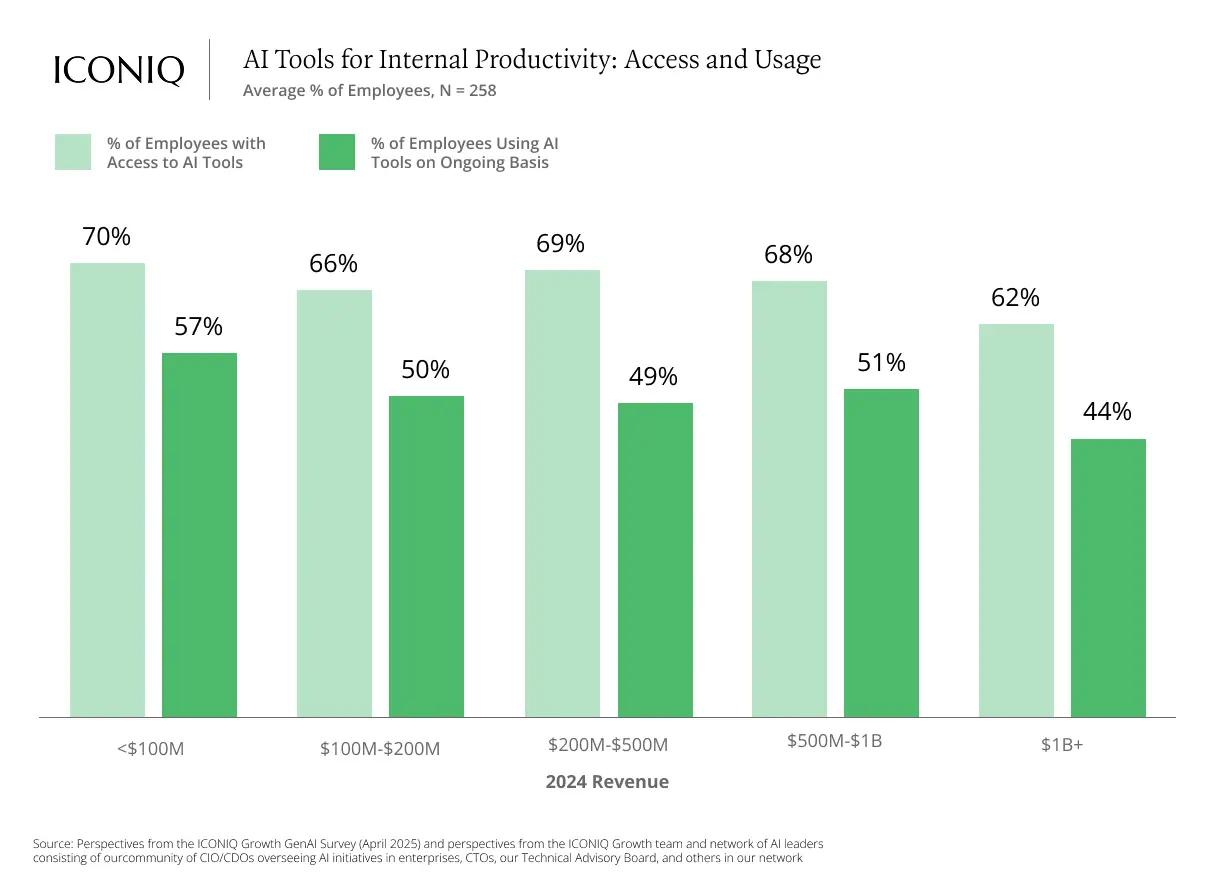
Although most surveyed enterprises provide AI tool usage permissions to about 70% of employees, only around half actually use these tools regularly. In larger, more established enterprises, driving employee AI adoption becomes particularly challenging.
High-adoption rate enterprises (where over half the employees use AI tools) deploy AI in seven or more internal application scenarios, including programming assistants (77% usage), content generation (65%), and document search (57%). Efficiency improvements in these areas range from 15% to 30%.
AI Tool Ecosystem Remains Fragmented but Gradually Maturing
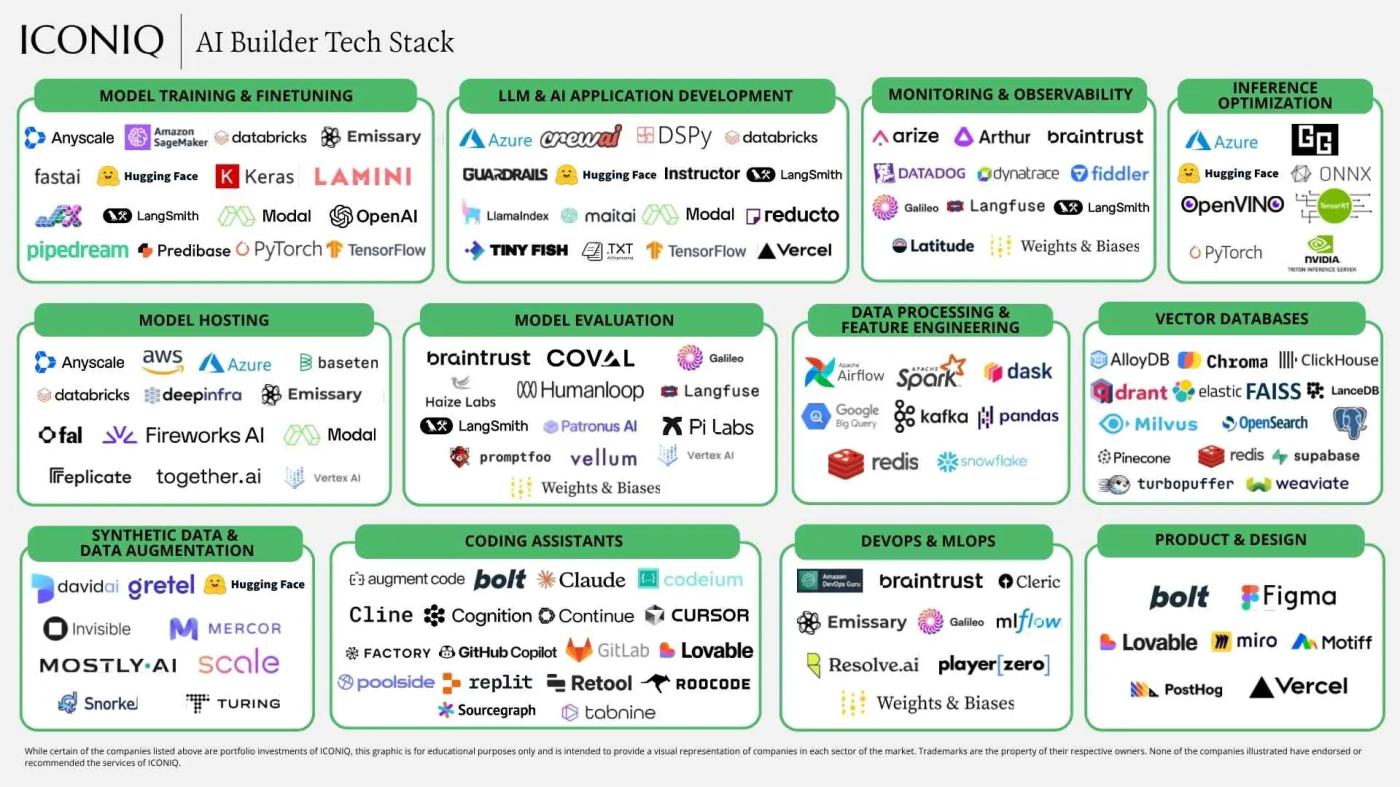
We surveyed hundreds of enterprises to understand the technology frameworks, libraries, and platforms actually running in production environments. This report is not a simple ranking but a true portrayal of tools adopted by developers across different domains.
Here is a brief overview of the most commonly used tools, listed in alphabetical order: