Source: Bitcoin Versus The IMF
Compiled and edited by: LenaXin, ChainCatcher
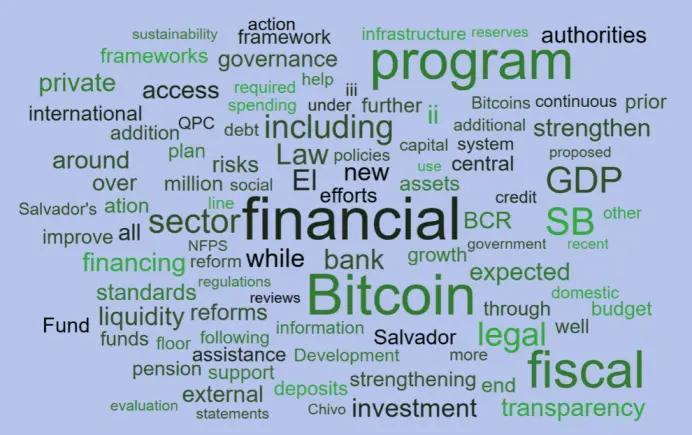
Note: The 111 - page section on “ Policies under the Extended Facility Arrangement ” in the IMF’s March 2025 El Salvador Country Report is being generated using a word cloud generator
International Monetary Fund
In 2004 , several years before Bitcoin was created , author John Perkins published his influential book, Confessions of an Economic Hit Man . This semi-autobiographical work chronicles Perkins’ career as an “ economic hit man ” —he travels around emerging market countries, persuading local governments to accept loans from the International Monetary Fund ( IMF ) and the World Bank, often with harsh conditions and using highly controversial methods. Perkins figuratively calls these economic agents “ jackals . ”
This work is a must-read for readers who want to understand the economic liberal context in which Bitcoin was born and its potential mission. Perkins ' revealing narrative provides early Bitcoin supporters with an important perspective on the value of this emerging monetary system. Like many members of the Bitcoin community, we are cautious about the IMF based on our understanding of such works. In general, Bitcoin supporters not only question the central bank system, but are also wary of multinational financial institutions such as the IMF , the World Bank, and the Bank for International Settlements. Accordingly, it is not difficult to understand the resistance of people within the IMF system to Bitcoin.
IMF ’s narrative control
In May 2011 , several years after Bitcoin was launched, Dominique Strauss-Kahn ( DSK ), then- IMF Managing Director, was accused of sexually assaulting a hotel waitress in New York. The politician, who was expected to run for the French presidency, was involved in the case against immigrants from Guinea. It is worth noting that Guinea still owed the IMF a loan of up to US$ 472 million at the time, a debt equivalent to a significant proportion of the country's GDP ( 30 billion Canadian dollars).
Many readers familiar with John Perkins 's works, including some Bitcoin holders, immediately linked the sexual assault allegation to the IMF 's nature of financial plunder against developing countries. The victim's dual experience: she was forced to immigrate because her country was under economic pressure from the IMF , and she was directly targeted by the organization's leaders. Although the sexual assault case was widely reported that year, the mainstream media generally ignored this extremely ironic connection and maintained a consistent respectful attitude towards the IMF in their reports.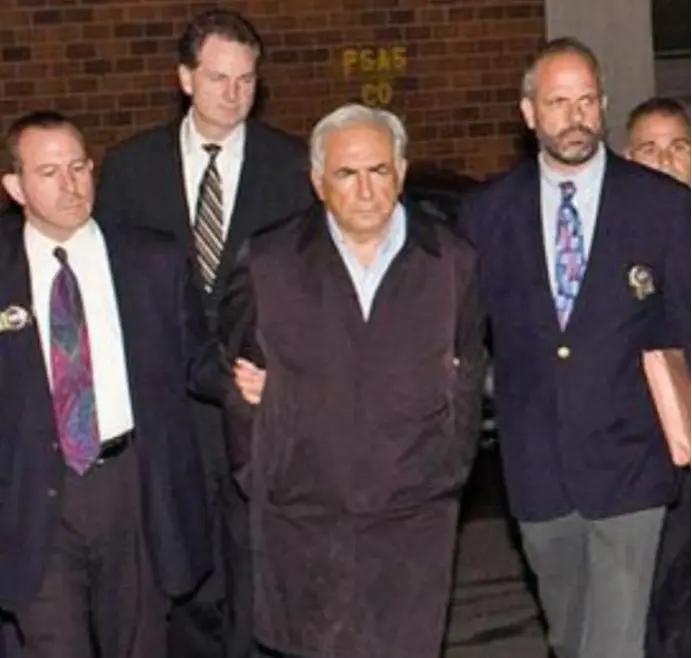
DSK subsequently resigned and was replaced by Christine Lagarde, the current president of the European Central Bank . It is worth noting that Lagarde herself has a criminal record and has repeatedly taken a negative stance on Bitcoin. In January 2025 , she tried to prevent the Czech Republic from including Bitcoin in its official foreign exchange reserves.
Lagarde 's term as president of the European Central Bank will end in 2027. There are rumors that she may succeed Klaus Schwab as chairman of the World Economic Forum. If true, this will be the second time Lagarde has taken over the top position of an international economic organization that has been vacant due to a sexual assault scandal.
The invisible game with Bitcoin
The International Monetary Fund ( IMF ) currently has $ 173 billion in outstanding loans to 86 countries, most of which are relatively poor . The organization has the potential to lend up to $ 1 trillion through its system of Special Drawing Rights ( SDRs ), a " global reserve asset " whose value is tied to a basket of national currencies and is essentially a financial instrument created out of thin air through a debt mechanism.
It is worth noting that although the IMF has 191 member countries, the distribution of voting rights is heavily tilted towards European and American countries. The United States alone has 16.49% of the voting rights (a proportion that gives it a de facto veto over new loan projects that require an 85% majority vote for approval), while the voting rights of most major European countries remain between 3% and 5% . In contrast, China 's voting rights in the IMF are only 6.1% - this proportion was obtained after the voting rights reform, and before that, China's voting rights were even equivalent to Belgium.
The IMF has long maintained its traditional personnel arrangement of a European as president and an American in charge of the World Bank. This institutional arrangement further highlights the power imbalance in the global financial governance system.
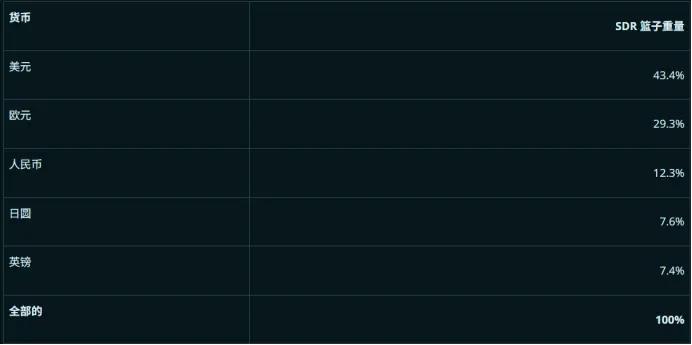
Source: International Monetary Fund (as of 2022 )
Over the past 15 years (since the DSK incident, and we are not suggesting a causal relationship), the relative influence of the IMF and the World Bank has declined, with only modest growth in their outstanding loans. During this period, China has emerged as a major financier of infrastructure projects in developing countries. This shift could be a boon for smaller developing countries, both in terms of increasing their bargaining power and in terms of being able to circumvent the stringent conditions that often come with IMF loans (which often require borrowers to cede control of key state-owned assets to foreign companies).
However, the new dependency relationship may lead these countries to shift from dependence on the IMF to excessive cession of influence to China. Any form of external financing dependence may weaken the autonomy of sovereign states, which has prompted some smaller economies to seek alternative solutions. Data shows that China has become the most competitive alternative option for the IMF and has clearly gained the upper hand in this game in recent years. In sharp contrast, the United States has invested hundreds of billions of dollars in military operations in countries such as Iraq and Afghanistan during this period, rather than economic development assistance. 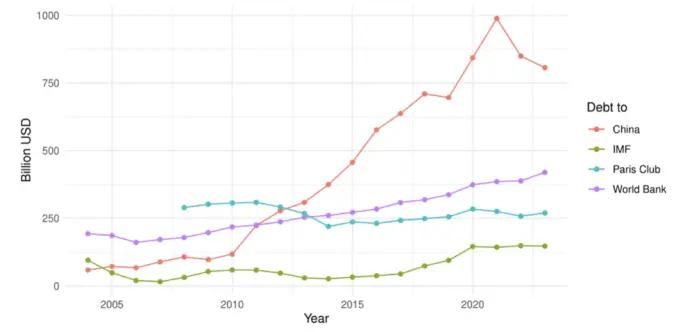
Source: https://cepr.org/voxeu/columns/rise-china-international-lender
The International Monetary Fund’s ( IMF ) balance sheet is relatively modest by modern financial standards —currently about the same market cap as commercial firm MicroStrategy ( MSTR US ) and only 6% of Bitcoin’s total market cap . It’s worth noting that Bitcoin has grown exponentially since the DSK incident (although I won’t show the price charts here).
To some extent, Bitcoin is competing with the IMF : both for the status of global reserve assets and as an alternative for infrastructure financing in emerging market countries. However, the Special Drawing Rights ( SDR ) has never developed into a true competitor and ultimate ruler of Bitcoin as some observers expected in 2011 .
The following article will focus on two very different case countries: El Salvador and Bhutan. It should be noted that our analysis is based on public data and we have not visited these two countries on the spot. This kind of " paper talk " research method is unlikely to be recognized by political commentators like Douglas Murray who focus on field research .
El Salvador
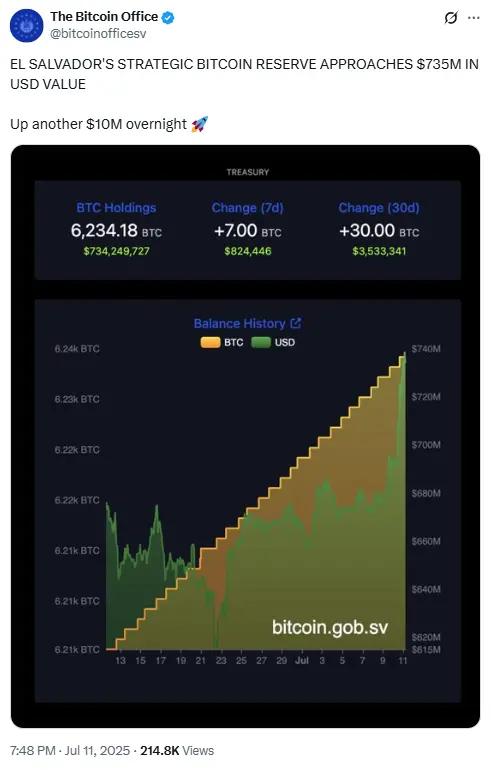
Jack Mallers introduced Salvadoran President Nayib Bukele to attendees at the Bitcoin Conference in Miami on June 5, 2021. Bukele made a landmark announcement at the conference: Bitcoin will be established as the country's legal tender. El Salvador has since implemented a series of pro-Bitcoin policies, including the creation of a national strategic Bitcoin reserve. As of press time, the reserve holds 6,234.18 Bitcoins, worth approximately $ 735 million.
El Salvador's relationship with the International Monetary Fund ( IMF ) dates back to 1959. As of April 2020 , the IMF has provided 23 financing programs to the country. The last loan before the Bitcoin policy was a $ 389 million COVID-19 loan approved in April 2020. In February 2025 , after the Bitcoin policy was implemented, the IMF Board of Governors approved a new $ 1.4 billion, 40 - month extended loan facility. As of June 27 , 2025 , $ 231 million had been disbursed under the facility .
It is worth noting that the full loan agreement between El Salvador and the IMF is kept secret, and its specific terms are not available to the public. This opacity is puzzling, as intergovernmental agreements are supposed to be more open. Nevertheless, the IMF has released a large number of relevant documents. We focus on two core documents: a 111- page report released on March 3, 2025 , and a 98- page report released on March 19 , 2025 .
The excessive attention paid to Bitcoin in the IMF report is staggering. In the two reports totaling 209 pages, the word " Bitcoin " appears 319 times. Through word cloud analysis, we found that in the core chapters discussing credit policy, "Bitcoin" is the second most frequently used word, second only to the general word " financial " . This fully demonstrates that in the IMF 's assessment framework, Bitcoin has been regarded as a major source of risk related to El Salvador.
The report views Bitcoin from an almost completely negative perspective —all relevant discussions presuppose that Bitcoin is risky and harmful, but never provide substantive evidence. The IMF completely ignores any positive impact that Bitcoin may have, and only mentions once that " widespread adoption of crypto assets may threaten macroeconomic stability and increase fiscal risks . " The report even sees low Bitcoin usage as a positive, citing " high price volatility and lack of public trust . " In the IMF 's logic, low adoption is equivalent to low risk.
The report uses several chapters to discuss how to " prevent Bitcoin risks " and puts forward seven specific policy recommendations:
- Legal aspect: abolishing Bitcoin’s legal tender status
- Payment system: Remove the obligation for the public and private sectors to accept Bitcoin payments
- Tax system: clearly stipulates that taxes are payable only in US dollars
- Government Payments: Ensuring National Debts Are Not Settled in Bitcoin
- Chivo Wallet: Publish audit report and end government involvement by July 2025
- Regulatory framework: Focus on preventing money laundering risks and follow FATF recommendations
- Investment restrictions: Restricting government investment in Bitcoin
Some of these loan conditions appear to be too harsh. For example, allowing companies to choose their own payment methods is a reasonable demand, but forcing sovereign states to change their laws through loan conditions (using foreign funds) is morally questionable. However, this is exactly how the IMF has always done things. This practice of imposing ideological preferences on borrowing countries precisely confirms the power operation model revealed by John Perkins in "Confessions of an Economic Hit Man".
Government restrictions on Bitcoin investment have attracted the most attention. Especially because governments have been buying Bitcoin and promoting it. The following two paragraphs of the report best illustrate this theme:
Authorities promise not to accumulate Bitcoin during the program
In the context of this plan, the public sector will not voluntarily accumulate Bitcoin
Without access to the actual loan agreement text, it is difficult to confirm the specific commitments of the Salvadoran government. But judging from public statements, the IMF 's requirements are quite clear. However, the reality presents an intriguing contradiction - the country continues to increase its holdings of Bitcoin in 2024 , although the rate has slowed to 1 per day . When Forbes reporter Javier Bastardo questioned the IMF about this apparent inconsistency , the response he received was vague :
This flexibility in policy implementation has led to many speculations: perhaps the agreement limits the proportion of Bitcoin investment in GDP , and as the economy grows, the purchase amount will increase accordingly; or perhaps El Salvador has classified Bitcoin assets as a special category outside the " public sector " through some kind of institutional design . In any case, an obvious fact is that despite the IMF 's strong anti-Bitcoin stance, the Salvadoran government is clearly seeking a balance - it hopes to maintain a cooperative relationship with the IMF and formally limit the scope of Bitcoin policy; and insists on exploring greater economic sovereignty and independence through Bitcoin. This " tightrope-walking " strategy precisely reflects the real dilemma and wisdom of small countries in the global financial system .
Bhutan
Bhutan, along with Paraguay and Laos, forms a unique group of countries that are blessed with hydroelectric resources that often generate far more electricity than their domestic grids need. This energy endowment presents a dual opportunity: Traditionally, excess electricity has been exported through cross-border trade (Bhutan to India, Paraguay to Brazil, Laos to Thailand and Vietnam), but this trading model gives electricity importers excessive bargaining power because they are the only realistic channel to absorb the excess electricity.
However, Bitcoin mining provides these countries with a breakthrough option. Bhutan has taken the lead in exploring this path, maximizing the value of natural resources by converting surplus electricity into digital currency. In theory, this innovative model could make Bhutan, Paraguay and Laos potential winners in the Bitcoin economy, while the relative advantages of traditional electricity importing countries could be weakened.
Located in the Himalayas, Bhutan is known for its unique natural landscape and spiritual pursuits. With an annual GDP of approximately $ 3.3 billion, the country prioritizes gross national happiness ( GNH ) and sustainable development over traditional economic growth indicators. Tourism (accounting for 15% of GDP ) is one of its economic pillars—even though the industry was not opened to the outside world until 1974. It is this unique economic structure that has caused Bhutan to suffer particularly severe impacts during the COVID-19 pandemic, and has also prompted the country to more actively seek innovative economic solutions such as Bitcoin.
Bhutan also faces the challenge of brain drain. To address this, the government announced a 50% increase in public sector wages in 2023. Unlike El Salvador, Bhutan did not buy Bitcoin on the open market, but made full use of its surplus hydroelectric resources to mine Bitcoin. To date, the country has accumulated 11,611 Bitcoins (worth about $ 1.4 billion), equivalent to 42% of its GDP . This strategic move has significantly enhanced Bhutan's economic autonomy - not only reducing its dependence on external funds such as the IMF , but also providing financial guarantees for domestic infrastructure construction and public sector development.
Although Bhutan does not borrow from the IMF , it still accepts some support from the World Bank. In the World Bank's latest 125- page Country Partnership Report, Bitcoin is only briefly mentioned three times, far less persistently than the IMF report. However, the World Bank still criticized Bhutan's Bitcoin mining operations for lack of transparency. It is foreseeable that if it were not for the economic buffer provided by Bitcoin, Bhutan would probably be forced to seek loan support from the IMF . This alternative financial path allows the Himalayan country to gain more policy autonomy while maintaining its unique concept of gross national happiness development.
Bhutan recently announced a forward-looking " Mindful City " plan, which will adopt a special legal framework different from the rest of the country (see video for details). Although the global special economic zone model is not uncommon, Bhutan's concept is unique: it focuses on sustainable development, uses natural methods to deal with flood risks, designs important cultural facilities as cross-river bridges, and even integrates temples into colorful hydropower station buildings.
This urban project, full of Buddhist wisdom, is likely to rely in part on Bitcoin mining revenue as a source of funding. In fact, Bhutan has become a successful example of the Bitcoin economy - by converting surplus hydropower into digital assets, the country has not only promoted infrastructure construction in a unique eco-friendly way, but also achieved a significant increase in public sector wages. More importantly, these achievements have been achieved while maintaining national independence and staying away from the intervention of so-called " economic jackals . "
Looking ahead, if the value of Bitcoin continues to grow, and the Bhutanese government maintains prudent governance and political wisdom, this " Land of the Thunder Dragon " and its people are expected to become the most successful strategic beneficiaries of the digital currency era. Perhaps in the near future, we will witness Bhutan become the first classic case of Bitcoin empowering a sovereign state.
Disclaimer
The content of this article does not represent the views of ChainCatcher. The views, data and conclusions in this article represent the personal positions of the original author or the interviewee. The compiler maintains a neutral attitude and does not endorse its accuracy. It does not constitute any advice or guidance in any professional field. Readers should use it prudently based on independent judgment. This compilation is limited to the purpose of knowledge sharing. Readers are requested to strictly abide by the laws and regulations of the region where they are located and not to participate in any illegal financial activities.