According to BitMart data, BTC has once again broken through its historical high, with spot prices momentarily reaching $123,215, marking a new investment boom amid the continuous warming of the crypto market. In recent years, with the globalization of cryptocurrency trading and the influx of institutional funds, the contract trading market has experienced an unprecedented explosive growth. As a market with high leverage and strong volatility, contract trading offers investors higher profit potential but also comes with enormous risks. Especially the issue of slippage has become an unavoidable pain point for many crypto traders. Therefore, how to effectively solve the slippage problem has become a focal point of industry attention.
Current Situation and Challenges of Crypto Market Contract Trading
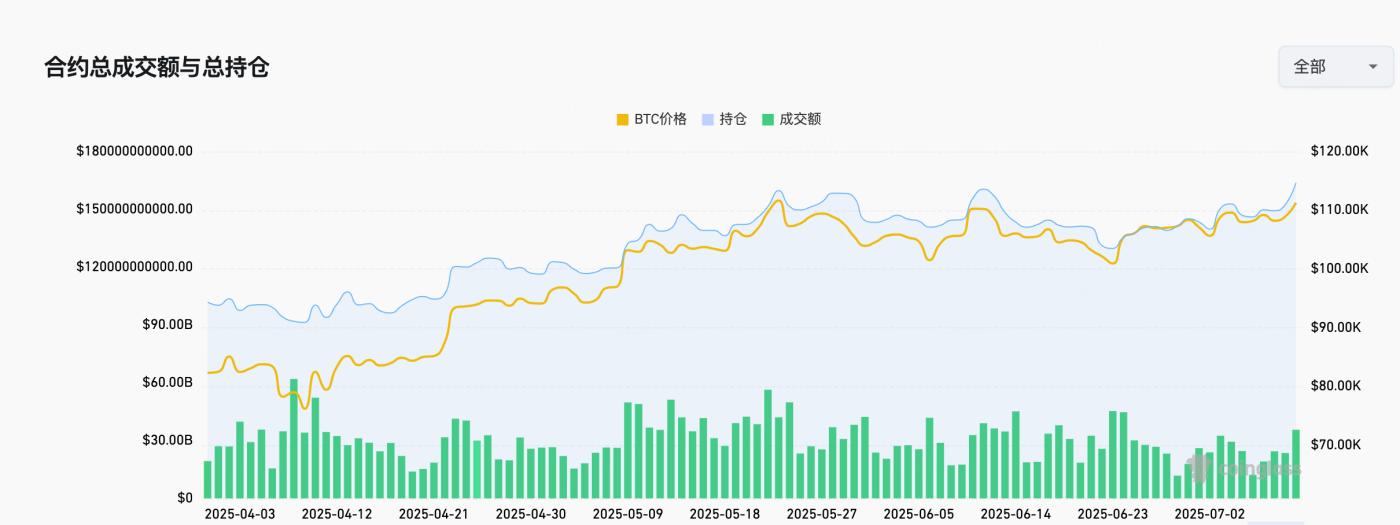
According to the latest data from Coinglass, in the second quarter of 2025, the global crypto market's contract positions steadily increased, with the daily average contract trading volume continuously breaking through $300 billion, reaching close to $500 billion at its peak. This growth trend reflects the sustained enthusiasm of market participants for contract trading. However, high volatility and leverage effects have made contract trading not only a tool for investors to pursue high returns but also a complex game of technology, risk, and psychology. For traders, how to precisely grasp market dynamics and avoid potential risks has become the key to success in this uncertain market.
Meanwhile, the contract market has attracted a large number of new users, becoming a "hot land" in many people's eyes. However, with market expansion, the high-risk nature and complexity of contract trading have gradually exposed hidden costs, especially the slippage problem. Slippage not only reduces trading execution efficiency but also amplifies potential losses in highly volatile environments, becoming an unavoidable fatal problem for new traders.
Slippage: The Hidden Killer of the Crypto Market
Slippage refers to the difference between the expected price and the actual executed price during order execution. In the crypto market, slippage is often caused by market volatility, insufficient liquidity, and technical bottlenecks. Especially during intense market fluctuations, traders' orders often cannot be executed at the expected price, resulting in additional costs, which is undoubtedly a loss for users. Using the daily trading volume of $300 billion as an example, if the slippage is 0.001%, the daily user loss due to slippage would be $3 million.
Specifically, the reasons for slippage can be summarized as follows:
Market Volatility: The crypto market is known for its high volatility. When prices fluctuate rapidly, especially during large-scale buy and sell orders in a short time, the market cannot digest orders in time, causing a gap between expected and actual transaction prices.
Insufficient Liquidity: Some trading pairs, especially for niche coins or low-trading-volume markets, have poor liquidity, making large orders prone to slippage. This is particularly evident in the crypto market, as its liquidity and depth are generally weaker compared to traditional financial markets.
Technical Limitations: Platform technical architecture and system delays can also cause slippage. Especially in high-frequency trading and extreme market conditions, platform response speed may not keep up with market fluctuations.
For many traders, slippage is not just an increase in trading costs but also enhances the uncertainty of trading decisions and strategies. When a trader makes a large transaction through leverage, slippage can even increase the risk of forced liquidation.
BitMart Slippage Protection Plan Phase II: From Risk Compensation to Ultimate Guarantee
BitMart understands the importance of slippage for traders and has therefore launched an important upgrade to the "Slippage Protection Plan" in its second phase. This upgrade not only lowers the compensation threshold but also further enhances the controllability and transparency of slippage through innovative technical solutions.
1. Significantly Lowered Compensation Threshold
One of the biggest highlights of the Slippage Protection Plan Phase II is the adjustment of the compensation threshold, reducing slippage from the original 0.05% to 0.02%. This improvement allows even tiny slippages to be quickly detected and trigger compensation rules. Taking Bitcoin (BTC) as an example, if the expected transaction price is $100,000 and the actual transaction price is $100,020 (a difference of $20), this small price difference can trigger compensation. This adjustment demonstrates BitMart's confidence in platform liquidity and engine stability, while also showcasing its technological innovation.
2. Comprehensive Compensation and Tiered Incentives
The Slippage Protection Plan Phase II not only significantly expands the compensation scope from "margin slippage loss" to "cross margin slippage loss", ensuring users receive full protection even in large transactions. Simultaneously, new users registering and trading for the first time can enjoy a "200% difference refund" for abnormal slippage (with a single transaction limit of 2,000 USDT). Additionally, BitMart provides BMX token holders with an extra 10% compensation and priority review channel, further enhancing platform user stickiness and increasing BMX's holding value.
3. Coin Expansion and Rapid Compensation
To better meet user needs, the Slippage Protection Plan Phase II has expanded supported coins from the initial BTC and ETH to include 8 major mainstream coins: SOL, XRP, BNB, TRX, Doge, and ADA, covering a broader market demand. Meanwhile, BitMart promises "ultra-fast account credit" after review, ensuring users can receive compensation promptly under any market environment, enhancing user trading trust and security.
BitMart's Slippage Protection Plan Phase II undoubtedly provides traders with certain guarantees, particularly in improving trading transparency and controllability. By lowering compensation thresholds, expanding compensation scope, and introducing more efficient liquidity matching, the platform not only enhances user trust but also attracts more high-frequency traders and large-capital users. However, despite technological breakthroughs, extreme market conditions and low-liquidity trading pairs may still cause slippage, which undoubtedly raises higher requirements for the platform's compensation mechanism.
In the future, BitMart seems intent on continuing to optimize this mechanism to adapt to changing market demands. By combining quantitative trading and artificial intelligence technologies, the platform may make further progress in improving slippage prevention accuracy and personalized services. If this trend continues, BitMart could further consolidate its market position in the competitive crypto trading market.
Summary
In fact, the slippage problem has always been a challenge that cannot be avoided in crypto market contract trading, especially in high-volatility and low-liquidity environments. Slippage not only increases trading costs but can also directly affect the success of trading strategies. As market scale continues to expand and institutional funds are injected, effectively controlling slippage and improving trading efficiency have become core issues that crypto trading platforms must address.
Currently, with BTC breaking new highs, the crypto market's activity has once again risen, which also means that trading volume and market volatility will further intensify. In this environment, the platform's technical architecture and risk management capabilities will directly determine whether it can provide users with a more stable and secure trading experience. The industry's future focus, besides slippage control, will concentrate more on using quantitative trading and artificial intelligence technologies to improve trading precision and ensure stable execution in extreme market conditions, driving the entire crypto industry towards a more mature and standardized future.