


Author: Jay Jo, Tiger Research Analyst; Translation: Jinse Finance xiaozou
Coinbase is transforming, no longer just an exchange, but building a comprehensive cryptocurrency ecosystem through the Base chain and The Base application.
The company is emulating the Google model, expanding its influence across the cryptocurrency industry by acquiring multiple crypto startups and leveraging its powerful Coinbase "alumni" network.
Coinbase's strategic moves will clearly promote the popularization of cryptocurrency. However, this also creates a new centralized architecture, leaving the challenge of balancing with decentralized values.
1. Coinbase: Ambitions Beyond the Exchange
In April 2021, Coinbase became the first cryptocurrency exchange to go public. The company was listed on Nasdaq through a direct listing. This was not just an IPO for a company, but a landmark turning point, signaling that the cryptocurrency industry had officially entered the mainstream financial system.

The company name is equally symbolic. "Coinbase" originates from the Bitcoin "Coinbase transaction" - the first transaction recorded when creating a new block, representing the moment of cryptocurrency's birth. This name reflects the company's firm commitment to becoming the starting point of the cryptocurrency ecosystem.
Coinbase's symbolic significance is not limited to its naming. Building on its exchange business, the company has continuously expanded its operational scope and is now constructing a massive ecosystem. Its Ethereum L2 Base and the recently launched The Base App (TBA) at the "A New Day One" event demonstrate that Coinbase is building a full-stack cryptocurrency ecosystem from infrastructure to application layer.
This article will analyze how Coinbase has evolved from an exchange to an empire covering the entire cryptocurrency ecosystem and explore the implications of these changes for the industry.
2. Crypto Full-Stack Ecosystem: Exchange, Infrastructure, and Consumer Applications
2.1 Exchange: Coinbase's Reliable Cash Cow
Coinbase's core business is undoubtedly its exchange. The company provides cryptocurrency trading services for various users, from individuals to institutions, generating revenue through trading fees. As of 2024, trading fee income accounts for about 60% of total revenue, reaching approximately $4 billion. The relatively stable trading fee income has become the foundation for Coinbase to develop new businesses, similar to Amazon's model of expanding into diverse businesses based on AWS.
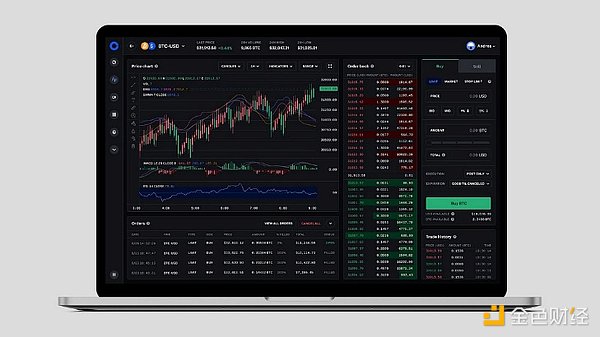
Moreover, the exchange's value is reflected in its strategic expandability. As the core channel connecting fiat currency and cryptocurrency, the exchange gains a massive user base and trading data. Based on this foundation, it plays a strategic hub role, naturally guiding users into a broader ecosystem. The exchange provides both financial stability and strategic expandability for Coinbase, becoming the core cornerstone of ecosystem development.
2.2 Base Chain: Strategic Leap from Off-Chain to On-Chain
Base chain is an Ethereum Layer 2 blockchain directly built by Coinbase. Through this chain, Coinbase has expanded from exchange business to the on-chain domain.

This expansion stems from the structural characteristics of the cryptocurrency ecosystem. Exchanges primarily provide trading services between fiat currency and cryptocurrency in the off-chain environment.
However, actual cryptocurrency usage occurs in the on-chain environment outside of Coinbase. This includes scenarios like crypto-backed lending and governance participation. For example, after purchasing cryptocurrency on Coinbase, users need to transfer it on-chain to participate in specific DeFi protocols. This means Coinbase faced structural limitations, forced to channel users to other ecosystems.
The Base chain resolves these limitations. Now, even if users buy and withdraw cryptocurrency on Coinbase, they can remain within the Coinbase ecosystem. Just as Apple controls both hardware and software, Coinbase can now manage the complete user process from exchange to infrastructure. This strategic significance is immense.
2.3 TBA: The Final Piece of the Crypto Ecosystem Puzzle

In July 2025, Coinbase announced the launch of TBA, an on-chain super app, moving towards a more grand vision. This strategy is not limited to acquiring users through the exchange but aims to provide users with directly usable application layers through Base infrastructure. Although numerous dApps are developed on Base, they are scattered and difficult to integrate. No matter how excellent Base chain's performance or how low its fees, if ordinary users cannot conveniently access it, these cannot create real value.

TBA integrates the core elements of the crypto ecosystem - exchange, infrastructure, and applications - into a single platform, providing a seamless user experience. Users can make crypto payments and transfers, earn through Farcaster social services, and immediately use them for online and offline payments, creating a new on-chain experience. Multiple services synergize to form a powerful ecosystem, significantly lowering the barrier to participating in the on-chain economy. This marks the completion of the final puzzle piece in the grand ecosystem Coinbase has been building.
3. Coinbase Building a Crypto Empire
Coinbase is no longer just an exchange. The company has built blockchain infrastructure and consumer-level applications on its exchange business foundation, ultimately developing into a massive empire covering the entire cryptocurrency ecosystem. Additionally, through an aggressive acquisition strategy, its business territory is expanding into more diverse areas - including acquiring token management platform LiquiFi, zero-knowledge proof technology company Iron Fish, Web3 advertising platform Spindl, and cryptocurrency derivatives exchange Deribit, extending its tentacles to various corners of the Web3 industry.

These moves are like an aircraft carrier strategy attempting to control all cryptocurrency touchpoints. Its relationship with USDC stablecoin issuer Circle is even more intriguing: Coinbase is not only a major shareholder of Circle but can also receive a certain percentage of USDC interest income beyond equity investment. The protocol even stipulates that if Circle goes bankrupt or fails to fulfill income distribution obligations, some USDC-related rights will transfer to Coinbase. Thus, Coinbase almost controls the core infrastructure across various cryptocurrency ecosystem domains.
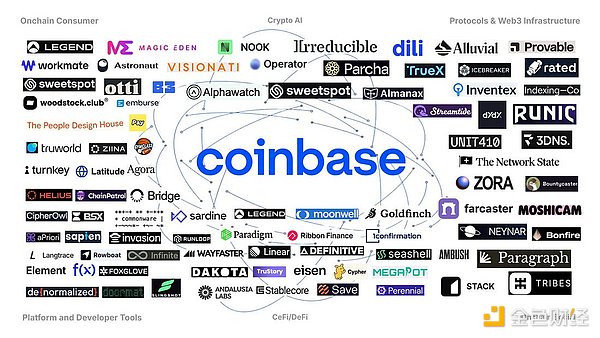
Coinbase's expansion strategy is not achieved solely through acquisitions. Another core strategy is to let the Coinbase "alumni" network penetrate the entire cryptocurrency industry like the former "PayPal Mafia". The company has invested in over 40 Web3 startups founded by former Coinbase employees and continues to build a close collaborative network through partnership establishment. Typical examples include Polychain Capital founded by Coinbase's first employee Olaf Carlson-Wee, and prominent Web3 projects like dYdX, Farcaster, Zora, and B3 were all founded by Coinbase alumni.
We still view Coinbase as an exchange, but its actual operating model is more similar to Google in the Web2 era. Just as Google started from search and ultimately dominated the entire digital realm including advertising, cloud computing, and mobile ecosystems, Coinbase has similarly built a massive empire covering the entire cryptocurrency ecosystem from its exchange business.
4. Centralized Exchanges: Pros or Cons?
Coinbase is building a massive empire. The company's development path from exchange to Base chain and then to TBA shows a clear strategic intent. However, in its aggressive expansion strategy, we need to examine its industry positioning.
Cryptocurrency once raised the banner of decentralization, but now it is returning to centralization in pursuit of convenience. After voluntarily entering the Coinbase ecosystem, users often find no reason to leave—which is essentially no different from traditional financial structures.
This transformation is not entirely negative. Integrated platforms like TBA do bring practical benefits to users: no need for complex wallet connections, avoiding the hassle of cross-platform switching, and not worrying about high gas fees. Users can access all services within a single application. From earning through social activities to completing actual payments, the entire process is seamlessly connected. Coinbase's model clearly promotes the popularization of cryptocurrency.
However, the key issue cannot be ignored: Cryptocurrency was born for decentralization, but now convenience has given rise to new centralized structures. Users voluntarily remain in the Coinbase ecosystem with little motivation to migrate, which is no different from the traditional centralized financial system we were trying to subvert.
The market has already chosen convenience, and reversing this trend is difficult. The priority is to find a balance between the convenience of centralization and the spirit of decentralization. The real challenge is: How to build an ecosystem that guarantees user choice through healthy competition and continuous innovation while maintaining the core values of cryptocurrency.






