Hong Kong is rapidly building its digital finance market through tokenization of real assets (RWAs), exchange-traded funds (ETFs), and new regulations on stablecoins. However, high costs and compliance requirements remain barriers for smaller issuers.
Volume for six virtual asset ETFs in the city reached HK$56.4 million ($7.2 million) on August 26, indicating steady investor interest despite broader volatility.
RWA tokenization faces high entry costs
RWA projects promise to unlock global liquidation and expand access to investors.
However, cost remains a major hurdle. Releasing a crypto product can cost as much as RMB6 million ($820,000), according to PANews .
Brokerage fees make up the bulk of the cost, while blockchain integration and regulatory compliance add to the cost. Additional fees for Capital, cross-border approvals, and promotion add to the overall burden.
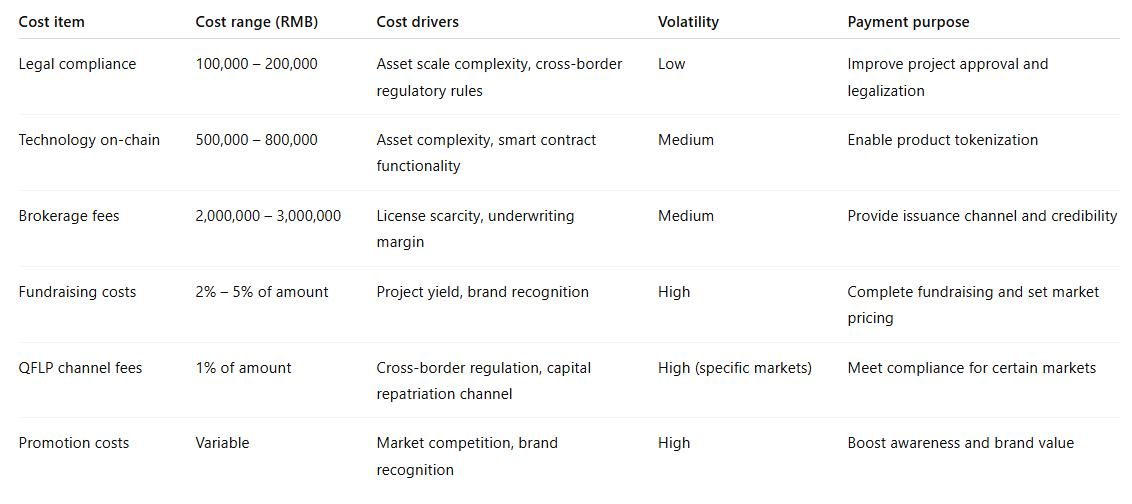 Analysis of RWA Token Issuance Costs in Hong Kong
In addition to the one-time issuance, companies must also secure licenses. A major financial license in Hong Kong costs more than 1.5 million RMB, while a virtual asset service provider (VASP) license can cost tens of millions.
Proponents argue that tokenization improves efficiency over traditional securitization. However, the reliance on Oracles, lack of expertise, and need for expensive intermediaries make adoption difficult.
Liquidation assets like money market funds and US Treasury bonds are XEM as the most realistic candidates for tokenization. In contrast, liquidation infrastructure projects are harder to scale.
Hong Kong ETFs Show Investor Interest
ETF trading patterns show a clear preference for Ethereum-based products, with China Asset Management’s Ethereum ETF leading the way with nearly HK$26 million in turnover on August 26.
Their Bitcoin products and those of rival issuers like Harvest and Bosera attract smaller volumes.
Overall, Ethereum-linked ETFs accounted for nearly two-thirds of activity. Analysts say this reflects a global trend where Ethereum supports decentralized applications and offers profit opportunities beyond price speculation.
Ruihe Joins Bitcoin Mining
In corporate moves, Hong Kong-listed Ruihe Data Technology Holdings has announced plans to expand into Bitcoin through its cloud mining business. The company has signed an outsourcing contract with mining hardware maker Bitmain to run the operation.
“Bitcoin mining as a standalone business segment provides the group with opportunities in digital assets and emerging technologies,” Ruihe’s board of directors said in its filing.
The company said outsourcing allows it to avoid large Capital expenditures while retaining flexibility. The bonus will be distributed to Ruihe under the agreement.
Stablecoin regulation creates new legal framework
The policy changes add another layer to Hong Kong’s digital finance efforts. On August 1, the city enacted the Stablecoin Act, which sets licensing requirements for issuers.
Local commentators have called on the government to align its strategy with China’s 15th Five-Year Plan and position Hong Kong as a stablecoin issuance hub. A Financial Development Whitepaper has been proposed as the next step.
Industry leaders see opportunity. JD.com CEO Richard Liu recently said:
“Through stablecoin licenses, we can realize currency exchange between global enterprises, reduce global cross-border payment costs by 90%, and improve efficiency within 10 seconds.”
Together, crypto, ETFs, and stablecoin regulation underscore Hong Kong’s ambition to secure a leading Vai in the global digital asset market.