
1. Could you please introduce yourself?
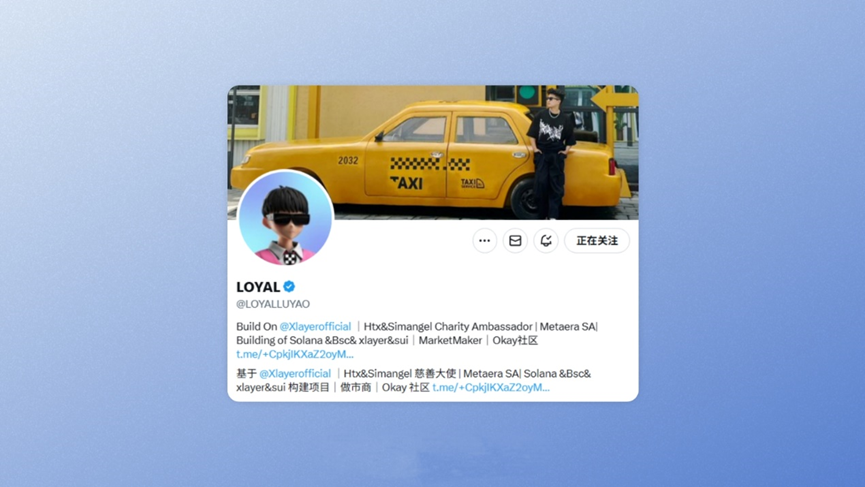
Hello everyone, I'm LOYAL. I'm the founder of Ximan Group, the spokesperson for Ximan Angel Charity, and the China Strategy Officer for the Malaysian Blockchain Association. I'm currently focused on building the MEME project on XLayer and promoting the development of the related ecosystem.
2. Could you please tell us about your past experience?
My entry into the crypto world began last year when I went bankrupt in Chengdu, burdened with over 700,000 yuan in debt. At the time, I had only heard of Bitcoin. A friend took me to an event at Chengdu Web3 Space. Although I barely understood what was being said, I realized the enormous potential of this industry. There, I met Rik, a senior market capitalization manager in Hangzhou, who became my mentor.
After that event, I began studying furiously, constantly searching for relevant information online. I even proactively looked for free internships on Xiaohongshu, just to get a chance to practice. About two or three months later, I saw Rik post a job opening on WeChat Moments. Although my knowledge was limited at the time, I was able to answer some questions, and I was eventually hired. This was not only my first job in the crypto, but also the turning point in my journey from bankruptcy to a new career path. I began learning from scratch how to identify projects, understand how exchanges operate, and learn about market making, quantitative trading, and market capitalization management. Although everything was unfamiliar, I knew this was my chance to make a comeback.
Having started seven businesses before, I'm well aware of the importance of connections and branding. So, I founded Super Player, a platform specializing in hosting industry salons. Project sponsors provide presentations and hosting, while I organize everyone's participation. Ultimately, I convert project sponsors into clients, creating a closed loop.
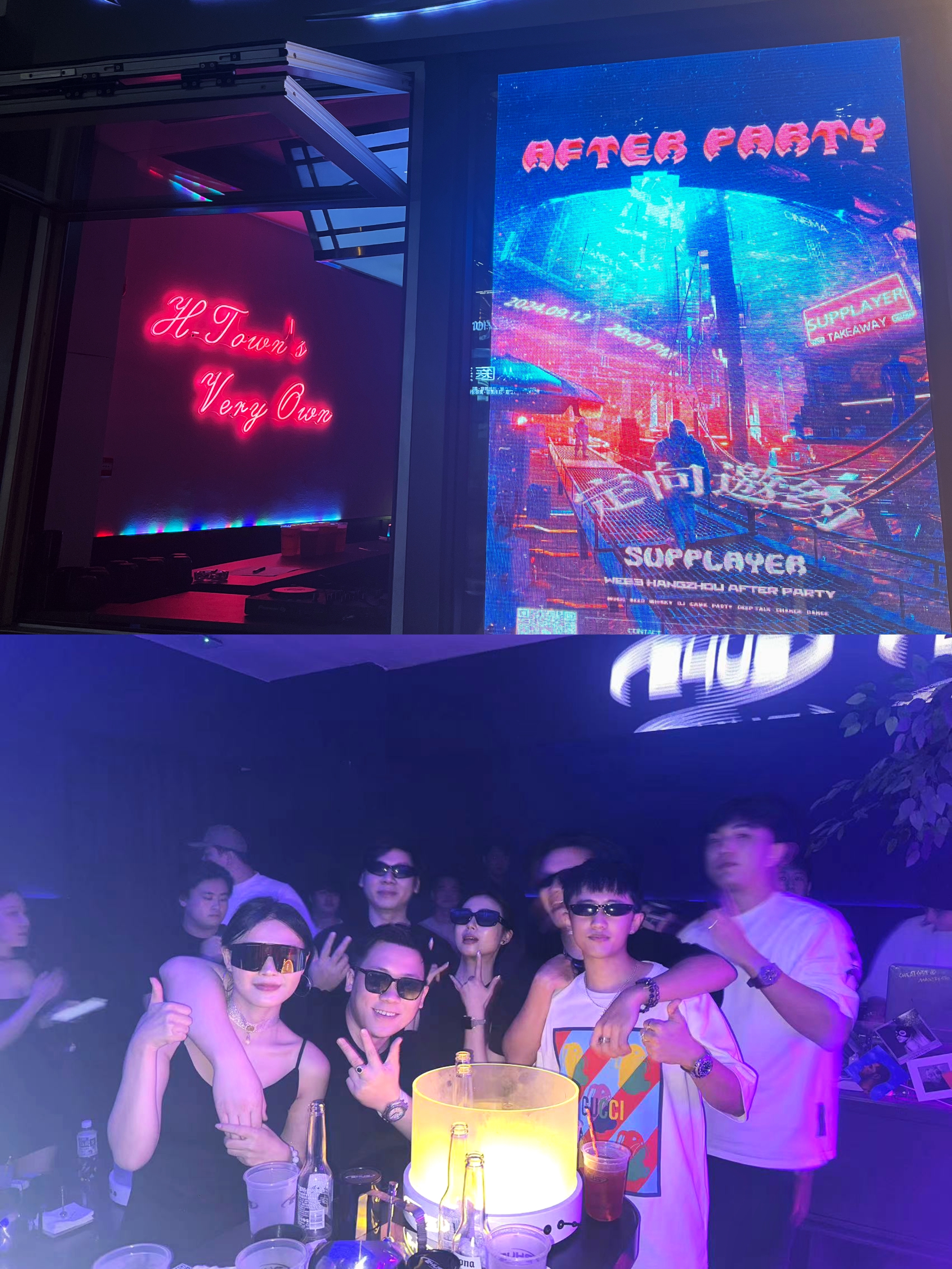
At the time, I launched a challenge on Xiaohongshu (Red Book) to have coffee with strangers. This challenge brought me a lot of traffic on Redbook and attracted the attention of some project developers, who I then converted into clients. However, I went through a period of almost no sales for a month or two, feeling that others didn't trust me. Considering that I was new to the industry and probably had little name recognition, I personally paid for a HANGZHOU WEB3 PARTY in Hangzhou. Anyone who was involved in Web3 could drink for free. The response was fantastic after the event, and I also met Li Yang there, who helped me promote the company. As a result, LOYAL became an instant hit, and many people in the crypto knew the name LOYAL.
So I started to transition to Twitter, and it happened to be the time for Singapore TOKEN2049. I sent a private message to Pei Qingyang, the global head of Huobi, and told him that I wanted to sing a song at Huobi Night, but at that time I only had a few dozen followers on Twitter. Unexpectedly, he replied to me. Later, I wrote a theme song for this event and sang it at Huobi Night. This time, I really stood out in this industry, so Brother Qingyang was my first real benefactor after I entered the circle.

Later, I visited Shenzhen, and I immediately felt the atmosphere there was distinctly different from Hangzhou. Whether eating, drinking tea, or even walking, everyone was discussing how to make money, which convinced me I had to stay and give it a try. I later met Winnie there, who introduced me to Zhang Dabi, Diving Observer, and Dong Shiba. Hearing them discuss projects like AI16Z, Hippo, and Koma, it dawned on me how MEME worked.
So, from December of last year to January of this year, I spent a significant amount of time learning how to play MEME, and gradually developed my own methodology: no matter how much I earn, I always take profits promptly, and when I'm losing, I always use a strict stop-loss. For example, if I start with 10,000 units, I'll exit if I lose 500-1,000 units at most. This way, I won't suffer a huge loss. I gradually understood that if I want to make money, I must first learn the true meaning of stop-loss.
After I came to Shenzhen, I joined a Hong Kong media company called metaera and met my second benefactor, Sister Joy. Now we are like real siblings. She always encourages me and helps me introduce people to other places. If I start a business in the future, I will definitely have my sister as a shareholder.
On January 18th, I was the first to see the news about Trump's coin launch and bought in at an average price of around $2.20, ultimately achieving a single coin, A7, my first significant success on MEME. I was able to seize this opportunity because I chose Shenzhen, where I constantly learned how to play MEME from my predecessors, and because I'd developed a habit of waking up early and closely monitoring market trends.
After I made some money, I immediately paid off all my loans and debts. My master, Gelige Rong, has adopted 30 homeless children, some in elementary school, middle school, and even kindergarten. So I decided to sponsor each of them 70,000 yuan, and continue supporting them until they graduate from university. In total, I've donated 2.1 million yuan and even built a small house in the temple for the children to study.
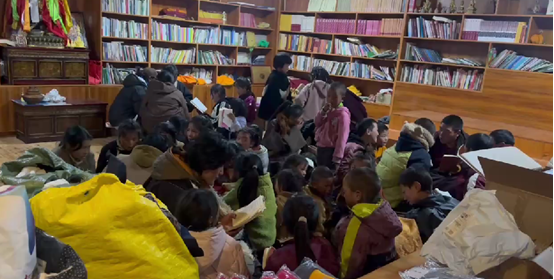
Having just experienced bankruptcy and a low point in my life, this experience was a life-restarter for me. But when wealth comes too quickly, it's easy to get carried away. After making money, I couldn't hold on to it and started rushing into various projects, buying tokens of Mrs. Trump and the Cuban government. At one point, I even lost 550,000 yuan on a heavy investment in the Cuban government. Only then did I gradually learn to stop playing around and practice risk control and fund management.
Core Content: I entered the crypto last year after going bankrupt in Chengdu with over 700,000 yuan in debt. I started as a market capitalization manager and gradually mastered exchange operations and quantitative methods. I later founded "Super Playmate," building connections through salons and gaining popularity at Huobi's TOKEN2049 Night in Singapore. After arriving in Shenzhen, I seized the opportunity presented by Trump's coin launch and launched the first single-coin A7. I used the proceeds to pay off my debts and contribute to charity. Although I also suffered losses due to impulsive investments, these experiences have truly taught me about risk control and fund management.
3. Can you tell us about what you are doing?
Starting in March of this year, I dedicated myself full-time to being a key opinion leader (KOL). I also participated in industry events, making many connections within the industry and gradually gaining popularity on Twitter. In April, a trusted advisor scammed me out of over 3 million yuan. Part of that money was intended for my study abroad tuition, but it was all gone. I hit rock bottom and felt lost. I remembered something my mentor once told me: "Who you are determines who you become. It doesn't matter if you don't have money now. Don't forget your original aspiration and find a way to get it back." So, I decided to relax and, with my remaining 2,000 to 3,000 U.S. dollars, I began traveling and even took my mother on a trip to Qinhuangdao.
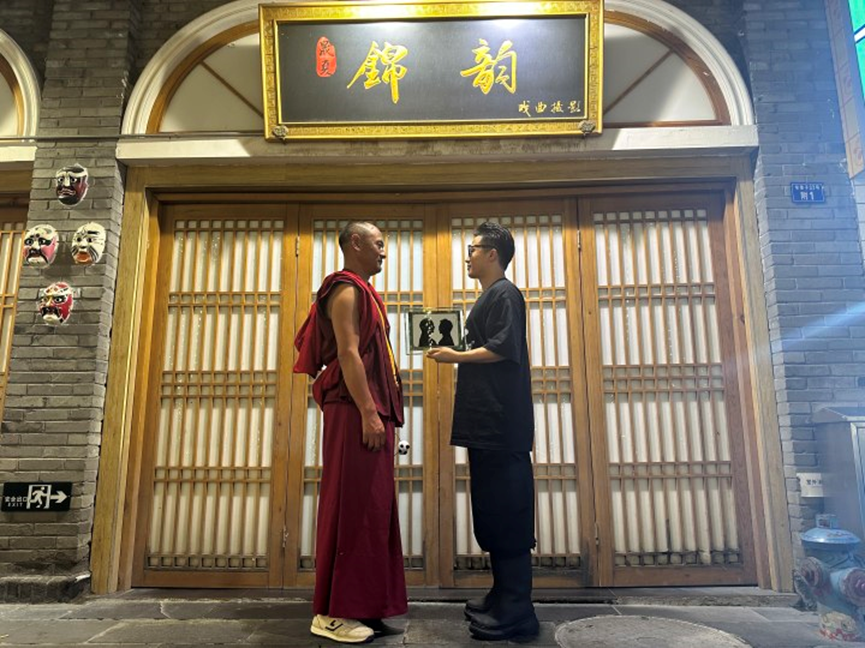
On August 1, I decided to return to Shenzhen, and the Little Prince also came back. We had learned from each other and helped each other before. Jack was also a good brother I met when I entered the circle. At this time, we created a group, and the three of us began to study day and night, from buying coins to studying pools, and learning XLayer 24 hours a day. We enjoyed it all.
Not long after, OKB began pumping. I'd heard some rumors and realized that if OKB was going to pump, there would be some hidden agenda behind it, so I paid close attention to its public chain. At the time, there was only one PUFF meme on the entire chain. Later, I discovered that the first transmitter was called dyorswap, and then there were three other coins: Xstar, Xcat, and Xdog.
Core Story: In March of this year, I started working as a full-time KOL, participating in industry events and building a strong network. However, in April, I was scammed out of over 3 million yuan by a scammer I trusted, hitting a low point. With only 2,000 or 3,000 U tokens left, I went traveling to relax. After returning to Shenzhen in August, I keenly seized the opportunity presented by the OKB pump and participated in MEME projects such as PUFF, Xstar, Xcat, and Xdog.
4. What are your most memorable experiences in web3?
I have suffered several relatively large losses in the crypto. The most typical one was the Cuban project, where I lost almost 50,000 U. Another one was Trump’s youngest son BTO. They also opened an "official account" with more than 300,000 followers, and I ended up losing nearly 150,000 U in it.
My most unforgettable experience was actually the scam I got in Kuala Lumpur in April of this year. There was this so-called "big brother" who constantly chatted with me about crypto days, fed me some trades, and occasionally offered me some so-called "wealth secrets." Sometimes, they actually showed a 400% or 500% increase, so I gradually let down my guard. When he asked me to invest in a project, I had little doubt and even considered taking out a loan to invest, believing the opportunity was right in front of me. But I ended up getting scammed. I eventually realized that these people exploit human nature, luring others into unconditional trust before reaping the benefits.
Core Content: I've experienced numerous significant losses in the crypto, including a loss of approximately 50,000 USD on a Cuban project and nearly 150,000 USD on Trump's younger son's BTO. The most unforgettable experience was being scammed out of over 3 million USD by a "big brother." He first gained my trust with small orders, then used "wealth codes" to lure me down and ultimately reap the benefits.
5. Can you share with us the skills or areas in which you think you are particularly good?
I have not been in this industry for long, and to be honest, I am not that familiar with investment research, and I may not be able to seize the so-called "wealth code" opportunities. My biggest advantage is actually very simple, which is to use all my physical strength and time.
I spend about 16-18 hours a day on the blockchain, almost all day, and only sleep for 5 hours. It may be because of this extreme investment that I have gradually accumulated a little bit of my own advantages.
6. Are there any sectors or tokens you’re optimistic about? Could you share your reasons for being optimistic?
My current favorite track is XLayer, and the token I'm most optimistic about is OKAY. "OK" has become the most colloquial and influential word in the world. Almost everyone, regardless of social class or nationality, uses it in everyday life. This natural meme quality and high frequency of use give it a strong social communication advantage, which I believe will be a key foundation for the growth of the OKAY token.
Core content: Currently, I am most optimistic about the XLayer track, focusing on the token OKAY, because "OK" has global, highly spreadable meme attributes and high-frequency usage scenarios, which will become the core advantage of OKAY's growth.
7. How do you view investment? Do you have any investment methods you can share?
Because I come from a background in market capitalization management, when I look at investment projects, I first focus on the people. The first step is to conduct background checks on core members to understand their character and credit, and to determine if they have a history of bad behavior. Secondly, I examine the team's background, including their education and resume. Next, I delve into their technical capabilities, and then consider the industry they're in, such as RWA, AI, DeFi, L2, or NFT. Finally, I also determine whether the team is willing to invest out of their own pocket and whether they have reputable institutional backing. Based on these factors, I decide whether to invest.
Core content: When I look at a project, I mainly focus on five factors: character and credit, team background, technical capabilities, track selection, and institutional endorsement to determine whether to invest money. I decide whether to invest after comprehensive judgment.
Web3 Profiles: Web3's first personal interview platform, it deeply explores the stories behind 100 industry KOLs, fund founders, entrepreneurs, and builders, focusing on their experiences in the crypto and their growth, and focusing on exploring their personal experiences, striving to make the personal experiences of the interviewees shine and show the most authentic personal growth stories.
Disclaimer: [Web3 Profile] disseminates content with a neutral attitude. This article does not constitute any investment advice and is for reference only.