Content arrangement: Peter_Techub News
On November 5th, at the Hong Kong Fintech Summit and Newfire Technology Product Launch, co-hosted by Newfire Technology, Techub News, and Avenir Group, Roundtable Forum Two, "Rejecting Black Swans: Institutional Liquidity in Digital Assets and the Future Form of Exchanges," was in full swing. Moderator Alma (founder of Techub News) led a heated debate among four heavyweight guests: Eugene Cheung, Chief Business Officer of OSL Group; Lan Jianzhong, COO of Avenir Group; Xing Yue, COO of Newfire Technology; and Adrian Wang, CEO of Metalpha. The discussion took place amidst heightened volatility in the crypto market: the October 11th black swan event triggered $20 billion in liquidations, with Bitcoin briefly falling below the $100,000 mark. The guests analyzed the pain points of institutional liquidity, dissected vulnerabilities, and envisioned the evolution of exchanges. This article focuses on the three core topics raised by Alma, summarizing the guests' views one by one to provide investors with industry insights.
On November 5th, at the Hong Kong Fintech Summit and Newfire Technology Product Launch, co-hosted by Newfire Technology, Techub News, and Avenir Group, Roundtable Forum Two, "Rejecting Black Swans: Institutional Liquidity in Digital Assets and the Future Form of Exchanges," was in full swing. Moderator Alma (founder of Techub News) led a heated debate among four heavyweight guests: Eugene Cheung, Chief Business Officer of OSL Group; Lan Jianzhong, COO of Avenir Group; Xing Yue, COO of Newfire Technology; and Adrian Wang, CEO of Metalpha. The discussion took place amidst heightened volatility in the crypto market: the October 11th black swan event triggered $20 billion in liquidations, with Bitcoin briefly falling below the $100,000 mark. The guests analyzed the pain points of institutional liquidity, dissected vulnerabilities, and envisioned the evolution of exchanges. This article focuses on the three core topics raised by Alma, summarizing the guests' views one by one to provide investors with industry insights.
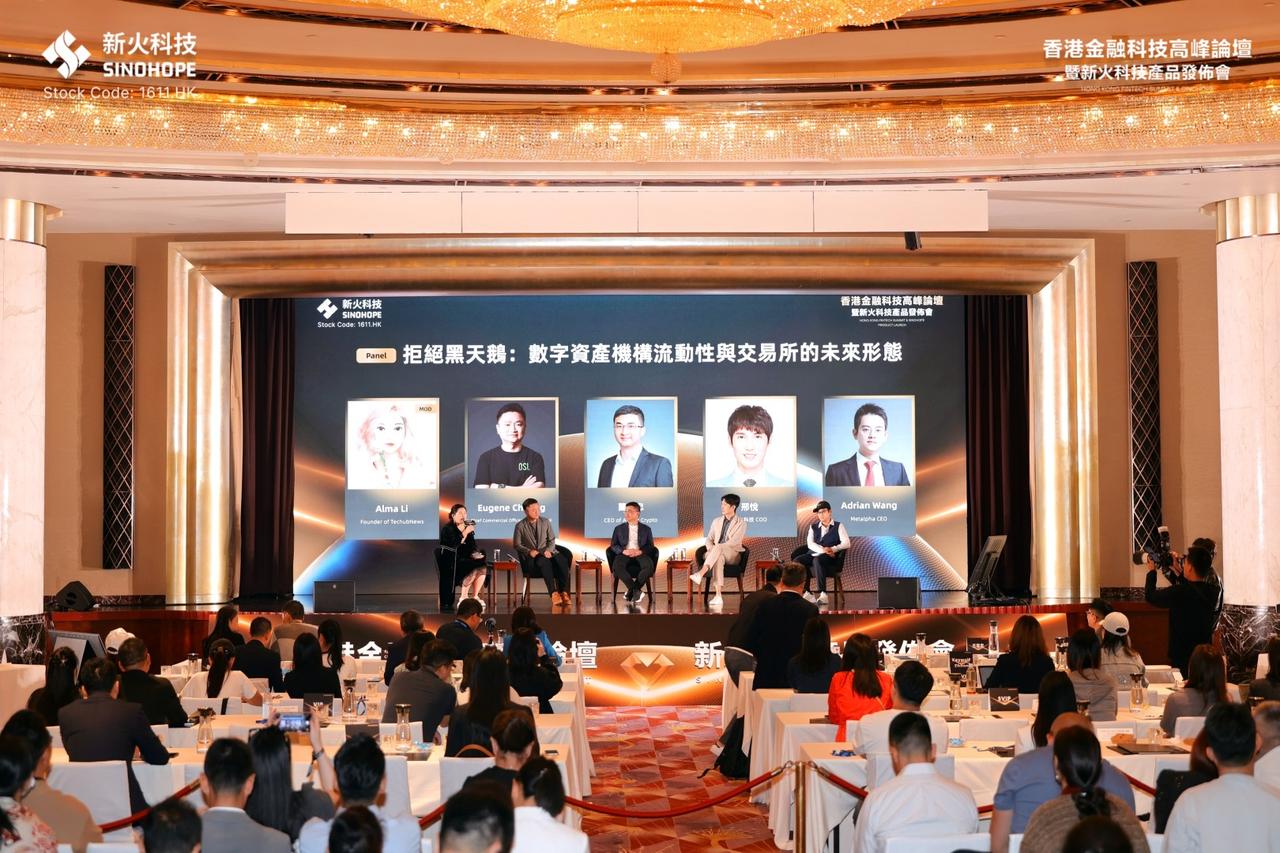
Topic 1: What are the vulnerabilities in black swan events? Trust gap in institutional liquidity.
Techub News founder Alma raised a key concern: What vulnerabilities in the digital asset space have been exposed by recent black swan events? Is it counterparty risk, lack of transparency in custody, or insufficient liquidity? This question directly addresses Taleb's "antifragility" concept, resonating with the panelists.
Eugene Cheung analyzed the situation from the perspective of traditional financial transformation, emphasizing that liquidity loss and lack of transparency in risk control were the core issues. "In this incident, the prices of the three tokens instantly plummeted to zero and then rebounded, stemming from the market maker's automated order cancellation mechanism. From the Chicago Mercantile Exchange to Bybit, I've witnessed the chaotic competition of 1000x leverage. Inconsistent risk control standards across exchanges and the lack of a Nasdaq circuit breaker mechanism led to a collapse in investor confidence." He advocated for a balance between innovation and regulation, introducing transparent rules to build resilience.
Lan Jianzhong, COO of Avenir Group, attributed the incident to a "liquidity crisis triggered by a risk control failure," recalling the terrifying alarms that blared in the early hours of the morning. "The trigger was the concentrated risk of the 'multiple benefits from one' strategy: investors chased after coin yields and multiple returns, ignoring the vulnerability of margin to secondary market manipulation. A large lock-up pricing loophole burst the bubble, causing the delta-neutral strategy to collapse, triggering a chain reaction of ADL liquidations." He pointed out three major problems: market fragmentation (small exchanges and DeFi disperse liquidity, unable to access it centrally like CME); a distorted ecosystem (over-reliance on top market makers, leading to market depletion when they stop); and room for improvement in pricing strategies. "Subsequent rectification is commendable, but global liquidity sharing is necessary."
Xing Yue, COO of Xinhuo Technology, downplayed the "black swan" label of the event: "Compared to the 312 or 519 crashes, although this one is the highest in history, it represents a tiny percentage of the industry's market capitalization." He distinguished between market-driven black swan events (extreme market conditions leading to leveraged liquidation, which can be quickly recovered, but investors face a steep learning curve) and compliance-driven black swan events (trust mismatch). He cited multi-billion dollar asset management institutions as an example: "They only dare to put in a few million dollars on Bybit because of the opaque custody and liquidation rules. Unlicensed exchanges have no audits for their self-custody, and trust relies on the owner's reputation. While Probability of Return (POR) has improved, the industry needs full-chain compliance: from underlying custody to code auditing." Xing Yue is optimistic: a compliant ecosystem will not experience major collapses; such events are an inevitable stage.
Metalpha CEO Adrian Wang shared his insights on the liquidity impact following the October 11th digital asset crisis. He mentioned that the industry experienced liquidity constraints due to the event (the stablecoin market is worth approximately $280 billion, with $20 billion of that being liquidated), but explicitly stated that liquidations were not the primary cause of the liquidity crunch.
He pointed out that the US government shutdown and abnormal SOFA (Social Security and Investment Fund) rates had a greater impact on liquidity, and that the government shutdown was not expected to last, with liquidity likely to return to normal. In the long term, the US is focusing its policy and development efforts on AI and blockchain, with Wall Street, the NYSE, and other institutions actively launching blockchain-related products. The industry's long-term development trend is positive, and short-term pullbacks of 10%-20% are normal fluctuations and should not be a cause for excessive concern, just as Tesla's stock price fluctuates but does not affect its long-term development.
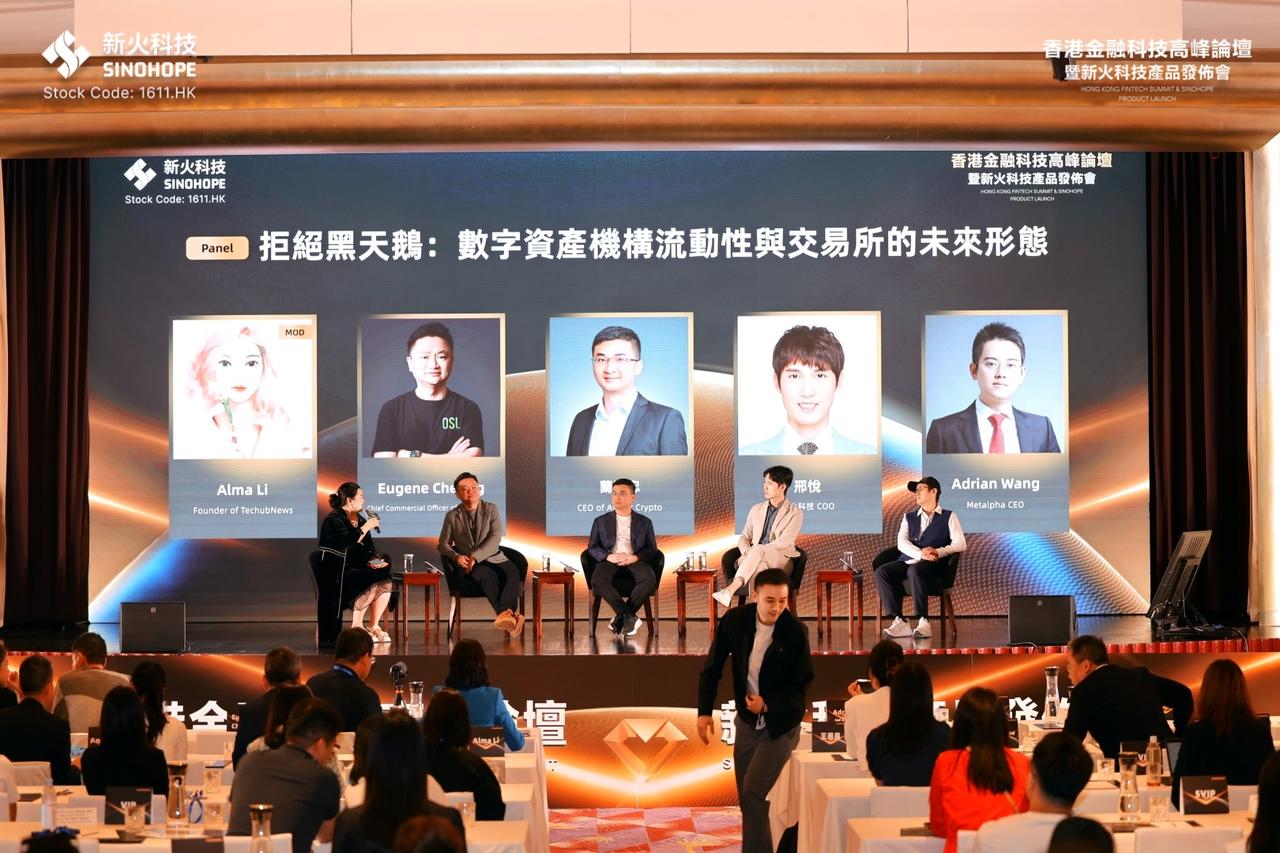
Topic 2: How to assess the health of an exchange? Indicators beyond trading volume.
Techub News founder Alma shifts focus to evaluation frameworks: Besides trading volume, what metrics measure an exchange's health and help it avoid black swan events? The focus is on Eugene Cheung of OSL, one of Hong Kong's first compliant exchanges, and Lan Jianzhong, CEO of Avenir Crypto.
Eugene Cheung views licensing as the bottom line: "Regulatory standards ensure nothing goes wrong, but health goes beyond that. Asset auditing is better than POR—the premise is that money hasn't been stolen; transparent risk control can handle abnormal markets." He calls on industry associations to promote best practices: ADL design, risk control sharing, and leadership from major exchanges. "OSL listed companies have transparent finances, 98% of assets are in cold wallets, and profits are safe." While licenses are not a panacea, economies of scale require liquidity aggregation.
Lan Jianzhong, COO of Avenir Group, revisited Huobi's "21-character mantra" (security, compliance, stability, high-quality assets, liquidity, user experience, and transaction fees), adding three dimensions: capital utilization (integrating contracts, spot trading, wealth management, and US stock margin to improve order book capacity and test quantitative risk control); a healthy liquidity ecosystem (co-construction by diverse providers to avoid the distorted cycle of "one fish eating up the pool," and API design requiring ecological balance); and asset transparency (reconciliation of user assets and payables, with no inflated figures; real money on the order book, not fake orders, to avoid withdrawal runs). "Experienced traders can easily identify fake platforms, and compliant exchanges must be responsible to their users." He reminisced about the Li Lin era, hinting at Avenir's future exchange plans.
Topic 3: The Future Form of Exchanges? Integrated Financial Platforms or On-Chain Innovation?
What form will trading platforms take? Integrated financial platforms? The focus shifted to asset managers Xing Yue and Adrian Wang, then expanded to Lan Jianzhong and Eugene Cheung, and touched on market predictions.
Xing Yue, drawing on his experience with exchanges such as Badbit, Hellokitty, and Huobi, analyzed the future form of trading platforms. He proposed a three-stage evolution of exchanges: the early stage was the liquidity inflection point (liquidity was the moat, such as BN's popularity due to its small-coin liquidity); the later stage was the trading service competition stage (competing on system stability, portfolio margin, etc., now functionally saturated); and the current stage is the compliant investment service stage, where the core of competition is the ability to provide licensed investment services.
The future trading platform will evolve into a comprehensive financial platform, with core directions including OSL-style compliant cross-currency instant swaps, Lan Jianzhong-related stock-currency integration and cross-category margin trading, Spark-style customized services for high-net-worth individuals, and future RWA asset compliant trading. Overall, it relies on compliance licenses and needs to focus on improving financial efficiency and adapting to the needs of institutions and high-net-worth individuals.
Adrian Wang shared his views on the future form of trading platforms: First, he believes that "professionals should do professional things." Traditional market exchanges are divided according to investment categories (such as the Hong Kong Stock Exchange and the LME not being merged, and different categories of commodities belonging to different exchanges). Due to the complexity and special characteristics of each category, the integration of categories is currently difficult and slow.
As someone with a technical background, after communicating with Mr. Lan, he became more optimistic about Dax exchanges (such as Hyper Liquid): the underlying technology of digital assets is blockchain technology, and Dax can leverage its advantages to achieve trustlessness. Transaction records, assets, market making and ADL methods are all recorded in code, which can be traced back to the source. It is also easy for regulators to review and can solve the pain points of the existing market.
In addition, he mentioned the combination of AI and decentralized exchanges: with the current evolution of program interfaces, it is easier to implement AI to call decentralized exchanges to conduct transactions at the technical level.
Lan Jianzhong envisions an "all-in-one" model: integrating on-chain and off-chain liquidity hubs, traditional cryptocurrencies, and fiat currencies. "Fragmentation will disappear, with several major hubs providing access for CEXs/DeFi/brokerages, saving costs. The SFC's welcome to overseas liquidity integration is a huge boon, elevating its global standing—but regulatory and technical challenges need to be overcome." Regarding market trends, he firmly believes in long-term investing: "Avenir built its position at $10,000-$20,000 without selling a single Bitcoin, treating it as a means of production. The market size is small, institutional adoption is high (401K entry), and another 10-20 times return is expected."
Eugene Cheung agrees that the traditional-digital overlap is driven by institutional entry (Trump, ETFs) and aggregation. "It's not just about exchanges; it's about integrating lending and payments across all scenarios, with blockchain replacing infrastructure." Scale is key, with liquidity sharing like the NYSE model allowing compliant exchanges to aggregate orders. "OSL has a multi-location presence and welcomes integration with HashKey." Short-term market outlook: "Bitcoin is like gold, with a 10x difference, and huge potential for national reserves; mainstream chains (Layer 1/2) are experiencing real growth. A shake-up in Q4, opportunities for believers."
Host's summary
The roundtable discussion served as a barometer for the industry: from analyzing pain points to envisioning a future, the guests' sharing consistently revolved around three key themes: "compliance, self-discipline, and technological integration." As the moderator of the roundtable, Alma, founder of Techub News, further distilled the core message at the end: "Regarding the $20 billion liquidation event on October 11th, the four guests provided clear guidance for the digital asset industry, analyzing pain points and looking towards the future. During the forum, a consensus was reached on the analysis of black swan events—requiring regulation to establish a bottom line, the industry to fill gaps, and strong trust across the entire chain; the health assessment of exchanges has broken away from the 'trading volume-only' approach, with licenses, asset audits, and capital utilization becoming key benchmarks; while the future path is diverse, they all point to 'technology as the foundation and compliance as the guiding principle.' This dialogue not only clarified the current risks in the industry but also outlined the core direction for breaking through the current predicament."
Techub News will continue to provide in-depth insights from this forum, track industry trends in the integration of compliance and technology, record every step the digital asset field takes to resist black swan events and move towards sustainable growth, and deliver more valuable decision-making references for investors and practitioners, jointly promoting the steady development of the crypto ecosystem.