This article is a summary and commentary on Chapter Nine, "Elderly Care Finance Industry," of the book "The New Blue Ocean of the Silver Economy (Industry Chapter)," which covers nine major vertical sectors of the silver economy: elderly healthcare, elderly care, elderly food and supplies, elderly leisure, elderly real estate, elderly finance, smart elderly care, and the funeral industry.
This series, covering nine key areas of the senior care industry, is a new authoritative publication planned by a high-level economic research group, in accordance with the spirit of the 15th Five-Year Plan and the Fourth Plenary Session of the 20th CPC Central Committee. It also includes research and commentary from our strategy group and senior living communities.
——————
*The concept and sub-sectors of the pension finance industry
- Conceptual pension finance is a system that integrates finance and elderly care, aiming to address the challenges of an aging population and meet the diverse financial needs of society members during their retirement and the development of the cultural industry. It is not merely an extension of traditional financial services into the silver economy, but rather a completely new financial concept and service model that integrates financial resources to provide comprehensive support for retirement security.
Its core lies in closely integrating the services of financial instruments with the needs of elderly care and the development of the silver economy, so as to effectively raise, manage and utilize pension funds and funds for the development of the silver economy, thereby ensuring the economic security and quality of life of the elderly and providing financial support for the development of the silver economy.
- Subdivision
Pension Finance [Pension System Arrangements, Pension Asset Management]
–Pension system arrangements
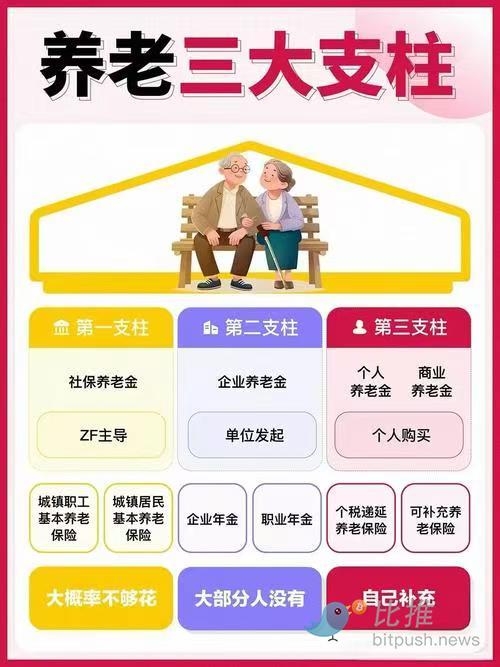
Pillar 1 Basic Pension Insurance (Urban Employees, Rural Residents)
Pillar 2: Corporate Annuity and Occupational Annuity (jointly contributed by the company and the individual)
Pillar 3: Personal pension (personal pension and other personal commercial financial pension services)
– Retirement Asset Management [Capital Security, Preservation and Appreciation, Long-Term Reserves, Returns and Liquidity, Diversified Asset Allocation for Social Security Funds]
Case Studies: Taikang Pension Technology Annuity Grand Trustee, Zhijinbao, Qijinbao, Quanyibao
Financial services for the elderly
We provide financial services to meet the diverse retirement needs of residents throughout their entire lifespan, focusing on personal retirement wealth accumulation and consumption activities. Based on different groups' income levels, risk preferences, and retirement needs, we offer personalized retirement financial solutions [high-income investment insurance, and inclusive options for middle- and low-income groups].
–Personal retirement wealth management business [for those preparing for retirement (40+) or during their working years, focusing on wealth accumulation and management with retirement as the goal (savings, wealth management, commercial insurance, 'retirement target funds', of which 130 have been launched as of 2021, with a latest scale exceeding 800 billion)]
– Retirement Wealth Consumption Business
A comprehensive range of financial and service products and services tailored to the wealth management, consumption needs, and livelihood security of the elderly, meeting their needs in areas such as wealth preservation and appreciation, consumption, and health protection, thereby improving quality of life.
Reverse mortgage (housing loan, using housing to support retirement)
Seniors who own property mortgage their homes to financial institutions. After comprehensively assessing factors such as the property value and the senior's life expectancy, the financial institution periodically disburses fixed amounts of money to the borrower to meet their retirement needs. Upon the borrower's death or permanent relocation, the financial institution acquires the property and disposes of it through sale to recover the principal and interest. This mechanism helps seniors convert real estate into liquid assets, alleviating the financial burden of insufficient pensions while ensuring their continued residence in the mortgaged property, thus guaranteeing their stability and sense of belonging.
[This model is similar to international examples, such as paid homestays for the elderly in Japan. A slight difference is that in Japan, the remaining value of the home is returned to the family after the elderly person's death, and if they live beyond their life expectancy, they are allowed to stay for free until their death.]
Rental fees [Target: Nursing homes and individual seniors]
Expanding the scale of institutions and improving facilities helps increase occupancy rates, improve service quality, and raise service levels.
For individuals providing rental housing (including home modifications to make the environment more age-friendly) or age-friendly equipment (large, expensive rehabilitation aids), the **service** helps reduce out-of-pocket expenses and improve quality of life.
Long-term care insurance [Important]: Japan enacted the Long-term Care Insurance Law in 1997 and fully implemented it in 2000; South Korea followed suit by about three years, and Germany by about five years.
This is what we commonly refer to as long-term care insurance. The pilot program covering 49 cities ended at the end of 2024, and will conclude in Q2 of 2025, with the announcement of coverage for 100 cities to be announced.
This is a universal social safety net insurance program added to my country after the five social insurances and one housing fund. However, its current pilot coverage is still very limited, mainly concentrated in the Yangtze River Delta, Pearl River Delta, and Chengdu-Chongqing urban clusters.
For elderly people who require long-term care due to old age, illness, or disability, insurance products provide coverage for nursing care expenses, funded by the government with a small contribution from the insured. After paying a certain fee, insured individuals receive corresponding nursing services or expense reimbursement, including home, community, and institutional care, subject to the conditions stipulated in the insurance contract. This primarily aims to alleviate the burden and financial pressure of family care, ensure that disabled elderly people receive proper care, and improve their quality of life. It also helps alleviate the strain on medical resources.
Rehabilitation aids rental
Financial leasing companies purchase large-scale rehabilitation assistive devices, such as wheelchairs, rehabilitation training equipment, smart nursing beds, and bathing facilities, and provide leasing services to senior citizens or elderly care institutions in need. Seniors or institutions only need to pay a rental fee to use the equipment for a specified period, without bearing the high costs of purchasing the equipment [in terms of usage efficiency, adoption rate, iteration rate, and supply chain funding pressure].
Case Study: Hengfeng Bank
–Innovation in elderly care financial services
Combining online and offline methods
Online channels feature age-friendly design, such as the small clinic at the Ruihong New City branch of Shanghai Bank.
Offline channels offer professional service personnel to provide seniors with financial planning consultations and business processing guidance, and some banks have established special financial service zones for seniors.
Intelligent service transformation
AI-powered customer service (those who use it know how bad the experience is; the AI's evolution can't keep up with customer expectations).
Intelligent investment advisory system, personalized investment portfolio solutions.
Retirement planning, health management, wealth transfer, one-stop financial services.
Case Study: Longyan Rural Credit Cooperative 1314520 (One goal, three major resources, one unique feature, four major brands, five transformations, 20 measures… Using finance as a link, fully leveraging the leadership of Party building and the role of various platforms, uniting multiple forces to form a matrix of elderly care services, serving the silver-haired customer base. Supported by personnel from five departments: Civil Affairs, Veteran Cadres, Medical Insurance, Human Resources and Social Security, and Administrative Service Center. Establishing a green channel with social security cards and benefits collection as the entry point… One-stop service offline, one-stop online service, frontline response to the needs of the silver-haired, payment channels, consumption scenarios, supporting facilities, and age-friendly modifications in both hardware and software) – Pilot program, too small in scope, too few participants (110 elderly canteens in Longyan, 10 pension settlement services, elderly financial education and free clinics, reaching only a little over a thousand people).
• Finance for the elderly care industry: [Large investments and long payback periods; the participation and support of the financial sector needs improvement. Currently, financing support for the elderly care industry is provided through credit bonds and equity.]
Innovation
Financial institutions are collaborating with elderly care enterprises to jointly explore innovative models of "finance plus elderly care".
Community-based insurance: [By the end of 2024, Taikang had completed the layout of 40 senior living communities in 35 cities nationwide, with 20 already operational and housing over 13,000 residents. The total premium threshold varies depending on the city: 2.4 million RMB for Tier 1 cities, 2 million RMB for Tier 1 cities, 1.6 million RMB for Tier 2 cities, and 1.2 million RMB for Tier 3 cities (slightly different from the 5 million RMB premium of the mainstream online Taikang Shengyuan-Yanyuan high-end product; please refer to the specific product details). Alternatively, residents can move in directly, paying a 50,000 RMB performance bond and medical reserve fund, followed by relevant monthly fees.]
Elderly care services plus trust
Case Study: China Foreign Trade Trust's Elderly Care Service Trust, featuring a designated guardianship plus special needs trust model. This product closely integrates the advantages of the trust system with elderly care services, creating a customized, full-life-cycle elderly care solution for the elderly by integrating guardianship services, medical payments, and other functions.
For elderly individuals whose children are not living with them or who lack effective guardianship, trust companies establish elderly care service trusts based on their needs and asset status. The trust funds are used to cover expenses such as daily living care, medical care, and emergency assistance. Simultaneously, the trust company assists in selecting professional elderly care service providers, monitors service quality, and ensures that the elderly receive high-quality and continuous elderly care services.
The aforementioned two types of retirement-plus-insurance policies and retirement-plus-trust policies are only suitable for high-net-worth individuals. For the middle class and those seeking broader access to insurance, the main approach is to expand the coverage of long-term care insurance as much as possible. The most optimistic estimate is that by Q4 2026, full coverage will be achieved in all prefecture-level cities nationwide. This presents enormous opportunities and challenges for entities involved in fundraising, fund management, and payment/reimbursement, as well as system integrators, IT solution providers, and long-term care insurance service providers (with all staff holding certifications and business network integration). Leading listed companies and regional benchmark enterprises are likely to quickly form a Matthew effect, creating unicorns and restructured blue-chip stocks.
Case Study: Industrial Bank's "Anyu Life" Retirement Security, Salary Planning, Value-Added Benefits Platform – A One-Stop Retirement Financial Service System
Current Status and Future Prospects of my country's Pension Finance Industry
-status quo
The pilot program for individual pension funds was launched in November 2022 in 36 cities. The program aims to encourage residents to build long-term retirement savings and construct a multi-tiered, multi-pillar pension insurance system through incentives such as tax breaks and account systems. In the two years of pilot implementation, financial institutions have opened over 60 million accounts. The number of diversified products exceeds 500. Commercial pension insurance has reached a scale exceeding 6 trillion yuan, covering nearly 100 million people. [This data is a bit...]
The commercial pension business is booming. [The market size exceeded 100 billion yuan in 2024, a several-fold increase from the initial 18 billion yuan in 2023, showing explosive growth. China Life Pension, with its brand and professional channels, reached a scale of 50 billion yuan, occupying half of the market share (Matthew effect? Trust?)]
• Increased credit support for the silver economy [As of the end of July 2024, the outstanding balance of loans to the silver economy increased by 16.1% compared to the beginning of the year, a growth rate significantly higher than the average growth rate of loans during the same period. The funds flowed to multiple areas, including the construction of senior living communities, the establishment of smart senior care service platforms, and the research and development of senior care equipment.]
-prospect
In March 2025, the State Financial Supervision and Administration Bureau issued the "Implementation Plan for High-Quality Development of Pension Finance in the Banking and Insurance Industries," establishing a complete policy framework covering product supply, service innovation, and risk management.
Bank of China, Agricultural Bank of China, China Life Insurance...
• Accelerate industry integration [Integrated residential, medical, and financial elderly care model, covering the entire chain of services including daily living care, health management, and wealth planning; innovative age-friendly financial products; introduction of reverse mortgage loans and elderly care consumption trusts]
• Develop an intelligent platform [fully utilizing technologies such as big data, artificial intelligence, and blockchain to build an intelligent elderly care financial service platform, using big data analysis to understand elderly care needs, and using artificial intelligence algorithms to improve reach, efficiency, and user experience].
• Collaborative development project products [Credit Card, Equity Upgrade and Expansion]
Based on real data accumulated from elderly care scenarios, we conduct customer behavior analysis and demand insights to develop innovative elderly care financial products that meet market needs. [Data sovereignty, asset ownership, and privacy protection are not mentioned in this process, and there may be no feasible solutions in the medium to long term. We can only explore and experiment in a gray area, making it difficult to form an effective growth engine.]
• Invest in specific sub-sectors [Key Focus]
Focusing on specific segments of the elderly care finance industry, we are exploring high-growth investment opportunities.
A startup specializing in financial technology for senior care, offering intelligent senior care services and a digital pension management system. [Angel Series B funding round with entry and exit mechanisms and a performance-based agreement.]
Specialized elderly care service projects include high-end integrated medical and elderly care communities and dementia care institutions [equity].
The establishment of a pension industry fund [joins forces with the government, financial institutions, and industrial capital to provide long-term and stable financial support, promote industry resource integration and model innovation, and cultivate new growth points in the pension finance industry]
*Lessons from International Experience in the Pension Finance Industry
-A mature retirement financial support system in the United States
A comprehensive three-pillar pension system
Pillar 1: Mandatory Federal Public Pension System
The second pillar, employer-sponsored retirement plans [Defined Benefit Plan (DB) and Defined Contribution Plan (401k) – the core of the US retirement system], is comprised of defined benefit plans (DB and DC).
Individual retirement accounts [primarily through Individual Retirement Account (IRA) plans, entirely based on voluntary contributions and accumulating wealth].
Deep integration with the capital market
Target-date funds and target-risk funds are the main investment tools of DC plans and IRAs. They improve the problem of lower investment returns caused by individuals' tendency to make short-term decisions with long-term funds by simplifying personal asset allocation decisions.
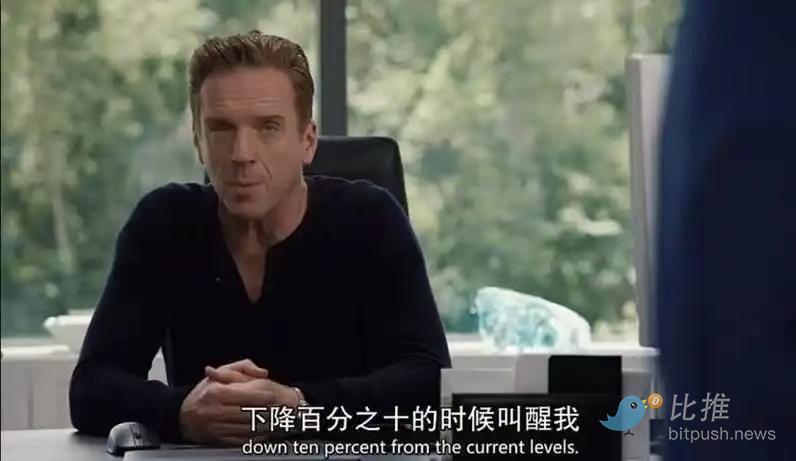
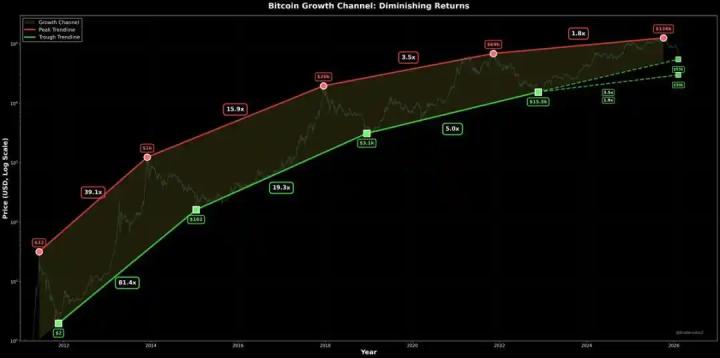
[US pension funds also invest in a variety of assets, including stocks, bonds, and real estate investment trusts (REITs) (characterized by high coupon rates, inflation protection, high long-term returns, and diversified risk, making them a preferred choice for retirement real estate investors and providing a stable source of income for pension fund investments). This diversified asset allocation aims to mitigate risk and maximize returns (this part is explained very clearly and in detail in the American TV series Billions). According to reports, US federal and state pension funds collaborate with Wall Street capital firms to pursue high profits while maintaining robust risk control, achieving a balance between liquidity, returns, and risk management. A couple of charts will be included in the image gallery.]
• Diversified financial products and services for senior living [reverse mortgage loans, reverse mortgage insurance, and senior living consumption trusts are all very mature]
• Professional retirement financial services and education [Highly qualified and accessible retirement planning and investment advice, with a focus on popularizing retirement financial knowledge. Providing the public with knowledge on retirement planning, investment management, and insurance through various channels to assist their decision-making.]
• Flexible system design and policy adjustments: [The 2006 Pension Protection Act included "target-date retirement funds (a product that is currently being vigorously developed in Singapore)" as a "qualified default investment option," improved the tax treatment of "long-term care insurance," and allowed the development of "hybrid products" (derivative products that lower the entry threshold and enhance liquidity)].
Germany's multi-tiered pension financial security system
• Changes in the old-age security system
The traditional three-pillar model has been transformed into a three-tier model.
Tier 1 consists of the statutory mandatory basic old-age insurance that enjoys government tax benefits, including statutory old-age insurance and the Lüproul pension.
The second tier consists of supplementary pension insurance programs that benefit from government tax breaks and subsidies, such as corporate pensions and Lister pension plans, designed to improve the quality of life in retirement.
The third tier consists of other supplementary personal voluntary pension insurance.
• Combination of tax incentives and fiscal subsidies
Germany was the first country in the world to introduce a personal pension system that combines tax breaks with government subsidies. Taking the Lister pension as an example, the government provides tax deductions, basic subsidies, and child allowances.
• Diversified retirement financial products [Lister offers a wide range of retirement products, including four categories: personal annuity insurance, bank savings plans, funds, and Lister housing, which preserve and grow wealth and diversify risk]
• Improved information disclosure and investor education
Germany's Pension Improvement Act requires that providers of Lürrup and Riester pension funds use a standardized product information sheet that covers key information such as risk levels and fees, improving product transparency and facilitating comparison and understanding by participants.
• Comprehensive, multi-agency collaborative oversight: The Federal Financial Supervisory Authority (FBI) provides unified oversight of pension insurance products.
Japan's comprehensive elderly care financial services system
The three-pillar system is relatively mature.
The first pillar of the public pension system, including the National Pension and the Employees' Pension, has broad coverage, providing basic retirement security for all residents aged 20-60. The Employees' Pension provides relatively substantial income security for salaried workers after retirement and accounts for a significant proportion of the total pension fund.
- The second pillar, supplementary pension systems for enterprises, take various forms, including those with defined benefits and defined contribution types, such as defined contribution (DB) plans and defined return (DC) plans, as well as SME retirement benefit pooling systems and lump-sum retirement payments. These systems involve joint contributions from both employers and individuals to supplement retirement income.
The third pillar of the personal savings pension system primarily includes the defined contribution retirement account (iDeCo) plan and the individual savings account (NISA) plan. Participation is voluntary, offering tax benefits and additional savings.
• Sound pension investment management
The Government Pension Investment Fund of Japan (GPIF) was established in 2001 to manage pension fund surpluses. Its investment strategy is primarily passive, with diversified allocations across Japanese and foreign bonds and stocks. It seeks long-term, stable returns and employs a combination of in-house management and outsourcing to external institutions, with a significant amount of funds being outsourced.
Diversified retirement financial products and services
Innovative financial products and services such as testamentary trusts and reverse mortgages are being gradually promoted. Among them, testamentary trusts involve the elderly making a will before their death and stipulating that a trustee will execute the will, which is conducive to realizing the elderly's wishes before their death. [A similar trust product was described in the early Hong Kong film "The Blazing Angel" (starring Simon Yam), and some institutions in my country are actively exploring "bucket list products" with similar early forms.]
• Multiple financing channels support the development of the elderly care industry [subsidies and taxes]
• Comprehensive policy and regulatory support: From the 1970s to the 1990s, Japan successively introduced policies and regulations such as the "Guidelines for the Establishment and Operation of Private Nursing Homes," the "Nursing Insurance Law," and the "Reform of the Basic Structure of Social Welfare Services," creating conditions and providing guarantees for financing for aging-related enterprises and driving increased demand in various industries such as elderly care products, elderly care facilities, elderly housing, and financial insurance.
*Current problems in China's pension finance industry: The traditional concept of relying on children for old-age support is fading. Consumers are recognizing the importance of personal retirement planning, leading to more diversified and personalized demands for pension financial products and services.
- The pension system is still imperfect.
The pressure of a funding gap in the basic pension insurance system is becoming increasingly apparent. [In 2014, the dependency ratio for urban employees' basic pension insurance was 2.97:1, and it is projected to decrease to 1.3:1 by 2050.]
Enterprise annuities have narrow coverage.
The problems with the personal pension system have become prominent.
- Limited pension financial products and services
The products lack personalization and fail to meet the diverse financial management needs of seniors of different ages, income levels, and risk preferences.
• Shortage of Long-Term Care Financial Products [Key Issue] The supply of related products is severely insufficient, with limited variety, narrow coverage, stringent payout requirements, high premiums, and a lack of integration with service resources such as senior living communities and nursing institutions. This makes it impossible to provide an integrated solution combining insurance coverage and nursing services for the elderly, failing to meet the complexity and diversity of long-term care needs.
Insufficient risk disclosure in pension target funds leads to significant declines in net asset value during periods of market volatility; annualized returns fall below the inflation rate, resulting in decreased asset purchasing power. These imbalances contradict the logic of stable value appreciation in pension finance and damage investor trust. There is an urgent need to optimize asset allocation, strengthen risk grading, and improve information disclosure.
- Lagging financial infrastructure development [Insufficient account interoperability and information integration, difficulties in data sharing; credit rating mechanisms for investors in pension financial institutions]
The pension finance market is fraught with hidden dangers [information asymmetry, financial fraud, inadequate regulation, especially in emerging pension finance formats such as internet-based pension financial services].
- The silver economy faces high financing barriers [large funding gap, difficulty in obtaining collateral and guarantees, and a break in the supply chain financing].
The future development of my country's pension finance industry should focus on multiple dimensions, including improving the pension system, innovating pension financial products and services, accelerating the construction of financial infrastructure, and optimizing the pension finance market environment. This will allow for the construction of a three-pronged financial support system encompassing security, services, and investment. By enhancing the elderly's ability to pay and activating industrial capital, a virtuous cycle can be formed, from capital supply to consumption release and then to industrial upgrading.
-Strengthening the sustainability of the basic old-age insurance system [National pooling (adjustment), enterprise annuity coverage, and individual pension system]
- Innovative elderly care financial products and services [Key Focus] Long-term care insurance, supplementary products to elderly medical insurance [Japan enacted the Long-Term Care Insurance Law in 1997, and it was fully implemented in 2000]
Develop personalized pension financial products
• Strengthen cross-industry integration and innovation of pension financial products [Savings insurance, equity funds]
• Improve the quality of elderly care financial services
-Accelerate the construction of financial infrastructure [unified personal pension financial account]
-Optimize the environment for the pension finance market [Information disclosure, supervision]
-Enhance financial support for the silver economy industry [Long-term funding, innovative collateral and guarantees, and a comprehensive supply chain financial service system (providing accounts receivable financing, prepayment financing, and other supply chain financial services to upstream rehabilitation equipment manufacturers and elderly product suppliers to ensure smooth cash flow in the supply chain)]
- Potential areas for the pension finance industry
• Financial Product Innovation: [Addressing retirement pain points such as the pressure to preserve and grow assets and the risks associated with long-term accounts by developing customized financial products]
• Establish pension-themed funds [equity funds, bond funds, mixed funds, professionally managed to achieve asset allocation and capital preservation and appreciation]
• Strengthen the integration of industry and finance [deeply integrate elderly care and medical care, smart elderly care, and elderly care cultural tourism industries; promote the coordinated development of medical and elderly care services; promote industry through finance, and support finance through industry]
• Increase credit support for elderly care consumption [including credit lines for age-friendly renovations, smart elderly care equipment, service consumption and elderly care re-credit, and expanding the scale of credit issuance].
above.
#Elderly Care Industry
#SilverEconomics
#Elderly Finance Industry
#Age-Friendly Financial Products
#Silver Economy and Elderly Care Industry Chain Database