A diamond from Botswana was cut, identified, assigned a unique serial number, and then stored as a string of code on the blockchain. Finally, it was purchased by a collector in Shanghai via a web link, all without the need to trust any intermediaries. This is no longer science fiction, but a reality unfolding before our eyes.
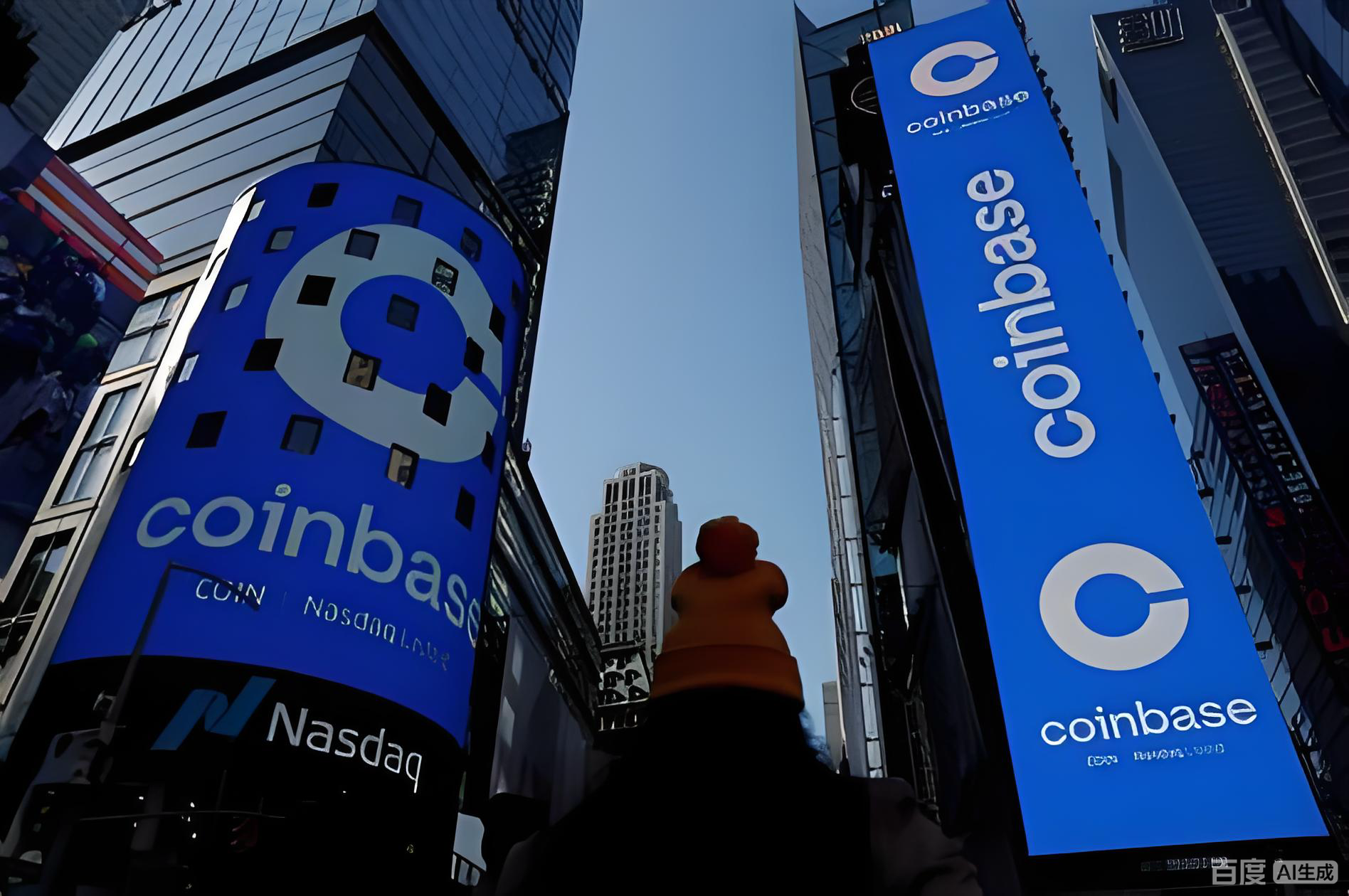
By the end of 2025, while the world's attention is focused on macroeconomic fluctuations, the architects of the crypto world have already turned their attention to more solid ground. Coinbase Ventures, as an industry bellwether, has placed "RWA (Renewable and Sustainable) Synthetic Assets" at the top of its four core investment tracks in its 2026 investment outlook.
This outlook reveals a profound shift: crypto technology is shedding its purely speculative guise and attempting to become a bridge connecting the trillion-dollar real economy. Around the same time, statistics from industry data platform RWA.xyz show that the total market capitalization of tokenized real-world assets has quietly surpassed $35.96 billion.
These seemingly isolated events, like magnets scattered on the sand table of time, are forming a new gravitational field.
I. Undercurrents: When Financial Narratives Shift Towards the Anchor of Value
Over the past year, the clamor in the crypto market has gradually settled into a consensus: to navigate through cycles, one must find a value anchor that is more solid than the consensus itself. This shift in collective consciousness is clearly discernible in the strategies of top investment institutions.
According to Coinbase Ventures' annual outlook report released in November 2025, it clearly focuses its resources on four frontiers: RWA perpetual contracts, professional trading facilities, next-generation DeFi, and AI integration. The report analyzes that perpetual contracts provide traditional assets with a "more flexible and liquid" on-chain path than direct tokenization, potentially unlocking a vast market from commodities to private credit.
The market responded to this assessment with silent data. According to real-time data from the RWA.xyz platform as of November 28, 2025, the total on-chain market capitalization of the entire RWA ecosystem has reached an all-time high of $35.96 billion. A more significant detail is that although the monthly growth rate of market capitalization slowed to 1.10%, the number of holder addresses bucked the trend, increasing by 8.02% to over 550,000.
This means that the influx is no longer driven by funds chasing short-term trends, but rather by a growing number of genuine users and long-term believers. The slowdown in asset growth coupled with the surge in participants paints a subtle picture of a transformation from a "speculative bubble" to a "user network."
II. Cornerstone: The Silent Technological Revolution
The unfolding of any grand narrative begins with the silent upgrade of the underlying infrastructure. RWA's transformation from blueprint to reality did not rely on a single magic bullet, but rather on a sophisticated project driven by the collaborative efforts of trading facilities, financial protocols, and intelligent algorithms.
First, there's the reshaping of trading channels. Liquidity fragmentation and market maker risk were once the biggest technological barriers preventing institutional capital from entering the market. To address this, a new generation of trading infrastructure is emerging. Take, for example, the "alternative Prop AMM" model that Coinbase Ventures is focusing on. Through clever mechanism design, it builds a transparent yet secure barrier between the open market and professional market makers, ensuring both liquidity depth and protecting market-making strategies from malicious attacks. This lays the first cornerstone for on-chaining assets such as government bonds and commodities that require stable pricing.
When trading channels are open, the Lego bricks of finance begin to unleash their magic. The core breakthrough of the next generation of DeFi lies in the deepening of "composability." Imagine an investor holding a perpetual contract position in "on-chain copper futures" on platform A. The assets deposited as margin can simultaneously be used as collateral to lend funds in protocol B, or to provide liquidity in pool C to earn returns. This cross-protocol, permissionless nesting of assets and strategies transforms static asset holding into a dynamic value production network.
Even more disruptive is the "codification of trust." The core of traditional finance is collateral, while the next generation of DeFi is attempting to reach the holy grail of unsecured lending. According to the Federal Reserve's G.19 Consumer Credit Report released in 2024, the US revolving unsecured lending market alone is worth approximately $1.3 trillion. If on-chain protocols can build reliable on-chain credit scoring models by integrating on-chain transaction history, compliant off-chain credit data, and even behavioral patterns, they could unlock a completely new trillion-dollar market. At that time, high-credit-rating RWA assets may become the pricing anchor for this new system.
Finally, the integration of AI provides intelligent navigation for all of this. AI's empowerment is subtle and pervasive: on the development side, it can transform complex legal terms and financial logic into error-free smart contracts, lowering the threshold for innovation; on the risk control side, it can monitor the health of the underlying asset pool in real time and predict potential risks; and identity verification technologies such as "human proof" are the cornerstone for ensuring the authenticity of on-chain asset ownership and resisting Sybil attacks, firmly binding rights in the virtual world with identities in the real world.
III. Emergence: When Abstract Techniques Become Concrete Life
Once the technological building blocks are ready, change begins to flow from engineers' screens to the daily lives of ordinary people. The appeal of RWA lies in its ability to transform abstract economic concepts into tangible and participatory scenarios.
The most direct impact is the dramatic broadening of the investment world's "horizon." Previously, an ordinary investor had virtually no way to express their views on "Southeast Asian logistics real estate" or the "German SME index." RWA perpetual synthetic assets, however, act like a combination of a financial telescope and microscope, allowing anyone to invest in or hedge risks across specific assets anywhere in the world at extremely low cost, 24/7. A Latin American coffee farmer can easily hedge against euro exchange rate risk; an East Asian saver can directly long on synthetic assets containing US inflation-protected bonds. For the first time, financial democratization is taking shape on a global macro scale.
A deeper revolution lies in "awakening the dormant super-rich." Globally, trillions of dollars worth of illiquid assets—real estate, private equity, art, intellectual property—are like frozen wealth. Tokenization enables the partitioning of asset shares, while perpetual synthetic contracts further provide a solution to the "liquidity illusion": the market doesn't need to trade actual fragments of a building, but only a contract tracking an index of that asset's price. This provides an efficient risk pricing and transfer tool for existing wealth, unlocking immeasurable capital efficiency.
The real story is unfolding. For example, the digital asset platform RWA.LTD has deeply integrated its issued diamond tokens with a native internet payment protocol. Purchasing a digital diamond is as simple as buying a book online—click, pay, confirm, and the asset goes directly to the user's encrypted wallet. Behind each digital diamond lies a physical diamond with an IGI international certificate, stored in a vault. This "digital twin" experience blurs the boundaries between investment and consumption, virtual and real, foreshadowing a completely new way of holding and transferring assets.
IV. Strategic Alliances: Moves and Encirclements on the Global Chess Game
RWA's narrative has never been about the victory of a single technology, but rather a complex web of alliances and maneuvers unfolding on a global chessboard of regulation, capital, and technology. The prosperity of the ecosystem depends on the simultaneous evolution of multiple key dimensions.
Data and oracles have become the nervous system of this ecosystem. Asset value discovery and loan settlement rely on the flow of data rushing from the real world to the blockchain every second. Future competition may not lie in who can transmit data, but in who can provide more unique, more robust, and more timely data sources for specific fields, such as carbon credit prices in a specific region or real-time cash flow from intellectual property royalties.
Ultimately, all innovation must flow through the channels of compliance. The global regulatory landscape presents an interesting mosaic. In East Asia, South Korea's Financial Services Commission is actively pushing forward revisions to the Electronic Securities Act, aiming to provide clear legislative support for asset tokenization. In Europe, the European Central Bank, in a special report released in 2024, repeatedly warned that large-scale asset tokenization could lead to deposit outflows from the banking system, posing potential risks to financial stability. This tension between "encouraging innovation" and "preventing risks" will define the industry's survival space in the long run.
The entry of traditional financial giants has added significant weight to this transformation. In 2025, CME Group, the world's leading derivatives market, announced a strategic partnership with Google Cloud, planning to launch a pilot project in 2026 to explore the tokenization of core businesses such as collateral management using distributed ledger technology. Meanwhile, U.S. Bancorp, one of the major U.S. financial institutions, has also been testing its digital asset solution on a public blockchain, paying particular attention to whether the technology can meet its stringent compliance and risk control requirements. Their cautious yet determined steps signify that the integration of "Wall Street" and "Crypto Valley" has entered a deeper phase.
In this increasingly multi-chain world, interoperability determines the radius of asset liquidity. A music copyright revenue token issued on chain A, if seamlessly used as collateral in a DeFi protocol on chain B, or as a premium item in a gaming ecosystem on chain C, will experience a network effect-driven increase in value. Breaking down these value silos is the foundational engineering for building a global liquidity network.
V. Looking into the distance: Gazing at the future from the challenging cliffs.
The road to the future is not smooth; treacherous ridges still lie ahead that must be traversed. A clear understanding of these challenges is an essential part of any rational narrative.
The most pressing issue is the "last mile" problem of legal ownership. When people hold tokens representing the carbon sequestration revenue of a forest, do they own a string of code, or legally protected ownership? Can the automatic execution of smart contracts be recognized in real-world courts? How can recourse be exercised for on-chain assets when the project goes bankrupt? Without resolving these issues, RWA is like a building built on quicksand.
The shadow of technology and security always looms large. Vulnerabilities in smart contracts, data tampering with oracles, and attacks on cross-chain bridges—these inherent risks of the crypto world, when involving billions of dollars in real-world assets, could trigger systemic shocks far exceeding anything seen before. Security is no longer just a technical issue, but a social responsibility.
Furthermore, the undercurrents of regulatory arbitrage and geopolitical maneuvering cannot be ignored. Some regions, in an effort to attract innovation, may introduce extremely lenient "regulatory sandboxes." For example, reports indicate that Uzbekistan is planning a sandbox program on digital assets in 2026. While this may promote localized innovation, it could also lead to fragmentation of global regulatory standards, laying the groundwork for cross-border risk transmission.
Despite the numerous challenges, the forces driving the wheels of history have already accumulated. The curve of technological innovation continues its steep ascent, from zero-knowledge proofs to account abstraction, constantly clearing obstacles for privacy and ease of use. The continued influx of traditional capital and talent has brought more rigorous financial engineering and risk management experience. More importantly, the inherent global economic demand for improved asset liquidity and reduced transaction friction is the most fundamental and enduring engine of this sector.
We may be approaching a turning point, at which time a multi-layered, programmable global value internet will begin to take shape: the bottom layer consists of "reserve-grade assets" backed by sovereign credit or top-tier physical assets, providing stability; the middle layer comprises a diverse array of synthetic assets and derivatives, meeting complex risk management and investment needs; and the top layer consists of innovative applications integrating social networking, gaming, and consumption, allowing finance to be thoroughly integrated into the capillaries of digital life.
Turning points in history often begin with subtle sounds from the margins. As South Korean lawmakers debate the specific wording of the proposed amendments to the Electronic Securities Act, as Zurich traders begin using synthetic contracts to hedge risks in African infrastructure projects, and as a diamond's journey from mine to wallet takes only a few clicks, these scattered fragments are being quietly connected by the same network.
This network doesn't claim to replace the old world; it simply offers a new way of connecting—more direct, more efficient, and more global. The future is already here; it just hasn't been evenly distributed yet. And the story of RWA is about how this distribution will occur and how it will reshape our entire imagination of value, property rights, and trust.
Some of the information comes from the following sources:
• Coinbase plans to invest in four major areas in 2026, including RWA perpetual contracts and specialized trading terminals.
• Which sectors will Coinbase focus on in 2026?
· Coinbase Announces Nine Crypto Innovation Directions It Plans to Bets On in 2026
Author: Liang Yu; Editor: Zhao Yidan